
Visual steady-state evoked potential detection system oriented to binocular competition
A steady-state induction and potential detection technology, applied in eye testing equipment, diagnostic recording/measurement, medical science, etc., can solve problems such as inconvenient operation and complicated equipment, and achieve improved accuracy, improved independence, and reduced operational inconvenience. Effect
Patent Information
- Authority / Receiving Office
- CN · China
- Patent Type
- Applications(China)
- Current Assignee / Owner
- Publication Date
- 2021-11-02
Smart Images
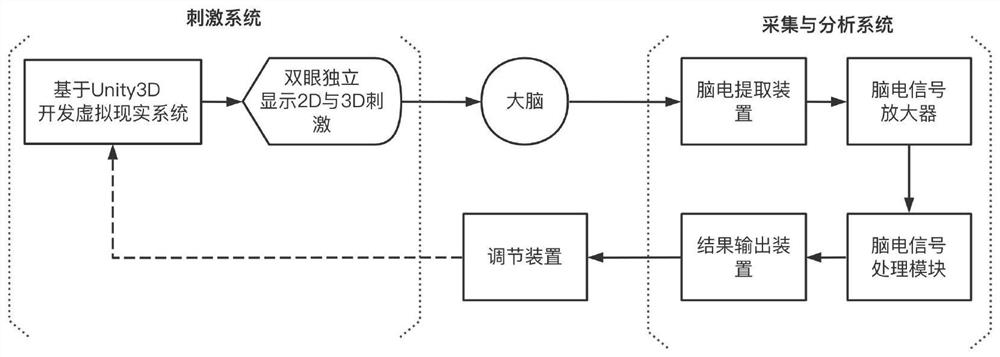
Figure 1 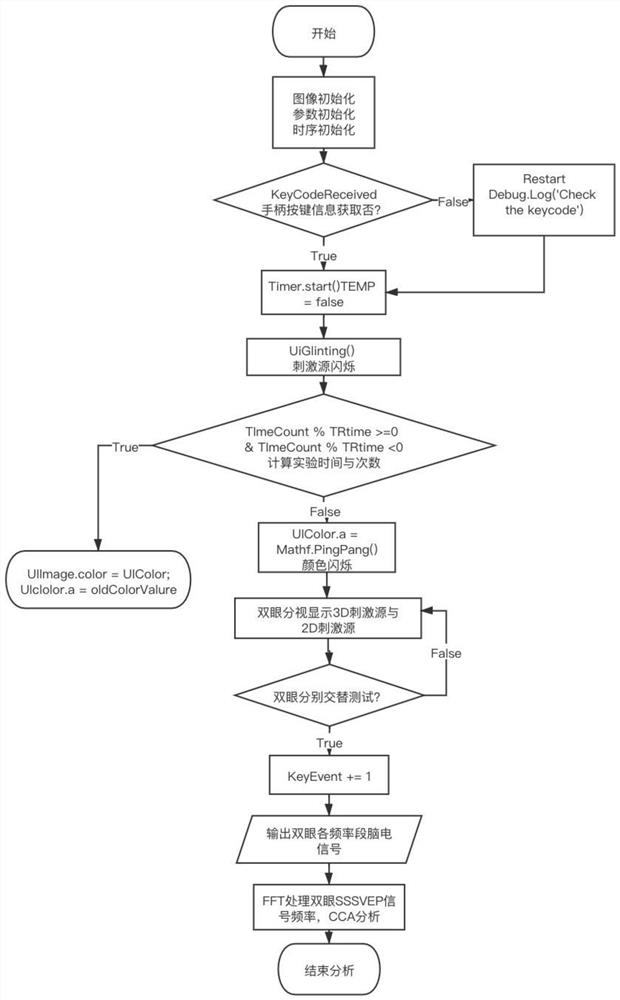
Figure 2 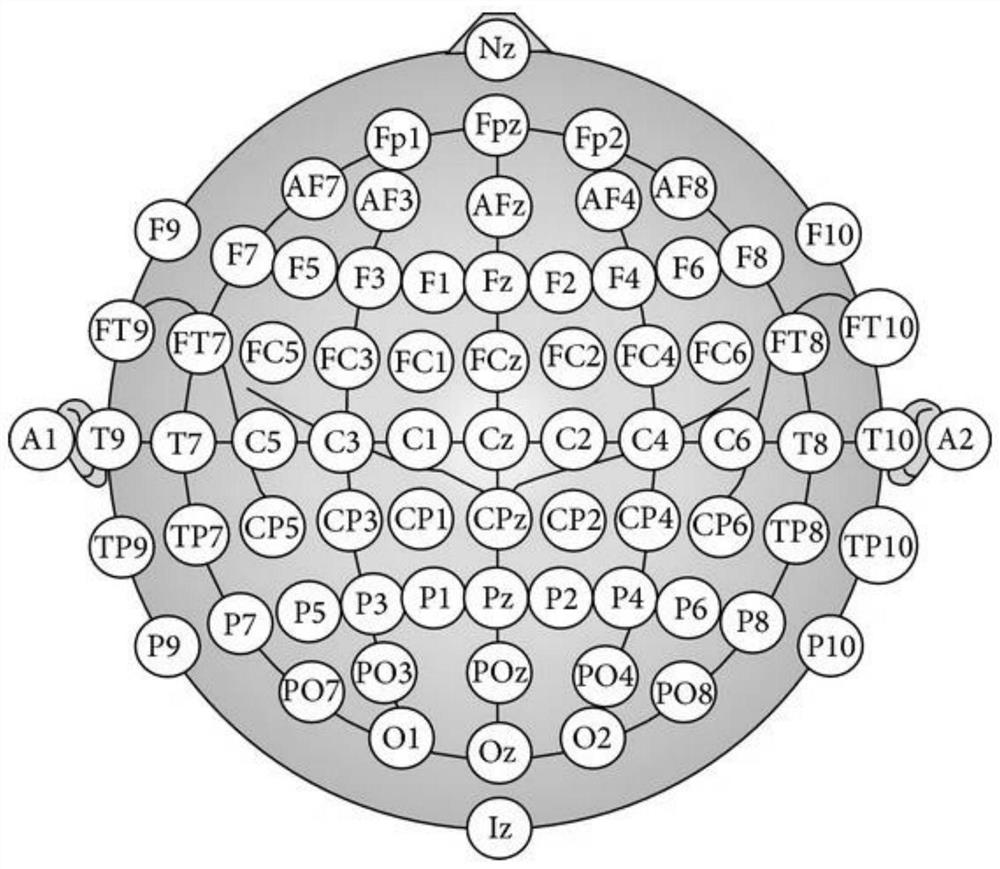
Figure 3
Abstract
Description
technical field
[0001] The invention relates to the field of visual steady-state evoked potentials, and proposes a visual steady-state evoked potential detection method for binocular competition detection. Background technique
[0002] Binocular rivalry is a phenomenon in which a single, stable perception of dynamic alternation cannot be formed due to the inconsistency of the images presented by the two eyes. Binocular rivalry is of great significance in clinical, medical and psychological fields.
[0003] The current research methods and measurement indicators for binocular rivalry include: duration, alternation rate, etc. At present, the method used for the measurement of binocular competition is to display stimulus pictures with different levels of difficulty and different information on the screen, and use polarized glasses to make the eyes feel the form of different picture stimuli, and at the same time assist with behavioral buttons designed for the tester to feedback...
Examples
Embodiment Construction
[0024] The present invention will be further described below with reference to the accompanying drawings and in combination with preferred embodiments. It should be noted that, in the case of no conflict, the embodiments in the present application and the features in the embodiments can be combined with each other.
[0025] Before introducing the embodiments, the terms related to the embodiments of the present invention are explained first:
[0026] Visual function: visual function is divided into three levels: simultaneous vision, fusion vision and stereo vision. The picture seen by the human eye is two-dimensional information, which is effectively processed by the two eyes together, and the nerve excitement is transmitted to the brain along the perceptual system, and the visual signals from the two eyes are analyzed in the high-level center of the brain, and synthesized into a complete three-dimensional perception impression.
[0027] Virtual Reality (VR): Virtual reality i...