
A boron-containing organic free radical compound and its preparation method and application
A technology of free radicals and compounds, applied in the field of boron-containing organic free radical compounds and its preparation, can solve the problems of difficult synthesis, limited means of free radical characteristics, and small number of organic free radical compounds, and achieve reasonable and effective yields. Conducive to a large number of synthesis, increase the effect of stability
Patent Information
- Authority / Receiving Office
- CN · China
- Patent Type
- Patents(China)
- Current Assignee / Owner
- Publication Date
- 2022-05-13
Smart Images
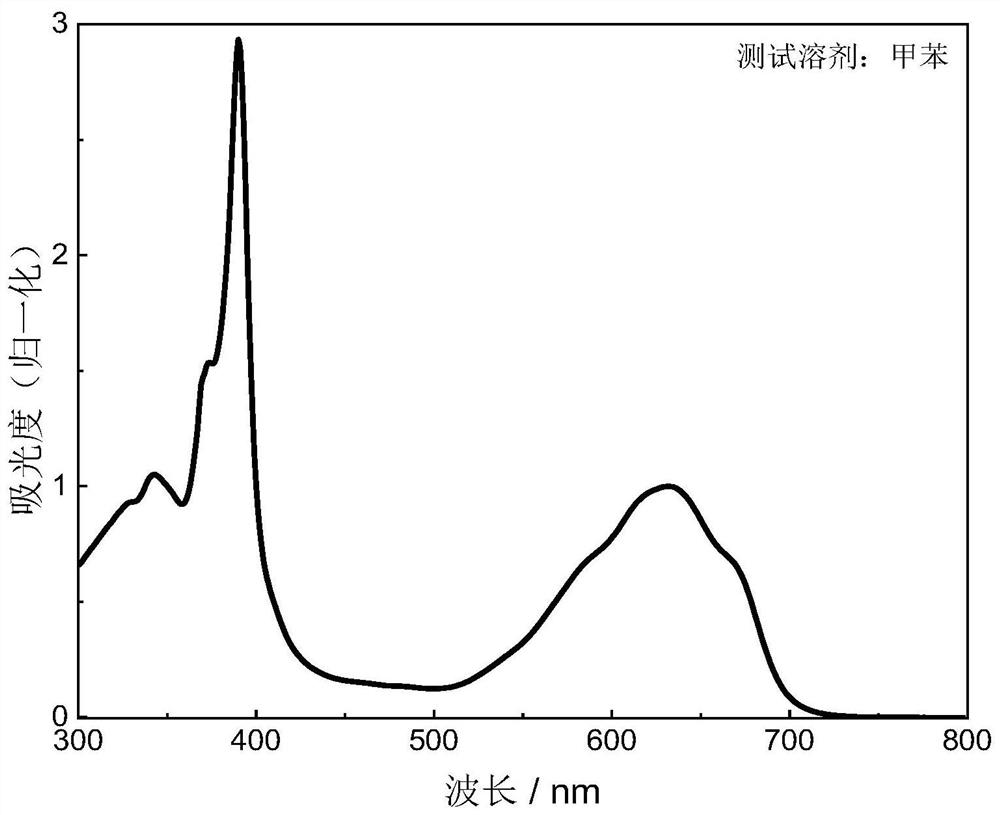
Figure 1 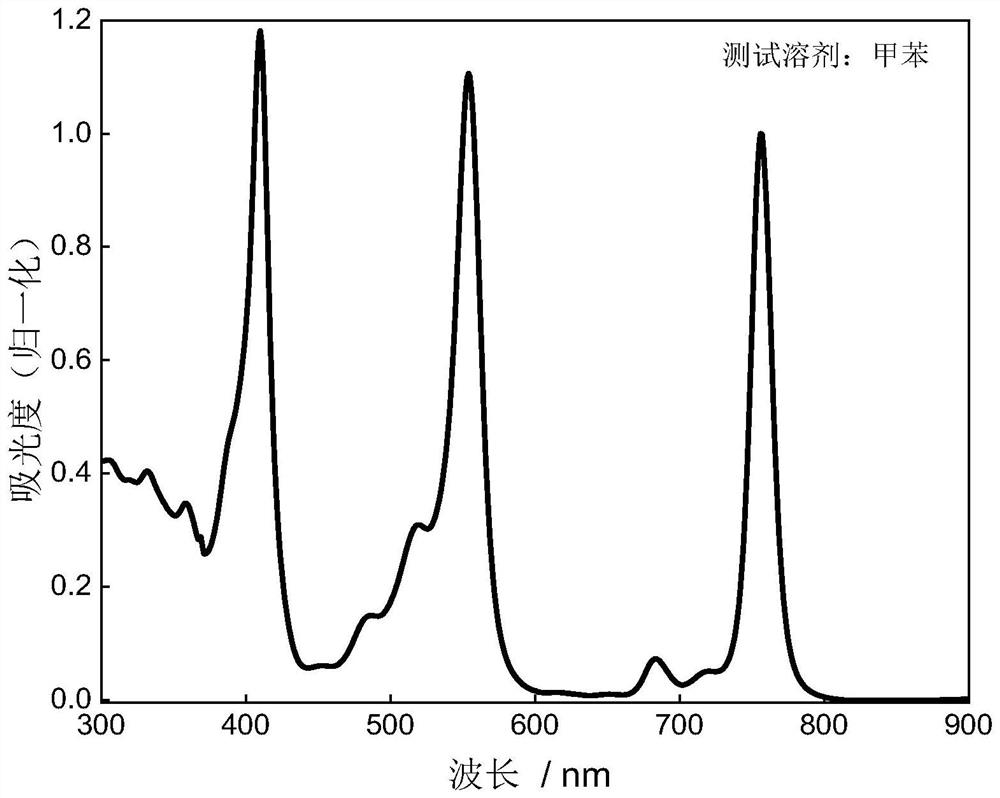
Figure 2 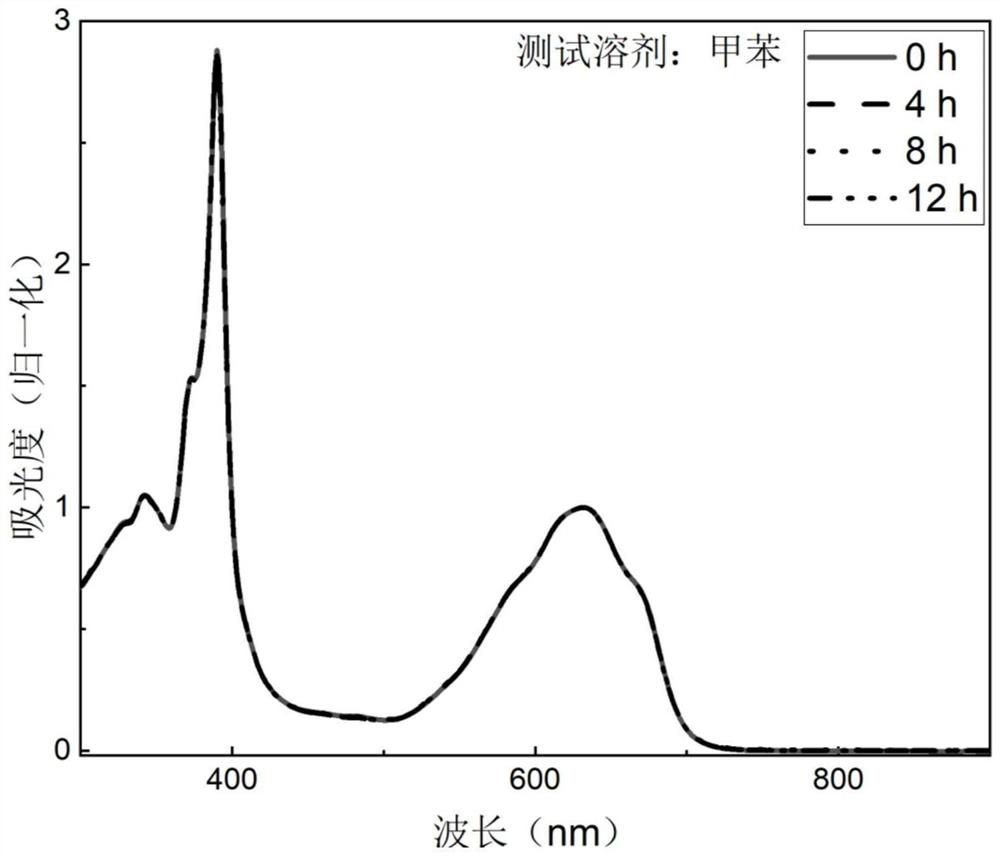
Figure 3
Abstract
Description
technical field
[0001] The invention belongs to the technical field of organic free radical compounds, and in particular relates to a boron-containing organic free radical compound and its preparation method and application. Background technique
[0002] Organic free radical compounds are molecules or ions that have one or more unpaired electrons. Due to the existence of unpaired electrons, such compounds often exhibit unique electronic structures and physicochemical properties. On the one hand, the unpaired electrons in molecular orbitals endow them with infrared / near-infrared light-absorbing properties, spin magnetism, and charge transport capabilities, which endow them with great potential as optical, electrical, and magnetic functional materials; on the other hand, unpaired electrons The high reactivity brought by it makes free radicals easy to decompose or react with water and oxygen in the environment, reducing its chemical stability. Therefore, the stabilization str...
Examples
preparation example Construction
[0037] In the preparation method of boron-containing organic free radical compounds of the present invention, under the protection of inert gas (generally adopting argon), the precursor to be oxidized is dissolved in toluene or xylene, and then 2,3-dichloro-5,6- Dicyano-1,4-benzoquinone in toluene or xylene, the precursor to be oxidized, 2,3-dichloro-5,6-dicyano-1,4-benzoquinone in a molar ratio of 1 : (1~2), carry out the oxidation reaction under the heating condition of 50-100 ℃, the duration is 0.5~1.5h, after the reaction finishes, cool down, purify through column chromatography, recrystallization, obtain formula (I) or formula (II ) the boron-containing organic free radical compound shown.
[0038] Be that a boron-containing organic free radical compound of formula (I) is example with structural formula, general reaction formula is as follows:
[0039]
[0040] In the above technical scheme, the chemical structural formula of the precursor to be oxidized is shown in f...
Embodiment 1
[0047] Boron-containing organic radical compound, the structural formula is as follows:
[0048]
[0049] The preparation of above-mentioned boron-containing organic radical compound:
[0050] Step 1, put 2,5-dibromo-1,3-difluorobenzene (1g, 36.8mmol), 4-ethylphenol (13.46g, 110.4mmol) and potassium carbonate (15.26g, 110.4mmol) into a dry In the reaction flask with a condenser tube, after more than three vacuum pumping and argon gas pumping operations, inject dry N,N-dimethylformamide solvent (45mL) to fully dissolve, and then heat up to 170°C for reaction 12h. The resulting reaction mixture was diluted with toluene and poured into water. The aqueous layer was extracted three times with toluene (30 mL). The toluene layer was collected and dried over anhydrous sodium sulfate. After toluene was removed under reduced pressure, it was purified by silica gel column chromatography (eluent: petroleum ether: dichloromethane = 12:1) to obtain a colorless powder, which was designate...
Embodiment 2
[0068] Boron-containing organic radical compound, the structural formula is as follows:
[0069]
[0070] The preparation of above-mentioned boron-containing organic radical compound:
[0071] Step 1, put 2,5-dibromo-1,3-difluorobenzene (1g, 36.8mmol), 4-tert-butylphenol (16.58g, 110.4mmol) and potassium carbonate (15.26g, 110.4mmol) into dry In the reaction flask with a condenser tube, after more than three times of vacuuming and argon gas pumping operations, inject dry N,N-dimethylformamide solvent (45mL) to fully dissolve, and then heat up to 170°C Under reaction 12h. The resulting reaction mixture was diluted with toluene and poured into water. The aqueous layer was extracted three times with toluene (30 mL). The toluene layer was collected and dried over anhydrous sodium sulfate. After rotary evaporation to remove toluene, the crude product was purified by silica gel column chromatography (eluent: petroleum ether: dichloromethane = 12:1) to obtain a colorless powder,...