
Display method and related device thereof
A display method and a technology of a display device, which are applied in the direction of using projection device image reproducers, static indicators, instruments, etc., can solve the problems of abnormal display brightness, power supply response speed cannot meet the fast adjustment between frames, etc., and achieve contrast improvement and saving , Reduce the effect of the requirement for a faster response speed of the light source
Patent Information
- Authority / Receiving Office
- CN · China
- Current Assignee / Owner
- Publication Date
- 2022-01-21
Smart Images
Figure 1 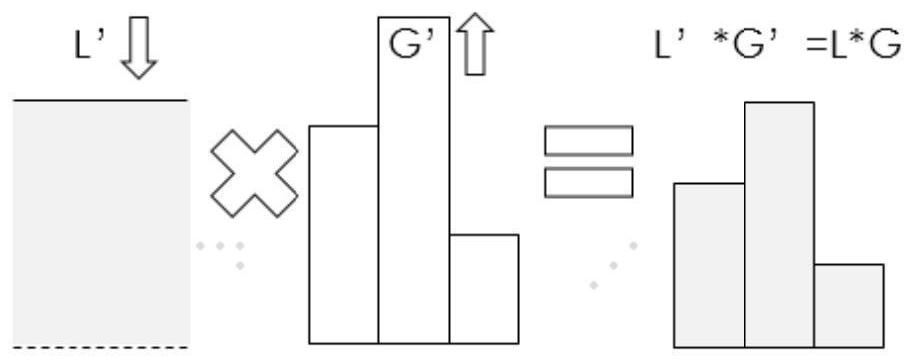
Figure 2 
Figure 3
Abstract
Description
technical field
[0001] The present application relates to the field of display technology, in particular to a display method and related devices. Background technique
[0002] In the prior art, when the maximum brightness of the image to be displayed in one frame is less than the maximum displayable brightness of the projection system, the brightness of the spatial light modulator can be reduced while increasing the grayscale brightness displayed by the DMD to ensure the display on the display screen. The corresponding display brightness of each pixel remains constant.
[0003] However, in actual use, unless specially designed, the response speed of the commonly used power supply cannot meet the requirements of fast adjustment between frames, especially when using high-brightness light sources, which have dozens or even hundreds of For lasers, the total output power of the power supply is as high as thousands of watts. In the power supply design of the high-brightness ligh...
Examples
Embodiment 1
[0118] The range in which the driving current of the light source changes from the adjustable minimum value to the adjustable maximum value is divided into M grades, and the corresponding current values are I 1 , I 2 ,..., I M , so that the brightness of the light source corresponding to the spatial light modulator is also M-level, that is, the brightness of the corresponding light source is L 1 , L 2 ,...,L M . Adjustment step size ΔI between adjacent current levels m = I m -I m-1 , (m=2,3,...M). During the display time of one frame, the current I m-1 Increase change to I m , or current I m+1 decrease change to I m , that is, the current can change to a stable value I according to the determined waveform m .
[0119] If the maximum value of the gray signal of all pixels in a frame is G max meet L m-1 M · G max ≤ L m , where L M is the maximum light source brightness that can be realized by the display device, then the target light source brightness in ...
Embodiment 2
[0130] This embodiment mainly introduces how to specifically obtain the grayscale mapping relationship table for determining the final grayscale signal of each pixel in each frame.
[0131] Assuming that the duration T of each frame is 16.67ms, the current of the light source can be adjusted in steps of 5 levels, and the response time for adjusting the current between two adjacent levels is about 3.33ms. Switching between the maximum value and the second maximum value corresponds to the The change law of light source brightness is as follows: Figure 9 As shown, among them, Figure 9 The curve equation corresponding to the brightness change curve of the light source in one frame can be expressed as in
[0132] In the process of obtaining the grayscale mapping relationship table, the law of light source brightness variation within a frame can be directly integrated according to the binary grayscale number, so as to determine the actual display brightness corresponding to e...
Embodiment 3
[0139] This embodiment introduces a method for obtaining a grayscale mapping relationship table in a special case.
[0140] Assuming that the change curve of the brightness of the light source is as follows Figure 13 As shown, the change law of the brightness of the light source in a corresponding frame is in
[0141] In this case, the relationship between the grayscale signal and the actual display brightness is as follows: Figure 14 As shown, it can be seen that the actual display brightness no longer increases with the gray signal.
[0142] Sort the actual display brightness with ups and downs from small to large, and get as follows Figure 15 The corresponding relationship between the sorted actual display brightness and the grayscale signal is shown. For this situation, it is necessary to match the expected display brightness corresponding to the initial grayscale signal with the actual display brightness, and use the grayscale signal corresponding to the matched...