
Methods and compositions for treating and/or inhibiting toxins using copper-containing compounds
a technology of copper-containing compounds and compositions, which is applied in the direction of inorganic active ingredients, medical preparations, pharmaceutical delivery mechanisms, etc., can solve the problems of cell death, distension of pores, cell swelling, etc., and achieve the effects of reducing pain scores, reducing bleeding, and slowing hemolysis
Patent Information
- Authority / Receiving Office
- US · United States
- Patent Type
- Patents(United States)
- Current Assignee / Owner
- Publication Date
- 2019-01-08
- Estimated Expiration
- Not applicable · inactive patent
Smart Images
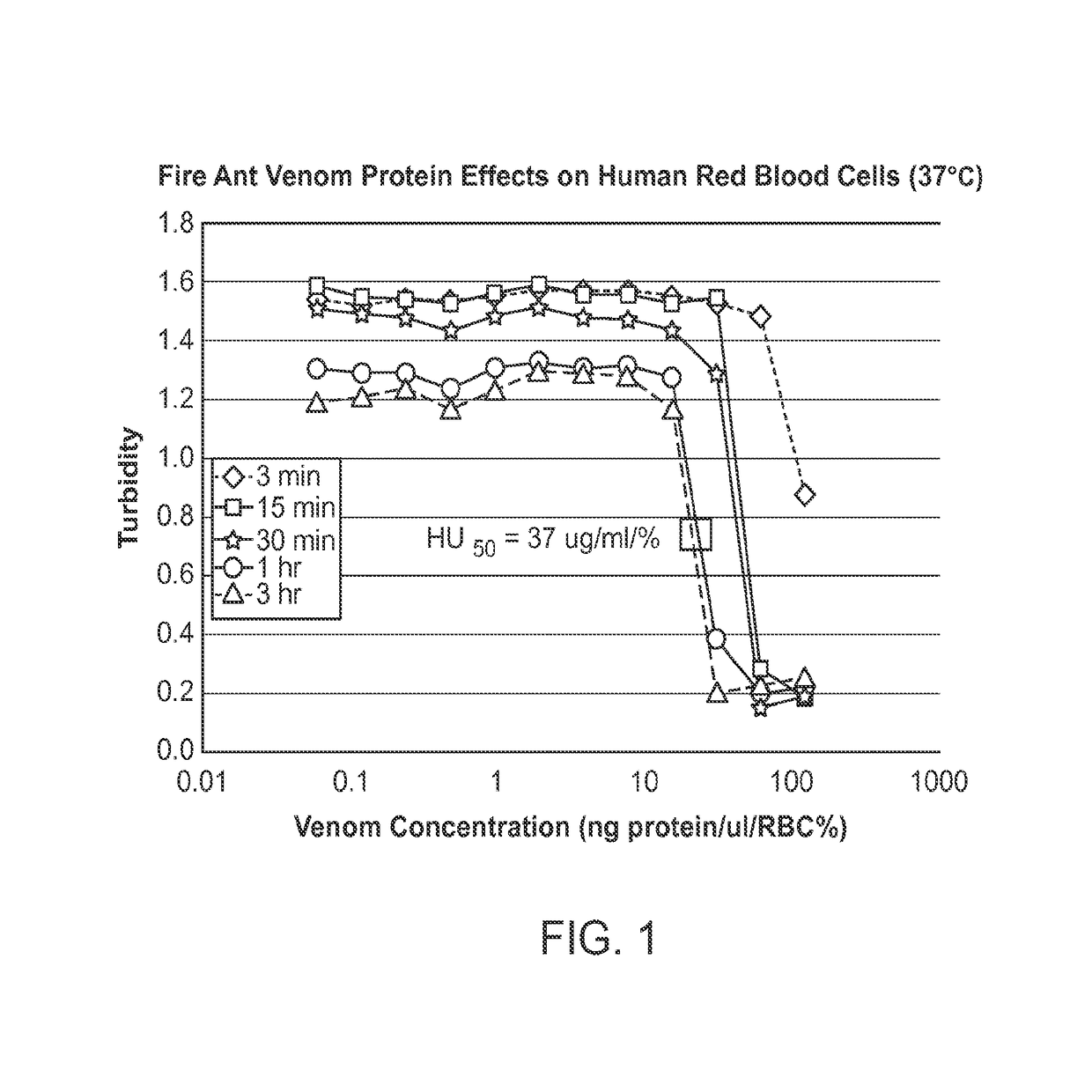
Figure 1 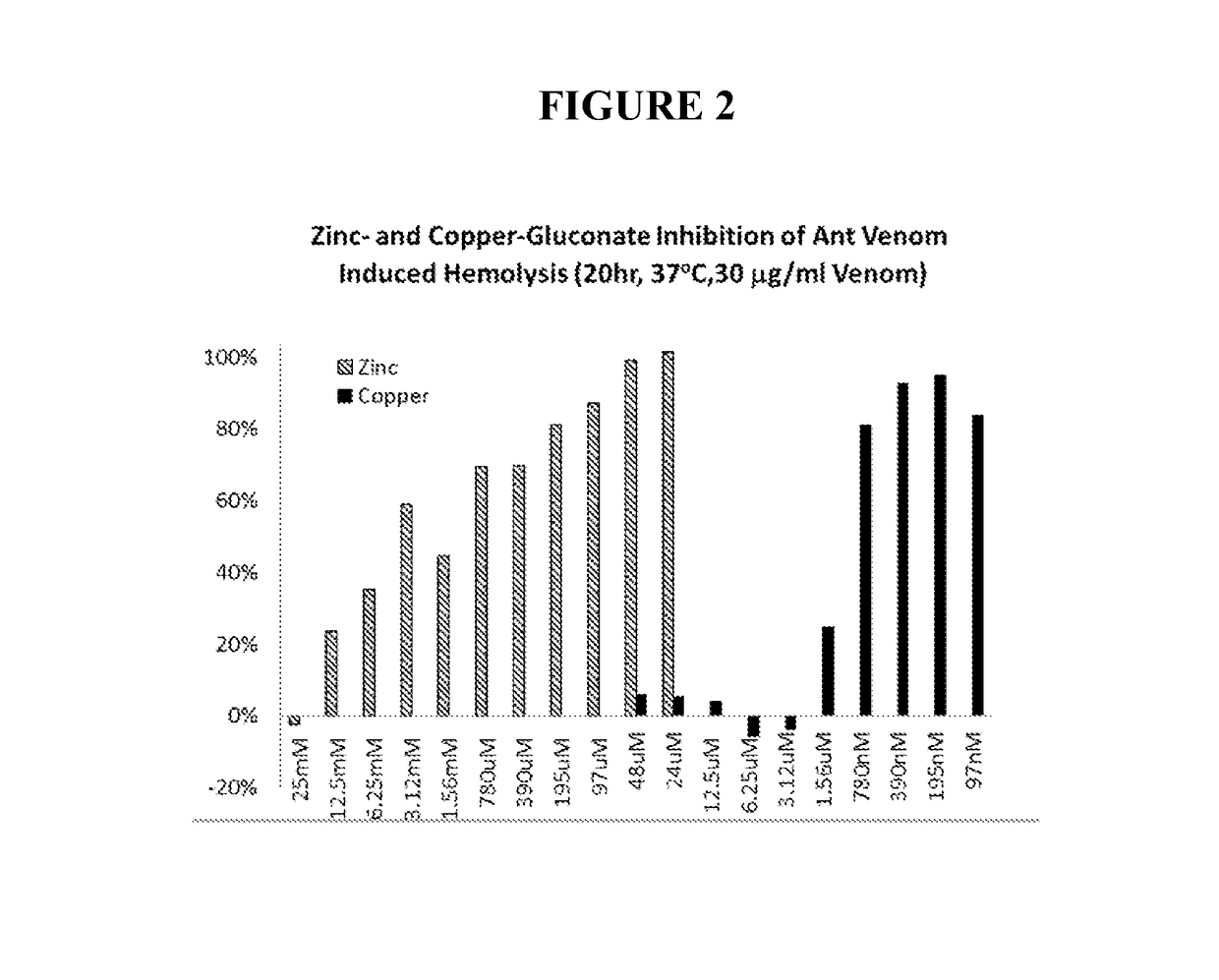
Figure 2 
Figure 3
Abstract
Description
BACKGROUND OF THE INVENTION
[0001] Cnidarian phylum members, including sessile anthozoa (anemone, corals), and the medusozoa sub phylum classes such as scyphozoa (common jellyfish) and cubozoa (tropical cuboidal jellies with venoms that result in high morbidity and mortality), are venomous sea life that sting hundreds of thousands of beach goers every year. For example, numerous life-threatening Chironex fleckeri and other cubozoan envenomations occur during summer months in North Queensland, Australia northward to Thailand. Symptoms of cnidarian stings include pain, wheals, urticarial, itching, swelling, tingling / numbness, nausea and vomiting, headache, muscle and joint problems, weakness / dizziness, fever, loss of consciousness, respiratory insufficiency, and heart problems. In some cases, infections and / or scarring or skin discoloration also occur. Current treatments are primarily directed at relief of symptoms or, in serious cases, support of cardiovascular integrity after envenoma...
Examples
example 1
Copper Gluconate Effect on Fire Ant Venom-induced Hemolysis
[0086]The membrane disruptive potential of ant venom protein was determined by incubating 1-2% human red blood cells (RBCs) with increasing amounts of fire ant venom (Solenopsis invicta) for 3 min, 15 min, 30 min, 1 hour, and 3 hours at 37° C. The results are depicted in FIG. 1. The HU50 (Hemolytic Unit) is approximately 37 microgram per milliliter per 1% RBCs (37 μg / mL / %). This is about 1 / 1000th the potency of box jellyfish venom. HU50 refers to the dose at which 50% of the RBCs in a 1% solution were lysed at one hour at 37° C.
[0087]RBCs were incubated with 30 μg / mL fire ant venom and the indicated amount of zinc gluconate or copper gluconate at 37° C. for 20 hours. The results are shown in FIG. 2. The efficacy of copper gluconate is approximately 10,000 times more than zinc gluconate in the inhibition of ant venom (3 μM versus 25 mM). It was determined that copper gluconate is active at approximately 3 μM or greater for fi...
example 2
Copper Gluconate Inhibition of Jellyfish Venom
[0090]2-20 mm sections of fresh live Alatina alata tentacles were placed on top of freshly prepared RBC agar slide (3% NuSieve GTG low melting agarose, 150 mM NaCl with 2% fresh human RBC). Slides were incubated at 37° C. for one hour. Zones of hemolysis are observed in control slide (FIG. 5, left) but not in slides prepared with 10 μM Copper Gluconate (3% NuSieve GTG low melting agarose, 150 mM NaCl, 10 μM Copper Gluconate with 2% fresh human RBC) (FIG. 5, right). A zone of hemolysis indicates lysis of the red blood cells.
[0091]The effect of copper gluconate on jellyfish venom induced hemolysis was evaluated as described in Example 1. Human RBCs were incubated with 5 units / mL / % RBC box jellyfish venom (Alatina alata) and zinc gluconate or magnesium sulfate (FIG. 6A), copper gluconate or strontium chloride (FIG. 6B), calcium gluconate (FIG. 6C) or jellyfish antivenom (FIG. 6D) at increasing doses for 1 hour at 37° C. Samples were centrif...