
Catheter decoupling device
a catheter and decoupling technology, applied in the field of catheter decoupling devices, can solve the problems of ineffective nerve block, tissue tear and/or distal end migration, and inability to effectively relieve pain, so as to reduce the risk of stressing the anchor site at either end or eliminate the effect of stressing the risk
Patent Information
- Authority / Receiving Office
- US · United States
- Patent Type
- Patents(United States)
- Current Assignee / Owner
- Publication Date
- 2020-01-28
Smart Images
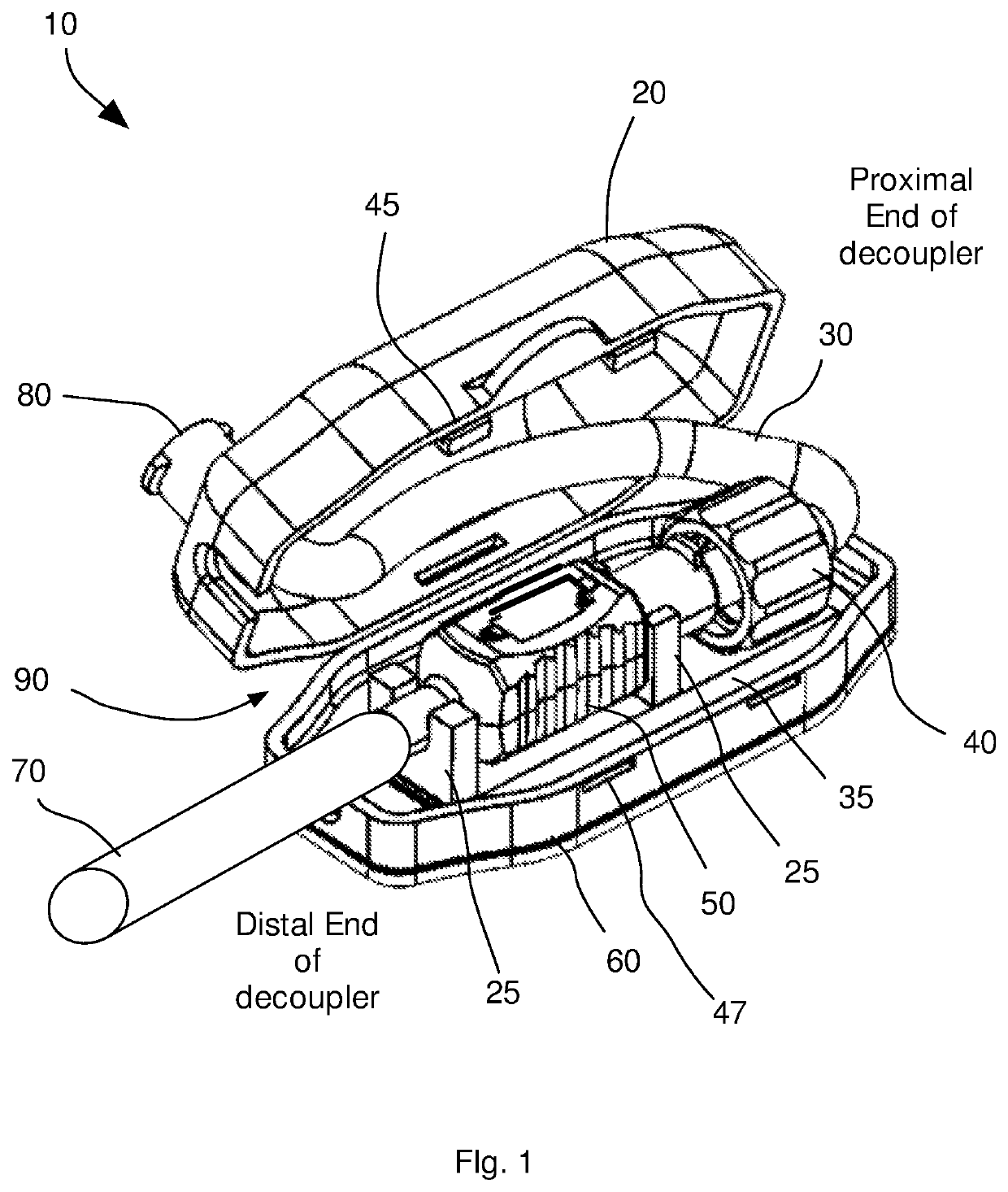
Figure 1 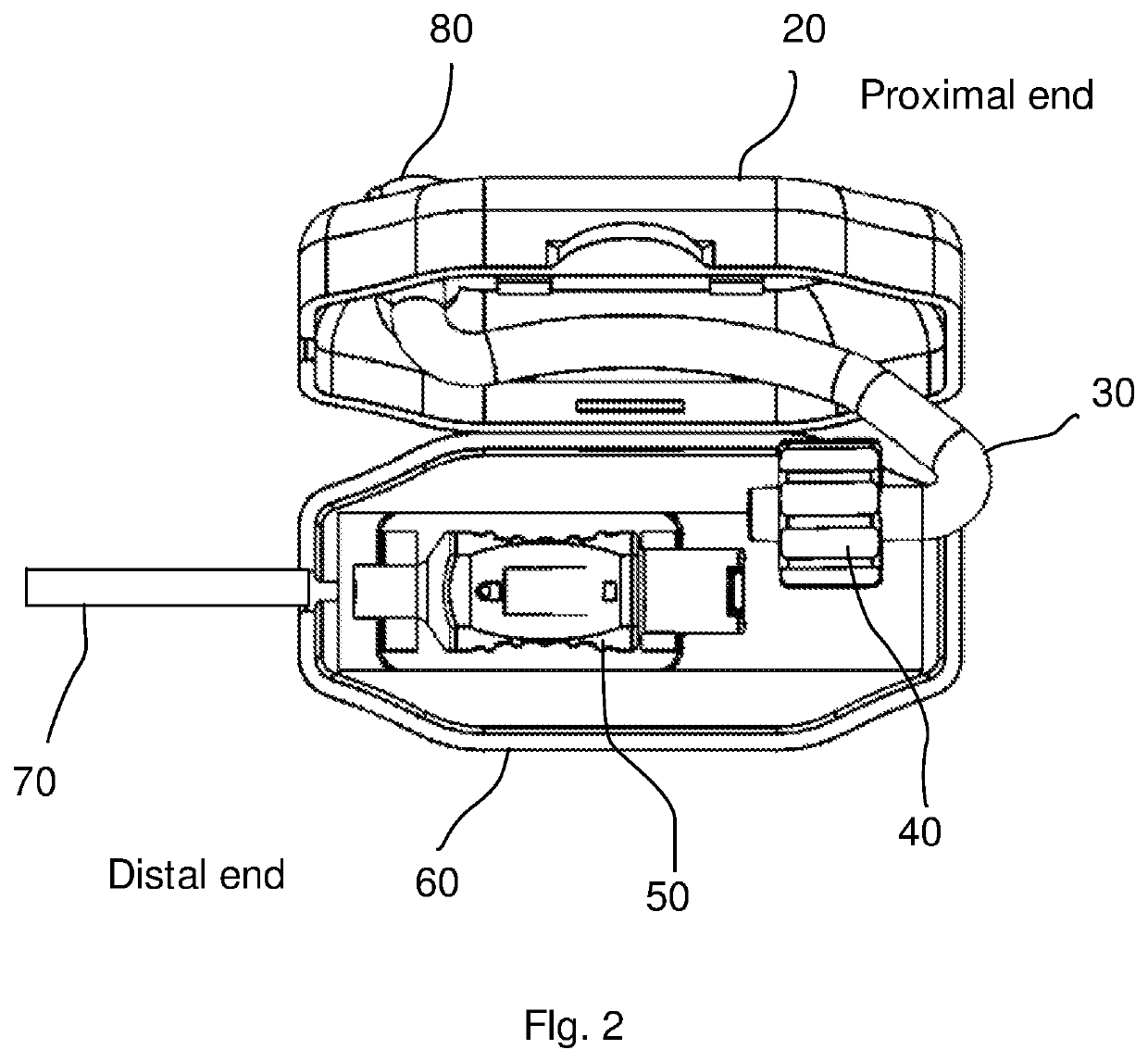
Figure 2 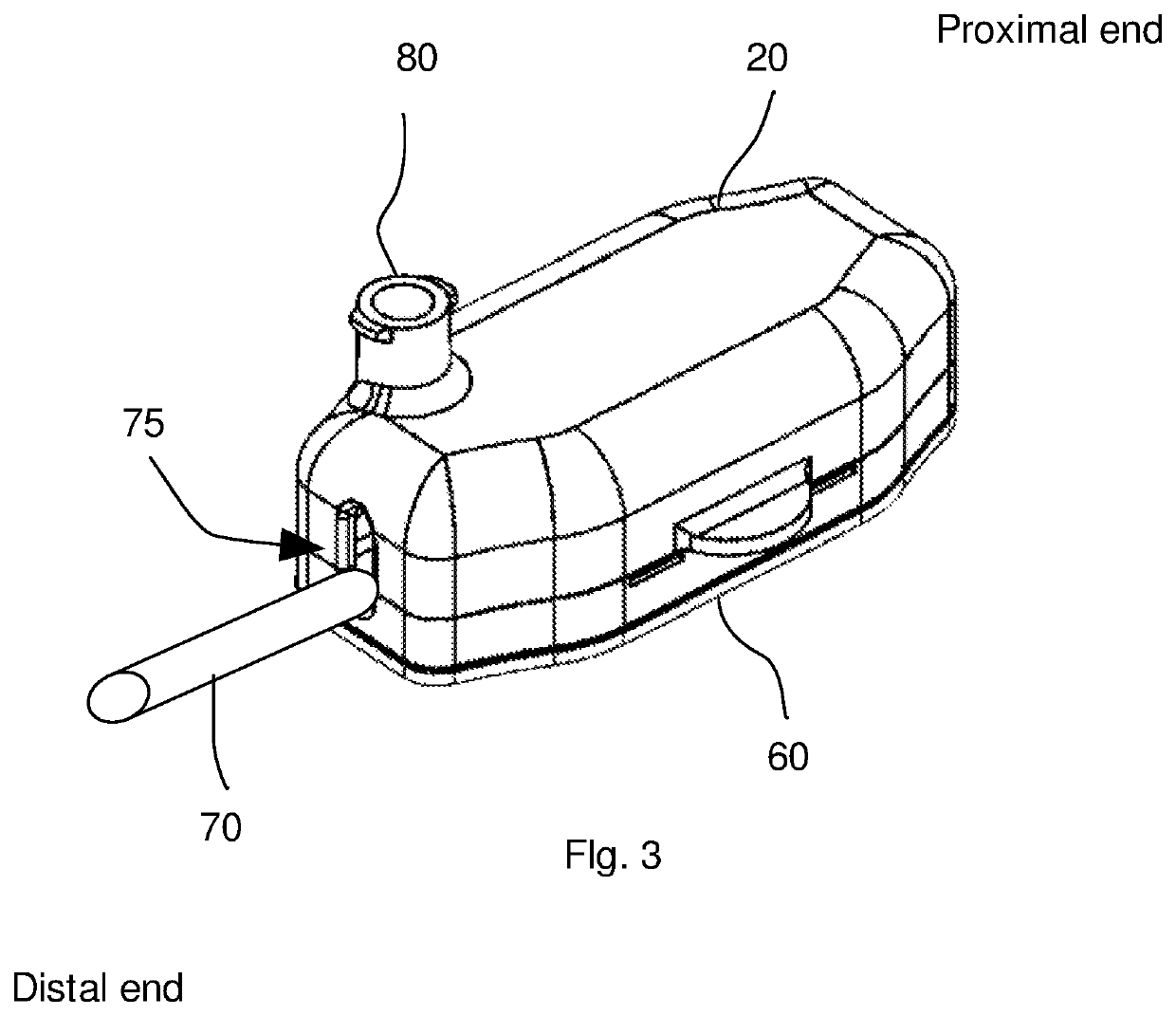
Figure 3
Abstract
Description
[0001] This application is a continuation of PCT / US16 / 19954; filed Feb. 26, 2016, which claims priority to Ser. No. 62 / 121,279; filed Feb. 26, 2015.
[0002] This invention was made with government support under grant 1P50FD003782 awarded by the Department of Health and Human Services. The government has certain rights in this invention.INTRODUCTION
[0003] In the practice of health care, there are numerous procedures where a catheter is placed within the body and is used as a conduit to either deliver therapeutic agents such as but not limited to drugs or to extract bodily fluids such as but not limited to blood. In some cases the catheter is used for both functions; to deliver agents and to extract fluids. In some of these procedures, it is necessary to ensure that the distal tip of the catheter remain stationary or relatively stationary at a particular location within the body. Such situations arise for example when a catheter is used to deliver anesthetic agents to a particular site wit...
Examples
Embodiment Construction
THEREOF
[0036]FIG. 1 illustrates one configuration of the decoupler, 10. This decoupler may be placed proximal to the exit location of an embedded catheter, between the catheter and the utlity tubing or other delivery devices. In this configuration, the catheter 70 may be coupled to a catheter hub 50. The catheter hub 50 may be placed within a sled 25; the distal and the proximal ends of the sled are visible in the figure and are both enumerated as 25. The sled may be positioned on a track 35 such that the sled may have some freedom of movement generally between the proximal end and the distal end of the decoupler. The track may be also so designed that some freedom of motion may be allowed side to side. In some versions, the tracks may be further designed to allow some up and down motion a well. As will be evident as more of the decoupler is described, this freedom of motion imparted to the sled is one component of the design of the decoupler that prevents, minimizes or eliminates m...