
Systems and methods for processing computational workflows
a computational workflow and workflow technology, applied in computing, instruments, drawing from basic elements, etc., can solve the problems of limited scalability, reproducibility, efficiency, and limitations of current state-of-the-art workflow platforms, and achieve the effects of limiting scalability, reproducibility, efficiency, and wide array of analysis methods and complexity
Patent Information
- Authority / Receiving Office
- US · United States
- Patent Type
- Patents(United States)
- Current Assignee / Owner
- Publication Date
- 2020-06-02
Smart Images
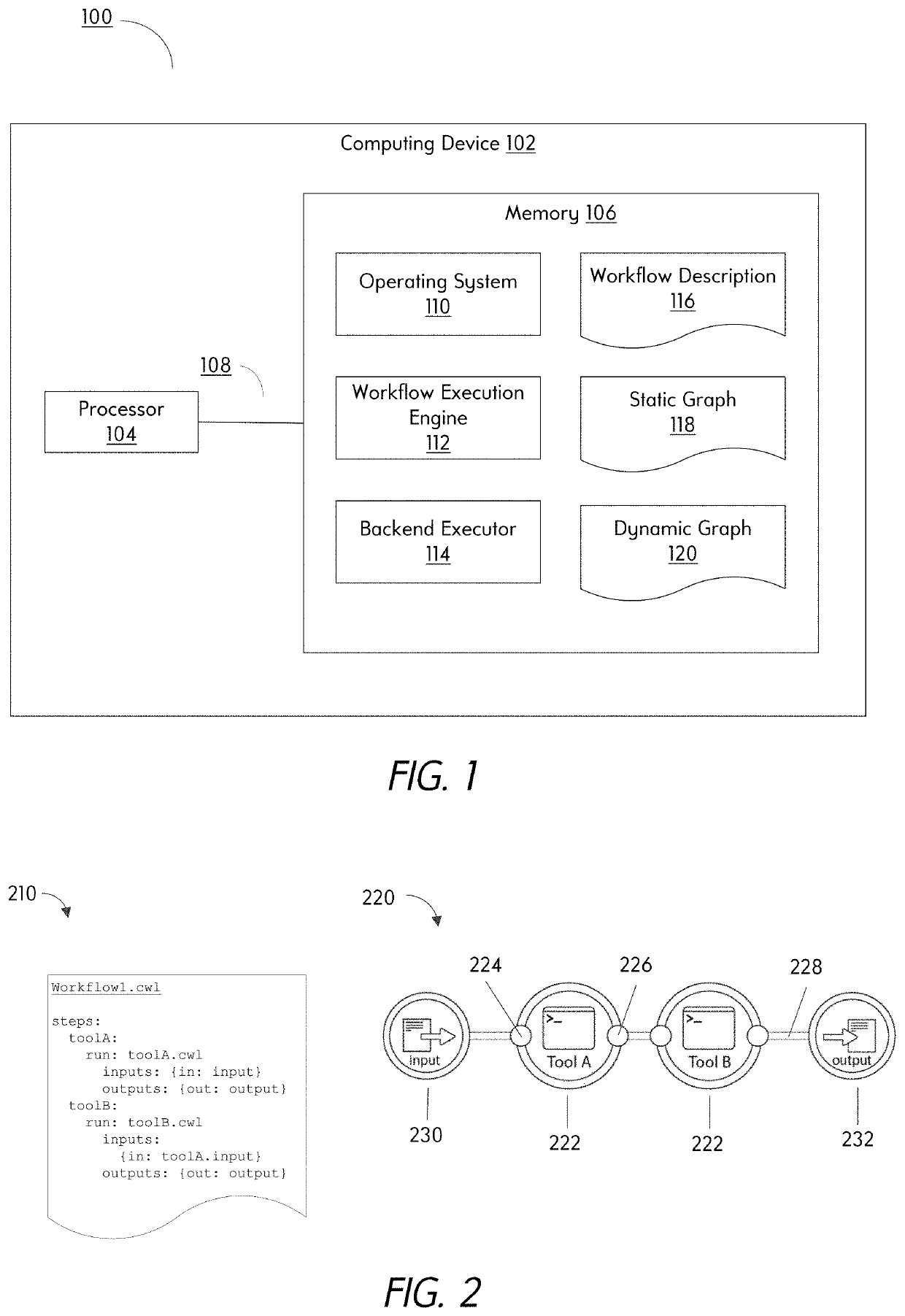
Figure 1 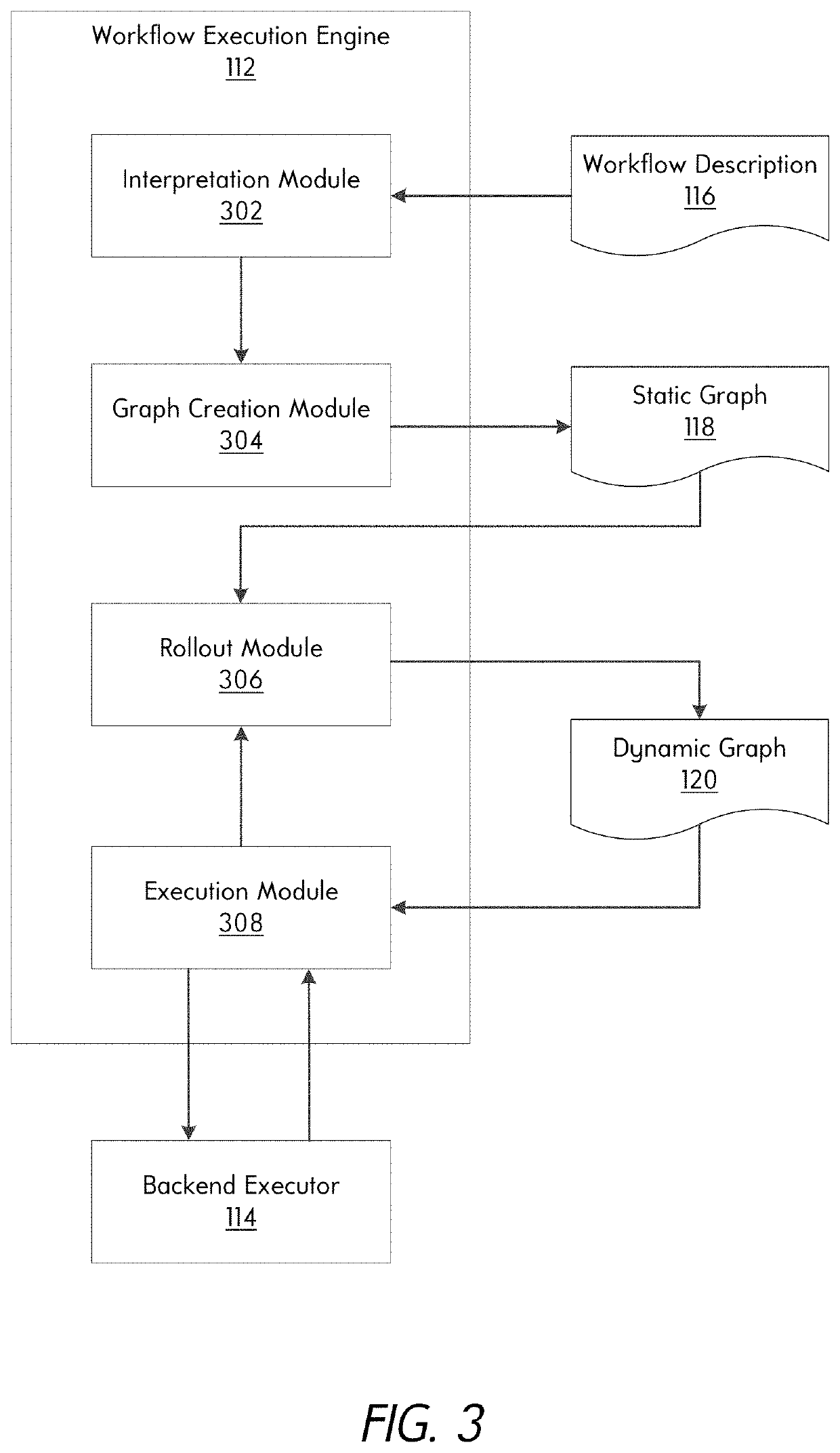
Figure 2 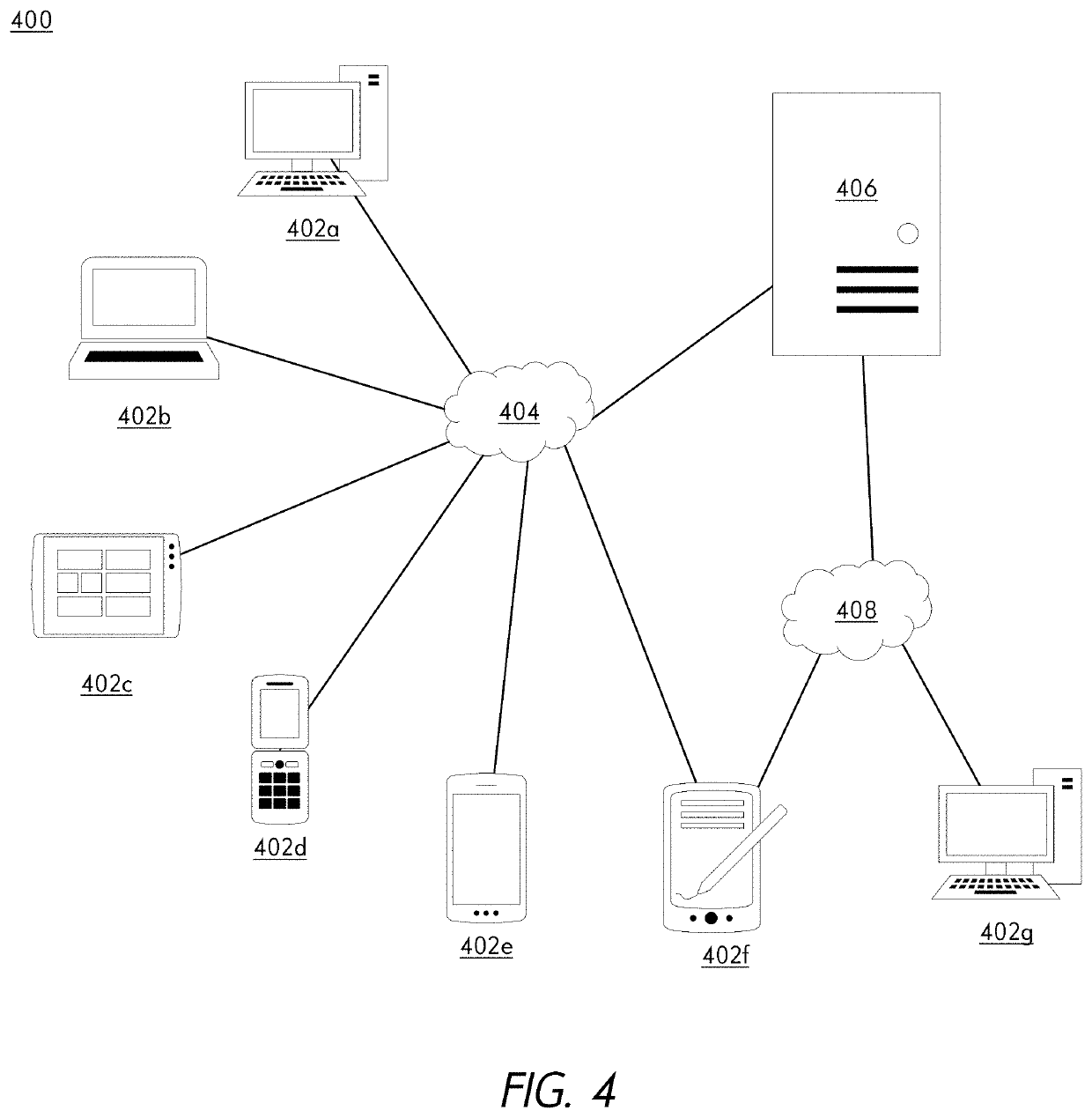
Figure 3
Abstract
Description
CROSS-REFERENCE TO RELATED APPLICATIONS
[0001] This application claims priority from U.S. Provisional Patent Application Ser. No. 62 / 377,275, filed on Aug. 19, 2016, entitled Graph Theory Approaches for Optimizing Biomedical Data Analysis using Reproducible Workflows, the contents of which are hereby incorporated by reference.BACKGROUND
[0002] The completion of the first human reference genome enabled the discovery of the whole catalogue of human genes, ushering in a new era of genomics research to discover the molecular basis of disease. More recently, so-called next generation sequencing (NGS) technologies can now routinely sequence entire genomes within days and for a low cost. The number of fully sequenced genomes continues to grow, and with it our understanding of human genetic variation. For example, the 1000 Genomes Project is an international collaboration that seeks to provide a comprehensive description of common human genetic variation by performing whole-genome sequencing of...
Examples
Embodiment Construction
[0028]Workflow descriptions and the engines that interpret and execute them must be able to support a plethora of computational environments and ensure reproducibility and efficiency while operating across them. In recent years, the concept of organizing data analysis via computational workflows and accompanying workflow description languages has surged in popularity as a way to support the reproducible analysis of massive genomics datasets. However, the inventors have recognized and appreciated that large and complicated computational workflows are often specific for single architectures, preventing their reproducibility on other platforms. Further, a complex ecosystem of workflow languages has developed, preventing interoperability. Moreover, as the complexity of computational workflows increases, it becomes more challenging to optimally compute.
[0029]Robust and reliable workflow systems share three key properties: flexibility, portability, and reproducibility. Flexibility can ref...