
Pneumatic tire
a pneumatic tire and tire technology, applied in the field of pneumatic tires, can solve the problems of insufficient steering stability and difficulty in achieving further weight reduction, and achieve the effects of suppressing the increase in carcass layer mass, reducing the weight of tires, and suppressing the degradation of rigidity and durability
Patent Information
- Authority / Receiving Office
- US · United States
- Patent Type
- Patents(United States)
- Current Assignee / Owner
- Publication Date
- 2021-10-05
Smart Images
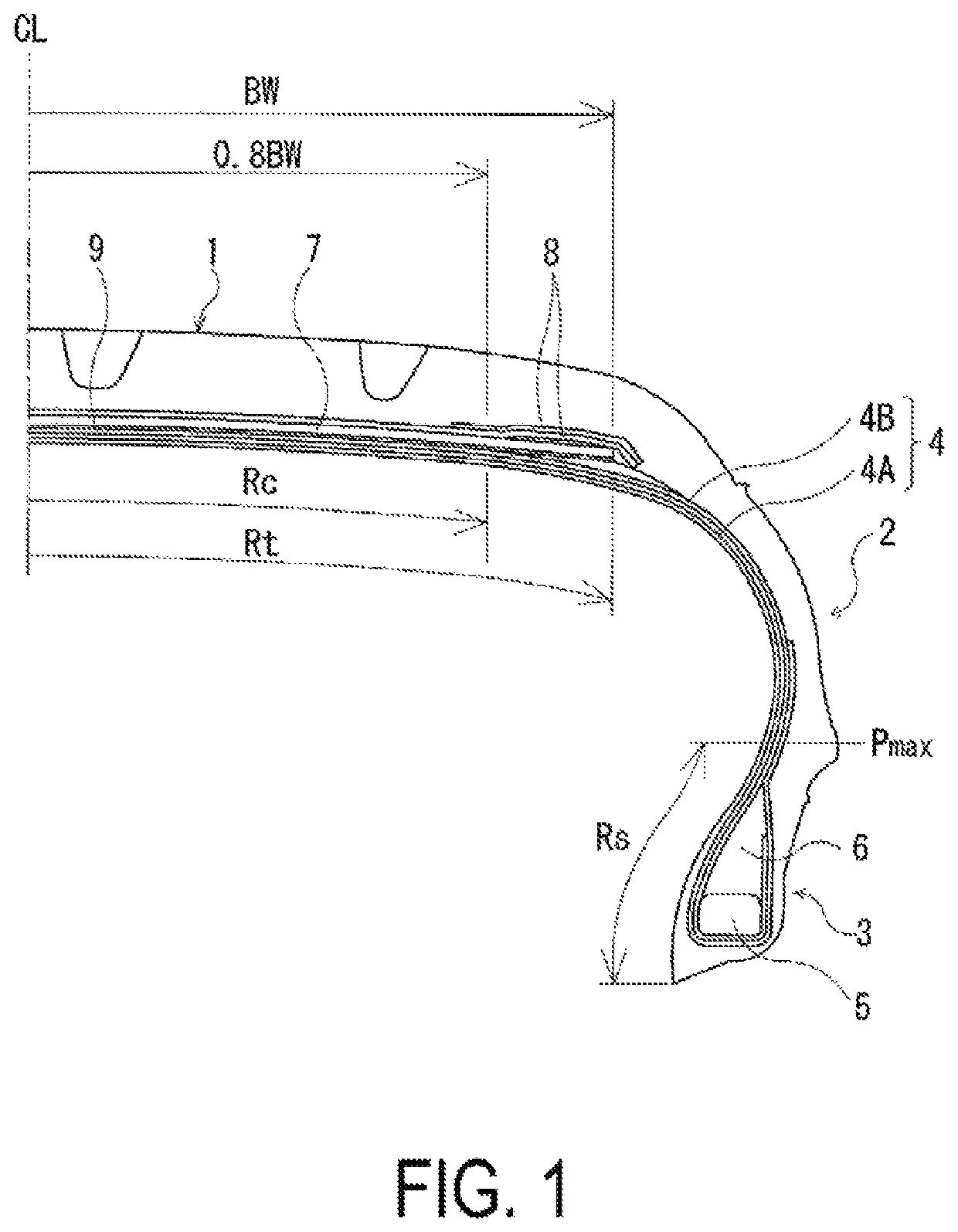
Figure 1 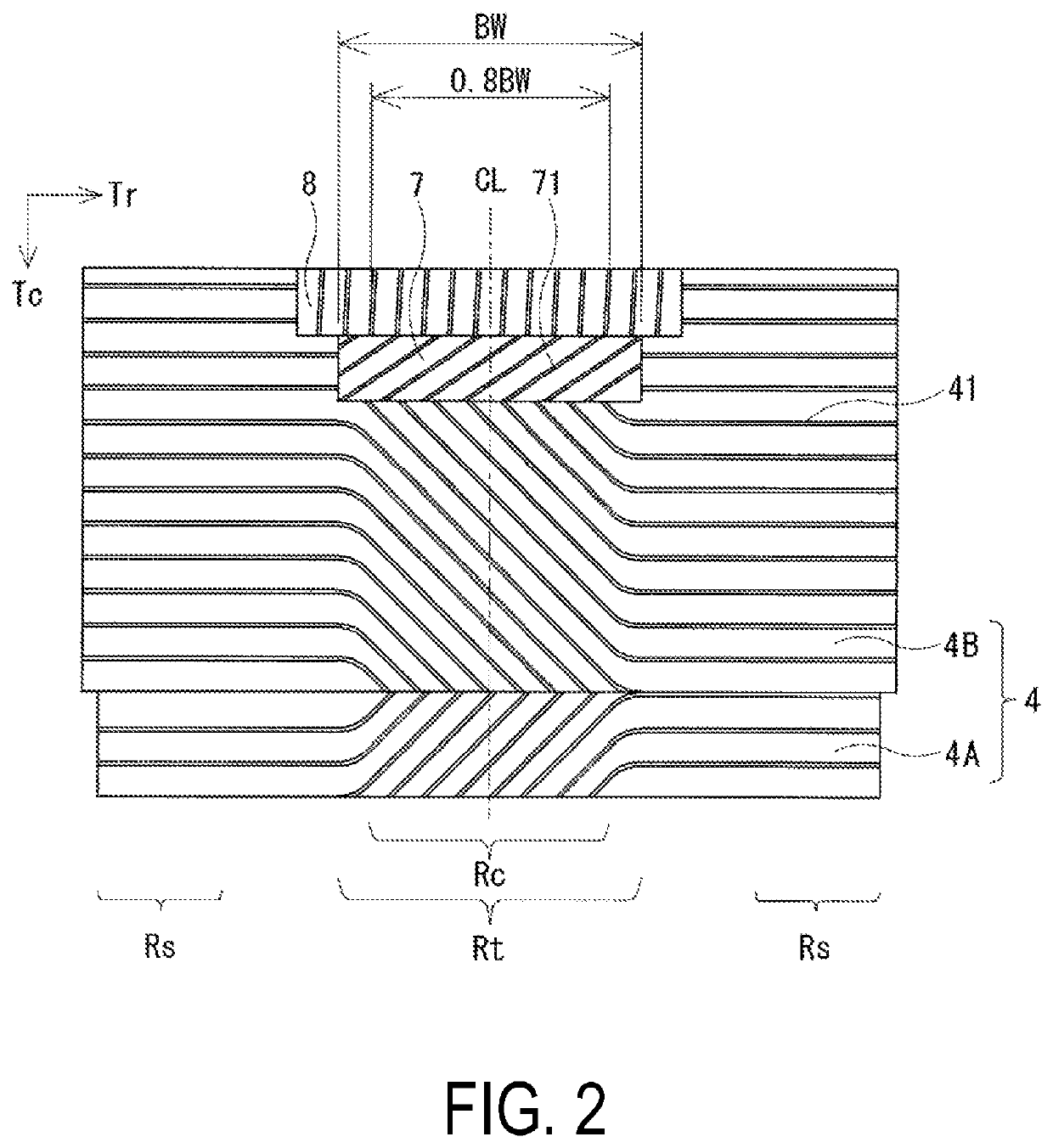
Figure 2 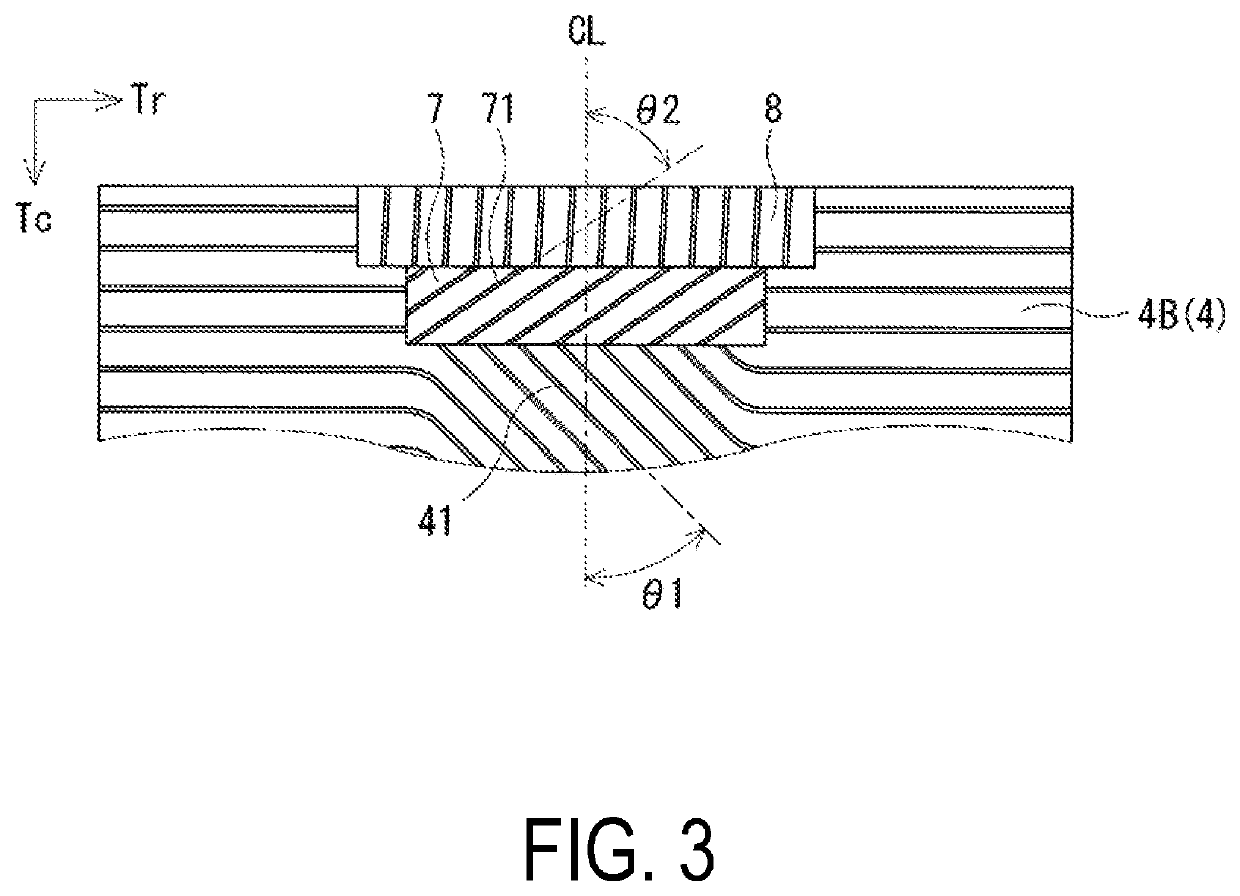
Figure 3
Abstract
Description
TECHNICAL FIELD
[0001] The present technology relates to a pneumatic tire and more particularly relates to a pneumatic tire including a belt layer, in which a carcass layer shares a function of the belt layer to achieve a single-ply belt layer by employing a curved carcass structure in which an angle of a carcass cord continuously changes in a tread region and side regions so that the pneumatic tire can maintain good steering stability and achieve reduction in tire weight.BACKGROUND ART
[0002] Generally, as a method of reducing weight of a tire, the thickness is reduced of rubber used for, for example, a cap tread and sides, which are portions of the tire large in area. However, from the perspective of wear resistance and durability, it is difficult to achieve further reduction in weight with the method of reducing the thickness of each portion of the tire.
[0003] Meanwhile, for reduction in weight of the tire, there have been proposed various types of a tire which does not require an ind...
Examples
examples
[0029]A tire for each of Examples 1 to 4 was manufactured in the following manner. The pneumatic tire had a tire size of 235 / 40R18, and included two carcass layers, and a single belt layer. The carcass layers included a plurality of carcass cords mounted between a pair of bead portions. The belt layer was positioned on an outer peripheral side of the carcass layers of a tread portion, and included a plurality of belt cords inclined with respect to a tire circumferential direction. Also, the carcass cords forming the carcass layers were inclined with respect to the tire radial direction in a tread region, and extended along the tire radial direction in a side region. The carcass cords forming the carcass layers and the belt cords forming the belt layer cross with each other in the tread region.
[0030]In each of Examples 1 to 4, as shown in Table 1, the cord angle in the inner carcass layer in the tread central region, the cord angle in the inner carcass layer in the side region, the c...