

Apparatus and method for placing and tensioning an aerial, rope through a traveler of a power line
a technology of aerial rope and traveler, which is applied in the field of apparatus and a method of tensioning an aerial rope, can solve the problems of high cost of operator, local use permits, and high cost of helicopter equipment, so as to increase the braking force of the tensioning mechanism, the effect of quick connection and disconnecting
Patent Information
- Authority / Receiving Office
- US · United States
- Patent Type
- Patents(United States)
- Current Assignee / Owner
- Publication Date
- 2022-02-22
Smart Images
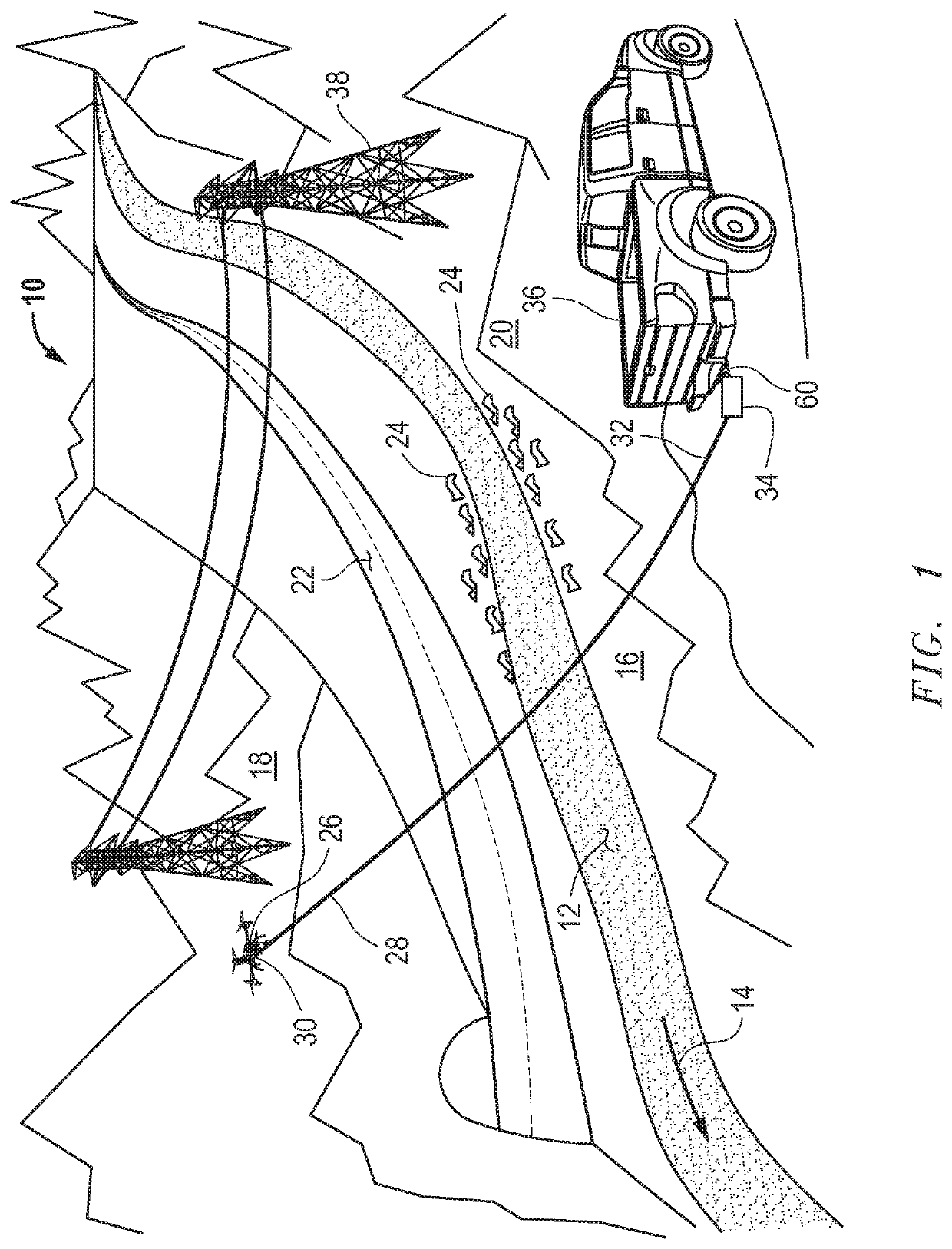
Figure 1 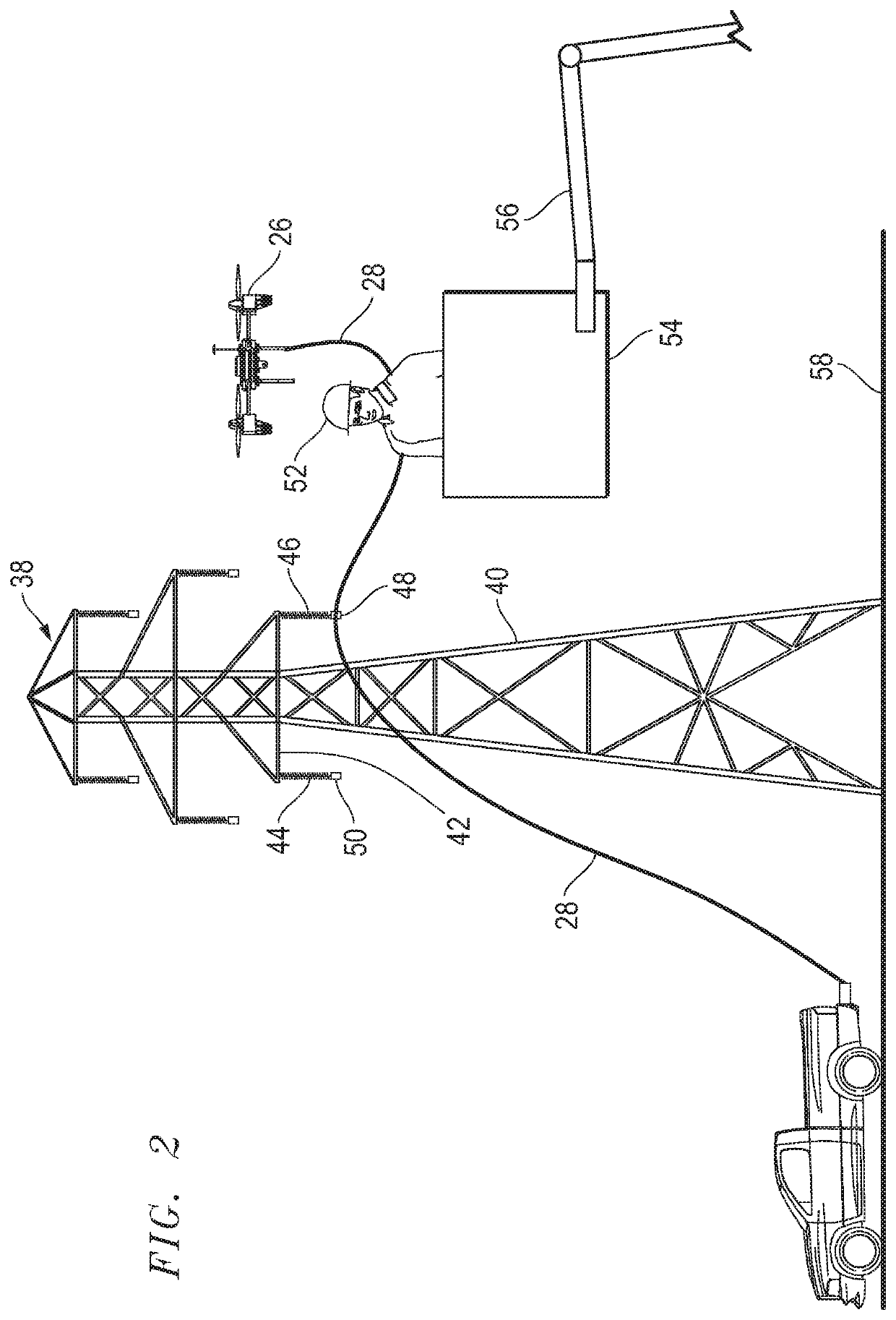
Figure 2 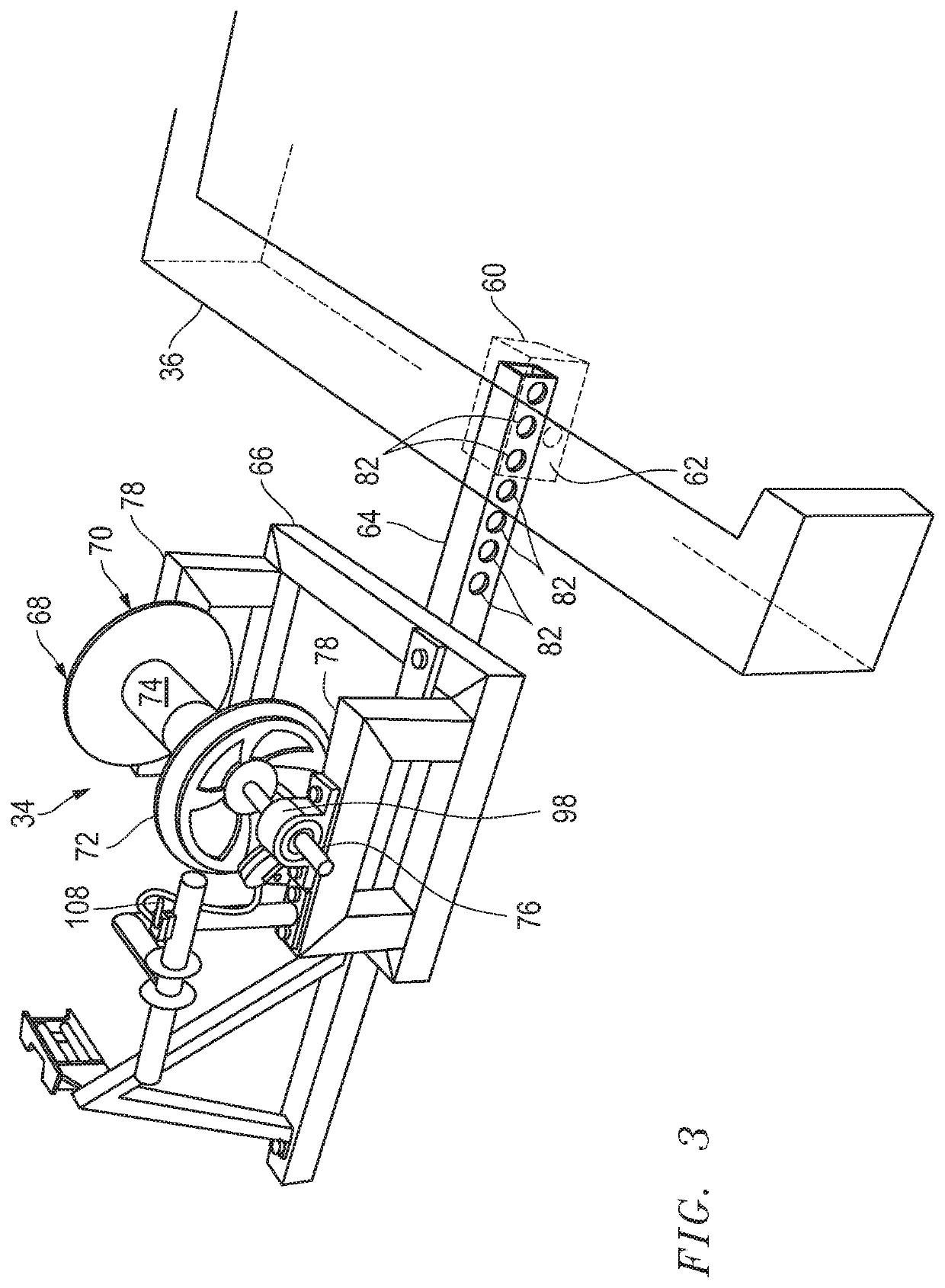
Figure 3
Abstract
Description
STATEMENT REGARDING FEDERALLY SPONSORED RESEARCH OR DEVELOPMENT
[0001] None.FIELD OF THE INVENTION(S)
[0002] This invention relates to an apparatus and a method of tensioning an aerial rope that is attached to an unmanned aerial device, such as a drone.BACKGROUND OF THE INVENTION(S)
[0003] Installing new or replacement de-energized power line conductors may be performed using a variety of known equipment and known methods depending upon the terrain over which, or through which, the power line is to be built or rebuilt. Generally, installing a conductor into its position on a power line tower or other structure involves pulling a rope or cable that is attached to a conductor to be pulled into position. In one example, in the case relatively flat, or open and generally unobstructed Earth terrain, simply pulling a conductor into place using traditional ground-based, or ground-positioned pulling equipment is possible because moving and installing pulling equipment along a generally flat right...
Examples
Embodiment Construction
[0020]Turning now to a detailed description of the present teachings with reference to FIGS. 1-9, features and concepts also may be manifested in other arrangements and so the scope of the teachings is not limited to the embodiments described or depicted in FIGS. 1-9. The following examples of certain embodiments of the teachings are provided. Each example is provided by way of explanation of the teachings, one of many examples of the teachings, and the following examples should not be read to limit, or define, the scope of the teachings.
[0021]FIG. 1 depicts an example of an outdoor landscape 10 with geographical obstacles that must be considered when installing a new electrical conductor into or onto electrical power line towers, whether that conductor is part of new power line tower construction or a replacement conductor into an existing power line tower. For example, outdoor landscape 10 depicts a river 12 that flows in direction 14 through or within a valley 16. On each side of...