
Domestic dishwasher and dishwashing method
a domestic dishwasher and dishwashing technology, applied in the field of domestic dishwashing, can solve the problems of reducing water consumption, reducing water consumption, and reducing the efficiency of the machine, so as to reduce water consumption, reduce water consumption, and improve the effect of performan
Patent Information
- Authority / Receiving Office
- US · United States
- Patent Type
- Patents(United States)
- Current Assignee / Owner
- Publication Date
- 2022-05-24
Smart Images
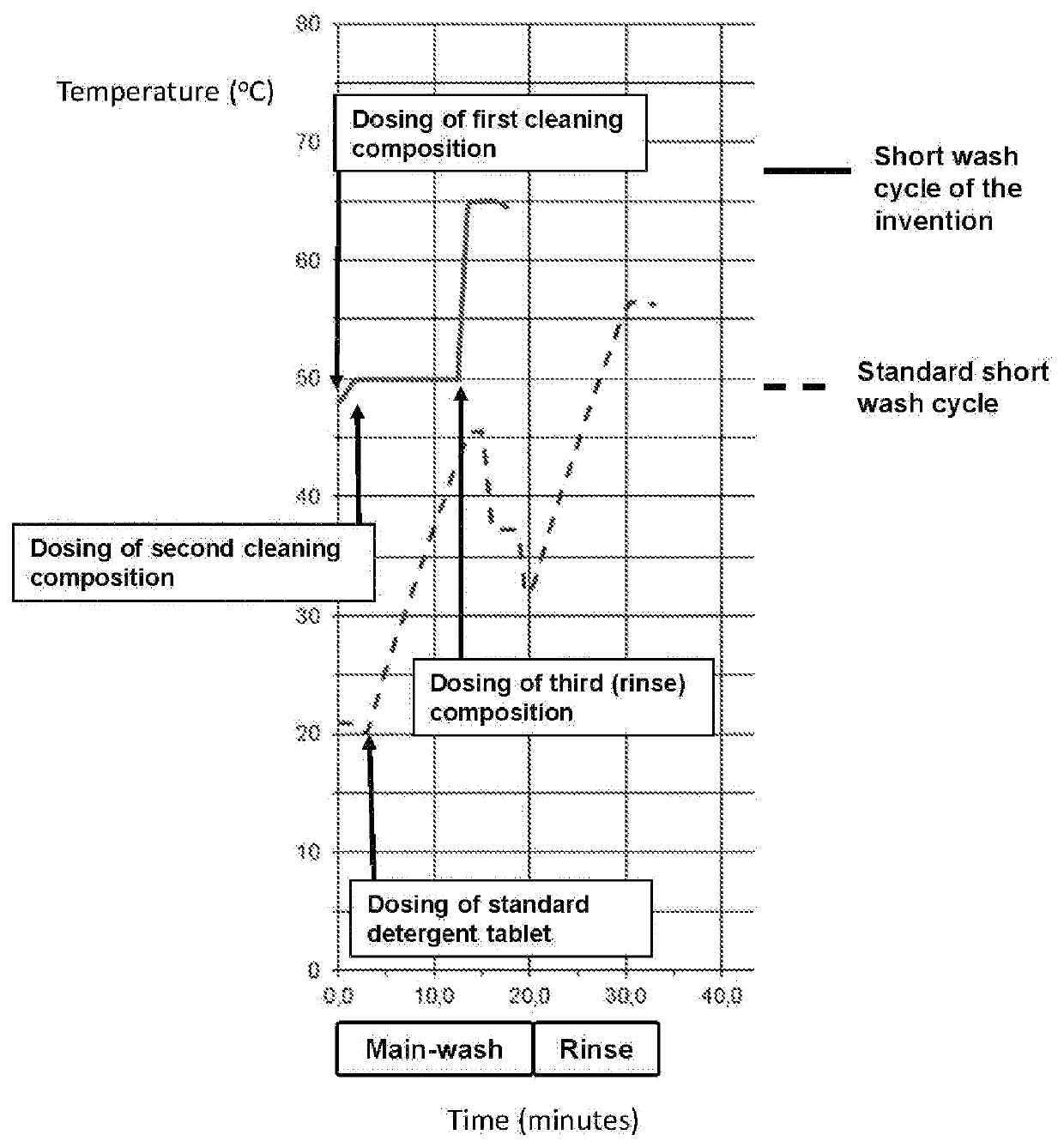
Figure 1 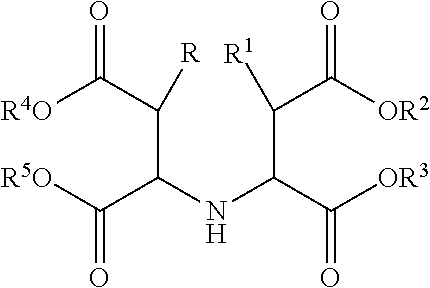
Figure 2
Abstract
Description
CROSS-REFERENCE TO RELATED APPLICATIONS
[0001] This application is a national stage entry of, and claims priority to, PCT / GB2016 / 051264 filed 29 Apr. 2016, which claims priority to GB Patent Application No. 1507289.5 filed 29 Apr. 2015, the disclosures of both of which are herein incorporated by reference in their entireties.TECHNICAL FIELD
[0002] The invention relates to domestic dishwashing, especially by a method which outperforms the current so-called “quick wash” programmes.BACKGROUND
[0003] Automatic dishwashing machines have been present in homes and commercial premises for decades. They offer genuine benefits in terms of speed of cleaning, consistency of cleaning and convenience with respect to manual dishwashing.
[0004] Automatic dishwashing machines are used in both the domestic and commercial / institutional markets, but are designed very differently depending on the intended market. Industrial / institutional markets demand higher size and / or volume of throughput, so their machines ...
Examples
example 1
on Tough Soils
[0093]To demonstrate the present invention, a single-tank domestic dishwasher (Miele G661) was modified with an additional interface allowing the inventors to control the spray arm rotation speed, water temperature and water drainage. The holes of the spray arm of the upper rack were also modified to allow reduced water usage during certain parts of the cycle.
[0094]According to the (2005) IKW method, cups were stained with tea and glass beakers were soiled with burnt-on milk. These were loaded into the dishwasher, along with stainless steel knives and other glasses that had been prepared according to the IKW method for assessing rinse performance.
[0095]The following compositions were prepared:
[0096]First composition:—the following ingredients were dissolved / dispersed in 0.5 litres of 9° dH water: 2.04 g sodium percarbonate, 3.14 g sodium silicate / MGDA co-granule, 0.70 g TAED, 0.84 g HEDP, 6 mg manganese-based bleach catalyst.
[0097]Second composition—the following ingre...
example 2
[0111]Testing was carried out on a series of lightly- and freshly-soiled dishes, simulating a consumer relevant light load. The dishes were washed using the embodiment of the inventive method set out in Example 1, and compared with an equivalent test in which only water was used. The dishes were examined for evidence of redeposition of soils at the end of the tests. These experiments revealed that using water alone with the same wash cycle profile as the invention is insufficient to avoid redeposition. In contrast, when using the specified detergents in the inventive method, redeposition was significantly reduced overall, and completely avoided for some soils.