
System for performing collaborative tasks
a technology for performing collaborative tasks and systems, applied in the field of systems for improving communication, can solve problems such as restricting the usefulness of the system, requiring extensive programming, and difficult and sometimes impossible communication between programming specialists and users
Patent Information
- Authority / Receiving Office
- US · United States
- Patent Type
- Applications(United States)
- Current Assignee / Owner
- Publication Date
- 2004-09-23
- Estimated Expiration
- Not applicable · inactive patent
Smart Images
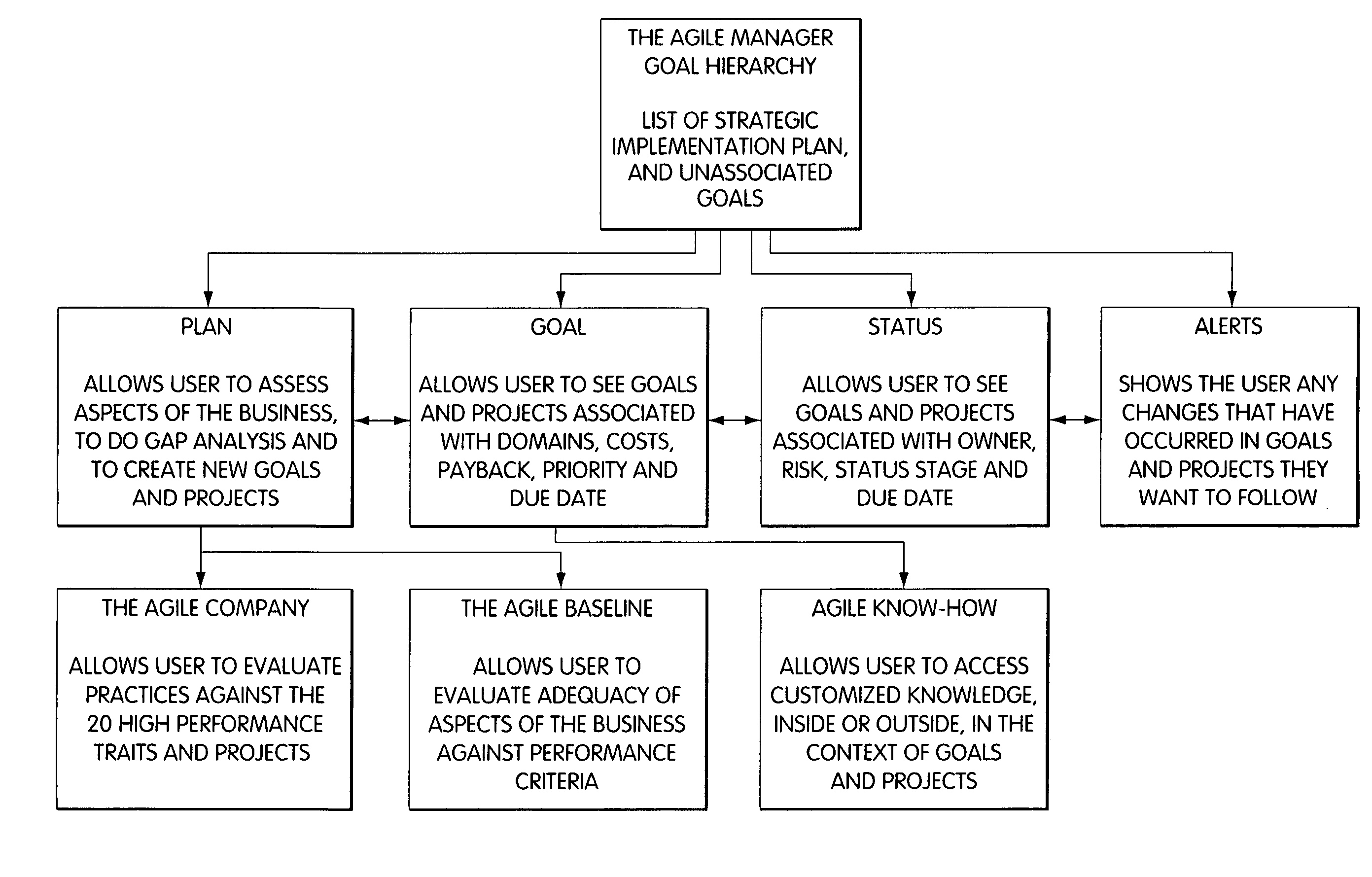
Figure 1 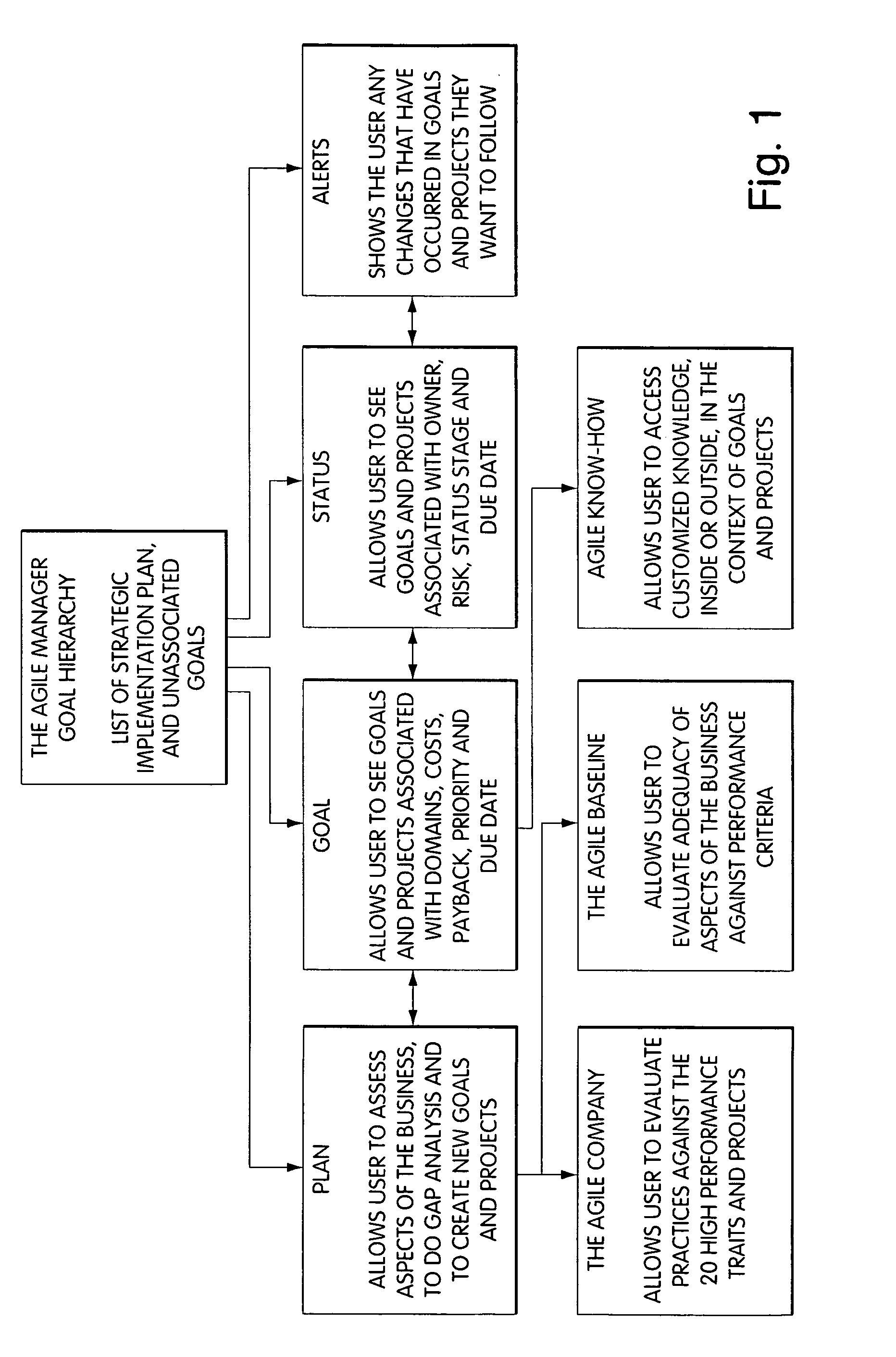
Figure 2 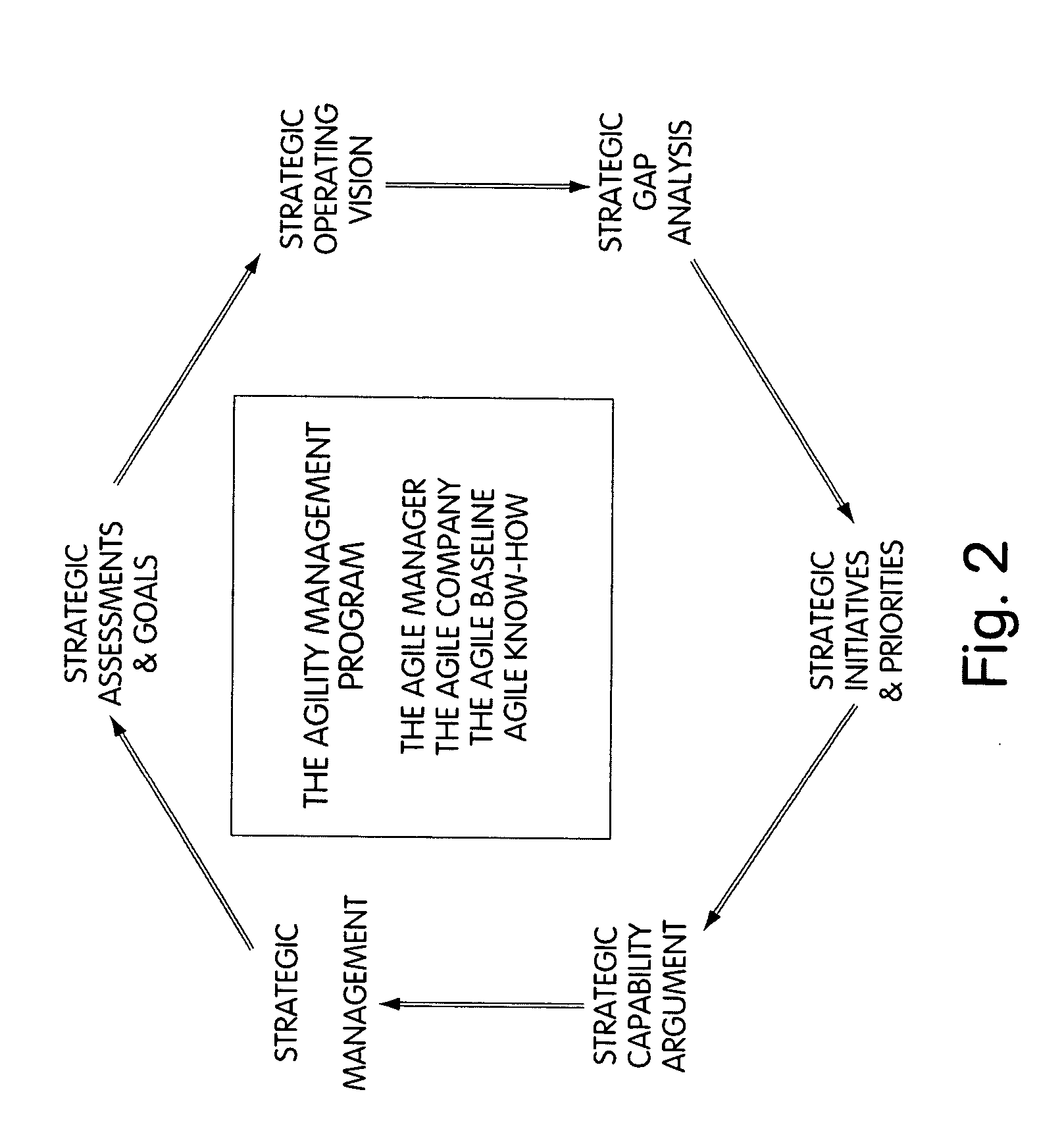
Figure 3
Abstract
Description
[0001] The present patent application is a continuation-in-part of U.S. Ser. No. 09 / 312740, Douglas F. Beaven, Processing management information, filed May 14, 1999 and claiming priority from U.S. provisional patent application No. 60 / 133,152, having the same title as U.S. Ser No. 09 / 312740 and having a filing date of May 7, 1999. The present patent application contains the entire Detailed Description of U.S. Ser. No. 09 / 312740. The additional material in the Detailed Description begins in the section The models used in the parent of the present patent application: FIG. 40. The present application and the parent have the same assignee and the complete parent application is incorporated by reference into the present patent application for all purposes.
[0002] 1. Field of the Invention
[0003] The invention relates generally to systems for improving communication among people who are collaborating in the performance of a task and more specifically to such systems which are implemented by...
Examples
Embodiment Construction
4101: FIG. 42
[0207] In a preferred embodiment of the system for collaborative work, the model which provides a context for the collaborative work is defined by tables in a standard commercial relational database system produced by Oracle Corp., Redwood City, Calif. In relational database systems, the data is stored in tables. A table is made up of rows and columns. Each row has a field for each of the columns. A column specifies a kind of data value and a row represents an entity which has values of the kinds specified by the column. For example, in a table for storing personal information, the columns might be called last_name, first_name, m_i, street_addr, and so forth, with each row representing a person and the fields in the row having the appropriate values for that person. The values of certain of the fields in the row may uniquely identify the row in the table. Such values are termed keys for the rows.
[0208] FIG. 42 shows the tables that are relevant to models such as the one...