
Brand value management
a brand value and value technology, applied in the field of marketing, can solve the problems of companies that believe their company cannot effectively measure the ROI of campaigns, and achieve the effects of increasing brand value, optimizing profits, and efficiently and effectively
Patent Information
- Authority / Receiving Office
- US · United States
- Patent Type
- Applications(United States)
- Current Assignee / Owner
- Publication Date
- 2005-09-22
- Estimated Expiration
- Not applicable · inactive patent
Smart Images
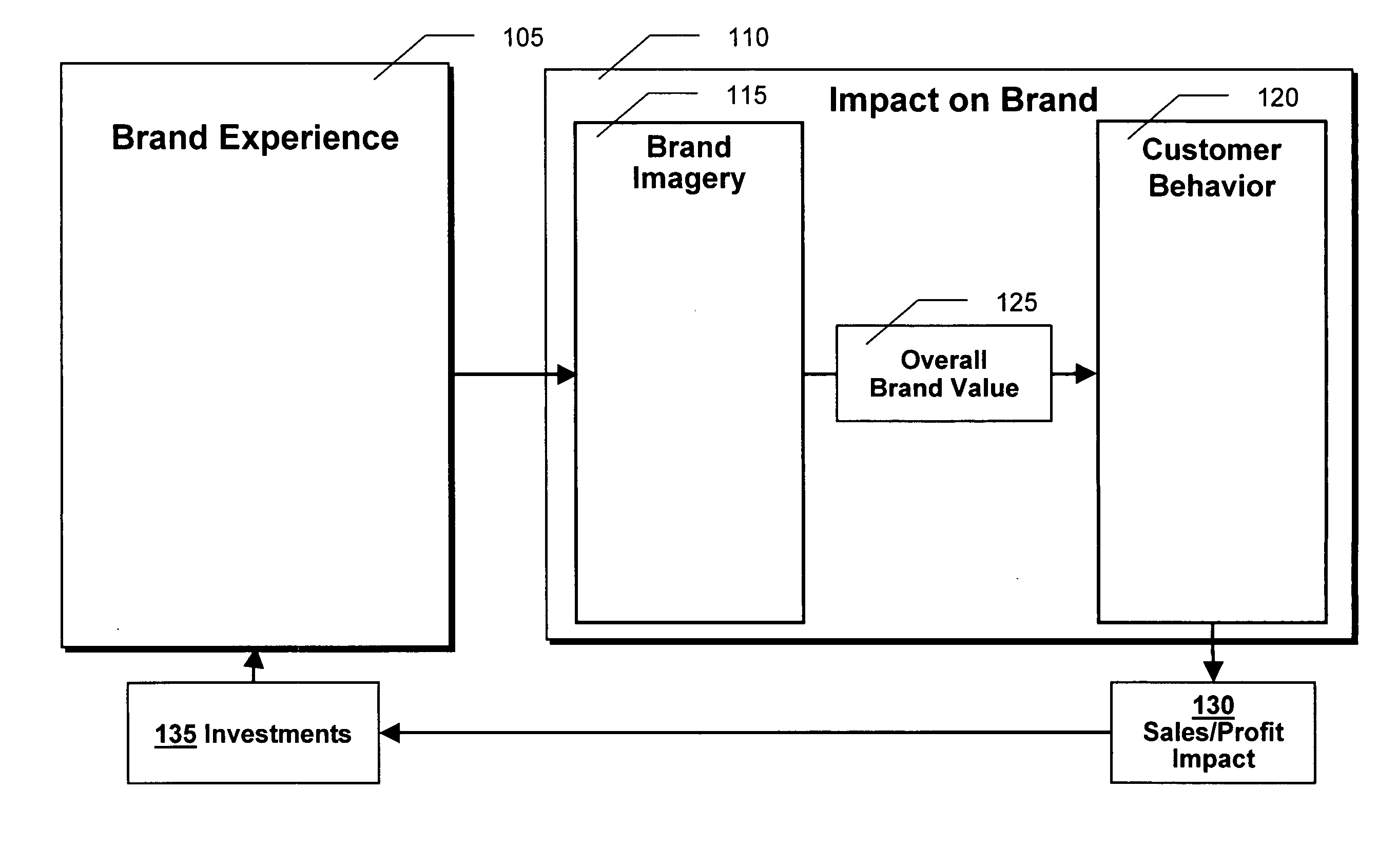
Figure 1 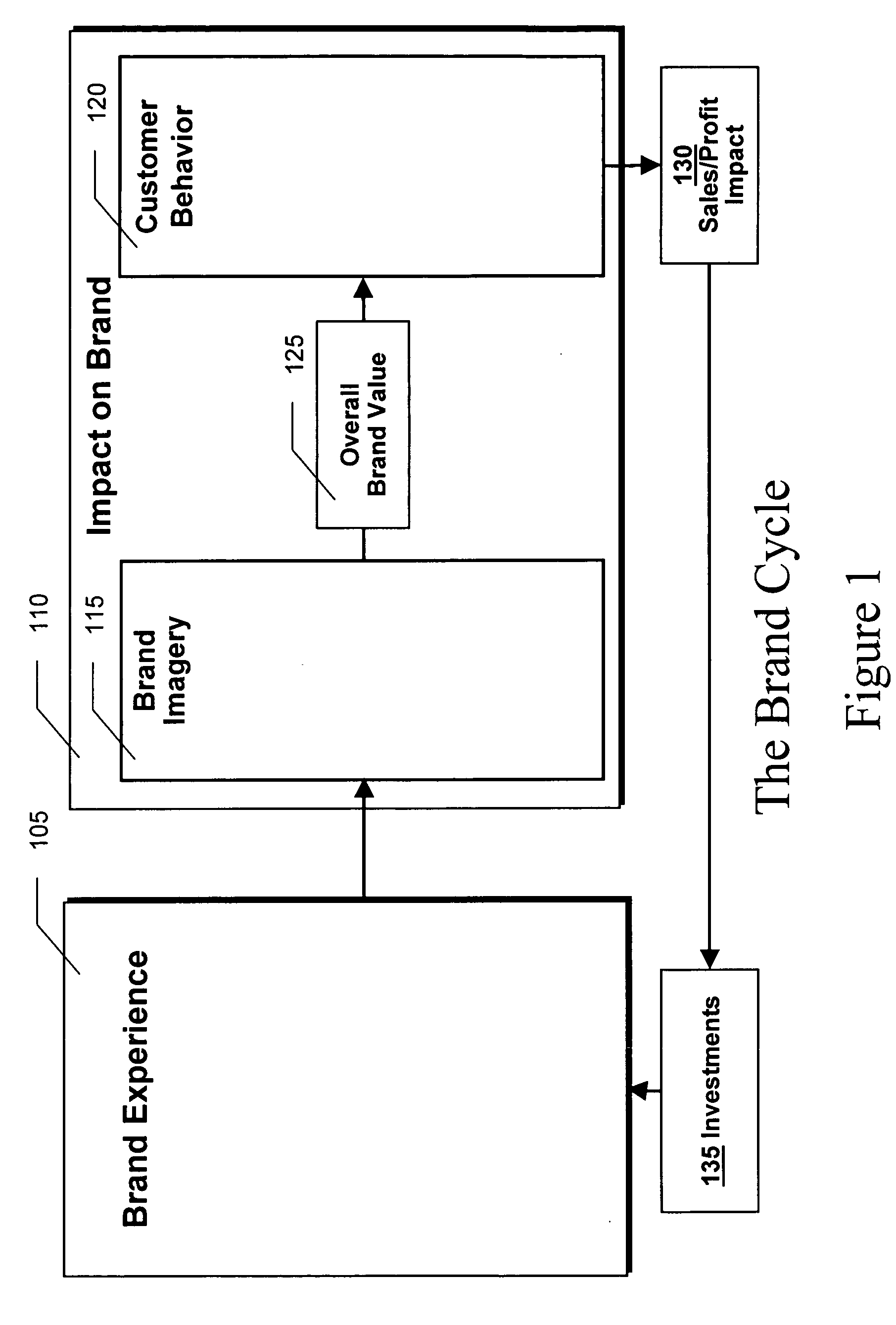
Figure 2 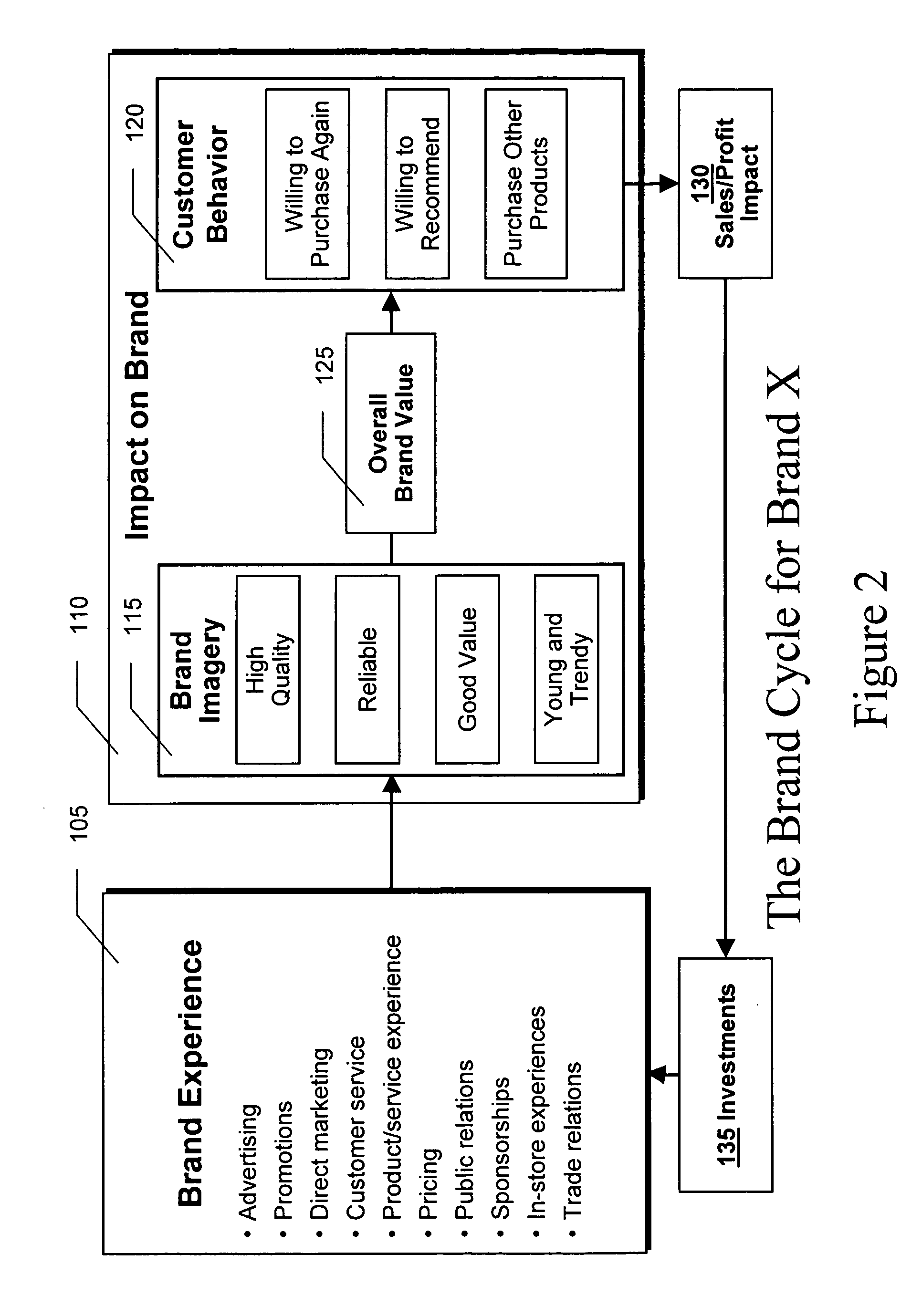
Figure 3
Abstract
Description
BACKGROUND OF THE INVENTION
[0001] This invention relates to marketing, and specifically to a method of combining several computer-based modeling techniques to evaluate the drivers of brand value, to quantify the impact of brand development activities, and to drive brand investment decisions that may optimize business performance and value creation.
[0002] Brand value management requires understanding how all interactions with customers—not just advertising or trademarked logos—contribute to customers' perception of the brand and as a result, have an impact on the company's brand value. Brand value management helps brand owners to answer some critical questions, such as:
[0003] What is driving the value of the brand?
[0004] How much of a premium price (if any) can the brand command?
[0005] How much does the brand affect customer choice?
[0006] Is it worth investing more in the brand?
[0007] Where should money be spent in order to maximize value?
[0008] Generally speaking, brand value man...
Examples
Embodiment Construction
[0021] There are several ways to conceptualize a brand, its relationship in the market, and its dependence on customer opinion. FIG. 1 is a diagram showing one such conceptualization, referred to as “The Brand Cycle.” As the figure demonstrates, brand experiences 105 may have an impact on a brand 110. The impact may be the formulation of one or more images for the brand 115 by customers. These images may be positive, negative, or neutral. The totality of the brand's image may form the basis of its value 125. The behavior of customers may be affected by their perception of the brand 120. Customer behavior may then impact the company's sales and profit 130, which can then be funneled back into the marketing cycle as investments 135 to invest in capabilities that may further impact customers' experience with the brand. When speaking of the cycle shown in FIG. 1, a customer may be a consumer in a B2C transaction or a business in a B2B transaction.
[0022] While FIG. 1 shows the brand cyc...