
Bacteria-based and enzyme-based mechanisms and products for viscosity reduction breaking of viscoelastic fluids
a technology of viscoelastic fluid and gelled fluid, which is applied in the direction of biological water/sewage treatment, water/sludge/sewage treatment, chemical apparatus and processes, etc., can solve the problems of fluid deformation, complex development of suitable fracturing fluid, and inability to close or heal completely cracks or fractures, etc., to reduce the viscosity of ves-gelled fluid.
Patent Information
- Authority / Receiving Office
- US · United States
- Patent Type
- Applications(United States)
- Current Assignee / Owner
- Publication Date
- 2006-12-14
- Estimated Expiration
- Not applicable · inactive patent
Smart Images
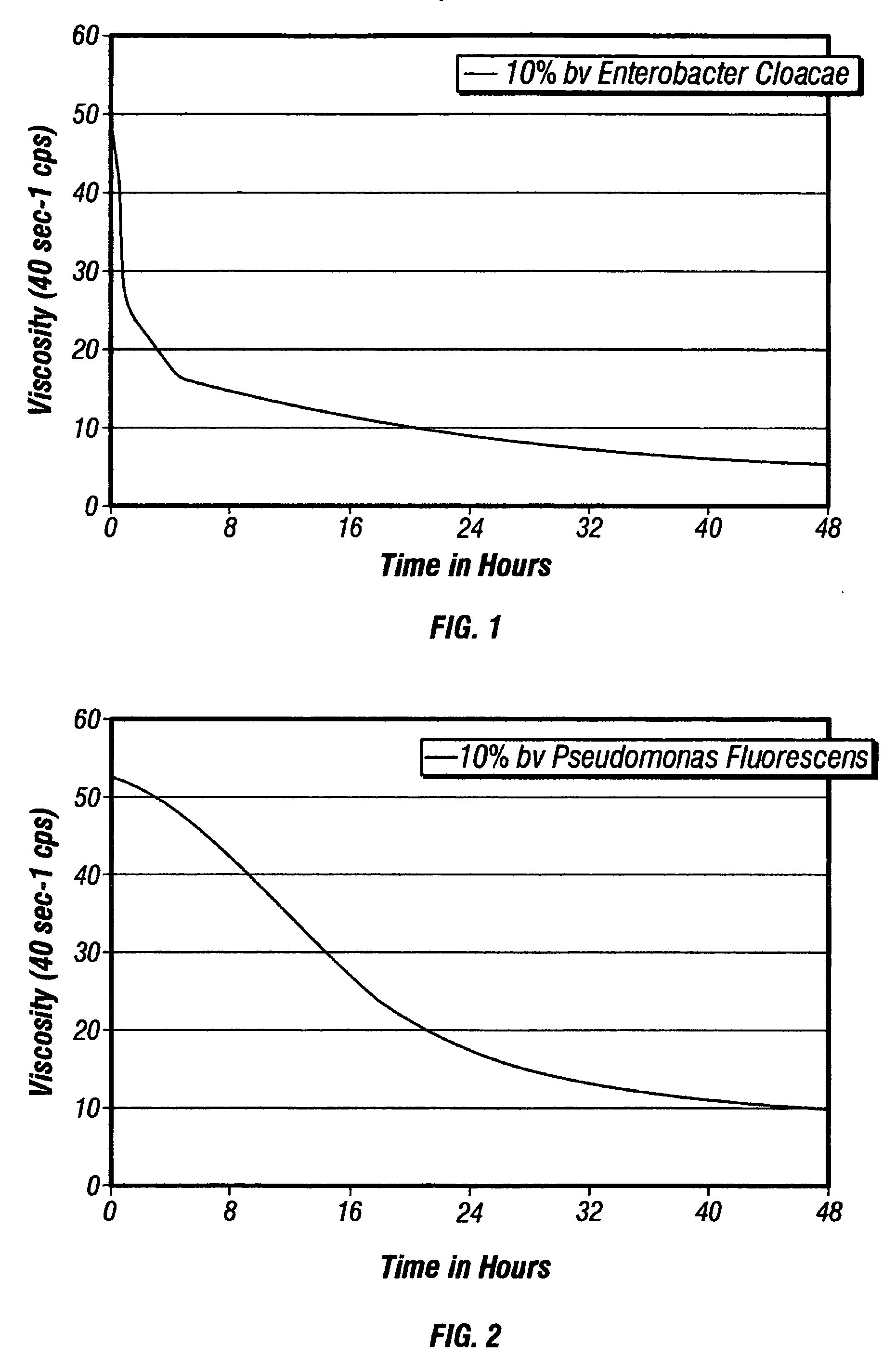
Figure 1 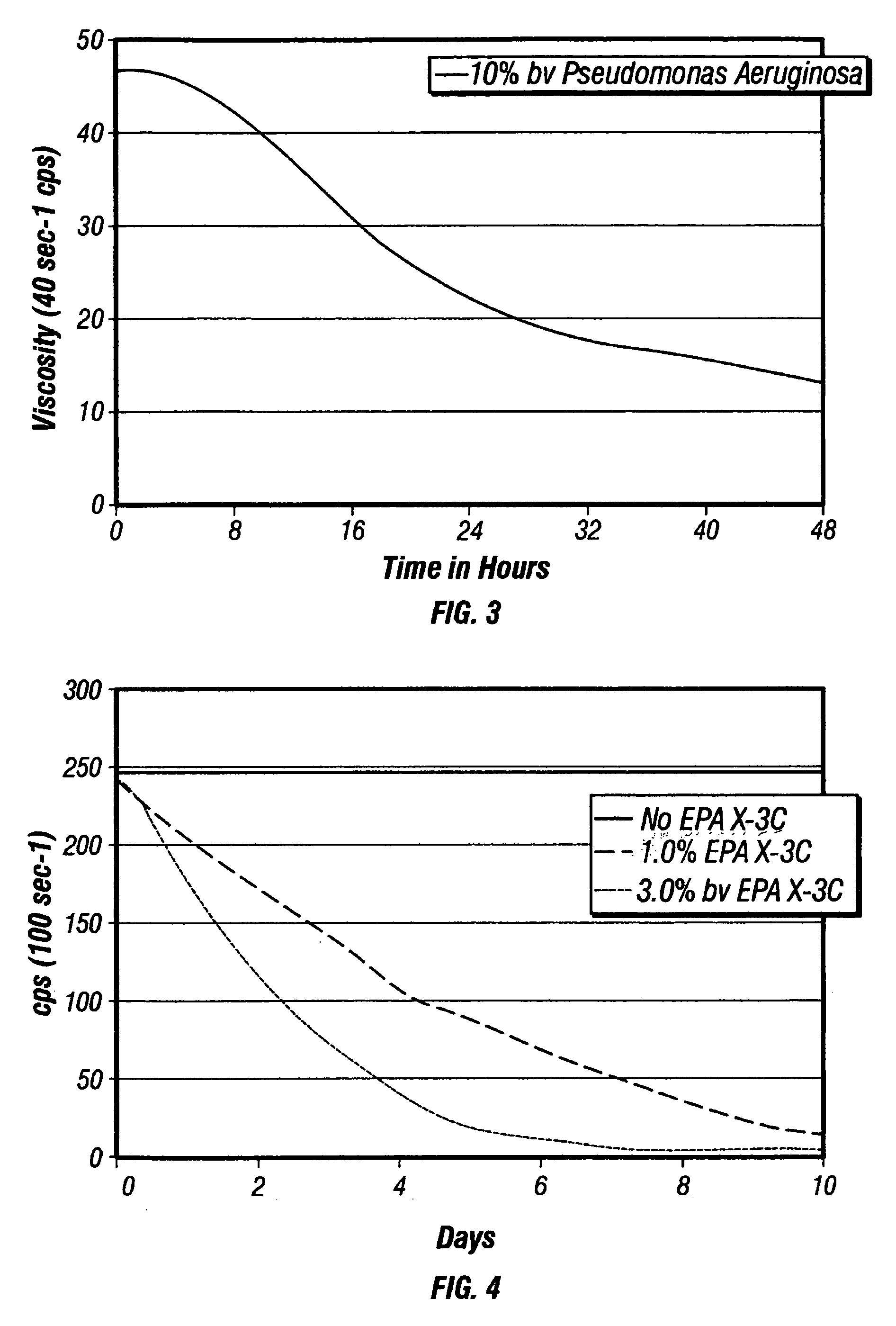
Figure 2 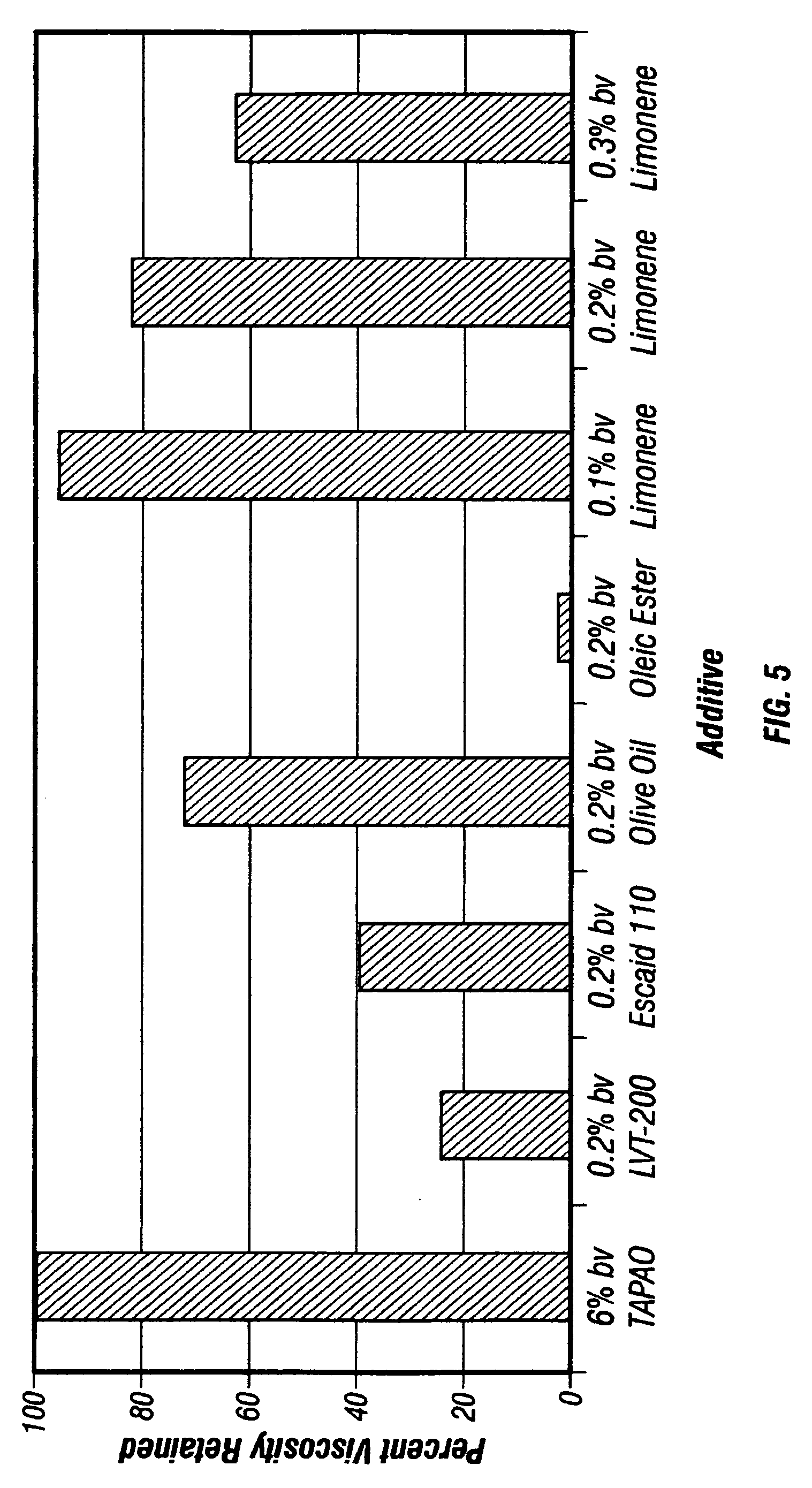
Figure 3
Abstract
Description
CROSS-REFERENCE TO RELATED APPLICATION
[0001] This application is a divisional application of U.S. Pat. No. 7,052,091 issued May 30, 2006, which in turn claims the benefit of U.S. provisional application No. 60 / 244,804 filed Oct. 31, 2000.FIELD OF THE INVENTION
[0002] The present invention relates to gelled treatment fluids used during hydrocarbon recovery operations, and more particularly relates, in one embodiment, to methods of “breaking” or reducing the viscosity of aqueous treatment fluids containing viscoelastic surfactant gelling agents used during hydrocarbon recovery operations. BACKGROUND OF THE INVENTION
[0003] Hydraulic fracturing is a method of using pump rate and hydraulic pressure to fracture or crack a subterranean formation. Once the crack or cracks are made, high permeability proppant, relative to the formation permeability, is pumped into the fracture to prop open the crack. When the applied pump rates and pressures are reduced or removed from the formation, the c...
Examples
examples 1-3
[0065]FIGS. 1-3 show the results of Examples 1-3, respectively, charting the effects of using the indicated bacteria at 10% by volume concentrations. It may be seen that the SurFRAQ viscosity broke most quickly with Enterobacter colacae, losing most of its viscosity in the first 2-3 hours (Ex. 1, FIG. 1). Viscosity reduction was also more complete in this Example 1. Pseudomonas fluorescens (Ex. 2, FIG. 2) and Pseudomonas aeruginosa (Ex. 3, FIG. 3) gave viscosity reduction as well, but more gradually than Enterobacter colacae. All Examples were run using 2% TAPAO in 3% KCl. Example 1 (FIG. 1) was conducted at 125° F. (52° C.); Examples 2 and 3 (FIGS. 2 and 3, respectively) were conducted at 75° F. (24° C.).
Examples 4 AND 9
[0066]FIGS. 4 and 9 show the results of Examples 4 and 9, respectively. Both Examples use 6.0% bv TAPAO surfactant at 180° F. (82° C.) and 950 psi (6.5 kPa) on a Fann 50 rheometer. Both compositions contained 3% KCl. The order of mixing was: DI water, KCl, NH4NO3, ...
examples 5-8
[0068]FIGS. 5-8 show the results of Examples 5-8, respectively, charting the effects of various bacteria or microbe nutrients on 6% bv TAPAO surfactant at 180° F. (82° C.) and 950 psi (6.5 kPa). It may be seen that proper selection of microbe nutrient is possible that has minimal effects on the TAPAO viscosity.
[0069] All of Examples 5-8 used a Fann 50 rheometer at 180° F. (82° C.) at 400 psi (2.8 kPa). Examples 5-7 used 6% TAPAO, 3% KCl, 30 pptg (3.4 kg / m3) NH4PO3 and NH4NO3 combined, and 20.0 pptg (2.4 kg / m3) TSB. Example 8 used 6% TAPAO and 3% KCl with the indicated additives. EGMBE in Example 6 refers to ethylene glycol monobutyl ether.