
System and method for wireless network content conversion for intuitively controlled portable displays
Patent Information
- Authority / Receiving Office
- US · United States
- Current Assignee / Owner
- Publication Date
- 2007-03-15
- Estimated Expiration
- Not applicable · inactive patent
Smart Images
Figure 1 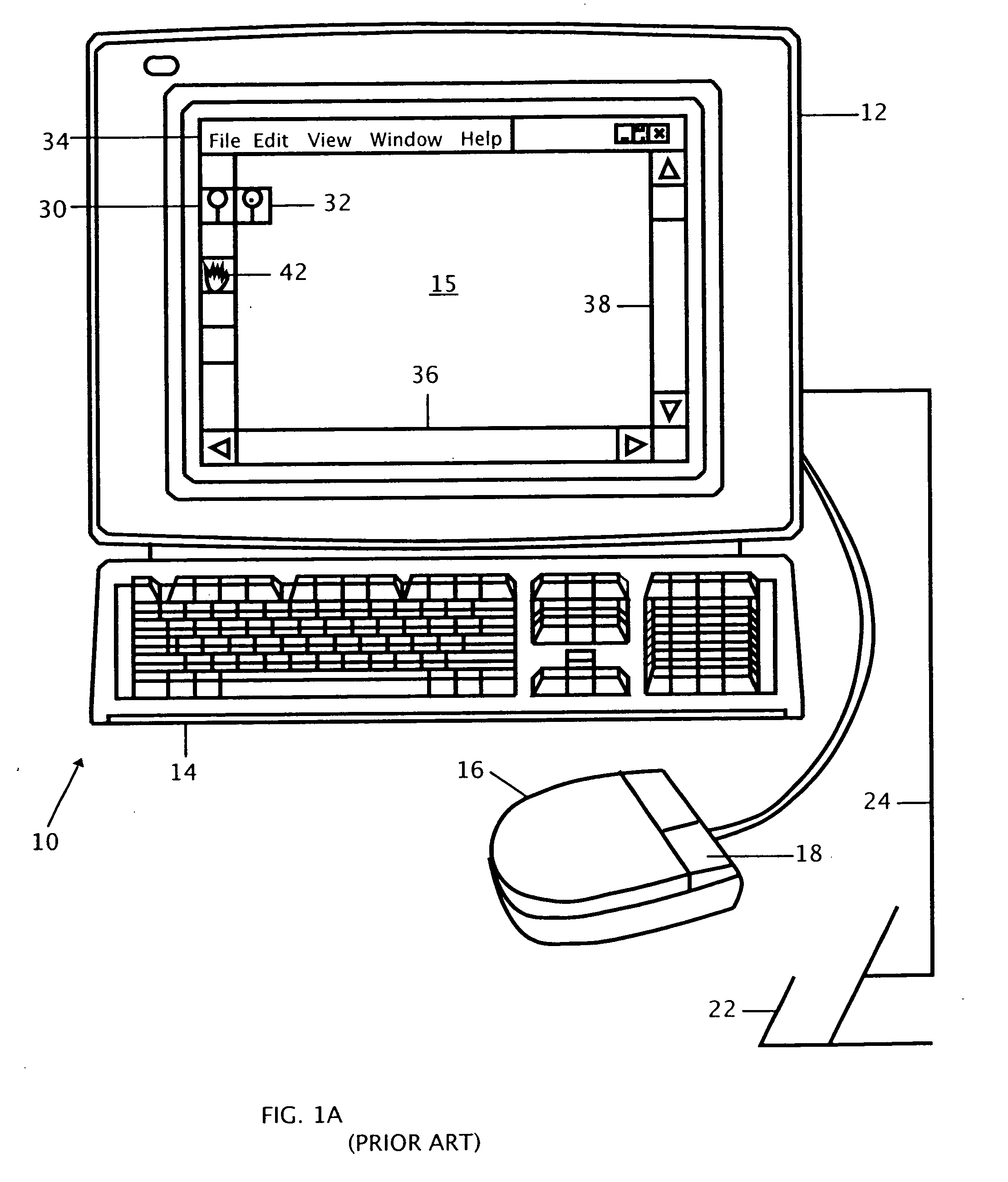
Figure 2 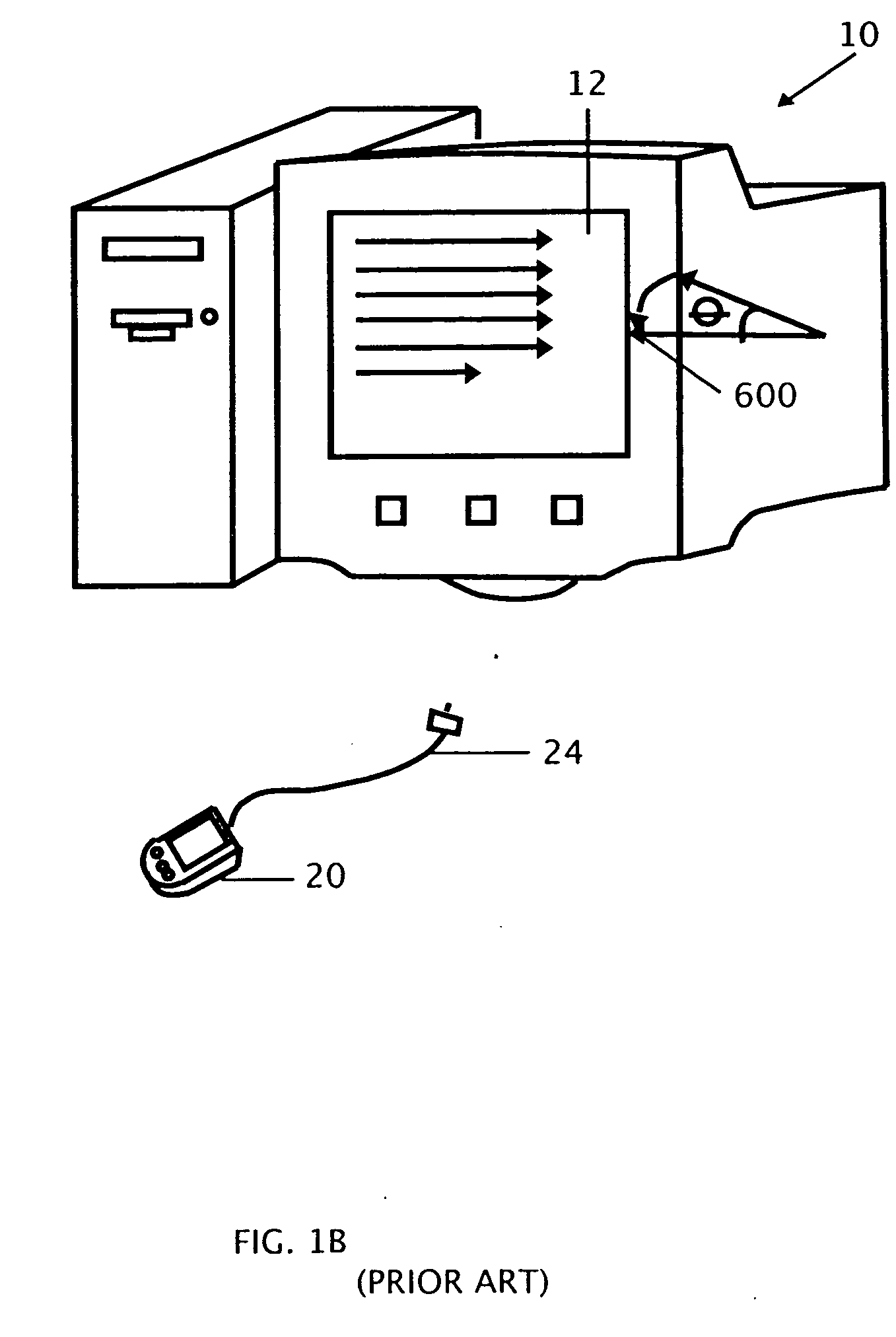
Figure 3
Abstract
Description
FIELD OF THE INVENTION
[0001] The present invention teaches a computer software and hardware implemented system and method for the conversion of displayable computer content to content that is displayable for intuitively-controlled display operating systems in hand-held electronic devices, such as PDAs and cellular telephone screens. BACKGROUND OF THE INVENTION
[0002] Prior art FIG. 1A displays a traditional desktop computer display 10. The traditional computer 10 typically includes a display device 12, a keyboard 14, and a pointing device 16. The display device 12 is normally physically connected to the keyboard 14 and pointing device 16. The pointing device 16 and buttons 18 may be physically integrated into the keyboard 14.
[0003] The dominant form of display technology for personal computing devices is called a “raster” display. Prior art FIG. 1B shows a typical computer raster display. Such a display will “scan” lines of pixels at a certain frequency, usually greater than 30 Hz...
Examples
Embodiment Construction
[0111] In the following description of the invention, the following definitions are used:
[0112] A frame refers to a set of electronically displayable graphics, text, or pictures that can be displayed all at one discrete point in time on a display device. In the specification “frame” and “graphics” are used interchangeably, although “graphics” may refer to a subset or superset of frames. The contents of one computer screen is generally the definition best used in the specification.
[0113] The positive x-direction is movement to the right of the device user. [0114] The negative x-direction is movement to the left of the device user. [0115] The positive y-direction is upward movement. [0116] The negative y-direction is downward movement. [0117] The positive z-direction is movement towards an individual PDA user which in one embodiment of the invention causes the screen to perform a zoom in (magnify screen) operation. [0118] The negative z-direction is movement away from an individual ...