
Abuse-deterrent pharmaceutical compositions of opioids and other drugs
a technology of opioids and compositions, applied in the field of pharmaceutical compositions, can solve the problems of drug not being easily extracted from such a formulation, the formulation will require more than one step, and the potential for abus
Patent Information
- Authority / Receiving Office
- US · United States
- Patent Type
- Applications(United States)
- Current Assignee / Owner
- Publication Date
- 2008-08-21
- Estimated Expiration
- Not applicable · inactive patent
Smart Images
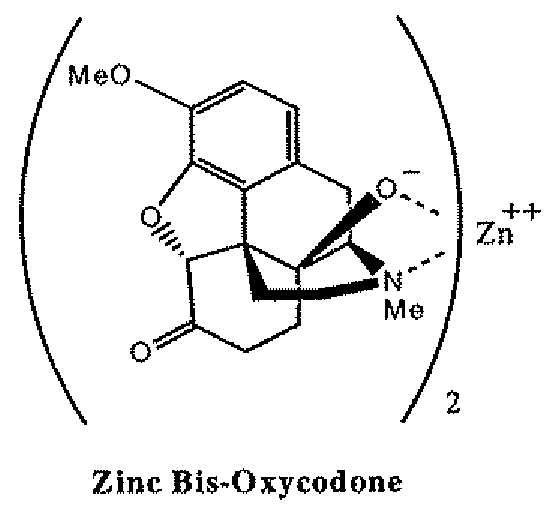
Figure 1 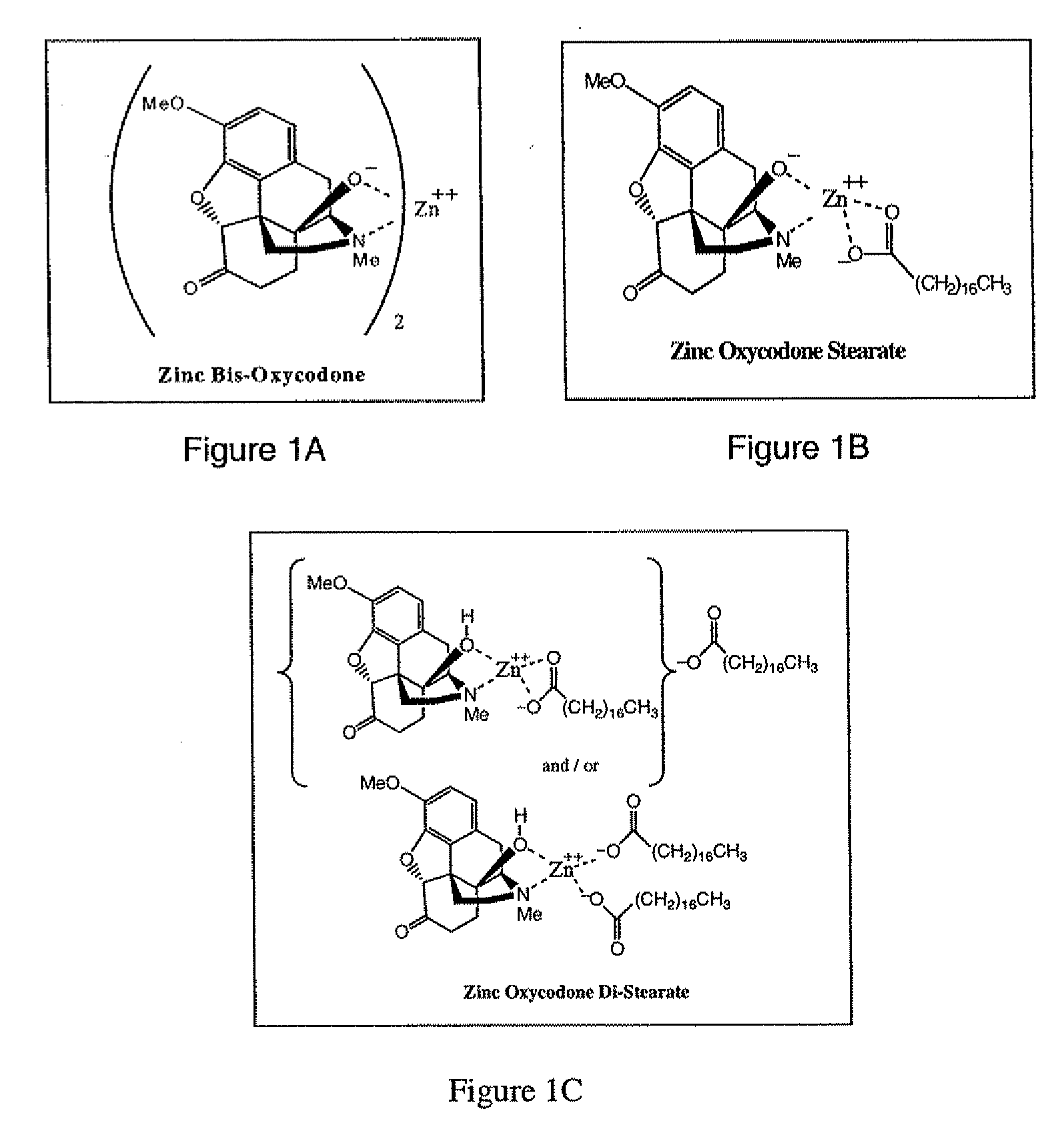
Figure 2
Abstract
Description
[0001] This application claims priority to U.S. Ser. No. 60 / 393,876 filed Jul. 5, 2002 entitled “Abuse-Resistant Formulations of Oxycontin and Other Drugs” by Alexander M. Klibanov, Stephen L. Buchwald, Timothy M. Swager, and Whe-Yong Lo; U.S. Ser. No. 60 / 436,523 filed Dec. 23, 2002 by Alison B. Fleming, Roman V. Rariy, Alexander M. Klibanov, Whe-Yong Lo, and Jane Hirsh; U.S. Ser. No. 60 / 443,226 filed Jan. 28, 2003 by Jane Hirsh, Alison B. Fleming, Alexander M. Klibanov, and Whe-Yong Lo; U.S. Ser. No. 60 / 463,514 filed Apr. 15, 2003 by Jane C. Hirsh, Alison B. Fleming, Roman V. Rariy, Stephen L. Buchwald, and Timothy M. Swager; and U.S. Ser. No. 60 / 463,518 filed Apr. 15, 2003 by Jane C. Hirsh, Alison B. Fleming and Roman V. Rariy.BACKGROUND OF THE INVENTION
[0002] The present invention is generally in the field of pharmaceutical compositions, and specifically relates to compositions that are designed to reduce the potential for improper administration of drugs that are subject to abuse....
Examples
example 1
Preparation of Lipophilic Oxycodone Derivatives
[0071]A. Oxycodone Free Base
[0072]The free base of oxycodone was prepared from its hydrochloride salt by the following method: Oxycodone hydrochloride was dissolved in water and sodium carbonate was added in the amount required to neutralize hydrochloric acid. Methylene chloride was added in order to extract the formed oxycodone free base. The obtained organic layer was dried over sodium sulfate and methylene chloride was evaporated using rotary evaporator. The obtained oxycodone free base was purified by crystallization.
[0073]B. Zinc-Bis-Oxycodone
[0074]Zinc bis-oxycodone can be obtained in anhydrous media by reacting oxycodone free base with Zn(Et)2
[0075]C. Zinc Oxycodone Stearate
[0076]Zinc oxycodone stearate can be obtained in anhydrous media by reacting oxycodone free base with Zn(Et)(C18H35O2)
[0077]D. Zinc Oxycodone Di-Stearate
[0078]Zinc-oxycodone di-stearate can be obtained by co-melting Zn(C18H35O2)2 and oxycodone free base.
[0079...
example 2
Preparation of Drug Containing Microparticles
[0082]The free base, salts or complexes from Example 1 are added to molten hydrogenated vegetable oil, mixed, extruded and spheronized to form drug containing microparticles.
example 3
Preparation of Coated Drug Containing Microparticles
[0083]The drug-containing particles from Example 2 are spray coated with zein in a fluidized bed apparatus.