
Compound aircraft control system and method
a control system and aircraft technology, applied in process control, navigation instruments, instruments, etc., can solve the problems of complex control system of compound aircraft, pilots of conventional helicopters having few control options, and no compound helicopters have been placed in regular operation in commercial or military fleets. , to achieve the effect of reducing lifecycle costs, reducing vibration, and increasing performance and speed
Patent Information
- Authority / Receiving Office
- US · United States
- Patent Type
- Applications(United States)
- Current Assignee / Owner
- Publication Date
- 2009-02-19
Smart Images
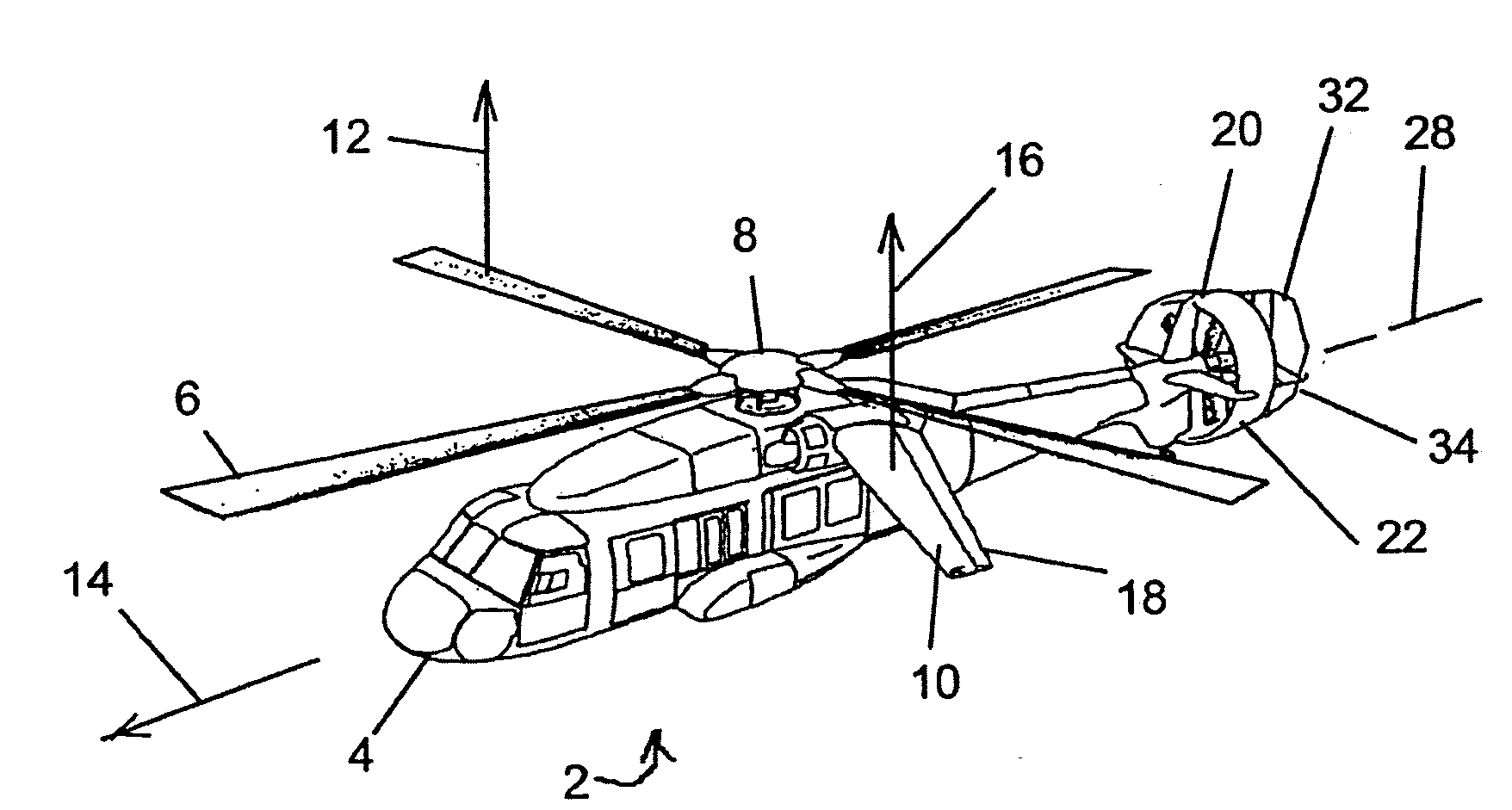
Figure 1 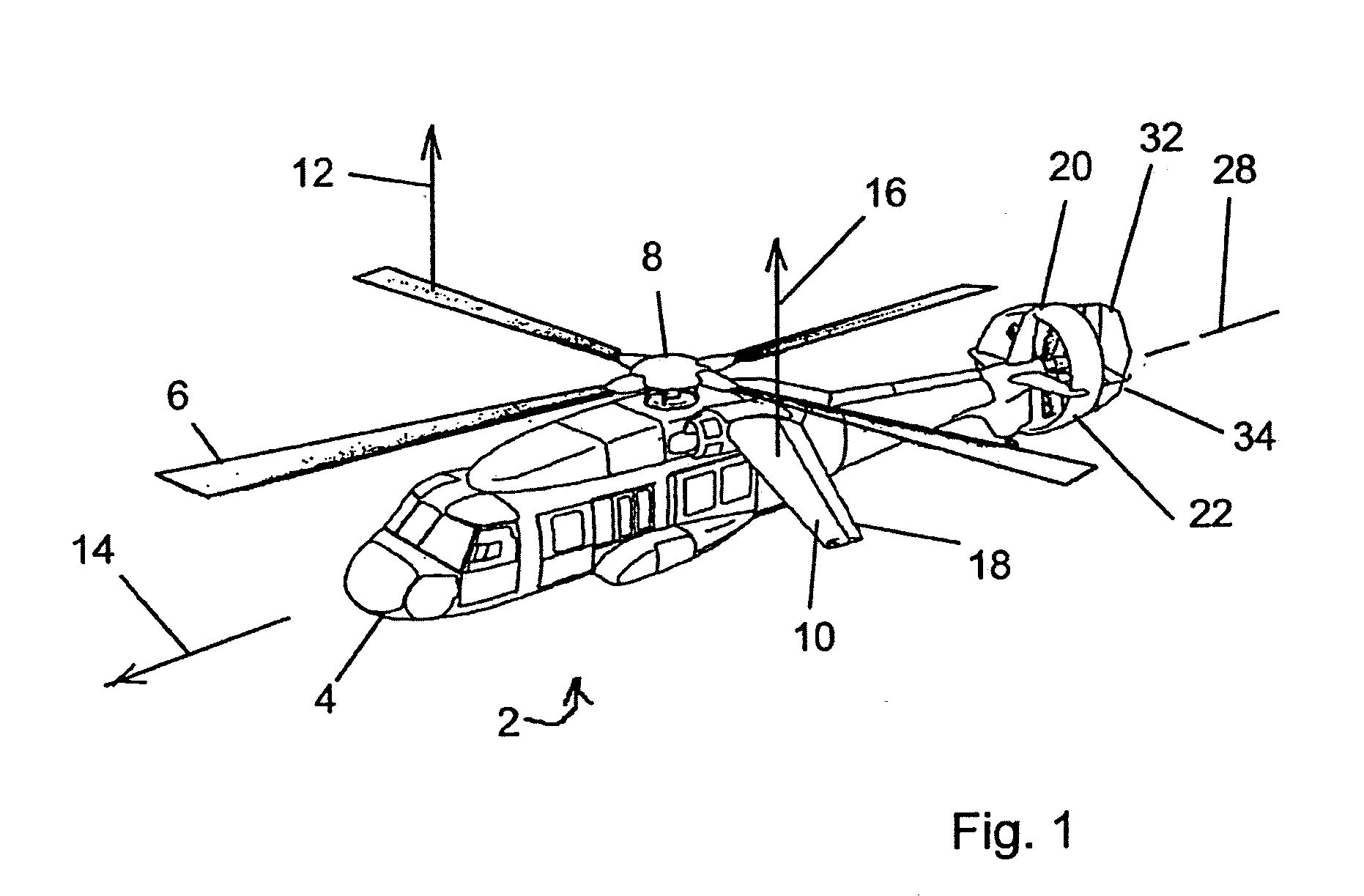
Figure 2 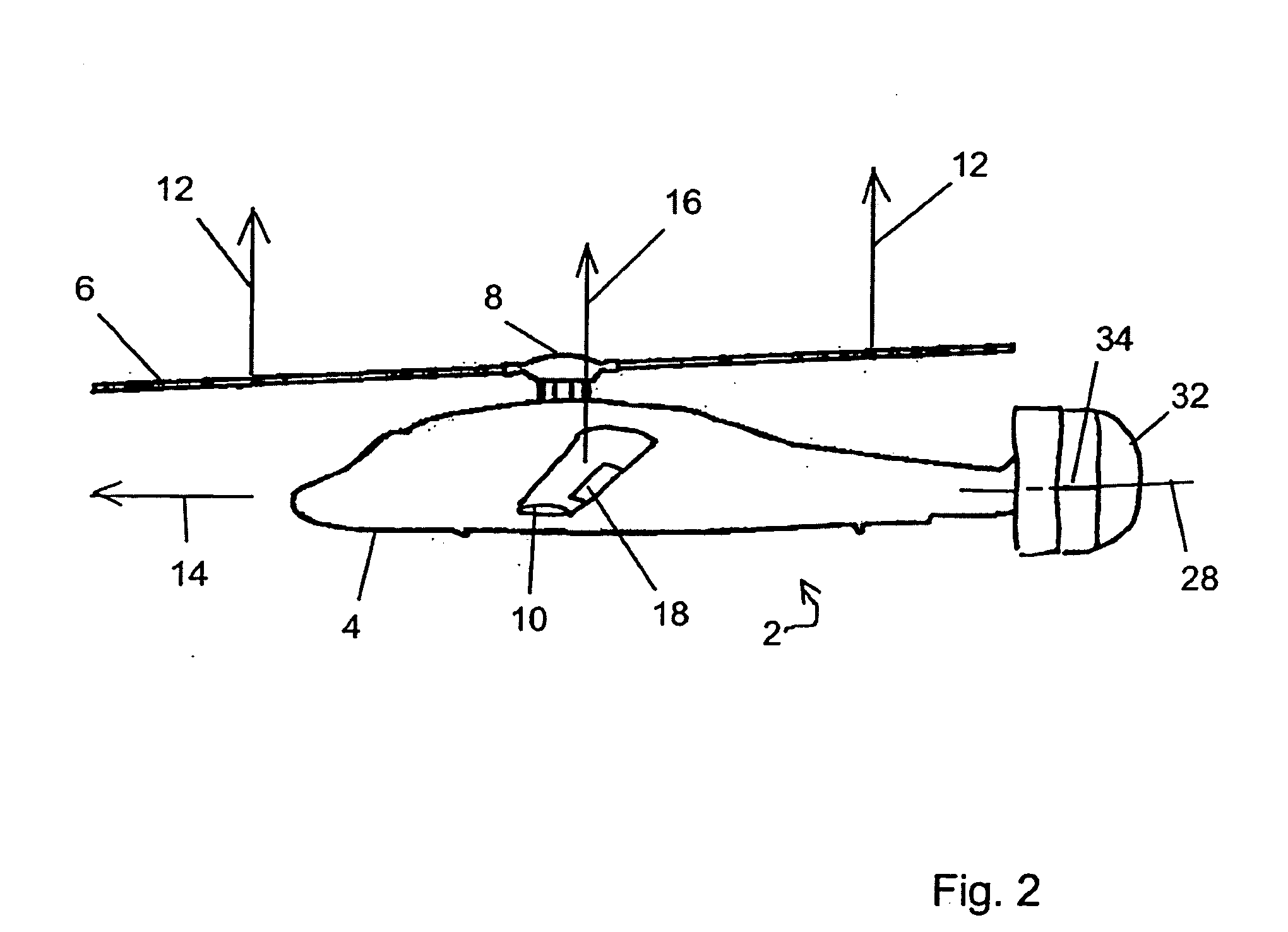
Figure 3
Abstract
Description
RELATED APPLICATIONS
[0001] This is a divisional application from U.S. patent application Ser. No. 11 / 505,235 by Frank N. Piasecki, inventor, filed Aug. 16, 2006.BACKGROUND OF THE INVENTION
[0002] 1. Field of the Invention
[0003] The Invention is a control system for a compound aircraft. For trimmed flight, the control system selects a combination of trim control settings for the redundant controls of the compound aircraft to achieve a pilot's command consistent with a user-selectable objective, such as speed maximization, fuel consumption minimization, vibration reduction or lifecycle cost reduction. For maneuvering flight, the control system distributes control among the redundant control options of the compound aircraft and may perform that distribution consistent with the user-selectable objective. The Invention is also a method for controlling a compound aircraft.
[0004] 2. Description of the Related Art
[0005] A ‘compound’ aircraft is an aircraft that includes features of both fixed win...
Examples
Embodiment Construction
A. Compound Aircraft Features
[0038]The apparatus of the Invention is a control system for a compound aircraft 2. As shown by FIGS. 1 and 2, the compound aircraft 2 includes features of both a helicopter and a fixed wing aircraft. Those features include a fuselage 4, a main rotor (or rotating wing) 6, a hub 8 about which the main rotor 6 rotates and wings 10. Rotation of main rotor 6 about hub 8 induces main rotor lift 12. Movement of air across wings 10 in response to the forward motion 14 of the compound aircraft 2 generates wing lift 16. Rotor lift 12 and wing lift 16 provide lift to the compound aircraft 2.
[0039]Wings 10 feature a wing control surface known as a ‘flaperon’18. Flaperon 18 may be moved differentially, in which event flaperons 18 act as ailerons. When used as ailerons, the flaperons 18 in conjunction with wings 10 impart a rolling moment to fuselage 4. The flaperons 18 also may be moved in unison, in which event the flaperons 18 act as flaps. When used as flaps, fla...