
Module for a fuel cell arrangement
Patent Information
- Authority / Receiving Office
- US · United States
- Current Assignee / Owner
- Publication Date
- 2009-11-26
Smart Images
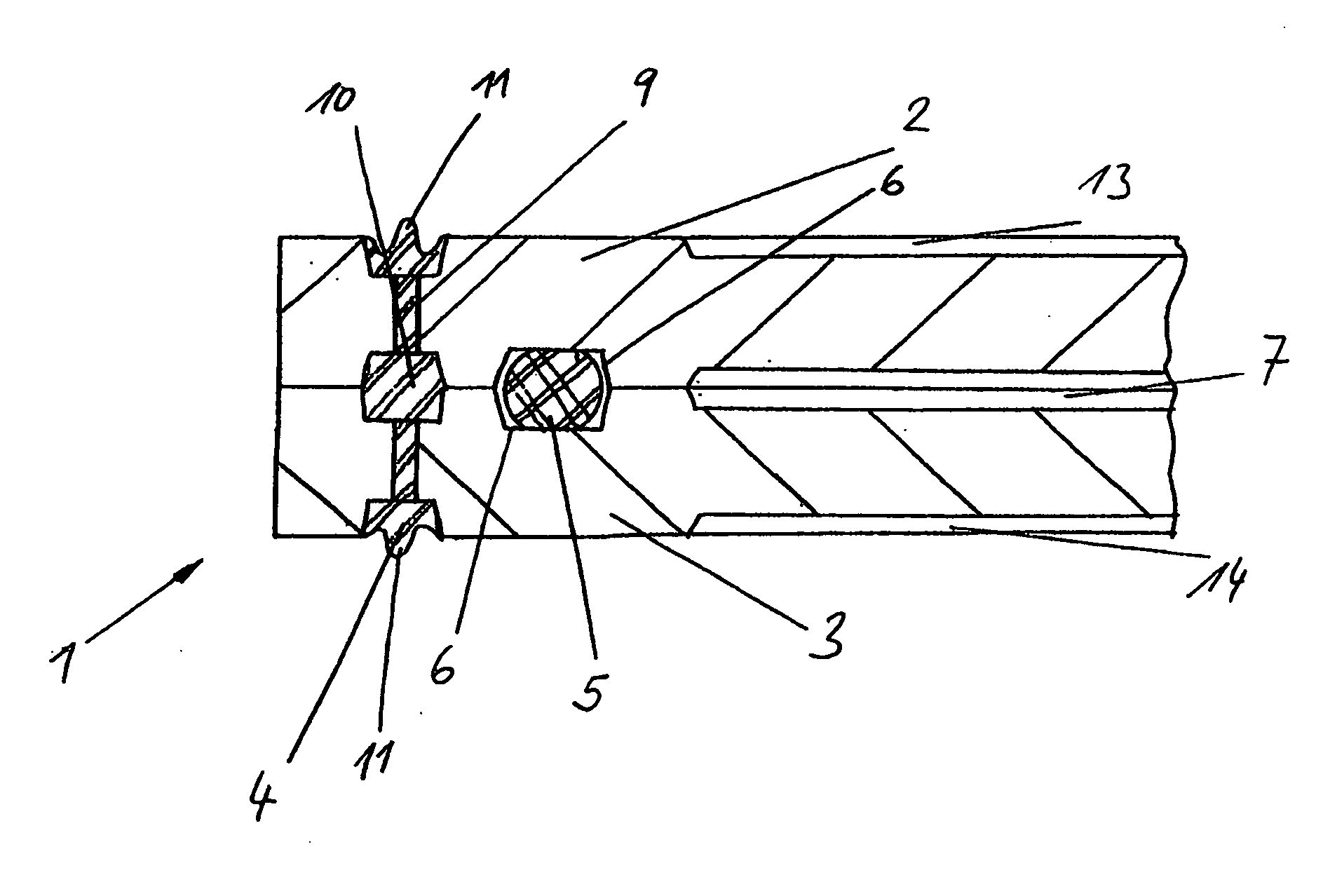
Figure 1 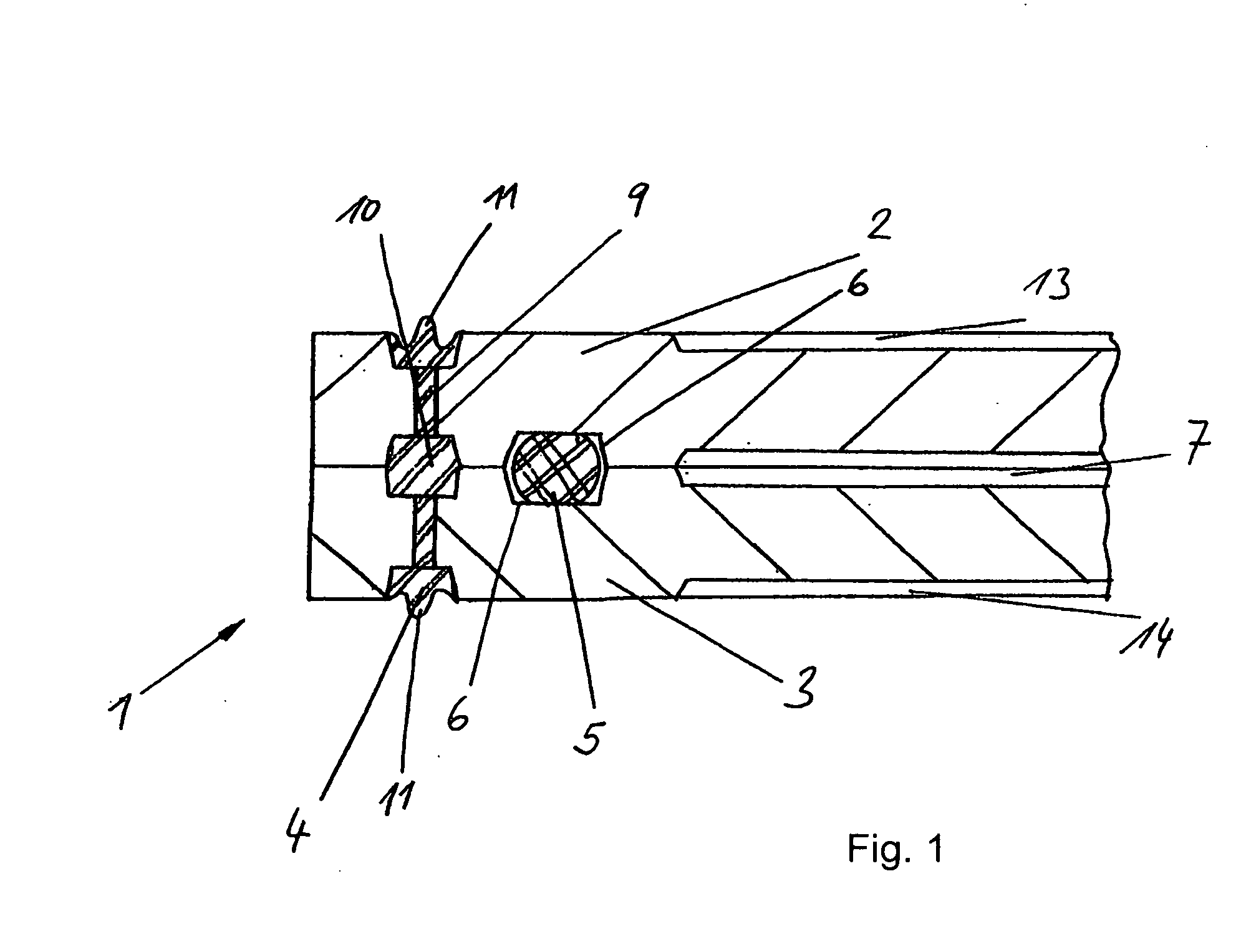
Figure 2 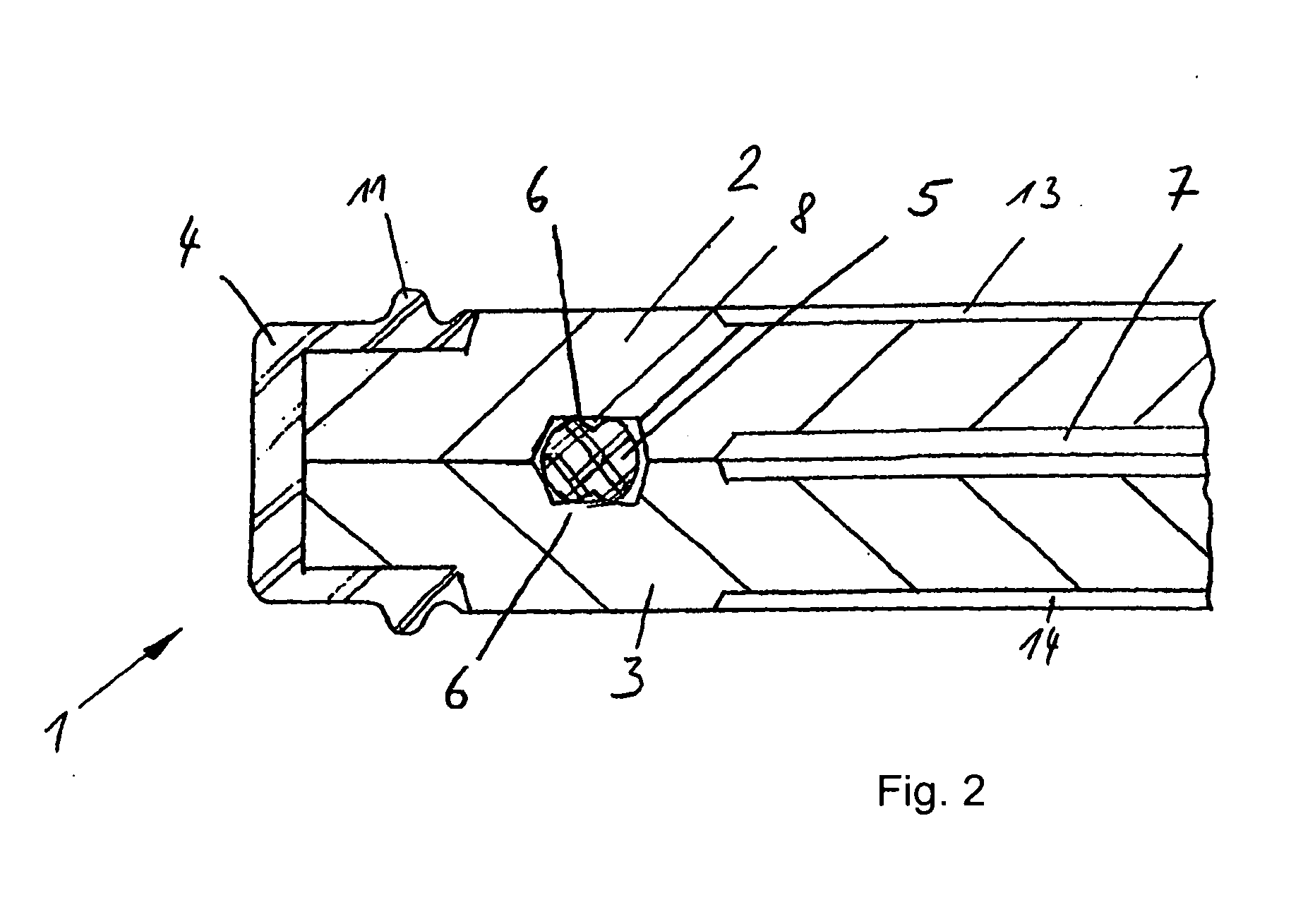
Figure 3
Abstract
Description
[0001] This claims benefit of German Patent Application DE 10 2006 032 530.3, filed Jul. 12, 2006 through International Patent Application PCT / EP2007 / 005208, filed Jun. 13, 2007, both disclosures are hereby incorporated by reference herein.
[0002] The present invention relates to a module for a fuel cell arrangement, having plates which are configured in the form of a stack, at least two plates being partially joined to one another by a sealing element.BACKGROUND OF THE INVENTION
[0003] When working with modules of this kind, which are known from the German Patent Application DE 102 50 434 A1, it is advantageous that the number of structural components required for assembling a fuel cell arrangement be reduced, and that the assembly operation be able to be carried out using fewer individual production steps. Moreover, no additional measures are required to fix the plates in position, since this is accomplished by the sealing element which is joined non-positively and / or positively to the...
Examples
Embodiment Construction
[0029]The figures each show a module 1 for a fuel cell arrangement, which, in these design variations, is a PEM fuel cell. Module 1 is composed of two plates 2, 3 which are configured in the form of a stack and are partially joined to one another by a sealing element 4. For that purpose, plates 2, 3 have elongated hole-type openings 9, which are configured so as to be offset from one another in such a way that orifices 10 are formed. Plates 2, 3 are graphitic bipolar plates, which include a cooling device 7 on the mutually facing sides. Cooling device 7 is composed of snake-like cooling recesses. At least one further seal 5 is configured in each case between plates 2, 3. To that end, recesses 6, in which additional seal 5 is located, are configured on the mutually facing sides of plates 2, 3. Modules 1 described in the following each represent one design variant. However, other design variants are conceivable where sealing elements 4 and additional seals 5 of the different design va...