
Saddle accessory apparatus
a technology for accessories and saddles, applied in saddles, applications, fastening devices, etc., can solve the problems of skin irritation and discomfort, modern breeches have no flare and fit skin tight, and riders continue to experience blisters, sores, scrapes, etc., to reduce slippage
Patent Information
- Authority / Receiving Office
- US · United States
- Patent Type
- Applications(United States)
- Current Assignee / Owner
- Publication Date
- 2012-10-18
- Estimated Expiration
- Not applicable · inactive patent
Smart Images
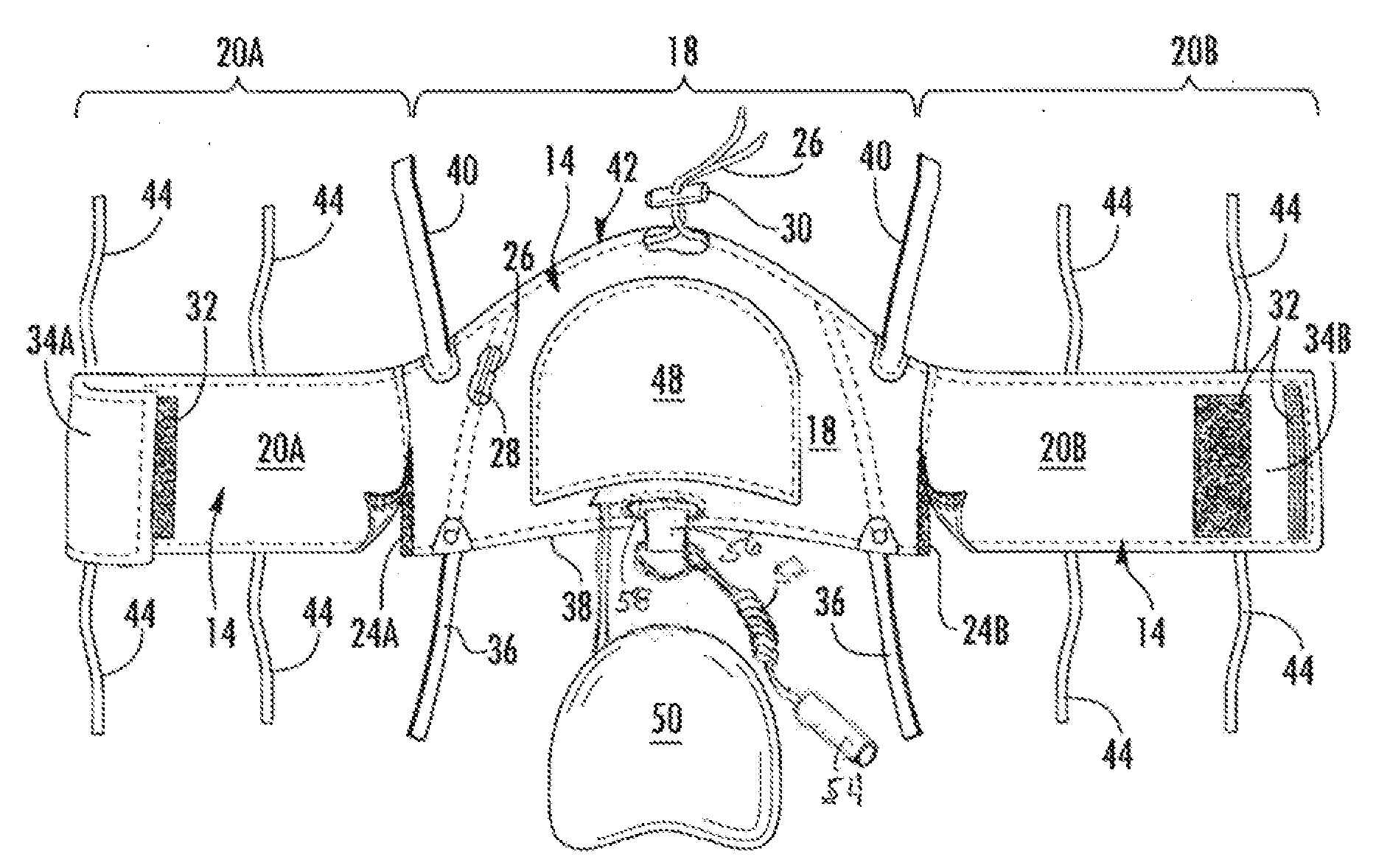
Figure 1 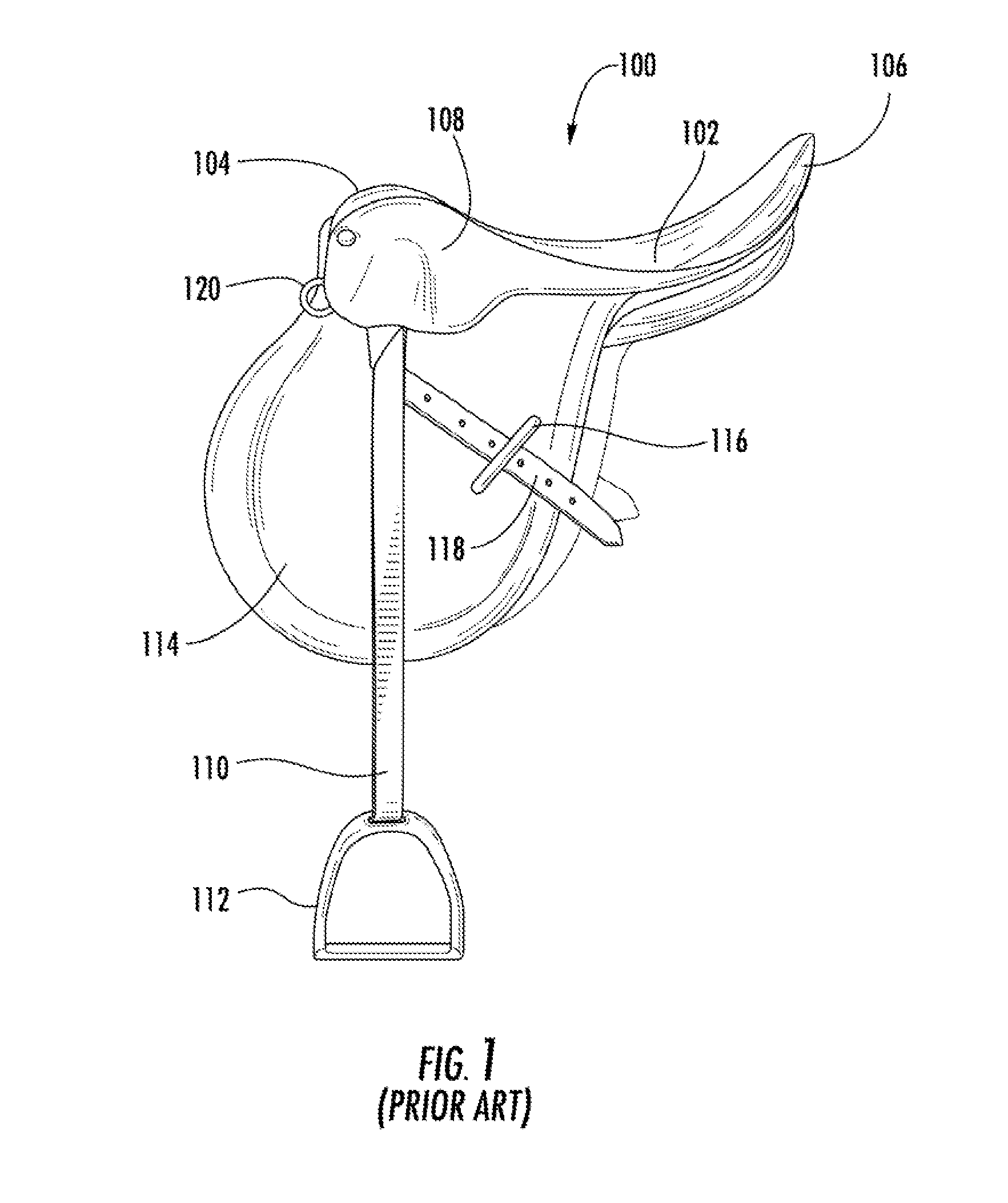
Figure 2 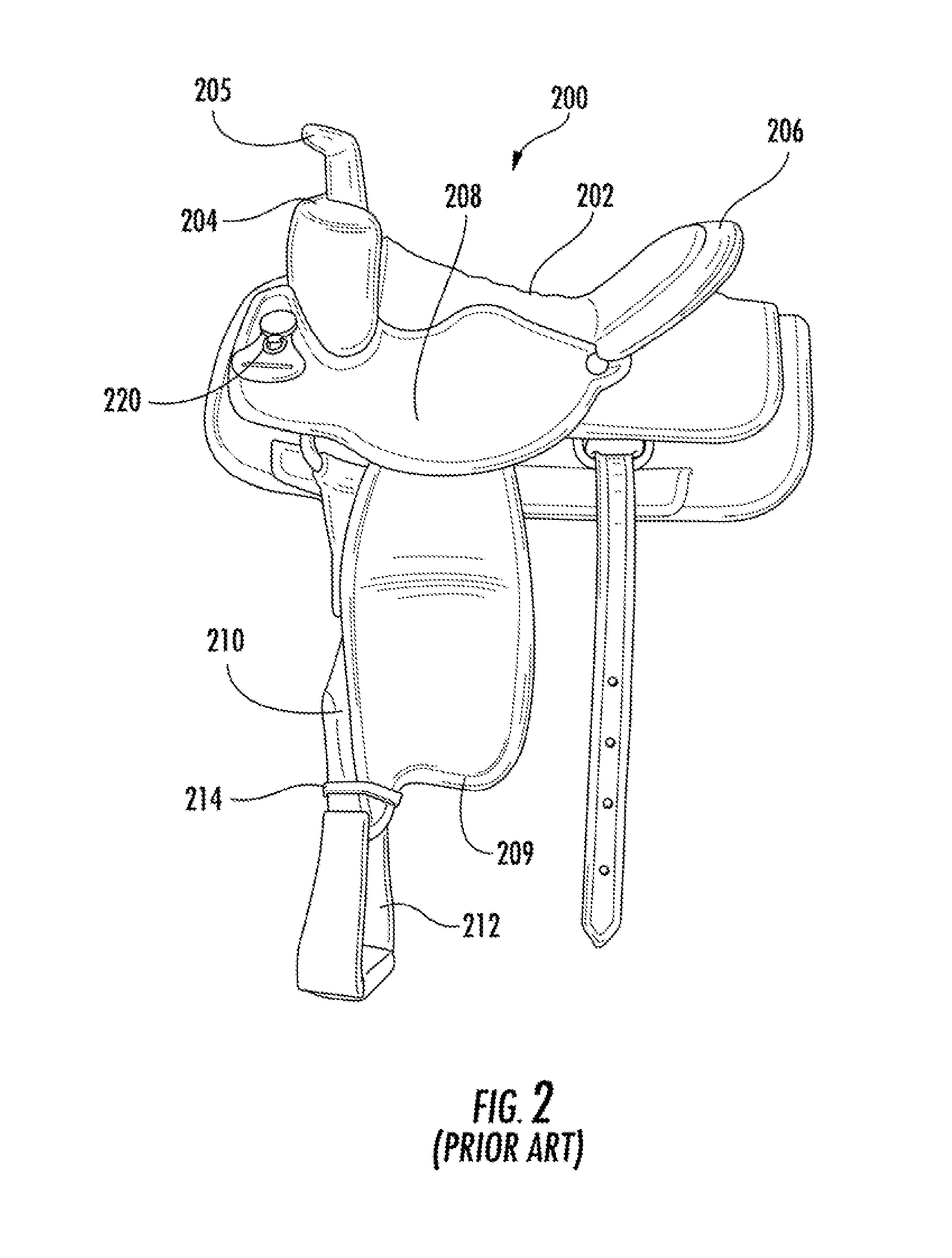
Figure 3
Abstract
Description
RELATED APPLICATION
[0001] This application claims the benefit of U.S. Provisional Application No. 61 / 476,285 filed Apr. 17, 2011 and entitled, Saddle-Mounted Leg Protection Apparatus.FIELD OF THE INVENTION
[0002] The present invention relates generally to an equestrian riding saddle accessory device for improving rider comfort and safety.BACKGROUND OF THE INVENTION
[0003] Horseback riding for pleasure, sport or work is an activity engaged in the world over. Despite the longstanding popularity of horseback riding which can be measured in terms of millennia, riders continue to experience blisters, sores, scrapes, rashes and other such irritations on the legs, particularly the inner portions of the calves and thighs which result from movement of the legs in contact with various saddle parts. A wide variety of protective clothing and articles have been-developed over time to obviate this problem. All of them involve incorporation of a protective material between the rider's leg and saddle. N...
Examples
Embodiment Construction
[0027]It should be clearly understood at the outset that like reference numerals are intended to identify the same structural elements, portions or surfaces consistently throughout the several drawings herein, as such elements, portions or surfaces may be further described or explained by the entire written specification, of which this detailed description is an integral part. Unless otherwise indicated, the drawings are intended to be read (e.g., cross-hatching, arrangement of parts, proportion, degree, etc.) together with the specification, and are to be considered a portion of the entire written description of this invention. As used in the following description, any reference to the terms “horizontal”, “vertical”, “left”, “right”, “up” and “down”, as well as adjectival and adverbial derivatives thereof (e.g., “horizontally”, “rightwardly”, “upwardly”, etc.), simply refer to the orientation of the illustrated structure as the particular drawing figure faces the reader. Similarly,...