
Ball Valve with Offset Straight Through Flow
a ball valve and straight through flow technology, applied in the field of valve technology, can solve the problems of increasing the power requirement of actuating the valve, the relative size of the valve member, and the increase of the cost of procurement and operation of the ball valve, so as to reduce the overall size
Patent Information
- Authority / Receiving Office
- US · United States
- Patent Type
- Applications(United States)
- Current Assignee / Owner
- Publication Date
- 2013-01-03
- Estimated Expiration
- Not applicable · inactive patent
Smart Images
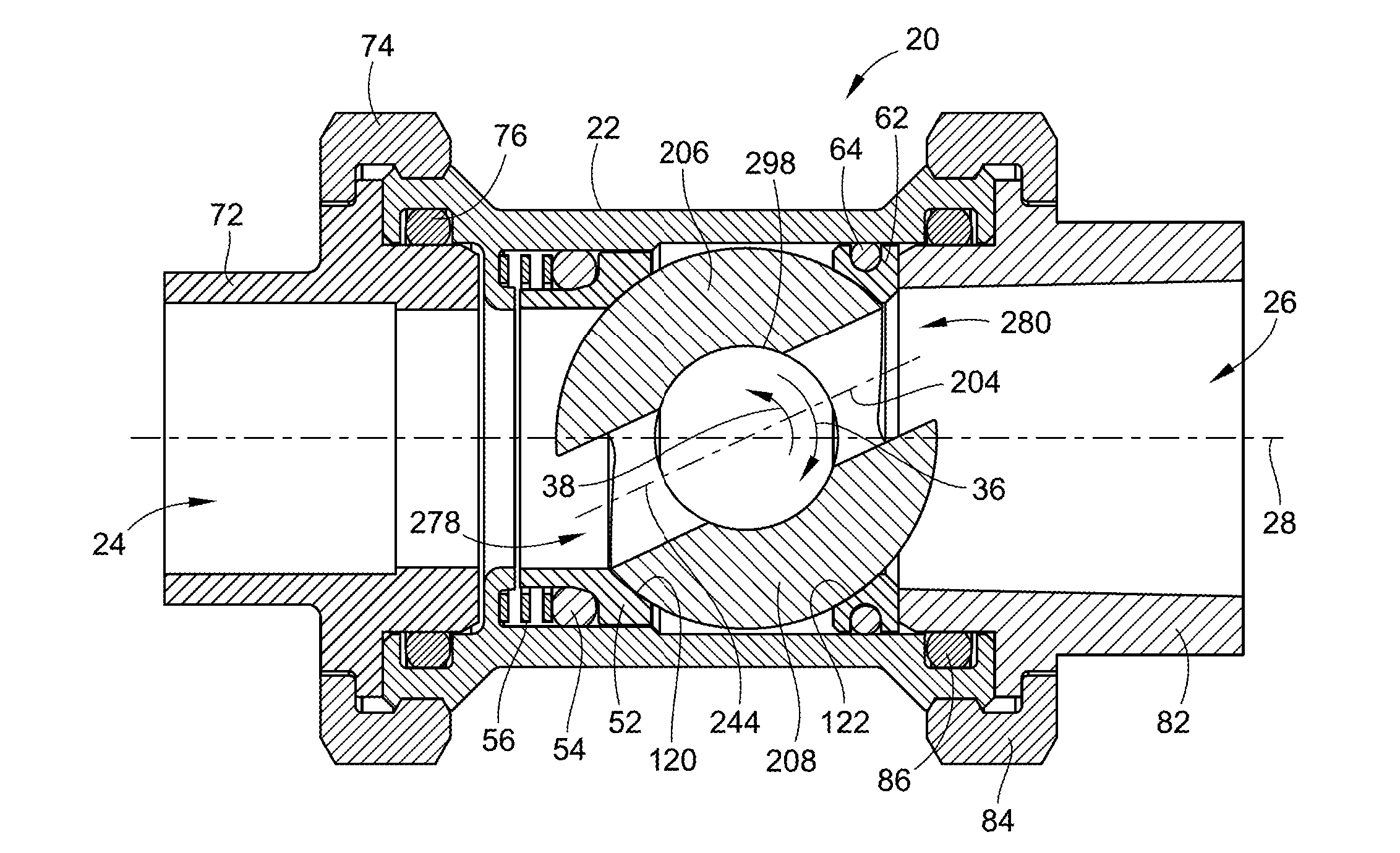
Figure 1 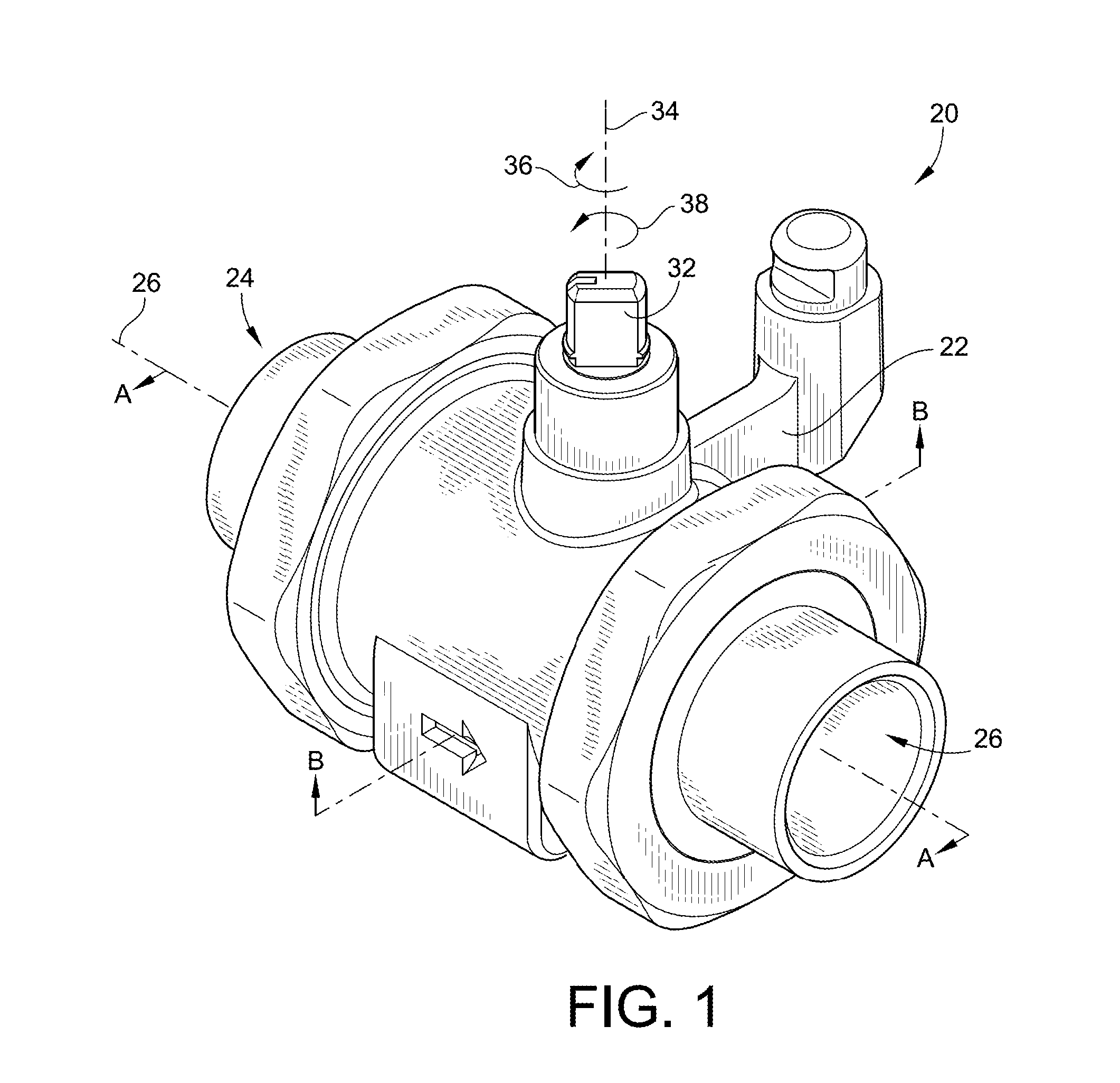
Figure 2 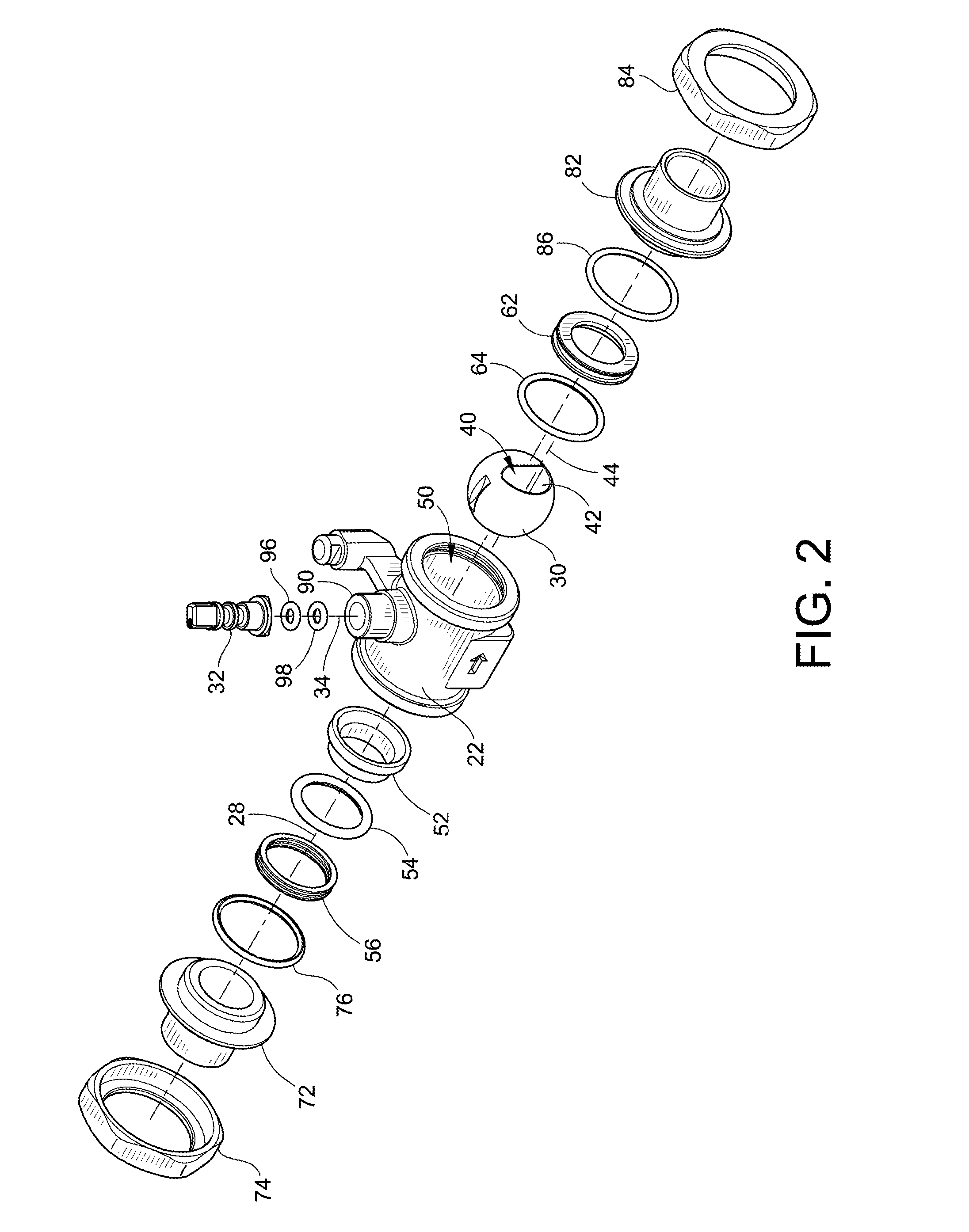
Figure 3
Abstract
Description
FIELD OF THE INVENTION
[0001] This invention generally relates to valve technology, and more particularly to ball valves and their associated valve members.BACKGROUND OF THE INVENTION
[0002] Ball valves are generally known in the art and used in a variety of applications ranging from liquid to gas flow control. A typical ball valve includes a housing, also often referred to as a valve body, that has an internal cavity and an inlet and an outlet in fluid communication with the internal cavity. A flow path extends from the inlet, through the cavity, and through the outlet.
[0003] A spherical valve member is positioned in the flow path within the internal cavity of the housing. The valve member has a passageway extending entirely through the center of the valve member. A variety of seals can be employed within the internal cavity and adjacent the valve member to restrict flow through the passageway of the valve member, and prevent fluid from freely flowing around the valve member that would ...
Examples
Embodiment Construction
[0041]Turning now to the drawings, there is illustrated in FIG. 1 an exemplary embodiment of a ball valve 20 according to the teachings of the present invention. The ball valve 20 includes a housing 22. The housing 22 has an inlet 24 and an outlet 26 axially aligned with the inlet 24 along a flow path represented by a flow path axis 28. The flow path axis 28 extends through the ball valve 20 and generally represents the course of fluid flow from the inlet 24 to and through the outlet 26. As used herein, the term “fluid” contemplates liquids, gases, liquid-gas mixtures, and slurries. Indeed, it will be recognized by those skilled in the art that the ball valve 20 is not limited in its application to any particular type of fluid.
[0042]A valve stem 32 of the ball valve 20 extends from an exterior of the housing 22 into an internal cavity 50 (see FIG. 2) of the housing 22. The valve steam 32 is rotatable about a valve stem axis 34 in first and second rotational directions 36, 38 to sele...