
Disposable flexible containers having surface elements
a flexible container and surface element technology, applied in the field of containers, can solve the problems of high production cost, high cost of conventional rigid containers for fluent products, and energy-intensive processes in both kinds of making, and achieve the effects of less material consumption, less expensive production, and convenient decoration
Patent Information
- Authority / Receiving Office
- US · United States
- Patent Type
- Applications(United States)
- Current Assignee / Owner
- Publication Date
- 2015-02-05
Smart Images
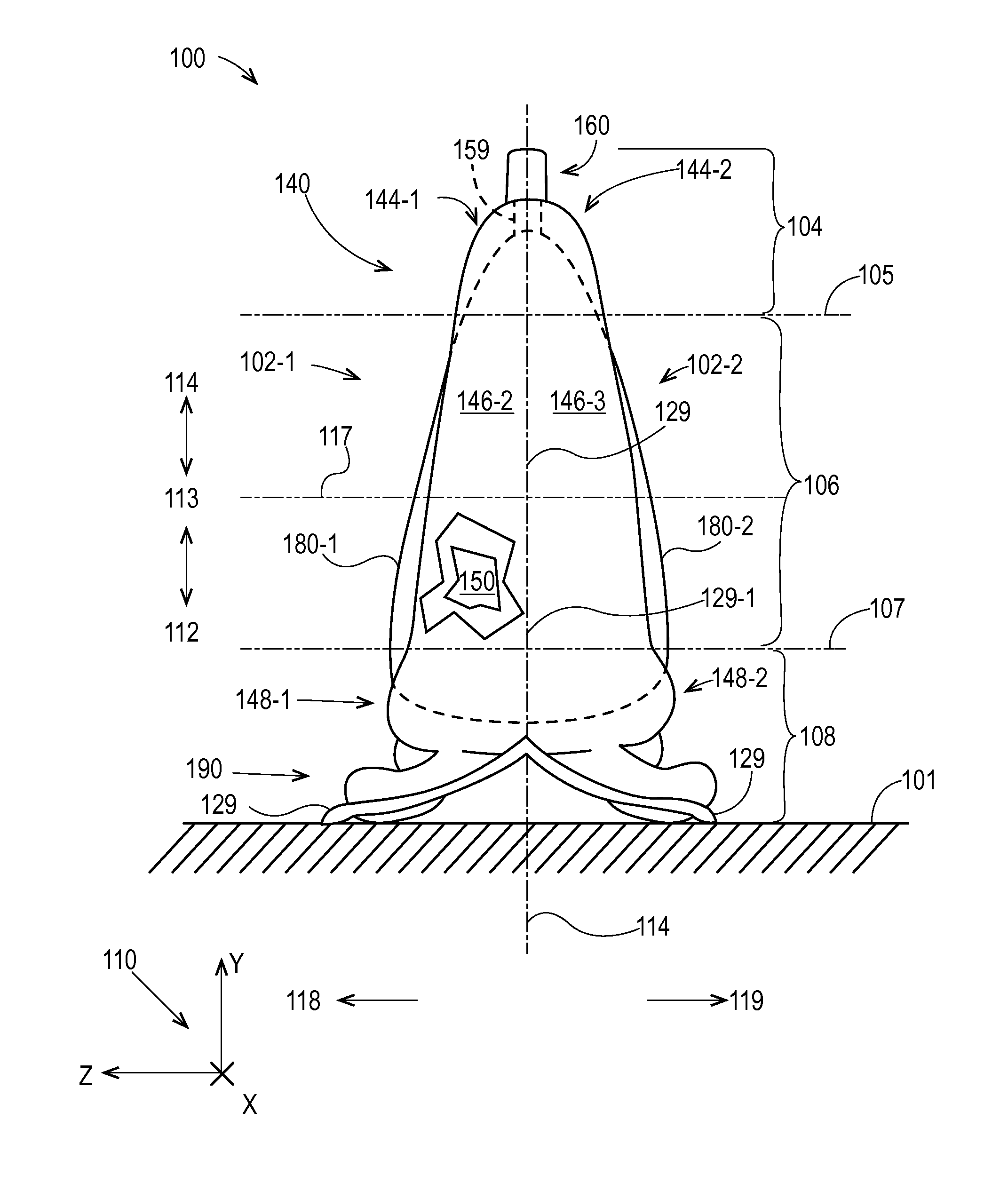
Figure 1 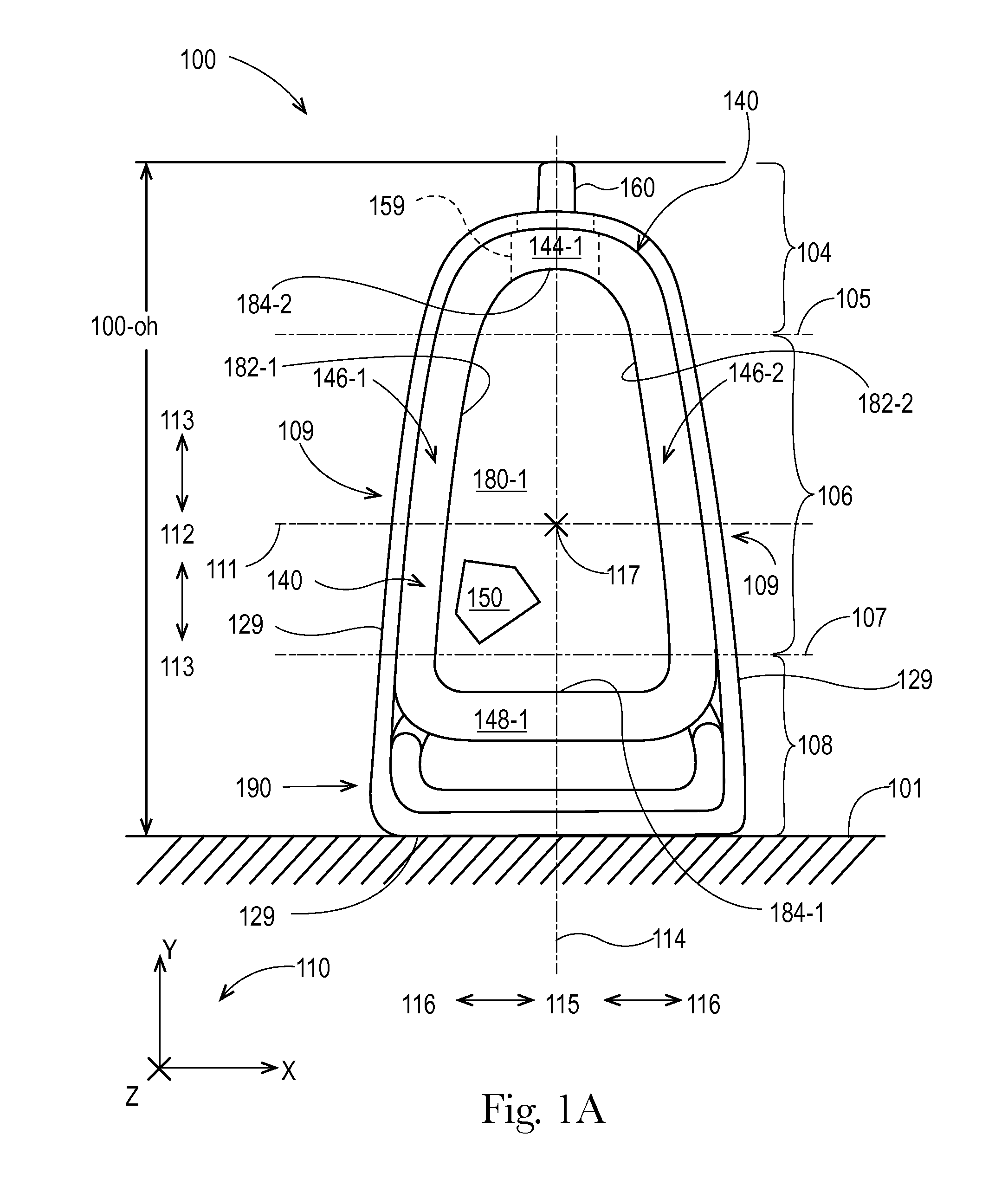
Figure 2 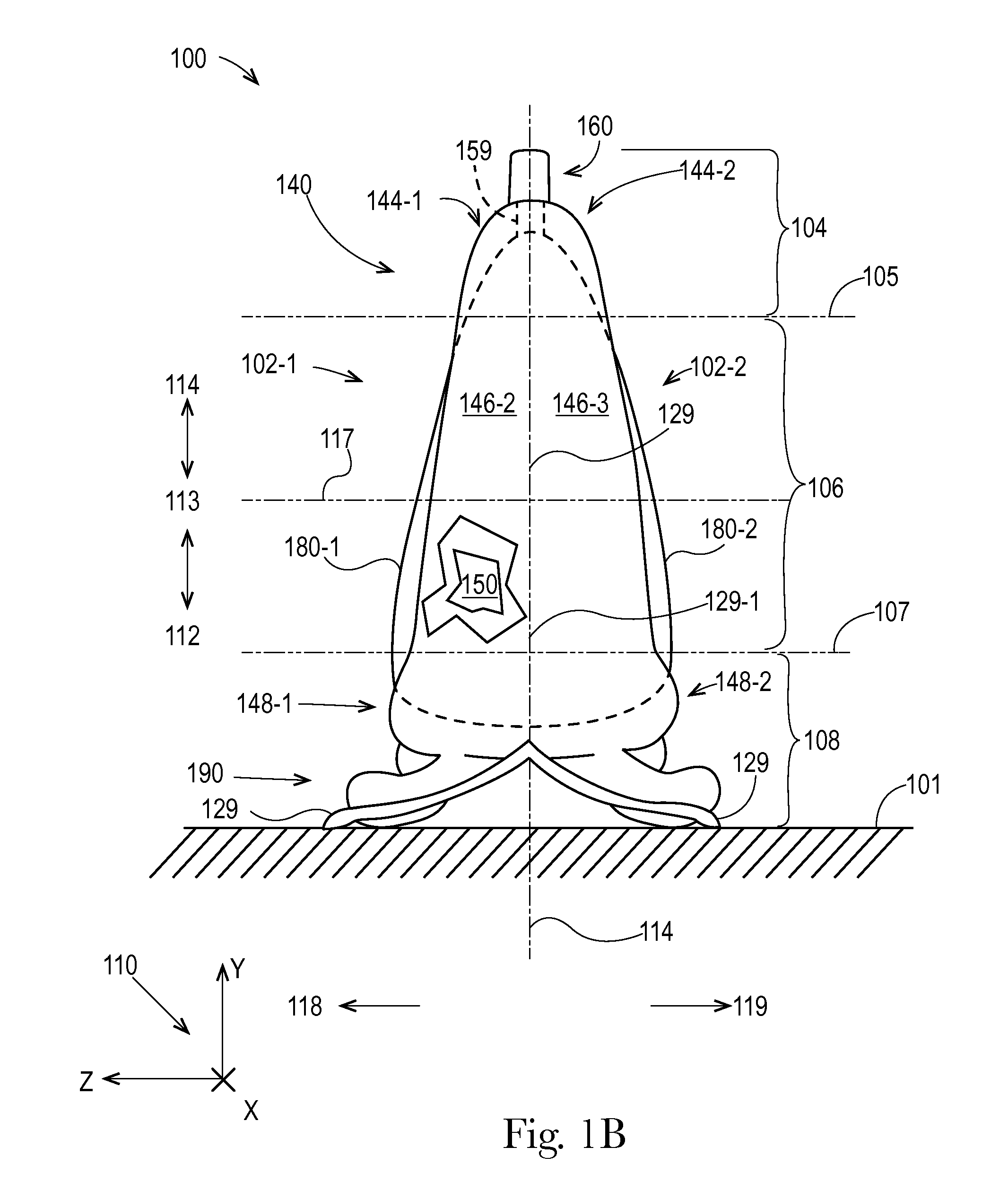
Figure 3
Abstract
Description
FIELD OF THE INVENTION
[0001] The present disclosure relates in general to containers, and in particular, to disposable flexible containers having surface elements thereon.BACKGROUND OF THE INVENTION
[0002] Fluent products include liquid products and / or pourable solid products. In various embodiments, a container can be used to receive, contain, and dispense one or more fluent products. And, in various embodiments, a container can be used to receive, contain, and / or dispense individual articles or separately packaged portions of a product. A container can include one or more product volumes. A product volume can be configured to be filled with one or more fluent products. A container receives a fluent product when its product volume is filled. Once filled to a desired volume, a container can be configured to contain the fluent product in its product volume, until the fluent product is dispensed. A container contains a fluent product by providing a barrier around the fluent product. The ...
Examples
Embodiment Construction
[0080]The present disclosure describes various embodiments of containers made from flexible material. Because these containers are made from flexible material, these containers can be less expensive to make, can use less material, and can be easier to decorate, when compared with conventional rigid containers. First, these containers can be less expensive to make, because the conversion of flexible materials (from sheet form to finished goods) generally requires less energy and complexity, than formation of rigid materials (from bulk form to finished goods). Second, these containers can use less material, because they are configured with novel support structures that do not require the use of the thick solid walls used in conventional rigid containers. Third, these flexible containers can be easier to decorate, because their flexible materials can be easily printed before they are formed into containers. Fourth, these flexible containers can be less prone to scuffing, denting, and r...