
Method of monitoring subsurface concrete structures
Patent Information
- Authority / Receiving Office
- US · United States
- Current Assignee / Owner
- Publication Date
- 2017-03-09
Smart Images
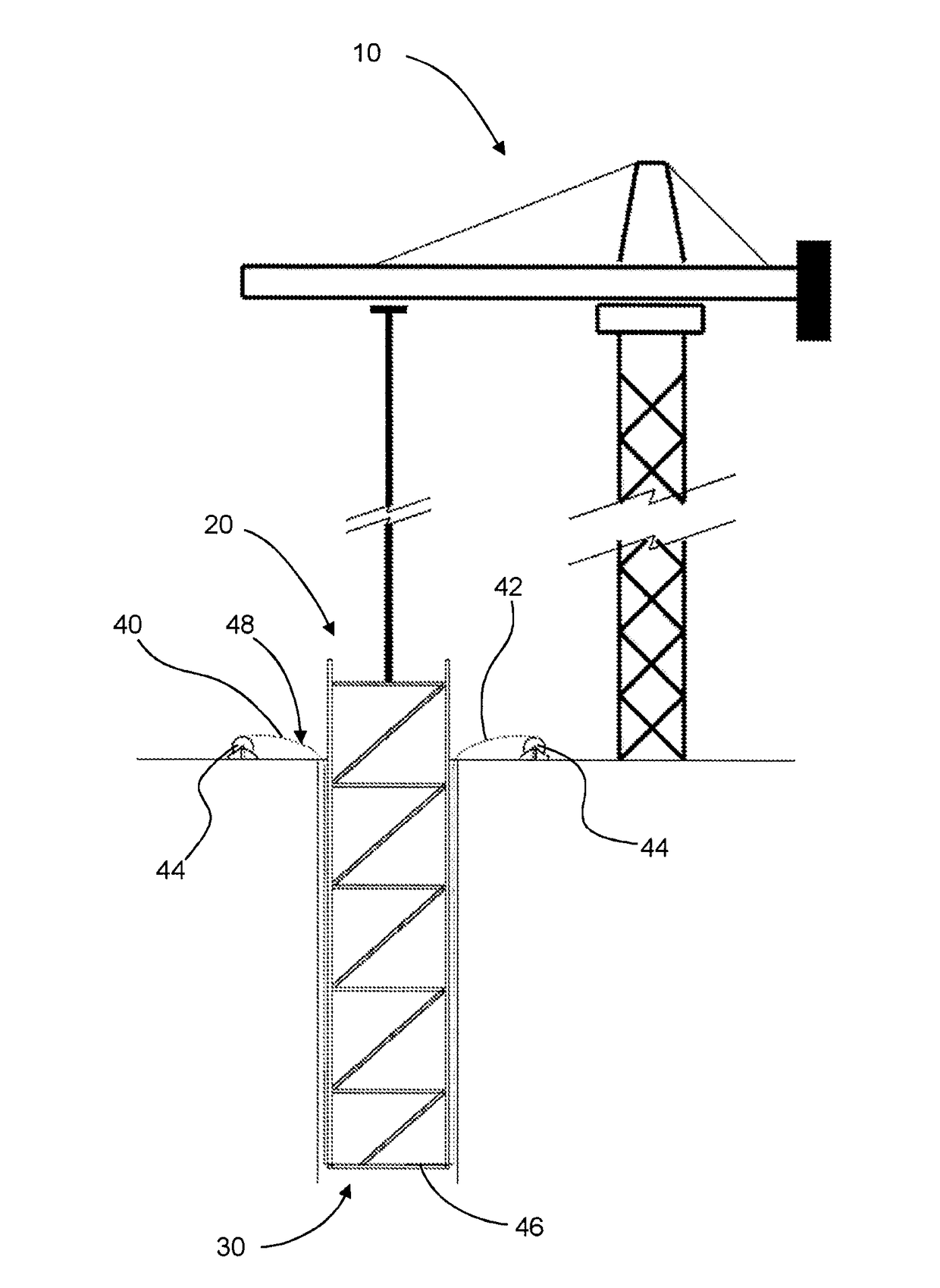
Figure 1 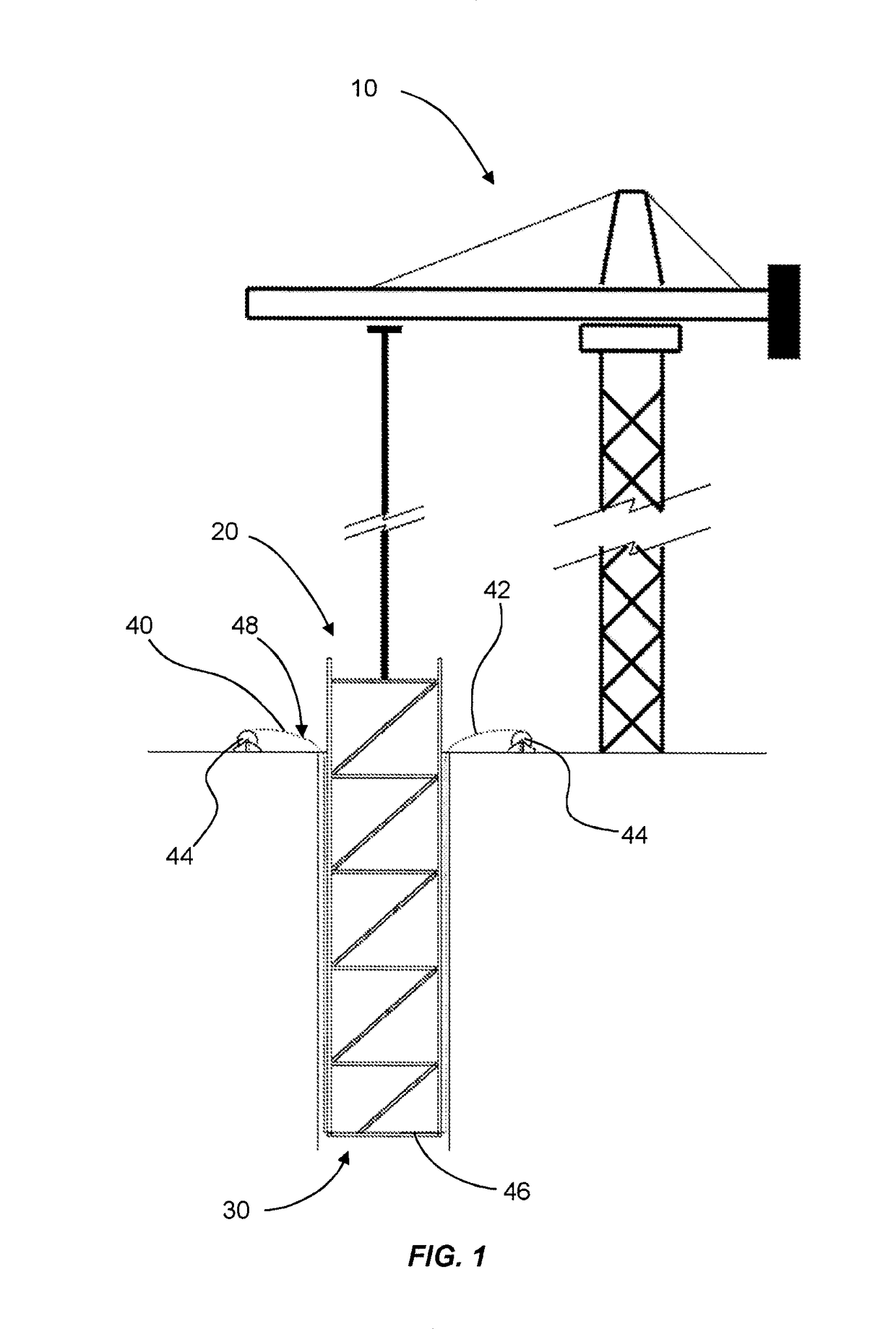
Figure 2 
Figure 3
Abstract
Description
BACKGROUND
[0001] There is a need to minimise failures within the built environment. In recent years, this has been driven not only by safety considerations, but also by a need to optimise the use of limited natural resources.
[0002] As such, it is necessary to monitor built structures, in order to identify potential failures. A problem arises when the built structure is inaccessible, e.g. if the structure is at a subsurface location.
[0003] Subsurface concrete structures are generally made by pouring fresh concrete into a cavity (such as an underground borehole, or a shuttered structure to contain the concrete). They require non-visual assessment after curing to ensure that the poured concrete is present in the designed quantity at all points in the structure and that there are no voids, bulges or significant anomalies in the concrete.
[0004] In some cases, strain gauges are used to facilitate non-visual assessment of subsurface structures after curing. The non-visual assessment of subsurf...
Examples
Embodiment Construction
[0038]Referring firstly to FIG. 1, a crane or other suitable lifting device 10 is shown lowering a reinforcement or framework assembly 20 into a borehole or cavity 30 in the ground, for the purpose of creating a subsurface concrete structure.
[0039]Once the assembly 20 has been positioned at the desired location, concrete (not shown) is applied to fill the borehole or cavity 30, thereby surrounding the assembly 20.
[0040]In an alternative method, the concrete may be placed first, with the assembly 20 then placed into the wet concrete.
[0041]As will be understood, the concrete will undergo a period of hydration, during which the concrete will harden to create a subsurface concrete structure having integral reinforcement or framework.
[0042]The reinforcement or framework assembly 20 (hereinafter referred to as ‘the assembly’) is configured to define a substructure of the subsurface concrete structure to be created. As such, the assembly 20 may typically be constructed as a cage or frame, ...