
System and method for buckle release assistive device
a technology of assistive devices and buckles, which is applied in the field of system and method of buckle release assistive devices, can solve the problems of lack of thumb or finger strength, inability to unlatch the buckle of the child restraint seat, and posing risks to child safety, so as to reduce the pressure required and avoid the dependency on the fingers for gripping
Patent Information
- Authority / Receiving Office
- US · United States
- Patent Type
- Applications(United States)
- Current Assignee / Owner
- Publication Date
- 2018-03-15
Smart Images
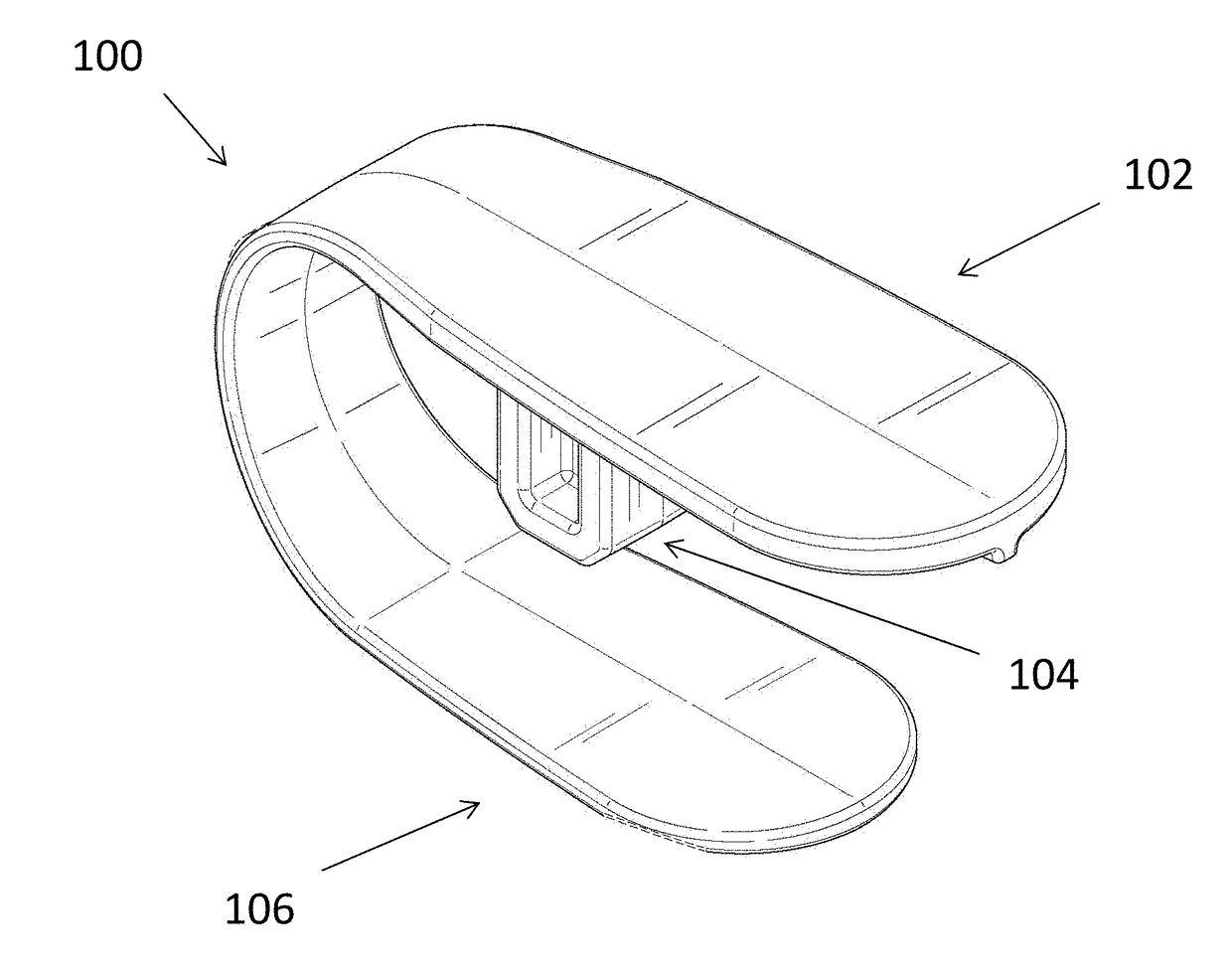
Figure 1 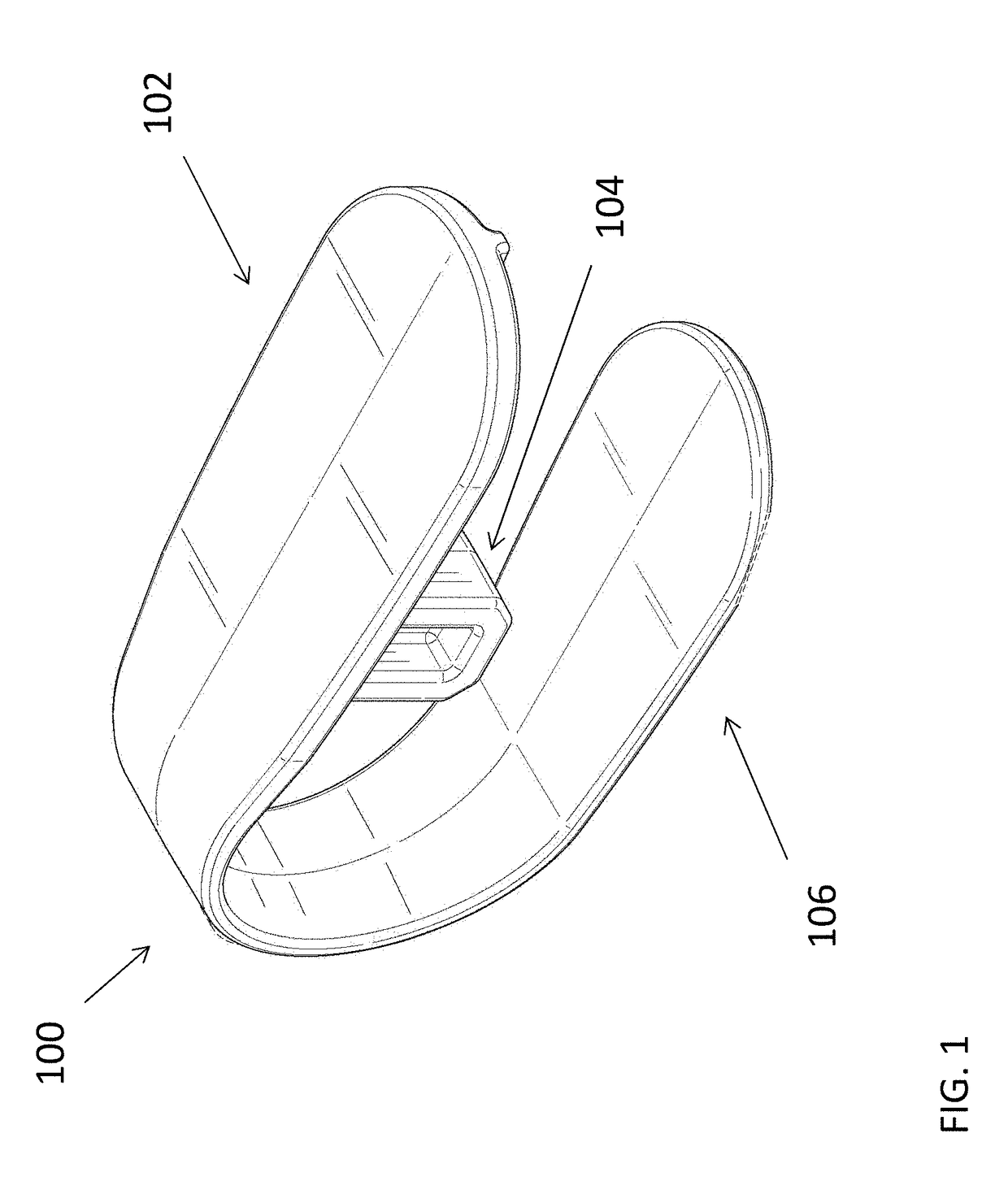
Figure 2 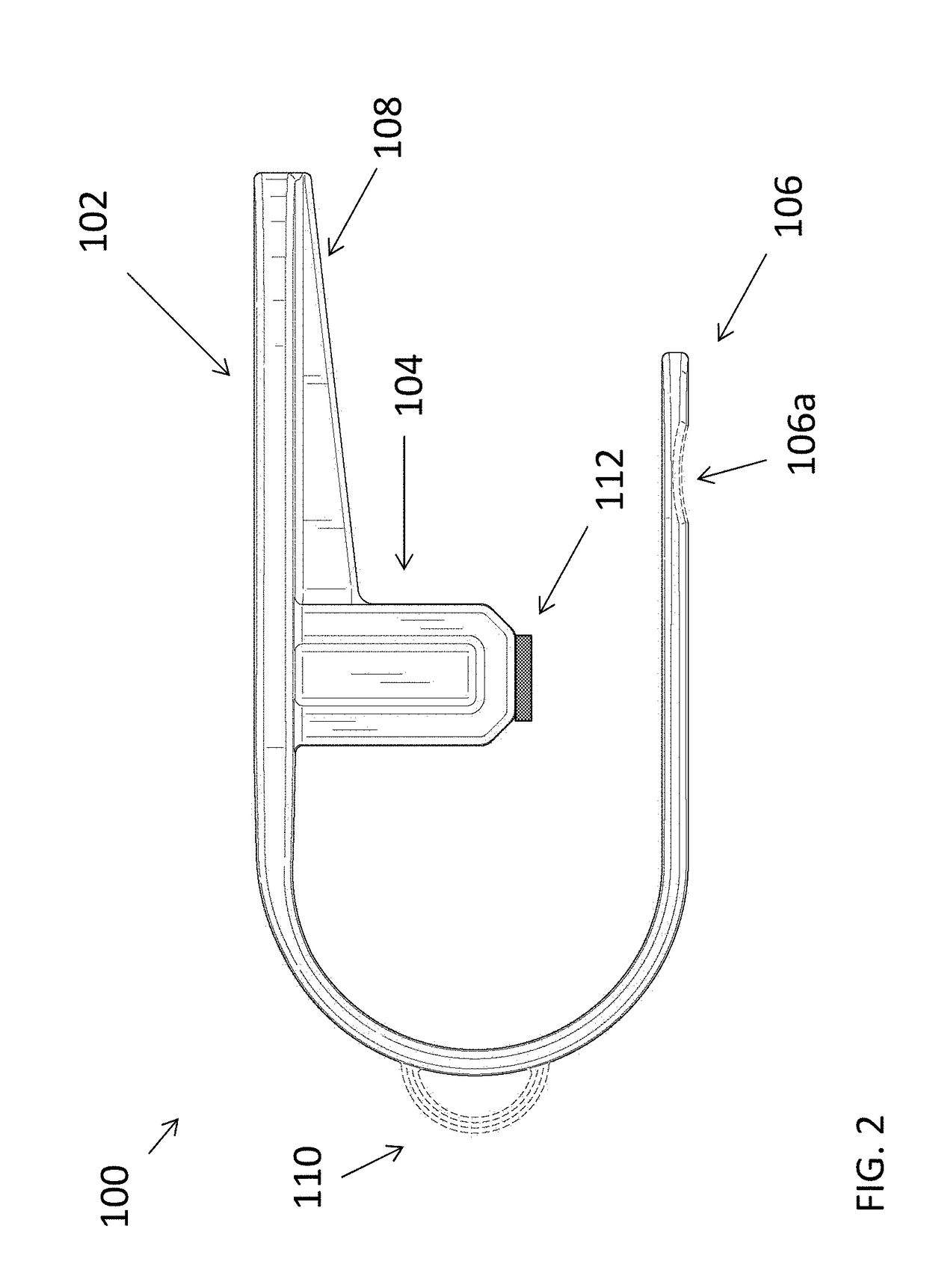
Figure 3
Abstract
Description
CROSS-REFERENCE TO RELATED APPLICATIONS
[0001] The present application claims the benefit under 35 U.S.C. § 119(e) of U.S. Provisional Patent Application Ser. No. 62 / 394,080, filed Sep. 13, 2016, entitled, “System and Method for Buckle Release Assistive Device,” which is hereby incorporated by reference for all purposes.BACKGROUNDTechnical Field
[0002] This invention relates in general to the field of occupant restraint systems and more particularly, but not by way of limitation to, systems and methods that assist with the depression of actuator buttons on restraint harnesses.Background
[0003] Occupant restraint systems are well known. They typically have a first piece of belting having a buckle at one end and an opposite end is anchored in place. The anchoring may be either by direct fastening or via a device such as a retractor. A tongue is attached to a free end of a second piece of belting whose opposite end is also anchored. When the restraint system is in use to restrain a seated oc...
Examples
Embodiment Construction
[0022]FIG. 1 is a perspective view of an embodiment of a buckle release assembly 100. In this embodiment, the buckle release assembly 100 has a generally C-shaped body having an upper portion that forms a handle 102, a lower portion that forms a back 106, and a generally curved middle section between the upper and lower portions. While the embodiment shown has a generally curved middle section, in various embodiments, the middle section may include one or more angles or a combination of angles and curves. In the embodiment shown, the handle 102 has an actuator 104 protruding from an inner surface and a generally flat outer surface. In various embodiments, the outer surface of the handle 102 positioned at the top of the C-shaped body may include one or more grooves, may be textured, may be coated in a non-skip material, or may include one or more protrusions therefrom to further facilitate depression of the actuator. In other embodiments, the handle 102 may additionally include a sof...