
Device for using dumb-bells
Patent Information
- Authority / Receiving Office
- US · United States
- Current Assignee / Owner
- Publication Date
- 2022-05-26
Smart Images
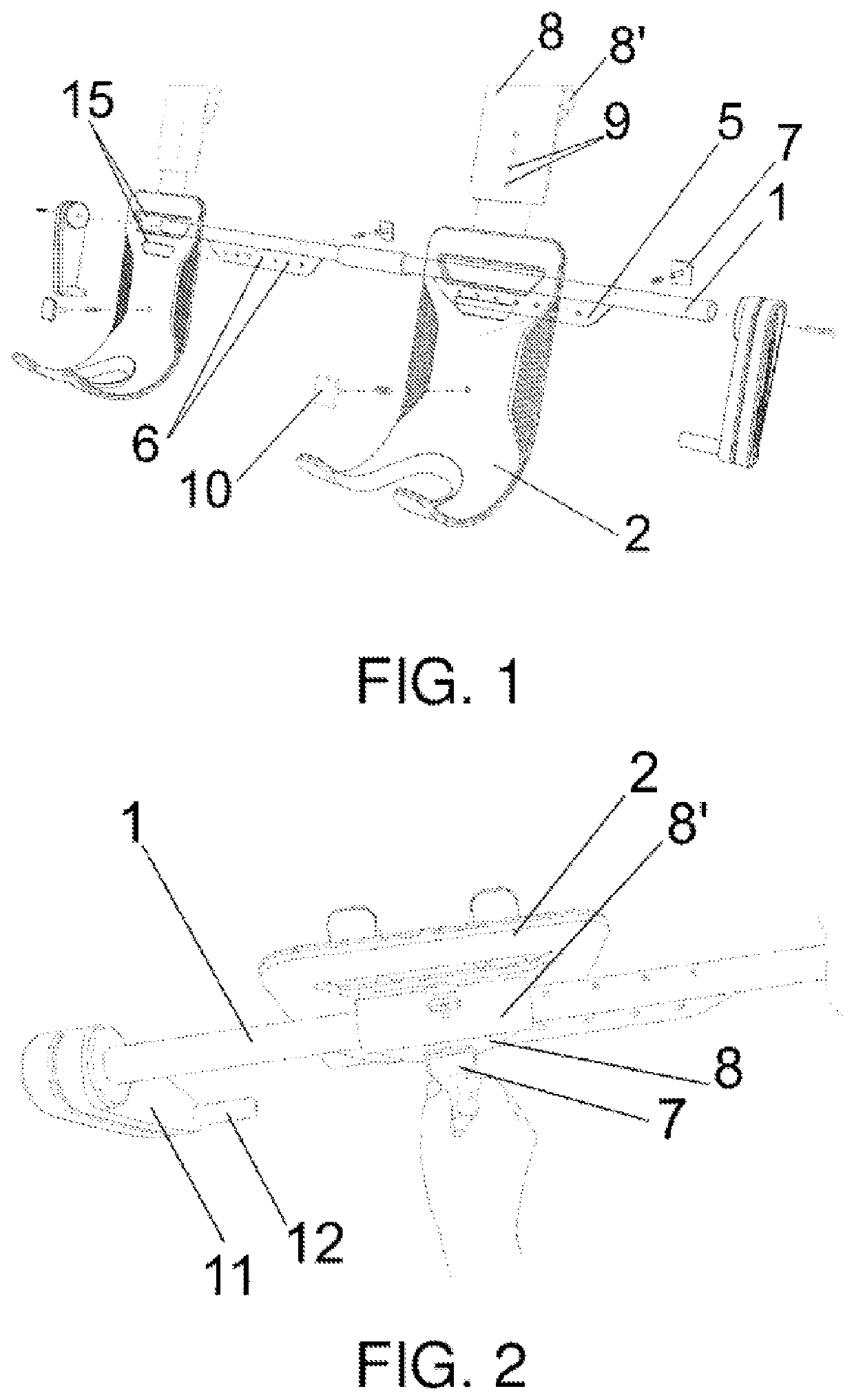
Figure 1 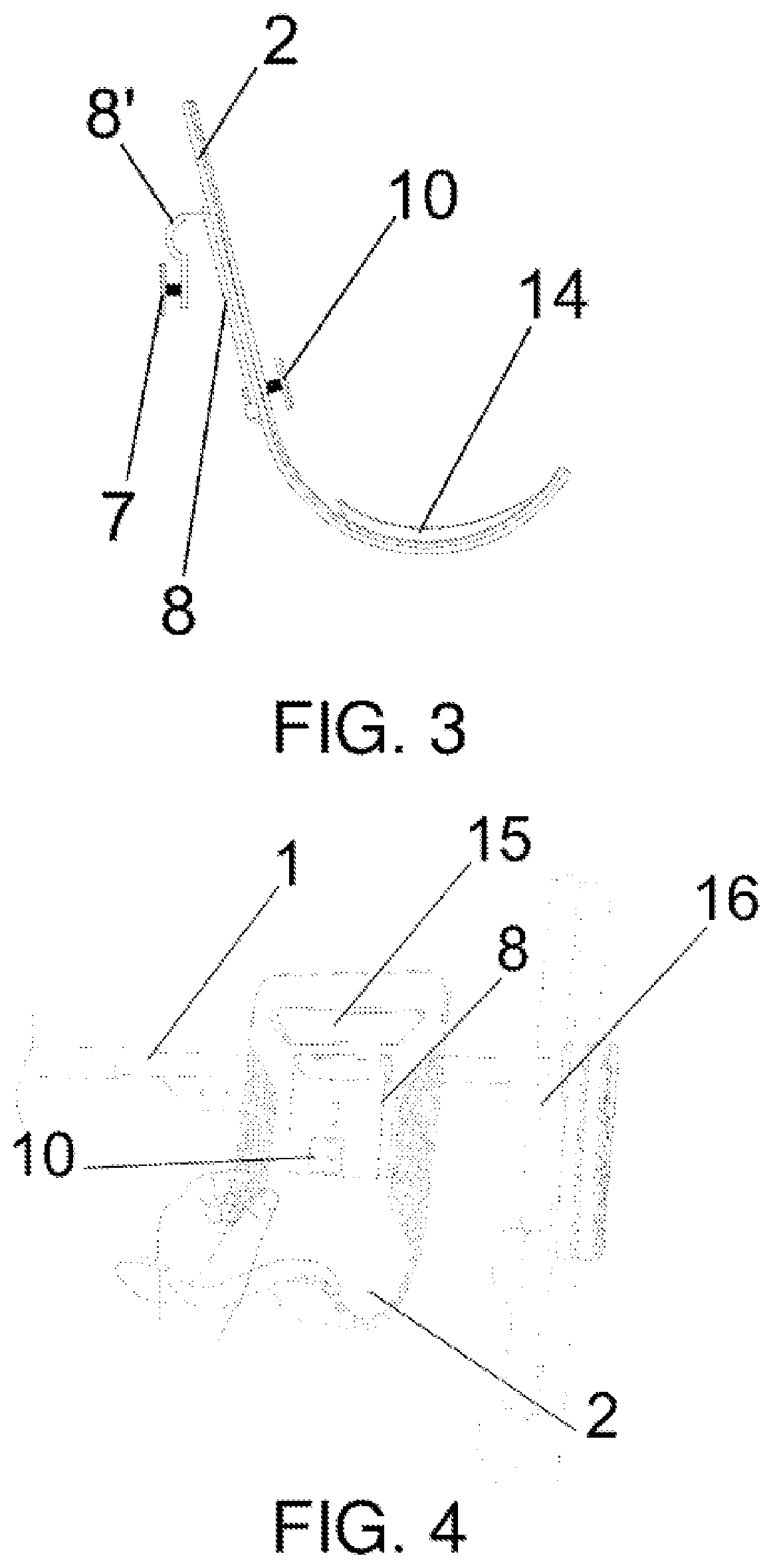
Figure 2 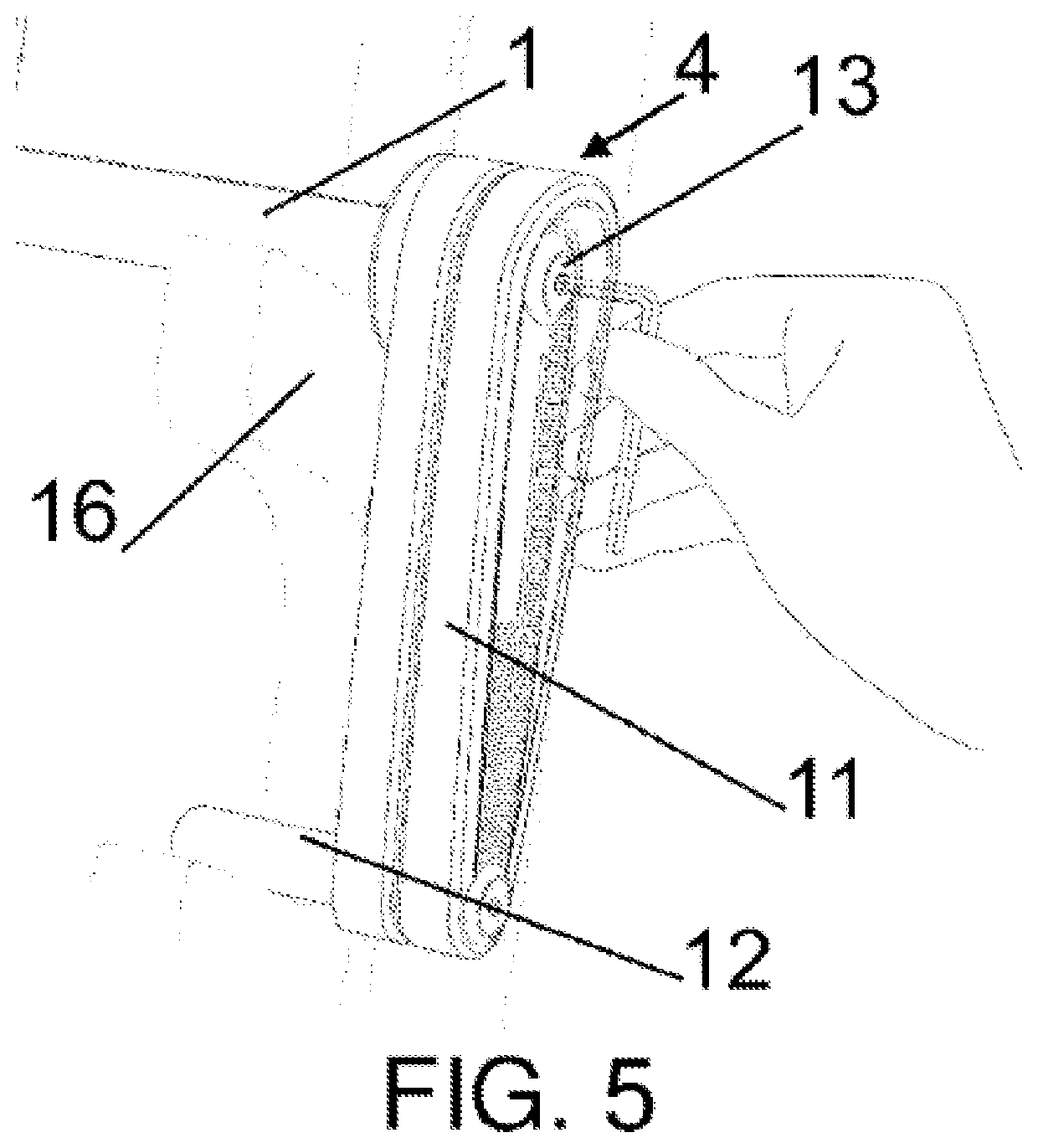
Figure 3
Abstract
Description
OBJECT OF THE INVENTION
[0001] The present invention relates to a device for using dumb-bells which is coupled on the bar used in known workbenches found in gyms and training rooms for personal training.
[0002] Specifically, the device of the invention is formed by supports with a curved surface on which dumb-bells are placed. The advantage of the device lies in its versatility for adjusting the height of the supports and the horizontal position thereof along the bar on which they are coupled, providing an assembly which can be readily arranged close to the user, being adapted to the user's dimensions and build in no time.BACKGROUND OF THE INVENTION
[0003] Auxiliary devices for practicing sports, the purpose of which is to make it easier for the user to perform exercise properly, are known. In fact, many of the machines commonly found in training rooms favor the correct position of the user so as to prevent him or her from performing incorrect movements that may strain muscles and joints....
Examples
first embodiment
[0025]FIG. 3 shows a side view of the support according to the invention, with the support being one of the elements forming the device for using dumb-bells.
[0026]FIG. 4 shows a partial front view of the device of the invention of FIG. 1 in which the vertical adjustment of the support and the complementary part can be seen in detail, with the element for attaching the device and the workbench on which the assembly is supported also being depicted.
[0027]FIG. 5 shows a perspective view of a detail of the anti-rotation means according to the first embodiment of the invention, element for attaching the device associated with a bar and with the workbench on which it is supported.
[0028]FIG. 6 shows a depiction of the device according to the first embodiment of the invention during the use thereof, with said device being supported on a workbench with a bar.
second embodiment
[0029]FIG. 7 shows a depiction of the device according to the invention, with said device being supported on a workbench with a bar.
[0030]FIG. 8 shows a rear view of the device depicted in FIG. 7 according to the second embodiment of the invention, with said device being supported on a workbench with a bar.
[0031]FIG. 9 shows a support used in the second embodiment of the invention.
third embodiment
[0032]FIG. 10 shows a depiction of the device according to the invention, in which the device is supported on a workbench with a bar.
[0033]FIG. 11 shows a rear view of the device depicted in FIG. 10 according to the third embodiment of the invention.