
Image display apparatus
a technology of image display and display screen, which is applied in the field of image display screen, can solve the problems of difficult observation of the display image, bleeding of colors comparable with chromatic aberration, etc., and achieve the effect of reducing chromatic aberration
Patent Information
- Authority / Receiving Office
- US · United States
- Current Assignee / Owner
- Publication Date
- 2005-07-26
- Estimated Expiration
- Not applicable · inactive patent
Smart Images
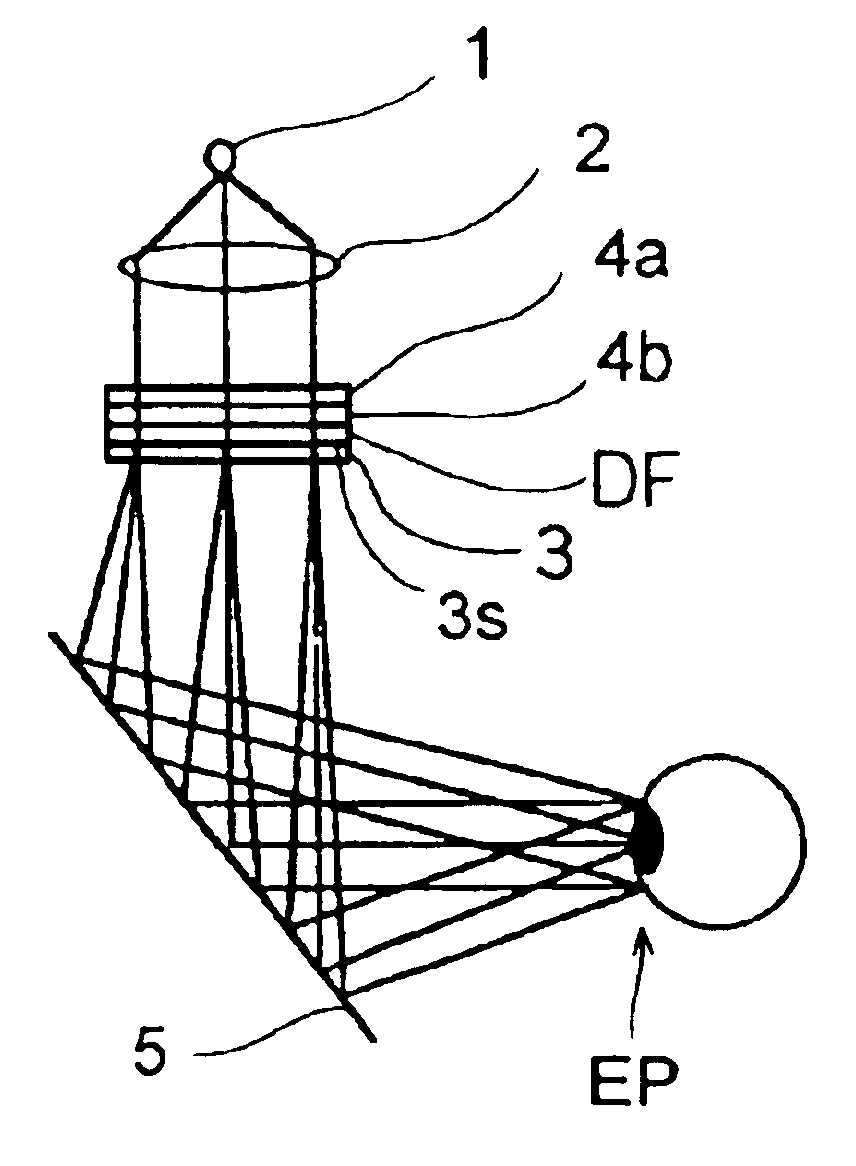
Figure 1 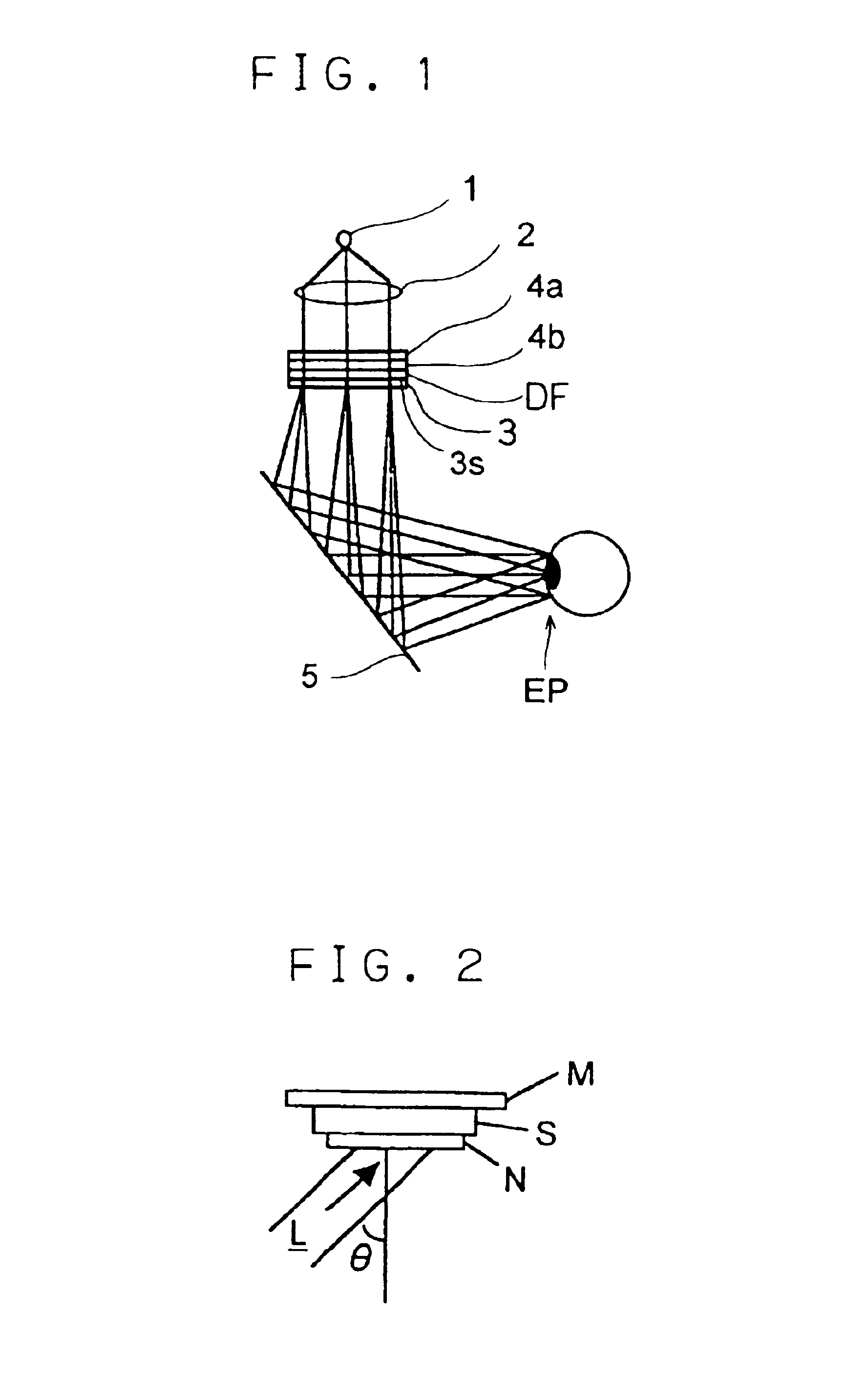
Figure 2 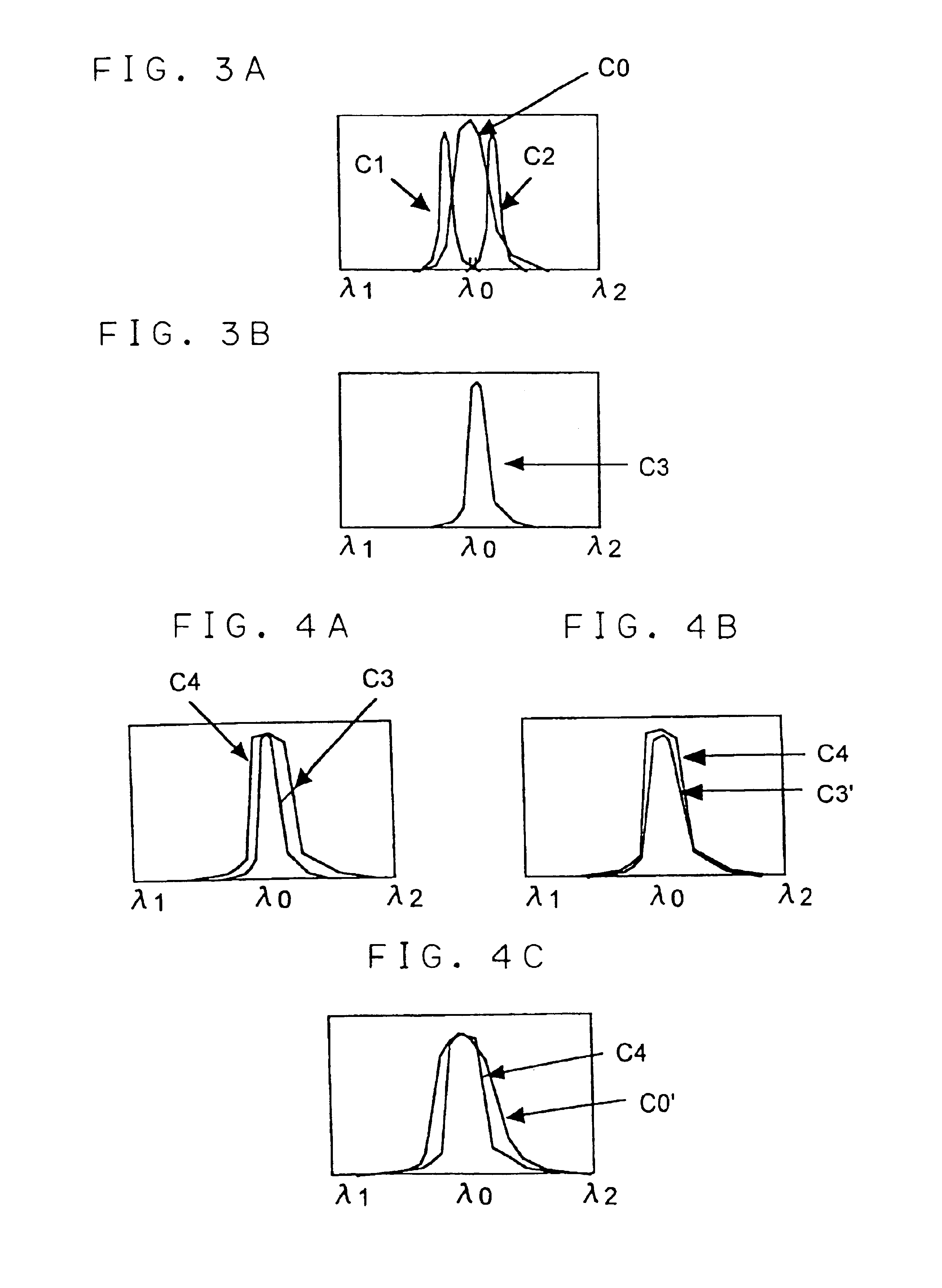
Figure 3
Abstract
Description
[0001] This application is based on Japanese Patent Application No. 2001-80624 filed on Mar. 21, 2001, the contents of which are hereby incorporated by reference.BACKGROUND OF THE INVENTION
[0002] 1. Field of the Invention
[0003] The present invention relates to an image display apparatus. More particularly, the present invention relates to, for example, an image display apparatus such as a HMD (head-mounted display) or HUD (head-up display) that operates by projecting a two-dimensional image formed on a liquid crystal display (LCD) onto an observer's eye on a see-through basis by using a holographic optical element (HOE).
[0004] 2. Description of the Prior Art
[0005] Conventionally, various see-through-type image display apparatus have been proposed that present a projected image in a form superimposed on an image of the outside world by the use of a holographic optical element (U.S. Pat. No. 5,475,512, and Japanese Patent Applications Laid-Open Nos. 2001-4956, 2000-122589, H4-118620, and o...
Examples
sixth embodiment (
FIGS. 13 and 14)
[0066]FIG. 13 shows the optical arrangement of a sixth embodiment of the invention. In this image display apparatus, the holographic magnifying optical element (5) has three diffraction center wavelengths respectively corresponding to three primary color components, i.e. R (red), G (green), and B (blue). The illumination light source is composed of three LEDs (1R, 1G, and 1B) and has three light mission center wavelengths, i.e. for R, G, and B, respectively corresponding to those diffraction center wavelengths. The holographic filter (4) has, for each of the R, G, and B wavelengths, two diffraction center wavelengths, i.e. a diffraction center wavelength shorter than the diffraction center wavelength of the holographic magnifying optical element (5) and a diffraction center wavelength longer than the diffraction center wavelength of the holographic magnifying optical element (5). Thus, the holographic magnifying optical element (5) restricts separately the three, i.e...