
Biodegradable stent
a biodegradable, stent technology, applied in the field of medical devices, can solve the problems of affecting the function of the stent, affecting the stent, etc., and achieve the effect of easy passage from the body lumen
Patent Information
- Authority / Receiving Office
- US · United States
- Patent Type
- Patents(United States)
- Current Assignee / Owner
- Publication Date
- 2007-01-30
- Estimated Expiration
- Not applicable · inactive patent
Smart Images
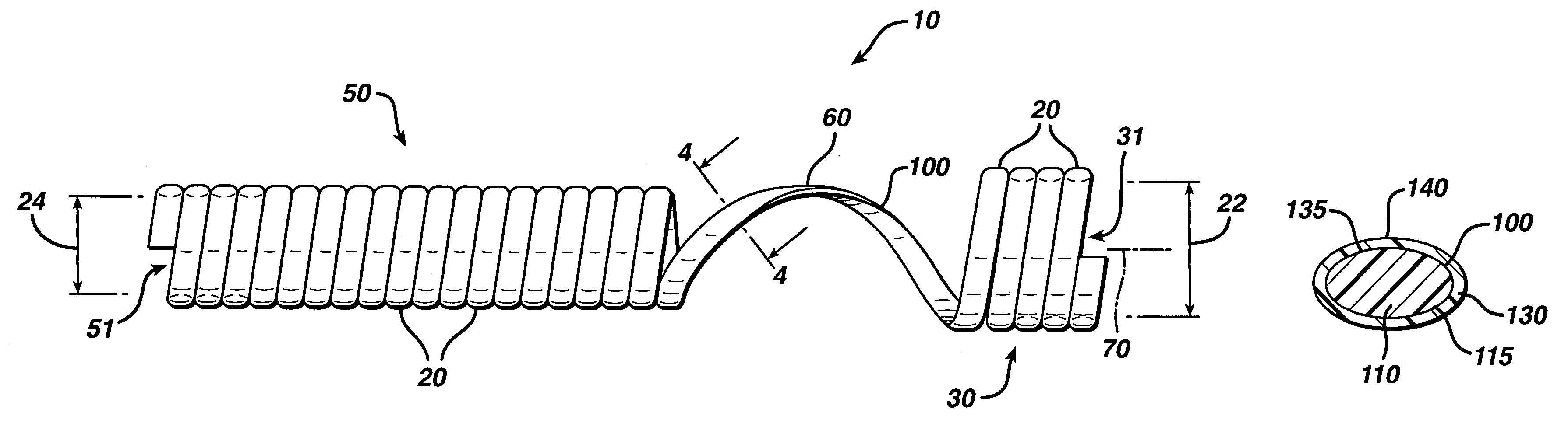
Figure 1 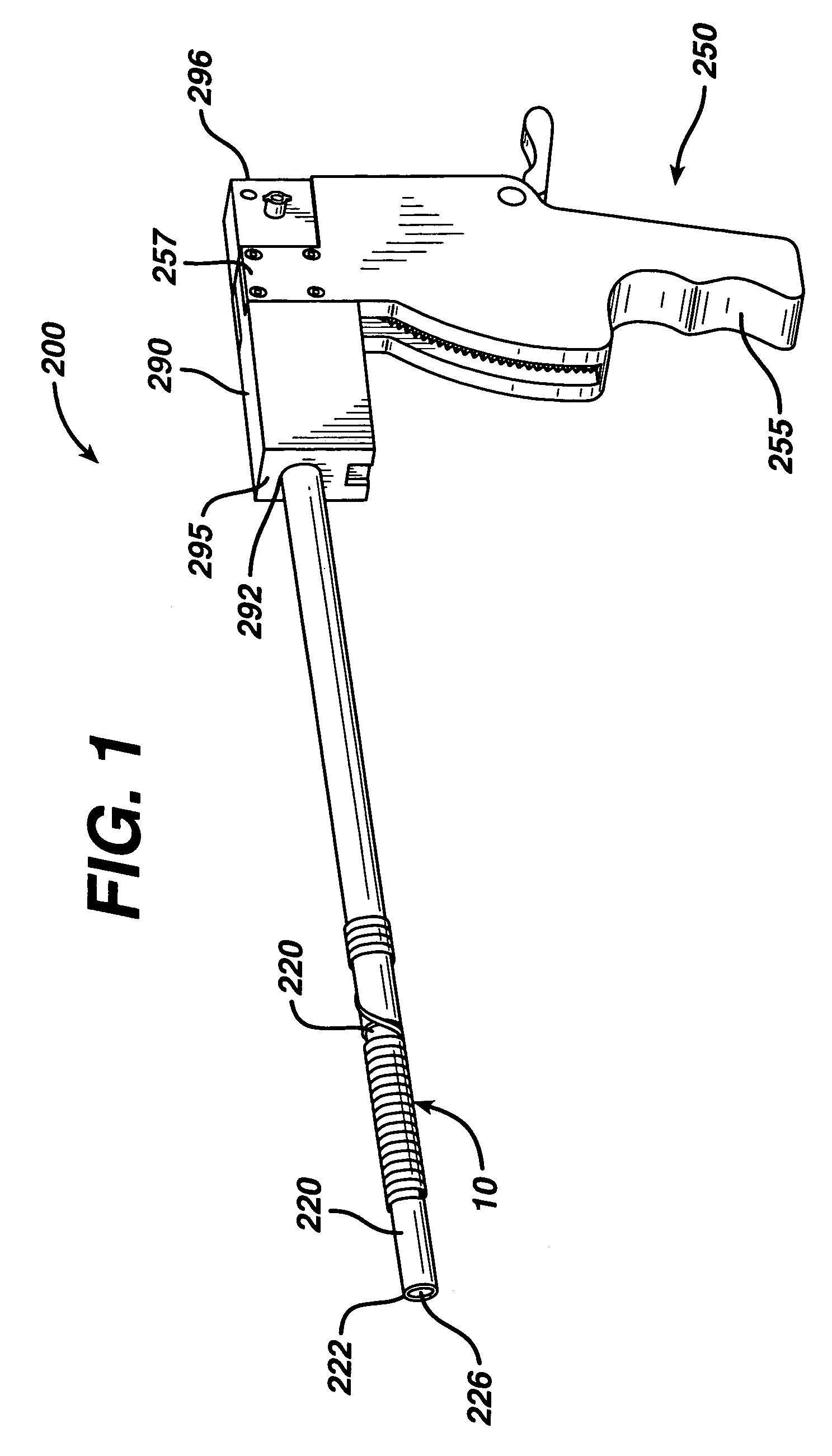
Figure 2 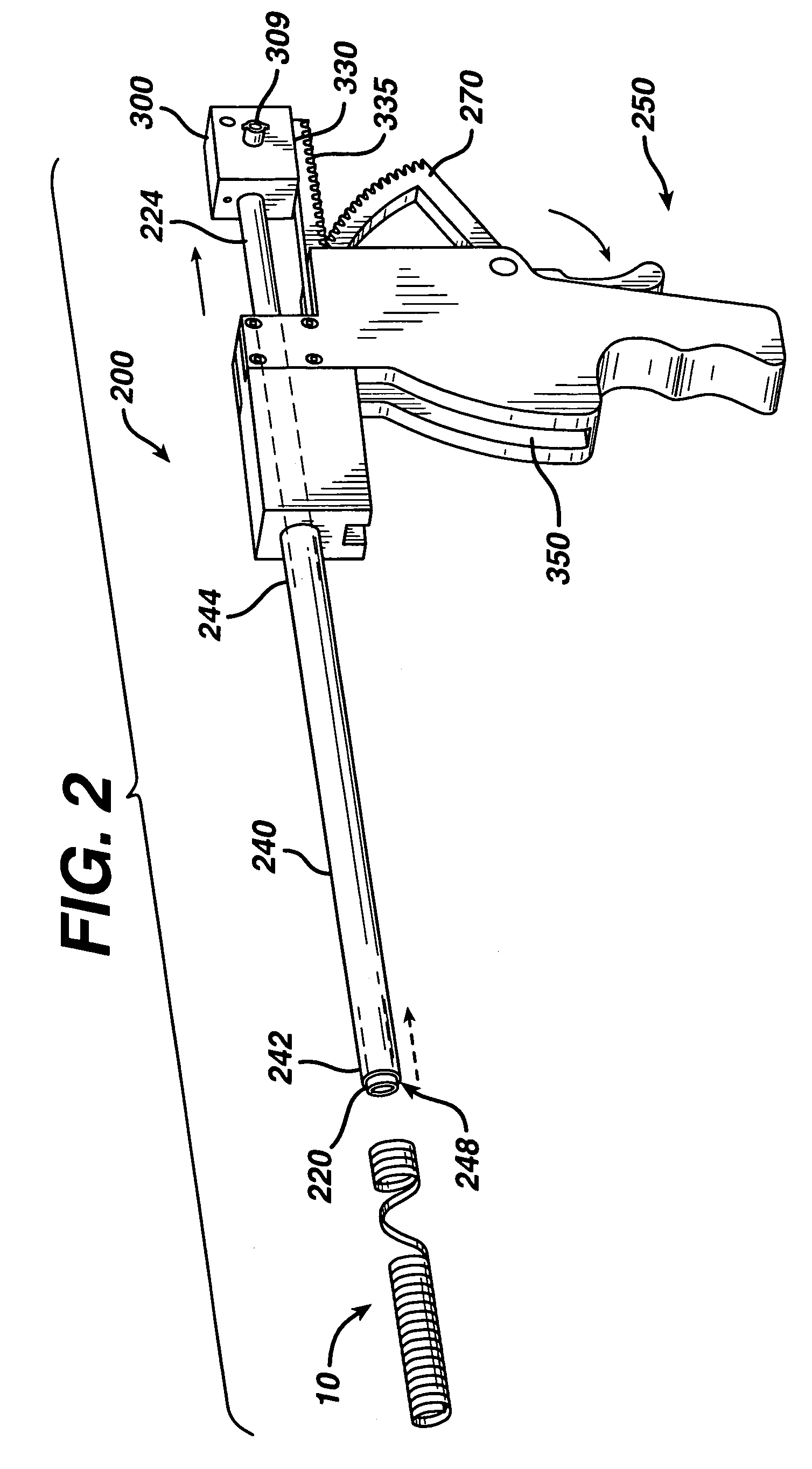
Figure 3
Abstract
Description
[0001] This application is a continuation-in-part which claims the benefit of non-provisional pending U.S. patent application Ser. No. 10 / 256,942, filed Sep. 27, 2002, which is a continuation of U.S. patent application Ser. No. 09 / 933,059, filed Aug. 20, 2001, now U.S. Pat. No. 6,537,312, issued Mar. 25, 2003, which is a continuation of U.S. patent application Ser. No. 09 / 470,619, filed Dec. 22, 1999, now U.S. Pat. No. 6,338,739, issued Jan. 15, 2002, which is hereby incorporated by reference herein.FIELD OF THE INVENTION
[0002] The field of art to which this invention relates is medical devices, in particular, stent devices made from biodegradable polymers.BACKGROUND OF THE INVENTION
[0003] The use of stent medical devices, or other types of endoluminal mechanical support devices, to keep a duct, vessel or other body lumen open in the human body has developed into a primary therapy for lumen stenosis or obstruction. The use of stents in various surgical procedures has quickly become acc...
Examples
example 1
[0081]A material blend was prepared for use in manufacturing the inner core and outer layer of a fiber useful to wind into a stent of the present invention. The use of this material in fiber formation is described in Example 2.
[0082]The outer shell layer was constituted from a blend of 60 wt % of a first random copolymer containing 90 mole % of polymerized glycolide and 10 mole % polymerized lactide and 40 wt % of a second copolymer containing 85 mole % polymerized lactide and 15 mole % polymerized glycolide. The inherent viscosity of the first copolymer containing 90 mole % polymerized glycolide and 10 mole % polymerized lactide, to be henceforth referred to as 90 / 10 glycolide / lactide copolymer, was 1.4 dL / g as determined in HFIP (hexafluroisopropanol) at 25° C. at a concentration of 0.1 g / dL. The inherent viscosity of the second copolymer containing 85 mole % polymerized lactide and 15 mole % polymerized glycolide, to be henceforth 85 / 15 lactide / glycolide copolymer, was 2.1 dL / g a...
example 2
[0084]The fabrication method for coextruded fibers with round cross-sections follows. The material used in the inner core and outer layer shell has been described in Example 1 above. The outer shell layer was made from a blend of 60 wt % 90 / 10 glycolide / lactide copolymer and 40 wt % of 85 / 15 lactide / glycolide copolymer. The inner layer was made from a blend of 95 wt % of 75 / 25 glycolide / caprolactone segmented block copolymer and 5 wt. % Barium Sulfate. Also the in vitro tensile testing of the fibers is presented and compared to coextruded fibers that have only the 90 / 10 glycolide / lactide copolymer.
[0085]The fibers were co-extruded using two single screw extruders. Both screws had compression ratios of 3:1 and an l / D of 25:1. A 1″ horizontal extruder was used for outer shell layer and ⅝″ vertical extruder was used for the inner core. A concentric two-layer feed-block was used to feed the two material stream into a single orifice die from which the extrudate is fed to a water trough f...
example 3
[0090]A process used to convert fibers having an oval or elliptical cross-section into stents is described in this example. A stent with single helix structure was formed from a single oval fiber. Coextruded fibers containing materials made in Example 1 were considered for the shell and core of the oval fiber.
[0091]The process to make oval coextruded fibers is described first. The material used in the outer core and inner shell has been described in Example 1. The outer shell layer was made from a blend 60 wt % of 90 / 10 glycolide / lactide copolymer and 40 wt % of 85 / 15 lactide / glycolide copolymer. The inner layer was made from a blend of 95 wt % of 75 / 25 glycolide / caprolactone segmented block copolymer and 5 wt. % barium sulfate.
[0092]The oval fibers were coextruded using two single screw extruders. Both screws had compression ratios of 3:1 and a L / D of 25:1. A 1″ horizontal extruder was used for outer shell layer and ⅝″ vertical extruder was used for the inner core. A concentric two...