
Authentication for use of high speed network resources
a network resource and authentication technology, applied in the field of telecommunications, can solve the problems of insufficient control of access to the network, user limitation in a conventional telephone network to a single connection at each physical interface, and the consumption of bandwidth by each connection across the network
Patent Information
- Authority / Receiving Office
- US · United States
- Patent Type
- Patents(United States)
- Current Assignee / Owner
- Publication Date
- 2007-03-06
- Estimated Expiration
- Not applicable · inactive patent
Smart Images
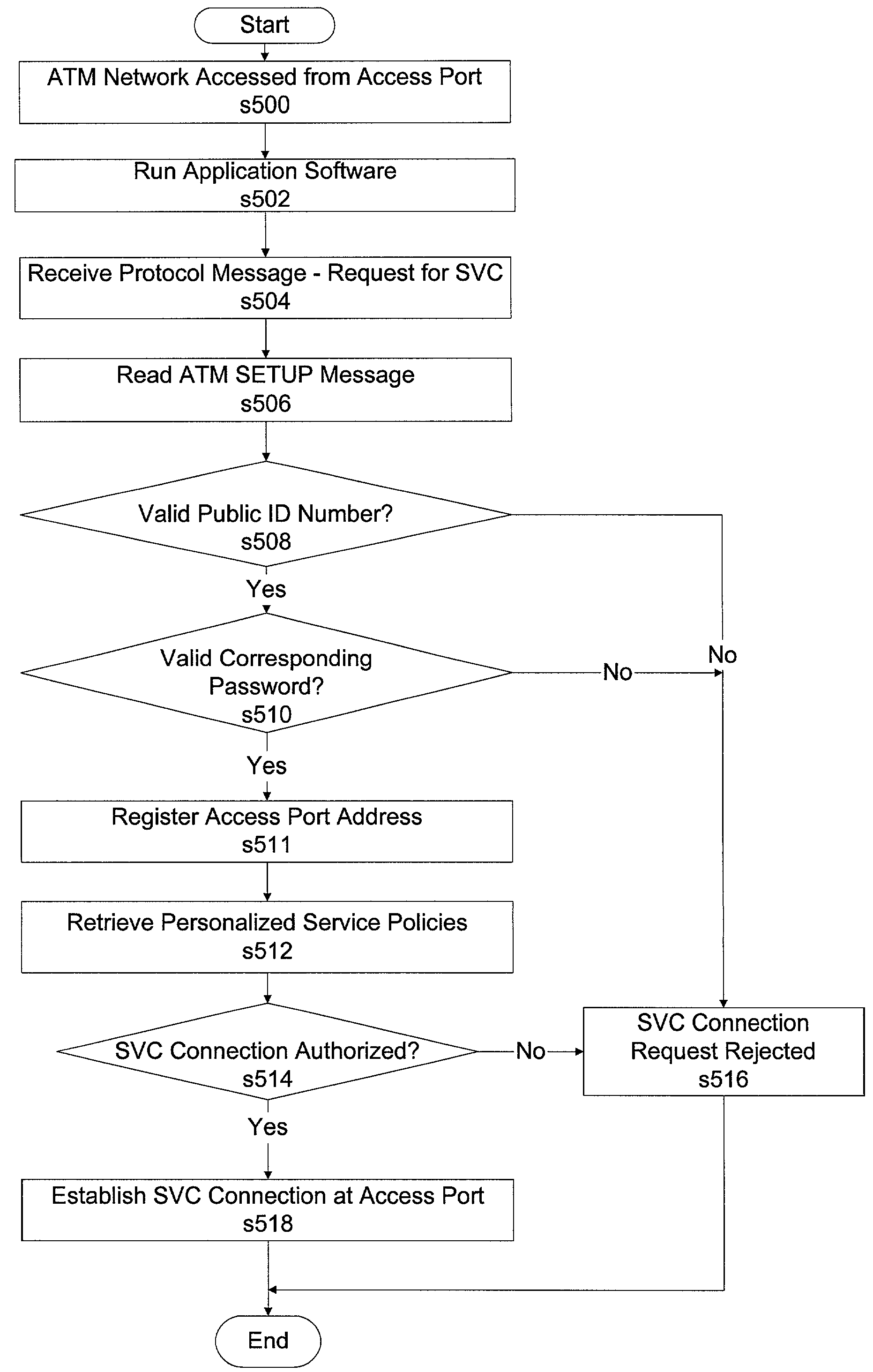
Figure 1 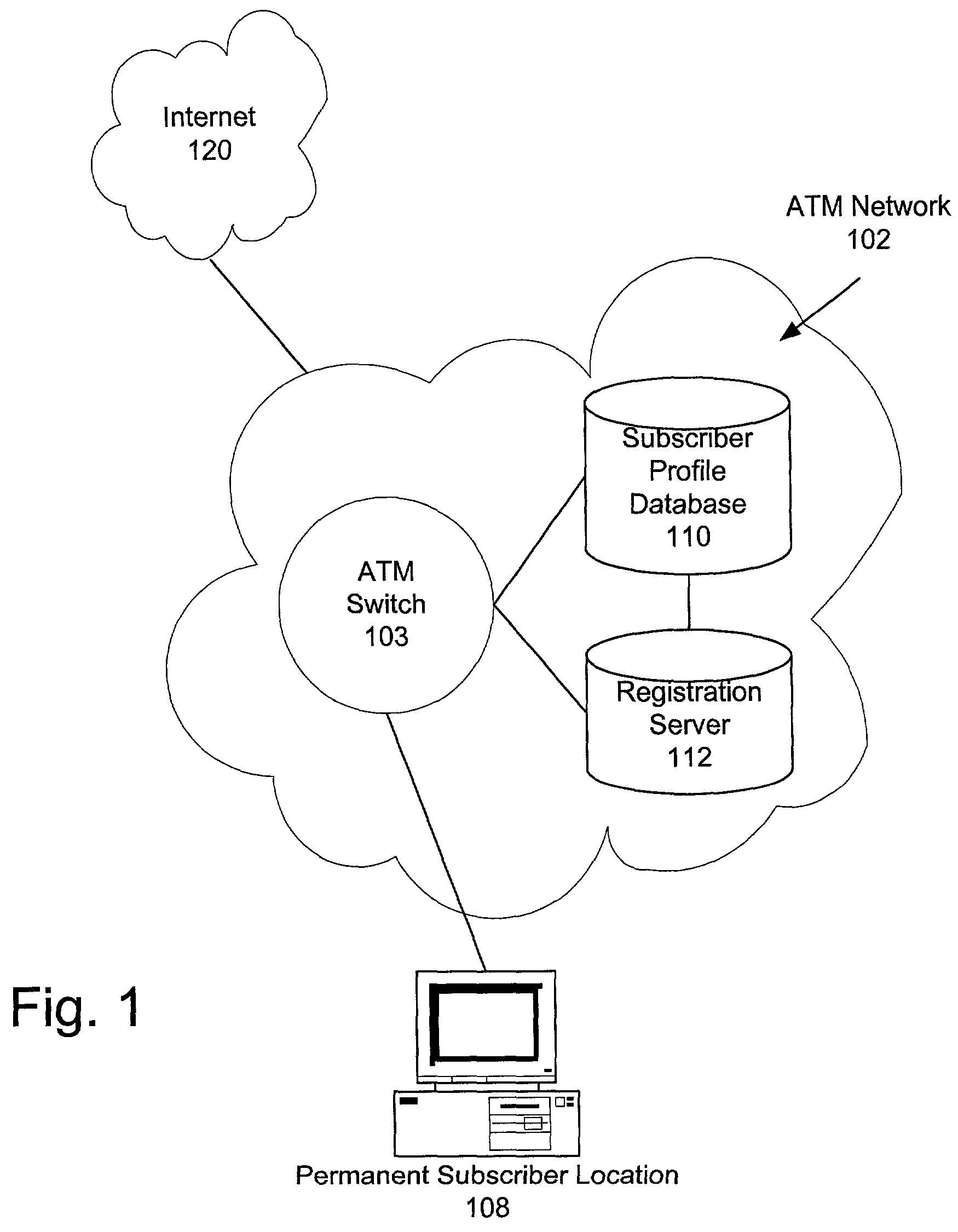
Figure 2 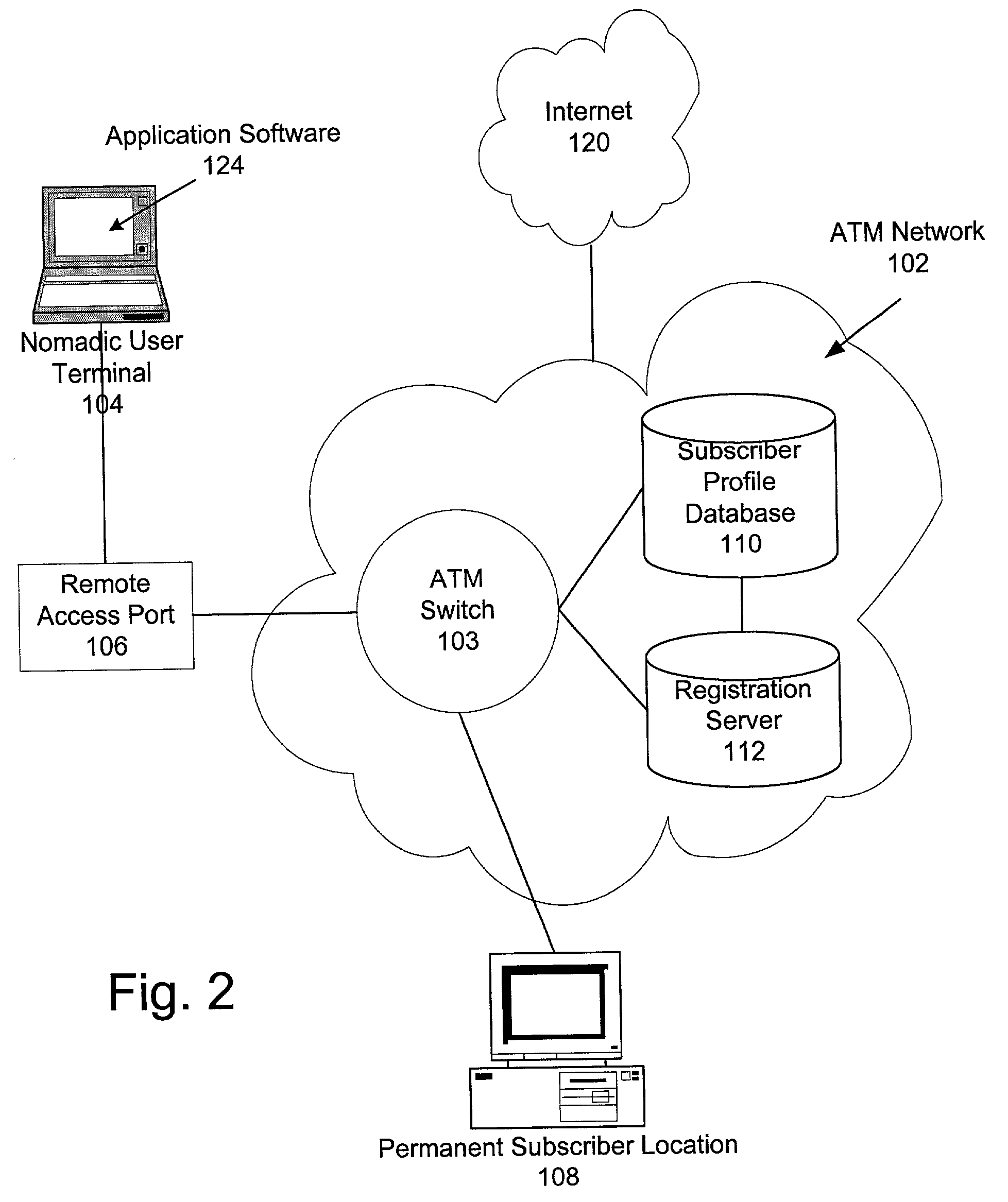
Figure 3
Abstract
Description
BACKGROUND OF THE INVENTION
[0001] 1. Field of the Invention
[0002] The present invention relates to the field of telecommunications. More particularly, the present invention relates to associating a request for a switched virtual circuit (SVC) service in a high speed network to an originating subscriber, so that the network can apply the subscriber's individual service policies, and optionally registering an access port address to the subscriber.
[0003] 2. Background Information
[0004] Currently, when network subscribers access a high speed network for SVC services, the port being used for the access is associated with the SVC service request. Thus, if multiple subscribers could access the network from a single port, each subscriber would not be uniquely associated with the network access. Similarly, if a subscriber could access the network from a location remote from the subscriber's normal access port (e.g., accessing from a public access port), the subscriber is not associated with the ...
Examples
Embodiment Construction
[0021]In view of the above, the present invention through one or more of its various aspects and / or embodiments is presented to accomplish one or more objectives and advantages, such as those noted below. It is noted that although the embodiments described below are described with reference to ATM networks, any high speed network employing SVCs, such as an IP network and an optical network, can operate according to the principles of the present invention.
[0022]An aspect of the present invention provides a method for associating a switched virtual circuit (SVC) connection request in a high speed data network with a network subscriber. The method includes receiving a signaling protocol message requesting the SVC connection from the subscriber at an access port and determining whether the signaling protocol message contains authentication data to authenticate the subscriber. The access port may be different from a permanent access port of the subscriber. When the subscriber is authenti...