
Interpolator based clock and data recovery (CDR) circuit with digitally programmable BW and tracking capability
a clock and data recovery circuit technology, applied in the field of high-speed encoded data communication, can solve the problems of limiting the tracking capability (or bandwidth) of the cdr circuit, affecting the speed of data transmission, so as to increase the bandwidth of the cdr, reduce the latency, and maintain the constant bandwidth
Patent Information
- Authority / Receiving Office
- US · United States
- Patent Type
- Patents(United States)
- Current Assignee / Owner
- Publication Date
- 2008-01-01
Smart Images
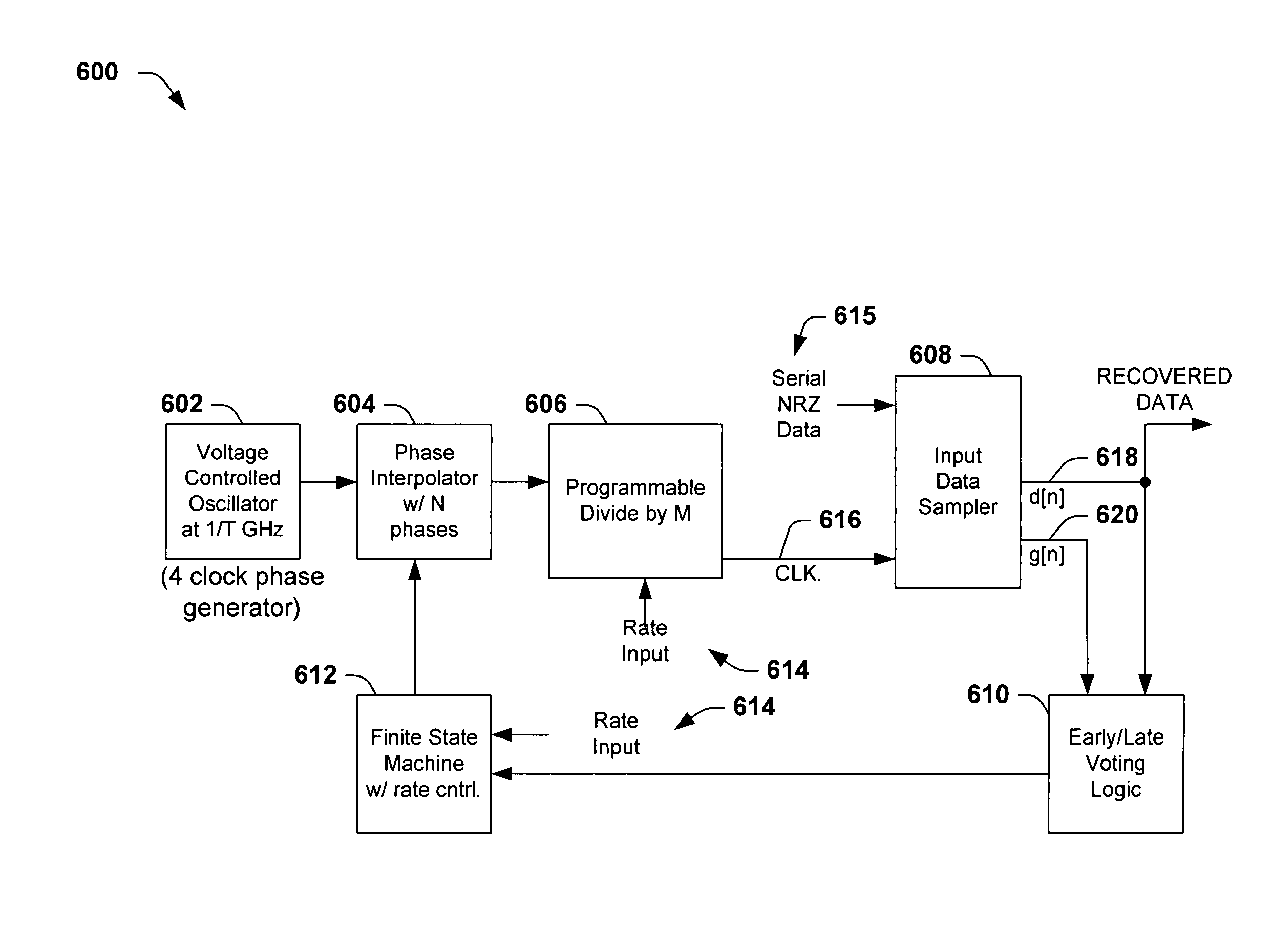
Figure 1 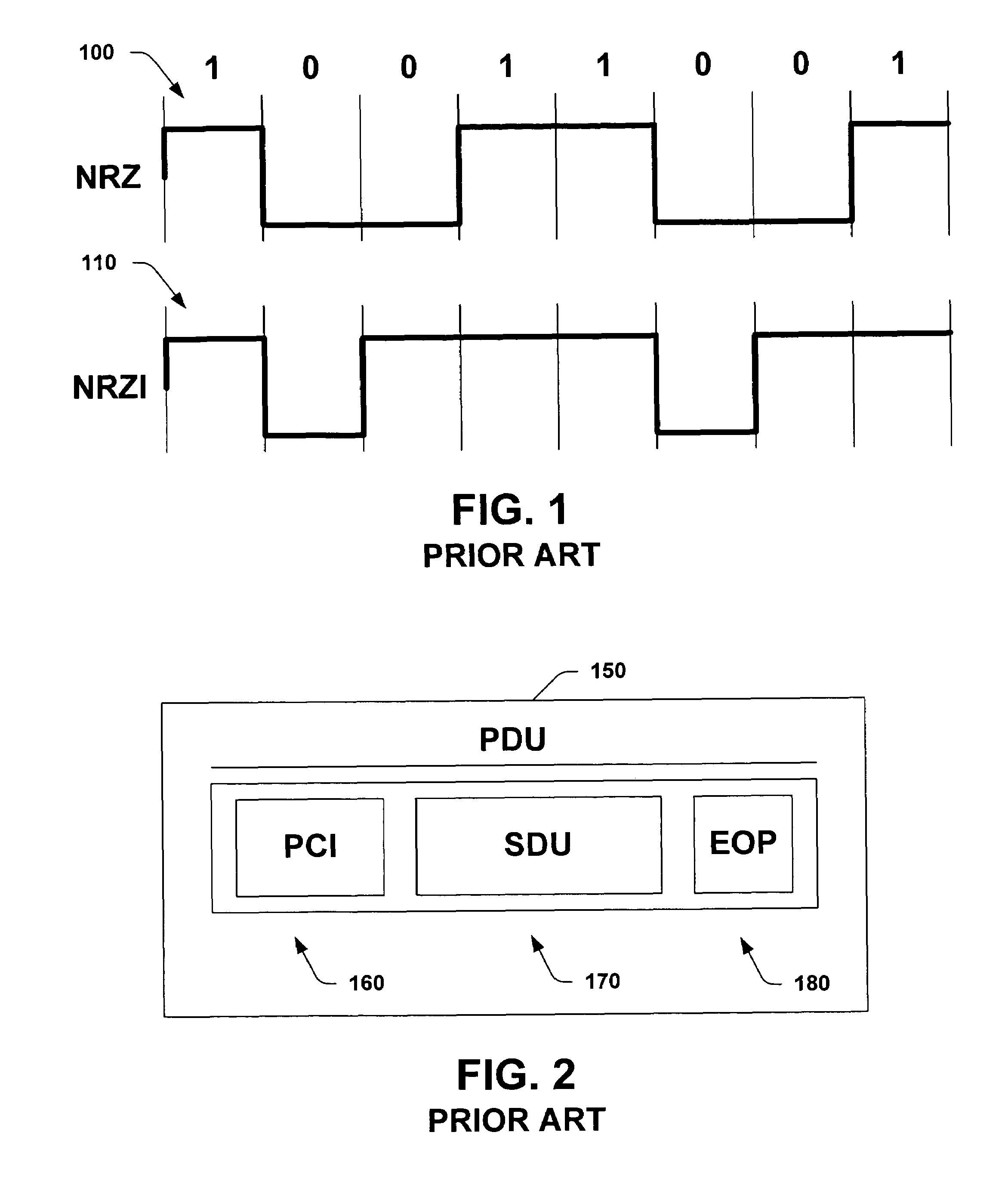
Figure 2 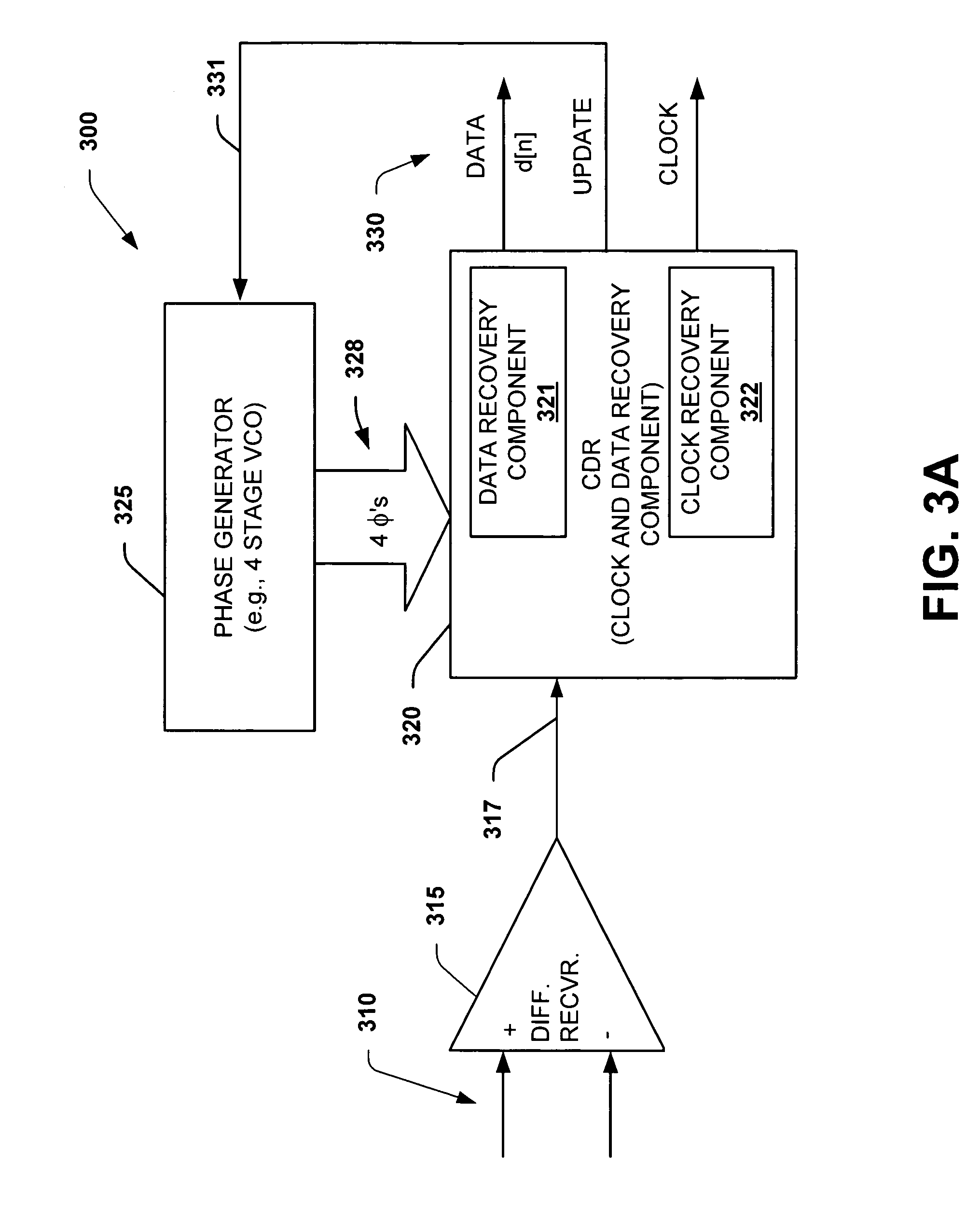
Figure 3
Abstract
Description
FIELD OF THE INVENTION
[0001] The present invention relates generally to high speed encoded data communications, and more particularly, to systems and methods that recover clock information from encoded serial data with digitally programmable bandwidth logic to provide fast locking capability or improved tracking accuracy.BACKGROUND OF THE INVENTION
[0002] There are several common serial communication standards currently available, including USB (Universal Serial Bus) 1.1 that provides communication speeds up to 12 Mbps (Million bits per second), FireWire (IEEE 1394) that operates at 400 Mbps, and USB 2.0 that operates at a maximum of about 480 Mbps. The operational speeds of these standards have increased over time. For example, the speed of USB 2.0 versus USB 1.1 illustrates an improvement of over 40 times. State of the art optical networks used in data communications and telecommunications operates at bit rates up to 40 Gbps (billion bits per second).
[0003] Generally, serial communica...
Examples
Embodiment Construction
[0045]The present invention will now be described with respect to the accompanying drawings in which like numbered elements represent like parts. The figures provided herewith and the accompanying descriptions of the figures are merely provided for illustrative purposes. One of ordinary skill in the art should realize, based on the instant description, other implementations and methods for fabricating the devices and structures illustrated in the figures and in the following description.
[0046]The present invention facilitates clock and data recovery for serial data streams by providing a mechanism that can be employed to maintain a fixed tracking capability of an interpolator based CDR circuit at multiple data rates. The present invention further provides a wide data rate range CDR circuit, yet uses an interpolator design optimized for a fixed frequency. The invention employs a rate programmable divider circuit that operates over a wide range of clock and data rates to provide vario...