
Case packing robot
a robot and case technology, applied in the field of case packing robots, can solve the problems of unsatisfactory use in highly sanitary environments such as meat and dairy products packing, difficult sanitation, undesirable for sanitary applications,
Patent Information
- Authority / Receiving Office
- US · United States
- Patent Type
- Patents(United States)
- Current Assignee / Owner
- Publication Date
- 2009-01-06
- Estimated Expiration
- Not applicable · inactive patent
Smart Images
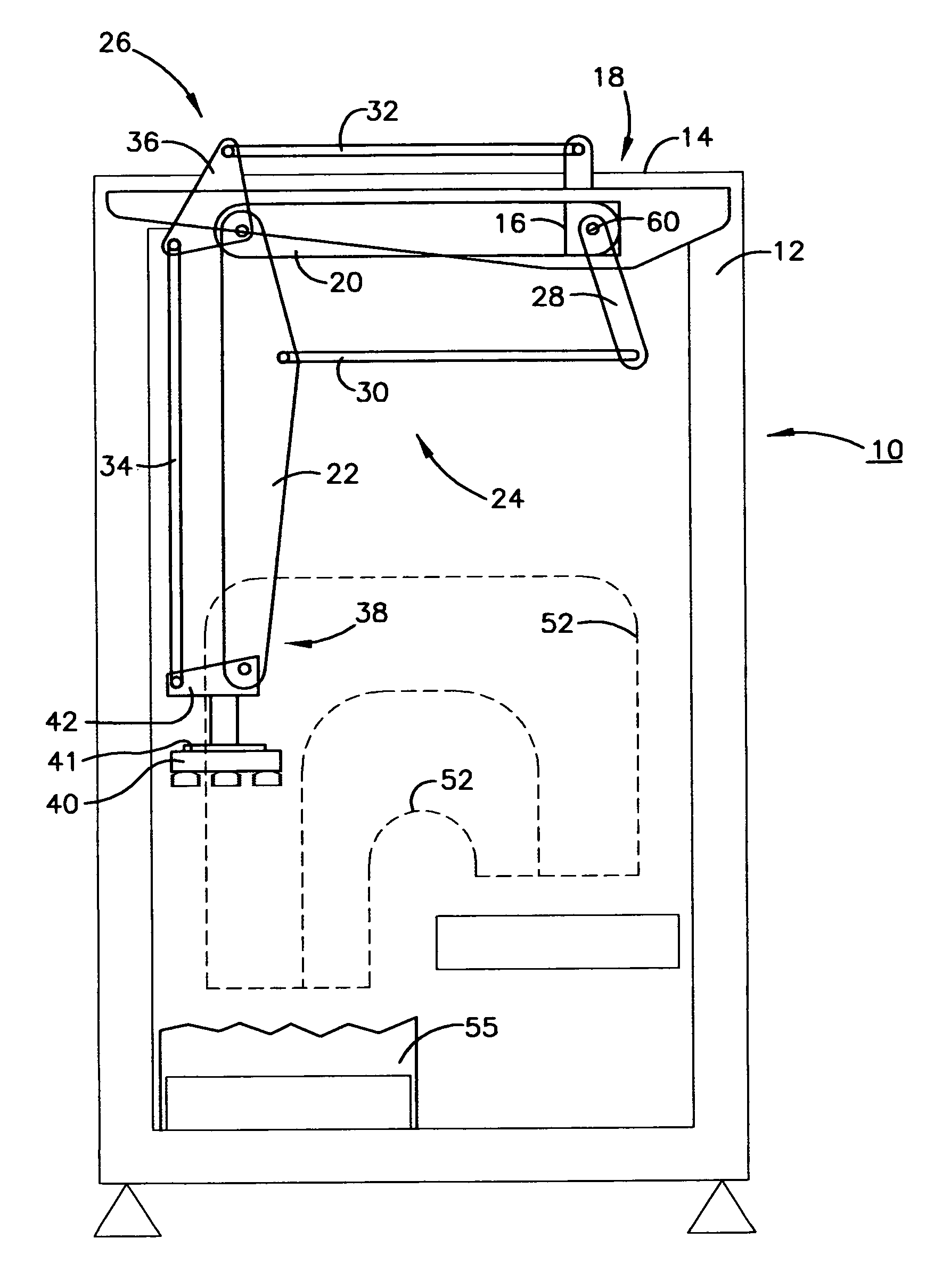
Figure 1 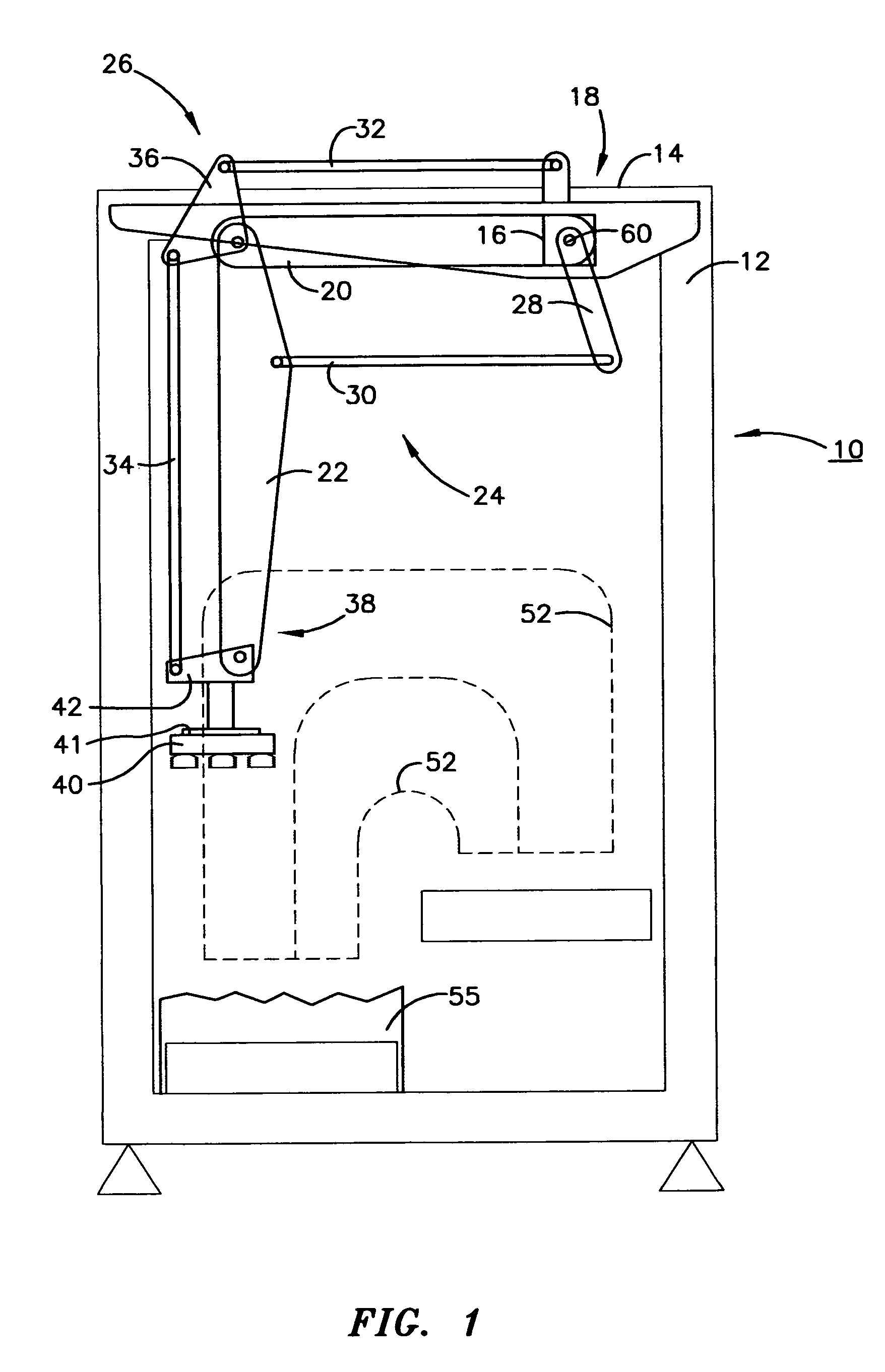
Figure 2 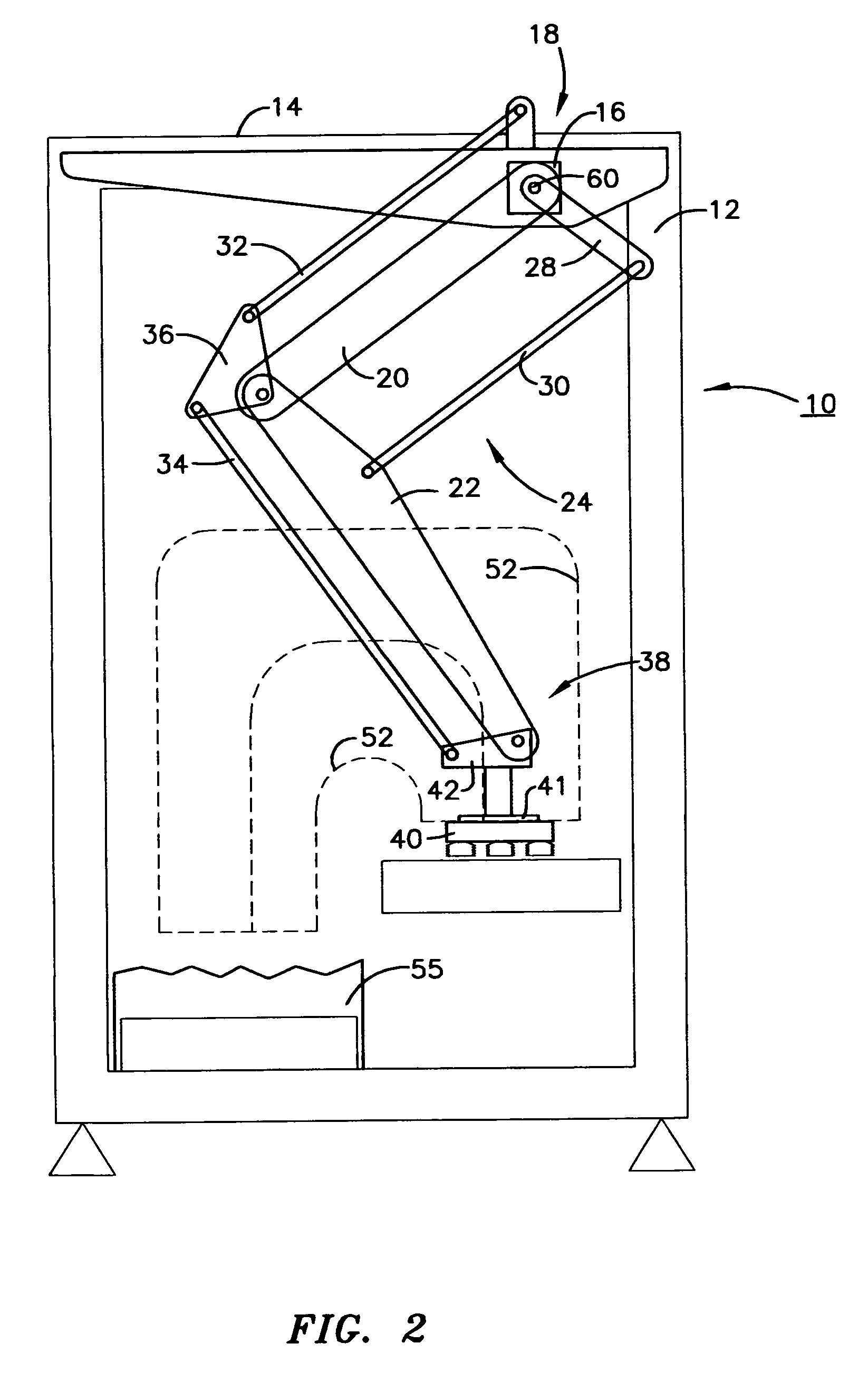
Figure 3
Abstract
Description
FIELD OF THE INVENTION
[0001] The present invention relates to case packing robots and more particularly to a suspended articulating robot designed specifically for this purpose.BACKGROUND OF THE INVENTION
[0002] So-called Cartesian style gantry robots have long been used in top loading applications. The design of such devices permits them to pick product and to reach into deep cases for the packing of product. While such robots have proven highly satisfactory for many case packing applications, their use in highly sanitary environments such as in the packing of meats and dairy products has proven somewhat undesirable due to their many horizontal flat surfaces and the presence of such structures as timing belts which make their sanitation difficult.
[0003] Some articulated robots on the other hand while proving highly desirable for sanitary applications have, because of their structure, not been suited to, for example case packing, due do the relatively large footprint needed to accommoda...
Examples
Embodiment Construction
[0012]Referring now to the accompanying drawings, the case loading articulated robot of the present invention 10 comprises a frame 12 that forms an integral part of robot 10 and defines the work space of robot 10. It should be specifically noted that all surfaces of frame 12 including top surface 14 are all slanted, i.e. tilted downward, to eliminate flat horizontal surfaces that might inhibit sanitizing. Additionally the various arms described hereinafter are of an open structure with no closed or sealed areas that could become contaminated to allow for ease of sanitation. As shown in the various Figures, servo motors 16 and 18 which drive generally horizontal first arm 20 proximate top 23 and generally vertical second arms 22 proximate sides 25 are fixed to frame 12 thus avoiding the need to provide arms 20 and 22 with adequate strength as to support arm drive servo motors, as is the case in conventional articulated robots wherein such drive motors are mounted on the arms of the a...