
Zoom lens and image pickup apparatus including the same
a technology of zoom lens and image pickup, which is applied in the direction of optics, instruments, optical elements, etc., can solve the problems of insufficient downsizing of the entire lens system, large effective front lens diameter, and difficult to obtain high optical performance over the entire zoom range, etc., to achieve high zoom ratio, small entire optical system, and high optical performance
Patent Information
- Authority / Receiving Office
- US · United States
- Patent Type
- Patents(United States)
- Current Assignee / Owner
- Publication Date
- 2012-11-20
Smart Images
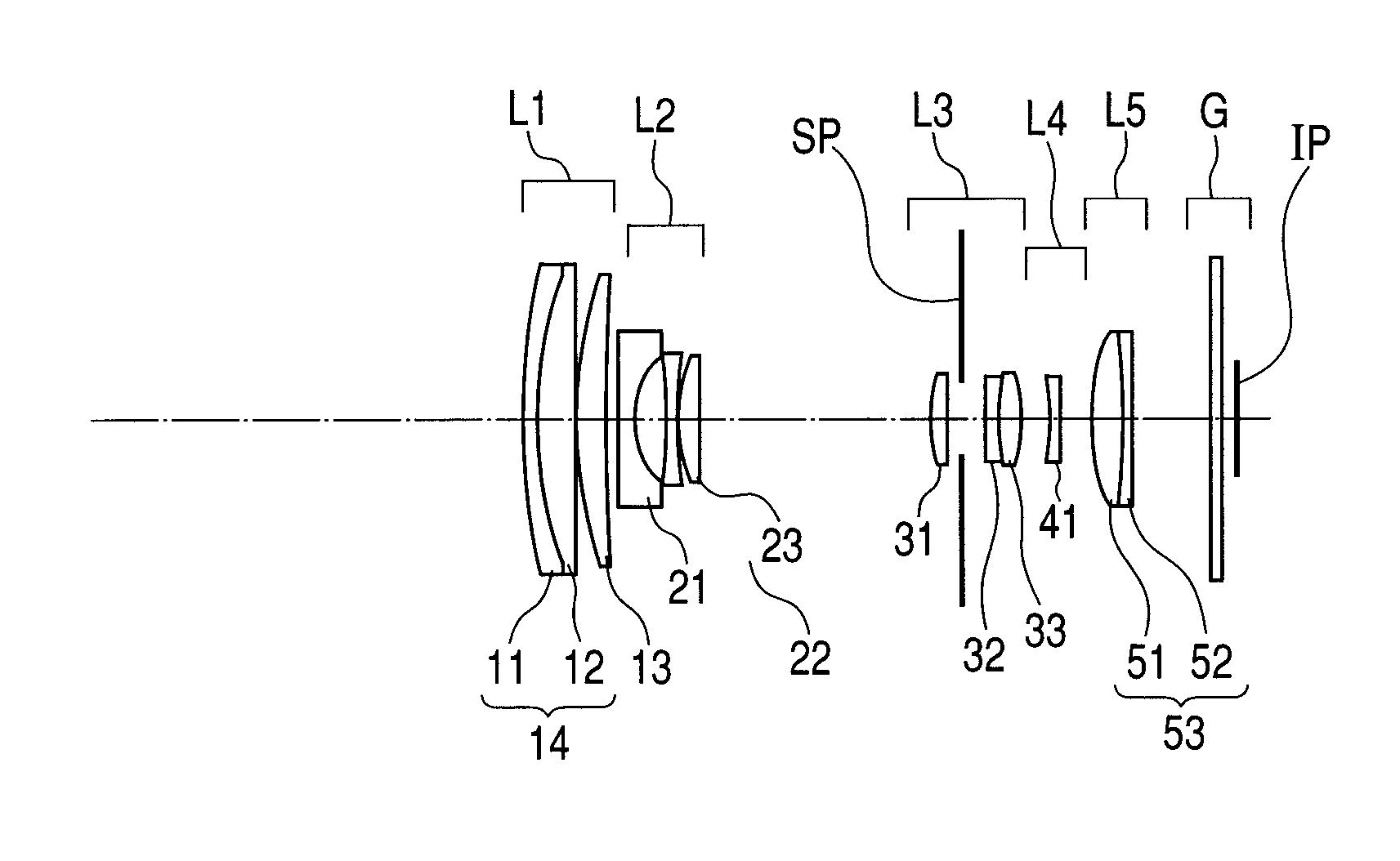
Figure 1 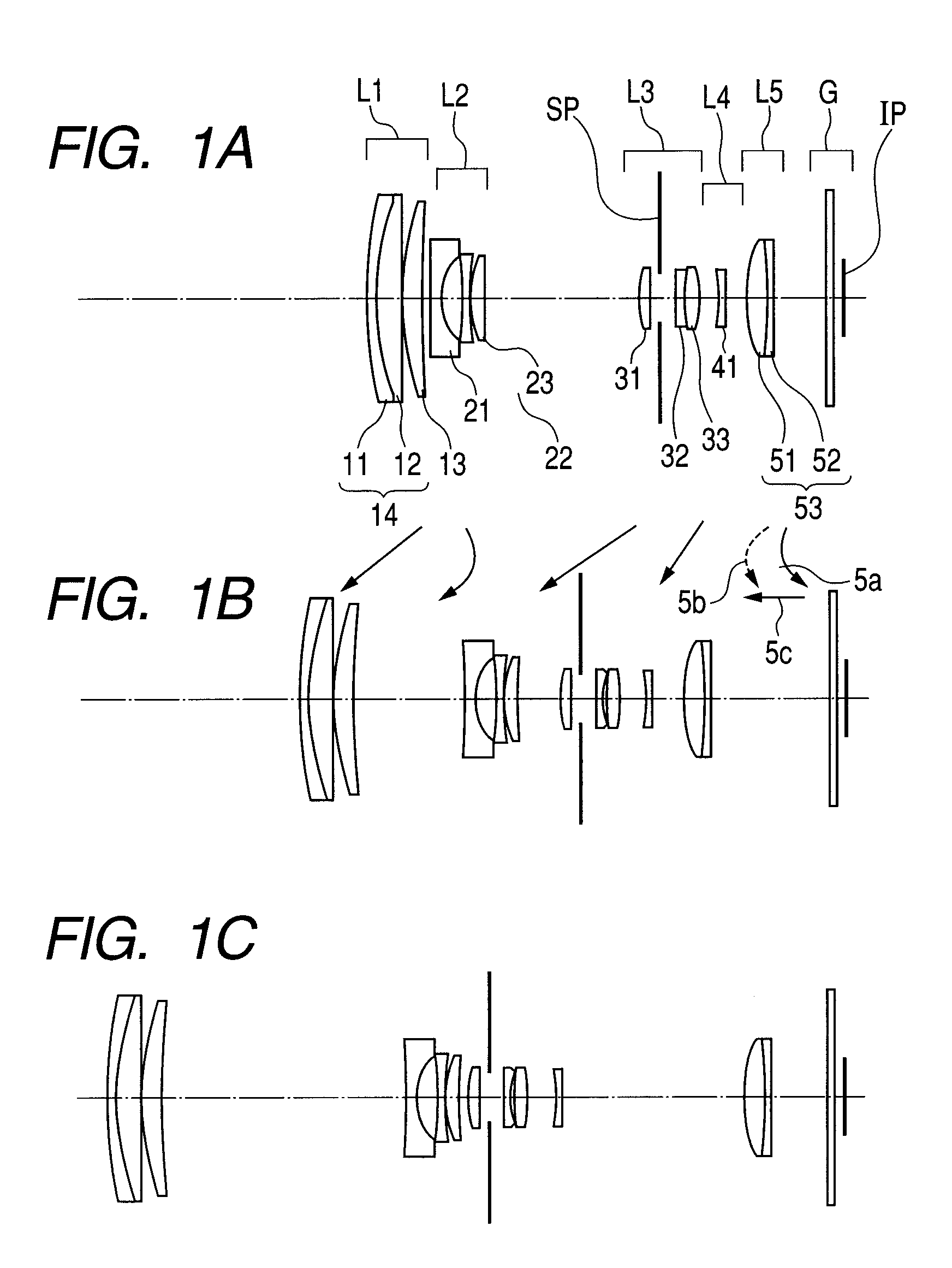
Figure 2 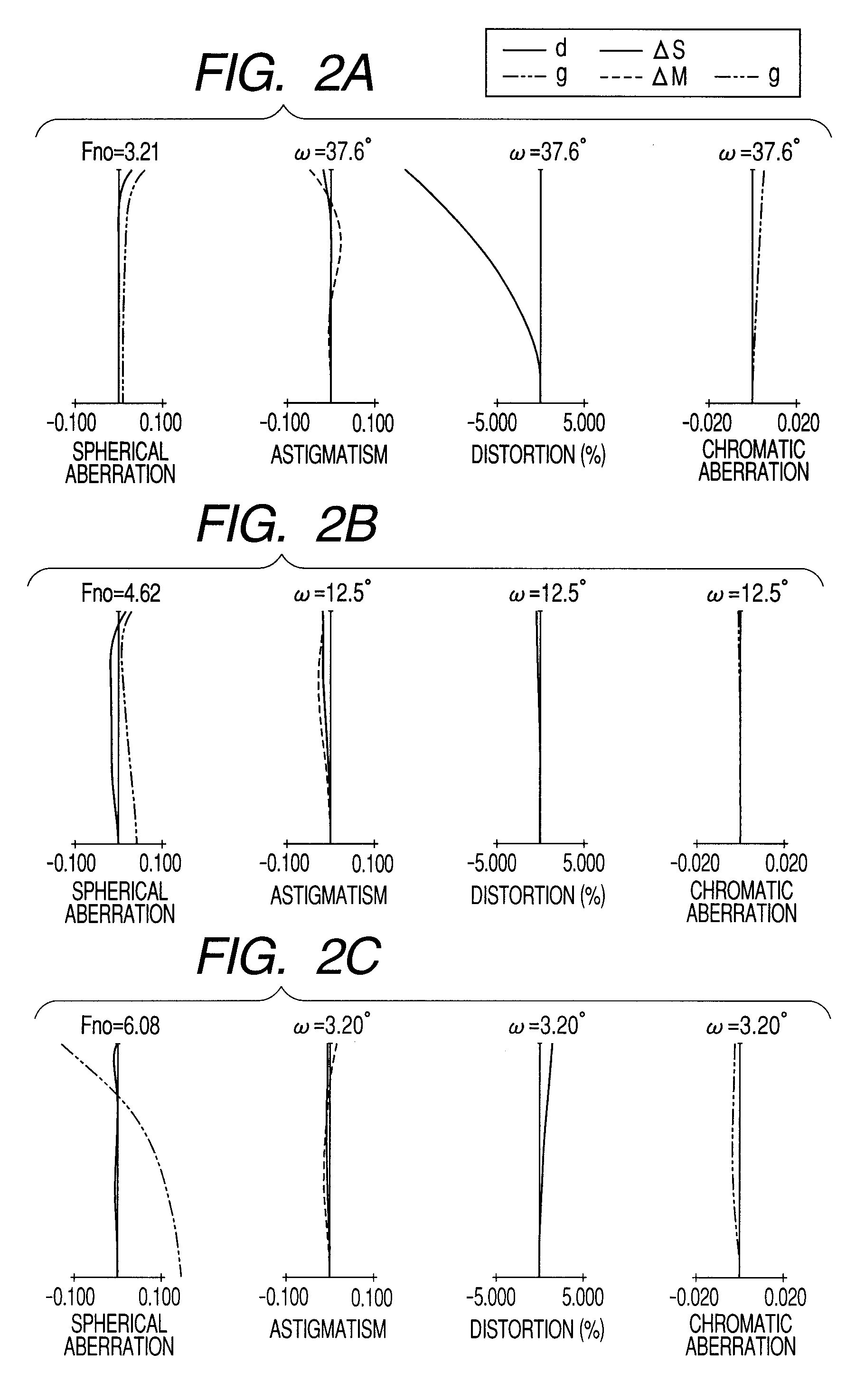
Figure 3
Abstract
Description
BACKGROUND OF THE INVENTION
[0001] 1. Field of the Invention
[0002] The present invention relates to a zoom lens and an image pickup apparatus including the same, which are suitable for an image pickup apparatus using a solid-state image pickup element, such as a video camera, an electronic still camera, a broadcasting camera, or a monitor camera, or an image pickup apparatus such as a silver-halide film camera.
[0003] 2. Description of the Related Art
[0004] In recent years, an image pickup apparatus using a solid-state image pickup element, such as a video camera, a digital still camera, a broadcasting camera, or a monitor camera, as well as a silver-halide film camera is downsized as the entire apparatus. Then, an image taking optical system used for the image pickup apparatus is required to be a high-resolution zoom lens having a short total lens length, a compact (small) size, and a high zoom ratio (high magnification ratio). As a zoom lens which meets the requirements, there is known ...
Examples
second embodiment
[0038]In the second embodiment illustrated in FIGS. 3A to 3C, in order to perform focusing on from an infinite object to a near object at the telephoto end, the fourth lens unit L4 is moved forward as illustrated in the lens cross section by the arrow 4c. The solid line curve 4a and the dot line curve 4b concerning the fourth lens unit L4 indicate moving loci for correcting image plane variation accompanying zooming from the wide angle end to the telephoto end when focusing on an infinite object and a near object, respectively.
[0039]In each embodiment, the first lens unit L1 includes two positive lenses and one negative lens. The second lens unit L2 includes a negative lens and a positive lens. Among the positive lenses included in the first lens unit L1, an Abbe number of a material of the positive lens G1p whose material has a largest Abbe number is denoted by ν1p. A refractive index and an Abbe number of a material of one positive lens G2p of the second lens unit L2 are denoted b...
fifth embodiment
[0066]The fifth lens unit L5 of the first, third, fourth, or fifth embodiment illustrated in FIGS. 1A to 1C, 5A to 5C, 7A to 7C, or 9A to 9C, respectively, includes, in order from the object side to the image side, a cemented lens 53 constituted of a positive lens 51 and a negative lens 52. By adopting the cemented lens, generation of lateral chromatic aberration can be reduced appropriately over the entire zooming region even if the refractive power of each lens unit is enhanced to some extent.
[0067]Next, Numerical Embodiments corresponding to the embodiments of the present invention are described. In each Numerical Embodiment, i denotes an order of an optical surface from the object side. In each Numerical Embodiment, ri denotes a curvature radius of the i-th lens surface counted from the object side. Symbol di denotes i-th lens thickness and air distance counted from the object side. Symbols ndi and νdi respectively denote a refractive index and an Abbe number of the i-th materia...