
Systems and methods for remote detection of volcanic plumes using satellite signals
a satellite signal and remote detection technology, applied in the field of remote detection of volcanic plumes, can solve the problems of affecting affecting the safety of people and livestock, and threatening the health of flying jet aircraft, so as to improve the accuracy of phase shift measurements, improve the availability of transmitted signals, and improve the coverage of the atmosphere
Patent Information
- Authority / Receiving Office
- US · United States
- Patent Type
- Patents(United States)
- Current Assignee / Owner
- Publication Date
- 2013-10-01
Smart Images
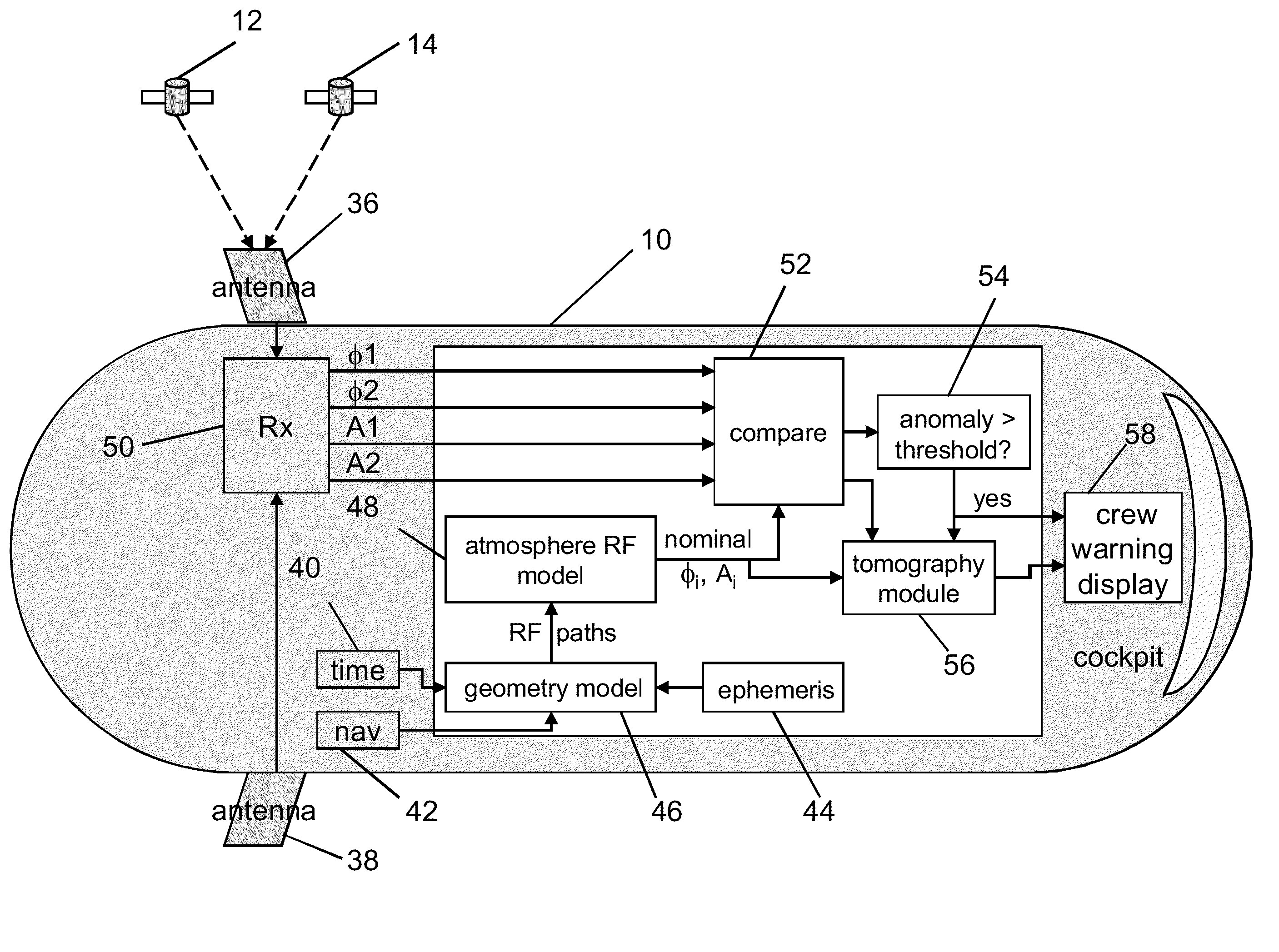
Figure 1 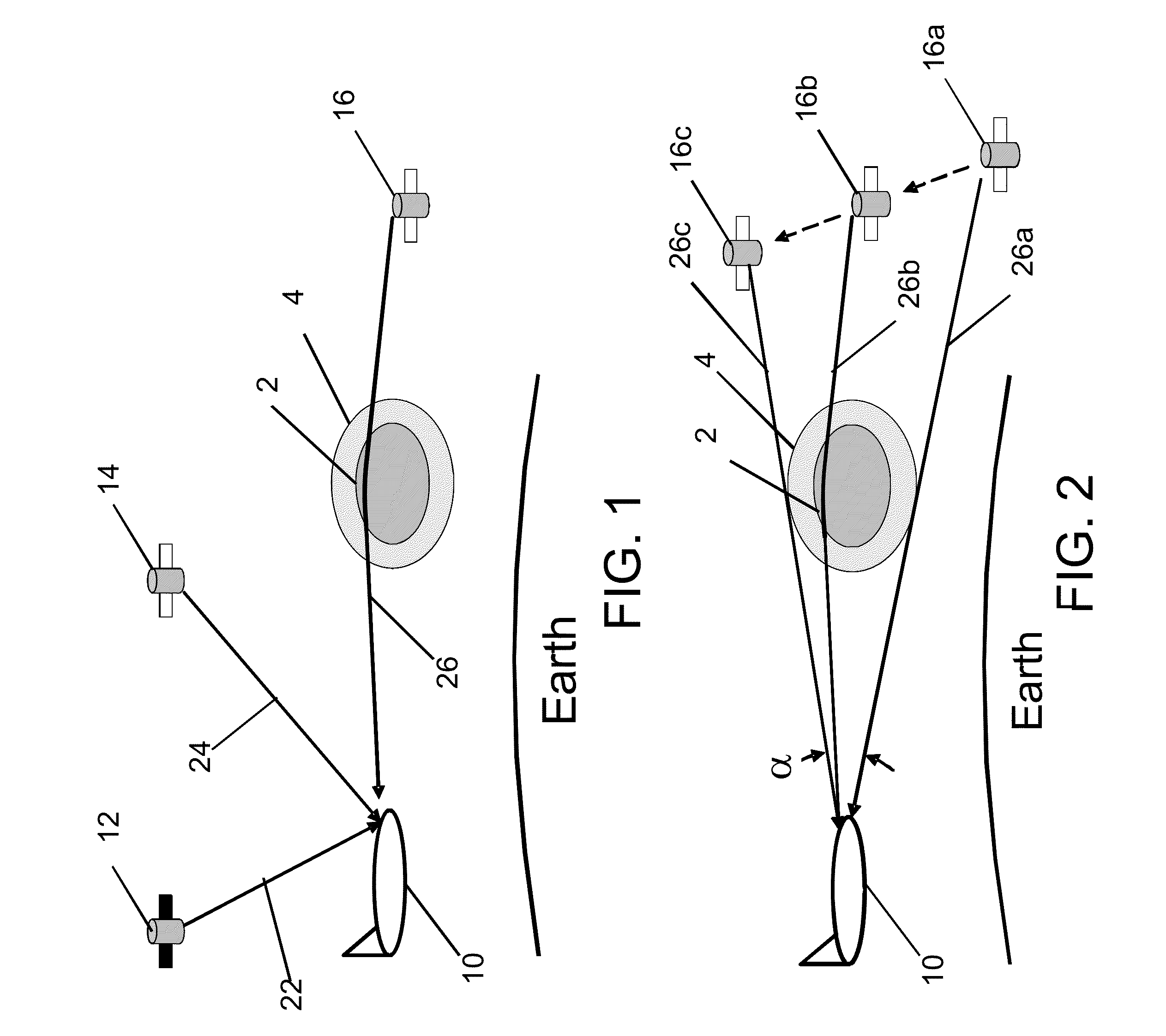
Figure 2 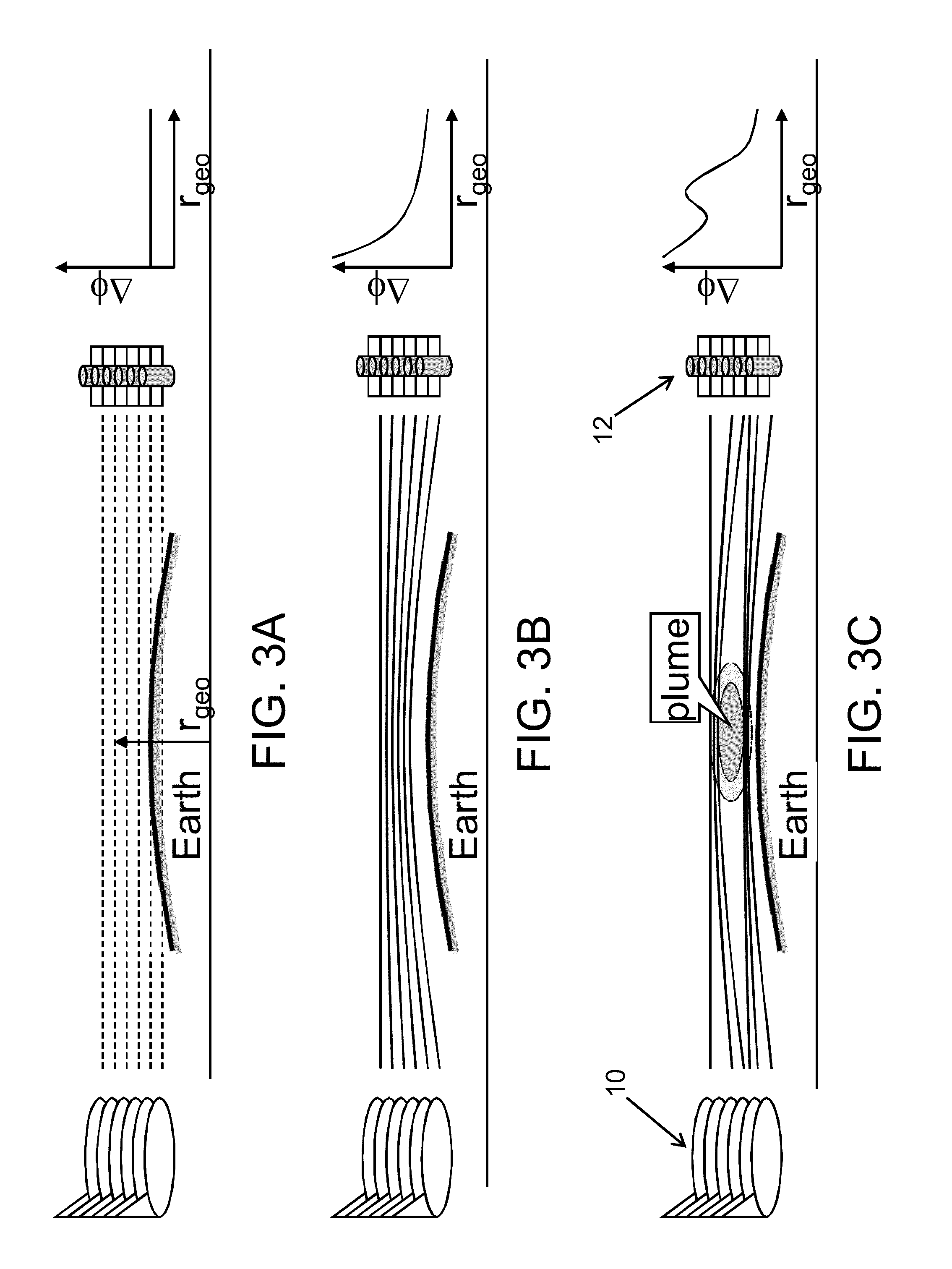
Figure 3
Abstract
Description
BACKGROUND
[0001] This invention generally relates to systems and methods for remotely detecting a volcanic plume using received radiofrequency (RF) signals that have traversed the plume. In particular, this invention relates to systems and methods for remotely detecting a volcanic plume embedded in clouds using satellite-transmitted RF signals.
[0002] As used herein, the term “volcanic plume” means a cloud of volcanic ash and the term “volcanic gases” means gases given off by active volcanoes. Dispersed volcanic gases disposed outside the volume occupied by a volcanic ash cloud are not included as part of the “volcanic plume,” as the latter term is used herein.
[0003] Volcanic ash can pose a hazard to flying jet aircraft, threaten the health of people and livestock, damage electronics and machinery, and interrupt power generation and telecommunications. Volcanic ash comprises tiny jagged particles of rock and natural glass blasted into the air by a volcano. Wind can carry ash thousands o...
Examples
Embodiment Construction
[0034]The invention solves the problem of remotely detecting volcanic plumes, including those embedded in clouds, by providing a system that can be installed onboard a mobile platform, such as an aircraft, a satellite, a weather balloon, a ship or a buoy. The volcanic plume detection system tracks RF signals (such as GPS signals from satellites) arriving at the mobile platform, and warns the pilot when characteristics of the RF signals indicate the likely presence of a volcanic plume. More specifically, the system in accordance with one embodiment utilizes the refractive properties of hydrogen sulfide (H2S), a gas that is abundant in nearly all volcanic eruptions, to infer the presence of a volcanic plume. The measured phase shifts of radio signals from satellites are used to measure the atmospheric index of refraction at cruise altitude. A typical phase shift pattern produced by a volcanic plume is compared to the phase pattern detected by the onboard system. The pilot is alerted w...