
Resin composition, optical film and organic light emitting display device
a technology of organic light and composition, applied in the direction of thermoelectric device junction materials, solid-state devices, optical filters, etc., can solve the problems of inability to use, inability to effectively block light introduced to the panel from the outside, and inability to meet the requirements of a completely black screen, etc., to achieve high degree of visible light transmittance and thermal stability, and facilitate manufacturing
Patent Information
- Authority / Receiving Office
- US · United States
- Patent Type
- Patents(United States)
- Current Assignee / Owner
- Publication Date
- 2015-07-21
Smart Images
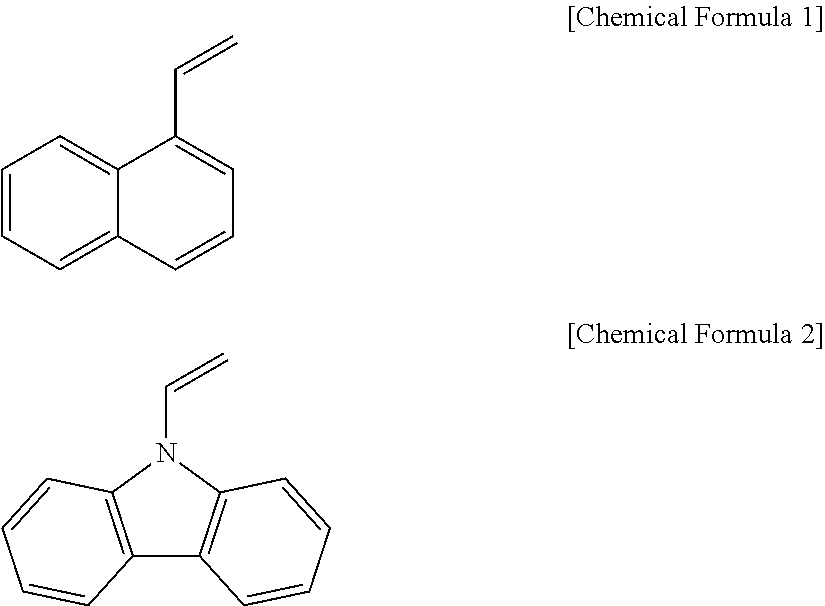
Figure 1 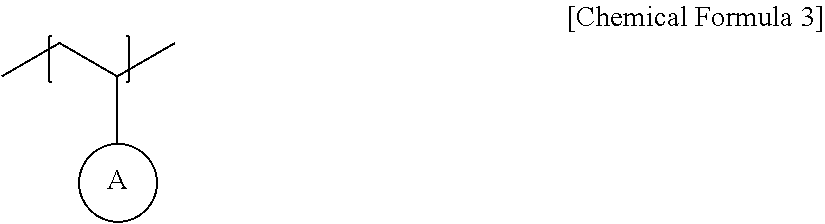
Figure 2 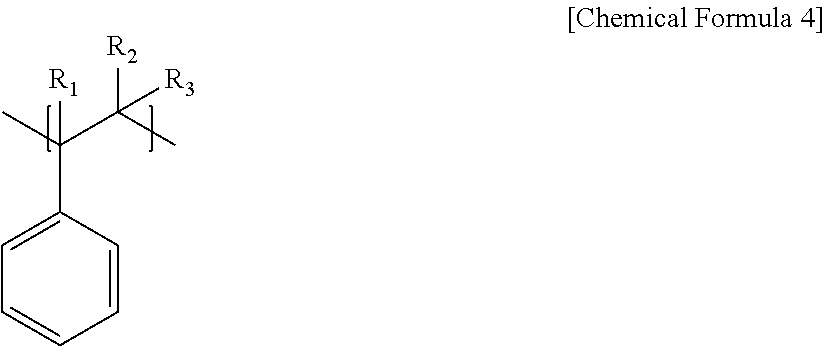
Figure 3
Abstract
Description
[0001] This application is a 35 USC §371 National Stage entry of International Application No. PCT / KR2013 / 008498, filed on Sep. 23, 2013, which claims priority of Korean Application No. 10-2013-0033790, filed on Mar. 28, 2013, and Korean Application No. 10-2013-0112585, filed on Sep. 23, 2013 all of which are hereby incorporated by reference in their entirety.TECHNICAL FIELD
[0002] The present disclosure relates to a resin composition and an optical film including the same and having reverse wavelength dispersion characteristics, and more particularly, to a resin composition for manufacturing an optical film having wavelength dispersion characteristics in which an in-plane retardation value is decreased in accordance with a reduction in wavelengths of light, and an optical film including the same.BACKGROUND ART
[0003] Currently commercialized organic light emitting diodes (OLED) panels have been prominent due to an excellent contrast ratio, a low degree of heat being generated therein, a...
Examples
##ventive example 1
Inventive Example 1
[0066]Resin was manufactured by copolymerizing 8 parts by weight of vinylnaphthalene, 22 parts by weight of maleic anhydride, 20 parts by weight of styrene, and 50 parts by weight of methylmethacrylate. The manufactured copolymer had a weight average molecular weight of 120,000 and a glass transition temperature thereof was 136° C.
[0067]Then, after a non-stretched film having a width of 1500 nm was fabricated using the resin with a T-die film-forming apparatus under conditions of 250° C. and 250 rpm, the film was uniaxially stretched in a TD direction at the glass transition temperature and a retardation value of the film was measured. In this case, a haze value of the film was 0.2.
##ventive example 2
Inventive Example 2
[0068]Resin was manufactured by copolymerizing 10 parts by weight of vinylnaphthalene, 25 parts by weight of maleic anhydride, 20 parts by weight of styrene, and 45 parts by weight of methylmethacrylate. The manufactured copolymer had a weight average molecular weight of 120,000 and a glass transition temperature thereof was 141° C.
[0069]Then, after a non-stretched film having a width of 1500 nm was fabricated using the resin with a T-die film-forming apparatus under conditions of 280° C. and 250 rpm, the film was uniaxially stretched in a TD direction at the glass transition temperature and a retardation value of the film was measured. In this case, a haze value of the film was 0.2.
##ventive example 3
Inventive Example 3
[0070]Resin was manufactured by copolymerizing 10 parts by weight of vinylnaphthalene, 25 parts by weight of maleic anhydride, 30 parts by weight of styrene, and 35 parts by weight of methylmethacrylate. The manufactured copolymer had a weight average molecular weight of 120,000 and a glass transition temperature thereof was 135° C.
[0071]Then, after a non-stretched film having a width of 1500 nm was fabricated using the resin with a T-die film-forming apparatus under conditions of 250° C. and 250 rpm, the film was uniaxially stretched in a TD direction at the glass transition temperature and a retardation value of the film was measured. In this case, a haze value of the film was 0.2.