

2-Methylpentane's Interaction with Organic Reactants
JUL 25, 20259 MIN READ
Generate Your Research Report Instantly with AI Agent
PatSnap Eureka helps you evaluate technical feasibility & market potential.
2-Methylpentane Overview
2-Methylpentane, also known as isohexane, is a branched alkane with the molecular formula C6H14. It is a colorless, flammable liquid at room temperature, commonly used as a solvent in various industrial applications. This compound belongs to the family of isomers of hexane, distinguished by its methyl group attached to the second carbon atom of the pentane chain.
The physical properties of 2-methylpentane are characteristic of its molecular structure. It has a boiling point of 60.3°C (140.5°F) and a melting point of -153.7°C (-244.7°F). Its density is approximately 0.653 g/cm³ at 20°C, making it slightly less dense than water. The compound exhibits low viscosity and surface tension, properties that contribute to its effectiveness as a solvent.
In terms of chemical reactivity, 2-methylpentane primarily undergoes reactions typical of alkanes. It is relatively inert under normal conditions but can participate in combustion reactions and halogenation processes. The presence of the methyl branch slightly increases its reactivity compared to its straight-chain counterpart, n-hexane, due to the increased number of tertiary hydrogen atoms.
The industrial significance of 2-methylpentane stems from its versatility as a solvent. It is widely used in the production of adhesives, coatings, and in the extraction of essential oils. Its low boiling point and rapid evaporation rate make it particularly useful in formulations where quick drying is desired. Additionally, it finds application in the petroleum industry as a component of gasoline, contributing to the fuel's octane rating.
From an environmental and safety perspective, 2-methylpentane is considered a volatile organic compound (VOC). Its use and handling require appropriate precautions due to its flammability and potential for forming explosive mixtures with air. Exposure to high concentrations can cause respiratory irritation and central nervous system depression, necessitating proper ventilation and personal protective equipment in industrial settings.
The synthesis of 2-methylpentane typically involves the isomerization of n-hexane or the alkylation of butane with propylene. These processes are integral to the petroleum refining industry, where the compound is often produced as part of a mixture of isomers. The separation and purification of 2-methylpentane from these mixtures involve techniques such as fractional distillation and molecular sieve adsorption.
The physical properties of 2-methylpentane are characteristic of its molecular structure. It has a boiling point of 60.3°C (140.5°F) and a melting point of -153.7°C (-244.7°F). Its density is approximately 0.653 g/cm³ at 20°C, making it slightly less dense than water. The compound exhibits low viscosity and surface tension, properties that contribute to its effectiveness as a solvent.
In terms of chemical reactivity, 2-methylpentane primarily undergoes reactions typical of alkanes. It is relatively inert under normal conditions but can participate in combustion reactions and halogenation processes. The presence of the methyl branch slightly increases its reactivity compared to its straight-chain counterpart, n-hexane, due to the increased number of tertiary hydrogen atoms.
The industrial significance of 2-methylpentane stems from its versatility as a solvent. It is widely used in the production of adhesives, coatings, and in the extraction of essential oils. Its low boiling point and rapid evaporation rate make it particularly useful in formulations where quick drying is desired. Additionally, it finds application in the petroleum industry as a component of gasoline, contributing to the fuel's octane rating.
From an environmental and safety perspective, 2-methylpentane is considered a volatile organic compound (VOC). Its use and handling require appropriate precautions due to its flammability and potential for forming explosive mixtures with air. Exposure to high concentrations can cause respiratory irritation and central nervous system depression, necessitating proper ventilation and personal protective equipment in industrial settings.
The synthesis of 2-methylpentane typically involves the isomerization of n-hexane or the alkylation of butane with propylene. These processes are integral to the petroleum refining industry, where the compound is often produced as part of a mixture of isomers. The separation and purification of 2-methylpentane from these mixtures involve techniques such as fractional distillation and molecular sieve adsorption.
Market Applications
The market applications of 2-methylpentane's interaction with organic reactants span several industries, primarily in the petrochemical and chemical sectors. As a branched alkane, 2-methylpentane serves as a valuable component in various industrial processes and consumer products.
In the fuel industry, 2-methylpentane is utilized as a high-octane component in gasoline blends. Its interaction with organic additives enhances fuel performance, improving engine efficiency and reducing emissions. This application is particularly significant in the automotive sector, where stringent environmental regulations drive the demand for cleaner-burning fuels.
The chemical industry leverages 2-methylpentane as a solvent and raw material in the production of various organic compounds. Its reactivity with organic molecules makes it useful in the synthesis of polymers, resins, and specialty chemicals. Manufacturers of adhesives, coatings, and sealants incorporate 2-methylpentane-derived products to enhance the performance and durability of their formulations.
In the pharmaceutical sector, 2-methylpentane's interactions with organic reactants play a role in drug synthesis and formulation. Its use as a solvent in extraction processes and as a precursor in the production of active pharmaceutical ingredients (APIs) contributes to the development of new medications and the optimization of existing drug manufacturing processes.
The personal care and cosmetics industry also benefits from 2-methylpentane's properties. Its interactions with organic compounds are utilized in the formulation of fragrances, hair care products, and skincare items. The compound's ability to dissolve and carry other organic substances makes it valuable in creating stable and effective cosmetic formulations.
In the electronics industry, 2-methylpentane finds applications in the production of electronic components and cleaning solutions. Its interactions with organic reactants are exploited in the manufacturing of printed circuit boards, semiconductors, and display technologies. The compound's low boiling point and ability to dissolve organic residues make it useful in precision cleaning applications for sensitive electronic components.
The agricultural sector utilizes 2-methylpentane-based products in the formulation of pesticides and herbicides. Its interactions with organic active ingredients enhance the efficacy and stability of crop protection products, contributing to improved agricultural yields and food security.
As environmental concerns grow, research into the sustainable applications of 2-methylpentane and its organic reactions is gaining momentum. Efforts are underway to develop bio-based alternatives and explore its potential in green chemistry applications, aligning with the global shift towards more sustainable industrial practices.
In the fuel industry, 2-methylpentane is utilized as a high-octane component in gasoline blends. Its interaction with organic additives enhances fuel performance, improving engine efficiency and reducing emissions. This application is particularly significant in the automotive sector, where stringent environmental regulations drive the demand for cleaner-burning fuels.
The chemical industry leverages 2-methylpentane as a solvent and raw material in the production of various organic compounds. Its reactivity with organic molecules makes it useful in the synthesis of polymers, resins, and specialty chemicals. Manufacturers of adhesives, coatings, and sealants incorporate 2-methylpentane-derived products to enhance the performance and durability of their formulations.
In the pharmaceutical sector, 2-methylpentane's interactions with organic reactants play a role in drug synthesis and formulation. Its use as a solvent in extraction processes and as a precursor in the production of active pharmaceutical ingredients (APIs) contributes to the development of new medications and the optimization of existing drug manufacturing processes.
The personal care and cosmetics industry also benefits from 2-methylpentane's properties. Its interactions with organic compounds are utilized in the formulation of fragrances, hair care products, and skincare items. The compound's ability to dissolve and carry other organic substances makes it valuable in creating stable and effective cosmetic formulations.
In the electronics industry, 2-methylpentane finds applications in the production of electronic components and cleaning solutions. Its interactions with organic reactants are exploited in the manufacturing of printed circuit boards, semiconductors, and display technologies. The compound's low boiling point and ability to dissolve organic residues make it useful in precision cleaning applications for sensitive electronic components.
The agricultural sector utilizes 2-methylpentane-based products in the formulation of pesticides and herbicides. Its interactions with organic active ingredients enhance the efficacy and stability of crop protection products, contributing to improved agricultural yields and food security.
As environmental concerns grow, research into the sustainable applications of 2-methylpentane and its organic reactions is gaining momentum. Efforts are underway to develop bio-based alternatives and explore its potential in green chemistry applications, aligning with the global shift towards more sustainable industrial practices.
Current Challenges
The interaction of 2-methylpentane with organic reactants presents several significant challenges in current research and industrial applications. One of the primary obstacles is the molecule's low reactivity due to its saturated hydrocarbon structure. This inherent stability makes it difficult to initiate and control reactions with other organic compounds, limiting its potential applications in organic synthesis.
Another challenge lies in the selectivity of reactions involving 2-methylpentane. When reactions do occur, they often result in a mixture of products, making it challenging to achieve high yields of desired compounds. This lack of selectivity necessitates complex separation processes, which can be both time-consuming and costly in industrial settings.
The branched structure of 2-methylpentane also poses difficulties in terms of steric hindrance. This structural feature can impede the approach of reactants, particularly in the case of bulky organic molecules. Consequently, reaction rates may be slower than desired, and certain reaction pathways may be entirely blocked, limiting the range of possible transformations.
Environmental concerns present another significant challenge. As a hydrocarbon, 2-methylpentane and its derivatives can contribute to air pollution and greenhouse gas emissions. This has led to increased scrutiny and regulatory pressure on industries that utilize this compound, necessitating the development of more environmentally friendly alternatives or improved containment and recycling methods.
From an analytical perspective, accurately detecting and quantifying 2-methylpentane and its reaction products in complex organic mixtures remains challenging. This is particularly true in trace analysis scenarios, where sophisticated analytical techniques and methodologies are required to distinguish 2-methylpentane from its isomers and other similar hydrocarbons.
The development of catalysts that can effectively activate 2-methylpentane for reactions with organic compounds is an ongoing challenge. While some progress has been made with transition metal catalysts, finding catalytic systems that are both highly active and selective remains an area of intense research.
Lastly, the scaling up of laboratory-scale reactions involving 2-methylpentane to industrial processes presents its own set of challenges. Issues such as heat transfer, mixing efficiency, and reactor design must be carefully addressed to ensure that the desired reactions can be carried out safely and economically on a large scale.
Another challenge lies in the selectivity of reactions involving 2-methylpentane. When reactions do occur, they often result in a mixture of products, making it challenging to achieve high yields of desired compounds. This lack of selectivity necessitates complex separation processes, which can be both time-consuming and costly in industrial settings.
The branched structure of 2-methylpentane also poses difficulties in terms of steric hindrance. This structural feature can impede the approach of reactants, particularly in the case of bulky organic molecules. Consequently, reaction rates may be slower than desired, and certain reaction pathways may be entirely blocked, limiting the range of possible transformations.
Environmental concerns present another significant challenge. As a hydrocarbon, 2-methylpentane and its derivatives can contribute to air pollution and greenhouse gas emissions. This has led to increased scrutiny and regulatory pressure on industries that utilize this compound, necessitating the development of more environmentally friendly alternatives or improved containment and recycling methods.
From an analytical perspective, accurately detecting and quantifying 2-methylpentane and its reaction products in complex organic mixtures remains challenging. This is particularly true in trace analysis scenarios, where sophisticated analytical techniques and methodologies are required to distinguish 2-methylpentane from its isomers and other similar hydrocarbons.
The development of catalysts that can effectively activate 2-methylpentane for reactions with organic compounds is an ongoing challenge. While some progress has been made with transition metal catalysts, finding catalytic systems that are both highly active and selective remains an area of intense research.
Lastly, the scaling up of laboratory-scale reactions involving 2-methylpentane to industrial processes presents its own set of challenges. Issues such as heat transfer, mixing efficiency, and reactor design must be carefully addressed to ensure that the desired reactions can be carried out safely and economically on a large scale.
Existing Methodologies
01 Use as a solvent in chemical processes
2-Methylpentane is commonly used as a solvent in various chemical processes due to its properties as a non-polar organic compound. It can be employed in extraction, purification, and reaction media for organic synthesis.- Use in chemical synthesis and reactions: 2-Methylpentane is utilized as a reactant or solvent in various chemical synthesis processes and reactions. It plays a role in the production of other organic compounds and can be used as a starting material for more complex molecules.
- Application in fuel and petroleum industry: 2-Methylpentane is a component found in petroleum products and can be used in fuel formulations. It is often present in gasoline and other hydrocarbon mixtures, contributing to their properties and performance.
- Role in polymer and plastic production: This compound is used in the manufacturing of polymers and plastics. It can serve as a monomer or comonomer in polymerization reactions, or as a solvent in polymer processing.
- Use as a solvent and extraction agent: 2-Methylpentane functions as a solvent for various applications, including extraction processes. It can be used to dissolve or separate different substances in industrial and laboratory settings.
- Application in analytical and research methods: The compound is utilized in analytical chemistry and research methodologies. It can be employed as a standard or reference material in chromatography, spectroscopy, and other analytical techniques for identifying and quantifying chemical substances.
02 Component in fuel formulations
2-Methylpentane is utilized as a component in fuel formulations, particularly in gasoline blends. Its high octane rating and volatility make it suitable for improving fuel performance and efficiency in internal combustion engines.Expand Specific Solutions03 Application in polymer production
2-Methylpentane finds application in polymer production processes, particularly in the synthesis and modification of various polymers. It can be used as a reaction medium or as a component in polymer formulations to achieve specific properties.Expand Specific Solutions04 Use in pharmaceutical industry
The pharmaceutical industry employs 2-Methylpentane in various processes, including drug synthesis, purification, and formulation. Its properties make it suitable for certain extraction and crystallization procedures in pharmaceutical manufacturing.Expand Specific Solutions05 Application in analytical chemistry
2-Methylpentane is used in analytical chemistry as a solvent or mobile phase component in chromatography techniques. It can be employed in gas chromatography and high-performance liquid chromatography for the separation and analysis of various compounds.Expand Specific Solutions
Key Industry Players
The competitive landscape for "2-Methylpentane's Interaction with Organic Reactants" is in an early development stage, with a relatively small market size but growing potential. The technology is still emerging, with varying levels of maturity across different applications. Companies like BASF Corp., DuPont de Nemours, Inc., and Chevron U.S.A., Inc. are likely leading the research efforts due to their strong presence in the chemical industry. Academic institutions such as Massachusetts Institute of Technology and California Institute of Technology are also contributing to the field's advancement. As the technology progresses, we can expect increased collaboration between industry and academia to drive innovation and commercialization in this niche area of organic chemistry.
BASF Corp.
Technical Solution: BASF has developed innovative catalytic processes for the selective conversion of 2-methylpentane into value-added products. Their approach involves using zeolite-based catalysts with tailored pore structures to promote isomerization and alkylation reactions[1]. The company has also explored the use of 2-methylpentane as a solvent in organic synthesis, particularly for reactions involving temperature-sensitive compounds[2]. BASF's research has focused on optimizing reaction conditions to enhance selectivity and yield, while minimizing unwanted side reactions.
Strengths: Extensive experience in catalysis and process optimization. Large-scale production capabilities. Weaknesses: May face challenges in adapting to rapidly changing environmental regulations.
DuPont de Nemours, Inc.
Technical Solution: DuPont has developed proprietary technology for the functionalization of 2-methylpentane to produce specialty chemicals and polymer precursors. Their approach involves selective oxidation and hydroformylation reactions, utilizing novel homogeneous catalysts[3]. The company has also investigated the use of 2-methylpentane as a blending component in high-performance fuels, leveraging its branched structure to improve octane ratings[4]. DuPont's research emphasizes sustainable chemistry principles, aiming to maximize atom economy and reduce waste generation in these processes.
Strengths: Strong intellectual property portfolio. Expertise in process scale-up and commercialization. Weaknesses: May face competition from bio-based alternatives in some applications.
Innovative Approaches
process FOR PREPARING 2-METHYLPENTANE-2,4-DIOL BY CATALYTIC HYDROGENATION OF DIACETONEALCOOL
PatentInactiveFR2453842B1
Innovation
- Use of ruthenium-based catalyst for catalytic hydrogenation of diacetone alcohol to produce 2-methylpentane-2,4-diol.
- Direct conversion of diacetone alcohol to 2-methylpentane-2,4-diol in a single step process.
- Application of catalytic hydrogenation for the synthesis of a branched diol compound.
Preparation method of epoxy perfluoropentane
PatentPendingCN115490651A
Innovation
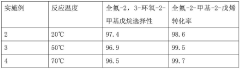
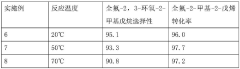
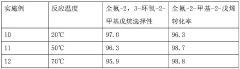
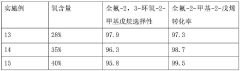
- Use perfluoro-2-methyl-2-pentene with specific dispersants and oxidants (such as 30% H2O2 aqueous solution, 8%-15% sodium hypochlorite solution or 30%-40% oxygen) at a specific temperature (15-80℃) React under pressure (0-0.6MPa) to prepare perfluoro-2,3-epoxy-2-methylpentane, with a selectivity and conversion rate of more than 95%.
Environmental Impact
The environmental impact of 2-methylpentane's interaction with organic reactants is a critical consideration in the broader context of chemical processes and their ecological footprint. This branched alkane, commonly used in various industrial applications, can have significant environmental implications when it reacts with organic compounds.
When 2-methylpentane interacts with organic reactants, it often leads to the formation of volatile organic compounds (VOCs). These VOCs can contribute to air pollution and the formation of ground-level ozone, a major component of smog. The release of these compounds into the atmosphere can have detrimental effects on air quality, particularly in urban and industrial areas where chemical processes are concentrated.
Furthermore, the potential for soil and water contamination exists when 2-methylpentane and its reaction products are not properly contained or disposed of. Leaks or spills during industrial processes can lead to the infiltration of these chemicals into soil and groundwater systems. This contamination can have long-lasting effects on ecosystems, potentially disrupting local flora and fauna and posing risks to human health through exposure to contaminated water sources.
The persistence of 2-methylpentane and its derivatives in the environment is another concern. While some organic compounds readily degrade, others may persist for extended periods, leading to bioaccumulation in food chains. This can result in far-reaching ecological impacts, affecting organisms at various trophic levels and potentially causing long-term disruptions to ecosystem balance.
From a global perspective, the production and use of 2-methylpentane in organic reactions contribute to carbon emissions. The energy-intensive processes involved in its manufacture and the subsequent chemical reactions it undergoes can have a significant carbon footprint. This aspect ties into broader concerns about climate change and the need for more sustainable chemical processes.
Efforts to mitigate the environmental impact of 2-methylpentane's interactions with organic reactants are ongoing. These include the development of greener reaction pathways, improved containment and disposal methods, and the exploration of alternative compounds with reduced environmental risks. Additionally, regulatory frameworks are evolving to address the environmental challenges posed by such chemical interactions, aiming to balance industrial needs with ecological preservation.
In conclusion, while 2-methylpentane plays a valuable role in various chemical processes, its interaction with organic reactants presents notable environmental challenges. Addressing these impacts requires a multifaceted approach, combining technological innovation, stringent safety measures, and regulatory oversight to minimize ecological harm while maintaining industrial productivity.
When 2-methylpentane interacts with organic reactants, it often leads to the formation of volatile organic compounds (VOCs). These VOCs can contribute to air pollution and the formation of ground-level ozone, a major component of smog. The release of these compounds into the atmosphere can have detrimental effects on air quality, particularly in urban and industrial areas where chemical processes are concentrated.
Furthermore, the potential for soil and water contamination exists when 2-methylpentane and its reaction products are not properly contained or disposed of. Leaks or spills during industrial processes can lead to the infiltration of these chemicals into soil and groundwater systems. This contamination can have long-lasting effects on ecosystems, potentially disrupting local flora and fauna and posing risks to human health through exposure to contaminated water sources.
The persistence of 2-methylpentane and its derivatives in the environment is another concern. While some organic compounds readily degrade, others may persist for extended periods, leading to bioaccumulation in food chains. This can result in far-reaching ecological impacts, affecting organisms at various trophic levels and potentially causing long-term disruptions to ecosystem balance.
From a global perspective, the production and use of 2-methylpentane in organic reactions contribute to carbon emissions. The energy-intensive processes involved in its manufacture and the subsequent chemical reactions it undergoes can have a significant carbon footprint. This aspect ties into broader concerns about climate change and the need for more sustainable chemical processes.
Efforts to mitigate the environmental impact of 2-methylpentane's interactions with organic reactants are ongoing. These include the development of greener reaction pathways, improved containment and disposal methods, and the exploration of alternative compounds with reduced environmental risks. Additionally, regulatory frameworks are evolving to address the environmental challenges posed by such chemical interactions, aiming to balance industrial needs with ecological preservation.
In conclusion, while 2-methylpentane plays a valuable role in various chemical processes, its interaction with organic reactants presents notable environmental challenges. Addressing these impacts requires a multifaceted approach, combining technological innovation, stringent safety measures, and regulatory oversight to minimize ecological harm while maintaining industrial productivity.
Safety Considerations
When handling 2-methylpentane and its interactions with organic reactants, safety considerations are paramount. The volatile and flammable nature of 2-methylpentane necessitates strict adherence to safety protocols. Proper ventilation is crucial in laboratory settings to prevent the accumulation of vapors, which can lead to fire or explosion hazards. Personal protective equipment (PPE) such as chemical-resistant gloves, safety goggles, and lab coats should be worn at all times to minimize skin contact and protect against splashes.
Storage of 2-methylpentane requires special attention. It should be kept in a cool, dry place away from sources of ignition and oxidizing agents. Proper labeling and segregation from incompatible chemicals are essential to prevent accidental mixing. The use of flame-proof electrical equipment and grounding procedures is necessary to mitigate the risk of static electricity buildup, which could potentially ignite the vapors.
When conducting reactions involving 2-methylpentane, it is critical to consider the potential for exothermic reactions. Temperature control and monitoring systems should be in place to prevent runaway reactions. The use of a fume hood is mandatory to contain and safely remove any vapors or gases produced during the reaction process. Additionally, having appropriate fire suppression equipment readily available is crucial in case of emergencies.
Waste disposal of 2-methylpentane and its reaction products must follow strict environmental regulations. Proper containment and disposal methods should be employed to prevent soil and water contamination. Evaporation or incineration of waste should only be performed in approved facilities with appropriate emission control systems.
Health hazards associated with 2-methylpentane exposure include respiratory irritation, dizziness, and potential central nervous system depression. Implementing exposure limits and regular air quality monitoring in the workspace is essential to protect personnel. Emergency eyewash stations and safety showers should be easily accessible in case of accidental exposure.
Training and education of all personnel handling 2-methylpentane and related organic reactants are crucial. This includes understanding the material safety data sheets (MSDS), proper handling techniques, emergency procedures, and the importance of maintaining a clean and organized workspace to minimize accidents. Regular safety drills and updates on best practices should be conducted to ensure all staff members are prepared for potential incidents.
Lastly, when scaling up reactions or processes involving 2-methylpentane, a comprehensive risk assessment should be performed. This includes evaluating the potential for heat accumulation, pressure buildup, and the formation of hazardous byproducts. Implementing fail-safe mechanisms and emergency shutdown procedures is essential for larger-scale operations to mitigate risks associated with equipment failure or process deviations.
Storage of 2-methylpentane requires special attention. It should be kept in a cool, dry place away from sources of ignition and oxidizing agents. Proper labeling and segregation from incompatible chemicals are essential to prevent accidental mixing. The use of flame-proof electrical equipment and grounding procedures is necessary to mitigate the risk of static electricity buildup, which could potentially ignite the vapors.
When conducting reactions involving 2-methylpentane, it is critical to consider the potential for exothermic reactions. Temperature control and monitoring systems should be in place to prevent runaway reactions. The use of a fume hood is mandatory to contain and safely remove any vapors or gases produced during the reaction process. Additionally, having appropriate fire suppression equipment readily available is crucial in case of emergencies.
Waste disposal of 2-methylpentane and its reaction products must follow strict environmental regulations. Proper containment and disposal methods should be employed to prevent soil and water contamination. Evaporation or incineration of waste should only be performed in approved facilities with appropriate emission control systems.
Health hazards associated with 2-methylpentane exposure include respiratory irritation, dizziness, and potential central nervous system depression. Implementing exposure limits and regular air quality monitoring in the workspace is essential to protect personnel. Emergency eyewash stations and safety showers should be easily accessible in case of accidental exposure.
Training and education of all personnel handling 2-methylpentane and related organic reactants are crucial. This includes understanding the material safety data sheets (MSDS), proper handling techniques, emergency procedures, and the importance of maintaining a clean and organized workspace to minimize accidents. Regular safety drills and updates on best practices should be conducted to ensure all staff members are prepared for potential incidents.
Lastly, when scaling up reactions or processes involving 2-methylpentane, a comprehensive risk assessment should be performed. This includes evaluating the potential for heat accumulation, pressure buildup, and the formation of hazardous byproducts. Implementing fail-safe mechanisms and emergency shutdown procedures is essential for larger-scale operations to mitigate risks associated with equipment failure or process deviations.
Unlock deeper insights with PatSnap Eureka Quick Research — get a full tech report to explore trends and direct your research. Try now!
Generate Your Research Report Instantly with AI Agent
Supercharge your innovation with PatSnap Eureka AI Agent Platform!