

AGM Battery Integration in Autonomous Robotics
AUG 7, 202510 MIN READ
Generate Your Research Report Instantly with AI Agent
PatSnap Eureka helps you evaluate technical feasibility & market potential.
AGM Battery Evolution and Integration Goals
The evolution of Absorbed Glass Mat (AGM) batteries has been closely intertwined with the development of autonomous robotics. Initially designed for military and aerospace applications, AGM batteries have found a new niche in powering robotic systems due to their unique characteristics. The primary goal of integrating AGM batteries into autonomous robots is to provide a reliable, efficient, and long-lasting power source that can meet the demanding requirements of mobile robotic platforms.
AGM battery technology has progressed significantly since its inception in the 1980s. Early versions offered improved performance over traditional lead-acid batteries but still faced limitations in energy density and cycle life. Recent advancements have focused on enhancing these key parameters, with modern AGM batteries boasting higher specific energy, improved charge acceptance, and extended operational lifespans.
The integration goals for AGM batteries in autonomous robotics are multifaceted. Firstly, there is a push to increase the energy density of AGM batteries, allowing robots to operate for longer periods without recharging. This is crucial for applications such as warehouse automation, where downtime for charging can significantly impact productivity. Secondly, researchers are working on improving the fast-charging capabilities of AGM batteries, aiming to reduce charging times without compromising battery life or performance.
Another key objective is to enhance the durability and reliability of AGM batteries in diverse environmental conditions. Autonomous robots often operate in challenging environments, from extreme temperatures to high-vibration settings. Developing AGM batteries that can maintain consistent performance across these varied conditions is essential for expanding the application range of robotic systems.
Integration efforts also focus on optimizing the battery management systems (BMS) specifically for AGM batteries in robotic applications. Advanced BMS designs aim to improve charge balancing, thermal management, and state-of-health monitoring, ensuring optimal battery performance and longevity. This is particularly important for autonomous robots that may operate in remote or hazardous environments where regular maintenance is challenging.
Furthermore, there is a growing emphasis on developing modular and scalable AGM battery solutions for robotics. This approach allows for easier customization of power systems to meet the specific energy requirements of different robotic platforms, from small indoor robots to large outdoor autonomous vehicles. Modularity also facilitates easier maintenance and replacement of battery components, reducing downtime and extending the overall lifespan of robotic systems.
As the field of autonomous robotics continues to evolve, the integration goals for AGM batteries are likely to expand. Future objectives may include further improvements in energy density, the development of self-healing battery technologies, and the integration of smart features that allow batteries to adapt to changing operational demands dynamically. These advancements will play a crucial role in shaping the future of autonomous robotics, enabling more capable, efficient, and versatile robotic systems across various industries.
AGM battery technology has progressed significantly since its inception in the 1980s. Early versions offered improved performance over traditional lead-acid batteries but still faced limitations in energy density and cycle life. Recent advancements have focused on enhancing these key parameters, with modern AGM batteries boasting higher specific energy, improved charge acceptance, and extended operational lifespans.
The integration goals for AGM batteries in autonomous robotics are multifaceted. Firstly, there is a push to increase the energy density of AGM batteries, allowing robots to operate for longer periods without recharging. This is crucial for applications such as warehouse automation, where downtime for charging can significantly impact productivity. Secondly, researchers are working on improving the fast-charging capabilities of AGM batteries, aiming to reduce charging times without compromising battery life or performance.
Another key objective is to enhance the durability and reliability of AGM batteries in diverse environmental conditions. Autonomous robots often operate in challenging environments, from extreme temperatures to high-vibration settings. Developing AGM batteries that can maintain consistent performance across these varied conditions is essential for expanding the application range of robotic systems.
Integration efforts also focus on optimizing the battery management systems (BMS) specifically for AGM batteries in robotic applications. Advanced BMS designs aim to improve charge balancing, thermal management, and state-of-health monitoring, ensuring optimal battery performance and longevity. This is particularly important for autonomous robots that may operate in remote or hazardous environments where regular maintenance is challenging.
Furthermore, there is a growing emphasis on developing modular and scalable AGM battery solutions for robotics. This approach allows for easier customization of power systems to meet the specific energy requirements of different robotic platforms, from small indoor robots to large outdoor autonomous vehicles. Modularity also facilitates easier maintenance and replacement of battery components, reducing downtime and extending the overall lifespan of robotic systems.
As the field of autonomous robotics continues to evolve, the integration goals for AGM batteries are likely to expand. Future objectives may include further improvements in energy density, the development of self-healing battery technologies, and the integration of smart features that allow batteries to adapt to changing operational demands dynamically. These advancements will play a crucial role in shaping the future of autonomous robotics, enabling more capable, efficient, and versatile robotic systems across various industries.
Market Demand for AGM Batteries in Robotics
The market demand for AGM (Absorbent Glass Mat) batteries in the autonomous robotics sector has been experiencing significant growth in recent years. This surge is primarily driven by the increasing adoption of autonomous robots across various industries, including manufacturing, logistics, healthcare, and agriculture. AGM batteries have emerged as a preferred power source for these robots due to their unique characteristics that align well with the requirements of autonomous systems.
One of the key factors contributing to the rising demand for AGM batteries in robotics is their superior performance in deep-cycle applications. Autonomous robots often require consistent power output over extended periods, and AGM batteries excel in this aspect. They can withstand numerous charge and discharge cycles without significant degradation in performance, making them ideal for robots that operate continuously or for long durations.
The safety features of AGM batteries also play a crucial role in their growing popularity within the robotics industry. These batteries are sealed and maintenance-free, reducing the risk of acid spills or leakage. This characteristic is particularly valuable in sensitive environments where robots may operate, such as clean rooms, healthcare facilities, or food processing plants. The reduced maintenance requirements also translate to lower operational costs for robot manufacturers and end-users.
Another driving factor for AGM battery demand in robotics is their compact size and high power density. As autonomous robots become more sophisticated and feature-rich, the need for efficient power sources that can deliver high energy in a small form factor becomes paramount. AGM batteries offer an excellent balance between size, weight, and power output, allowing robot designers to optimize space utilization without compromising on performance.
The market demand is further bolstered by the increasing focus on sustainability and environmental consciousness. AGM batteries are recyclable and have a longer lifespan compared to traditional lead-acid batteries, aligning with the growing emphasis on eco-friendly technologies in the robotics industry. This aspect is particularly appealing to companies looking to reduce their environmental footprint while adopting autonomous robotic solutions.
In terms of market size, the global AGM battery market for robotics applications is projected to grow substantially over the coming years. This growth is expected to be driven not only by the increasing number of autonomous robots being deployed but also by the expansion of robotics into new sectors and applications. Industries such as agriculture, construction, and underwater exploration are beginning to adopt autonomous robotic systems, further expanding the potential market for AGM batteries.
However, it's important to note that the market demand for AGM batteries in robotics is not without challenges. The emergence of alternative power sources, such as lithium-ion batteries and fuel cells, presents competition in certain applications. Additionally, the ongoing research and development in battery technologies may lead to new innovations that could potentially disrupt the current market dynamics.
One of the key factors contributing to the rising demand for AGM batteries in robotics is their superior performance in deep-cycle applications. Autonomous robots often require consistent power output over extended periods, and AGM batteries excel in this aspect. They can withstand numerous charge and discharge cycles without significant degradation in performance, making them ideal for robots that operate continuously or for long durations.
The safety features of AGM batteries also play a crucial role in their growing popularity within the robotics industry. These batteries are sealed and maintenance-free, reducing the risk of acid spills or leakage. This characteristic is particularly valuable in sensitive environments where robots may operate, such as clean rooms, healthcare facilities, or food processing plants. The reduced maintenance requirements also translate to lower operational costs for robot manufacturers and end-users.
Another driving factor for AGM battery demand in robotics is their compact size and high power density. As autonomous robots become more sophisticated and feature-rich, the need for efficient power sources that can deliver high energy in a small form factor becomes paramount. AGM batteries offer an excellent balance between size, weight, and power output, allowing robot designers to optimize space utilization without compromising on performance.
The market demand is further bolstered by the increasing focus on sustainability and environmental consciousness. AGM batteries are recyclable and have a longer lifespan compared to traditional lead-acid batteries, aligning with the growing emphasis on eco-friendly technologies in the robotics industry. This aspect is particularly appealing to companies looking to reduce their environmental footprint while adopting autonomous robotic solutions.
In terms of market size, the global AGM battery market for robotics applications is projected to grow substantially over the coming years. This growth is expected to be driven not only by the increasing number of autonomous robots being deployed but also by the expansion of robotics into new sectors and applications. Industries such as agriculture, construction, and underwater exploration are beginning to adopt autonomous robotic systems, further expanding the potential market for AGM batteries.
However, it's important to note that the market demand for AGM batteries in robotics is not without challenges. The emergence of alternative power sources, such as lithium-ion batteries and fuel cells, presents competition in certain applications. Additionally, the ongoing research and development in battery technologies may lead to new innovations that could potentially disrupt the current market dynamics.
AGM Battery Technology: Current State and Challenges
Absorbent Glass Mat (AGM) battery technology has made significant strides in recent years, particularly in its application to autonomous robotics. However, several challenges persist in its integration and optimization for this rapidly evolving field. The current state of AGM battery technology in autonomous robotics is characterized by a balance between its advantages and limitations.
AGM batteries offer several benefits that make them attractive for use in autonomous robots. They are maintenance-free, spill-proof, and have a low self-discharge rate, which are crucial factors for robots operating in various environments. The sealed nature of AGM batteries also allows for flexible mounting orientations, a valuable feature in compact robotic designs. Additionally, AGM batteries provide good vibration resistance and can deliver high currents on demand, essential for robots that may require sudden bursts of power.
Despite these advantages, AGM batteries face several challenges in meeting the demanding requirements of autonomous robotics. One of the primary concerns is energy density. While AGM batteries offer improved energy density compared to traditional lead-acid batteries, they still lag behind lithium-ion batteries in this aspect. This limitation can restrict the operational range and runtime of autonomous robots, particularly in applications where size and weight are critical factors.
Another significant challenge is the charging and discharging characteristics of AGM batteries. The relatively slow charging rate compared to some other battery technologies can lead to longer downtime for robots, potentially impacting their operational efficiency. Moreover, the depth of discharge affects the battery's lifespan, requiring careful management to optimize longevity while meeting power demands.
Temperature sensitivity is also a notable concern for AGM batteries in robotic applications. Performance can degrade significantly in extreme temperatures, both hot and cold, which can limit the operational environments of autonomous robots. This is particularly challenging for outdoor or industrial robots that may encounter a wide range of temperature conditions.
The integration of AGM batteries with advanced power management systems and robot control algorithms presents another set of challenges. Optimizing power consumption, accurately estimating state of charge, and implementing efficient charging strategies are complex tasks that require sophisticated software and hardware solutions. These challenges are compounded by the need for real-time adaptation to varying load conditions and operational scenarios typical in autonomous robotics.
Furthermore, while AGM batteries are more environmentally friendly than some alternatives, there are still concerns regarding their end-of-life disposal and recycling. As the adoption of autonomous robots increases, addressing these environmental considerations becomes increasingly important.
In conclusion, while AGM battery technology offers several advantages for autonomous robotics, significant challenges remain in fully optimizing their integration. Ongoing research and development efforts are focused on addressing these limitations, with particular emphasis on improving energy density, charging efficiency, and temperature performance. The future of AGM batteries in autonomous robotics will likely depend on overcoming these challenges while leveraging their inherent strengths.
AGM batteries offer several benefits that make them attractive for use in autonomous robots. They are maintenance-free, spill-proof, and have a low self-discharge rate, which are crucial factors for robots operating in various environments. The sealed nature of AGM batteries also allows for flexible mounting orientations, a valuable feature in compact robotic designs. Additionally, AGM batteries provide good vibration resistance and can deliver high currents on demand, essential for robots that may require sudden bursts of power.
Despite these advantages, AGM batteries face several challenges in meeting the demanding requirements of autonomous robotics. One of the primary concerns is energy density. While AGM batteries offer improved energy density compared to traditional lead-acid batteries, they still lag behind lithium-ion batteries in this aspect. This limitation can restrict the operational range and runtime of autonomous robots, particularly in applications where size and weight are critical factors.
Another significant challenge is the charging and discharging characteristics of AGM batteries. The relatively slow charging rate compared to some other battery technologies can lead to longer downtime for robots, potentially impacting their operational efficiency. Moreover, the depth of discharge affects the battery's lifespan, requiring careful management to optimize longevity while meeting power demands.
Temperature sensitivity is also a notable concern for AGM batteries in robotic applications. Performance can degrade significantly in extreme temperatures, both hot and cold, which can limit the operational environments of autonomous robots. This is particularly challenging for outdoor or industrial robots that may encounter a wide range of temperature conditions.
The integration of AGM batteries with advanced power management systems and robot control algorithms presents another set of challenges. Optimizing power consumption, accurately estimating state of charge, and implementing efficient charging strategies are complex tasks that require sophisticated software and hardware solutions. These challenges are compounded by the need for real-time adaptation to varying load conditions and operational scenarios typical in autonomous robotics.
Furthermore, while AGM batteries are more environmentally friendly than some alternatives, there are still concerns regarding their end-of-life disposal and recycling. As the adoption of autonomous robots increases, addressing these environmental considerations becomes increasingly important.
In conclusion, while AGM battery technology offers several advantages for autonomous robotics, significant challenges remain in fully optimizing their integration. Ongoing research and development efforts are focused on addressing these limitations, with particular emphasis on improving energy density, charging efficiency, and temperature performance. The future of AGM batteries in autonomous robotics will likely depend on overcoming these challenges while leveraging their inherent strengths.
Current AGM Battery Integration Solutions
01 AGM battery structure and design improvements
Advancements in AGM battery structure and design focus on enhancing performance and efficiency. These improvements include optimized electrode configurations, innovative separators, and refined internal layouts to increase capacity, reduce internal resistance, and improve overall battery life.- AGM battery structure and design improvements: Advancements in AGM battery structure and design focus on enhancing performance and efficiency. These improvements include optimized plate arrangements, innovative separators, and refined internal configurations to increase capacity, reduce internal resistance, and improve overall battery life.
- Electrolyte management and absorption techniques: Developments in electrolyte management for AGM batteries involve improved absorption methods and materials. These techniques aim to enhance the electrolyte distribution within the battery, leading to better performance, reduced maintenance requirements, and increased durability.
- Thermal management and safety features: Innovations in thermal management and safety features for AGM batteries focus on preventing overheating, improving heat dissipation, and enhancing overall safety. These advancements include novel cooling systems, temperature monitoring devices, and protective mechanisms to ensure stable and safe operation.
- Manufacturing processes and quality control: Improvements in AGM battery manufacturing processes and quality control measures aim to enhance production efficiency and product consistency. These advancements include automated assembly techniques, precision control systems, and advanced testing methods to ensure high-quality battery production.
- Integration with renewable energy systems: AGM batteries are being optimized for integration with renewable energy systems, such as solar and wind power. These developments focus on improving charge-discharge cycles, enhancing storage capacity, and increasing overall system efficiency to support sustainable energy solutions.
02 Electrolyte management and absorption techniques
Developments in electrolyte management for AGM batteries involve improved absorption methods and materials. These techniques aim to enhance electrolyte distribution, prevent leakage, and maintain optimal moisture levels within the battery, leading to better performance and longer lifespan.Expand Specific Solutions03 Thermal management and safety features
Innovations in thermal management and safety features for AGM batteries include advanced cooling systems, heat-resistant materials, and protective mechanisms. These improvements help prevent overheating, reduce the risk of thermal runaway, and enhance overall battery safety and reliability.Expand Specific Solutions04 Charging and maintenance technologies
Advancements in charging and maintenance technologies for AGM batteries focus on intelligent charging algorithms, battery monitoring systems, and automated maintenance procedures. These innovations aim to optimize charging efficiency, extend battery life, and reduce maintenance requirements.Expand Specific Solutions05 Integration with renewable energy systems
Developments in integrating AGM batteries with renewable energy systems involve optimizing battery performance for solar and wind power applications. These advancements include improved energy storage capabilities, faster charge/discharge cycles, and enhanced compatibility with renewable energy sources.Expand Specific Solutions
Key Players in AGM Battery and Robotics Industries
The AGM Battery Integration in Autonomous Robotics market is in a growth phase, driven by increasing demand for reliable power sources in robotics applications. The market size is expanding as autonomous robots find wider adoption across industries. Technologically, AGM batteries are mature, but their integration with robotics is still evolving. Companies like Ford Global Technologies, Hyundai Mobis, and ABB Group are leading innovation in this space, leveraging their expertise in automotive and industrial automation. Emerging players such as ArcActive and Stryten Energy are focusing on advanced AGM battery technologies specifically for robotics applications, indicating a competitive and dynamic market landscape.
Hyundai Mobis Co., Ltd.
Technical Solution: Hyundai Mobis has developed an innovative AGM battery integration system for autonomous robotics, leveraging their expertise in automotive and mobility technologies. Their solution features a high-performance AGM battery pack with enhanced energy density and cycle life, specifically optimized for the dynamic power demands of autonomous robots[1]. The integration approach includes an advanced Battery Management System (BMS) that utilizes AI algorithms to predict and optimize battery performance based on usage patterns and environmental factors. Hyundai Mobis has implemented a unique cell balancing technology that ensures uniform degradation across all cells, maximizing overall battery lifespan[3]. The system incorporates a rapid charging capability, allowing for quick power replenishment during short operational breaks. Additionally, their integration strategy includes a modular design that facilitates easy maintenance and scalability for different robotic platforms. Hyundai Mobis has also developed a proprietary thermal management system that maintains optimal battery temperature across a wide range of operating conditions, ensuring consistent performance and longevity[5].
Strengths: Advanced AI-driven BMS, innovative cell balancing technology, modular and scalable design. Weaknesses: Potentially higher initial cost, may require specialized training for maintenance and integration.
GM Global Technology Operations LLC
Technical Solution: GM's approach to AGM battery integration in autonomous robotics focuses on leveraging their expertise in electric vehicle technology. They have developed a proprietary AGM battery system that incorporates advanced thermal management to maintain optimal battery temperature, crucial for consistent performance in varying environmental conditions[2]. GM's solution includes a sophisticated power management system that balances power draw across multiple AGM cells, ensuring even wear and extended overall battery life. The integration strategy also involves the use of lightweight materials and compact designs to maximize the power-to-weight ratio, essential for mobile robotic applications[4]. GM has implemented smart charging algorithms that adapt to usage patterns, optimizing charge cycles and reducing energy waste. Their system also features built-in diagnostics and remote monitoring capabilities, allowing for real-time performance tracking and predictive maintenance[6].
Strengths: Extensive experience in electric vehicle technology, advanced thermal management, smart charging algorithms. Weaknesses: Potential over-engineering for simpler robotic applications, may have higher costs due to automotive-grade components.
Core Innovations in AGM Battery Technology
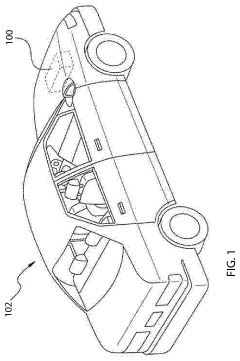
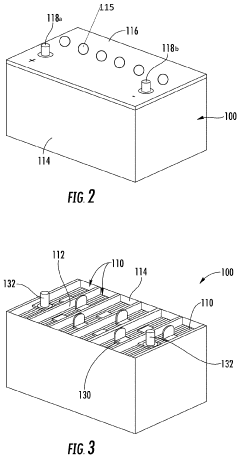
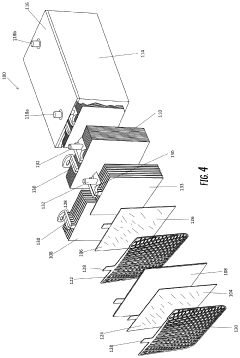
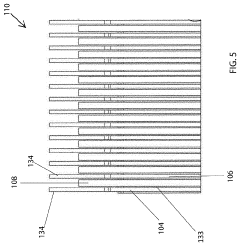
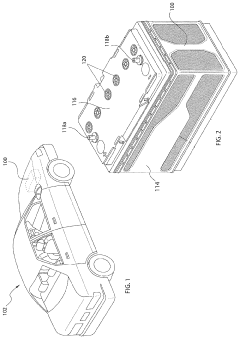
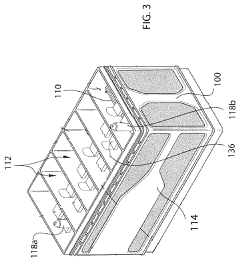
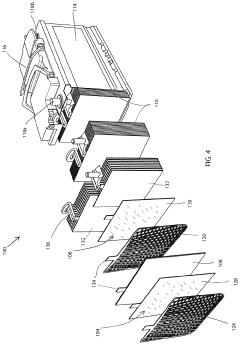
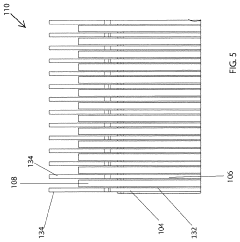
Compact absorbent glass mat battery
PatentPendingUS20200212504A1
Innovation
- A compact AGM lead acid battery design with a reduced lead content and smaller size, utilizing a container with electrically connected cells and an absorbent glass mat interleaved between positive and negative plates, achieving improved cycle life and higher CCA performance.
Absorbent glass mat battery
PatentActiveUS11936032B2
Innovation
- The development of a lead-acid battery with a negative electrode comprising a leady oxide, a synthetic organic expander, conductive carbons, and very fine particle barium sulfate, along with an absorbent glass mat separator, which enhances charge acceptance and cycling performance by improving the electrochemical active material composition and structure.
Environmental Impact of AGM Batteries
The integration of Absorbent Glass Mat (AGM) batteries in autonomous robotics systems has significant environmental implications that warrant careful consideration. These batteries, while offering numerous advantages in terms of performance and reliability, also present certain environmental challenges throughout their lifecycle.
AGM batteries used in autonomous robots typically have a longer lifespan compared to traditional lead-acid batteries, which reduces the frequency of battery replacements and, consequently, the overall environmental impact associated with battery production and disposal. The sealed design of AGM batteries also minimizes the risk of electrolyte leakage, reducing the potential for soil and water contamination during operation.
However, the production of AGM batteries involves the use of lead and other potentially harmful materials. The mining and processing of these raw materials can contribute to environmental degradation, including habitat destruction, air and water pollution, and greenhouse gas emissions. Additionally, the manufacturing process itself is energy-intensive, further contributing to the carbon footprint of these batteries.
During their operational life in autonomous robots, AGM batteries contribute to energy efficiency due to their low internal resistance and high charge acceptance rate. This efficiency can lead to reduced energy consumption and, by extension, lower environmental impact from power generation. However, the increased use of autonomous robots powered by AGM batteries may lead to higher overall energy demand, potentially offsetting some of these gains.
End-of-life management of AGM batteries presents both challenges and opportunities from an environmental perspective. These batteries are highly recyclable, with up to 99% of their components being recoverable. Proper recycling processes can reclaim lead, plastic, and other materials, reducing the need for virgin raw materials and minimizing waste. However, inadequate recycling infrastructure or improper disposal can lead to environmental contamination and health risks.
The increasing adoption of autonomous robotics across various industries may lead to a surge in AGM battery demand, potentially straining recycling capacities and exacerbating environmental concerns. This underscores the importance of developing robust recycling networks and implementing stringent regulations to ensure responsible end-of-life management.
In conclusion, while AGM batteries offer several environmental benefits in autonomous robotics applications, their overall environmental impact is complex and multifaceted. Balancing the advantages of improved performance and longevity against the environmental costs of production and disposal remains a critical challenge for the industry. Future developments in battery technology and recycling processes will play a crucial role in mitigating the environmental impact of AGM batteries in autonomous robotics.
AGM batteries used in autonomous robots typically have a longer lifespan compared to traditional lead-acid batteries, which reduces the frequency of battery replacements and, consequently, the overall environmental impact associated with battery production and disposal. The sealed design of AGM batteries also minimizes the risk of electrolyte leakage, reducing the potential for soil and water contamination during operation.
However, the production of AGM batteries involves the use of lead and other potentially harmful materials. The mining and processing of these raw materials can contribute to environmental degradation, including habitat destruction, air and water pollution, and greenhouse gas emissions. Additionally, the manufacturing process itself is energy-intensive, further contributing to the carbon footprint of these batteries.
During their operational life in autonomous robots, AGM batteries contribute to energy efficiency due to their low internal resistance and high charge acceptance rate. This efficiency can lead to reduced energy consumption and, by extension, lower environmental impact from power generation. However, the increased use of autonomous robots powered by AGM batteries may lead to higher overall energy demand, potentially offsetting some of these gains.
End-of-life management of AGM batteries presents both challenges and opportunities from an environmental perspective. These batteries are highly recyclable, with up to 99% of their components being recoverable. Proper recycling processes can reclaim lead, plastic, and other materials, reducing the need for virgin raw materials and minimizing waste. However, inadequate recycling infrastructure or improper disposal can lead to environmental contamination and health risks.
The increasing adoption of autonomous robotics across various industries may lead to a surge in AGM battery demand, potentially straining recycling capacities and exacerbating environmental concerns. This underscores the importance of developing robust recycling networks and implementing stringent regulations to ensure responsible end-of-life management.
In conclusion, while AGM batteries offer several environmental benefits in autonomous robotics applications, their overall environmental impact is complex and multifaceted. Balancing the advantages of improved performance and longevity against the environmental costs of production and disposal remains a critical challenge for the industry. Future developments in battery technology and recycling processes will play a crucial role in mitigating the environmental impact of AGM batteries in autonomous robotics.
Safety Standards for AGM Batteries in Robotics
The integration of AGM (Absorbent Glass Mat) batteries in autonomous robotics has necessitated the development and implementation of comprehensive safety standards. These standards are crucial to ensure the safe operation of robotic systems and protect both human operators and the environment. The primary focus of safety standards for AGM batteries in robotics revolves around three key areas: electrical safety, thermal management, and mechanical protection.
Electrical safety standards address the potential risks associated with short circuits, overcharging, and over-discharging. These standards typically require the implementation of battery management systems (BMS) that continuously monitor voltage, current, and temperature. The BMS must be capable of disconnecting the battery in case of abnormal conditions, such as excessive current draw or voltage fluctuations. Additionally, standards often mandate the use of insulation materials and protective circuitry to prevent accidental contact with live electrical components.
Thermal management is another critical aspect of AGM battery safety in robotics. Standards in this area often specify maximum operating temperatures and require the implementation of cooling systems or heat dissipation mechanisms. These may include passive cooling through strategic placement of heat sinks or active cooling systems utilizing fans or liquid cooling. Furthermore, safety standards often mandate the inclusion of thermal runaway protection, which can detect and mitigate potential battery overheating scenarios.
Mechanical protection standards focus on ensuring the physical integrity of the AGM battery within the robotic system. These standards typically require robust enclosures that can withstand impact, vibration, and environmental factors such as dust and moisture. The use of shock-absorbing materials and secure mounting systems is often mandated to prevent battery displacement during operation or in the event of a collision.
Safety standards also address the proper handling and disposal of AGM batteries in robotics. This includes guidelines for safe installation, maintenance procedures, and end-of-life disposal. Many standards require clear labeling of battery specifications, hazard warnings, and disposal instructions on the robotic system itself.
Furthermore, safety standards often extend to the design of the overall robotic system, ensuring that the integration of AGM batteries does not compromise the robot's stability or functionality. This may include requirements for weight distribution, center of gravity considerations, and fail-safe mechanisms in case of battery failure.
As the field of autonomous robotics continues to evolve, safety standards for AGM batteries are regularly updated to address new challenges and technological advancements. Compliance with these standards is typically verified through rigorous testing and certification processes, often conducted by independent third-party organizations. This ensures that robotic systems utilizing AGM batteries meet the necessary safety requirements before being deployed in real-world applications.
Electrical safety standards address the potential risks associated with short circuits, overcharging, and over-discharging. These standards typically require the implementation of battery management systems (BMS) that continuously monitor voltage, current, and temperature. The BMS must be capable of disconnecting the battery in case of abnormal conditions, such as excessive current draw or voltage fluctuations. Additionally, standards often mandate the use of insulation materials and protective circuitry to prevent accidental contact with live electrical components.
Thermal management is another critical aspect of AGM battery safety in robotics. Standards in this area often specify maximum operating temperatures and require the implementation of cooling systems or heat dissipation mechanisms. These may include passive cooling through strategic placement of heat sinks or active cooling systems utilizing fans or liquid cooling. Furthermore, safety standards often mandate the inclusion of thermal runaway protection, which can detect and mitigate potential battery overheating scenarios.
Mechanical protection standards focus on ensuring the physical integrity of the AGM battery within the robotic system. These standards typically require robust enclosures that can withstand impact, vibration, and environmental factors such as dust and moisture. The use of shock-absorbing materials and secure mounting systems is often mandated to prevent battery displacement during operation or in the event of a collision.
Safety standards also address the proper handling and disposal of AGM batteries in robotics. This includes guidelines for safe installation, maintenance procedures, and end-of-life disposal. Many standards require clear labeling of battery specifications, hazard warnings, and disposal instructions on the robotic system itself.
Furthermore, safety standards often extend to the design of the overall robotic system, ensuring that the integration of AGM batteries does not compromise the robot's stability or functionality. This may include requirements for weight distribution, center of gravity considerations, and fail-safe mechanisms in case of battery failure.
As the field of autonomous robotics continues to evolve, safety standards for AGM batteries are regularly updated to address new challenges and technological advancements. Compliance with these standards is typically verified through rigorous testing and certification processes, often conducted by independent third-party organizations. This ensures that robotic systems utilizing AGM batteries meet the necessary safety requirements before being deployed in real-world applications.
Unlock deeper insights with PatSnap Eureka Quick Research — get a full tech report to explore trends and direct your research. Try now!
Generate Your Research Report Instantly with AI Agent
Supercharge your innovation with PatSnap Eureka AI Agent Platform!