

Evaluating AGM Battery Efficiency Gains Through Advanced Modelling
AUG 7, 20259 MIN READ
Generate Your Research Report Instantly with AI Agent
PatSnap Eureka helps you evaluate technical feasibility & market potential.
AGM Battery Evolution and Objectives
Absorbed Glass Mat (AGM) battery technology has undergone significant evolution since its inception in the 1980s. Initially developed for military and aerospace applications, AGM batteries have gradually found their way into various commercial and industrial sectors. The technology's progression has been driven by the increasing demand for reliable, maintenance-free energy storage solutions with improved performance characteristics.
The primary objective of AGM battery development has been to enhance energy density, cycle life, and overall efficiency while maintaining the inherent safety and low-maintenance benefits of the technology. Over the years, researchers and manufacturers have focused on optimizing the internal structure, electrolyte composition, and plate design to achieve these goals. The evolution of AGM batteries has been closely tied to advancements in materials science and manufacturing processes.
One of the key milestones in AGM battery evolution was the introduction of high-purity lead alloys and advanced separator materials. These innovations significantly improved the battery's capacity retention and cycle life. Additionally, the development of precision manufacturing techniques allowed for better control over plate thickness and uniformity, leading to enhanced performance and reliability.
The integration of valve-regulated technology marked another crucial step in AGM battery evolution. This innovation eliminated the need for regular water additions and reduced gas emissions, making AGM batteries suitable for a wider range of applications, including uninterruptible power supplies (UPS) and renewable energy storage systems.
Recent years have seen a renewed focus on AGM battery technology, driven by the growing demand for efficient energy storage solutions in automotive and renewable energy sectors. The objectives of current research and development efforts include further improving energy density, fast-charging capabilities, and temperature tolerance. These advancements aim to position AGM batteries as a competitive alternative to newer battery technologies in certain applications.
The specific objective of evaluating AGM battery efficiency gains through advanced modeling is to leverage computational tools and simulation techniques to optimize battery design and performance. This approach allows researchers and engineers to explore various parameters and configurations without the need for extensive physical prototyping, significantly accelerating the development process and reducing costs.
Advanced modeling techniques enable a deeper understanding of the complex electrochemical processes within AGM batteries. By simulating factors such as electrolyte distribution, charge/discharge dynamics, and thermal behavior, researchers can identify potential areas for improvement and predict the impact of design changes on overall battery efficiency.
The ultimate goal of these modeling efforts is to develop AGM batteries with higher energy density, improved charge acceptance, and extended cycle life. These advancements would not only enhance the performance of existing AGM battery applications but also potentially expand their use in emerging technologies, such as hybrid electric vehicles and grid-scale energy storage systems.
The primary objective of AGM battery development has been to enhance energy density, cycle life, and overall efficiency while maintaining the inherent safety and low-maintenance benefits of the technology. Over the years, researchers and manufacturers have focused on optimizing the internal structure, electrolyte composition, and plate design to achieve these goals. The evolution of AGM batteries has been closely tied to advancements in materials science and manufacturing processes.
One of the key milestones in AGM battery evolution was the introduction of high-purity lead alloys and advanced separator materials. These innovations significantly improved the battery's capacity retention and cycle life. Additionally, the development of precision manufacturing techniques allowed for better control over plate thickness and uniformity, leading to enhanced performance and reliability.
The integration of valve-regulated technology marked another crucial step in AGM battery evolution. This innovation eliminated the need for regular water additions and reduced gas emissions, making AGM batteries suitable for a wider range of applications, including uninterruptible power supplies (UPS) and renewable energy storage systems.
Recent years have seen a renewed focus on AGM battery technology, driven by the growing demand for efficient energy storage solutions in automotive and renewable energy sectors. The objectives of current research and development efforts include further improving energy density, fast-charging capabilities, and temperature tolerance. These advancements aim to position AGM batteries as a competitive alternative to newer battery technologies in certain applications.
The specific objective of evaluating AGM battery efficiency gains through advanced modeling is to leverage computational tools and simulation techniques to optimize battery design and performance. This approach allows researchers and engineers to explore various parameters and configurations without the need for extensive physical prototyping, significantly accelerating the development process and reducing costs.
Advanced modeling techniques enable a deeper understanding of the complex electrochemical processes within AGM batteries. By simulating factors such as electrolyte distribution, charge/discharge dynamics, and thermal behavior, researchers can identify potential areas for improvement and predict the impact of design changes on overall battery efficiency.
The ultimate goal of these modeling efforts is to develop AGM batteries with higher energy density, improved charge acceptance, and extended cycle life. These advancements would not only enhance the performance of existing AGM battery applications but also potentially expand their use in emerging technologies, such as hybrid electric vehicles and grid-scale energy storage systems.
Market Demand Analysis for AGM Batteries
The market demand for Absorbent Glass Mat (AGM) batteries has been experiencing significant growth in recent years, driven by several key factors. The automotive industry, particularly in the context of start-stop vehicle systems, has been a major contributor to this increased demand. As more vehicles incorporate start-stop technology to improve fuel efficiency and reduce emissions, the need for reliable, high-performance batteries capable of handling frequent charge-discharge cycles has surged.
In the renewable energy sector, AGM batteries have gained traction as energy storage solutions for solar and wind power systems. Their ability to provide deep-cycle performance, coupled with maintenance-free operation, makes them attractive for both residential and commercial applications. The growing emphasis on sustainable energy solutions has further bolstered the market for AGM batteries in this segment.
The telecommunications industry represents another substantial market for AGM batteries. As the global demand for uninterrupted communication services continues to rise, AGM batteries are increasingly deployed in backup power systems for cell towers and other critical infrastructure. Their long service life and ability to operate in a wide range of temperatures make them well-suited for these applications.
In the marine and recreational vehicle markets, AGM batteries have become the preferred choice due to their spill-proof design and superior performance in high-vibration environments. The growth in leisure boating and RV sales has contributed to the increased demand for AGM batteries in these sectors.
The industrial sector, including material handling equipment and uninterruptible power supply (UPS) systems, has also shown a rising demand for AGM batteries. Their low internal resistance, which allows for high-rate discharge capabilities, makes them ideal for applications requiring sudden bursts of power.
Market analysis indicates that the global AGM battery market is expected to continue its growth trajectory. Factors such as increasing vehicle electrification, the expansion of 5G networks, and the ongoing transition to renewable energy sources are likely to sustain this trend. However, the market also faces challenges, including competition from lithium-ion batteries in certain applications and the need for more efficient recycling processes to address environmental concerns.
As advanced modelling techniques are applied to evaluate and improve AGM battery efficiency, the potential for market expansion becomes even more significant. Enhanced battery performance could open up new application areas and strengthen the position of AGM batteries in existing markets. This underscores the importance of ongoing research and development efforts in maintaining and growing market share in the face of evolving energy storage needs and competing technologies.
In the renewable energy sector, AGM batteries have gained traction as energy storage solutions for solar and wind power systems. Their ability to provide deep-cycle performance, coupled with maintenance-free operation, makes them attractive for both residential and commercial applications. The growing emphasis on sustainable energy solutions has further bolstered the market for AGM batteries in this segment.
The telecommunications industry represents another substantial market for AGM batteries. As the global demand for uninterrupted communication services continues to rise, AGM batteries are increasingly deployed in backup power systems for cell towers and other critical infrastructure. Their long service life and ability to operate in a wide range of temperatures make them well-suited for these applications.
In the marine and recreational vehicle markets, AGM batteries have become the preferred choice due to their spill-proof design and superior performance in high-vibration environments. The growth in leisure boating and RV sales has contributed to the increased demand for AGM batteries in these sectors.
The industrial sector, including material handling equipment and uninterruptible power supply (UPS) systems, has also shown a rising demand for AGM batteries. Their low internal resistance, which allows for high-rate discharge capabilities, makes them ideal for applications requiring sudden bursts of power.
Market analysis indicates that the global AGM battery market is expected to continue its growth trajectory. Factors such as increasing vehicle electrification, the expansion of 5G networks, and the ongoing transition to renewable energy sources are likely to sustain this trend. However, the market also faces challenges, including competition from lithium-ion batteries in certain applications and the need for more efficient recycling processes to address environmental concerns.
As advanced modelling techniques are applied to evaluate and improve AGM battery efficiency, the potential for market expansion becomes even more significant. Enhanced battery performance could open up new application areas and strengthen the position of AGM batteries in existing markets. This underscores the importance of ongoing research and development efforts in maintaining and growing market share in the face of evolving energy storage needs and competing technologies.
AGM Battery Technology Status and Challenges
Absorptive Glass Mat (AGM) battery technology has made significant strides in recent years, yet it still faces several challenges in terms of efficiency and performance. The current status of AGM batteries is characterized by their widespread use in various applications, including automotive, renewable energy storage, and uninterruptible power supplies. These batteries offer advantages such as maintenance-free operation, high charge acceptance, and improved cycle life compared to traditional lead-acid batteries.
However, the technology is not without its limitations. One of the primary challenges is the optimization of energy density. While AGM batteries have shown improvements in this area, they still lag behind some newer battery technologies, such as lithium-ion, in terms of energy storage capacity per unit weight and volume. This presents a significant hurdle for applications where space and weight are critical factors, such as in electric vehicles or portable electronics.
Another major challenge is the improvement of charge efficiency and cycle life. Although AGM batteries generally outperform flooded lead-acid batteries in these aspects, there is still room for enhancement. The charge acceptance rate, particularly at high states of charge, remains a limiting factor in fast-charging applications. Additionally, while AGM batteries have demonstrated better cycle life than traditional lead-acid batteries, further improvements are necessary to compete with emerging battery technologies in long-term energy storage applications.
The thermal management of AGM batteries also presents a significant challenge. Heat generation during charging and discharging can affect battery performance and lifespan. Developing more effective cooling strategies and improving the battery's thermal characteristics are crucial areas of ongoing research and development.
From a manufacturing perspective, the cost of production remains a challenge for widespread adoption in certain markets. While AGM batteries are more cost-effective than some advanced battery technologies, further reductions in production costs are necessary to enhance their competitiveness, especially in price-sensitive applications.
Environmental concerns also pose challenges for AGM battery technology. Although these batteries are sealed and can be recycled, the use of lead and sulfuric acid raises environmental and health considerations. Developing more environmentally friendly materials and improving recycling processes are important areas of focus for the industry.
In the context of advanced modeling for evaluating AGM battery efficiency gains, several technical challenges emerge. These include accurately modeling the complex electrochemical processes within the battery, predicting performance under various operating conditions, and simulating long-term degradation mechanisms. The development of more sophisticated models that can capture these aspects with high fidelity is crucial for driving further improvements in AGM battery technology.
However, the technology is not without its limitations. One of the primary challenges is the optimization of energy density. While AGM batteries have shown improvements in this area, they still lag behind some newer battery technologies, such as lithium-ion, in terms of energy storage capacity per unit weight and volume. This presents a significant hurdle for applications where space and weight are critical factors, such as in electric vehicles or portable electronics.
Another major challenge is the improvement of charge efficiency and cycle life. Although AGM batteries generally outperform flooded lead-acid batteries in these aspects, there is still room for enhancement. The charge acceptance rate, particularly at high states of charge, remains a limiting factor in fast-charging applications. Additionally, while AGM batteries have demonstrated better cycle life than traditional lead-acid batteries, further improvements are necessary to compete with emerging battery technologies in long-term energy storage applications.
The thermal management of AGM batteries also presents a significant challenge. Heat generation during charging and discharging can affect battery performance and lifespan. Developing more effective cooling strategies and improving the battery's thermal characteristics are crucial areas of ongoing research and development.
From a manufacturing perspective, the cost of production remains a challenge for widespread adoption in certain markets. While AGM batteries are more cost-effective than some advanced battery technologies, further reductions in production costs are necessary to enhance their competitiveness, especially in price-sensitive applications.
Environmental concerns also pose challenges for AGM battery technology. Although these batteries are sealed and can be recycled, the use of lead and sulfuric acid raises environmental and health considerations. Developing more environmentally friendly materials and improving recycling processes are important areas of focus for the industry.
In the context of advanced modeling for evaluating AGM battery efficiency gains, several technical challenges emerge. These include accurately modeling the complex electrochemical processes within the battery, predicting performance under various operating conditions, and simulating long-term degradation mechanisms. The development of more sophisticated models that can capture these aspects with high fidelity is crucial for driving further improvements in AGM battery technology.
Current AGM Battery Modelling Techniques
01 Improved electrode design for AGM batteries
Enhancing the electrode design in AGM batteries can significantly improve efficiency. This includes optimizing the structure, material composition, and surface area of electrodes to increase charge/discharge rates and overall battery performance.- Improved electrode design for AGM batteries: Enhancing the electrode design in AGM batteries can significantly improve their efficiency. This includes optimizing the structure, material composition, and surface area of electrodes to increase charge/discharge rates and overall battery performance. Advanced electrode designs can also reduce internal resistance and improve energy density.
- Electrolyte management and distribution: Efficient electrolyte management and distribution within AGM batteries play a crucial role in their performance. This involves optimizing the absorption and retention of electrolytes by the glass mat separator, ensuring uniform distribution throughout the battery, and preventing dry spots or electrolyte stratification. Improved electrolyte management can lead to better charge acceptance and longer battery life.
- Thermal management systems for AGM batteries: Implementing effective thermal management systems can enhance AGM battery efficiency by maintaining optimal operating temperatures. This includes the use of cooling systems, heat dissipation techniques, and temperature-controlled environments to prevent overheating and ensure consistent performance across various conditions. Proper thermal management can extend battery life and improve overall efficiency.
- Advanced charging algorithms and battery management systems: Developing sophisticated charging algorithms and battery management systems can significantly improve AGM battery efficiency. These systems can optimize charging profiles, monitor battery health, and adjust parameters in real-time to maximize performance and longevity. Intelligent charging strategies can also help prevent overcharging and reduce the risk of battery degradation.
- Novel separator materials and designs: Incorporating innovative separator materials and designs can enhance AGM battery efficiency. This includes developing advanced glass mat separators with improved absorption properties, reduced internal resistance, and better oxygen recombination capabilities. Novel separator designs can also contribute to better electrolyte distribution and overall battery performance.
02 Advanced electrolyte management systems
Implementing sophisticated electrolyte management systems can boost AGM battery efficiency. These systems ensure optimal electrolyte distribution, reduce stratification, and maintain proper saturation levels throughout the battery's lifecycle.Expand Specific Solutions03 Thermal management techniques
Effective thermal management is crucial for AGM battery efficiency. This involves implementing cooling systems, heat dissipation methods, and temperature control mechanisms to maintain optimal operating conditions and extend battery life.Expand Specific Solutions04 Smart charging and monitoring systems
Incorporating intelligent charging algorithms and real-time monitoring systems can significantly enhance AGM battery efficiency. These technologies optimize charging cycles, prevent overcharging, and provide accurate state-of-charge information.Expand Specific Solutions05 Advanced separator materials and designs
Utilizing innovative separator materials and designs can improve AGM battery efficiency. This includes developing high-performance glass fiber mats, optimizing pore structures, and incorporating novel materials to enhance ion transport and reduce internal resistance.Expand Specific Solutions
Key Players in AGM Battery Industry
The AGM battery efficiency evaluation market is in a growth phase, driven by increasing demand for advanced energy storage solutions. The global market size for AGM batteries is projected to expand significantly in the coming years, fueled by automotive and renewable energy applications. Technologically, AGM batteries are relatively mature, but ongoing research aims to enhance their performance and efficiency. Key players like Samsung SDI, LG Energy Solution, and FIAMM Energy Technology are investing heavily in R&D to improve AGM battery technology. Emerging companies such as Fengfan and Tianneng Battery Group are also making strides in this field, intensifying competition and driving innovation. The focus on advanced modeling techniques is expected to further accelerate efficiency gains in AGM batteries.
LG Energy Solution Ltd.
Technical Solution: LG Energy Solution has developed advanced modelling techniques for AGM (Absorbent Glass Mat) batteries to improve efficiency. Their approach involves using sophisticated computational fluid dynamics (CFD) simulations to optimize the internal structure of AGM batteries[1]. This allows for better electrolyte distribution and gas recombination, leading to improved charge acceptance and overall battery performance. The company has also implemented machine learning algorithms to predict battery degradation patterns, enabling more accurate state-of-health estimations[2]. Additionally, LG Energy Solution has integrated thermal management modelling into their AGM battery designs, which helps maintain optimal operating temperatures and extends battery life[3].
Strengths: Advanced CFD simulations for optimized internal structure; Machine learning for accurate degradation prediction; Integrated thermal management modelling. Weaknesses: Potentially higher computational costs; May require specialized expertise for implementation.
Samsung SDI Co., Ltd.
Technical Solution: Samsung SDI has focused on developing a multi-scale modelling approach for AGM batteries to enhance efficiency. Their method combines atomistic, mesoscopic, and macroscopic models to provide a comprehensive understanding of battery behavior[4]. At the atomistic level, they use density functional theory (DFT) calculations to study electrode-electrolyte interactions. The mesoscopic scale employs kinetic Monte Carlo simulations to model ion transport within the AGM separator. At the macroscopic level, finite element analysis is used to optimize overall battery design and performance[5]. Samsung SDI has also incorporated electrochemical impedance spectroscopy (EIS) data into their models, allowing for real-time monitoring and adjustment of battery parameters[6].
Strengths: Comprehensive multi-scale modelling approach; Integration of EIS data for real-time monitoring; Detailed understanding of battery behavior at multiple levels. Weaknesses: Complex modelling system may be challenging to implement; High computational requirements for atomistic simulations.
Advanced Modelling Innovations for AGM Batteries
Compact absorbent glass mat battery
PatentPendingUS20200212504A1
Innovation
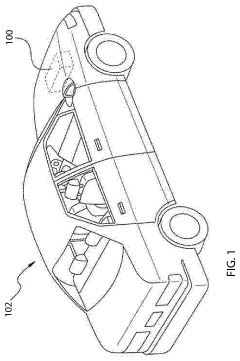
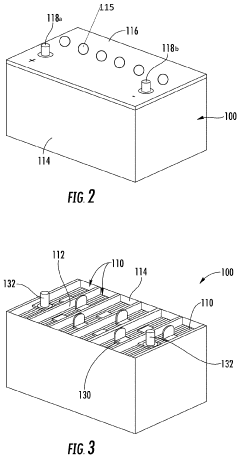
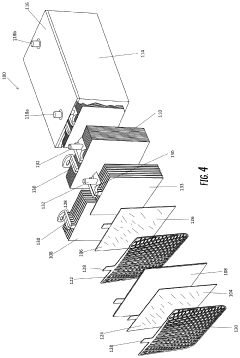
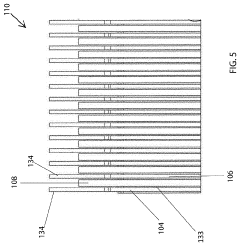
- A compact AGM lead acid battery design with a reduced lead content and smaller size, utilizing a container with electrically connected cells and an absorbent glass mat interleaved between positive and negative plates, achieving improved cycle life and higher CCA performance.
Battery electrode plate reinforcement mat having improved wettability characteristics and methods of use therefor
PatentActiveUS20180337380A1
Innovation
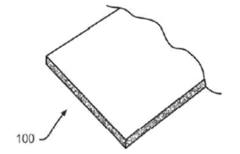
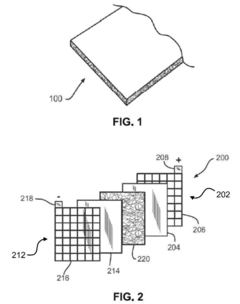
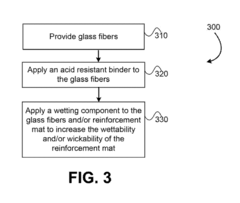
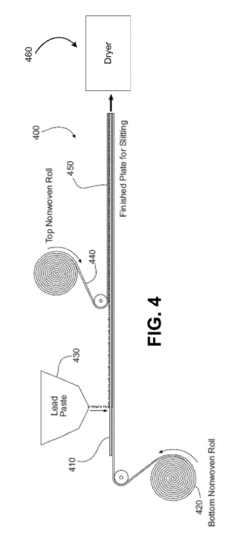
- Nonwoven fiber mats with increased wettability properties, composed of glass fibers and an acid-resistant binder, along with a dissolvable wetting component, enhance the mats' ability to transport and evaporate water and acid solutions, improving electrode drying and structural integrity.
Environmental Impact of AGM Battery Technologies
The environmental impact of AGM (Absorbent Glass Mat) battery technologies is a critical consideration in the broader context of sustainable energy storage solutions. AGM batteries, while offering several advantages over traditional lead-acid batteries, still present significant environmental challenges throughout their lifecycle.
The production phase of AGM batteries involves the extraction and processing of raw materials, including lead, sulfuric acid, and glass fiber mats. These processes contribute to resource depletion and energy consumption. However, compared to flooded lead-acid batteries, AGM batteries require less lead and acid, potentially reducing the environmental footprint of their manufacturing.
During their operational life, AGM batteries demonstrate improved efficiency and longer lifespan compared to conventional lead-acid batteries. This increased durability translates to reduced waste generation and less frequent replacement, indirectly mitigating environmental impact. Additionally, the sealed design of AGM batteries minimizes the risk of acid spills and hydrogen gas emissions, further enhancing their environmental safety profile.
The end-of-life management of AGM batteries presents both challenges and opportunities. While the recycling process for AGM batteries is well-established, with up to 99% of battery components being recyclable, the collection and transportation of used batteries remain significant environmental concerns. Improper disposal can lead to soil and water contamination due to the leaching of toxic materials.
Advanced modelling techniques play a crucial role in evaluating and optimizing the environmental performance of AGM batteries. Life Cycle Assessment (LCA) models help quantify the environmental impacts across various stages of the battery's life, from raw material extraction to disposal. These models enable researchers and manufacturers to identify hotspots for environmental improvement and guide the development of more sustainable battery designs.
Thermal modelling of AGM batteries contributes to enhancing their efficiency and lifespan, indirectly reducing their environmental impact. By optimizing thermal management systems, researchers can minimize energy losses and extend battery life, thereby decreasing the frequency of battery replacements and associated waste generation.
The integration of AGM batteries in renewable energy systems, such as solar and wind power installations, further amplifies their positive environmental impact. By enabling efficient energy storage and grid stabilization, AGM batteries support the broader transition to clean energy sources, potentially offsetting their own environmental footprint through facilitation of renewable energy adoption.
As environmental regulations become increasingly stringent, manufacturers are incentivized to innovate and improve the ecological profile of AGM batteries. This includes exploring alternative materials, enhancing recycling processes, and developing more energy-efficient production methods. The ongoing research in this field promises to further reduce the environmental footprint of AGM battery technologies in the coming years.
The production phase of AGM batteries involves the extraction and processing of raw materials, including lead, sulfuric acid, and glass fiber mats. These processes contribute to resource depletion and energy consumption. However, compared to flooded lead-acid batteries, AGM batteries require less lead and acid, potentially reducing the environmental footprint of their manufacturing.
During their operational life, AGM batteries demonstrate improved efficiency and longer lifespan compared to conventional lead-acid batteries. This increased durability translates to reduced waste generation and less frequent replacement, indirectly mitigating environmental impact. Additionally, the sealed design of AGM batteries minimizes the risk of acid spills and hydrogen gas emissions, further enhancing their environmental safety profile.
The end-of-life management of AGM batteries presents both challenges and opportunities. While the recycling process for AGM batteries is well-established, with up to 99% of battery components being recyclable, the collection and transportation of used batteries remain significant environmental concerns. Improper disposal can lead to soil and water contamination due to the leaching of toxic materials.
Advanced modelling techniques play a crucial role in evaluating and optimizing the environmental performance of AGM batteries. Life Cycle Assessment (LCA) models help quantify the environmental impacts across various stages of the battery's life, from raw material extraction to disposal. These models enable researchers and manufacturers to identify hotspots for environmental improvement and guide the development of more sustainable battery designs.
Thermal modelling of AGM batteries contributes to enhancing their efficiency and lifespan, indirectly reducing their environmental impact. By optimizing thermal management systems, researchers can minimize energy losses and extend battery life, thereby decreasing the frequency of battery replacements and associated waste generation.
The integration of AGM batteries in renewable energy systems, such as solar and wind power installations, further amplifies their positive environmental impact. By enabling efficient energy storage and grid stabilization, AGM batteries support the broader transition to clean energy sources, potentially offsetting their own environmental footprint through facilitation of renewable energy adoption.
As environmental regulations become increasingly stringent, manufacturers are incentivized to innovate and improve the ecological profile of AGM batteries. This includes exploring alternative materials, enhancing recycling processes, and developing more energy-efficient production methods. The ongoing research in this field promises to further reduce the environmental footprint of AGM battery technologies in the coming years.
Standardization Efforts in Battery Modelling
Standardization efforts in battery modelling have become increasingly crucial as the demand for more efficient and reliable energy storage solutions continues to grow. These efforts aim to establish common frameworks, methodologies, and protocols for accurately simulating and predicting battery performance across various applications, including AGM (Absorbent Glass Mat) batteries.
One of the primary focuses of standardization in battery modelling is the development of consistent terminology and definitions. This ensures that researchers, engineers, and industry professionals can communicate effectively and compare results across different studies and applications. Standardized terms for battery characteristics, performance metrics, and modelling parameters help eliminate ambiguity and promote a shared understanding within the field.
Another key aspect of standardization is the establishment of common testing procedures and protocols. These standardized methods enable consistent evaluation of battery performance, allowing for more accurate comparisons between different battery technologies and modelling approaches. For AGM batteries specifically, standardized testing procedures help in assessing efficiency gains and validating modelling results across various operating conditions.
Efforts are also being made to create standardized data formats and exchange protocols for battery modelling. This facilitates easier collaboration between research groups and industry partners, enabling more efficient sharing of experimental data, model parameters, and simulation results. Standardized data formats also support the development of interoperable software tools and platforms for battery modelling, reducing the barriers to entry for new researchers and accelerating innovation in the field.
Furthermore, standardization initiatives are addressing the need for consistent reporting of modelling results and uncertainties. This includes guidelines for documenting model assumptions, limitations, and validation procedures. By promoting transparency and reproducibility in battery modelling studies, these standards help build confidence in the accuracy and reliability of simulation results, particularly when evaluating efficiency gains in AGM batteries through advanced modelling techniques.
Collaborative efforts between academic institutions, industry partners, and standardization bodies are driving the development of these battery modelling standards. Organizations such as the International Electrotechnical Commission (IEC) and the Institute of Electrical and Electronics Engineers (IEEE) are playing crucial roles in coordinating these efforts and publishing relevant standards and guidelines. These collaborations ensure that the developed standards are both scientifically rigorous and practically applicable in real-world scenarios.
One of the primary focuses of standardization in battery modelling is the development of consistent terminology and definitions. This ensures that researchers, engineers, and industry professionals can communicate effectively and compare results across different studies and applications. Standardized terms for battery characteristics, performance metrics, and modelling parameters help eliminate ambiguity and promote a shared understanding within the field.
Another key aspect of standardization is the establishment of common testing procedures and protocols. These standardized methods enable consistent evaluation of battery performance, allowing for more accurate comparisons between different battery technologies and modelling approaches. For AGM batteries specifically, standardized testing procedures help in assessing efficiency gains and validating modelling results across various operating conditions.
Efforts are also being made to create standardized data formats and exchange protocols for battery modelling. This facilitates easier collaboration between research groups and industry partners, enabling more efficient sharing of experimental data, model parameters, and simulation results. Standardized data formats also support the development of interoperable software tools and platforms for battery modelling, reducing the barriers to entry for new researchers and accelerating innovation in the field.
Furthermore, standardization initiatives are addressing the need for consistent reporting of modelling results and uncertainties. This includes guidelines for documenting model assumptions, limitations, and validation procedures. By promoting transparency and reproducibility in battery modelling studies, these standards help build confidence in the accuracy and reliability of simulation results, particularly when evaluating efficiency gains in AGM batteries through advanced modelling techniques.
Collaborative efforts between academic institutions, industry partners, and standardization bodies are driving the development of these battery modelling standards. Organizations such as the International Electrotechnical Commission (IEC) and the Institute of Electrical and Electronics Engineers (IEEE) are playing crucial roles in coordinating these efforts and publishing relevant standards and guidelines. These collaborations ensure that the developed standards are both scientifically rigorous and practically applicable in real-world scenarios.
Unlock deeper insights with PatSnap Eureka Quick Research — get a full tech report to explore trends and direct your research. Try now!
Generate Your Research Report Instantly with AI Agent
Supercharge your innovation with PatSnap Eureka AI Agent Platform!