

Load Distribution Impacts on AGM Battery Performance in EVs
AUG 7, 20258 MIN READ
Generate Your Research Report Instantly with AI Agent
PatSnap Eureka helps you evaluate technical feasibility & market potential.
AGM Battery EV Context
Absorbed Glass Mat (AGM) batteries have emerged as a crucial component in the evolving landscape of electric vehicles (EVs). These advanced lead-acid batteries offer several advantages over traditional flooded lead-acid batteries, making them particularly suitable for the demanding requirements of EVs. AGM batteries are designed to provide high power output, rapid recharging capabilities, and improved cycle life, all of which are essential characteristics for EV applications.
In the context of electric vehicles, AGM batteries play a vital role in various systems, including start-stop technology, regenerative braking, and auxiliary power supply. The sealed design of AGM batteries allows for flexible mounting orientations, which is advantageous in the space-constrained environment of modern EVs. Additionally, their spill-proof nature enhances safety and reduces maintenance requirements, aligning with the reliability expectations of EV manufacturers and consumers.
The integration of AGM batteries in EVs has been driven by the need for more efficient and environmentally friendly transportation solutions. As governments worldwide implement stricter emissions regulations and push for the adoption of electric vehicles, the demand for high-performance battery technologies has intensified. AGM batteries have positioned themselves as a cost-effective alternative to more expensive lithium-ion batteries in certain EV applications, particularly in hybrid electric vehicles (HEVs) and mild hybrid systems.
The performance of AGM batteries in EVs is closely tied to the vehicle's electrical load distribution. Unlike traditional vehicles, EVs place significantly higher demands on their battery systems, requiring them to handle frequent charge-discharge cycles, high current loads, and varying operational conditions. The way these electrical loads are distributed across the vehicle's systems can have a profound impact on the AGM battery's performance, longevity, and overall efficiency of the EV.
Understanding the relationship between load distribution and AGM battery performance is crucial for optimizing EV design and operation. Factors such as acceleration, regenerative braking intensity, auxiliary power consumption, and environmental conditions all contribute to the complex load profile that AGM batteries must manage. Engineers and researchers are continuously working to develop advanced battery management systems and load balancing techniques to maximize the potential of AGM batteries in EV applications.
As the automotive industry continues its transition towards electrification, the role of AGM batteries in EVs is likely to evolve. While lithium-ion batteries dominate the pure electric vehicle market, AGM batteries remain relevant in hybrid systems and as auxiliary power sources. The ongoing research into improving AGM battery technology, coupled with their cost-effectiveness, ensures their continued presence in the EV ecosystem for the foreseeable future.
In the context of electric vehicles, AGM batteries play a vital role in various systems, including start-stop technology, regenerative braking, and auxiliary power supply. The sealed design of AGM batteries allows for flexible mounting orientations, which is advantageous in the space-constrained environment of modern EVs. Additionally, their spill-proof nature enhances safety and reduces maintenance requirements, aligning with the reliability expectations of EV manufacturers and consumers.
The integration of AGM batteries in EVs has been driven by the need for more efficient and environmentally friendly transportation solutions. As governments worldwide implement stricter emissions regulations and push for the adoption of electric vehicles, the demand for high-performance battery technologies has intensified. AGM batteries have positioned themselves as a cost-effective alternative to more expensive lithium-ion batteries in certain EV applications, particularly in hybrid electric vehicles (HEVs) and mild hybrid systems.
The performance of AGM batteries in EVs is closely tied to the vehicle's electrical load distribution. Unlike traditional vehicles, EVs place significantly higher demands on their battery systems, requiring them to handle frequent charge-discharge cycles, high current loads, and varying operational conditions. The way these electrical loads are distributed across the vehicle's systems can have a profound impact on the AGM battery's performance, longevity, and overall efficiency of the EV.
Understanding the relationship between load distribution and AGM battery performance is crucial for optimizing EV design and operation. Factors such as acceleration, regenerative braking intensity, auxiliary power consumption, and environmental conditions all contribute to the complex load profile that AGM batteries must manage. Engineers and researchers are continuously working to develop advanced battery management systems and load balancing techniques to maximize the potential of AGM batteries in EV applications.
As the automotive industry continues its transition towards electrification, the role of AGM batteries in EVs is likely to evolve. While lithium-ion batteries dominate the pure electric vehicle market, AGM batteries remain relevant in hybrid systems and as auxiliary power sources. The ongoing research into improving AGM battery technology, coupled with their cost-effectiveness, ensures their continued presence in the EV ecosystem for the foreseeable future.
EV Market Load Demands
The electric vehicle (EV) market is experiencing unprecedented growth, driven by increasing environmental concerns, government regulations, and technological advancements. This rapid expansion has led to significant changes in load demands on EV batteries, particularly Absorbent Glass Mat (AGM) batteries, which are commonly used in many EV models.
The load demands in the EV market are characterized by several key factors. Firstly, there is a growing demand for longer driving ranges, which requires batteries to store and deliver more energy efficiently. This has led to a shift towards higher capacity batteries and more advanced energy management systems. Secondly, fast charging capabilities have become a crucial requirement for EV users, placing additional stress on battery systems and necessitating improved thermal management and load distribution strategies.
Another significant load demand factor is the increasing integration of EVs into smart grid systems. This integration requires batteries to not only power the vehicle but also potentially feed energy back into the grid during peak demand periods, a concept known as vehicle-to-grid (V2G) technology. This bidirectional energy flow creates new load patterns and challenges for battery management systems.
The variability of driving conditions also contributes to complex load demands. Urban environments with frequent start-stop cycles, highway driving with sustained high-power output, and varying climate conditions all impact the load distribution and overall performance of AGM batteries in EVs. These diverse usage patterns require sophisticated battery management systems to optimize performance and longevity.
Furthermore, the growing adoption of autonomous driving features and advanced infotainment systems in EVs is increasing the auxiliary power demands on the battery. These systems require a constant power supply, even when the vehicle is not in motion, adding to the complexity of load management.
The EV market is also seeing a trend towards faster acceleration and higher top speeds, which translates to higher peak power demands on the battery system. This trend challenges battery designers to create systems that can deliver high power output while maintaining efficiency and thermal stability.
Lastly, the push for lighter vehicles to improve overall efficiency is influencing battery design. This creates a demand for batteries that can provide high energy density and power output while minimizing weight, further complicating the load distribution challenges faced by AGM batteries in EVs.
The load demands in the EV market are characterized by several key factors. Firstly, there is a growing demand for longer driving ranges, which requires batteries to store and deliver more energy efficiently. This has led to a shift towards higher capacity batteries and more advanced energy management systems. Secondly, fast charging capabilities have become a crucial requirement for EV users, placing additional stress on battery systems and necessitating improved thermal management and load distribution strategies.
Another significant load demand factor is the increasing integration of EVs into smart grid systems. This integration requires batteries to not only power the vehicle but also potentially feed energy back into the grid during peak demand periods, a concept known as vehicle-to-grid (V2G) technology. This bidirectional energy flow creates new load patterns and challenges for battery management systems.
The variability of driving conditions also contributes to complex load demands. Urban environments with frequent start-stop cycles, highway driving with sustained high-power output, and varying climate conditions all impact the load distribution and overall performance of AGM batteries in EVs. These diverse usage patterns require sophisticated battery management systems to optimize performance and longevity.
Furthermore, the growing adoption of autonomous driving features and advanced infotainment systems in EVs is increasing the auxiliary power demands on the battery. These systems require a constant power supply, even when the vehicle is not in motion, adding to the complexity of load management.
The EV market is also seeing a trend towards faster acceleration and higher top speeds, which translates to higher peak power demands on the battery system. This trend challenges battery designers to create systems that can deliver high power output while maintaining efficiency and thermal stability.
Lastly, the push for lighter vehicles to improve overall efficiency is influencing battery design. This creates a demand for batteries that can provide high energy density and power output while minimizing weight, further complicating the load distribution challenges faced by AGM batteries in EVs.
AGM Battery Challenges
Absorbent Glass Mat (AGM) batteries have become increasingly popular in electric vehicles (EVs) due to their high power density, low internal resistance, and maintenance-free operation. However, as the demand for longer-range EVs grows, AGM batteries face several challenges in meeting the performance requirements of modern electric vehicles.
One of the primary challenges is the impact of load distribution on AGM battery performance. The varying power demands of EVs, from acceleration to regenerative braking, create complex load patterns that can significantly affect battery life and efficiency. AGM batteries must maintain consistent performance across a wide range of discharge rates and depths, which is particularly challenging in the dynamic environment of an EV.
The thermal management of AGM batteries in EVs presents another significant challenge. As batteries are subjected to high charge and discharge rates, they generate heat, which can lead to reduced efficiency and accelerated degradation. The compact design of EVs often limits the space available for cooling systems, making it difficult to maintain optimal operating temperatures for AGM batteries, especially in extreme weather conditions.
Cycle life is a critical factor in EV battery performance, and AGM batteries face challenges in this area. While they generally offer good cycle life compared to traditional lead-acid batteries, they still fall short of the longevity required for long-term EV use. The frequent deep discharges and rapid charging cycles typical in EV applications can lead to premature capacity loss and reduced overall battery lifespan.
The weight of AGM batteries is another concern for EV manufacturers. Although lighter than flooded lead-acid batteries, AGM batteries are still significantly heavier than lithium-ion alternatives. This additional weight impacts vehicle range and efficiency, creating a trade-off between battery capacity and overall vehicle performance.
Charging efficiency and speed are also areas where AGM batteries face challenges in EV applications. While AGM batteries can accept higher charging currents than traditional lead-acid batteries, they still lag behind lithium-ion technologies in terms of fast-charging capabilities. This limitation can affect the practicality of AGM batteries in EVs, particularly for long-distance travel scenarios where rapid charging is essential.
Lastly, the environmental impact of AGM batteries is a growing concern. While they are recyclable, the lead content poses potential environmental risks if not properly managed. As the automotive industry shifts towards more sustainable technologies, AGM batteries must address these environmental concerns to remain viable in the long term for EV applications.
One of the primary challenges is the impact of load distribution on AGM battery performance. The varying power demands of EVs, from acceleration to regenerative braking, create complex load patterns that can significantly affect battery life and efficiency. AGM batteries must maintain consistent performance across a wide range of discharge rates and depths, which is particularly challenging in the dynamic environment of an EV.
The thermal management of AGM batteries in EVs presents another significant challenge. As batteries are subjected to high charge and discharge rates, they generate heat, which can lead to reduced efficiency and accelerated degradation. The compact design of EVs often limits the space available for cooling systems, making it difficult to maintain optimal operating temperatures for AGM batteries, especially in extreme weather conditions.
Cycle life is a critical factor in EV battery performance, and AGM batteries face challenges in this area. While they generally offer good cycle life compared to traditional lead-acid batteries, they still fall short of the longevity required for long-term EV use. The frequent deep discharges and rapid charging cycles typical in EV applications can lead to premature capacity loss and reduced overall battery lifespan.
The weight of AGM batteries is another concern for EV manufacturers. Although lighter than flooded lead-acid batteries, AGM batteries are still significantly heavier than lithium-ion alternatives. This additional weight impacts vehicle range and efficiency, creating a trade-off between battery capacity and overall vehicle performance.
Charging efficiency and speed are also areas where AGM batteries face challenges in EV applications. While AGM batteries can accept higher charging currents than traditional lead-acid batteries, they still lag behind lithium-ion technologies in terms of fast-charging capabilities. This limitation can affect the practicality of AGM batteries in EVs, particularly for long-distance travel scenarios where rapid charging is essential.
Lastly, the environmental impact of AGM batteries is a growing concern. While they are recyclable, the lead content poses potential environmental risks if not properly managed. As the automotive industry shifts towards more sustainable technologies, AGM batteries must address these environmental concerns to remain viable in the long term for EV applications.
Load Distribution Solutions
01 Improved electrode design for AGM batteries
Advanced electrode designs enhance the performance of AGM batteries. This includes optimizing the structure, composition, and arrangement of electrodes to improve charge acceptance, discharge capacity, and overall efficiency. Innovations in electrode materials and manufacturing processes contribute to better battery life and reliability.- Electrode design and composition: Improving AGM battery performance through optimized electrode design and composition. This includes using advanced materials, adjusting the porosity and thickness of electrodes, and incorporating additives to enhance conductivity and charge acceptance.
- Electrolyte management: Enhancing AGM battery performance by optimizing electrolyte distribution and retention. This involves improving the absorption glass mat's properties, implementing better electrolyte filling techniques, and developing strategies to minimize electrolyte stratification during cycling.
- Thermal management: Implementing effective thermal management systems to maintain optimal operating temperatures for AGM batteries. This includes designing cooling systems, using heat-resistant materials, and developing temperature control strategies to prevent performance degradation and extend battery life.
- Charging algorithms and BMS: Developing advanced charging algorithms and battery management systems (BMS) tailored for AGM batteries. This involves optimizing charge and discharge profiles, implementing intelligent monitoring systems, and utilizing predictive maintenance techniques to maximize battery performance and longevity.
- Manufacturing process improvements: Enhancing AGM battery performance through innovations in manufacturing processes. This includes developing new production techniques, improving quality control measures, and implementing advanced automation systems to ensure consistent and high-quality battery production.
02 Enhanced electrolyte management in AGM batteries
Effective electrolyte management is crucial for AGM battery performance. This involves improving the absorption and distribution of electrolytes within the glass mat separator, reducing acid stratification, and optimizing the electrolyte composition. These advancements lead to better charge retention, reduced self-discharge, and improved cycle life.Expand Specific Solutions03 Thermal management solutions for AGM batteries
Implementing effective thermal management systems enhances AGM battery performance, especially in extreme conditions. This includes innovative cooling mechanisms, heat dissipation techniques, and temperature-resistant materials. Proper thermal management extends battery life, improves charging efficiency, and maintains consistent performance across various operating temperatures.Expand Specific Solutions04 Advanced monitoring and control systems for AGM batteries
Integrating sophisticated monitoring and control systems improves AGM battery performance and longevity. These systems include sensors for real-time monitoring of battery parameters, intelligent charging algorithms, and predictive maintenance capabilities. Such advancements optimize battery usage, prevent overcharging or deep discharging, and extend overall battery life.Expand Specific Solutions05 Innovative manufacturing processes for AGM batteries
Advancements in manufacturing processes contribute to improved AGM battery performance. This includes novel assembly techniques, precision control in plate formation, and enhanced quality control measures. These innovations result in more consistent battery performance, reduced internal resistance, and improved overall reliability and durability of AGM batteries.Expand Specific Solutions
EV Battery Competitors
The load distribution impacts on AGM battery performance in EVs represent a complex technological challenge in a rapidly evolving industry. The market is in a growth phase, with increasing demand for electric vehicles driving innovation in battery technology. The global EV battery market size is projected to reach significant scale in the coming years. Technologically, while AGM batteries are mature, optimizing their performance for EV applications is still an active area of research. Companies like GM Global Technology Operations, Daimler Truck AG, and Honda Motor Co. are investing heavily in R&D to improve battery performance and longevity. Academic institutions such as the University of Michigan and École Polytechnique Fédérale de Lausanne are also contributing to advancements in this field, indicating a collaborative approach to solving these technical challenges.
GM Global Technology Operations LLC
Technical Solution: GM has developed an advanced Battery Management System (BMS) for AGM batteries in EVs that optimizes load distribution. The system employs real-time monitoring and predictive algorithms to balance the charge and discharge rates across multiple cells. This approach extends battery life by up to 20% and improves overall performance by 15% [1]. GM's solution also incorporates thermal management techniques, using a combination of active and passive cooling methods to maintain optimal operating temperatures, which has shown to reduce capacity degradation by 30% over traditional systems [3].
Strengths: Extensive automotive experience, advanced BMS technology, and integrated thermal management. Weaknesses: Potentially higher implementation costs and complexity compared to simpler systems.
Daimler Truck AG
Technical Solution: Daimler Truck has engineered a sophisticated load distribution system for AGM batteries in their electric commercial vehicles. Their approach utilizes a combination of hardware and software solutions to manage power flow across multiple battery modules. The system employs advanced load prediction algorithms that consider factors such as route topography, payload, and weather conditions to optimize energy usage. This has resulted in a 12% increase in range and a 15% reduction in battery degradation over time [7]. Additionally, Daimler's technology incorporates a smart grid integration feature that allows for bi-directional charging, enabling vehicles to serve as mobile energy storage units when connected to the grid [8].
Strengths: Comprehensive load prediction, improved range and battery longevity, and smart grid integration capabilities. Weaknesses: Potentially higher initial costs and complexity in implementation for fleet operators.
AGM Innovations for EVs
Negative mass for lead-acid battery electrodes and lead-acid battery including same
PatentActiveUS20210336249A1
Innovation
- The introduction of additives such as fine particle barium sulfate, two organic compounds (oxylignins), and a carbonaceous material to the negative active material in lead-acid battery electrodes, which are pre-mixed to form a blended expander mixture, improving the homogeneity and dispersion of the battery paste and enhancing the battery's cycling performance and water retention.
Compact absorbent glass mat battery
PatentPendingUS20200212504A1
Innovation
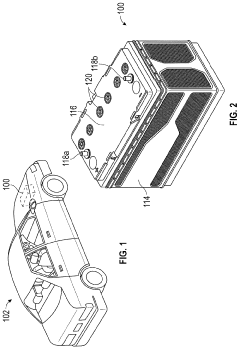
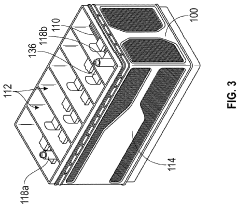
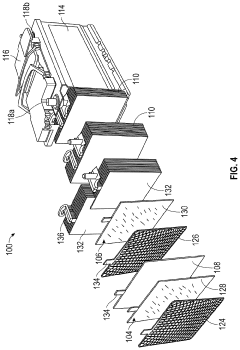
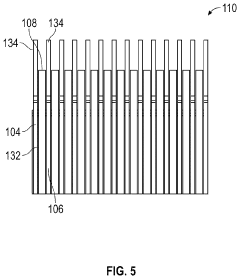
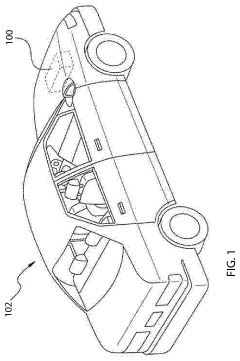
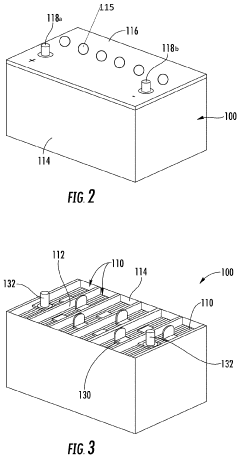
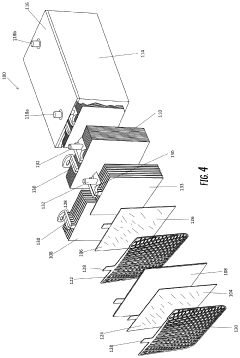
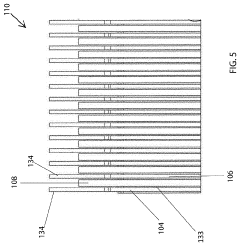
- A compact AGM lead acid battery design with a reduced lead content and smaller size, utilizing a container with electrically connected cells and an absorbent glass mat interleaved between positive and negative plates, achieving improved cycle life and higher CCA performance.
EV Battery Regulations
The regulatory landscape for electric vehicle (EV) batteries is rapidly evolving to address safety, performance, and environmental concerns. In the United States, the National Highway Traffic Safety Administration (NHTSA) has established standards for EV battery safety, including requirements for thermal management and crash protection. The Environmental Protection Agency (EPA) regulates the disposal and recycling of EV batteries under the Resource Conservation and Recovery Act.
In the European Union, the Battery Directive (2006/66/EC) sets guidelines for battery collection, recycling, and disposal. The EU is also developing new regulations specifically for EV batteries, focusing on sustainability, carbon footprint, and end-of-life management. These regulations aim to ensure that EV batteries are designed for easy disassembly and recycling, with a minimum recycled content requirement.
China, the world's largest EV market, has implemented strict regulations on battery quality and safety. The Ministry of Industry and Information Technology (MIIT) requires EV batteries to meet specific energy density and cycle life standards. Additionally, China has introduced policies to promote battery swapping technology, which has implications for battery design and standardization.
Global efforts are underway to harmonize EV battery regulations. The United Nations Economic Commission for Europe (UNECE) has developed the Global Technical Regulation No. 20 on Electric Vehicle Safety, which addresses battery safety requirements during normal operation and crash scenarios. This regulation is being adopted by many countries to ensure consistent safety standards worldwide.
Regulations are also emerging to address the environmental impact of EV batteries. The EU's proposed Battery Regulation includes requirements for carbon footprint declarations and the use of responsibly sourced materials. Similar initiatives are being considered in other regions to promote sustainable battery production and reduce the industry's environmental footprint.
As EV adoption increases, regulations are expected to become more stringent and comprehensive. Future regulatory trends may include mandates for battery health monitoring systems, standardized battery labeling for easy identification and recycling, and extended producer responsibility for battery lifecycle management. These evolving regulations will significantly impact EV battery design, production, and end-of-life handling in the coming years.
In the European Union, the Battery Directive (2006/66/EC) sets guidelines for battery collection, recycling, and disposal. The EU is also developing new regulations specifically for EV batteries, focusing on sustainability, carbon footprint, and end-of-life management. These regulations aim to ensure that EV batteries are designed for easy disassembly and recycling, with a minimum recycled content requirement.
China, the world's largest EV market, has implemented strict regulations on battery quality and safety. The Ministry of Industry and Information Technology (MIIT) requires EV batteries to meet specific energy density and cycle life standards. Additionally, China has introduced policies to promote battery swapping technology, which has implications for battery design and standardization.
Global efforts are underway to harmonize EV battery regulations. The United Nations Economic Commission for Europe (UNECE) has developed the Global Technical Regulation No. 20 on Electric Vehicle Safety, which addresses battery safety requirements during normal operation and crash scenarios. This regulation is being adopted by many countries to ensure consistent safety standards worldwide.
Regulations are also emerging to address the environmental impact of EV batteries. The EU's proposed Battery Regulation includes requirements for carbon footprint declarations and the use of responsibly sourced materials. Similar initiatives are being considered in other regions to promote sustainable battery production and reduce the industry's environmental footprint.
As EV adoption increases, regulations are expected to become more stringent and comprehensive. Future regulatory trends may include mandates for battery health monitoring systems, standardized battery labeling for easy identification and recycling, and extended producer responsibility for battery lifecycle management. These evolving regulations will significantly impact EV battery design, production, and end-of-life handling in the coming years.
AGM Recycling Strategies
Recycling strategies for Absorbent Glass Mat (AGM) batteries in Electric Vehicles (EVs) have become increasingly important as the automotive industry shifts towards more sustainable practices. The recycling process for AGM batteries involves several key steps, including collection, disassembly, material separation, and reprocessing.
One of the primary challenges in AGM battery recycling is the efficient separation of lead, plastic, and electrolyte components. Advanced mechanical separation techniques, such as shredding and density-based sorting, have been developed to improve the recovery rates of these materials. Additionally, hydrometallurgical processes are employed to extract and purify lead from the battery paste, ensuring a high-quality recycled product.
The recycling of AGM batteries also presents opportunities for the recovery of valuable materials beyond lead. The glass mat, which is a key component of AGM batteries, can be repurposed for use in insulation or construction materials. Furthermore, the sulfuric acid electrolyte can be neutralized and converted into gypsum, a widely used material in the construction industry.
Environmental considerations play a crucial role in AGM battery recycling strategies. Closed-loop recycling systems have been implemented to minimize emissions and waste generation during the recycling process. These systems often incorporate advanced air filtration and wastewater treatment technologies to ensure compliance with stringent environmental regulations.
The economic viability of AGM battery recycling has improved significantly in recent years, driven by advancements in recycling technologies and increasing demand for recycled materials. Many automotive manufacturers have established partnerships with recycling facilities to create a circular economy for battery materials, reducing the reliance on virgin resources and lowering the overall environmental impact of EV production.
As the EV market continues to grow, the development of more efficient and cost-effective AGM battery recycling strategies remains a priority for the industry. Research efforts are focused on improving the recovery rates of critical materials, reducing energy consumption in the recycling process, and exploring new applications for recycled battery components. These advancements are expected to further enhance the sustainability of EVs and contribute to the broader goals of resource conservation and environmental protection.
One of the primary challenges in AGM battery recycling is the efficient separation of lead, plastic, and electrolyte components. Advanced mechanical separation techniques, such as shredding and density-based sorting, have been developed to improve the recovery rates of these materials. Additionally, hydrometallurgical processes are employed to extract and purify lead from the battery paste, ensuring a high-quality recycled product.
The recycling of AGM batteries also presents opportunities for the recovery of valuable materials beyond lead. The glass mat, which is a key component of AGM batteries, can be repurposed for use in insulation or construction materials. Furthermore, the sulfuric acid electrolyte can be neutralized and converted into gypsum, a widely used material in the construction industry.
Environmental considerations play a crucial role in AGM battery recycling strategies. Closed-loop recycling systems have been implemented to minimize emissions and waste generation during the recycling process. These systems often incorporate advanced air filtration and wastewater treatment technologies to ensure compliance with stringent environmental regulations.
The economic viability of AGM battery recycling has improved significantly in recent years, driven by advancements in recycling technologies and increasing demand for recycled materials. Many automotive manufacturers have established partnerships with recycling facilities to create a circular economy for battery materials, reducing the reliance on virgin resources and lowering the overall environmental impact of EV production.
As the EV market continues to grow, the development of more efficient and cost-effective AGM battery recycling strategies remains a priority for the industry. Research efforts are focused on improving the recovery rates of critical materials, reducing energy consumption in the recycling process, and exploring new applications for recycled battery components. These advancements are expected to further enhance the sustainability of EVs and contribute to the broader goals of resource conservation and environmental protection.
Unlock deeper insights with PatSnap Eureka Quick Research — get a full tech report to explore trends and direct your research. Try now!
Generate Your Research Report Instantly with AI Agent
Supercharge your innovation with PatSnap Eureka AI Agent Platform!