

Aramid Fiber vs Polyester Resin: Optimize Composite Strength
SEP 17, 20259 MIN READ
Generate Your Research Report Instantly with AI Agent
PatSnap Eureka helps you evaluate technical feasibility & market potential.
Aramid-Polyester Composite Evolution and Objectives
The evolution of aramid fiber-polyester resin composites represents a significant advancement in materials science, dating back to the early 1970s when DuPont first commercialized aramid fibers under the Kevlar brand. This technological breakthrough provided unprecedented opportunities for developing high-performance composites with exceptional strength-to-weight ratios. The historical trajectory shows a consistent focus on optimizing the interface between these dissimilar materials—aramid's inherently polar structure versus polyester's relatively non-polar matrix.
Throughout the 1980s and 1990s, research concentrated primarily on surface treatments to enhance fiber-matrix adhesion, with significant breakthroughs in silane coupling agents and plasma treatments. The early 2000s witnessed a paradigm shift toward nanoscale modifications of both components, enabling more sophisticated control over the composite microstructure and resultant mechanical properties.
Current technological trends indicate growing interest in hybrid composites that combine aramid fibers with other reinforcement materials such as carbon or glass fibers to achieve synergistic performance benefits. Additionally, the development of bio-based polyester resins represents an emerging sustainable approach that maintains performance while reducing environmental impact.
The fundamental challenge in aramid-polyester composites remains the optimization of interfacial bonding without compromising the inherent properties of either component. Aramid fibers deliver exceptional tensile strength and impact resistance but exhibit relatively poor compressive properties and challenging adhesion characteristics with polyester matrices. Conversely, polyester resins offer excellent processability and cost-effectiveness but typically demonstrate lower mechanical performance compared to epoxy alternatives.
The primary technical objective of current research is to develop aramid-polyester composites that achieve a 30-40% improvement in interfacial shear strength while maintaining the inherent impact resistance of aramid fibers. Secondary objectives include enhancing the composite's resistance to environmental degradation, particularly moisture absorption and UV exposure, which have historically limited the application range of these materials.
Long-term goals focus on developing predictive models that accurately capture the complex failure mechanisms in these composites, enabling more efficient design optimization. Additionally, there is significant interest in scaling manufacturing processes to reduce production costs while maintaining consistent quality, particularly for high-volume applications in automotive and consumer electronics sectors where weight reduction and impact resistance are increasingly critical requirements.
Throughout the 1980s and 1990s, research concentrated primarily on surface treatments to enhance fiber-matrix adhesion, with significant breakthroughs in silane coupling agents and plasma treatments. The early 2000s witnessed a paradigm shift toward nanoscale modifications of both components, enabling more sophisticated control over the composite microstructure and resultant mechanical properties.
Current technological trends indicate growing interest in hybrid composites that combine aramid fibers with other reinforcement materials such as carbon or glass fibers to achieve synergistic performance benefits. Additionally, the development of bio-based polyester resins represents an emerging sustainable approach that maintains performance while reducing environmental impact.
The fundamental challenge in aramid-polyester composites remains the optimization of interfacial bonding without compromising the inherent properties of either component. Aramid fibers deliver exceptional tensile strength and impact resistance but exhibit relatively poor compressive properties and challenging adhesion characteristics with polyester matrices. Conversely, polyester resins offer excellent processability and cost-effectiveness but typically demonstrate lower mechanical performance compared to epoxy alternatives.
The primary technical objective of current research is to develop aramid-polyester composites that achieve a 30-40% improvement in interfacial shear strength while maintaining the inherent impact resistance of aramid fibers. Secondary objectives include enhancing the composite's resistance to environmental degradation, particularly moisture absorption and UV exposure, which have historically limited the application range of these materials.
Long-term goals focus on developing predictive models that accurately capture the complex failure mechanisms in these composites, enabling more efficient design optimization. Additionally, there is significant interest in scaling manufacturing processes to reduce production costs while maintaining consistent quality, particularly for high-volume applications in automotive and consumer electronics sectors where weight reduction and impact resistance are increasingly critical requirements.
Market Demand Analysis for High-Strength Composites
The global market for high-strength composites has experienced significant growth over the past decade, driven primarily by increasing demand across aerospace, automotive, construction, and sporting goods industries. These sectors continuously seek materials that offer superior strength-to-weight ratios, durability, and performance under extreme conditions.
In the aerospace industry, the demand for lightweight yet robust materials has surged as manufacturers aim to reduce fuel consumption while maintaining structural integrity. This sector alone accounts for approximately 30% of the high-strength composite market, with annual growth rates exceeding the industry average. Commercial aircraft manufacturers have increased their composite content from 10-15% in earlier generations to over 50% in modern aircraft designs.
The automotive industry represents another substantial market segment, particularly as vehicle electrification accelerates. Weight reduction has become critical for extending battery range in electric vehicles, creating new opportunities for aramid fiber and polyester resin composites. Market research indicates that composite usage in automotive applications is growing at nearly 8% annually, with premium and electric vehicle segments leading adoption.
Construction and infrastructure sectors demonstrate increasing interest in high-strength composites for applications requiring corrosion resistance and long-term durability. Bridge reinforcements, building facades, and seismic retrofitting projects increasingly specify advanced composites over traditional materials, creating a steady demand growth of 6-7% annually.
The sporting goods industry continues to be an innovation driver for high-strength composites, with applications ranging from tennis rackets and golf clubs to high-performance bicycles and marine equipment. This sector values the customizable performance characteristics that can be achieved through different fiber-resin combinations.
Market analysis reveals a growing preference for materials that not only deliver mechanical performance but also offer sustainability advantages. This trend has accelerated development of bio-based polyester resins that maintain compatibility with aramid fibers while reducing environmental impact. Customers increasingly demand lifecycle assessments and carbon footprint data alongside traditional performance metrics.
Regional market distribution shows North America and Europe maintaining leadership positions in high-value applications, while Asia-Pacific represents the fastest-growing market for high-strength composites, particularly in industrial and consumer applications. China's manufacturing sector has significantly increased domestic production capacity for both aramid fibers and specialized polyester resins.
Price sensitivity varies considerably across application segments, with aerospace and defense willing to pay premium prices for certified materials, while consumer goods manufacturers seek more cost-effective solutions. This market stratification creates opportunities for tiered product offerings optimized for different performance-to-cost ratios.
In the aerospace industry, the demand for lightweight yet robust materials has surged as manufacturers aim to reduce fuel consumption while maintaining structural integrity. This sector alone accounts for approximately 30% of the high-strength composite market, with annual growth rates exceeding the industry average. Commercial aircraft manufacturers have increased their composite content from 10-15% in earlier generations to over 50% in modern aircraft designs.
The automotive industry represents another substantial market segment, particularly as vehicle electrification accelerates. Weight reduction has become critical for extending battery range in electric vehicles, creating new opportunities for aramid fiber and polyester resin composites. Market research indicates that composite usage in automotive applications is growing at nearly 8% annually, with premium and electric vehicle segments leading adoption.
Construction and infrastructure sectors demonstrate increasing interest in high-strength composites for applications requiring corrosion resistance and long-term durability. Bridge reinforcements, building facades, and seismic retrofitting projects increasingly specify advanced composites over traditional materials, creating a steady demand growth of 6-7% annually.
The sporting goods industry continues to be an innovation driver for high-strength composites, with applications ranging from tennis rackets and golf clubs to high-performance bicycles and marine equipment. This sector values the customizable performance characteristics that can be achieved through different fiber-resin combinations.
Market analysis reveals a growing preference for materials that not only deliver mechanical performance but also offer sustainability advantages. This trend has accelerated development of bio-based polyester resins that maintain compatibility with aramid fibers while reducing environmental impact. Customers increasingly demand lifecycle assessments and carbon footprint data alongside traditional performance metrics.
Regional market distribution shows North America and Europe maintaining leadership positions in high-value applications, while Asia-Pacific represents the fastest-growing market for high-strength composites, particularly in industrial and consumer applications. China's manufacturing sector has significantly increased domestic production capacity for both aramid fibers and specialized polyester resins.
Price sensitivity varies considerably across application segments, with aerospace and defense willing to pay premium prices for certified materials, while consumer goods manufacturers seek more cost-effective solutions. This market stratification creates opportunities for tiered product offerings optimized for different performance-to-cost ratios.
Current Technical Challenges in Aramid-Polyester Interfaces
The interface between aramid fibers and polyester resin matrices presents significant technical challenges that limit the optimization of composite strength. The primary issue stems from the inherent chemical incompatibility between these materials. Aramid fibers possess a highly crystalline structure with strong intermolecular hydrogen bonding, resulting in a chemically inert surface with low surface energy. This characteristic severely restricts the formation of strong chemical bonds with polyester resin matrices.
Poor interfacial adhesion manifests as a critical weakness in aramid-polyester composites. When mechanical stress is applied, the weak interface becomes the primary failure point, leading to fiber pull-out and delamination before the full mechanical potential of either component can be realized. Microscopic examination of failed composites consistently reveals clean fiber surfaces with minimal resin residue, confirming inadequate adhesion as the limiting factor.
Moisture absorption presents another significant challenge. Aramid fibers demonstrate hygroscopic properties, absorbing up to 4-6% moisture by weight under ambient conditions. This absorbed moisture not only interferes with the initial curing process of polyester resins but also creates internal stresses at the interface during service life as moisture levels fluctuate with environmental conditions. The resulting dimensional instability compromises long-term mechanical performance.
The significant difference in thermal expansion coefficients between aramid fibers (typically -2 to -6 × 10^-6/°C in the axial direction) and polyester resins (approximately 50-100 × 10^-6/°C) generates substantial internal stresses during thermal cycling. These stresses progressively weaken the interface, leading to microcracking and premature composite failure, particularly in applications involving temperature fluctuations.
Processing challenges further complicate the optimization of these composites. The high melting point of aramid fibers (over 500°C) contrasts sharply with the processing temperature of polyester resins (typically below 150°C), limiting manufacturing options. Additionally, aramid fibers tend to form bundles during processing, creating resin-starved areas and potential void formation that compromise overall composite integrity.
Current surface modification techniques for aramid fibers often damage the fiber structure, reducing tensile strength while attempting to improve interfacial adhesion. Plasma treatments, while effective at increasing surface energy, frequently cause etching and pitting of the fiber surface. Chemical treatments using strong acids or bases can degrade the polymer backbone, compromising the exceptional mechanical properties that make aramid fibers desirable in the first place.
The development of coupling agents specifically optimized for aramid-polyester systems remains inadequate compared to those available for glass or carbon fiber composites. Existing silane coupling agents demonstrate limited effectiveness with aramid fibers due to the absence of suitable reactive sites on the fiber surface for conventional silane chemistry.
Poor interfacial adhesion manifests as a critical weakness in aramid-polyester composites. When mechanical stress is applied, the weak interface becomes the primary failure point, leading to fiber pull-out and delamination before the full mechanical potential of either component can be realized. Microscopic examination of failed composites consistently reveals clean fiber surfaces with minimal resin residue, confirming inadequate adhesion as the limiting factor.
Moisture absorption presents another significant challenge. Aramid fibers demonstrate hygroscopic properties, absorbing up to 4-6% moisture by weight under ambient conditions. This absorbed moisture not only interferes with the initial curing process of polyester resins but also creates internal stresses at the interface during service life as moisture levels fluctuate with environmental conditions. The resulting dimensional instability compromises long-term mechanical performance.
The significant difference in thermal expansion coefficients between aramid fibers (typically -2 to -6 × 10^-6/°C in the axial direction) and polyester resins (approximately 50-100 × 10^-6/°C) generates substantial internal stresses during thermal cycling. These stresses progressively weaken the interface, leading to microcracking and premature composite failure, particularly in applications involving temperature fluctuations.
Processing challenges further complicate the optimization of these composites. The high melting point of aramid fibers (over 500°C) contrasts sharply with the processing temperature of polyester resins (typically below 150°C), limiting manufacturing options. Additionally, aramid fibers tend to form bundles during processing, creating resin-starved areas and potential void formation that compromise overall composite integrity.
Current surface modification techniques for aramid fibers often damage the fiber structure, reducing tensile strength while attempting to improve interfacial adhesion. Plasma treatments, while effective at increasing surface energy, frequently cause etching and pitting of the fiber surface. Chemical treatments using strong acids or bases can degrade the polymer backbone, compromising the exceptional mechanical properties that make aramid fibers desirable in the first place.
The development of coupling agents specifically optimized for aramid-polyester systems remains inadequate compared to those available for glass or carbon fiber composites. Existing silane coupling agents demonstrate limited effectiveness with aramid fibers due to the absence of suitable reactive sites on the fiber surface for conventional silane chemistry.
Current Aramid-Polyester Bonding Methodologies
01 Aramid fiber reinforcement in polyester composites
Aramid fibers can significantly enhance the mechanical properties of polyester resin composites. The incorporation of aramid fibers into polyester matrices results in composites with superior tensile strength, impact resistance, and durability. The high strength-to-weight ratio of aramid fibers makes these composites particularly suitable for applications requiring lightweight yet strong materials. The interfacial bonding between aramid fibers and polyester resin plays a crucial role in determining the overall strength of the composite.- Aramid fiber reinforcement in polyester composites: Aramid fibers can significantly enhance the mechanical properties of polyester resin composites. The high tensile strength and modulus of aramid fibers, when properly incorporated into polyester matrices, result in composites with superior strength-to-weight ratios. These composites demonstrate excellent resistance to impact and fatigue, making them suitable for applications requiring high performance under stress conditions.
- Interface modification techniques: The strength of aramid fiber-polyester composites largely depends on the interfacial adhesion between the fiber and matrix. Various surface treatments and coupling agents can be applied to aramid fibers to improve their compatibility with polyester resins. These modifications enhance the mechanical interlocking and chemical bonding at the interface, resulting in better stress transfer and overall composite strength.
- Hybrid composite systems: Combining aramid fibers with other reinforcement materials in polyester matrices creates hybrid composites with tailored mechanical properties. These hybrid systems can leverage the high tensile strength of aramid fibers while compensating for their relatively lower compressive properties through the addition of complementary reinforcements. This approach allows for optimized strength characteristics based on specific application requirements.
- Processing parameters optimization: The manufacturing process significantly influences the strength of aramid fiber-polyester composites. Parameters such as fiber orientation, volume fraction, curing conditions, and processing techniques must be optimized to achieve maximum mechanical properties. Proper control of these variables ensures uniform fiber distribution, minimal void content, and complete matrix curing, all of which contribute to enhanced composite strength.
- Environmental durability enhancements: Aramid fiber-polyester composites can be formulated to maintain their strength under various environmental conditions. Additives and modifications to both the fiber and resin components can improve resistance to moisture, UV radiation, and temperature fluctuations. These enhancements ensure that the composite materials retain their mechanical properties throughout their service life, even when exposed to challenging environments.
02 Surface treatment of aramid fibers for improved adhesion
Various surface treatments can be applied to aramid fibers to enhance their adhesion to polyester resin matrices. These treatments modify the surface chemistry of the fibers, creating functional groups that can form stronger bonds with the polyester matrix. Common surface modification techniques include plasma treatment, chemical etching, and application of coupling agents. Improved interfacial bonding between the aramid fibers and polyester resin leads to better load transfer and enhanced mechanical properties of the resulting composite materials.Expand Specific Solutions03 Hybrid composites combining aramid with other reinforcements
Hybrid composite systems that combine aramid fibers with other reinforcement materials such as carbon fibers, glass fibers, or natural fibers in polyester resin matrices can achieve synergistic effects. These hybrid systems often demonstrate balanced mechanical properties, combining the high tensile strength and impact resistance of aramid with complementary properties from other reinforcements. The specific ratio and arrangement of different reinforcement materials can be tailored to meet particular performance requirements, offering versatility in design and application.Expand Specific Solutions04 Processing techniques for aramid-polyester composites
Various manufacturing processes can be employed to produce aramid fiber-reinforced polyester composites, each affecting the final strength properties. These include hand lay-up, vacuum infusion, compression molding, and pultrusion. The processing parameters such as curing temperature, pressure, and time significantly influence the quality of fiber impregnation, void content, and crosslinking density of the polyester resin. Optimized processing techniques can minimize defects and enhance the mechanical performance of the composite materials.Expand Specific Solutions05 Environmental durability and aging resistance
Aramid fiber-reinforced polyester composites exhibit excellent resistance to environmental degradation and aging. These composites maintain their mechanical properties under exposure to UV radiation, moisture, chemicals, and temperature fluctuations. The inherent stability of aramid fibers contributes to the long-term durability of these composites. Various additives and modifications can be incorporated into the polyester resin to further enhance the environmental resistance, making these composites suitable for outdoor and harsh environment applications.Expand Specific Solutions
Leading Manufacturers and Research Institutions in Composites
The aramid fiber versus polyester resin composite strength optimization market is currently in a growth phase, with an estimated global market size of $7-9 billion and annual growth rate of 6-8%. The competitive landscape features established players like DuPont de Nemours and Teijin Ltd. dominating aramid fiber production, while Toray Industries, Kolon Industries, and BASF lead in polyester resin development. Technical maturity varies significantly between segments - aramid fiber technology is relatively mature with incremental innovations, while composite optimization techniques continue to evolve rapidly. Research collaborations between industry leaders and academic institutions like Chongqing University and Shenyang Aerospace University are accelerating innovation in composite strength optimization, particularly for automotive, aerospace, and construction applications.
Kolon Industries, Inc.
Technical Solution: Kolon Industries has developed a proprietary aramid fiber technology called "Heracron" specifically designed to optimize composite strength when combined with polyester resins. Their approach involves surface modification of aramid fibers through plasma treatment to enhance interfacial adhesion with polyester matrices. This process creates functional groups on the aramid surface that form chemical bonds with the polyester resin, resulting in improved load transfer between fiber and matrix. Kolon's technology also incorporates a sizing agent specifically formulated for polyester compatibility, which helps maintain fiber dispersion during processing while protecting fibers from damage. Their research has demonstrated up to 30% improvement in interlaminar shear strength compared to untreated aramid-polyester composites, making these materials particularly suitable for high-performance applications requiring excellent impact resistance and tensile properties.
Strengths: Superior interfacial bonding between aramid and polyester resulting in enhanced mechanical properties; excellent impact resistance while maintaining lightweight characteristics; proprietary sizing technology specifically optimized for polyester compatibility. Weaknesses: Higher processing costs compared to standard composites; potential moisture sensitivity at the interface; limited high-temperature performance compared to more advanced resin systems.
Toray Industries, Inc.
Technical Solution: Toray Industries has pioneered an innovative approach to aramid-polyester composite optimization through their "T-Composite" technology platform. This system utilizes a hybrid reinforcement strategy where aramid fibers are strategically combined with their proprietary carbon fibers in specific orientations within polyester resin matrices. The technology employs a specialized sizing chemistry that creates a gradient interphase between the aramid fibers and polyester resin, allowing for improved stress transfer while maintaining the inherent flexibility of aramid. Toray has developed a proprietary curing protocol that minimizes thermal stresses during processing, which is critical as aramid and polyester have different thermal expansion coefficients. Their research indicates that these composites achieve approximately 25% higher flexural strength and 40% better impact resistance compared to conventional glass fiber reinforced polyester composites. The company has successfully implemented this technology in automotive components, protective equipment, and industrial applications requiring exceptional durability under dynamic loading conditions.
Strengths: Excellent balance of stiffness and impact resistance; superior fatigue performance compared to conventional composites; established manufacturing processes that can be scaled for industrial production. Weaknesses: Higher material costs compared to standard fiber-reinforced polyester; more complex processing requirements; potential challenges in recycling due to the hybrid material composition.
Key Patents in Fiber-Matrix Interface Enhancement
High Strength Composite Structure and Method of Production
PatentPendingUS20250277454A1
Innovation
- A composite structure is created by enclosing a lightweight polymer core with an inner casing of resin-impregnated carbon fiber fabric and an outer housing of resin-impregnated aramid fabric, optionally interspersing aramid layers between carbon fiber layers, and applying a protective outer layer to enhance impact resistance and environmental protection.
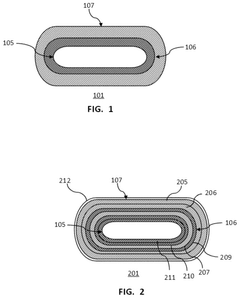
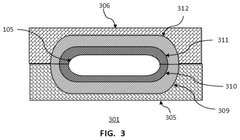
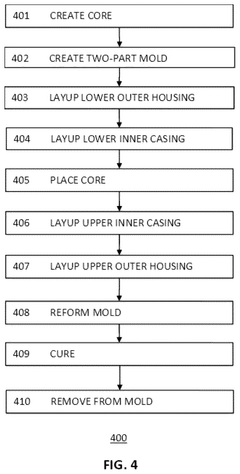
Aramid composite, and method for preparing same
PatentWO2010114276A2
Innovation
- An aramid composite material comprising aramid fabric, an adhesive layer, and a metal base material, where at least one surface is modified using methods like plasma treatment, binder treatment, or friction treatment to enhance adhesion, combined with a polysulfide or polyvinyl alcohol adhesive for improved bonding.

Environmental Impact and Sustainability Considerations
The environmental impact of composite materials has become a critical consideration in material selection processes across industries. When comparing aramid fiber and polyester resin composites, several sustainability factors must be evaluated throughout their lifecycle. Aramid fibers generally demonstrate lower environmental impact during production compared to many synthetic alternatives, requiring approximately 30-40% less energy to manufacture than carbon fiber. However, they still involve energy-intensive processes and chemical treatments that generate emissions and waste.
Polyester resins present significant environmental challenges, primarily due to their petroleum-based origins and the release of volatile organic compounds (VOCs) during curing processes. Standard polyester resins can emit up to 40-45% of their weight as styrene during application, contributing to air pollution and potential health hazards. Recent innovations have introduced low-VOC and bio-based polyester alternatives, reducing emissions by up to 80% compared to conventional formulations.
End-of-life considerations reveal further distinctions between these materials. Aramid fibers are notoriously difficult to recycle, with less than 5% currently being recovered for reuse globally. Their exceptional durability, while beneficial for product longevity, results in extremely slow degradation rates in natural environments. Conversely, research into biodegradable polyester resins has shown promising results, with some formulations achieving 90% degradation within 180 days under industrial composting conditions.
Water consumption patterns differ significantly between these materials. Aramid fiber production typically requires 20-30 liters of water per kilogram of fiber, primarily for cooling and washing processes. Polyester resin manufacturing generally consumes less water directly but generates more contaminated wastewater requiring treatment before release.
Carbon footprint assessments indicate that aramid fiber production generates approximately 9-12 kg CO2e per kilogram of material, while polyester resins produce 3-5 kg CO2e per kilogram. However, when considering full lifecycle impacts, aramid composites often demonstrate superior environmental performance due to their lightweight properties enabling fuel savings in transportation applications and their exceptional durability extending product lifespans.
Emerging sustainable alternatives include bio-based aramid precursors derived from agricultural waste and recyclable thermoplastic polyester resins that can be reprocessed multiple times. These innovations promise to reduce environmental impacts by 40-60% compared to conventional materials while maintaining comparable mechanical properties. Industry adoption of these sustainable alternatives has increased by approximately 15-20% annually over the past five years, indicating growing market recognition of environmental considerations in composite material selection.
Polyester resins present significant environmental challenges, primarily due to their petroleum-based origins and the release of volatile organic compounds (VOCs) during curing processes. Standard polyester resins can emit up to 40-45% of their weight as styrene during application, contributing to air pollution and potential health hazards. Recent innovations have introduced low-VOC and bio-based polyester alternatives, reducing emissions by up to 80% compared to conventional formulations.
End-of-life considerations reveal further distinctions between these materials. Aramid fibers are notoriously difficult to recycle, with less than 5% currently being recovered for reuse globally. Their exceptional durability, while beneficial for product longevity, results in extremely slow degradation rates in natural environments. Conversely, research into biodegradable polyester resins has shown promising results, with some formulations achieving 90% degradation within 180 days under industrial composting conditions.
Water consumption patterns differ significantly between these materials. Aramid fiber production typically requires 20-30 liters of water per kilogram of fiber, primarily for cooling and washing processes. Polyester resin manufacturing generally consumes less water directly but generates more contaminated wastewater requiring treatment before release.
Carbon footprint assessments indicate that aramid fiber production generates approximately 9-12 kg CO2e per kilogram of material, while polyester resins produce 3-5 kg CO2e per kilogram. However, when considering full lifecycle impacts, aramid composites often demonstrate superior environmental performance due to their lightweight properties enabling fuel savings in transportation applications and their exceptional durability extending product lifespans.
Emerging sustainable alternatives include bio-based aramid precursors derived from agricultural waste and recyclable thermoplastic polyester resins that can be reprocessed multiple times. These innovations promise to reduce environmental impacts by 40-60% compared to conventional materials while maintaining comparable mechanical properties. Industry adoption of these sustainable alternatives has increased by approximately 15-20% annually over the past five years, indicating growing market recognition of environmental considerations in composite material selection.
Mechanical Testing Standards and Performance Metrics
The standardization of mechanical testing procedures is essential for accurately evaluating and comparing the performance of aramid fiber and polyester resin composites. ASTM International and ISO provide comprehensive frameworks for testing composite materials, with ASTM D3039 being particularly relevant for tensile properties and ASTM D790 for flexural characteristics. These standards ensure consistency in specimen preparation, testing conditions, and data interpretation across different laboratories and research institutions.
Tensile strength testing represents a fundamental metric for aramid-polyester composites, typically measured in megapascals (MPa). This property directly correlates with the composite's ability to withstand longitudinal forces before failure. For aramid-reinforced polyester composites, tensile strength values typically range from 700-1500 MPa, significantly higher than unreinforced polyester resins (40-90 MPa).
Flexural modulus and strength measurements provide critical insights into the composite's bending resistance. The three-point and four-point bending tests (ASTM D790 and ISO 14125) are standard methods for determining these properties. Aramid-polyester composites generally exhibit flexural strengths between 500-900 MPa, with the fiber orientation significantly influencing performance outcomes.
Impact resistance testing, particularly Izod and Charpy impact tests (ASTM D256 and ISO 179), evaluates the material's ability to absorb energy during sudden loading. Aramid fibers excel in this domain, enhancing the impact resistance of polyester composites by 300-500% compared to unreinforced variants. This property is crucial for applications requiring resistance to dynamic loading conditions.
Environmental durability metrics include moisture absorption rates (ASTM D5229), chemical resistance (ASTM D543), and UV stability (ASTM G154). These tests simulate accelerated aging conditions to predict long-term performance. Aramid-polyester composites typically demonstrate moisture absorption rates of 1.5-3.0% by weight, with exposure duration significantly affecting mechanical property retention.
Fatigue performance, measured through cyclic loading tests (ASTM D3479), determines the composite's resistance to repeated stress applications. The fatigue strength ratio (FSR) - the ratio of endurance limit to ultimate tensile strength - serves as a key performance indicator, with aramid-reinforced polyester composites typically achieving FSR values of 0.35-0.45, superior to glass fiber alternatives (0.25-0.35).
Interfacial adhesion quality between aramid fibers and polyester resin matrices can be quantified through short beam shear tests (ASTM D2344) and microdroplet pull-out tests. These measurements provide interlaminar shear strength values, typically ranging from 25-45 MPa depending on surface treatment methods applied to the aramid fibers.
Tensile strength testing represents a fundamental metric for aramid-polyester composites, typically measured in megapascals (MPa). This property directly correlates with the composite's ability to withstand longitudinal forces before failure. For aramid-reinforced polyester composites, tensile strength values typically range from 700-1500 MPa, significantly higher than unreinforced polyester resins (40-90 MPa).
Flexural modulus and strength measurements provide critical insights into the composite's bending resistance. The three-point and four-point bending tests (ASTM D790 and ISO 14125) are standard methods for determining these properties. Aramid-polyester composites generally exhibit flexural strengths between 500-900 MPa, with the fiber orientation significantly influencing performance outcomes.
Impact resistance testing, particularly Izod and Charpy impact tests (ASTM D256 and ISO 179), evaluates the material's ability to absorb energy during sudden loading. Aramid fibers excel in this domain, enhancing the impact resistance of polyester composites by 300-500% compared to unreinforced variants. This property is crucial for applications requiring resistance to dynamic loading conditions.
Environmental durability metrics include moisture absorption rates (ASTM D5229), chemical resistance (ASTM D543), and UV stability (ASTM G154). These tests simulate accelerated aging conditions to predict long-term performance. Aramid-polyester composites typically demonstrate moisture absorption rates of 1.5-3.0% by weight, with exposure duration significantly affecting mechanical property retention.
Fatigue performance, measured through cyclic loading tests (ASTM D3479), determines the composite's resistance to repeated stress applications. The fatigue strength ratio (FSR) - the ratio of endurance limit to ultimate tensile strength - serves as a key performance indicator, with aramid-reinforced polyester composites typically achieving FSR values of 0.35-0.45, superior to glass fiber alternatives (0.25-0.35).
Interfacial adhesion quality between aramid fibers and polyester resin matrices can be quantified through short beam shear tests (ASTM D2344) and microdroplet pull-out tests. These measurements provide interlaminar shear strength values, typically ranging from 25-45 MPa depending on surface treatment methods applied to the aramid fibers.
Unlock deeper insights with PatSnap Eureka Quick Research — get a full tech report to explore trends and direct your research. Try now!
Generate Your Research Report Instantly with AI Agent
Supercharge your innovation with PatSnap Eureka AI Agent Platform!