Aramid Fiber vs Polyethylene: Compare Rigidity Profiles
SEP 17, 20259 MIN READ
Generate Your Research Report Instantly with AI Agent
PatSnap Eureka helps you evaluate technical feasibility & market potential.
Aramid and UHMWPE Fiber Development History and Objectives
The development of high-performance fibers has revolutionized numerous industries, with aramid and ultra-high-molecular-weight polyethylene (UHMWPE) fibers standing at the forefront of this technological evolution. Aramid fibers, first developed by DuPont in the 1960s under the brand name Kevlar, emerged from research aimed at creating lightweight yet strong materials for aerospace and military applications. The breakthrough came when Stephanie Kwolek discovered that certain polyamides could form liquid crystalline solutions, leading to fibers with exceptional tensile strength and thermal stability.
Parallel to aramid development, UHMWPE fibers emerged in the 1980s through gel spinning processes pioneered by DSM (Dyneema) and Honeywell (Spectra). These fibers represented a significant departure from traditional polyethylene, offering strength-to-weight ratios that surpassed steel while maintaining flexibility and chemical resistance superior to many competing materials.
The evolution of both fiber types has been driven by increasing demands for lightweight, high-strength materials across diverse sectors including ballistics protection, aerospace, marine applications, and sporting goods. The technical objectives guiding their development have consistently focused on optimizing the balance between rigidity, flexibility, and overall mechanical performance.
For aramid fibers, development milestones include the introduction of Kevlar 29 for ballistic applications, Kevlar 49 for composite reinforcement, and subsequent generations with enhanced properties. The technology has evolved to address initial limitations such as UV sensitivity and moisture absorption, with modern variants offering improved environmental resistance while maintaining the characteristic high tensile strength and thermal stability.
UHMWPE fiber development has followed a trajectory focused on maximizing molecular orientation and crystallinity, with key advancements in gel spinning technology enabling ever-higher molecular weights and improved fiber properties. Recent innovations have addressed historical limitations in creep resistance and temperature performance, expanding the application range of these materials.
Current technical objectives in the field center on further enhancing the rigidity profiles of both fiber types while preserving their respective advantages. For aramid fibers, research aims to improve compressive strength and reduce brittleness while maintaining thermal stability. For UHMWPE, efforts focus on enhancing temperature resistance and dimensional stability under load while preserving the material's exceptional strength-to-weight ratio and flexibility.
The comparative analysis of rigidity profiles between these two fiber families represents a critical area of investigation, as it directly impacts their suitability for specific applications and determines the boundaries of their performance envelopes in advanced composite structures and protective systems.
Parallel to aramid development, UHMWPE fibers emerged in the 1980s through gel spinning processes pioneered by DSM (Dyneema) and Honeywell (Spectra). These fibers represented a significant departure from traditional polyethylene, offering strength-to-weight ratios that surpassed steel while maintaining flexibility and chemical resistance superior to many competing materials.
The evolution of both fiber types has been driven by increasing demands for lightweight, high-strength materials across diverse sectors including ballistics protection, aerospace, marine applications, and sporting goods. The technical objectives guiding their development have consistently focused on optimizing the balance between rigidity, flexibility, and overall mechanical performance.
For aramid fibers, development milestones include the introduction of Kevlar 29 for ballistic applications, Kevlar 49 for composite reinforcement, and subsequent generations with enhanced properties. The technology has evolved to address initial limitations such as UV sensitivity and moisture absorption, with modern variants offering improved environmental resistance while maintaining the characteristic high tensile strength and thermal stability.
UHMWPE fiber development has followed a trajectory focused on maximizing molecular orientation and crystallinity, with key advancements in gel spinning technology enabling ever-higher molecular weights and improved fiber properties. Recent innovations have addressed historical limitations in creep resistance and temperature performance, expanding the application range of these materials.
Current technical objectives in the field center on further enhancing the rigidity profiles of both fiber types while preserving their respective advantages. For aramid fibers, research aims to improve compressive strength and reduce brittleness while maintaining thermal stability. For UHMWPE, efforts focus on enhancing temperature resistance and dimensional stability under load while preserving the material's exceptional strength-to-weight ratio and flexibility.
The comparative analysis of rigidity profiles between these two fiber families represents a critical area of investigation, as it directly impacts their suitability for specific applications and determines the boundaries of their performance envelopes in advanced composite structures and protective systems.
Market Applications and Demand Analysis for High-Performance Fibers
The high-performance fiber market has experienced significant growth over the past decade, driven primarily by increasing demand from defense, aerospace, automotive, and construction industries. The global market for high-performance fibers was valued at approximately $10.6 billion in 2022 and is projected to reach $23.9 billion by 2030, growing at a CAGR of 10.7% during the forecast period.
Aramid fibers, dominated by brands like Kevlar and Twaron, hold a substantial market share in applications requiring high tensile strength and heat resistance. The defense sector remains the largest consumer of aramid fibers, accounting for roughly 30% of total consumption, primarily for ballistic protection equipment. The automotive industry follows closely, utilizing aramid fibers in tire reinforcement, brake pads, and increasingly in lightweight composite components for electric vehicles.
Ultra-high-molecular-weight polyethylene (UHMWPE) fibers, marketed under brands like Dyneema and Spectra, have witnessed accelerated market penetration, particularly in marine applications, ropes, and personal protective equipment. The medical sector has emerged as a rapidly growing market for UHMWPE, with applications in orthopedic implants and surgical sutures showing a 15% annual growth rate.
Regional analysis reveals Asia-Pacific as the fastest-growing market for high-performance fibers, with China and India leading manufacturing capacity expansion. North America maintains leadership in technical innovation and high-value applications, while Europe focuses on sustainable production methods and recycling technologies for these advanced materials.
The rigidity profile differences between aramid and polyethylene fibers have created distinct market segmentation. Industries requiring higher stiffness and dimensional stability under load predominantly favor aramid fibers, while applications prioritizing flexibility, impact resistance, and lightweight properties gravitate toward UHMWPE solutions.
Market research indicates a growing demand for hybrid solutions that combine the beneficial properties of both fiber types. This trend is particularly evident in the sporting goods sector, where manufacturers seek to balance rigidity with impact resistance in products like tennis rackets, hockey sticks, and protective gear.
Price sensitivity varies significantly across application sectors. While defense and aerospace industries prioritize performance over cost, consumer goods and general industrial applications demonstrate higher price elasticity, creating market opportunities for cost-optimized fiber variants with tailored rigidity profiles.
Aramid fibers, dominated by brands like Kevlar and Twaron, hold a substantial market share in applications requiring high tensile strength and heat resistance. The defense sector remains the largest consumer of aramid fibers, accounting for roughly 30% of total consumption, primarily for ballistic protection equipment. The automotive industry follows closely, utilizing aramid fibers in tire reinforcement, brake pads, and increasingly in lightweight composite components for electric vehicles.
Ultra-high-molecular-weight polyethylene (UHMWPE) fibers, marketed under brands like Dyneema and Spectra, have witnessed accelerated market penetration, particularly in marine applications, ropes, and personal protective equipment. The medical sector has emerged as a rapidly growing market for UHMWPE, with applications in orthopedic implants and surgical sutures showing a 15% annual growth rate.
Regional analysis reveals Asia-Pacific as the fastest-growing market for high-performance fibers, with China and India leading manufacturing capacity expansion. North America maintains leadership in technical innovation and high-value applications, while Europe focuses on sustainable production methods and recycling technologies for these advanced materials.
The rigidity profile differences between aramid and polyethylene fibers have created distinct market segmentation. Industries requiring higher stiffness and dimensional stability under load predominantly favor aramid fibers, while applications prioritizing flexibility, impact resistance, and lightweight properties gravitate toward UHMWPE solutions.
Market research indicates a growing demand for hybrid solutions that combine the beneficial properties of both fiber types. This trend is particularly evident in the sporting goods sector, where manufacturers seek to balance rigidity with impact resistance in products like tennis rackets, hockey sticks, and protective gear.
Price sensitivity varies significantly across application sectors. While defense and aerospace industries prioritize performance over cost, consumer goods and general industrial applications demonstrate higher price elasticity, creating market opportunities for cost-optimized fiber variants with tailored rigidity profiles.
Current Technical Challenges in Fiber Rigidity Engineering
The engineering of fiber rigidity presents several significant technical challenges that researchers and manufacturers must overcome to optimize performance for specific applications. When comparing aramid fibers like Kevlar with high-performance polyethylene fibers such as Dyneema or Spectra, the rigidity profiles reveal distinct material behaviors that create unique engineering hurdles.
One primary challenge lies in achieving consistent rigidity across varying environmental conditions. Aramid fibers maintain excellent dimensional stability under heat but experience rigidity degradation when exposed to moisture and UV radiation. Conversely, polyethylene fibers demonstrate superior moisture resistance but suffer from lower heat tolerance, with significant rigidity loss at temperatures above 80-90°C. This temperature-dependent behavior creates substantial engineering difficulties when designing composite materials for applications with wide temperature fluctuations.
The trade-off between rigidity and impact resistance presents another significant challenge. Aramid fibers exhibit high tensile strength and impressive rigidity but demonstrate relatively poor compression resistance. This characteristic creates difficulties in applications requiring multi-directional stress resistance. Polyethylene fibers, while offering superior flexibility and impact absorption, struggle to provide the same level of structural rigidity as aramid alternatives, necessitating complex engineering solutions to compensate.
Surface treatment and interfacial bonding represent critical challenges in fiber rigidity engineering. Both aramid and polyethylene fibers possess inherently smooth surfaces with low surface energy, making effective bonding with matrix materials difficult. This poor adhesion compromises the transfer of mechanical loads throughout composite structures, directly affecting overall rigidity performance. Current chemical and physical surface modification techniques often compromise the intrinsic mechanical properties of the fibers themselves.
Scale-up manufacturing while maintaining consistent rigidity profiles presents substantial technical hurdles. Production variations in molecular orientation, crystallinity, and fiber diameter significantly impact rigidity characteristics. Aramid fibers typically demonstrate greater manufacturing consistency but at higher production costs, while polyethylene fibers offer cost advantages but with greater batch-to-batch variability in rigidity profiles.
Finally, accurate modeling and prediction of long-term rigidity behavior remains challenging. Current computational models struggle to accurately predict how these fibers will maintain rigidity under complex real-world conditions involving cyclic loading, environmental exposure, and chemical interactions. This limitation forces engineers to rely heavily on extensive physical testing, significantly extending development timelines and increasing costs for new applications requiring specific rigidity characteristics.
One primary challenge lies in achieving consistent rigidity across varying environmental conditions. Aramid fibers maintain excellent dimensional stability under heat but experience rigidity degradation when exposed to moisture and UV radiation. Conversely, polyethylene fibers demonstrate superior moisture resistance but suffer from lower heat tolerance, with significant rigidity loss at temperatures above 80-90°C. This temperature-dependent behavior creates substantial engineering difficulties when designing composite materials for applications with wide temperature fluctuations.
The trade-off between rigidity and impact resistance presents another significant challenge. Aramid fibers exhibit high tensile strength and impressive rigidity but demonstrate relatively poor compression resistance. This characteristic creates difficulties in applications requiring multi-directional stress resistance. Polyethylene fibers, while offering superior flexibility and impact absorption, struggle to provide the same level of structural rigidity as aramid alternatives, necessitating complex engineering solutions to compensate.
Surface treatment and interfacial bonding represent critical challenges in fiber rigidity engineering. Both aramid and polyethylene fibers possess inherently smooth surfaces with low surface energy, making effective bonding with matrix materials difficult. This poor adhesion compromises the transfer of mechanical loads throughout composite structures, directly affecting overall rigidity performance. Current chemical and physical surface modification techniques often compromise the intrinsic mechanical properties of the fibers themselves.
Scale-up manufacturing while maintaining consistent rigidity profiles presents substantial technical hurdles. Production variations in molecular orientation, crystallinity, and fiber diameter significantly impact rigidity characteristics. Aramid fibers typically demonstrate greater manufacturing consistency but at higher production costs, while polyethylene fibers offer cost advantages but with greater batch-to-batch variability in rigidity profiles.
Finally, accurate modeling and prediction of long-term rigidity behavior remains challenging. Current computational models struggle to accurately predict how these fibers will maintain rigidity under complex real-world conditions involving cyclic loading, environmental exposure, and chemical interactions. This limitation forces engineers to rely heavily on extensive physical testing, significantly extending development timelines and increasing costs for new applications requiring specific rigidity characteristics.
Comparative Analysis of Aramid and Polyethylene Rigidity Properties
01 Composite materials combining aramid fiber and polyethylene for enhanced rigidity
Composite materials that incorporate both aramid fibers and polyethylene can achieve superior rigidity properties. The aramid fibers provide high tensile strength and thermal stability, while the polyethylene contributes flexibility and impact resistance. These composites often exhibit improved mechanical properties compared to single-material constructions, making them suitable for applications requiring both strength and rigidity.- Composite materials combining aramid fiber and polyethylene for enhanced rigidity: Composite materials that incorporate both aramid fibers and polyethylene can achieve superior rigidity properties. The combination leverages the high tensile strength of aramid fibers with the lightweight and chemical resistance properties of polyethylene. These composites often demonstrate improved mechanical performance, including enhanced flexural rigidity and structural stability, making them suitable for applications requiring high strength-to-weight ratios.
- Manufacturing processes for rigid aramid-polyethylene structures: Various manufacturing techniques are employed to produce rigid structures from aramid fibers and polyethylene. These processes include compression molding, extrusion, and specialized lamination techniques that optimize the bonding between the aramid reinforcement and polyethylene matrix. The manufacturing methods often involve specific temperature and pressure conditions to ensure proper integration of the materials and maximize the rigidity of the final product.
- Surface treatments to improve interfacial adhesion and rigidity: Surface modification techniques are applied to aramid fibers and polyethylene to enhance their interfacial adhesion and consequently improve the rigidity of the composite. These treatments include chemical functionalization, plasma treatment, and application of coupling agents. By improving the compatibility between the hydrophilic aramid fibers and hydrophobic polyethylene, these methods result in stronger interfacial bonding and enhanced load transfer, leading to increased overall rigidity of the composite structure.
- Ultra-high molecular weight polyethylene and aramid fiber reinforcement systems: Ultra-high molecular weight polyethylene (UHMWPE) combined with aramid fibers creates reinforcement systems with exceptional rigidity characteristics. These systems benefit from the inherent properties of UHMWPE, including high impact strength and wear resistance, complemented by the high tensile strength and thermal stability of aramid fibers. The resulting composites exhibit superior rigidity while maintaining relatively low weight, making them ideal for applications in ballistic protection, aerospace components, and high-performance sporting equipment.
- Applications of rigid aramid-polyethylene composites in protective equipment: Rigid composites made from aramid fibers and polyethylene find extensive applications in protective equipment where both rigidity and impact resistance are crucial. These applications include ballistic panels, helmets, body armor, and industrial safety equipment. The unique combination of materials provides an optimal balance of stiffness, strength, and energy absorption capabilities, while maintaining lighter weight compared to traditional metal-based protective solutions. The composites can be engineered to meet specific rigidity requirements for different protection levels and use scenarios.
02 Manufacturing processes for rigid aramid-polyethylene structures
Various manufacturing techniques can be employed to create rigid structures from aramid fibers and polyethylene. These include compression molding, extrusion, and lamination processes that optimize the bonding between the aramid fibers and polyethylene matrix. The processing parameters, such as temperature, pressure, and curing time, significantly influence the final rigidity of the composite structure.Expand Specific Solutions03 Surface treatments to improve adhesion between aramid fibers and polyethylene
Surface modification techniques can enhance the interfacial adhesion between aramid fibers and polyethylene matrices, resulting in improved rigidity. These treatments include chemical functionalization, plasma treatment, and application of coupling agents. Better adhesion at the interface leads to more effective load transfer between the components, thereby increasing the overall rigidity of the composite material.Expand Specific Solutions04 Structural applications utilizing aramid-polyethylene rigidity properties
The unique rigidity characteristics of aramid-polyethylene composites make them suitable for various structural applications. These include protective equipment, automotive components, aerospace structures, and industrial machinery parts. The combination of high strength-to-weight ratio, impact resistance, and dimensional stability allows these composites to replace traditional materials in applications where rigidity and durability are critical requirements.Expand Specific Solutions05 Modification techniques to enhance rigidity in aramid-polyethylene systems
Various modification approaches can be employed to further enhance the rigidity of aramid-polyethylene systems. These include the incorporation of nanofillers, cross-linking agents, and reinforcing additives. Additionally, molecular orientation techniques and crystallinity control methods can be utilized to optimize the microstructure of the composite, resulting in improved rigidity without compromising other mechanical properties.Expand Specific Solutions
Leading Manufacturers and Research Institutions in Advanced Fibers
The aramid fiber versus polyethylene rigidity comparison market is currently in a growth phase, with the global high-performance fiber market expected to reach $25 billion by 2027. Aramid fibers, dominated by established players like DuPont and Teijin Aramid, offer superior rigidity and heat resistance, while ultra-high-molecular-weight polyethylene (UHMWPE) provides better flexibility and impact resistance. Key competitors include DuPont, Kolon Industries, and Toyobo in aramid production, with Hyosung and DSM leading in polyethylene technologies. Recent innovations from Teijin Aramid and DuPont Safety & Construction demonstrate advancing technical maturity, particularly in composite applications where these materials compete directly in aerospace, automotive, and defense sectors.
DuPont de Nemours, Inc.
Technical Solution: DuPont's Kevlar® aramid fiber technology demonstrates superior rigidity characteristics compared to polyethylene fibers, with a tensile modulus of approximately 70-112 GPa versus polyethylene's 15-40 GPa. Their proprietary spinning process creates highly oriented molecular chains with strong hydrogen bonding between adjacent polymer chains, resulting in exceptional axial stiffness. DuPont has developed specialized surface treatments to enhance interfacial adhesion in composite applications, improving load transfer efficiency. Their aramid fibers maintain rigidity across a wider temperature range (-196°C to 370°C) compared to polyethylene's more limited range (-140°C to 100°C). Recent innovations include hybrid aramid structures that combine para-aramid and meta-aramid components to optimize rigidity-to-weight ratios for specific applications while maintaining thermal stability.
Strengths: Superior temperature resistance, excellent dimensional stability under load, and higher specific stiffness in axial direction. Weaknesses: Higher density than polyethylene (1.44 g/cm³ vs. 0.97 g/cm³), more difficult to process, and greater moisture absorption which can affect long-term mechanical properties.
Kolon Industries, Inc.
Technical Solution: Kolon Industries has developed Heracron®, an advanced aramid fiber technology that competes directly with polyethylene in high-performance applications. Their proprietary solution spinning process creates fibers with tensile modulus values of 70-85 GPa, significantly higher than ultra-high molecular weight polyethylene (UHMWPE) fibers. Kolon's aramid technology features a rigid rod-like molecular structure with strong intermolecular hydrogen bonding, providing exceptional dimensional stability under load. Their recent innovations include modified surface treatments that improve fiber-matrix adhesion in composite applications, addressing one of aramid's traditional weaknesses. Kolon has also developed specialized sizing agents that enhance the fiber's resistance to moisture absorption while maintaining rigidity. Their aramid fibers demonstrate superior heat resistance, maintaining structural integrity and rigidity at temperatures up to 370°C, whereas polyethylene fibers begin to lose rigidity at temperatures above 80-100°C.
Strengths: Excellent thermal stability maintaining rigidity at high temperatures, superior chemical resistance to many organic solvents, and consistent mechanical properties over time. Weaknesses: Higher production costs than polyethylene, greater sensitivity to UV degradation without protective additives, and more complex processing requirements for composite manufacturing.
Key Patents and Research Breakthroughs in Fiber Mechanics
Enhanced flexible lightweight ballistic, stab and spike resistant materials
PatentWO2011156577A1
Innovation
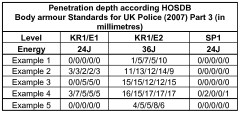
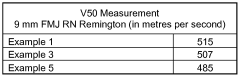
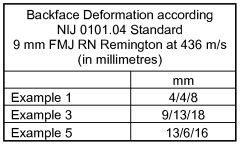
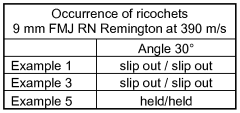
- A thermoplastic composition comprising two polymers with different melting points is used to reinforce ballistic fabric layers, allowing for increased flexibility while maintaining protection against multiple threats by dispersing one polymer in the continuous phase of the other, forming a network that enhances flexibility without embedding fibers rigidly.
Plastic encased multi-threat Anti-ballistic material
PatentInactiveUS20110041675A1
Innovation
- A plastic-encased anti-ballistic material configuration with multiple layers of Kevlar or Dyneema fabrics, embedded in a foamed or expandable plastic matrix, which provides securement and multi-threat protection by absorbing and distributing the impact of ballistic projectiles without excessive weight or deformation.


Environmental Impact and Sustainability Considerations
The environmental footprint of aramid fibers and polyethylene presents significant contrasts that merit careful consideration in material selection processes. Aramid fiber production typically requires energy-intensive processes involving hazardous chemicals such as sulfuric acid and N-methylpyrrolidone, resulting in substantial emissions and potential environmental contamination if not properly managed. The manufacturing process generates approximately 29 kg CO2 equivalent per kilogram of material, positioning aramid fibers among the more carbon-intensive technical textiles.
Polyethylene, particularly high-density polyethylene (HDPE) and ultra-high-molecular-weight polyethylene (UHMWPE), demonstrates a comparatively lower environmental impact during production, with carbon emissions averaging 6-8 kg CO2 equivalent per kilogram. This significant difference stems from polyethylene's simpler manufacturing process and petroleum-based feedstock, though this dependency on fossil fuels raises long-term sustainability concerns.
End-of-life management reveals further distinctions between these materials. Aramid fibers present considerable recycling challenges due to their exceptional durability and complex polymer structure. Current recycling rates remain below 10% globally, with most aramid waste directed to landfills or incineration. Conversely, polyethylene offers more established recycling pathways, with mechanical recycling achieving efficiency rates of 60-85% in optimal conditions, though contamination issues persist.
Biodegradability profiles differ markedly between these materials. Aramid fibers demonstrate extreme persistence in the environment, with estimated degradation timeframes exceeding 500 years under natural conditions. Polyethylene, while also resistant to natural degradation, has benefited from recent innovations in biodegradable additives and enzymatic breakdown technologies that can accelerate decomposition under specific conditions.
Water consumption metrics reveal that aramid fiber production requires approximately 300-500 liters per kilogram of finished material, significantly exceeding polyethylene's requirement of 20-80 liters per kilogram. This disparity becomes particularly relevant in water-stressed regions where manufacturing facilities operate.
Recent sustainability innovations have emerged for both materials. Bio-based aramid precursors derived from lignin show promise in reducing petroleum dependency, while advanced polyethylene formulations incorporating recycled content and renewable feedstocks are gaining commercial traction. Life cycle assessments indicate that rigidity-optimized composite structures combining both materials may offer the most environmentally balanced solution for applications requiring specific mechanical properties.
Polyethylene, particularly high-density polyethylene (HDPE) and ultra-high-molecular-weight polyethylene (UHMWPE), demonstrates a comparatively lower environmental impact during production, with carbon emissions averaging 6-8 kg CO2 equivalent per kilogram. This significant difference stems from polyethylene's simpler manufacturing process and petroleum-based feedstock, though this dependency on fossil fuels raises long-term sustainability concerns.
End-of-life management reveals further distinctions between these materials. Aramid fibers present considerable recycling challenges due to their exceptional durability and complex polymer structure. Current recycling rates remain below 10% globally, with most aramid waste directed to landfills or incineration. Conversely, polyethylene offers more established recycling pathways, with mechanical recycling achieving efficiency rates of 60-85% in optimal conditions, though contamination issues persist.
Biodegradability profiles differ markedly between these materials. Aramid fibers demonstrate extreme persistence in the environment, with estimated degradation timeframes exceeding 500 years under natural conditions. Polyethylene, while also resistant to natural degradation, has benefited from recent innovations in biodegradable additives and enzymatic breakdown technologies that can accelerate decomposition under specific conditions.
Water consumption metrics reveal that aramid fiber production requires approximately 300-500 liters per kilogram of finished material, significantly exceeding polyethylene's requirement of 20-80 liters per kilogram. This disparity becomes particularly relevant in water-stressed regions where manufacturing facilities operate.
Recent sustainability innovations have emerged for both materials. Bio-based aramid precursors derived from lignin show promise in reducing petroleum dependency, while advanced polyethylene formulations incorporating recycled content and renewable feedstocks are gaining commercial traction. Life cycle assessments indicate that rigidity-optimized composite structures combining both materials may offer the most environmentally balanced solution for applications requiring specific mechanical properties.
Cost-Performance Analysis and Industrial Application Optimization
When evaluating aramid fiber versus polyethylene for industrial applications, cost-performance analysis reveals significant trade-offs that impact selection decisions across various sectors. Aramid fibers typically command a premium price point, ranging from 5-10 times higher than high-density polyethylene (HDPE) per unit weight. This substantial cost differential stems from aramid's complex manufacturing process involving specialized chemical synthesis and spinning techniques, compared to polyethylene's simpler petroleum-based production methods.
Performance metrics demonstrate that aramid fibers deliver superior tensile strength (3000-3600 MPa versus 20-40 MPa for HDPE) and thermal stability (operational temperature up to 500°C compared to polyethylene's 120°C maximum). However, polyethylene offers advantages in chemical resistance, particularly against acids, and demonstrates better UV resistance without additional treatments. These performance characteristics create distinct value propositions depending on application requirements.
Cost-benefit analysis indicates aramid fibers provide optimal value in high-stress, safety-critical applications where failure consequences outweigh material costs. The automotive sector demonstrates this through selective application of aramid in critical components like timing belts and brake pads, while utilizing polyethylene for non-critical parts such as fluid containers and interior panels. This hybrid approach optimizes overall system economics while maintaining performance standards.
Industrial application optimization strategies have emerged across multiple sectors. In aerospace, manufacturers employ aramid-polyethylene composites that leverage aramid's rigidity for structural integrity while incorporating polyethylene to reduce weight and cost in less stressed areas. The marine industry has developed similar approaches for rope and cable systems, using aramid cores with polyethylene sheaths to balance tensile strength requirements with environmental exposure resistance.
Lifecycle cost analysis reveals that despite higher initial investment, aramid components often demonstrate superior total cost of ownership in applications experiencing high mechanical stress or thermal cycling. The extended service life and reduced maintenance requirements frequently offset the initial price premium, particularly in infrastructure and industrial equipment applications where replacement costs and downtime carry significant economic penalties.
Future optimization pathways include development of hybrid materials combining aramid and polyethylene at the molecular level, advanced manufacturing techniques to reduce aramid production costs, and application-specific engineering that precisely maps material properties to functional requirements across component geometries.
Performance metrics demonstrate that aramid fibers deliver superior tensile strength (3000-3600 MPa versus 20-40 MPa for HDPE) and thermal stability (operational temperature up to 500°C compared to polyethylene's 120°C maximum). However, polyethylene offers advantages in chemical resistance, particularly against acids, and demonstrates better UV resistance without additional treatments. These performance characteristics create distinct value propositions depending on application requirements.
Cost-benefit analysis indicates aramid fibers provide optimal value in high-stress, safety-critical applications where failure consequences outweigh material costs. The automotive sector demonstrates this through selective application of aramid in critical components like timing belts and brake pads, while utilizing polyethylene for non-critical parts such as fluid containers and interior panels. This hybrid approach optimizes overall system economics while maintaining performance standards.
Industrial application optimization strategies have emerged across multiple sectors. In aerospace, manufacturers employ aramid-polyethylene composites that leverage aramid's rigidity for structural integrity while incorporating polyethylene to reduce weight and cost in less stressed areas. The marine industry has developed similar approaches for rope and cable systems, using aramid cores with polyethylene sheaths to balance tensile strength requirements with environmental exposure resistance.
Lifecycle cost analysis reveals that despite higher initial investment, aramid components often demonstrate superior total cost of ownership in applications experiencing high mechanical stress or thermal cycling. The extended service life and reduced maintenance requirements frequently offset the initial price premium, particularly in infrastructure and industrial equipment applications where replacement costs and downtime carry significant economic penalties.
Future optimization pathways include development of hybrid materials combining aramid and polyethylene at the molecular level, advanced manufacturing techniques to reduce aramid production costs, and application-specific engineering that precisely maps material properties to functional requirements across component geometries.
Unlock deeper insights with PatSnap Eureka Quick Research — get a full tech report to explore trends and direct your research. Try now!
Generate Your Research Report Instantly with AI Agent
Supercharge your innovation with PatSnap Eureka AI Agent Platform!