Aromatic Compounds vs Alcohols: Boiling Point Evaluation
MAR 5, 20269 MIN READ
Generate Your Research Report Instantly with AI Agent
PatSnap Eureka helps you evaluate technical feasibility & market potential.
Aromatic vs Alcohol Boiling Point Research Background
The study of boiling point relationships between aromatic compounds and alcohols represents a fundamental area of physical chemistry that has evolved significantly since the early 20th century. This research domain emerged from the need to understand intermolecular forces and their impact on phase transitions, particularly as industrial applications demanded precise knowledge of thermal properties for separation processes and chemical synthesis.
Historical development in this field began with pioneering work by scientists such as Antoine and Riedel, who established empirical correlations for vapor pressure and boiling point predictions. The systematic comparison between aromatic compounds and alcohols gained prominence during the 1940s and 1950s when petroleum refining and pharmaceutical industries required detailed understanding of molecular behavior under varying thermal conditions.
The technological evolution has progressed through several distinct phases, beginning with basic experimental observations and advancing to sophisticated computational modeling approaches. Early research relied heavily on empirical measurements and simple correlations, while modern investigations incorporate quantum mechanical calculations, molecular dynamics simulations, and advanced spectroscopic techniques to elucidate the underlying mechanisms governing boiling point differences.
Current research objectives focus on developing predictive models that can accurately forecast boiling points based on molecular structure, particularly addressing the complex interplay between aromatic π-electron systems and hydrogen bonding networks in alcohols. The field aims to establish comprehensive structure-property relationships that enable rational design of compounds with desired thermal properties.
Contemporary investigations emphasize understanding how aromatic delocalization affects intermolecular interactions compared to the hydrogen bonding networks characteristic of alcohols. This comparative analysis has become increasingly important for applications in green chemistry, where solvent selection and process optimization require precise thermal property predictions.
The integration of machine learning algorithms and high-throughput computational screening has opened new avenues for systematic exploration of boiling point relationships. These technological advances enable researchers to process vast datasets and identify subtle patterns that traditional approaches might overlook, ultimately contributing to more accurate predictive capabilities for industrial applications.
Historical development in this field began with pioneering work by scientists such as Antoine and Riedel, who established empirical correlations for vapor pressure and boiling point predictions. The systematic comparison between aromatic compounds and alcohols gained prominence during the 1940s and 1950s when petroleum refining and pharmaceutical industries required detailed understanding of molecular behavior under varying thermal conditions.
The technological evolution has progressed through several distinct phases, beginning with basic experimental observations and advancing to sophisticated computational modeling approaches. Early research relied heavily on empirical measurements and simple correlations, while modern investigations incorporate quantum mechanical calculations, molecular dynamics simulations, and advanced spectroscopic techniques to elucidate the underlying mechanisms governing boiling point differences.
Current research objectives focus on developing predictive models that can accurately forecast boiling points based on molecular structure, particularly addressing the complex interplay between aromatic π-electron systems and hydrogen bonding networks in alcohols. The field aims to establish comprehensive structure-property relationships that enable rational design of compounds with desired thermal properties.
Contemporary investigations emphasize understanding how aromatic delocalization affects intermolecular interactions compared to the hydrogen bonding networks characteristic of alcohols. This comparative analysis has become increasingly important for applications in green chemistry, where solvent selection and process optimization require precise thermal property predictions.
The integration of machine learning algorithms and high-throughput computational screening has opened new avenues for systematic exploration of boiling point relationships. These technological advances enable researchers to process vast datasets and identify subtle patterns that traditional approaches might overlook, ultimately contributing to more accurate predictive capabilities for industrial applications.
Market Demand for Boiling Point Prediction Technologies
The pharmaceutical industry represents one of the most significant markets driving demand for boiling point prediction technologies, particularly in drug discovery and development processes. Accurate prediction of boiling points for aromatic compounds versus alcohols enables pharmaceutical companies to optimize synthesis pathways, improve purification processes, and enhance drug formulation strategies. The increasing complexity of modern drug molecules, which often contain both aromatic and alcohol functional groups, necessitates sophisticated prediction tools that can account for molecular interactions and structural variations.
Chemical manufacturing sectors demonstrate substantial market appetite for advanced boiling point evaluation systems. Process engineers require precise thermodynamic property predictions to design efficient distillation columns, optimize separation processes, and ensure product quality consistency. The growing emphasis on green chemistry and sustainable manufacturing practices further amplifies this demand, as companies seek to minimize energy consumption and reduce environmental impact through better process design based on accurate property predictions.
The petrochemical industry continues to expand its reliance on computational prediction methods for boiling point assessment. With the increasing diversity of feedstock compositions and the need to process complex hydrocarbon mixtures containing various aromatic compounds and oxygenated species, refineries and chemical plants require robust prediction capabilities to optimize their operations and maintain competitive advantages in volatile market conditions.
Academic and research institutions constitute another vital market segment, driving demand for sophisticated boiling point prediction technologies. Universities and research centers require these tools for fundamental research in physical chemistry, materials science, and chemical engineering education. The growing emphasis on computational chemistry and molecular modeling in academic curricula creates sustained demand for accessible yet accurate prediction software and methodologies.
Regulatory compliance requirements across multiple industries intensify the market need for reliable boiling point prediction capabilities. Environmental agencies and safety organizations increasingly require accurate thermodynamic property data for chemical registration, risk assessment, and environmental impact evaluation. This regulatory landscape creates consistent market demand for validated prediction methods that can support compliance documentation and safety analysis protocols.
The emerging field of materials informatics and artificial intelligence-driven chemical discovery represents a rapidly expanding market opportunity. Companies developing novel materials, specialty chemicals, and advanced polymers require high-throughput screening capabilities that include accurate boiling point predictions as part of comprehensive property assessment workflows, driving innovation in prediction technology development.
Chemical manufacturing sectors demonstrate substantial market appetite for advanced boiling point evaluation systems. Process engineers require precise thermodynamic property predictions to design efficient distillation columns, optimize separation processes, and ensure product quality consistency. The growing emphasis on green chemistry and sustainable manufacturing practices further amplifies this demand, as companies seek to minimize energy consumption and reduce environmental impact through better process design based on accurate property predictions.
The petrochemical industry continues to expand its reliance on computational prediction methods for boiling point assessment. With the increasing diversity of feedstock compositions and the need to process complex hydrocarbon mixtures containing various aromatic compounds and oxygenated species, refineries and chemical plants require robust prediction capabilities to optimize their operations and maintain competitive advantages in volatile market conditions.
Academic and research institutions constitute another vital market segment, driving demand for sophisticated boiling point prediction technologies. Universities and research centers require these tools for fundamental research in physical chemistry, materials science, and chemical engineering education. The growing emphasis on computational chemistry and molecular modeling in academic curricula creates sustained demand for accessible yet accurate prediction software and methodologies.
Regulatory compliance requirements across multiple industries intensify the market need for reliable boiling point prediction capabilities. Environmental agencies and safety organizations increasingly require accurate thermodynamic property data for chemical registration, risk assessment, and environmental impact evaluation. This regulatory landscape creates consistent market demand for validated prediction methods that can support compliance documentation and safety analysis protocols.
The emerging field of materials informatics and artificial intelligence-driven chemical discovery represents a rapidly expanding market opportunity. Companies developing novel materials, specialty chemicals, and advanced polymers require high-throughput screening capabilities that include accurate boiling point predictions as part of comprehensive property assessment workflows, driving innovation in prediction technology development.
Current Challenges in Molecular Boiling Point Analysis
The accurate prediction of boiling points for aromatic compounds and alcohols remains one of the most persistent challenges in computational chemistry and molecular modeling. Traditional empirical correlations, while useful for simple hydrocarbon systems, frequently fail when applied to these complex molecular structures due to their unique intermolecular interaction patterns. The fundamental difficulty lies in accurately quantifying the competing effects of π-π stacking interactions in aromatics versus hydrogen bonding networks in alcohols.
Current quantum mechanical approaches, despite their theoretical rigor, face significant computational limitations when dealing with large aromatic systems or complex alcohol clusters. Density functional theory calculations, while providing reasonable accuracy for small molecules, become prohibitively expensive for industrial-scale applications involving hundreds of compounds. The challenge is further compounded by the need to account for solvent effects and temperature-dependent conformational changes that significantly influence boiling point behavior.
Machine learning models have emerged as promising alternatives, yet they suffer from critical data quality and representation issues. Training datasets often exhibit systematic biases toward certain molecular classes, leading to poor generalization across the aromatic-alcohol spectrum. Feature engineering remains problematic, as traditional molecular descriptors fail to capture the subtle electronic effects that govern intermolecular interactions in these systems.
Experimental validation presents additional complications, particularly for high-boiling aromatic compounds that may decompose before reaching their theoretical boiling points. Standard measurement techniques often require extrapolation methods that introduce substantial uncertainties. The situation is further complicated by the presence of impurities and isomeric mixtures that are common in industrial aromatic streams.
The integration of multiple theoretical approaches represents another significant hurdle. Combining quantum mechanical insights with thermodynamic modeling requires sophisticated bridging methodologies that are still under development. Current hybrid approaches often produce inconsistent results when transitioning between different molecular size regimes or when dealing with mixed aromatic-alcohol systems.
Scale-up challenges from laboratory predictions to industrial applications remain largely unresolved. The gap between idealized single-component predictions and real-world multicomponent mixture behavior continues to limit practical implementation of advanced boiling point prediction methodologies.
Current quantum mechanical approaches, despite their theoretical rigor, face significant computational limitations when dealing with large aromatic systems or complex alcohol clusters. Density functional theory calculations, while providing reasonable accuracy for small molecules, become prohibitively expensive for industrial-scale applications involving hundreds of compounds. The challenge is further compounded by the need to account for solvent effects and temperature-dependent conformational changes that significantly influence boiling point behavior.
Machine learning models have emerged as promising alternatives, yet they suffer from critical data quality and representation issues. Training datasets often exhibit systematic biases toward certain molecular classes, leading to poor generalization across the aromatic-alcohol spectrum. Feature engineering remains problematic, as traditional molecular descriptors fail to capture the subtle electronic effects that govern intermolecular interactions in these systems.
Experimental validation presents additional complications, particularly for high-boiling aromatic compounds that may decompose before reaching their theoretical boiling points. Standard measurement techniques often require extrapolation methods that introduce substantial uncertainties. The situation is further complicated by the presence of impurities and isomeric mixtures that are common in industrial aromatic streams.
The integration of multiple theoretical approaches represents another significant hurdle. Combining quantum mechanical insights with thermodynamic modeling requires sophisticated bridging methodologies that are still under development. Current hybrid approaches often produce inconsistent results when transitioning between different molecular size regimes or when dealing with mixed aromatic-alcohol systems.
Scale-up challenges from laboratory predictions to industrial applications remain largely unresolved. The gap between idealized single-component predictions and real-world multicomponent mixture behavior continues to limit practical implementation of advanced boiling point prediction methodologies.
Existing Boiling Point Calculation Solutions
01 Distillation and separation methods for aromatic compounds based on boiling point differences
Methods for separating and purifying aromatic compounds utilize the differences in boiling points between various aromatic hydrocarbons and alcohols. Distillation processes, including fractional distillation and vacuum distillation, are employed to separate mixtures based on their distinct boiling point ranges. These techniques are particularly effective for isolating specific aromatic compounds from complex mixtures by exploiting their thermal properties.- Distillation methods for separating aromatic compounds based on boiling point differences: Various distillation techniques can be employed to separate aromatic compounds from mixtures by exploiting their different boiling points. These methods include fractional distillation, vacuum distillation, and azeotropic distillation. The process involves heating the mixture to specific temperatures where components with lower boiling points vaporize first, allowing for effective separation and purification of aromatic compounds from complex mixtures.
- Extraction and purification of aromatic alcohols using boiling point properties: Aromatic alcohols can be extracted and purified by utilizing their characteristic boiling points. The process typically involves selective heating and condensation cycles that take advantage of the specific boiling point ranges of different aromatic alcohol compounds. This allows for the isolation of desired aromatic alcohols from reaction mixtures or natural sources while removing impurities with significantly different boiling points.
- Synthesis methods producing aromatic compounds with controlled boiling point ranges: Chemical synthesis processes can be designed to produce aromatic compounds with specific boiling point characteristics. These methods involve selecting appropriate starting materials and reaction conditions to yield aromatic products within desired boiling point ranges. The control of molecular weight, functional groups, and structural features during synthesis directly influences the final boiling point properties of the aromatic compounds produced.
- Solvent systems utilizing aromatic compounds and alcohols with specific boiling points: Aromatic compounds and alcohols with particular boiling point characteristics can be formulated into solvent systems for various industrial applications. The selection of components is based on their boiling point compatibility to ensure proper evaporation rates, stability, and performance. These solvent systems are designed to optimize processing conditions while maintaining desired physical and chemical properties throughout their use.
- Analytical methods for determining boiling points of aromatic compounds and alcohols: Various analytical techniques have been developed to accurately measure and characterize the boiling points of aromatic compounds and alcohols. These methods include standard distillation apparatus, differential scanning calorimetry, and gas chromatography techniques. Precise determination of boiling points is essential for quality control, compound identification, and process optimization in chemical manufacturing and research applications.
02 Synthesis of aromatic alcohols through controlled temperature processes
Production methods for aromatic alcohols involve carefully controlled temperature conditions that take into account the boiling points of reactants and products. These processes often utilize specific temperature ranges to optimize yield and purity while preventing decomposition or unwanted side reactions. The synthesis methods may include catalytic hydrogenation, reduction reactions, or other chemical transformations where temperature control relative to boiling points is critical.Expand Specific Solutions03 Azeotropic distillation involving aromatic compounds and alcohols
Techniques for breaking azeotropes or utilizing azeotropic behavior in mixtures containing aromatic compounds and alcohols are employed in purification processes. These methods exploit the unique boiling point characteristics of azeotropic mixtures to achieve separation that would otherwise be difficult through conventional distillation. The processes may involve the addition of entraining agents or the use of pressure variations to modify boiling point relationships.Expand Specific Solutions04 Solvent extraction and recovery based on boiling point properties
Processes for using aromatic compounds and alcohols as solvents incorporate recovery methods that rely on their boiling point characteristics. These methods enable efficient solvent recycling through evaporation and condensation cycles. The selection of specific aromatic compounds or alcohols as solvents is often based on their boiling points relative to the materials being processed, allowing for easy separation and reuse of the solvent.Expand Specific Solutions05 Purification of aromatic alcohols through selective vaporization
Purification techniques for aromatic alcohols utilize selective vaporization methods that depend on precise boiling point control. These processes may involve multi-stage distillation, steam distillation, or other vaporization techniques to remove impurities and achieve high-purity products. The methods take advantage of the specific boiling point ranges of target aromatic alcohols compared to contaminants to achieve effective separation and purification.Expand Specific Solutions
Key Players in Chemical Property Prediction Industry
The aromatic compounds versus alcohols boiling point evaluation represents a mature research area within the broader chemical analysis and separation technology sector. The industry has reached a stable development stage with well-established theoretical frameworks and standardized methodologies. Market applications span multiple sectors including petrochemicals, fragrances, and specialty chemicals, generating substantial revenue streams for major players. Technology maturity is evidenced by the sophisticated capabilities of leading companies such as Takasago International Corp. and Firmenich SA in fragrance applications, Shell Oil Co. and Saudi Arabian Oil Co. in petrochemical processing, and Dow Global Technologies LLC in advanced materials development. Companies like Symrise GmbH, Braskem SA, and Wanhua Chemical Group demonstrate the global reach and technical expertise required for complex molecular analysis and industrial applications. The competitive landscape shows strong consolidation among established players who possess both the technical infrastructure and market presence necessary for continued innovation in boiling point evaluation methodologies.
Firmenich SA
Technical Solution: Firmenich employs advanced molecular distillation and fractional distillation techniques to separate aromatic compounds from alcohols based on their boiling point differences. Their proprietary vapor pressure prediction models utilize quantum mechanical calculations to estimate boiling points of complex aromatic esters and alcohol derivatives. The company has developed specialized distillation columns operating under controlled temperature gradients (50-300°C) to achieve high-purity separation of fragrance compounds. Their process optimization includes the use of azeotropic distillation for alcohol-aromatic mixtures and vacuum distillation to prevent thermal decomposition of sensitive aromatic molecules.
Strengths: Extensive experience in fragrance chemistry with precise boiling point databases for thousands of compounds. Advanced distillation infrastructure and proprietary separation technologies. Weaknesses: Limited to fragrance and flavor applications, high energy consumption in separation processes.
Dow Global Technologies LLC
Technical Solution: Dow utilizes computational thermodynamics and UNIFAC group contribution methods to predict boiling points of aromatic compounds versus alcohols in petrochemical processes. Their approach combines experimental vapor-liquid equilibrium data with machine learning algorithms to optimize separation efficiency. The company employs multi-stage distillation towers with heat integration systems, achieving energy efficiency improvements of 15-20% compared to conventional methods. Their boiling point evaluation framework includes consideration of molecular interactions, hydrogen bonding effects in alcohols, and π-π stacking in aromatic systems for accurate phase behavior prediction.
Strengths: Strong petrochemical expertise with comprehensive thermodynamic databases and advanced process simulation capabilities. Proven industrial-scale separation technologies. Weaknesses: Focus primarily on bulk chemicals rather than specialty applications, complex process requirements for mixed systems.
Core Innovations in Molecular Structure-Property Relations
Catalyst system and use in heavy aromatics conversion processes
PatentWO2016126442A1
Innovation
- A catalyst system comprising a first catalyst bed with a medium pore zeolite and a second catalyst bed with high activity meso-mordenite zeolite, both optionally loaded with metals from Groups 10 and 11-15 of the IUPAC Periodic Table, is employed to enhance the conversion of Cs+ aromatics to lighter aromatic products, with the meso-mordenite zeolite synthesized from tetraethylammonium or methyltriethylammonium cations and characterized by high mesopore surface area and small primary crystallite size.


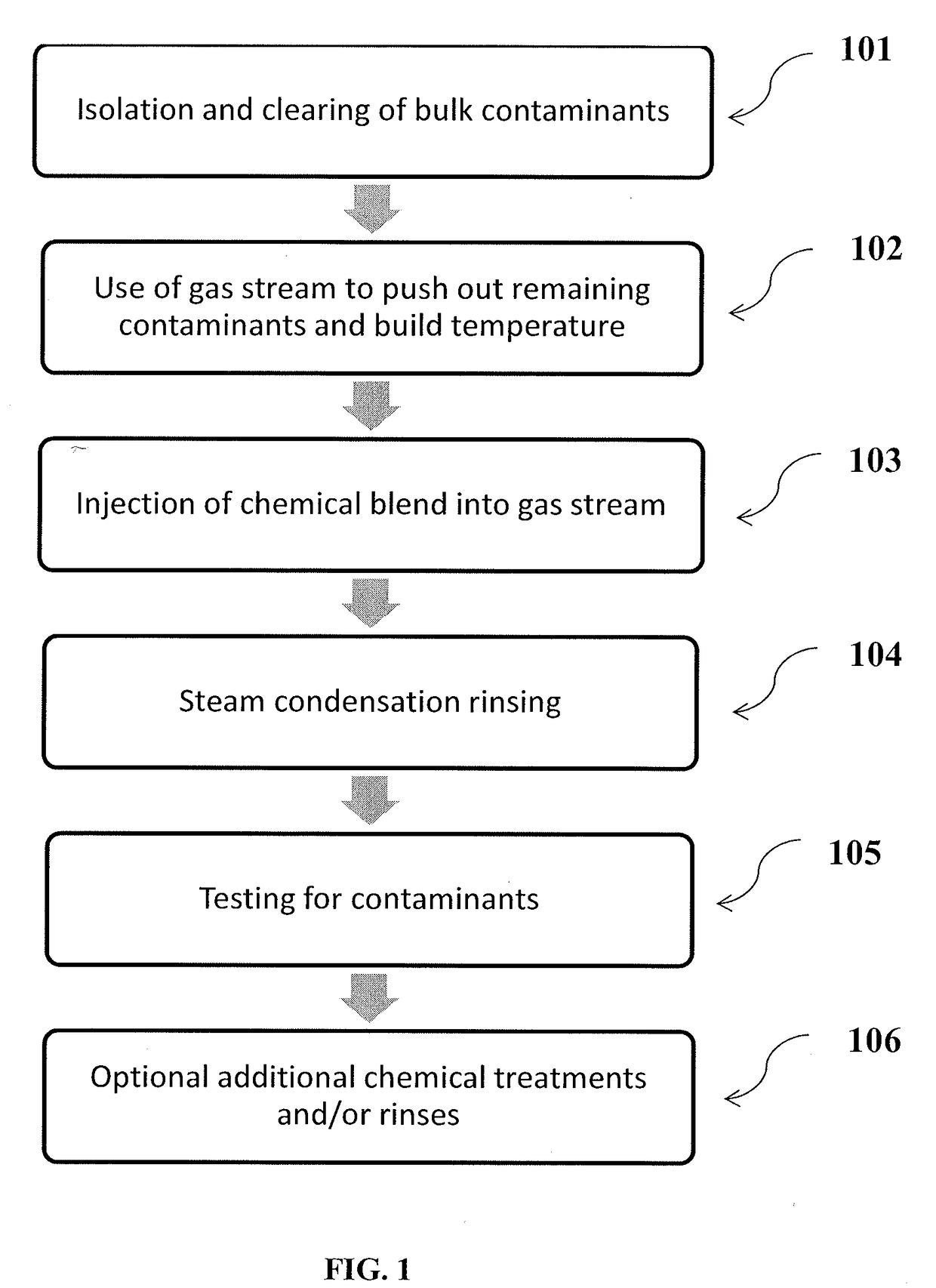
Decontamination and cleaning process for hydrocarbon contaminated equipment
PatentActiveUS20180085791A1
Innovation
- A process involving injecting a gas stream, such as steam, into equipment with a solvent and surfactant that has a high Kauri-butanol value, allowing the mixture to condense on internal surfaces and form a condensed liquid for effective removal of noxious gases and contaminants, with the solvent and surfactant being dispersed throughout the equipment to ensure thorough cleaning.
Environmental Impact of Volatile Organic Compounds
The environmental implications of volatile organic compounds (VOCs) derived from both aromatic compounds and alcohols present significant challenges for atmospheric chemistry and public health. These substances, characterized by their relatively low boiling points and high vapor pressures, readily evaporate into the atmosphere under ambient conditions, contributing to various environmental degradation processes.
Aromatic VOCs, including benzene, toluene, and xylene derivatives, pose particularly severe environmental concerns due to their chemical stability and persistence in atmospheric systems. These compounds participate in photochemical reactions that lead to ground-level ozone formation, a primary component of urban smog. The conjugated ring structures in aromatic compounds enhance their reactivity with hydroxyl radicals and nitrogen oxides, accelerating the formation of secondary organic aerosols that contribute to particulate matter pollution.
Alcohol-based VOCs, while generally considered less toxic than their aromatic counterparts, still present notable environmental challenges. Lower alcohols such as methanol and ethanol exhibit high volatility and can contribute to atmospheric ozone formation through complex photochemical pathways. However, their shorter atmospheric lifetimes and greater biodegradability often result in reduced long-term environmental persistence compared to aromatic compounds.
The differential boiling point characteristics between these compound classes directly influence their environmental fate and transport mechanisms. Aromatic compounds with higher boiling points tend to partition between gas and particle phases, affecting their atmospheric residence times and deposition patterns. Conversely, lower-boiling alcohols remain predominantly in the vapor phase, facilitating rapid atmospheric mixing and regional transport.
Industrial emissions from chemical manufacturing, petroleum refining, and solvent applications represent major sources of both aromatic and alcohol VOCs. The automotive sector contributes significantly through fuel evaporation and combustion processes, where the boiling point properties of fuel components directly influence emission rates and atmospheric behavior.
Regulatory frameworks increasingly focus on controlling VOC emissions through vapor recovery systems, catalytic oxidation technologies, and alternative solvent formulations. The development of low-volatility alternatives and closed-loop processing systems represents critical mitigation strategies for reducing environmental VOC burdens while maintaining industrial productivity and economic viability.
Aromatic VOCs, including benzene, toluene, and xylene derivatives, pose particularly severe environmental concerns due to their chemical stability and persistence in atmospheric systems. These compounds participate in photochemical reactions that lead to ground-level ozone formation, a primary component of urban smog. The conjugated ring structures in aromatic compounds enhance their reactivity with hydroxyl radicals and nitrogen oxides, accelerating the formation of secondary organic aerosols that contribute to particulate matter pollution.
Alcohol-based VOCs, while generally considered less toxic than their aromatic counterparts, still present notable environmental challenges. Lower alcohols such as methanol and ethanol exhibit high volatility and can contribute to atmospheric ozone formation through complex photochemical pathways. However, their shorter atmospheric lifetimes and greater biodegradability often result in reduced long-term environmental persistence compared to aromatic compounds.
The differential boiling point characteristics between these compound classes directly influence their environmental fate and transport mechanisms. Aromatic compounds with higher boiling points tend to partition between gas and particle phases, affecting their atmospheric residence times and deposition patterns. Conversely, lower-boiling alcohols remain predominantly in the vapor phase, facilitating rapid atmospheric mixing and regional transport.
Industrial emissions from chemical manufacturing, petroleum refining, and solvent applications represent major sources of both aromatic and alcohol VOCs. The automotive sector contributes significantly through fuel evaporation and combustion processes, where the boiling point properties of fuel components directly influence emission rates and atmospheric behavior.
Regulatory frameworks increasingly focus on controlling VOC emissions through vapor recovery systems, catalytic oxidation technologies, and alternative solvent formulations. The development of low-volatility alternatives and closed-loop processing systems represents critical mitigation strategies for reducing environmental VOC burdens while maintaining industrial productivity and economic viability.
Safety Regulations for Chemical Handling Procedures
The handling of aromatic compounds and alcohols in boiling point evaluation studies requires strict adherence to comprehensive safety regulations due to the distinct hazardous properties exhibited by these chemical classes. Aromatic compounds, particularly benzene derivatives, present significant health risks including carcinogenic potential and neurotoxic effects, while alcohols pose fire hazards due to their flammability and can cause respiratory irritation at elevated temperatures.
Personal protective equipment protocols mandate the use of chemical-resistant gloves, safety goggles with side shields, and laboratory coats when handling both compound types. For volatile aromatic compounds, additional respiratory protection through fume hoods or supplied-air respirators becomes essential, especially during heating processes that increase vapor concentration. The selection of appropriate glove materials is critical, as nitrile gloves provide adequate protection against most alcohols, while specialized polymer gloves are required for aromatic solvents.
Ventilation requirements for boiling point determination experiments involving these compounds necessitate working within properly functioning fume hoods with face velocities maintained between 80-120 feet per minute. Emergency ventilation systems must be readily accessible, and air monitoring protocols should be established to detect vapor concentrations exceeding permissible exposure limits. For aromatic compounds, workplace exposure limits are typically more stringent, requiring enhanced ventilation controls.
Storage and handling procedures require segregation of aromatic compounds from alcohols due to potential incompatibility reactions. Temperature-controlled storage environments must be maintained, with aromatic compounds stored in cool, dry locations away from ignition sources. Alcohol storage requires similar fire prevention measures, with additional considerations for static electricity control during transfer operations.
Emergency response protocols must address the specific hazards associated with each compound class. Spill containment procedures differ significantly, with aromatic compound spills requiring immediate area evacuation and specialized cleanup materials, while alcohol spills primarily focus on fire prevention and vapor control. Emergency shower and eyewash stations must be positioned within immediate reach of experimental areas.
Documentation requirements include maintaining detailed chemical inventories, safety data sheets accessibility, and incident reporting procedures. Regular safety training updates ensure personnel remain current with evolving regulations and best practices for handling these compounds during analytical procedures.
Personal protective equipment protocols mandate the use of chemical-resistant gloves, safety goggles with side shields, and laboratory coats when handling both compound types. For volatile aromatic compounds, additional respiratory protection through fume hoods or supplied-air respirators becomes essential, especially during heating processes that increase vapor concentration. The selection of appropriate glove materials is critical, as nitrile gloves provide adequate protection against most alcohols, while specialized polymer gloves are required for aromatic solvents.
Ventilation requirements for boiling point determination experiments involving these compounds necessitate working within properly functioning fume hoods with face velocities maintained between 80-120 feet per minute. Emergency ventilation systems must be readily accessible, and air monitoring protocols should be established to detect vapor concentrations exceeding permissible exposure limits. For aromatic compounds, workplace exposure limits are typically more stringent, requiring enhanced ventilation controls.
Storage and handling procedures require segregation of aromatic compounds from alcohols due to potential incompatibility reactions. Temperature-controlled storage environments must be maintained, with aromatic compounds stored in cool, dry locations away from ignition sources. Alcohol storage requires similar fire prevention measures, with additional considerations for static electricity control during transfer operations.
Emergency response protocols must address the specific hazards associated with each compound class. Spill containment procedures differ significantly, with aromatic compound spills requiring immediate area evacuation and specialized cleanup materials, while alcohol spills primarily focus on fire prevention and vapor control. Emergency shower and eyewash stations must be positioned within immediate reach of experimental areas.
Documentation requirements include maintaining detailed chemical inventories, safety data sheets accessibility, and incident reporting procedures. Regular safety training updates ensure personnel remain current with evolving regulations and best practices for handling these compounds during analytical procedures.
Unlock deeper insights with PatSnap Eureka Quick Research — get a full tech report to explore trends and direct your research. Try now!
Generate Your Research Report Instantly with AI Agent
Supercharge your innovation with PatSnap Eureka AI Agent Platform!