

Assess Microgrid Contribution to Grid Peak Load Reduction
MAR 18, 20269 MIN READ
Generate Your Research Report Instantly with AI Agent
PatSnap Eureka helps you evaluate technical feasibility & market potential.
Microgrid Peak Load Reduction Background and Objectives
The global energy landscape has undergone significant transformation over the past two decades, driven by increasing electricity demand, aging grid infrastructure, and the urgent need for decarbonization. Traditional centralized power systems face mounting challenges in managing peak load periods, which typically occur during extreme weather conditions or high-demand hours. These peak events strain grid resources, increase operational costs, and often require expensive peaking power plants that operate inefficiently for limited periods.
Microgrids have emerged as a promising distributed energy solution that combines local generation, energy storage, and intelligent control systems to serve specific geographic areas or customer segments. These systems can operate both in grid-connected mode and as isolated islands during grid disturbances. The evolution of microgrid technology has been accelerated by advances in renewable energy systems, battery storage technologies, and smart grid communication protocols.
The concept of peak load reduction through distributed resources gained prominence following major blackouts in the early 2000s, which highlighted the vulnerabilities of centralized grid systems. Regulatory frameworks such as FERC Order 2222 in the United States have recognized the value of distributed energy resources in providing grid services, creating new market opportunities for microgrid operators to participate in demand response and ancillary service programs.
The primary objective of assessing microgrid contribution to grid peak load reduction is to quantify the technical and economic benefits these systems can provide to the broader electrical grid. This assessment aims to establish standardized methodologies for measuring peak load reduction capabilities, considering factors such as local generation capacity, energy storage deployment, demand response potential, and load management strategies.
Key technical objectives include developing accurate forecasting models for microgrid peak shaving performance, establishing optimal sizing criteria for distributed energy resources, and creating control algorithms that maximize grid benefits while maintaining local energy security. Economic objectives focus on quantifying the value proposition for both microgrid operators and utility companies, including avoided capacity costs, reduced transmission losses, and enhanced grid reliability.
The assessment framework seeks to address critical questions regarding scalability, grid integration impacts, and the potential for widespread microgrid deployment to fundamentally alter peak demand patterns. Understanding these dynamics is essential for utilities, policymakers, and investors to make informed decisions about future grid modernization investments and regulatory structures that support distributed energy resource integration.
Microgrids have emerged as a promising distributed energy solution that combines local generation, energy storage, and intelligent control systems to serve specific geographic areas or customer segments. These systems can operate both in grid-connected mode and as isolated islands during grid disturbances. The evolution of microgrid technology has been accelerated by advances in renewable energy systems, battery storage technologies, and smart grid communication protocols.
The concept of peak load reduction through distributed resources gained prominence following major blackouts in the early 2000s, which highlighted the vulnerabilities of centralized grid systems. Regulatory frameworks such as FERC Order 2222 in the United States have recognized the value of distributed energy resources in providing grid services, creating new market opportunities for microgrid operators to participate in demand response and ancillary service programs.
The primary objective of assessing microgrid contribution to grid peak load reduction is to quantify the technical and economic benefits these systems can provide to the broader electrical grid. This assessment aims to establish standardized methodologies for measuring peak load reduction capabilities, considering factors such as local generation capacity, energy storage deployment, demand response potential, and load management strategies.
Key technical objectives include developing accurate forecasting models for microgrid peak shaving performance, establishing optimal sizing criteria for distributed energy resources, and creating control algorithms that maximize grid benefits while maintaining local energy security. Economic objectives focus on quantifying the value proposition for both microgrid operators and utility companies, including avoided capacity costs, reduced transmission losses, and enhanced grid reliability.
The assessment framework seeks to address critical questions regarding scalability, grid integration impacts, and the potential for widespread microgrid deployment to fundamentally alter peak demand patterns. Understanding these dynamics is essential for utilities, policymakers, and investors to make informed decisions about future grid modernization investments and regulatory structures that support distributed energy resource integration.
Market Demand for Grid Peak Load Management Solutions
The global electricity market faces unprecedented challenges in managing peak demand, driven by increasing urbanization, electrification of transportation, and growing reliance on intermittent renewable energy sources. Traditional grid infrastructure struggles to accommodate these demand spikes, leading to system instability, higher operational costs, and increased carbon emissions from peaker plants. This scenario has created substantial market opportunities for innovative peak load management solutions.
Utility companies worldwide are actively seeking cost-effective alternatives to expensive grid infrastructure upgrades and fossil fuel-based peaking power plants. The economic burden of maintaining reserve capacity for peak periods, combined with regulatory pressure to reduce greenhouse gas emissions, has intensified the search for distributed energy solutions. Microgrids emerge as a compelling technology to address these challenges through localized generation, storage, and intelligent load management capabilities.
The commercial and industrial sectors represent the most immediate market opportunity for microgrid-based peak load reduction solutions. Large energy consumers face significant demand charges that can constitute substantial portions of their electricity bills. These customers demonstrate strong willingness to invest in technologies that can reduce peak consumption and provide energy cost predictability. Healthcare facilities, data centers, manufacturing plants, and educational institutions have shown particular interest in microgrid solutions that combine peak shaving benefits with enhanced energy reliability.
Residential market demand is emerging through community-scale microgrid projects and virtual power plant initiatives. Homeowners increasingly recognize the value proposition of participating in demand response programs while maintaining energy independence. The proliferation of rooftop solar installations and residential battery storage systems creates natural building blocks for neighborhood-level microgrids that can collectively contribute to grid peak load reduction.
Regulatory frameworks are evolving to support microgrid deployment through favorable interconnection standards, net metering policies, and grid services compensation mechanisms. Many jurisdictions now offer financial incentives for distributed energy resources that provide grid support services, creating additional revenue streams for microgrid operators. These policy developments significantly enhance the economic attractiveness of microgrid investments for both private and public sector customers.
The market demand extends beyond traditional electricity customers to include microgrid technology providers, energy service companies, and financial institutions seeking investment opportunities in the clean energy transition. This ecosystem approach accelerates market growth by enabling innovative financing models, turnkey solution offerings, and risk-sharing arrangements that make microgrid projects more accessible to diverse customer segments.
Utility companies worldwide are actively seeking cost-effective alternatives to expensive grid infrastructure upgrades and fossil fuel-based peaking power plants. The economic burden of maintaining reserve capacity for peak periods, combined with regulatory pressure to reduce greenhouse gas emissions, has intensified the search for distributed energy solutions. Microgrids emerge as a compelling technology to address these challenges through localized generation, storage, and intelligent load management capabilities.
The commercial and industrial sectors represent the most immediate market opportunity for microgrid-based peak load reduction solutions. Large energy consumers face significant demand charges that can constitute substantial portions of their electricity bills. These customers demonstrate strong willingness to invest in technologies that can reduce peak consumption and provide energy cost predictability. Healthcare facilities, data centers, manufacturing plants, and educational institutions have shown particular interest in microgrid solutions that combine peak shaving benefits with enhanced energy reliability.
Residential market demand is emerging through community-scale microgrid projects and virtual power plant initiatives. Homeowners increasingly recognize the value proposition of participating in demand response programs while maintaining energy independence. The proliferation of rooftop solar installations and residential battery storage systems creates natural building blocks for neighborhood-level microgrids that can collectively contribute to grid peak load reduction.
Regulatory frameworks are evolving to support microgrid deployment through favorable interconnection standards, net metering policies, and grid services compensation mechanisms. Many jurisdictions now offer financial incentives for distributed energy resources that provide grid support services, creating additional revenue streams for microgrid operators. These policy developments significantly enhance the economic attractiveness of microgrid investments for both private and public sector customers.
The market demand extends beyond traditional electricity customers to include microgrid technology providers, energy service companies, and financial institutions seeking investment opportunities in the clean energy transition. This ecosystem approach accelerates market growth by enabling innovative financing models, turnkey solution offerings, and risk-sharing arrangements that make microgrid projects more accessible to diverse customer segments.
Current Microgrid Technologies and Grid Integration Challenges
Microgrid technologies have evolved significantly over the past decade, encompassing diverse energy generation, storage, and management systems that operate either independently or in conjunction with the main electrical grid. Contemporary microgrid architectures typically integrate distributed energy resources including solar photovoltaic arrays, wind turbines, combined heat and power systems, fuel cells, and battery energy storage systems. These components are coordinated through sophisticated energy management systems that utilize advanced control algorithms and real-time monitoring capabilities.
The integration of renewable energy sources within microgrids presents substantial technical challenges, particularly regarding intermittency management and power quality maintenance. Solar and wind generation variability requires robust forecasting algorithms and rapid response storage systems to ensure consistent power delivery. Battery energy storage systems, predominantly lithium-ion technologies, serve as the primary buffer for managing these fluctuations, though their deployment costs and degradation characteristics remain significant considerations for long-term viability.
Grid integration challenges encompass multiple technical and regulatory dimensions that complicate microgrid deployment and operation. Synchronization with the main grid requires precise frequency and voltage matching, necessitating advanced inverter technologies and protective relay systems. Islanding detection and seamless transition capabilities are critical for maintaining power quality during grid disturbances while preventing safety hazards for utility workers during maintenance operations.
Communication infrastructure represents another fundamental challenge, as effective grid integration demands real-time data exchange between microgrid controllers and utility dispatch centers. Cybersecurity concerns have intensified with increased digitalization, requiring robust encryption protocols and intrusion detection systems to protect critical infrastructure from potential threats.
Regulatory frameworks often lag behind technological capabilities, creating uncertainty around interconnection standards, market participation rules, and compensation mechanisms for grid services. Many jurisdictions lack clear guidelines for microgrid operation during emergency conditions or for providing ancillary services to the main grid.
Economic integration challenges include complex tariff structures that may not adequately compensate microgrids for their grid support capabilities. Peak load reduction contributions often require sophisticated metering and verification systems to quantify and monetize the value provided to the broader electrical system, creating additional implementation complexity for microgrid developers and operators.
The integration of renewable energy sources within microgrids presents substantial technical challenges, particularly regarding intermittency management and power quality maintenance. Solar and wind generation variability requires robust forecasting algorithms and rapid response storage systems to ensure consistent power delivery. Battery energy storage systems, predominantly lithium-ion technologies, serve as the primary buffer for managing these fluctuations, though their deployment costs and degradation characteristics remain significant considerations for long-term viability.
Grid integration challenges encompass multiple technical and regulatory dimensions that complicate microgrid deployment and operation. Synchronization with the main grid requires precise frequency and voltage matching, necessitating advanced inverter technologies and protective relay systems. Islanding detection and seamless transition capabilities are critical for maintaining power quality during grid disturbances while preventing safety hazards for utility workers during maintenance operations.
Communication infrastructure represents another fundamental challenge, as effective grid integration demands real-time data exchange between microgrid controllers and utility dispatch centers. Cybersecurity concerns have intensified with increased digitalization, requiring robust encryption protocols and intrusion detection systems to protect critical infrastructure from potential threats.
Regulatory frameworks often lag behind technological capabilities, creating uncertainty around interconnection standards, market participation rules, and compensation mechanisms for grid services. Many jurisdictions lack clear guidelines for microgrid operation during emergency conditions or for providing ancillary services to the main grid.
Economic integration challenges include complex tariff structures that may not adequately compensate microgrids for their grid support capabilities. Peak load reduction contributions often require sophisticated metering and verification systems to quantify and monetize the value provided to the broader electrical system, creating additional implementation complexity for microgrid developers and operators.
Existing Microgrid Peak Load Reduction Solutions
01 Energy storage systems integration for peak shaving
Integration of battery energy storage systems (BESS) or other energy storage technologies into microgrids enables effective peak load reduction by storing energy during off-peak periods and discharging during peak demand times. These systems can be controlled through intelligent algorithms to optimize charging and discharging cycles, thereby flattening the load curve and reducing peak demand on the grid. The storage systems can include lithium-ion batteries, flow batteries, or other advanced storage technologies that provide rapid response capabilities.- Energy storage systems integration for peak shaving: Integration of battery energy storage systems (BESS) or other energy storage technologies into microgrids enables effective peak load reduction by storing energy during off-peak periods and discharging during peak demand times. These systems can be controlled through intelligent management algorithms to optimize charging and discharging cycles, thereby flattening the load curve and reducing peak demand on the grid. The storage capacity and power rating can be sized according to the specific peak load characteristics of the microgrid.
- Demand response and load management strategies: Implementation of demand response programs allows for active management of electricity consumption during peak periods through load shifting, load shedding, or load curtailment. Smart control systems can automatically adjust or schedule non-critical loads to operate during off-peak hours, while critical loads maintain priority. This approach involves communication between the microgrid controller and various loads, enabling dynamic adjustment based on real-time grid conditions and pricing signals.
- Renewable energy source optimization and forecasting: Optimization of renewable energy sources such as solar and wind generation within microgrids contributes to peak load reduction by maximizing local generation during high-demand periods. Advanced forecasting algorithms predict renewable energy availability and load patterns, enabling proactive scheduling of distributed generation resources. This coordination between renewable sources and load demand helps reduce reliance on grid power during peak times.
- Intelligent microgrid control and optimization algorithms: Advanced control algorithms and optimization techniques enable coordinated operation of multiple distributed energy resources within microgrids for peak load management. These systems utilize machine learning, artificial intelligence, or model predictive control to optimize power flow, generation scheduling, and load distribution. The control strategies consider multiple objectives including peak reduction, cost minimization, and system stability while managing the complex interactions between various microgrid components.
- Grid-interactive inverter and power electronics solutions: Deployment of advanced power electronics and grid-interactive inverters facilitates bidirectional power flow control and enables active participation in peak load reduction. These devices provide precise control over power injection and absorption, support voltage and frequency regulation, and enable seamless integration of distributed energy resources. The inverter systems can be programmed to respond to grid signals and implement various peak shaving strategies through coordinated control.
02 Demand response and load management strategies
Implementation of demand response programs allows microgrid operators to actively manage and reduce peak loads by coordinating with consumers to shift or curtail electricity usage during peak periods. This can be achieved through automated control systems that adjust controllable loads, such as HVAC systems, water heaters, and industrial equipment, based on real-time pricing signals or grid conditions. Smart scheduling algorithms can optimize load distribution across different time periods to minimize peak demand.Expand Specific Solutions03 Renewable energy source coordination
Coordinated operation of distributed renewable energy sources, such as solar photovoltaic systems and wind turbines, can contribute to peak load reduction by maximizing local generation during high-demand periods. Advanced forecasting techniques predict renewable energy availability and load patterns, enabling proactive scheduling of generation resources. Power management systems can prioritize the use of renewable energy during peak hours, reducing reliance on grid power and lowering peak demand charges.Expand Specific Solutions04 Intelligent microgrid control and optimization algorithms
Advanced control algorithms and optimization techniques enable real-time monitoring and management of microgrid resources to achieve peak load reduction. These systems utilize machine learning, artificial intelligence, or model predictive control to forecast load patterns, optimize resource allocation, and coordinate multiple distributed energy resources. The control systems can automatically adjust generation, storage, and load parameters to minimize peak demand while maintaining system stability and reliability.Expand Specific Solutions05 Peak load shifting through thermal energy storage
Thermal energy storage systems can be integrated into microgrids to shift cooling and heating loads away from peak demand periods. These systems store thermal energy in the form of chilled water, ice, or hot water during off-peak hours when electricity is cheaper and demand is lower, then release the stored energy during peak periods to meet heating or cooling needs without drawing additional electrical power. This approach is particularly effective for commercial and industrial facilities with significant HVAC loads.Expand Specific Solutions
Key Players in Microgrid and Grid Management Industry
The microgrid technology for grid peak load reduction is experiencing rapid evolution across multiple development stages, with the market demonstrating significant growth potential driven by increasing grid modernization demands and renewable energy integration requirements. The competitive landscape reveals a mature technology foundation supported by established infrastructure giants like State Grid Corp. of China, ABB Ltd., and Siemens Energy Global, who provide core grid integration capabilities. Emerging specialized players including Enphase Energy, Heila Technologies, and DG Matrix are advancing next-generation solutions with software-driven platforms and solid-state transformer technologies. Research institutions such as MIT, North Carolina State University, and China Electric Power Research Institute are contributing fundamental innovations in optimization algorithms and control systems. The technology maturity spans from proven hardware components to cutting-edge AI-driven energy management systems, indicating a sector transitioning from early adoption to mainstream deployment, with companies like Bloom Energy and Pareto Energy demonstrating commercial viability in distributed energy applications.
State Grid Corp. of China
Technical Solution: State Grid implements comprehensive microgrid solutions integrated with demand response systems to achieve peak load reduction. Their approach combines distributed energy resources including solar PV, energy storage systems, and smart load management technologies. The company deploys advanced grid-interactive microgrids that can island during peak demand periods, reducing stress on the main grid by 15-30% during critical hours. Their microgrid control systems utilize AI-powered forecasting algorithms to predict peak demand and automatically shift loads or discharge stored energy. The integration includes vehicle-to-grid technology and industrial load scheduling to maximize peak shaving effectiveness across their vast network coverage.
Strengths: Extensive grid infrastructure and operational experience, large-scale deployment capabilities, comprehensive data analytics from massive grid operations. Weaknesses: Complex regulatory environment, high capital investment requirements, slower adaptation to emerging technologies due to organizational scale.
ABB Ltd.
Technical Solution: ABB's microgrid solutions focus on intelligent energy management systems that optimize distributed generation and storage for peak load reduction. Their PowerStore energy storage systems combined with Ability microgrid control software enable real-time load balancing and peak shaving capabilities. The technology integrates renewable energy sources with battery storage systems, achieving peak load reduction of 20-40% in commercial and industrial applications. ABB's approach includes predictive analytics for demand forecasting and automated load curtailment during peak periods. Their modular microgrid architecture allows scalable deployment from small commercial facilities to large industrial complexes, with seamless grid interconnection capabilities and advanced power quality management features.
Strengths: Proven technology portfolio, global deployment experience, strong automation and control expertise, modular scalable solutions. Weaknesses: Higher initial costs compared to competitors, complex system integration requirements, dependency on third-party renewable energy components.
Core Technologies in Microgrid Grid Support Systems
Improved peak microgrid load dispatch
PatentWO2025264388A1
Innovation
- A microgrid controller executes a load stabilization algorithm to manage energy resource systems, including stabilizing and non-stabilizing groups, by calculating target loads, state-of-charge, and generating control signals to stabilize cyclic loads and maintain constant loads, using energy storage systems to instantaneously inject or absorb power.


Method and system for reducing peak load charge on utility bill using target peak load and countermeasures
PatentInactiveUS8774976B2
Innovation
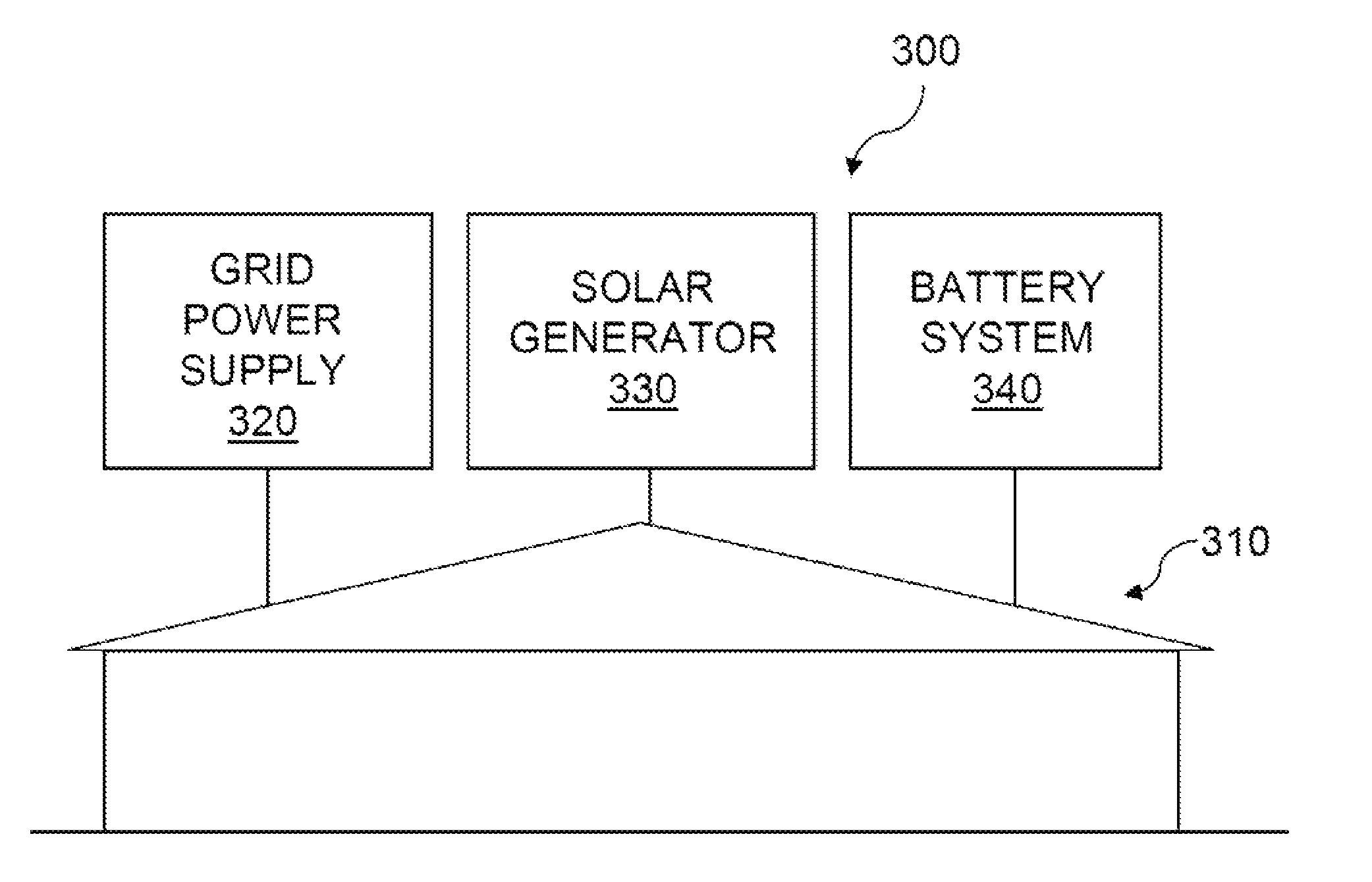
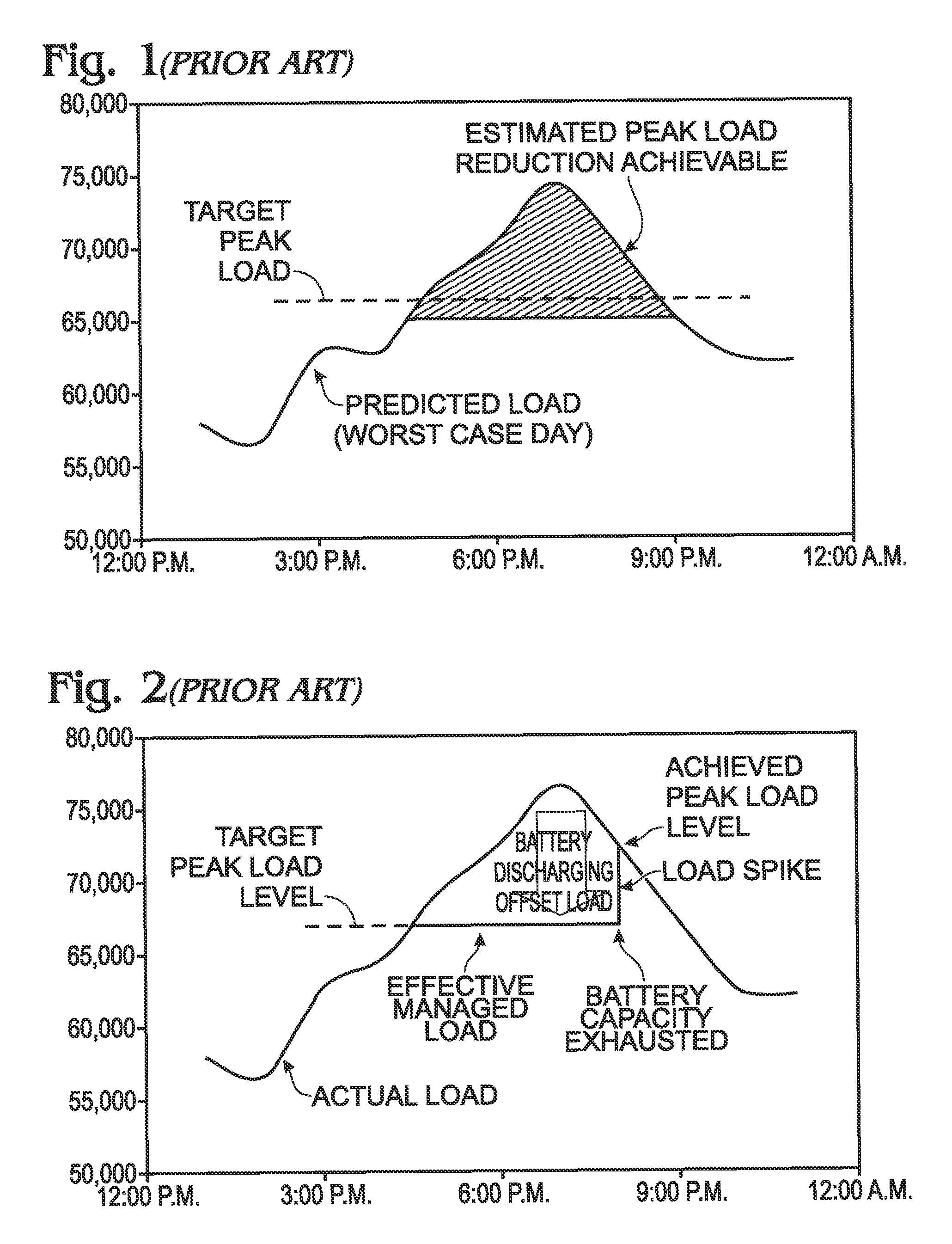
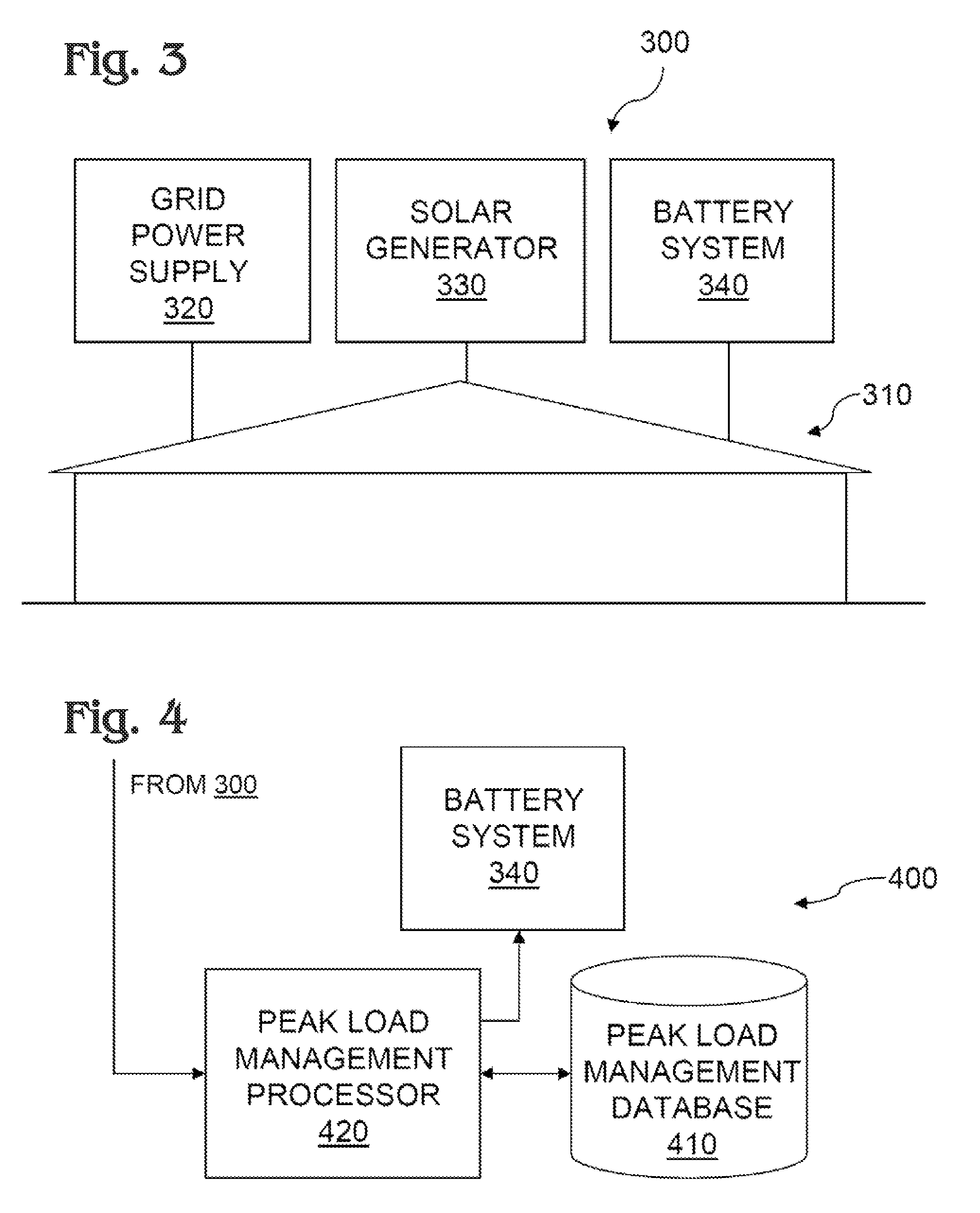
- A peak load management system that continuously measures actual and predicted load data to assess the risk of grid power spikes above the target peak load, implementing countermeasures such as adjusting the target peak load or shedding actual load to prevent battery exhaustion and optimize battery utilization.

Grid Code and Regulatory Framework for Microgrids
The regulatory landscape for microgrids has evolved significantly as governments and utility commissions recognize their potential for enhancing grid resilience and supporting renewable energy integration. Grid codes traditionally designed for centralized power systems are being adapted to accommodate distributed energy resources and microgrid operations, creating new frameworks that balance system reliability with operational flexibility.
Current grid codes vary substantially across jurisdictions, with some regions implementing comprehensive microgrid-specific regulations while others rely on modified existing frameworks. The IEEE 1547 standard series provides foundational technical requirements for distributed energy resource interconnection, establishing protocols for voltage regulation, frequency response, and islanding detection. European standards such as EN 50549 offer similar guidance, emphasizing grid support functions and power quality requirements.
Regulatory frameworks increasingly emphasize microgrids' role in peak load management through demand response programs and energy storage deployment. Many jurisdictions now permit microgrids to participate in wholesale electricity markets, enabling them to provide ancillary services during peak demand periods. Time-of-use tariffs and peak demand charges create economic incentives for microgrid operators to optimize their contribution to grid stability.
Interconnection standards are becoming more sophisticated, requiring advanced inverter functions that enable microgrids to provide reactive power support and voltage regulation during peak load conditions. These technical requirements ensure that microgrids can seamlessly transition between grid-connected and islanded modes while maintaining power quality standards.
Emerging regulatory trends focus on performance-based incentives that reward microgrids for measurable contributions to peak load reduction. Some jurisdictions are implementing capacity market mechanisms that compensate microgrids for their ability to reduce peak demand, while others are developing virtual power plant frameworks that aggregate multiple microgrids for enhanced grid services.
The regulatory evolution continues toward outcome-based standards that prioritize grid benefits over prescriptive technical requirements, enabling innovative microgrid designs while ensuring system reliability and safety.
Current grid codes vary substantially across jurisdictions, with some regions implementing comprehensive microgrid-specific regulations while others rely on modified existing frameworks. The IEEE 1547 standard series provides foundational technical requirements for distributed energy resource interconnection, establishing protocols for voltage regulation, frequency response, and islanding detection. European standards such as EN 50549 offer similar guidance, emphasizing grid support functions and power quality requirements.
Regulatory frameworks increasingly emphasize microgrids' role in peak load management through demand response programs and energy storage deployment. Many jurisdictions now permit microgrids to participate in wholesale electricity markets, enabling them to provide ancillary services during peak demand periods. Time-of-use tariffs and peak demand charges create economic incentives for microgrid operators to optimize their contribution to grid stability.
Interconnection standards are becoming more sophisticated, requiring advanced inverter functions that enable microgrids to provide reactive power support and voltage regulation during peak load conditions. These technical requirements ensure that microgrids can seamlessly transition between grid-connected and islanded modes while maintaining power quality standards.
Emerging regulatory trends focus on performance-based incentives that reward microgrids for measurable contributions to peak load reduction. Some jurisdictions are implementing capacity market mechanisms that compensate microgrids for their ability to reduce peak demand, while others are developing virtual power plant frameworks that aggregate multiple microgrids for enhanced grid services.
The regulatory evolution continues toward outcome-based standards that prioritize grid benefits over prescriptive technical requirements, enabling innovative microgrid designs while ensuring system reliability and safety.
Economic Assessment of Microgrid Peak Reduction Benefits
The economic assessment of microgrid peak reduction benefits encompasses multiple value streams that collectively demonstrate the financial viability of distributed energy systems. These benefits manifest through direct cost savings, revenue generation opportunities, and avoided infrastructure investments that create substantial economic value for both microgrid operators and the broader electrical grid system.
Peak demand charge reduction represents the most immediate and quantifiable economic benefit for microgrid operators. Commercial and industrial customers typically face demand charges ranging from $10 to $50 per kW of peak monthly demand, creating significant financial incentives for peak shaving strategies. Microgrids equipped with energy storage systems can reduce these charges by 20-40%, translating to annual savings of $50,000 to $200,000 for medium-scale installations.
Utility-scale economic benefits emerge through deferred transmission and distribution infrastructure investments. Each MW of peak load reduction can defer approximately $1-3 million in grid upgrade costs, depending on regional infrastructure conditions and load growth projections. These avoided costs create opportunities for shared value arrangements between utilities and microgrid developers through capacity payments or demand response compensation programs.
Energy arbitrage opportunities provide additional revenue streams through strategic energy storage deployment. Time-of-use rate differentials of $0.10-0.30 per kWh between peak and off-peak periods enable microgrids to generate annual revenues of $100-300 per kWh of storage capacity. Advanced forecasting algorithms and real-time optimization systems can enhance these arbitrage profits by 15-25% through improved market timing strategies.
Ancillary services markets offer emerging revenue opportunities for grid-connected microgrids. Frequency regulation services can generate $20-60 per kW-year, while spinning reserve capacity commands $10-30 per kW-year in competitive markets. These services leverage the fast response capabilities of battery storage systems and distributed generation assets within microgrid configurations.
The economic value proposition strengthens when considering resilience benefits and avoided outage costs. Critical facilities such as hospitals, data centers, and manufacturing plants face outage costs ranging from $10,000 to $100,000 per hour, making microgrid investments economically justified even with modest reliability improvements. Comprehensive economic assessments must incorporate these risk mitigation values alongside traditional energy cost savings to capture the full benefit spectrum of microgrid peak reduction capabilities.
Peak demand charge reduction represents the most immediate and quantifiable economic benefit for microgrid operators. Commercial and industrial customers typically face demand charges ranging from $10 to $50 per kW of peak monthly demand, creating significant financial incentives for peak shaving strategies. Microgrids equipped with energy storage systems can reduce these charges by 20-40%, translating to annual savings of $50,000 to $200,000 for medium-scale installations.
Utility-scale economic benefits emerge through deferred transmission and distribution infrastructure investments. Each MW of peak load reduction can defer approximately $1-3 million in grid upgrade costs, depending on regional infrastructure conditions and load growth projections. These avoided costs create opportunities for shared value arrangements between utilities and microgrid developers through capacity payments or demand response compensation programs.
Energy arbitrage opportunities provide additional revenue streams through strategic energy storage deployment. Time-of-use rate differentials of $0.10-0.30 per kWh between peak and off-peak periods enable microgrids to generate annual revenues of $100-300 per kWh of storage capacity. Advanced forecasting algorithms and real-time optimization systems can enhance these arbitrage profits by 15-25% through improved market timing strategies.
Ancillary services markets offer emerging revenue opportunities for grid-connected microgrids. Frequency regulation services can generate $20-60 per kW-year, while spinning reserve capacity commands $10-30 per kW-year in competitive markets. These services leverage the fast response capabilities of battery storage systems and distributed generation assets within microgrid configurations.
The economic value proposition strengthens when considering resilience benefits and avoided outage costs. Critical facilities such as hospitals, data centers, and manufacturing plants face outage costs ranging from $10,000 to $100,000 per hour, making microgrid investments economically justified even with modest reliability improvements. Comprehensive economic assessments must incorporate these risk mitigation values alongside traditional energy cost savings to capture the full benefit spectrum of microgrid peak reduction capabilities.
Unlock deeper insights with PatSnap Eureka Quick Research — get a full tech report to explore trends and direct your research. Try now!
Generate Your Research Report Instantly with AI Agent
Supercharge your innovation with PatSnap Eureka AI Agent Platform!