

Residential Microgrid Systems: Performance Considerations
MAR 18, 20269 MIN READ
Generate Your Research Report Instantly with AI Agent
PatSnap Eureka helps you evaluate technical feasibility & market potential.
Residential Microgrid Development Background and Objectives
Residential microgrid systems have emerged as a transformative technology in the distributed energy landscape, driven by the convergence of renewable energy proliferation, grid modernization initiatives, and increasing consumer demand for energy independence. The evolution of these systems traces back to early off-grid applications in remote areas, where traditional grid connectivity was economically unfeasible or technically challenging.
The technological foundation for residential microgrids has been built upon decades of advancement in photovoltaic systems, battery storage technologies, and power electronics. Early implementations were primarily focused on basic load management and backup power capabilities. However, the integration of smart inverters, advanced energy management systems, and bidirectional power flow capabilities has elevated these systems from simple backup solutions to sophisticated energy orchestration platforms.
Current market drivers include escalating concerns about grid reliability, extreme weather events causing widespread outages, and the declining costs of distributed energy resources. The residential sector has witnessed a paradigm shift from passive energy consumption to active energy prosumption, where households generate, store, and potentially trade energy within localized networks.
The primary technical objectives for residential microgrid development center on achieving seamless islanding capabilities, optimizing energy storage utilization, and maintaining power quality during both grid-connected and islanded operations. Performance considerations encompass system efficiency optimization, load balancing algorithms, and the integration of diverse energy sources including solar photovoltaics, small wind systems, and backup generators.
Advanced control algorithms represent a critical development focus, enabling predictive energy management based on consumption patterns, weather forecasting, and dynamic pricing signals. The integration of artificial intelligence and machine learning technologies aims to enhance system autonomy and optimize performance across varying operational conditions.
Interoperability standards and communication protocols constitute another essential objective, ensuring compatibility between different manufacturers' components and enabling participation in broader grid services markets. The development of standardized interfaces facilitates system scalability and reduces deployment complexity for residential applications.
Future objectives include achieving cost parity with traditional grid services, enhancing cybersecurity frameworks, and developing plug-and-play installation methodologies that reduce technical barriers for widespread adoption across diverse residential market segments.
The technological foundation for residential microgrids has been built upon decades of advancement in photovoltaic systems, battery storage technologies, and power electronics. Early implementations were primarily focused on basic load management and backup power capabilities. However, the integration of smart inverters, advanced energy management systems, and bidirectional power flow capabilities has elevated these systems from simple backup solutions to sophisticated energy orchestration platforms.
Current market drivers include escalating concerns about grid reliability, extreme weather events causing widespread outages, and the declining costs of distributed energy resources. The residential sector has witnessed a paradigm shift from passive energy consumption to active energy prosumption, where households generate, store, and potentially trade energy within localized networks.
The primary technical objectives for residential microgrid development center on achieving seamless islanding capabilities, optimizing energy storage utilization, and maintaining power quality during both grid-connected and islanded operations. Performance considerations encompass system efficiency optimization, load balancing algorithms, and the integration of diverse energy sources including solar photovoltaics, small wind systems, and backup generators.
Advanced control algorithms represent a critical development focus, enabling predictive energy management based on consumption patterns, weather forecasting, and dynamic pricing signals. The integration of artificial intelligence and machine learning technologies aims to enhance system autonomy and optimize performance across varying operational conditions.
Interoperability standards and communication protocols constitute another essential objective, ensuring compatibility between different manufacturers' components and enabling participation in broader grid services markets. The development of standardized interfaces facilitates system scalability and reduces deployment complexity for residential applications.
Future objectives include achieving cost parity with traditional grid services, enhancing cybersecurity frameworks, and developing plug-and-play installation methodologies that reduce technical barriers for widespread adoption across diverse residential market segments.
Market Demand Analysis for Home Energy Independence
The residential microgrid market is experiencing unprecedented growth driven by consumers' increasing desire for energy independence and resilience. Traditional centralized power systems have demonstrated vulnerabilities through frequent outages, grid instability, and rising electricity costs, prompting homeowners to seek alternative energy solutions that provide greater control over their power supply.
Energy independence has emerged as a primary motivator for residential microgrid adoption. Homeowners are increasingly concerned about their reliance on utility companies and the associated risks of power interruptions during extreme weather events, natural disasters, or grid maintenance. This concern has intensified following recent widespread blackouts and the growing frequency of climate-related power disruptions across various regions.
The economic drivers supporting home energy independence are multifaceted. Rising electricity rates in many markets have made distributed energy resources more attractive from a cost-benefit perspective. Net metering policies and feed-in tariffs in numerous jurisdictions enable homeowners to monetize excess energy production, creating additional financial incentives for microgrid investments. Time-of-use pricing structures further enhance the value proposition by allowing consumers to optimize their energy consumption and storage patterns.
Environmental consciousness represents another significant demand driver. Growing awareness of climate change and carbon footprint reduction has motivated environmentally conscious consumers to adopt renewable energy technologies. Residential microgrids enable households to significantly reduce their dependence on fossil fuel-based grid electricity while contributing to broader sustainability goals.
Technological advancements have made residential microgrids more accessible and user-friendly. Improved battery storage technologies, smart inverters, and integrated energy management systems have enhanced system reliability and performance while reducing complexity for end users. These developments have expanded the addressable market beyond early adopters to mainstream consumers seeking practical energy solutions.
The market potential extends across diverse demographic segments, including suburban homeowners with adequate roof space for solar installations, rural properties with limited grid connectivity, and urban households seeking backup power capabilities. Geographic regions with high electricity costs, favorable renewable energy policies, or frequent grid reliability issues demonstrate particularly strong demand characteristics.
Regulatory support continues to evolve favorably for residential energy independence. Many jurisdictions are implementing policies that facilitate distributed energy resource integration, streamline permitting processes, and provide financial incentives for clean energy adoption. These regulatory developments are expanding market opportunities and reducing barriers to entry for potential microgrid adopters.
Energy independence has emerged as a primary motivator for residential microgrid adoption. Homeowners are increasingly concerned about their reliance on utility companies and the associated risks of power interruptions during extreme weather events, natural disasters, or grid maintenance. This concern has intensified following recent widespread blackouts and the growing frequency of climate-related power disruptions across various regions.
The economic drivers supporting home energy independence are multifaceted. Rising electricity rates in many markets have made distributed energy resources more attractive from a cost-benefit perspective. Net metering policies and feed-in tariffs in numerous jurisdictions enable homeowners to monetize excess energy production, creating additional financial incentives for microgrid investments. Time-of-use pricing structures further enhance the value proposition by allowing consumers to optimize their energy consumption and storage patterns.
Environmental consciousness represents another significant demand driver. Growing awareness of climate change and carbon footprint reduction has motivated environmentally conscious consumers to adopt renewable energy technologies. Residential microgrids enable households to significantly reduce their dependence on fossil fuel-based grid electricity while contributing to broader sustainability goals.
Technological advancements have made residential microgrids more accessible and user-friendly. Improved battery storage technologies, smart inverters, and integrated energy management systems have enhanced system reliability and performance while reducing complexity for end users. These developments have expanded the addressable market beyond early adopters to mainstream consumers seeking practical energy solutions.
The market potential extends across diverse demographic segments, including suburban homeowners with adequate roof space for solar installations, rural properties with limited grid connectivity, and urban households seeking backup power capabilities. Geographic regions with high electricity costs, favorable renewable energy policies, or frequent grid reliability issues demonstrate particularly strong demand characteristics.
Regulatory support continues to evolve favorably for residential energy independence. Many jurisdictions are implementing policies that facilitate distributed energy resource integration, streamline permitting processes, and provide financial incentives for clean energy adoption. These regulatory developments are expanding market opportunities and reducing barriers to entry for potential microgrid adopters.
Current Performance Challenges in Residential Microgrids
Residential microgrid systems face significant performance challenges that limit their widespread adoption and operational effectiveness. These challenges span multiple technical domains and require comprehensive understanding to develop viable solutions for future deployment.
Energy storage integration represents one of the most critical performance bottlenecks in residential microgrids. Current battery technologies, primarily lithium-ion systems, suffer from capacity degradation over time, temperature sensitivity, and limited cycle life. The mismatch between renewable energy generation patterns and household consumption profiles creates substantial stress on storage systems, leading to frequent deep discharge cycles that accelerate battery aging. Additionally, the high upfront costs of adequate storage capacity often result in undersized systems that cannot provide reliable backup power during extended grid outages.
Power quality management poses another significant challenge, particularly during islanding operations when the microgrid disconnects from the main grid. Voltage and frequency fluctuations become more pronounced due to the intermittent nature of renewable sources and varying load demands. Harmonic distortion from power electronic converters can affect sensitive household equipment, while maintaining stable power delivery during rapid load changes requires sophisticated control algorithms that many current systems lack.
Grid synchronization and seamless transition between grid-connected and islanded modes present complex technical hurdles. The detection of grid faults and subsequent islanding decisions must occur within milliseconds to prevent equipment damage, yet false disconnections due to overly sensitive protection systems can reduce system reliability. Reconnection to the grid after fault clearance requires precise synchronization of voltage magnitude, frequency, and phase angle, which becomes increasingly difficult as the number of distributed energy resources grows.
Load forecasting and energy management optimization remain inadequate in most residential microgrid implementations. Current systems often rely on simple rule-based control strategies that fail to account for weather patterns, occupancy schedules, and dynamic electricity pricing. This results in suboptimal energy dispatch decisions, reduced economic benefits, and increased wear on system components.
Communication and cybersecurity vulnerabilities create additional performance constraints. Many residential microgrids depend on wireless communication networks that can experience interference or connectivity issues, leading to degraded system coordination. The increasing digitization of these systems also exposes them to cyber threats that could compromise both performance and safety.
Scalability limitations become apparent when attempting to coordinate multiple residential microgrids within a neighborhood or community. Current control architectures struggle to manage the complex interactions between interconnected systems, leading to stability issues and reduced overall performance as the network grows.
Energy storage integration represents one of the most critical performance bottlenecks in residential microgrids. Current battery technologies, primarily lithium-ion systems, suffer from capacity degradation over time, temperature sensitivity, and limited cycle life. The mismatch between renewable energy generation patterns and household consumption profiles creates substantial stress on storage systems, leading to frequent deep discharge cycles that accelerate battery aging. Additionally, the high upfront costs of adequate storage capacity often result in undersized systems that cannot provide reliable backup power during extended grid outages.
Power quality management poses another significant challenge, particularly during islanding operations when the microgrid disconnects from the main grid. Voltage and frequency fluctuations become more pronounced due to the intermittent nature of renewable sources and varying load demands. Harmonic distortion from power electronic converters can affect sensitive household equipment, while maintaining stable power delivery during rapid load changes requires sophisticated control algorithms that many current systems lack.
Grid synchronization and seamless transition between grid-connected and islanded modes present complex technical hurdles. The detection of grid faults and subsequent islanding decisions must occur within milliseconds to prevent equipment damage, yet false disconnections due to overly sensitive protection systems can reduce system reliability. Reconnection to the grid after fault clearance requires precise synchronization of voltage magnitude, frequency, and phase angle, which becomes increasingly difficult as the number of distributed energy resources grows.
Load forecasting and energy management optimization remain inadequate in most residential microgrid implementations. Current systems often rely on simple rule-based control strategies that fail to account for weather patterns, occupancy schedules, and dynamic electricity pricing. This results in suboptimal energy dispatch decisions, reduced economic benefits, and increased wear on system components.
Communication and cybersecurity vulnerabilities create additional performance constraints. Many residential microgrids depend on wireless communication networks that can experience interference or connectivity issues, leading to degraded system coordination. The increasing digitization of these systems also exposes them to cyber threats that could compromise both performance and safety.
Scalability limitations become apparent when attempting to coordinate multiple residential microgrids within a neighborhood or community. Current control architectures struggle to manage the complex interactions between interconnected systems, leading to stability issues and reduced overall performance as the network grows.
Existing Performance Optimization Technologies
01 Energy management and optimization systems for residential microgrids
Advanced energy management systems are employed to optimize the performance of residential microgrids by coordinating multiple distributed energy resources. These systems utilize intelligent algorithms and control strategies to balance power generation, storage, and consumption in real-time. The optimization includes load forecasting, demand response management, and dynamic scheduling of energy resources to maximize efficiency and minimize costs. Machine learning and predictive analytics are integrated to improve decision-making processes and adapt to changing energy patterns.- Energy management and optimization systems for residential microgrids: Advanced energy management systems are employed to optimize the performance of residential microgrids by coordinating multiple energy sources and loads. These systems utilize algorithms and control strategies to balance power generation, storage, and consumption in real-time. The optimization includes demand response capabilities, load forecasting, and intelligent scheduling to maximize efficiency and minimize costs. Integration of renewable energy sources with battery storage systems enables better utilization of generated power and improved grid stability.
- Power quality and voltage regulation in microgrid systems: Maintaining stable power quality and voltage levels is critical for residential microgrid performance. Various control methods and power electronic devices are implemented to regulate voltage fluctuations and harmonics. These solutions include active filtering, reactive power compensation, and advanced inverter control techniques. The systems monitor grid parameters continuously and adjust operations to ensure compliance with power quality standards while protecting connected appliances and equipment.
- Islanding detection and seamless transition capabilities: Residential microgrids require reliable islanding detection mechanisms to identify grid disconnection events and transition smoothly between grid-connected and standalone modes. Advanced detection algorithms monitor voltage, frequency, and phase parameters to quickly identify islanding conditions. The systems incorporate automatic switching mechanisms and synchronization controls to ensure uninterrupted power supply during mode transitions. These capabilities enhance system resilience and provide continuous power availability during utility grid outages.
- Distributed generation coordination and load balancing: Effective coordination of distributed generation resources is essential for optimal microgrid performance. Control systems manage multiple generation units including solar panels, wind turbines, and backup generators to meet varying load demands. Load balancing algorithms distribute power generation among available resources based on capacity, efficiency, and operational costs. The systems implement peer-to-peer energy sharing and hierarchical control structures to enhance overall system reliability and performance.
- Monitoring and predictive maintenance systems: Comprehensive monitoring systems track the operational status and performance metrics of residential microgrid components. These systems collect data on energy production, consumption patterns, equipment health, and environmental conditions. Advanced analytics and machine learning algorithms process the collected data to predict potential failures and optimize maintenance schedules. Real-time dashboards and alert systems provide users with visibility into system performance and enable proactive intervention to prevent downtime.
02 Grid integration and islanding capabilities
Residential microgrid systems incorporate sophisticated grid integration technologies that enable seamless transition between grid-connected and islanded operation modes. These systems include automatic detection mechanisms for grid disturbances and intelligent switching capabilities to ensure continuous power supply during utility outages. The islanding functionality allows the microgrid to operate independently while maintaining power quality and system stability. Advanced synchronization techniques are employed to reconnect to the main grid safely when utility power is restored.Expand Specific Solutions03 Battery energy storage integration and management
Battery energy storage systems are critical components for enhancing residential microgrid performance through effective energy buffering and peak shaving capabilities. Advanced battery management systems monitor state of charge, health, and temperature to optimize charging and discharging cycles while extending battery lifespan. The integration includes sophisticated power conversion systems and control algorithms that manage energy flow between generation sources, storage, and loads. These systems enable time-shifting of renewable energy and provide backup power during outages or peak demand periods.Expand Specific Solutions04 Renewable energy source coordination and forecasting
Residential microgrids integrate multiple renewable energy sources such as solar panels and wind turbines with advanced forecasting and coordination mechanisms. Predictive algorithms analyze weather patterns, historical data, and real-time conditions to optimize renewable energy utilization and reduce reliance on grid power. The coordination systems manage the variability and intermittency of renewable sources through intelligent dispatch strategies and complementary resource scheduling. Power quality management techniques ensure stable voltage and frequency despite fluctuating renewable generation.Expand Specific Solutions05 Monitoring, communication, and control infrastructure
Comprehensive monitoring and communication systems provide real-time visibility and control over all microgrid components and operations. Advanced sensor networks collect data on power generation, consumption, storage status, and system health parameters for analysis and optimization. Secure communication protocols enable remote monitoring, control, and coordination between distributed components while protecting against cyber threats. User interfaces and mobile applications allow homeowners to monitor system performance, track energy usage, and adjust settings to meet their specific needs and preferences.Expand Specific Solutions
Major Players in Residential Microgrid Solutions
The residential microgrid systems market is experiencing rapid growth as the industry transitions from early adoption to mainstream deployment, driven by increasing energy independence demands and grid resilience concerns. The market demonstrates significant scale potential with diverse technological approaches emerging across different regions. Technology maturity varies considerably among key players, with established utilities like State Grid Corp. of China, Korea Electric Power Corp., and Commonwealth Edison Co. leveraging extensive grid infrastructure experience, while specialized companies such as S&C Electric Co., Generac Power Systems, and DG Matrix focus on advanced power electronics and energy storage solutions. Research institutions including North Carolina State University, University of Tokyo, and various Chinese universities are advancing fundamental technologies, particularly in power conversion and control systems. The competitive landscape shows a convergence of traditional power companies, innovative technology firms, and academic research driving rapid technological advancement toward more intelligent, efficient, and scalable residential microgrid solutions.
State Grid Corp. of China
Technical Solution: State Grid has developed comprehensive residential microgrid solutions integrating distributed solar PV, energy storage systems, and smart inverters with advanced grid-tie capabilities. Their approach focuses on bidirectional power flow management, enabling households to both consume and inject power into the main grid. The system incorporates real-time monitoring and control through IoT-enabled smart meters and energy management systems. Their residential microgrids typically achieve 85-90% energy efficiency with seamless islanding capabilities during grid outages. The company has deployed over 10,000 residential microgrid units across China, demonstrating scalability and reliability in diverse climatic conditions.
Strengths: Extensive deployment experience, robust grid integration capabilities, proven scalability. Weaknesses: Limited international market presence, primarily focused on Chinese grid standards and regulations.
S&C Electric Co.
Technical Solution: S&C Electric provides residential microgrid solutions through their IntelliRupter and microgrid control systems, focusing on grid-edge automation and protection. Their residential approach integrates distributed energy resources with advanced protection schemes and automated switching capabilities. The system features predictive analytics for load forecasting and optimal energy dispatch, supporting both AC and DC coupling configurations. S&C's solutions emphasize grid resilience with sub-second fault detection and isolation capabilities. Their residential microgrids typically achieve 92-95% system efficiency with advanced power quality management features including voltage regulation and harmonic filtering.
Strengths: Superior grid protection and automation capabilities, excellent power quality management, proven utility-grade reliability. Weaknesses: Higher complexity requiring specialized installation and maintenance, primarily targets utility-scale applications.
Core Innovations in Microgrid Control and Storage
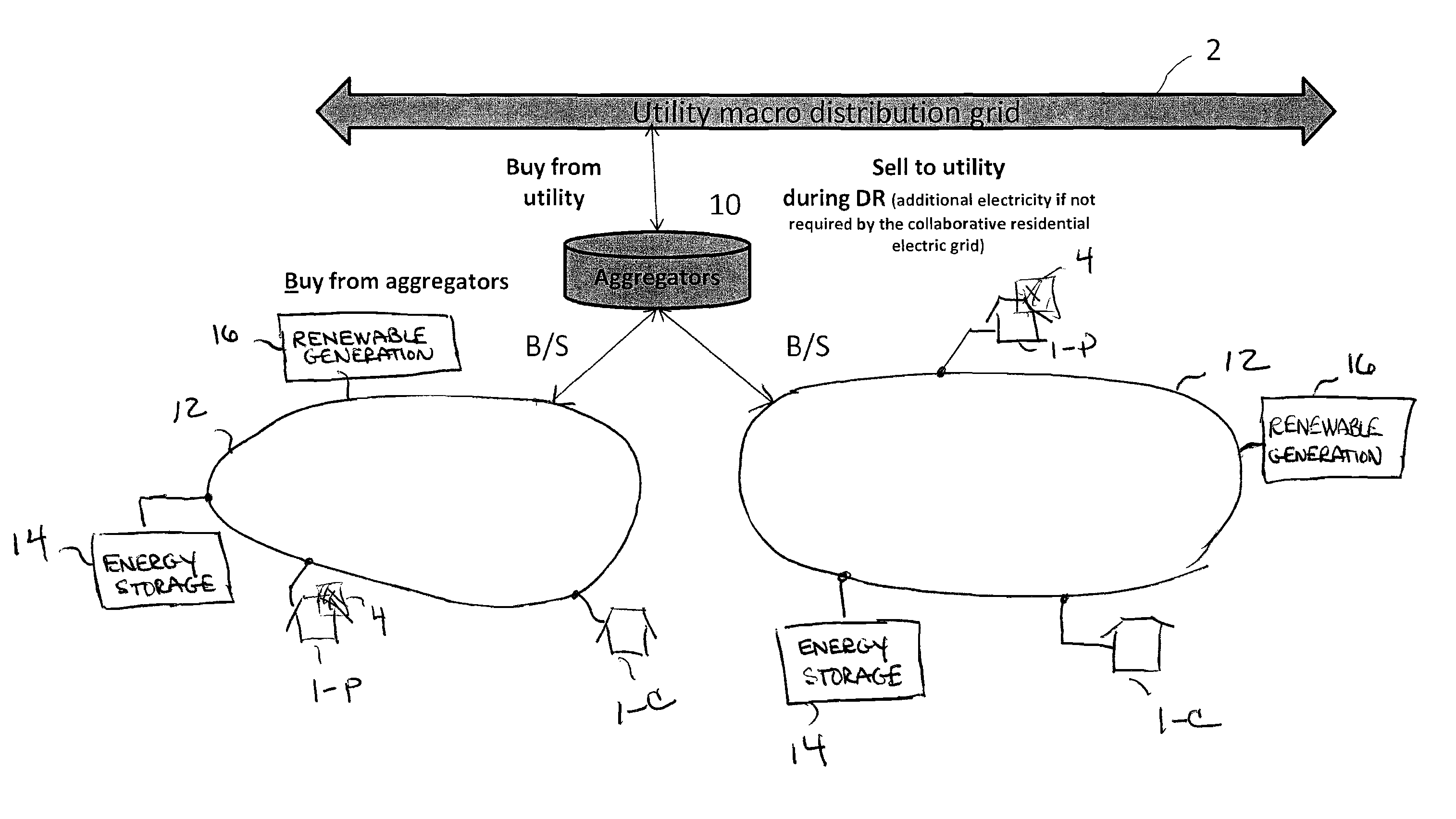
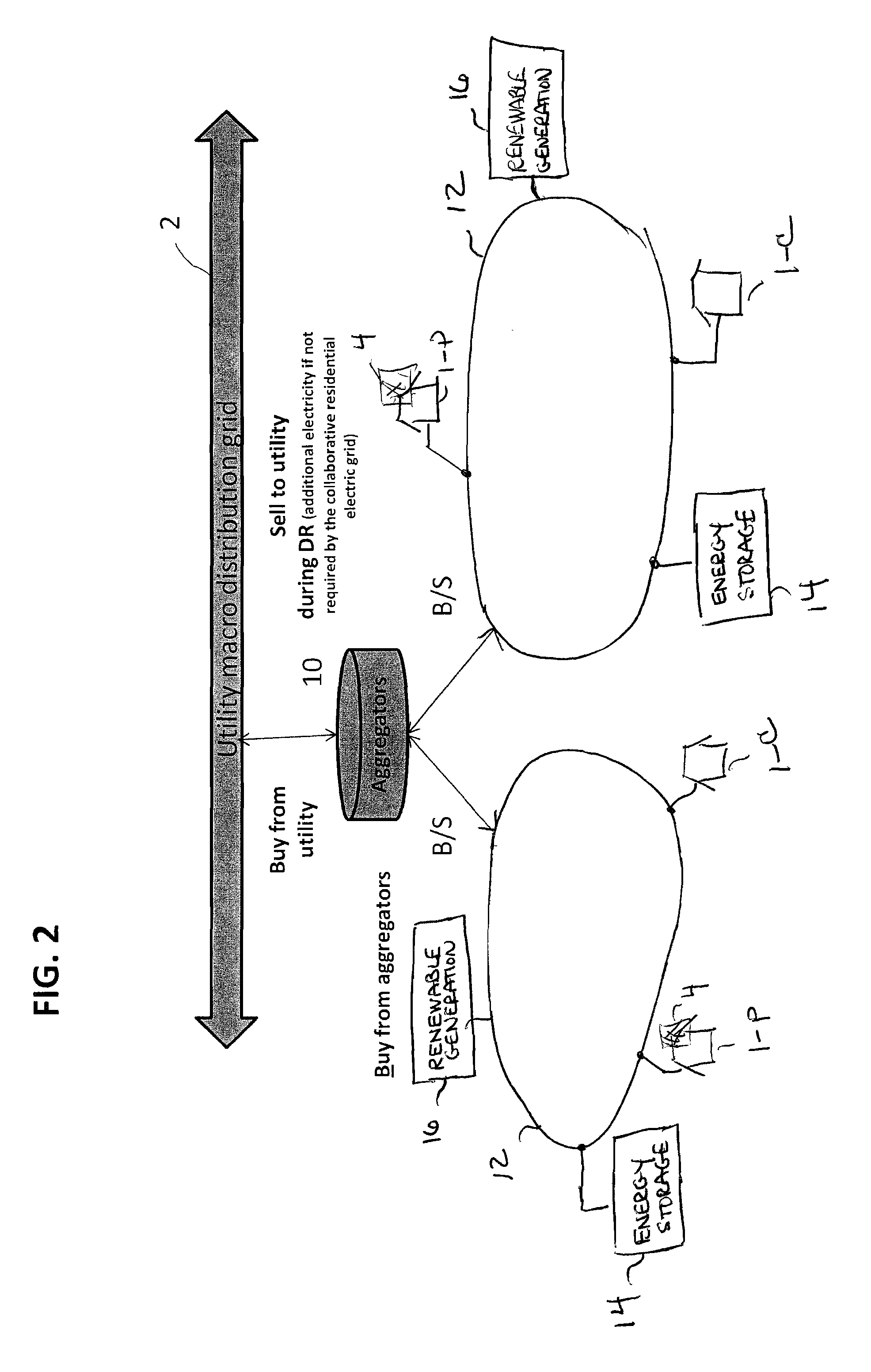
Aggregator-based electric microgrid for residential applications incorporating renewable energy sources
PatentInactiveUS8571955B2
Innovation
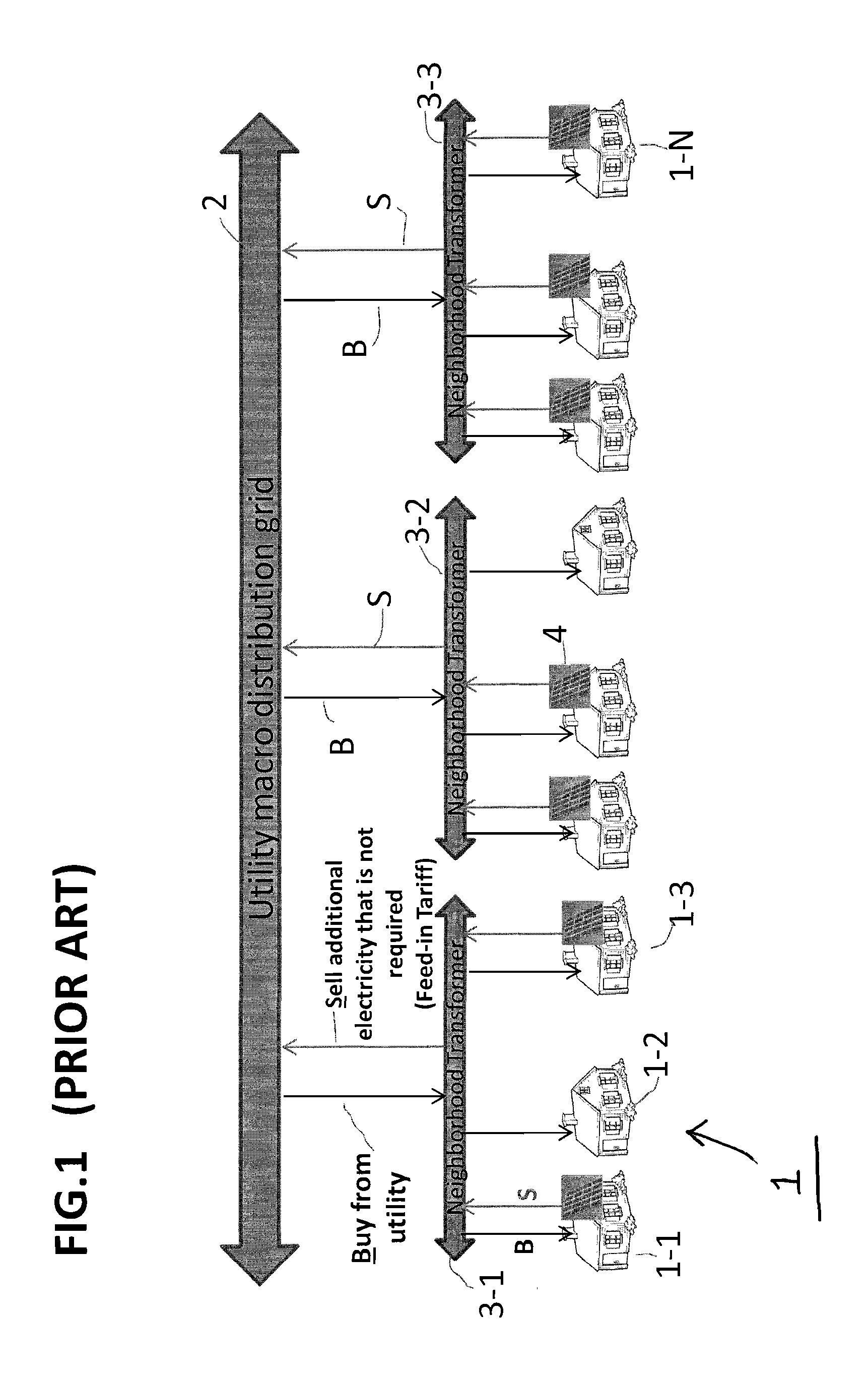
- An electric microgrid with a residential aggregator that combines multiple prosumers, energy storage, and participation in Demand Response programs, allowing for collective renewable energy negotiation and sale back to utilities, providing financial benefits and increased reliability.

Grid Integration Standards and Regulatory Framework
The integration of residential microgrid systems into existing electrical infrastructure requires adherence to comprehensive standards and regulatory frameworks that ensure safe, reliable, and efficient operation. The IEEE 1547 series represents the cornerstone of grid integration standards, establishing fundamental requirements for distributed energy resources interconnection. This standard addresses critical aspects including voltage regulation, frequency response, and anti-islanding protection mechanisms that prevent microgrids from operating independently when the main grid experiences outages.
Regulatory frameworks vary significantly across jurisdictions, with utilities and public utility commissions establishing specific interconnection procedures and technical requirements. The Federal Energy Regulatory Commission (FERC) Order 2222 has created pathways for distributed energy resource aggregation, enabling residential microgrids to participate in wholesale energy markets. State-level net metering policies further influence microgrid economics by determining compensation mechanisms for excess energy fed back into the grid.
Technical compliance requirements encompass power quality standards, including harmonic distortion limits and voltage flicker constraints defined in IEEE 519 and IEC 61000 series standards. Residential microgrids must demonstrate capability to maintain grid stability through appropriate inverter controls and energy management systems that respond to grid conditions in real-time.
Safety standards such as UL 1741 and UL 9540 establish certification requirements for inverters and energy storage systems, ensuring equipment meets rigorous testing protocols for electrical safety and fire prevention. These standards are continuously evolving to address emerging technologies and operational scenarios specific to residential applications.
Cybersecurity frameworks are increasingly critical, with NIST guidelines and IEC 62351 standards addressing communication protocols and data protection requirements for grid-connected systems. Residential microgrids must implement secure communication channels and authentication mechanisms to prevent unauthorized access and potential grid disruptions.
The regulatory landscape continues evolving toward performance-based standards that emphasize grid services provision rather than merely passive interconnection, reflecting the growing recognition of microgrids as active grid assets capable of enhancing overall system resilience and efficiency.
Regulatory frameworks vary significantly across jurisdictions, with utilities and public utility commissions establishing specific interconnection procedures and technical requirements. The Federal Energy Regulatory Commission (FERC) Order 2222 has created pathways for distributed energy resource aggregation, enabling residential microgrids to participate in wholesale energy markets. State-level net metering policies further influence microgrid economics by determining compensation mechanisms for excess energy fed back into the grid.
Technical compliance requirements encompass power quality standards, including harmonic distortion limits and voltage flicker constraints defined in IEEE 519 and IEC 61000 series standards. Residential microgrids must demonstrate capability to maintain grid stability through appropriate inverter controls and energy management systems that respond to grid conditions in real-time.
Safety standards such as UL 1741 and UL 9540 establish certification requirements for inverters and energy storage systems, ensuring equipment meets rigorous testing protocols for electrical safety and fire prevention. These standards are continuously evolving to address emerging technologies and operational scenarios specific to residential applications.
Cybersecurity frameworks are increasingly critical, with NIST guidelines and IEC 62351 standards addressing communication protocols and data protection requirements for grid-connected systems. Residential microgrids must implement secure communication channels and authentication mechanisms to prevent unauthorized access and potential grid disruptions.
The regulatory landscape continues evolving toward performance-based standards that emphasize grid services provision rather than merely passive interconnection, reflecting the growing recognition of microgrids as active grid assets capable of enhancing overall system resilience and efficiency.
Economic Viability and Investment Considerations
The economic viability of residential microgrid systems hinges on multiple financial factors that determine their attractiveness to homeowners and investors. Initial capital expenditure represents the most significant barrier, with typical residential microgrid installations ranging from $15,000 to $50,000 depending on system capacity and component selection. This substantial upfront investment includes solar panels, battery storage systems, inverters, control systems, and installation costs, creating a considerable financial threshold for adoption.
Return on investment calculations must account for various revenue streams and cost savings. Primary economic benefits include reduced electricity bills through self-consumption of generated power, potential income from excess energy sales back to the grid, and avoided costs during power outages. The payback period typically ranges from 8 to 15 years, influenced by local electricity rates, net metering policies, and system performance characteristics.
Financing mechanisms play a crucial role in making residential microgrids accessible to broader market segments. Traditional options include cash purchases, solar loans, and power purchase agreements, while emerging models such as microgrid-as-a-service offerings reduce upfront costs by spreading payments over extended periods. Government incentives, including federal tax credits, state rebates, and utility programs, can significantly improve project economics by reducing effective system costs by 20-40%.
Long-term economic considerations extend beyond initial payback calculations. Battery replacement costs, typically required every 10-15 years, represent a significant future expense that must be factored into lifecycle cost analyses. Conversely, increasing electricity rates and potential carbon pricing mechanisms may enhance the economic attractiveness of microgrid investments over time.
Risk assessment encompasses both financial and operational factors. Technology risks include component degradation, performance variability, and potential obsolescence, while regulatory risks involve changes to net metering policies, utility rate structures, and interconnection standards. Insurance considerations and property value impacts also influence overall investment attractiveness, with studies indicating potential home value increases of 3-4% for properties with well-designed microgrid systems.
Return on investment calculations must account for various revenue streams and cost savings. Primary economic benefits include reduced electricity bills through self-consumption of generated power, potential income from excess energy sales back to the grid, and avoided costs during power outages. The payback period typically ranges from 8 to 15 years, influenced by local electricity rates, net metering policies, and system performance characteristics.
Financing mechanisms play a crucial role in making residential microgrids accessible to broader market segments. Traditional options include cash purchases, solar loans, and power purchase agreements, while emerging models such as microgrid-as-a-service offerings reduce upfront costs by spreading payments over extended periods. Government incentives, including federal tax credits, state rebates, and utility programs, can significantly improve project economics by reducing effective system costs by 20-40%.
Long-term economic considerations extend beyond initial payback calculations. Battery replacement costs, typically required every 10-15 years, represent a significant future expense that must be factored into lifecycle cost analyses. Conversely, increasing electricity rates and potential carbon pricing mechanisms may enhance the economic attractiveness of microgrid investments over time.
Risk assessment encompasses both financial and operational factors. Technology risks include component degradation, performance variability, and potential obsolescence, while regulatory risks involve changes to net metering policies, utility rate structures, and interconnection standards. Insurance considerations and property value impacts also influence overall investment attractiveness, with studies indicating potential home value increases of 3-4% for properties with well-designed microgrid systems.
Unlock deeper insights with PatSnap Eureka Quick Research — get a full tech report to explore trends and direct your research. Try now!
Generate Your Research Report Instantly with AI Agent
Supercharge your innovation with PatSnap Eureka AI Agent Platform!