

Assessing Intelligent Message Filter Vulnerabilities
MAR 2, 20269 MIN READ
Generate Your Research Report Instantly with AI Agent
PatSnap Eureka helps you evaluate technical feasibility & market potential.
Intelligent Message Filter Background and Security Objectives
Intelligent message filtering systems have evolved from simple rule-based mechanisms to sophisticated AI-driven solutions that process billions of communications daily across email platforms, social media networks, messaging applications, and enterprise communication systems. These systems emerged in the late 1990s as a response to the growing volume of unwanted communications, initially focusing on spam detection through keyword matching and basic pattern recognition.
The technological evolution has progressed through distinct phases, beginning with static blacklists and whitelists, advancing to statistical analysis methods like Bayesian filtering, and ultimately incorporating machine learning algorithms including neural networks, natural language processing, and deep learning models. Modern intelligent message filters now employ ensemble methods combining multiple detection techniques to achieve higher accuracy rates while minimizing false positives.
Contemporary message filtering systems integrate real-time threat intelligence, behavioral analysis, and contextual understanding to identify not only traditional spam but also sophisticated threats such as phishing attempts, social engineering attacks, malware distribution, and advanced persistent threats. The integration of artificial intelligence has enabled these systems to adapt dynamically to emerging attack vectors and evolving communication patterns.
The primary security objectives of intelligent message filtering systems encompass multiple layers of protection and operational requirements. Threat detection and prevention constitute the foundational objective, requiring systems to identify and block malicious content before it reaches end users. This includes detecting known malware signatures, suspicious URLs, credential harvesting attempts, and social engineering tactics that exploit human psychology.
Accuracy optimization represents another critical objective, balancing the need for comprehensive threat detection against the risk of blocking legitimate communications. Systems must maintain high sensitivity to security threats while preserving business continuity and user productivity through minimal false positive rates.
Privacy preservation and compliance adherence form essential security objectives, particularly given the sensitive nature of communication content and stringent regulatory requirements such as GDPR, HIPAA, and industry-specific data protection standards. Message filtering systems must implement appropriate data handling procedures, encryption protocols, and audit capabilities while maintaining transparency in their decision-making processes.
Scalability and performance objectives ensure that security measures do not compromise system responsiveness or availability, requiring efficient processing algorithms capable of handling peak communication volumes without introducing significant latency or resource consumption that could impact user experience or business operations.
The technological evolution has progressed through distinct phases, beginning with static blacklists and whitelists, advancing to statistical analysis methods like Bayesian filtering, and ultimately incorporating machine learning algorithms including neural networks, natural language processing, and deep learning models. Modern intelligent message filters now employ ensemble methods combining multiple detection techniques to achieve higher accuracy rates while minimizing false positives.
Contemporary message filtering systems integrate real-time threat intelligence, behavioral analysis, and contextual understanding to identify not only traditional spam but also sophisticated threats such as phishing attempts, social engineering attacks, malware distribution, and advanced persistent threats. The integration of artificial intelligence has enabled these systems to adapt dynamically to emerging attack vectors and evolving communication patterns.
The primary security objectives of intelligent message filtering systems encompass multiple layers of protection and operational requirements. Threat detection and prevention constitute the foundational objective, requiring systems to identify and block malicious content before it reaches end users. This includes detecting known malware signatures, suspicious URLs, credential harvesting attempts, and social engineering tactics that exploit human psychology.
Accuracy optimization represents another critical objective, balancing the need for comprehensive threat detection against the risk of blocking legitimate communications. Systems must maintain high sensitivity to security threats while preserving business continuity and user productivity through minimal false positive rates.
Privacy preservation and compliance adherence form essential security objectives, particularly given the sensitive nature of communication content and stringent regulatory requirements such as GDPR, HIPAA, and industry-specific data protection standards. Message filtering systems must implement appropriate data handling procedures, encryption protocols, and audit capabilities while maintaining transparency in their decision-making processes.
Scalability and performance objectives ensure that security measures do not compromise system responsiveness or availability, requiring efficient processing algorithms capable of handling peak communication volumes without introducing significant latency or resource consumption that could impact user experience or business operations.
Market Demand for Advanced Email Security Solutions
The global email security market has experienced unprecedented growth driven by the escalating sophistication of cyber threats and the increasing reliance on email communications across all business sectors. Organizations worldwide are recognizing that traditional spam filters and basic security measures are insufficient against modern attack vectors, creating substantial demand for intelligent message filtering solutions that can adapt to evolving threat landscapes.
Enterprise adoption of advanced email security solutions has accelerated significantly as businesses face mounting pressure from regulatory compliance requirements and the financial implications of successful cyberattacks. The shift toward remote and hybrid work models has further amplified this demand, as organizations must secure email communications across distributed networks and diverse endpoint devices. Companies are actively seeking solutions that can provide real-time threat detection, behavioral analysis, and automated response capabilities.
Small and medium-sized enterprises represent a rapidly expanding market segment for intelligent email security solutions. These organizations often lack dedicated cybersecurity teams and require automated, easy-to-deploy solutions that can provide enterprise-grade protection without extensive technical expertise. The democratization of advanced security technologies has made sophisticated email filtering capabilities accessible to smaller organizations that were previously underserved by traditional security vendors.
Government agencies and critical infrastructure sectors demonstrate particularly strong demand for advanced email security solutions due to their high-value targets status and stringent security requirements. These organizations require solutions capable of detecting advanced persistent threats, nation-state attacks, and sophisticated social engineering campaigns that can bypass conventional security measures.
The healthcare and financial services industries exhibit robust demand driven by strict regulatory frameworks and the sensitive nature of their data assets. These sectors require email security solutions that can maintain compliance with regulations while providing seamless user experiences and minimal disruption to business operations.
Cloud-based email security solutions are experiencing exceptional market traction as organizations migrate to cloud infrastructure and seek scalable, cost-effective security options. The demand for integrated security platforms that can provide comprehensive protection across multiple communication channels continues to grow as businesses adopt unified communication strategies.
Enterprise adoption of advanced email security solutions has accelerated significantly as businesses face mounting pressure from regulatory compliance requirements and the financial implications of successful cyberattacks. The shift toward remote and hybrid work models has further amplified this demand, as organizations must secure email communications across distributed networks and diverse endpoint devices. Companies are actively seeking solutions that can provide real-time threat detection, behavioral analysis, and automated response capabilities.
Small and medium-sized enterprises represent a rapidly expanding market segment for intelligent email security solutions. These organizations often lack dedicated cybersecurity teams and require automated, easy-to-deploy solutions that can provide enterprise-grade protection without extensive technical expertise. The democratization of advanced security technologies has made sophisticated email filtering capabilities accessible to smaller organizations that were previously underserved by traditional security vendors.
Government agencies and critical infrastructure sectors demonstrate particularly strong demand for advanced email security solutions due to their high-value targets status and stringent security requirements. These organizations require solutions capable of detecting advanced persistent threats, nation-state attacks, and sophisticated social engineering campaigns that can bypass conventional security measures.
The healthcare and financial services industries exhibit robust demand driven by strict regulatory frameworks and the sensitive nature of their data assets. These sectors require email security solutions that can maintain compliance with regulations while providing seamless user experiences and minimal disruption to business operations.
Cloud-based email security solutions are experiencing exceptional market traction as organizations migrate to cloud infrastructure and seek scalable, cost-effective security options. The demand for integrated security platforms that can provide comprehensive protection across multiple communication channels continues to grow as businesses adopt unified communication strategies.
Current Vulnerabilities and Attack Vectors in Smart Filters
Intelligent message filtering systems face a complex landscape of vulnerabilities that exploit both technical weaknesses and algorithmic limitations. These vulnerabilities primarily manifest through adversarial attacks, where malicious actors craft messages specifically designed to bypass detection mechanisms. The most prevalent attack vectors include content obfuscation techniques, where harmful messages are disguised using character substitution, homograph attacks, and strategic spacing modifications that confuse pattern recognition algorithms.
Evasion attacks represent another critical vulnerability category, particularly targeting machine learning-based filters. Attackers employ techniques such as semantic manipulation, where malicious content maintains its harmful intent while altering surface-level features that filters typically analyze. This includes synonym substitution, grammatical restructuring, and context shifting that preserves malicious meaning while evading detection signatures.
Model poisoning attacks pose significant threats to adaptive filtering systems. These attacks involve introducing carefully crafted training data that gradually degrades filter performance or creates specific blind spots. Attackers may submit seemingly benign messages that contain subtle patterns designed to influence the learning algorithm's decision boundaries, ultimately compromising the filter's ability to detect similar future attacks.
Zero-day exploits targeting filter infrastructure represent another vulnerability dimension. These attacks focus on underlying software components, including parsing engines, database systems, and communication protocols. Buffer overflow vulnerabilities in message processing modules, SQL injection attacks against filter databases, and remote code execution flaws in filter management interfaces create opportunities for system compromise.
Social engineering attacks specifically target human-in-the-loop filtering systems. These attacks exploit the psychological aspects of content moderation, using techniques such as context manipulation, where harmful content is embedded within seemingly legitimate communications, making human reviewers more likely to approve malicious messages.
Advanced persistent threats utilize multi-vector approaches, combining technical exploits with behavioral analysis evasion. These sophisticated attacks study filter response patterns over time, gradually probing system boundaries to identify weaknesses while maintaining low detection profiles. Such attacks often employ distributed coordination, using multiple accounts and varied timing patterns to avoid triggering rate-limiting or anomaly detection mechanisms.
Emerging vulnerabilities include adversarial machine learning attacks that exploit the statistical nature of modern filtering algorithms. These attacks leverage gradient-based optimization to generate messages that appear benign to automated systems while maintaining malicious functionality for human recipients.
Evasion attacks represent another critical vulnerability category, particularly targeting machine learning-based filters. Attackers employ techniques such as semantic manipulation, where malicious content maintains its harmful intent while altering surface-level features that filters typically analyze. This includes synonym substitution, grammatical restructuring, and context shifting that preserves malicious meaning while evading detection signatures.
Model poisoning attacks pose significant threats to adaptive filtering systems. These attacks involve introducing carefully crafted training data that gradually degrades filter performance or creates specific blind spots. Attackers may submit seemingly benign messages that contain subtle patterns designed to influence the learning algorithm's decision boundaries, ultimately compromising the filter's ability to detect similar future attacks.
Zero-day exploits targeting filter infrastructure represent another vulnerability dimension. These attacks focus on underlying software components, including parsing engines, database systems, and communication protocols. Buffer overflow vulnerabilities in message processing modules, SQL injection attacks against filter databases, and remote code execution flaws in filter management interfaces create opportunities for system compromise.
Social engineering attacks specifically target human-in-the-loop filtering systems. These attacks exploit the psychological aspects of content moderation, using techniques such as context manipulation, where harmful content is embedded within seemingly legitimate communications, making human reviewers more likely to approve malicious messages.
Advanced persistent threats utilize multi-vector approaches, combining technical exploits with behavioral analysis evasion. These sophisticated attacks study filter response patterns over time, gradually probing system boundaries to identify weaknesses while maintaining low detection profiles. Such attacks often employ distributed coordination, using multiple accounts and varied timing patterns to avoid triggering rate-limiting or anomaly detection mechanisms.
Emerging vulnerabilities include adversarial machine learning attacks that exploit the statistical nature of modern filtering algorithms. These attacks leverage gradient-based optimization to generate messages that appear benign to automated systems while maintaining malicious functionality for human recipients.
Existing Vulnerability Assessment and Mitigation Solutions
01 Machine learning-based spam and malicious message detection
Intelligent message filters can utilize machine learning algorithms to identify and classify spam, phishing attempts, and malicious content. These systems analyze message patterns, sender behavior, and content characteristics to improve detection accuracy. However, vulnerabilities may arise from adversarial attacks that manipulate features to evade detection, requiring continuous model updates and robust training datasets to maintain effectiveness.- Machine learning-based spam and malicious message detection: Intelligent message filters employ machine learning algorithms to identify and classify spam, phishing attempts, and malicious content. These systems analyze message patterns, sender behavior, and content characteristics to improve detection accuracy. Vulnerabilities may arise from adversarial attacks that manipulate features to evade detection or from insufficient training data leading to false negatives.
- Content-based filtering and natural language processing vulnerabilities: Message filtering systems utilize natural language processing and content analysis to evaluate message legitimacy. These filters examine text patterns, keywords, and semantic meaning to identify threats. Vulnerabilities include bypass techniques using obfuscation, encoding manipulation, or context-aware evasion that exploits limitations in language understanding capabilities.
- Behavioral analysis and anomaly detection weaknesses: Intelligent filters monitor user behavior patterns and communication anomalies to detect suspicious activities. These systems establish baseline behaviors and flag deviations that may indicate compromised accounts or malicious intent. Vulnerabilities emerge when attackers gradually modify behavior to avoid triggering anomaly thresholds or exploit gaps in behavioral modeling.
- Real-time threat intelligence integration vulnerabilities: Modern message filters integrate real-time threat intelligence feeds to identify known malicious sources and attack patterns. These systems correlate incoming messages with updated threat databases and reputation services. Vulnerabilities include delayed intelligence updates, poisoning of threat feeds, and zero-day threats that have not yet been cataloged in intelligence systems.
- Authentication and sender verification bypass techniques: Message filtering systems implement sender authentication protocols and verification mechanisms to validate message origins. These include domain authentication, digital signatures, and sender reputation scoring. Vulnerabilities occur through spoofing techniques, compromised credentials, exploitation of protocol weaknesses, or social engineering that circumvents verification processes.
02 Content-based filtering and natural language processing vulnerabilities
Message filtering systems employ natural language processing and content analysis to detect threats based on keywords, semantic meaning, and contextual information. Vulnerabilities in these systems include susceptibility to obfuscation techniques, encoding variations, and linguistic manipulation that can bypass detection rules. Advanced attackers may exploit weaknesses in parsing logic or use polymorphic content to evade filters.Expand Specific Solutions03 Behavioral analysis and anomaly detection weaknesses
Intelligent filters monitor user behavior patterns and communication anomalies to identify suspicious activities and potential security threats. These systems establish baseline behaviors and flag deviations that may indicate compromised accounts or malicious intent. Vulnerabilities include slow adaptation to evolving attack patterns, false positive rates that impact usability, and potential exploitation through gradual behavioral changes that remain undetected.Expand Specific Solutions04 Authentication and sender verification bypass techniques
Message filtering systems implement sender authentication protocols and verification mechanisms to validate message origins and prevent spoofing attacks. Vulnerabilities may exist in the implementation of authentication standards, allowing attackers to forge sender identities or exploit weaknesses in domain verification processes. These gaps can enable phishing campaigns and social engineering attacks to bypass security controls.Expand Specific Solutions05 Real-time threat intelligence integration and update mechanisms
Modern intelligent message filters incorporate real-time threat intelligence feeds and dynamic rule updates to respond to emerging threats. Vulnerabilities in these systems include delays in threat intelligence propagation, inadequate validation of threat data sources, and potential exploitation during update processes. Attackers may leverage zero-day vulnerabilities or time windows between threat discovery and filter updates to successfully deliver malicious messages.Expand Specific Solutions
Key Players in Email Security and AI Filter Industry
The intelligent message filter vulnerability assessment field represents a mature cybersecurity market experiencing steady growth driven by escalating email-based threats and regulatory compliance requirements. The industry has evolved from basic spam filtering to sophisticated AI-driven threat detection, with market leaders like Microsoft Technology Licensing LLC, Proofpoint Inc., and Trend Micro Inc. demonstrating advanced technological capabilities. Established players including IBM, McAfee LLC, and CrowdStrike Inc. leverage machine learning and behavioral analysis for enhanced threat identification. The technology maturity varies significantly, with enterprise-focused companies like Gen Digital Inc. and Varonis Systems Inc. offering comprehensive solutions, while specialized firms such as Agari Data Inc. focus on targeted authentication and anti-phishing technologies. Academic institutions like Auburn University and Chitkara University contribute research advancements, indicating ongoing innovation in detection methodologies and vulnerability assessment frameworks.
Microsoft Technology Licensing LLC
Technical Solution: Microsoft implements a comprehensive intelligent message filtering system through Microsoft Defender for Office 365, utilizing machine learning algorithms and behavioral analysis to detect sophisticated threats including phishing, malware, and social engineering attacks. The system employs Safe Attachments and Safe Links technologies that create isolated environments for suspicious content analysis. Their approach integrates real-time threat intelligence feeds with advanced heuristic analysis, enabling detection of zero-day attacks and polymorphic malware. The platform uses natural language processing to analyze message content, sender reputation scoring, and cross-reference with global threat databases to provide multi-layered protection against evolving email-based threats.
Strengths: Extensive threat intelligence network, seamless integration with Office 365 ecosystem, advanced machine learning capabilities. Weaknesses: High licensing costs, potential false positives with legitimate business communications, dependency on cloud connectivity.
Proofpoint, Inc.
Technical Solution: Proofpoint's Targeted Attack Protection (TAP) employs advanced threat detection using machine learning, sandboxing, and behavioral analysis to identify and block sophisticated email threats. Their system utilizes dynamic classification engines that analyze message content, attachments, and URLs in real-time. The platform incorporates threat intelligence from multiple sources and uses predictive analytics to identify emerging attack patterns. Proofpoint's approach includes people-centric security analytics that focuses on user behavior and risk assessment, enabling personalized protection strategies. Their Email Fraud Defense specifically targets business email compromise and impersonation attacks through advanced authentication protocols and sender verification mechanisms.
Strengths: Specialized focus on email security, strong threat intelligence capabilities, comprehensive user behavior analytics. Weaknesses: Complex deployment and configuration, higher cost for smaller organizations, potential performance impact on email flow.
Core Security Research in AI-Based Message Filtering
Determining and mitigating artificial intelligence model vulnerabilities
PatentPendingUS20260003956A1
Innovation
- A system that generates and tests multiple prompt variations and filter variations using AI models to identify and mitigate vulnerabilities in LLMs, including generating a report on vulnerability testing and mitigation effectiveness.


Methods and systems for detecting and preventing the spread of malware on instant messaging (IM) networks by using Bayesian filtering
PatentInactiveUS20070006026A1
Innovation
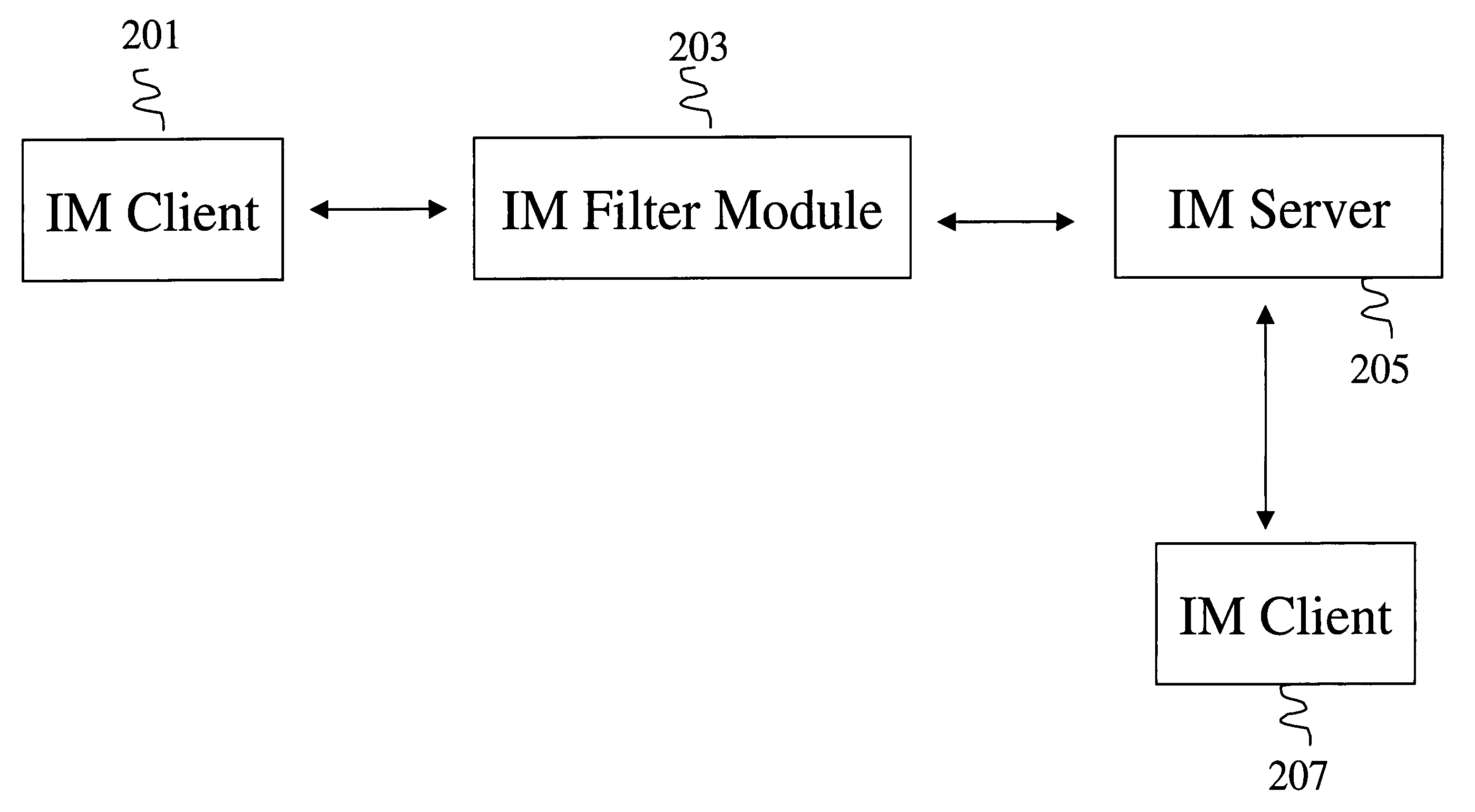
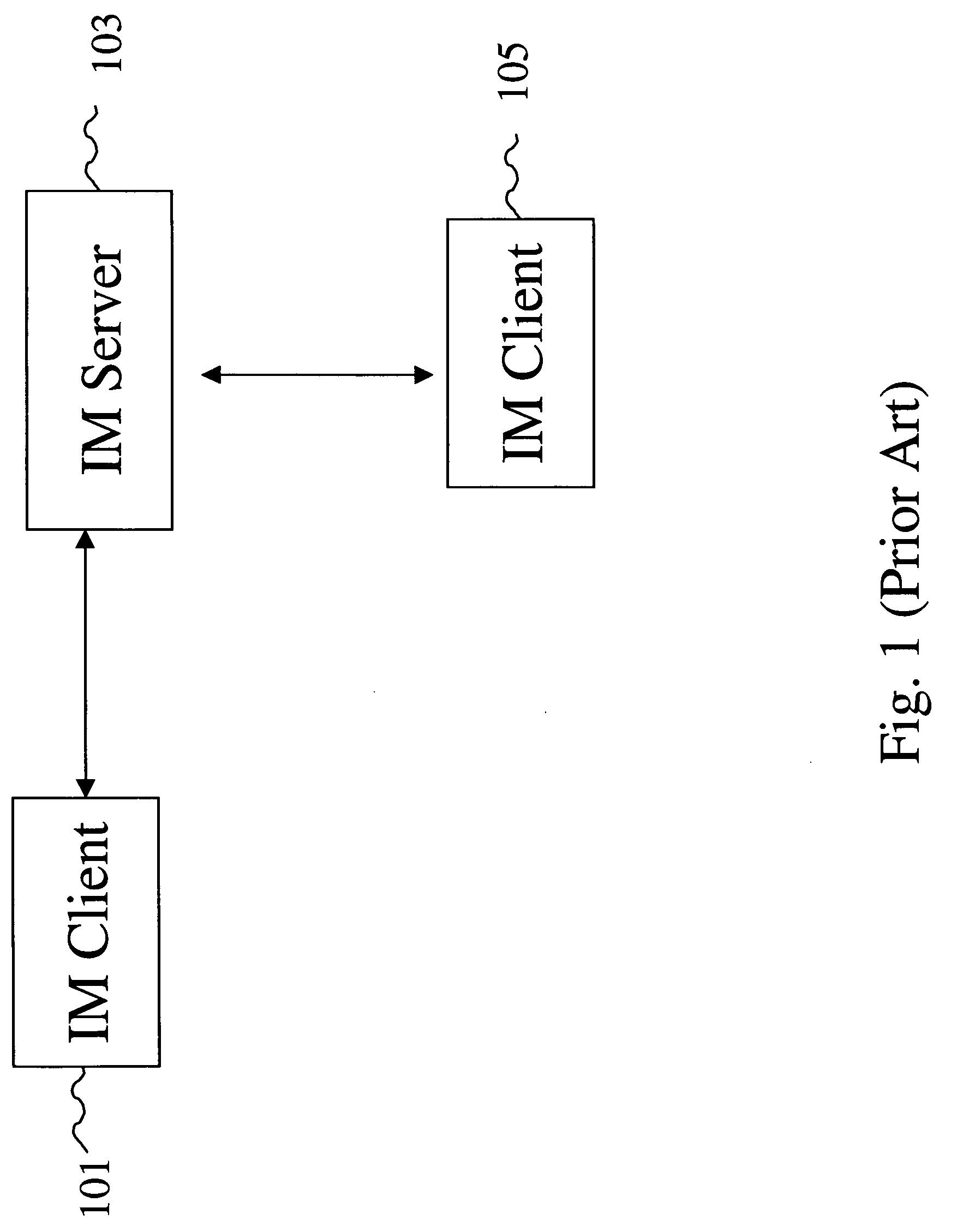
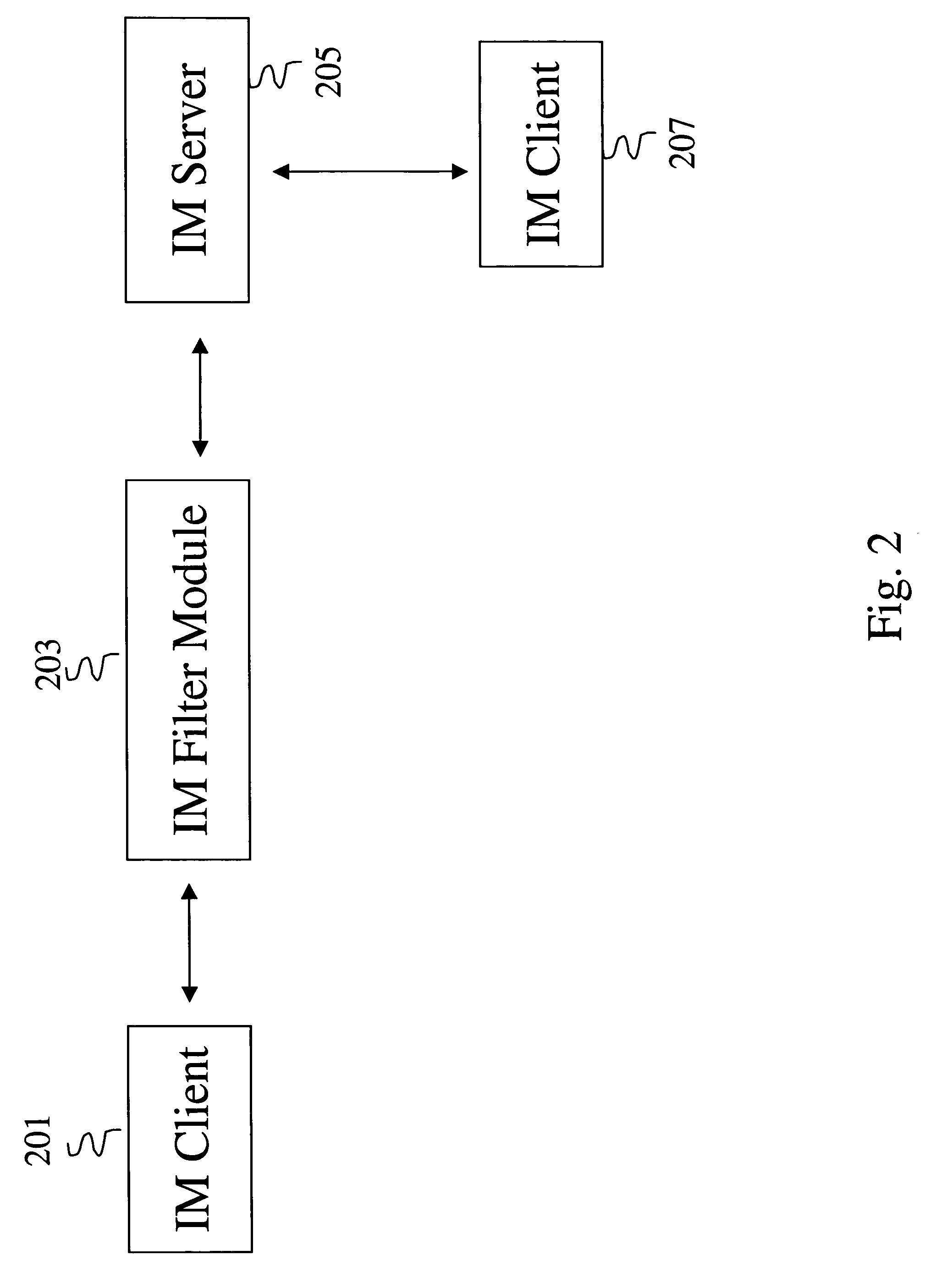
- Implementing an IM filter module (IM FM) with a Bayesian filtering system that uses feedback training mechanisms to analyze messages exchanged between IM servers and clients, identifying potential malware and assigning confidence levels, and employing a Malware Trapping System (MTS) to lure and block malicious messages by using fictitious users and analyzing message traffic patterns.

Privacy Regulations Impact on Message Filter Design
The implementation of intelligent message filtering systems faces unprecedented challenges due to evolving privacy regulations worldwide. The General Data Protection Regulation (GDPR) in Europe, California Consumer Privacy Act (CCPA), and similar frameworks have fundamentally altered how message filters must be designed, deployed, and maintained. These regulations impose strict requirements on data processing, user consent, and algorithmic transparency that directly impact filter architecture and functionality.
Privacy regulations mandate explicit user consent for data processing activities, creating significant design constraints for intelligent message filters. Traditional approaches that relied on extensive data collection and profiling must now incorporate granular consent mechanisms. Filter systems must be capable of operating with varying levels of data access based on individual user preferences, requiring adaptive algorithms that can maintain effectiveness even with limited information. This consent-driven approach necessitates the development of privacy-preserving machine learning techniques and federated learning architectures.
The right to explanation provisions in modern privacy laws pose particular challenges for AI-driven message filters. These systems must now provide comprehensible justifications for filtering decisions, moving away from black-box neural networks toward more interpretable models. This requirement has accelerated research into explainable AI techniques specifically tailored for content filtering applications, including attention mechanisms and rule-based hybrid approaches that can articulate decision rationales.
Data minimization principles embedded in privacy regulations force message filter designers to reconsider fundamental assumptions about data retention and processing scope. Filters must now operate on the principle of collecting and processing only the minimum data necessary for their intended function. This constraint has driven innovation in on-device processing, differential privacy techniques, and ephemeral data handling mechanisms that reduce privacy exposure while maintaining filtering effectiveness.
Cross-border data transfer restrictions significantly complicate the deployment of global message filtering systems. Regulations requiring data localization and imposing restrictions on international data flows necessitate distributed architectures with region-specific processing capabilities. This fragmentation challenges the traditional centralized approach to filter training and deployment, requiring sophisticated data governance frameworks and localized model adaptation strategies.
Privacy regulations mandate explicit user consent for data processing activities, creating significant design constraints for intelligent message filters. Traditional approaches that relied on extensive data collection and profiling must now incorporate granular consent mechanisms. Filter systems must be capable of operating with varying levels of data access based on individual user preferences, requiring adaptive algorithms that can maintain effectiveness even with limited information. This consent-driven approach necessitates the development of privacy-preserving machine learning techniques and federated learning architectures.
The right to explanation provisions in modern privacy laws pose particular challenges for AI-driven message filters. These systems must now provide comprehensible justifications for filtering decisions, moving away from black-box neural networks toward more interpretable models. This requirement has accelerated research into explainable AI techniques specifically tailored for content filtering applications, including attention mechanisms and rule-based hybrid approaches that can articulate decision rationales.
Data minimization principles embedded in privacy regulations force message filter designers to reconsider fundamental assumptions about data retention and processing scope. Filters must now operate on the principle of collecting and processing only the minimum data necessary for their intended function. This constraint has driven innovation in on-device processing, differential privacy techniques, and ephemeral data handling mechanisms that reduce privacy exposure while maintaining filtering effectiveness.
Cross-border data transfer restrictions significantly complicate the deployment of global message filtering systems. Regulations requiring data localization and imposing restrictions on international data flows necessitate distributed architectures with region-specific processing capabilities. This fragmentation challenges the traditional centralized approach to filter training and deployment, requiring sophisticated data governance frameworks and localized model adaptation strategies.
AI Ethics and Bias in Automated Content Filtering
The deployment of intelligent message filtering systems raises significant ethical concerns that extend beyond technical performance metrics. These automated systems, designed to identify and filter potentially harmful, inappropriate, or unwanted content, operate at unprecedented scale across digital platforms, making ethical considerations paramount to their responsible implementation.
Algorithmic bias represents one of the most pressing ethical challenges in automated content filtering. Machine learning models inherit biases present in their training data, which often reflects historical inequalities and societal prejudices. When these biased datasets are used to train filtering algorithms, the resulting systems may disproportionately flag content from certain demographic groups, suppress minority voices, or perpetuate discriminatory practices. For instance, content filtering systems have been observed to exhibit higher false positive rates for content created by users from specific ethnic backgrounds or those discussing topics related to marginalized communities.
The opacity of AI decision-making processes compounds these ethical concerns. Many intelligent filtering systems operate as "black boxes," making it difficult for users, content creators, and even platform administrators to understand why specific content was flagged or removed. This lack of transparency undermines accountability and makes it challenging to identify and correct biased behaviors in the system.
Cultural and contextual bias presents another critical dimension of ethical concern. Automated filtering systems often struggle to understand cultural nuances, sarcasm, context-dependent meanings, and regional variations in language use. Content that may be acceptable or even positive in one cultural context might be incorrectly flagged as problematic by systems trained primarily on data from different cultural backgrounds.
The potential for censorship and suppression of legitimate discourse raises fundamental questions about freedom of expression in digital spaces. Overly aggressive filtering systems may inadvertently silence important conversations about social issues, political topics, or controversial but legally protected speech. This creates a chilling effect where users self-censor to avoid algorithmic penalties.
Addressing these ethical challenges requires implementing fairness-aware machine learning techniques, ensuring diverse and representative training datasets, establishing transparent appeal processes, and conducting regular bias audits. Organizations must also consider the broader societal implications of their filtering decisions and engage with diverse stakeholders to develop more equitable automated content moderation systems.
Algorithmic bias represents one of the most pressing ethical challenges in automated content filtering. Machine learning models inherit biases present in their training data, which often reflects historical inequalities and societal prejudices. When these biased datasets are used to train filtering algorithms, the resulting systems may disproportionately flag content from certain demographic groups, suppress minority voices, or perpetuate discriminatory practices. For instance, content filtering systems have been observed to exhibit higher false positive rates for content created by users from specific ethnic backgrounds or those discussing topics related to marginalized communities.
The opacity of AI decision-making processes compounds these ethical concerns. Many intelligent filtering systems operate as "black boxes," making it difficult for users, content creators, and even platform administrators to understand why specific content was flagged or removed. This lack of transparency undermines accountability and makes it challenging to identify and correct biased behaviors in the system.
Cultural and contextual bias presents another critical dimension of ethical concern. Automated filtering systems often struggle to understand cultural nuances, sarcasm, context-dependent meanings, and regional variations in language use. Content that may be acceptable or even positive in one cultural context might be incorrectly flagged as problematic by systems trained primarily on data from different cultural backgrounds.
The potential for censorship and suppression of legitimate discourse raises fundamental questions about freedom of expression in digital spaces. Overly aggressive filtering systems may inadvertently silence important conversations about social issues, political topics, or controversial but legally protected speech. This creates a chilling effect where users self-censor to avoid algorithmic penalties.
Addressing these ethical challenges requires implementing fairness-aware machine learning techniques, ensuring diverse and representative training datasets, establishing transparent appeal processes, and conducting regular bias audits. Organizations must also consider the broader societal implications of their filtering decisions and engage with diverse stakeholders to develop more equitable automated content moderation systems.
Unlock deeper insights with PatSnap Eureka Quick Research — get a full tech report to explore trends and direct your research. Try now!
Generate Your Research Report Instantly with AI Agent
Supercharge your innovation with PatSnap Eureka AI Agent Platform!