Augmenting Raman Spectroscopy with Pattern Recognition Techniques
SEP 19, 20259 MIN READ
Generate Your Research Report Instantly with AI Agent
PatSnap Eureka helps you evaluate technical feasibility & market potential.
Raman Spectroscopy Evolution and Research Objectives
Raman spectroscopy has evolved significantly since its discovery by C.V. Raman in 1928, transforming from a purely scientific tool into a versatile analytical technique with applications spanning multiple industries. The initial decades following its discovery were characterized by fundamental research and theoretical development, with limited practical applications due to technological constraints. The advent of laser technology in the 1960s marked a pivotal turning point, enabling more precise and powerful excitation sources that dramatically improved signal quality and detection capabilities.
The 1970s and 1980s witnessed the integration of computerized data acquisition systems, which further enhanced the technique's analytical power. By the 1990s, miniaturization efforts began yielding more compact and field-deployable Raman systems, expanding its utility beyond laboratory environments. The early 2000s saw significant improvements in detector sensitivity and spectral resolution, alongside substantial reductions in equipment costs, democratizing access to this powerful analytical tool.
Recent technological advancements have focused on enhancing signal processing capabilities and developing specialized variants such as surface-enhanced Raman spectroscopy (SERS), tip-enhanced Raman spectroscopy (TERS), and spatially offset Raman spectroscopy (SORS). These innovations have collectively expanded the technique's sensitivity, specificity, and application range, enabling analyses previously considered impossible.
The integration of pattern recognition techniques with Raman spectroscopy represents the next frontier in this technology's evolution. Traditional Raman analysis often requires expert interpretation of complex spectral data, limiting its accessibility and scalability. Pattern recognition algorithms, particularly those leveraging machine learning and artificial intelligence, offer promising solutions to these limitations by automating spectral interpretation, enhancing signal extraction from noisy data, and enabling more sophisticated classification of molecular structures.
Our research objectives focus on developing robust computational frameworks that seamlessly integrate advanced pattern recognition techniques with Raman spectroscopy. Specifically, we aim to: (1) design adaptive algorithms capable of distinguishing subtle spectral variations in complex biological and material samples; (2) develop transfer learning approaches that minimize the need for extensive calibration datasets; (3) create interpretable machine learning models that provide not only classification results but also insights into the underlying molecular characteristics; and (4) establish standardized protocols for validating and benchmarking hybrid Raman-pattern recognition systems across diverse application domains.
The ultimate goal is to transform Raman spectroscopy from a primarily qualitative technique requiring expert interpretation into a quantitative, automated analytical platform accessible to non-specialists. This evolution would significantly expand its utility in fields ranging from medical diagnostics and pharmaceutical quality control to environmental monitoring and materials science, potentially revolutionizing point-of-care testing, in-line manufacturing controls, and field-deployable analytical capabilities.
The 1970s and 1980s witnessed the integration of computerized data acquisition systems, which further enhanced the technique's analytical power. By the 1990s, miniaturization efforts began yielding more compact and field-deployable Raman systems, expanding its utility beyond laboratory environments. The early 2000s saw significant improvements in detector sensitivity and spectral resolution, alongside substantial reductions in equipment costs, democratizing access to this powerful analytical tool.
Recent technological advancements have focused on enhancing signal processing capabilities and developing specialized variants such as surface-enhanced Raman spectroscopy (SERS), tip-enhanced Raman spectroscopy (TERS), and spatially offset Raman spectroscopy (SORS). These innovations have collectively expanded the technique's sensitivity, specificity, and application range, enabling analyses previously considered impossible.
The integration of pattern recognition techniques with Raman spectroscopy represents the next frontier in this technology's evolution. Traditional Raman analysis often requires expert interpretation of complex spectral data, limiting its accessibility and scalability. Pattern recognition algorithms, particularly those leveraging machine learning and artificial intelligence, offer promising solutions to these limitations by automating spectral interpretation, enhancing signal extraction from noisy data, and enabling more sophisticated classification of molecular structures.
Our research objectives focus on developing robust computational frameworks that seamlessly integrate advanced pattern recognition techniques with Raman spectroscopy. Specifically, we aim to: (1) design adaptive algorithms capable of distinguishing subtle spectral variations in complex biological and material samples; (2) develop transfer learning approaches that minimize the need for extensive calibration datasets; (3) create interpretable machine learning models that provide not only classification results but also insights into the underlying molecular characteristics; and (4) establish standardized protocols for validating and benchmarking hybrid Raman-pattern recognition systems across diverse application domains.
The ultimate goal is to transform Raman spectroscopy from a primarily qualitative technique requiring expert interpretation into a quantitative, automated analytical platform accessible to non-specialists. This evolution would significantly expand its utility in fields ranging from medical diagnostics and pharmaceutical quality control to environmental monitoring and materials science, potentially revolutionizing point-of-care testing, in-line manufacturing controls, and field-deployable analytical capabilities.
Market Applications and Demand Analysis for Enhanced Raman Systems
The global market for Raman spectroscopy enhanced with pattern recognition techniques has witnessed substantial growth, driven by increasing demand for advanced analytical tools across multiple industries. The current market size for Raman spectroscopy systems is estimated at $2.3 billion, with enhanced systems incorporating pattern recognition technologies representing approximately 35% of this segment and growing at a compound annual growth rate of 8.7%.
Healthcare and pharmaceutical sectors constitute the largest application areas, accounting for nearly 40% of the market share. The integration of pattern recognition with Raman spectroscopy has revolutionized drug discovery processes, enabling rapid identification of molecular structures and significantly reducing development timelines. Pharmaceutical companies report efficiency improvements of up to 30% in quality control processes when implementing these enhanced systems.
Material science applications represent the second-largest market segment at 25%, where pattern recognition-augmented Raman systems facilitate advanced material characterization and development of novel composites. The technology enables detection of subtle structural variations that traditional analytical methods might miss, providing crucial insights for industries developing high-performance materials.
Food safety and agricultural applications have emerged as the fastest-growing segment, expanding at 12.3% annually. Enhanced Raman systems allow for non-destructive testing of food products, rapid detection of contaminants, and authentication of premium products, addressing critical consumer safety concerns and regulatory requirements.
Environmental monitoring applications constitute approximately 15% of the market, with growing implementation in water quality assessment, air pollution monitoring, and soil contamination detection. The ability to identify trace contaminants with high specificity makes these systems particularly valuable for environmental regulatory compliance.
Regional analysis reveals North America leading with 38% market share, followed by Europe (29%) and Asia-Pacific (24%). However, the Asia-Pacific region demonstrates the highest growth rate at 10.5% annually, driven by expanding industrial bases in China and India, coupled with increasing research and development investments.
End-user surveys indicate that 78% of current users plan to increase their investment in enhanced Raman systems over the next three years, citing improved analytical capabilities and operational efficiency as primary motivators. The market demonstrates strong resilience to economic fluctuations due to the essential nature of analytical technologies in regulated industries.
Healthcare and pharmaceutical sectors constitute the largest application areas, accounting for nearly 40% of the market share. The integration of pattern recognition with Raman spectroscopy has revolutionized drug discovery processes, enabling rapid identification of molecular structures and significantly reducing development timelines. Pharmaceutical companies report efficiency improvements of up to 30% in quality control processes when implementing these enhanced systems.
Material science applications represent the second-largest market segment at 25%, where pattern recognition-augmented Raman systems facilitate advanced material characterization and development of novel composites. The technology enables detection of subtle structural variations that traditional analytical methods might miss, providing crucial insights for industries developing high-performance materials.
Food safety and agricultural applications have emerged as the fastest-growing segment, expanding at 12.3% annually. Enhanced Raman systems allow for non-destructive testing of food products, rapid detection of contaminants, and authentication of premium products, addressing critical consumer safety concerns and regulatory requirements.
Environmental monitoring applications constitute approximately 15% of the market, with growing implementation in water quality assessment, air pollution monitoring, and soil contamination detection. The ability to identify trace contaminants with high specificity makes these systems particularly valuable for environmental regulatory compliance.
Regional analysis reveals North America leading with 38% market share, followed by Europe (29%) and Asia-Pacific (24%). However, the Asia-Pacific region demonstrates the highest growth rate at 10.5% annually, driven by expanding industrial bases in China and India, coupled with increasing research and development investments.
End-user surveys indicate that 78% of current users plan to increase their investment in enhanced Raman systems over the next three years, citing improved analytical capabilities and operational efficiency as primary motivators. The market demonstrates strong resilience to economic fluctuations due to the essential nature of analytical technologies in regulated industries.
Current Limitations and Technical Challenges in Spectral Pattern Recognition
Despite the significant advancements in combining Raman spectroscopy with pattern recognition techniques, several critical limitations and technical challenges persist that hinder the full potential of this integration. One of the primary challenges is the inherent complexity of Raman spectral data, which often contains overlapping peaks, background fluorescence, and noise that can mask important spectral features. This complexity makes it difficult for pattern recognition algorithms to accurately identify and classify spectral patterns without sophisticated preprocessing.
Signal-to-noise ratio (SNR) remains a fundamental limitation, particularly when analyzing samples with low concentrations or when rapid analysis is required. While various denoising algorithms have been developed, they often introduce artifacts or remove subtle spectral features that might be crucial for accurate pattern recognition. This trade-off between noise reduction and preservation of spectral integrity continues to challenge researchers.
The variability in spectral acquisition conditions presents another significant hurdle. Differences in instrument calibration, sample preparation, environmental conditions, and operator techniques can lead to spectral inconsistencies that confound pattern recognition algorithms. This lack of standardization across different laboratories and instruments makes it difficult to develop universally applicable pattern recognition models.
Computational efficiency represents a growing concern as datasets become larger and more complex. Many advanced pattern recognition techniques, particularly deep learning approaches, require substantial computational resources and processing time. This limitation becomes particularly problematic for real-time applications or when deploying these technologies in resource-constrained environments.
The "black box" nature of many machine learning algorithms used in spectral pattern recognition creates challenges for scientific validation and regulatory approval. The inability to fully understand or explain how these algorithms arrive at specific classifications limits their acceptance in critical applications such as medical diagnostics or pharmaceutical quality control.
Data scarcity for training robust pattern recognition models remains problematic, especially for rare conditions or materials. The collection of comprehensive spectral libraries that capture all possible variations and conditions requires significant time and resources, creating barriers to developing highly accurate and generalizable models.
Transfer learning limitations also persist, as models trained on one type of Raman spectrometer often perform poorly when applied to data from different instruments. This lack of transferability necessitates retraining or extensive calibration when implementing pattern recognition systems across different platforms or environments.
Signal-to-noise ratio (SNR) remains a fundamental limitation, particularly when analyzing samples with low concentrations or when rapid analysis is required. While various denoising algorithms have been developed, they often introduce artifacts or remove subtle spectral features that might be crucial for accurate pattern recognition. This trade-off between noise reduction and preservation of spectral integrity continues to challenge researchers.
The variability in spectral acquisition conditions presents another significant hurdle. Differences in instrument calibration, sample preparation, environmental conditions, and operator techniques can lead to spectral inconsistencies that confound pattern recognition algorithms. This lack of standardization across different laboratories and instruments makes it difficult to develop universally applicable pattern recognition models.
Computational efficiency represents a growing concern as datasets become larger and more complex. Many advanced pattern recognition techniques, particularly deep learning approaches, require substantial computational resources and processing time. This limitation becomes particularly problematic for real-time applications or when deploying these technologies in resource-constrained environments.
The "black box" nature of many machine learning algorithms used in spectral pattern recognition creates challenges for scientific validation and regulatory approval. The inability to fully understand or explain how these algorithms arrive at specific classifications limits their acceptance in critical applications such as medical diagnostics or pharmaceutical quality control.
Data scarcity for training robust pattern recognition models remains problematic, especially for rare conditions or materials. The collection of comprehensive spectral libraries that capture all possible variations and conditions requires significant time and resources, creating barriers to developing highly accurate and generalizable models.
Transfer learning limitations also persist, as models trained on one type of Raman spectrometer often perform poorly when applied to data from different instruments. This lack of transferability necessitates retraining or extensive calibration when implementing pattern recognition systems across different platforms or environments.
Contemporary Approaches to Raman Data Processing and Classification
01 Machine learning algorithms for Raman spectral analysis
Various machine learning techniques are applied to Raman spectroscopy data for pattern recognition and classification. These algorithms can identify spectral patterns, extract features, and classify samples based on their Raman signatures. Advanced techniques such as neural networks, support vector machines, and deep learning approaches enable automated analysis of complex spectral data, improving accuracy and reducing analysis time for material identification and characterization.- Machine learning algorithms for Raman spectroscopy data analysis: Various machine learning algorithms can be applied to Raman spectroscopy data for pattern recognition and classification. These algorithms include neural networks, support vector machines, and deep learning approaches that can identify patterns in spectral data, enabling automated identification of substances, materials, or biological samples. The machine learning models can be trained on large datasets of Raman spectra to improve accuracy and reduce false positives in complex sample analysis.
- Preprocessing techniques for Raman spectral data: Preprocessing of Raman spectral data is essential for effective pattern recognition. Techniques include baseline correction, normalization, smoothing, and noise reduction to enhance signal quality before analysis. These preprocessing methods help to remove artifacts, correct for fluorescence background, and standardize spectra for more accurate comparison and classification. Proper preprocessing significantly improves the performance of subsequent pattern recognition algorithms by highlighting the relevant spectral features.
- Multivariate statistical methods for spectral pattern recognition: Multivariate statistical techniques are widely used for pattern recognition in Raman spectroscopy. Methods such as Principal Component Analysis (PCA), Partial Least Squares (PLS), and Linear Discriminant Analysis (LDA) help reduce data dimensionality while preserving important spectral information. These techniques enable the identification of key spectral features that differentiate between sample classes and facilitate the visualization of complex spectral datasets, making pattern recognition more efficient and accurate.
- Real-time Raman spectroscopy pattern recognition systems: Real-time pattern recognition systems for Raman spectroscopy enable immediate identification and classification of samples in various applications. These systems integrate hardware components with advanced algorithms to process spectral data on-the-fly, providing rapid results for time-sensitive applications. Real-time systems are particularly valuable in medical diagnostics, security screening, pharmaceutical quality control, and industrial process monitoring where immediate decision-making is required.
- Portable and handheld Raman devices with pattern recognition capabilities: Portable and handheld Raman spectroscopy devices incorporate pattern recognition algorithms for field-based applications. These compact systems combine miniaturized spectrometers with embedded software for on-site analysis and identification. The integration of pattern recognition capabilities in portable devices enables non-expert users to perform complex spectral analysis in diverse environments, from environmental monitoring to forensic investigation, without requiring laboratory facilities or specialized training.
02 Preprocessing methods for Raman spectral data
Preprocessing techniques are essential for enhancing the quality of Raman spectral data before pattern recognition. These methods include baseline correction, noise reduction, normalization, and spectral alignment to remove artifacts and improve signal-to-noise ratio. Effective preprocessing ensures that subsequent pattern recognition algorithms can accurately identify spectral features and patterns, leading to more reliable classification and identification of materials.Expand Specific Solutions03 Multivariate statistical analysis for spectral pattern recognition
Multivariate statistical methods are widely used for analyzing Raman spectroscopy data to identify patterns and classify samples. Techniques such as Principal Component Analysis (PCA), Partial Least Squares (PLS), and cluster analysis help reduce data dimensionality while preserving important spectral information. These approaches enable the identification of subtle differences between similar samples and can be used to build robust classification models for various applications.Expand Specific Solutions04 Real-time Raman spectral pattern recognition systems
Real-time systems for Raman spectral pattern recognition enable immediate analysis and identification of materials in various applications. These systems integrate hardware components with advanced software algorithms to process spectral data and provide rapid results. Real-time capabilities are particularly valuable in industrial quality control, medical diagnostics, security screening, and environmental monitoring where immediate identification of substances is critical.Expand Specific Solutions05 Application-specific Raman spectral libraries and databases
Specialized Raman spectral libraries and databases are developed for specific applications to improve pattern recognition accuracy. These reference collections contain characterized spectra of known materials relevant to particular fields such as pharmaceuticals, forensics, geology, or biology. By comparing unknown sample spectra against these curated databases, pattern recognition algorithms can more accurately identify materials and detect subtle variations or contaminants in complex samples.Expand Specific Solutions
Leading Organizations and Research Groups in Augmented Spectroscopy
The augmentation of Raman spectroscopy with pattern recognition techniques is currently in a growth phase, with the market expanding rapidly due to increasing applications in pharmaceutical, medical diagnostics, and materials science sectors. The global market size for advanced Raman systems is projected to reach significant scale as industries recognize the value of combining spectroscopic data with AI-driven pattern recognition. Technologically, this field is approaching maturity with companies like Renishaw, ChemImage, and Industrial Technology Research Institute leading commercial applications, while academic institutions such as Northwestern University and National University of Singapore drive fundamental research. HP, Intel, and Philips are leveraging their data processing expertise to enhance pattern recognition capabilities, creating a competitive landscape where hardware sophistication meets software innovation.
ChemImage Corp.
Technical Solution: ChemImage has pioneered the integration of Raman spectroscopy with advanced pattern recognition algorithms through their Hyperspectral Imaging technology. Their systems combine Raman spectroscopy with digital imaging to create chemical maps of samples, which are then processed using proprietary machine learning algorithms to identify specific molecular signatures. ChemImage's technology employs multivariate statistical methods including Principal Component Analysis (PCA) and Partial Least Squares Discriminant Analysis (PLS-DA) to extract meaningful patterns from complex spectral datasets. Their FALCON II® system incorporates real-time pattern recognition capabilities that can automatically detect and identify substances of interest, even in complex matrices or at low concentrations. The company has developed specialized neural network architectures optimized for spectroscopic data analysis that can be trained to recognize specific molecular fingerprints with high accuracy.
Strengths: Specialized expertise in hyperspectral Raman imaging; proprietary algorithms optimized for specific detection applications; strong focus on real-time analysis capabilities. Weaknesses: Solutions tend to be application-specific rather than general-purpose; higher computational requirements for real-time processing; primarily focused on security and defense applications.
UT-Battelle LLC
Technical Solution: UT-Battelle, which manages Oak Ridge National Laboratory (ORNL), has developed sophisticated approaches to augmenting Raman spectroscopy with advanced pattern recognition techniques. Their research combines high-performance computing capabilities with machine learning algorithms to analyze complex Raman spectral data. ORNL scientists have implemented deep learning neural networks that can identify subtle spectral features that might be missed by traditional analysis methods. Their approach includes the development of convolutional neural networks (CNNs) specifically designed to process spectroscopic data, enabling automated identification of materials with minimal human intervention. The laboratory has also pioneered the use of transfer learning techniques to adapt pre-trained neural networks to specific Raman spectroscopy applications, significantly reducing the amount of training data required. ORNL's systems can process and analyze terabytes of spectral data, identifying patterns and correlations that would be impossible to detect manually, with applications in materials science, environmental monitoring, and national security.
Strengths: Access to world-class supercomputing resources for complex data analysis; interdisciplinary research teams combining spectroscopy and AI expertise; ability to handle extremely large datasets. Weaknesses: Research-focused rather than commercial product development; solutions may require significant customization for specific applications; higher technical barriers to implementation.
Breakthrough Algorithms and Methodologies for Spectral Analysis
Electrically driven devices for surface enhanced raman spectroscopy
PatentInactiveUS20130196449A1
Innovation
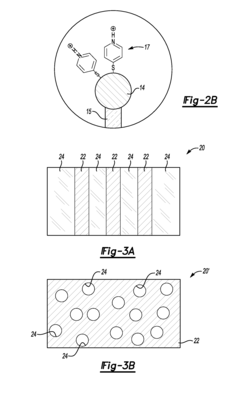
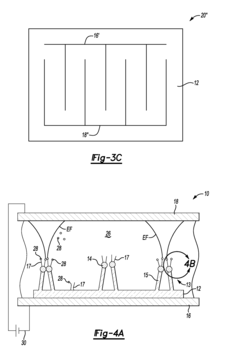
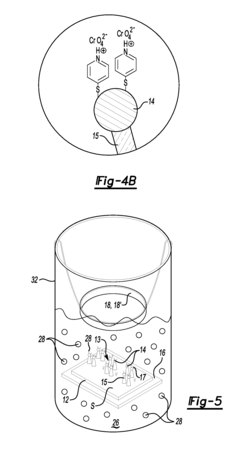
- An electrically driven device with signal-amplifying structures and analyte receptors is developed, where an electric field concentrates analyte molecules onto the receptors, enhancing SERS signals and allowing for multiple uses by reversibly binding and releasing analytes, using a substrate with nano-structures and Raman signal-enhancing materials like silver or gold.
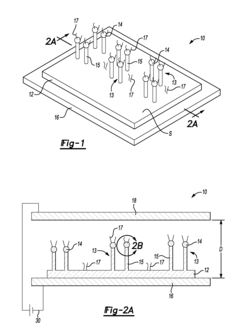
Spectroscopic apparatus and methods for determining components present in a sample
PatentInactiveUS20160252459A1
Innovation
- A method that resolves spectral data separately for candidate component reference spectra, using a figure of merit to determine the presence of components based on the improvement in goodness of fit, allowing for more accurate identification and concentration determination of trace components, and employing a kit with dyes that can be identified with high sensitivity and specificity across a range of concentrations.


Implementation Frameworks and System Architecture Considerations
Implementing an effective system for augmenting Raman spectroscopy with pattern recognition requires careful consideration of both hardware and software architecture. The integration framework must balance computational efficiency with analytical accuracy while maintaining scalability for diverse applications. A modular architecture approach is recommended, separating data acquisition, preprocessing, feature extraction, pattern recognition, and results visualization into distinct but interconnected components.
The data acquisition layer should interface directly with Raman spectrometer hardware through standardized protocols, supporting various instrument manufacturers while maintaining consistent data formats. This layer must handle real-time data streaming capabilities and implement appropriate buffering mechanisms to manage high-throughput spectral collection without data loss.
Preprocessing modules should be designed as configurable pipelines that include baseline correction, noise reduction, normalization, and spectral alignment algorithms. These components should be interchangeable based on specific application requirements, allowing domain experts to customize the preprocessing workflow without modifying the core system architecture.
The feature extraction and pattern recognition components represent the analytical core of the system. These should be implemented using a plugin architecture that supports multiple algorithmic approaches—from traditional statistical methods to advanced machine learning models. Critical considerations include model versioning, parameter management, and computational resource allocation for handling complex algorithms like convolutional neural networks or ensemble methods that may require significant processing power.
System deployment architectures should accommodate both edge computing scenarios for field-based Raman analysis and cloud-based implementations for more complex pattern recognition tasks. Edge deployments require optimized algorithms with reduced computational footprints, while cloud implementations can leverage distributed computing frameworks like Apache Spark for processing large spectral datasets.
Database architecture considerations must address the challenges of storing and indexing high-dimensional spectral data alongside derived features and classification results. Time-series databases or specialized scientific data formats may offer advantages over traditional relational databases for spectral data management.
User interface frameworks should implement the Model-View-Controller pattern to separate the analytical engine from visualization components, enabling multiple interface options ranging from programmatic APIs for integration with laboratory information systems to interactive dashboards for research scientists. Visualization components should support both standard spectral representations and advanced pattern recognition outputs such as confusion matrices, feature importance maps, and classification confidence metrics.
The data acquisition layer should interface directly with Raman spectrometer hardware through standardized protocols, supporting various instrument manufacturers while maintaining consistent data formats. This layer must handle real-time data streaming capabilities and implement appropriate buffering mechanisms to manage high-throughput spectral collection without data loss.
Preprocessing modules should be designed as configurable pipelines that include baseline correction, noise reduction, normalization, and spectral alignment algorithms. These components should be interchangeable based on specific application requirements, allowing domain experts to customize the preprocessing workflow without modifying the core system architecture.
The feature extraction and pattern recognition components represent the analytical core of the system. These should be implemented using a plugin architecture that supports multiple algorithmic approaches—from traditional statistical methods to advanced machine learning models. Critical considerations include model versioning, parameter management, and computational resource allocation for handling complex algorithms like convolutional neural networks or ensemble methods that may require significant processing power.
System deployment architectures should accommodate both edge computing scenarios for field-based Raman analysis and cloud-based implementations for more complex pattern recognition tasks. Edge deployments require optimized algorithms with reduced computational footprints, while cloud implementations can leverage distributed computing frameworks like Apache Spark for processing large spectral datasets.
Database architecture considerations must address the challenges of storing and indexing high-dimensional spectral data alongside derived features and classification results. Time-series databases or specialized scientific data formats may offer advantages over traditional relational databases for spectral data management.
User interface frameworks should implement the Model-View-Controller pattern to separate the analytical engine from visualization components, enabling multiple interface options ranging from programmatic APIs for integration with laboratory information systems to interactive dashboards for research scientists. Visualization components should support both standard spectral representations and advanced pattern recognition outputs such as confusion matrices, feature importance maps, and classification confidence metrics.
Interdisciplinary Applications and Cross-Domain Knowledge Transfer
The integration of Raman spectroscopy with pattern recognition techniques has catalyzed significant cross-disciplinary applications, extending far beyond traditional chemistry and materials science domains. This powerful combination has found remarkable utility in medical diagnostics, where spectral patterns from biological samples enable early disease detection without invasive procedures. The pattern recognition algorithms developed for Raman data analysis have been successfully transferred to other spectroscopic methods, including infrared and mass spectrometry, demonstrating the versatility of these computational approaches.
In environmental monitoring, techniques originally developed for identifying chemical compounds in laboratory settings have been adapted for real-time pollution detection and water quality assessment. The machine learning models trained on Raman spectral data have proven valuable in geological surveys and planetary exploration, where similar pattern recognition principles apply despite vastly different sample compositions and environmental conditions.
Forensic science has benefited substantially from this cross-domain knowledge transfer, with algorithms initially designed for pharmaceutical quality control now being employed to identify trace evidence at crime scenes. The statistical methods refined for noise reduction in Raman spectra have found applications in audio signal processing and telecommunications, highlighting unexpected synergies between seemingly disparate fields.
Agricultural technology represents another frontier where Raman-based pattern recognition has been successfully transplanted, enabling rapid assessment of soil composition, crop health, and food authenticity. The non-destructive nature of these techniques makes them particularly valuable across domains where sample preservation is critical.
Perhaps most promising is the bidirectional knowledge flow between Raman spectroscopy applications and artificial intelligence research. Advances in deep learning architectures originally developed for image recognition have revolutionized spectral data interpretation, while the unique challenges of spectroscopic data have inspired novel AI approaches with broader applications in data science.
This cross-pollination of ideas has accelerated innovation cycles across multiple industries, with techniques refined in one domain rapidly finding applications in others. The establishment of interdisciplinary research centers and open-source data repositories has further facilitated this knowledge transfer, creating communities of practice that transcend traditional academic and industrial boundaries.
In environmental monitoring, techniques originally developed for identifying chemical compounds in laboratory settings have been adapted for real-time pollution detection and water quality assessment. The machine learning models trained on Raman spectral data have proven valuable in geological surveys and planetary exploration, where similar pattern recognition principles apply despite vastly different sample compositions and environmental conditions.
Forensic science has benefited substantially from this cross-domain knowledge transfer, with algorithms initially designed for pharmaceutical quality control now being employed to identify trace evidence at crime scenes. The statistical methods refined for noise reduction in Raman spectra have found applications in audio signal processing and telecommunications, highlighting unexpected synergies between seemingly disparate fields.
Agricultural technology represents another frontier where Raman-based pattern recognition has been successfully transplanted, enabling rapid assessment of soil composition, crop health, and food authenticity. The non-destructive nature of these techniques makes them particularly valuable across domains where sample preservation is critical.
Perhaps most promising is the bidirectional knowledge flow between Raman spectroscopy applications and artificial intelligence research. Advances in deep learning architectures originally developed for image recognition have revolutionized spectral data interpretation, while the unique challenges of spectroscopic data have inspired novel AI approaches with broader applications in data science.
This cross-pollination of ideas has accelerated innovation cycles across multiple industries, with techniques refined in one domain rapidly finding applications in others. The establishment of interdisciplinary research centers and open-source data repositories has further facilitated this knowledge transfer, creating communities of practice that transcend traditional academic and industrial boundaries.
Unlock deeper insights with PatSnap Eureka Quick Research — get a full tech report to explore trends and direct your research. Try now!
Generate Your Research Report Instantly with AI Agent
Supercharge your innovation with PatSnap Eureka AI Agent Platform!