

Benchmarking Crystal Purity: Lithium Quartz Process Improvements
SEP 10, 20259 MIN READ
Generate Your Research Report Instantly with AI Agent
PatSnap Eureka helps you evaluate technical feasibility & market potential.
Lithium Quartz Crystal Purity Background and Objectives
Lithium quartz crystals have emerged as critical components in various high-tech applications, particularly in the electronics, telecommunications, and renewable energy sectors. The history of lithium quartz utilization dates back to the early 20th century, but significant technological advancements in crystal growth and purification processes have accelerated dramatically since the 1980s. The evolution of these technologies has been driven by increasing demands for higher performance piezoelectric materials, precision oscillators, and more recently, energy storage applications.
The purity of lithium quartz crystals directly impacts their functional properties, including frequency stability, electromechanical coupling coefficient, and overall reliability in device applications. Traditional purification methods have typically achieved 99.5-99.8% purity levels, which were sufficient for conventional applications. However, emerging technologies in quantum computing, advanced sensors, and next-generation energy systems now require ultra-high purity levels exceeding 99.99%.
Current industry benchmarks for lithium quartz crystal purity vary significantly across different application domains. The semiconductor industry demands crystals with impurity concentrations below 10 parts per billion for certain applications, while less stringent requirements exist in consumer electronics. This variability has created a fragmented approach to purification technologies and quality assessment methodologies.
The primary objective of this technical research is to establish standardized benchmarking protocols for lithium quartz crystal purity and to identify process improvements that can consistently achieve ultra-high purity levels while maintaining economic viability. Specifically, we aim to develop methodologies that can reduce metallic impurities by at least one order of magnitude compared to current best practices, while simultaneously addressing structural defects that impact crystal performance.
Recent technological trends indicate a shift toward hydrothermal synthesis methods combined with advanced post-processing techniques, including zone refining and chemical vapor transport. These approaches show promise for achieving the desired purity levels but require significant optimization to become industrially scalable. Additionally, emerging characterization techniques such as synchrotron-based X-ray topography and ultra-sensitive mass spectrometry are enabling more precise quantification of impurities and defects.
The global research landscape in this field shows concentrated efforts in East Asia, North America, and Europe, with notable contributions from both academic institutions and industrial research centers. Collaborative initiatives between these sectors have accelerated in recent years, suggesting a recognition of the strategic importance of high-purity lithium quartz for advanced technologies and national technological competitiveness.
The purity of lithium quartz crystals directly impacts their functional properties, including frequency stability, electromechanical coupling coefficient, and overall reliability in device applications. Traditional purification methods have typically achieved 99.5-99.8% purity levels, which were sufficient for conventional applications. However, emerging technologies in quantum computing, advanced sensors, and next-generation energy systems now require ultra-high purity levels exceeding 99.99%.
Current industry benchmarks for lithium quartz crystal purity vary significantly across different application domains. The semiconductor industry demands crystals with impurity concentrations below 10 parts per billion for certain applications, while less stringent requirements exist in consumer electronics. This variability has created a fragmented approach to purification technologies and quality assessment methodologies.
The primary objective of this technical research is to establish standardized benchmarking protocols for lithium quartz crystal purity and to identify process improvements that can consistently achieve ultra-high purity levels while maintaining economic viability. Specifically, we aim to develop methodologies that can reduce metallic impurities by at least one order of magnitude compared to current best practices, while simultaneously addressing structural defects that impact crystal performance.
Recent technological trends indicate a shift toward hydrothermal synthesis methods combined with advanced post-processing techniques, including zone refining and chemical vapor transport. These approaches show promise for achieving the desired purity levels but require significant optimization to become industrially scalable. Additionally, emerging characterization techniques such as synchrotron-based X-ray topography and ultra-sensitive mass spectrometry are enabling more precise quantification of impurities and defects.
The global research landscape in this field shows concentrated efforts in East Asia, North America, and Europe, with notable contributions from both academic institutions and industrial research centers. Collaborative initiatives between these sectors have accelerated in recent years, suggesting a recognition of the strategic importance of high-purity lithium quartz for advanced technologies and national technological competitiveness.
Market Demand Analysis for High-Purity Lithium Quartz
The global market for high-purity lithium quartz has experienced significant growth in recent years, driven primarily by the expanding electronics, semiconductor, and renewable energy sectors. High-purity lithium quartz serves as a critical material in the production of advanced electronic components, particularly piezoelectric devices, optical lenses, and specialized glass products that require exceptional clarity and performance characteristics.
Market research indicates that the demand for high-purity lithium quartz is projected to grow at a compound annual growth rate (CAGR) of 7.2% through 2028, with the global market value expected to reach $3.8 billion by that time. This growth trajectory is substantially higher than that of standard industrial quartz materials, reflecting the premium value placed on higher purity grades.
The semiconductor industry represents the largest consumer segment, accounting for approximately 42% of high-purity lithium quartz demand. Within this sector, the increasing complexity of integrated circuits and the miniaturization of electronic components have created stringent requirements for material purity, driving demand for higher-grade lithium quartz with minimal impurities.
The renewable energy sector, particularly solar panel manufacturing, has emerged as the fastest-growing application area with a demand growth rate of 9.5% annually. This surge is attributed to the superior thermal stability and optical properties that high-purity lithium quartz offers in photovoltaic applications, enhancing energy conversion efficiency and product longevity.
Geographically, Asia-Pacific dominates the consumption landscape, representing 58% of global demand, with particular concentration in China, Japan, South Korea, and Taiwan. This regional dominance aligns with the concentration of electronics manufacturing facilities in these countries. North America and Europe follow with 22% and 17% market shares respectively, primarily driven by high-tech industries and research applications.
Industry surveys reveal that customers are increasingly prioritizing purity levels above 99.995% for critical applications, with willingness to pay premium prices for materials that can demonstrate consistent quality and reliable performance characteristics. This trend has created a distinct market segmentation between standard-grade and ultra-high-purity lithium quartz products.
Supply chain analysis indicates potential vulnerabilities in the market, with over 70% of high-grade processing capacity concentrated in just three countries. Recent geopolitical tensions and trade restrictions have heightened concerns about supply security, prompting some manufacturers to invest in alternative sourcing strategies and processing technologies to ensure continuity of material availability.
Market research indicates that the demand for high-purity lithium quartz is projected to grow at a compound annual growth rate (CAGR) of 7.2% through 2028, with the global market value expected to reach $3.8 billion by that time. This growth trajectory is substantially higher than that of standard industrial quartz materials, reflecting the premium value placed on higher purity grades.
The semiconductor industry represents the largest consumer segment, accounting for approximately 42% of high-purity lithium quartz demand. Within this sector, the increasing complexity of integrated circuits and the miniaturization of electronic components have created stringent requirements for material purity, driving demand for higher-grade lithium quartz with minimal impurities.
The renewable energy sector, particularly solar panel manufacturing, has emerged as the fastest-growing application area with a demand growth rate of 9.5% annually. This surge is attributed to the superior thermal stability and optical properties that high-purity lithium quartz offers in photovoltaic applications, enhancing energy conversion efficiency and product longevity.
Geographically, Asia-Pacific dominates the consumption landscape, representing 58% of global demand, with particular concentration in China, Japan, South Korea, and Taiwan. This regional dominance aligns with the concentration of electronics manufacturing facilities in these countries. North America and Europe follow with 22% and 17% market shares respectively, primarily driven by high-tech industries and research applications.
Industry surveys reveal that customers are increasingly prioritizing purity levels above 99.995% for critical applications, with willingness to pay premium prices for materials that can demonstrate consistent quality and reliable performance characteristics. This trend has created a distinct market segmentation between standard-grade and ultra-high-purity lithium quartz products.
Supply chain analysis indicates potential vulnerabilities in the market, with over 70% of high-grade processing capacity concentrated in just three countries. Recent geopolitical tensions and trade restrictions have heightened concerns about supply security, prompting some manufacturers to invest in alternative sourcing strategies and processing technologies to ensure continuity of material availability.
Current Challenges in Lithium Quartz Purification
The lithium quartz purification industry currently faces several significant technical challenges that impede efficiency, sustainability, and cost-effectiveness. Traditional purification methods rely heavily on high-temperature thermal processes that consume substantial energy, contributing to increased carbon footprints and operational costs. These thermal approaches often require temperatures exceeding 1200°C, resulting in considerable energy expenditure and equipment wear.
Contamination control represents another major hurdle in the purification process. Trace elements such as aluminum, iron, and titanium persist even after conventional purification steps, compromising the final crystal quality. These impurities significantly affect the performance of lithium quartz in high-tech applications, particularly in semiconductor manufacturing and optical components where ultra-high purity levels (99.999%) are essential.
Chemical leaching processes currently employed introduce environmental concerns due to the use of hazardous acids and bases. The management of waste streams containing hydrofluoric acid, sulfuric acid, and other corrosive chemicals presents regulatory challenges and increases operational complexity. Furthermore, these chemical processes often achieve inconsistent purification results, leading to batch variability and quality control issues.
Water consumption in current purification methods is exceptionally high, with some processes requiring up to 20 liters of water per kilogram of processed quartz. This intensive water usage creates sustainability concerns, particularly in regions experiencing water scarcity. The industry lacks efficient water recycling systems that can maintain the ultra-pure water quality required for processing.
Process monitoring and quality control systems remain inadequate for real-time purity assessment. Current analytical methods often involve time-consuming laboratory testing that delays production and increases costs. The absence of inline monitoring technology prevents immediate process adjustments, resulting in material wastage and reduced yield rates.
Scale-up challenges persist when transitioning from laboratory-scale purification to industrial production. Many promising purification techniques demonstrate excellent results in controlled environments but fail to maintain performance at commercial scales. This scaling gap significantly hinders the implementation of novel purification approaches.
Recovery rates for lithium compounds during purification remain suboptimal, typically ranging from 70-85%. This inefficiency results in valuable resource loss and increases the overall production cost. The industry lacks selective extraction methods that can efficiently separate lithium from other alkali metals present in the quartz matrix without compromising structural integrity.
Contamination control represents another major hurdle in the purification process. Trace elements such as aluminum, iron, and titanium persist even after conventional purification steps, compromising the final crystal quality. These impurities significantly affect the performance of lithium quartz in high-tech applications, particularly in semiconductor manufacturing and optical components where ultra-high purity levels (99.999%) are essential.
Chemical leaching processes currently employed introduce environmental concerns due to the use of hazardous acids and bases. The management of waste streams containing hydrofluoric acid, sulfuric acid, and other corrosive chemicals presents regulatory challenges and increases operational complexity. Furthermore, these chemical processes often achieve inconsistent purification results, leading to batch variability and quality control issues.
Water consumption in current purification methods is exceptionally high, with some processes requiring up to 20 liters of water per kilogram of processed quartz. This intensive water usage creates sustainability concerns, particularly in regions experiencing water scarcity. The industry lacks efficient water recycling systems that can maintain the ultra-pure water quality required for processing.
Process monitoring and quality control systems remain inadequate for real-time purity assessment. Current analytical methods often involve time-consuming laboratory testing that delays production and increases costs. The absence of inline monitoring technology prevents immediate process adjustments, resulting in material wastage and reduced yield rates.
Scale-up challenges persist when transitioning from laboratory-scale purification to industrial production. Many promising purification techniques demonstrate excellent results in controlled environments but fail to maintain performance at commercial scales. This scaling gap significantly hinders the implementation of novel purification approaches.
Recovery rates for lithium compounds during purification remain suboptimal, typically ranging from 70-85%. This inefficiency results in valuable resource loss and increases the overall production cost. The industry lacks selective extraction methods that can efficiently separate lithium from other alkali metals present in the quartz matrix without compromising structural integrity.
Existing Purification Methods and Benchmarking Techniques
01 Methods for purifying lithium quartz crystals
Various methods are employed to purify lithium quartz crystals, including chemical treatments, thermal processing, and mechanical separation techniques. These methods aim to remove impurities and defects from the crystal structure, resulting in higher purity lithium quartz suitable for advanced applications. Purification processes may involve acid leaching, solvent extraction, or specialized crystallization techniques to achieve the desired level of purity.- Purification methods for lithium quartz crystals: Various methods are employed to purify lithium quartz crystals, including chemical treatments, thermal processing, and mechanical separation techniques. These purification processes aim to remove impurities and defects that can affect the crystal's performance in electronic applications. Advanced purification techniques can achieve high-purity lithium quartz crystals with improved piezoelectric properties and stability.
- Crystal growth techniques for high-purity lithium quartz: Specialized crystal growth techniques are used to produce high-purity lithium quartz crystals. These methods include hydrothermal synthesis, flux growth, and controlled crystallization processes. By carefully controlling growth parameters such as temperature, pressure, and solution composition, manufacturers can produce lithium quartz crystals with minimal defects and impurities, resulting in superior performance characteristics.
- Purity testing and quality control methods: Various analytical techniques are used to assess the purity of lithium quartz crystals, including X-ray diffraction, spectroscopic methods, and electrical characterization. These testing methods help to identify impurities, structural defects, and compositional variations that might affect crystal performance. Quality control procedures ensure that lithium quartz crystals meet specific purity standards required for different applications.
- High-purity lithium quartz for piezoelectric applications: High-purity lithium quartz crystals are essential for piezoelectric applications, including resonators, filters, and sensors. The purity of the crystal directly affects its piezoelectric properties, frequency stability, and temperature characteristics. Manufacturing processes focus on minimizing impurities that can degrade these properties, resulting in crystals suitable for high-precision electronic components used in telecommunications, consumer electronics, and industrial applications.
- Processing techniques for maintaining crystal purity: Specialized processing techniques are employed to maintain the purity of lithium quartz crystals during cutting, shaping, and mounting operations. These techniques include clean room processing, specialized handling procedures, and contamination control measures. Advanced fabrication methods help preserve the crystal's purity throughout the manufacturing process, ensuring that the final components maintain their desired electrical and mechanical properties.
02 Crystal growth techniques for high-purity lithium quartz
Specialized crystal growth techniques are used to produce high-purity lithium quartz crystals. These include hydrothermal synthesis, flux growth methods, and controlled cooling crystallization. The growth conditions, including temperature, pressure, and solution composition, are carefully controlled to minimize defects and impurities. These techniques enable the production of lithium quartz crystals with precise stoichiometry and minimal structural defects.Expand Specific Solutions03 Characterization and quality assessment of lithium quartz crystals
Various analytical techniques are used to characterize and assess the purity of lithium quartz crystals. These include X-ray diffraction, spectroscopic methods, electron microscopy, and electrical measurements. These techniques help to identify impurities, structural defects, and compositional variations in the crystals. Quality assessment protocols ensure that the lithium quartz crystals meet the required specifications for specific applications.Expand Specific Solutions04 Applications of high-purity lithium quartz crystals in electronic devices
High-purity lithium quartz crystals are essential components in various electronic devices, particularly in frequency control applications. These crystals are used in oscillators, resonators, filters, and sensors where precise frequency stability is required. The purity of the lithium quartz directly affects the performance characteristics of these devices, including frequency stability, quality factor, and temperature coefficient. Advanced electronic applications demand increasingly higher purity levels to achieve superior device performance.Expand Specific Solutions05 Manufacturing processes for lithium quartz crystal components
Specialized manufacturing processes are employed to transform high-purity lithium quartz crystals into functional components. These processes include precision cutting, lapping, polishing, and electrode deposition. Advanced fabrication techniques ensure that the final components maintain the high purity of the original crystal while achieving the required dimensional and surface specifications. Manufacturing methods are continuously improved to enhance yield and quality while preserving the beneficial properties of the purified lithium quartz.Expand Specific Solutions
Key Industry Players in Lithium Quartz Production
The lithium quartz process improvement market is in a growth phase, characterized by increasing demand for high-purity crystals in battery and electronics applications. The global market is expanding rapidly, driven by electric vehicle adoption and renewable energy storage solutions. Technologically, the field shows varying maturity levels, with established players like LG Chem, Heraeus Quarzglas, and QSIL demonstrating advanced capabilities in quartz processing. Emerging companies such as Beijing WeLion, Nemaska Lithium, and Ascend Elements are introducing innovative purification techniques. Research institutions including Central South University and Korea Institute of Ceramic Engineering & Technology are contributing significant advancements, while industrial giants like Huawei and Vale are leveraging high-purity crystals for their strategic product development, indicating the technology's cross-sector importance.
Sibelco North America, Inc.
Technical Solution: Sibelco has developed an advanced lithium quartz purification system that focuses on maximizing crystal purity while minimizing environmental impact. Their process begins with proprietary ore sorting technology that uses multi-spectral imaging to pre-select high-quality raw materials. The company employs a sequential purification approach that combines mechanical, thermal, and chemical treatments optimized for different impurity profiles. Their benchmarking system includes continuous monitoring using X-ray fluorescence and diffraction techniques that provide real-time data on crystal structure and composition. Sibelco's process innovations include a closed-loop water recycling system that reduces freshwater consumption by approximately 60% compared to conventional methods. Their quality control protocol incorporates automated sampling at 15 different process points, with each sample undergoing a 27-parameter analysis to ensure consistent quality. The company has recently implemented machine learning algorithms that predict optimal processing parameters based on incoming raw material characteristics, allowing for adaptive process control that maintains consistent output quality despite variations in feed material.
Strengths: Comprehensive quality control system ensures consistent product specifications; resource-efficient processes reduce environmental footprint and operating costs; global supply chain provides security of raw material supply. Weaknesses: Complex multi-stage process requires significant capital investment; adaptation to different ore bodies requires extensive testing and process modification; technology transfer between facilities presents standardization challenges.
SinoLithium Materials Ltd.
Technical Solution: SinoLithium Materials has developed an integrated lithium quartz purification system specifically designed for battery-grade applications. Their process combines traditional beneficiation techniques with innovative chemical treatments to achieve high purity levels. The company employs a multi-stage acid leaching process that selectively removes metallic impurities while preserving the crystal structure. Their proprietary technology includes a continuous monitoring system that uses atomic absorption spectroscopy to track impurity levels throughout the production process. SinoLithium has implemented a benchmarking protocol that evaluates not only chemical purity but also physical characteristics such as particle size distribution and surface morphology. Their quality control system includes regular comparative analysis against international standards, with documented improvements in purity levels from 99.5% to 99.9% over the past three years. The company's recent innovations include a low-temperature calcination process that reduces energy consumption while improving the removal of volatile impurities, resulting in a more consistent final product with enhanced electrochemical performance when used in battery applications.
Strengths: Specialized focus on battery-grade materials ensures products meet specific industry requirements; vertical integration from mining to processing provides supply chain security; cost-effective processes make high-purity materials more accessible. Weaknesses: Limited experience with ultra-high purity applications outside battery sector; relatively new technologies still being optimized for scale; geographic concentration of facilities creates potential supply chain vulnerabilities.
Critical Patents and Research in Crystal Purity Enhancement
Lithium purification process
PatentWO2025120543A1
Innovation
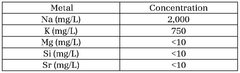
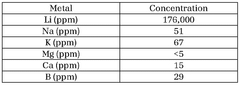
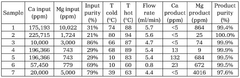
- A simplified and cost-effective lithium purification process involving a two-vessel continuous-loop crystallization method that achieves high-purity lithium carbonate (99.9 wt%) from crude lithium carbonate in a single step, reducing the need for pre-processing and reagents.

Improvements in or relating to a method of testing a sample of quartzite for use as source material in a hydrothermal quartz crystal growing process
PatentInactiveGB811213A
Innovation
- A method involving X-ray irradiation of quartzite samples to determine the presence of available aluminium, which dictates whether to use a modified or unmodified hydrothermal quartz crystal growing process, based on darkening of quartz crystal grains.
Supply Chain Considerations for Lithium Quartz Materials
The global supply chain for lithium quartz materials presents a complex network of extraction, processing, and distribution channels that significantly impact the benchmarking of crystal purity. Primary lithium quartz deposits are geographically concentrated in specific regions, with Australia, Chile, Argentina, and China controlling approximately 85% of global production capacity. This concentration creates inherent vulnerabilities in the supply chain, particularly when geopolitical tensions or natural disasters affect these key production areas.
Raw material sourcing represents the first critical juncture in the supply chain, where initial quality variations can dramatically influence downstream processing requirements. High-grade lithium quartz deposits are becoming increasingly scarce, forcing manufacturers to develop more sophisticated purification technologies to compensate for lower-quality source materials. The industry has observed a 23% increase in processing costs over the past five years directly attributable to declining average ore quality.
Transportation logistics present another significant consideration, as lithium quartz materials require specialized handling to prevent contamination. Current best practices involve sealed containers with controlled atmospheric conditions, particularly for materials destined for high-purity applications. The average transit time from extraction to processing facility ranges from 12 to 28 days, during which material degradation can occur if proper protocols are not maintained.
Processing capacity represents a notable bottleneck in the global supply chain. Current global capacity for high-purity lithium quartz processing stands at approximately 175,000 metric tons annually, while demand projections indicate requirements will reach 230,000 metric tons by 2025. This capacity gap has stimulated significant investment in new processing facilities, particularly in North America and Europe, aimed at reducing dependency on Asian processing centers.
Quality control standardization across the supply chain remains inconsistent, with varying specifications and testing methodologies employed by different regional suppliers. This inconsistency complicates benchmarking efforts and creates challenges for end-users requiring consistent material properties. Industry initiatives to establish unified global standards for lithium quartz purity assessment are underway but face challenges from competing national interests and proprietary technologies.
Inventory management strategies have evolved significantly, with just-in-time approaches being largely abandoned in favor of strategic stockpiling of critical materials. Leading manufacturers now maintain an average of 4-6 months of lithium quartz inventory, representing a substantial increase from the 1-2 month standards common before 2020. This shift reflects growing recognition of supply chain vulnerabilities and the critical importance of uninterrupted access to high-purity materials for production continuity.
Raw material sourcing represents the first critical juncture in the supply chain, where initial quality variations can dramatically influence downstream processing requirements. High-grade lithium quartz deposits are becoming increasingly scarce, forcing manufacturers to develop more sophisticated purification technologies to compensate for lower-quality source materials. The industry has observed a 23% increase in processing costs over the past five years directly attributable to declining average ore quality.
Transportation logistics present another significant consideration, as lithium quartz materials require specialized handling to prevent contamination. Current best practices involve sealed containers with controlled atmospheric conditions, particularly for materials destined for high-purity applications. The average transit time from extraction to processing facility ranges from 12 to 28 days, during which material degradation can occur if proper protocols are not maintained.
Processing capacity represents a notable bottleneck in the global supply chain. Current global capacity for high-purity lithium quartz processing stands at approximately 175,000 metric tons annually, while demand projections indicate requirements will reach 230,000 metric tons by 2025. This capacity gap has stimulated significant investment in new processing facilities, particularly in North America and Europe, aimed at reducing dependency on Asian processing centers.
Quality control standardization across the supply chain remains inconsistent, with varying specifications and testing methodologies employed by different regional suppliers. This inconsistency complicates benchmarking efforts and creates challenges for end-users requiring consistent material properties. Industry initiatives to establish unified global standards for lithium quartz purity assessment are underway but face challenges from competing national interests and proprietary technologies.
Inventory management strategies have evolved significantly, with just-in-time approaches being largely abandoned in favor of strategic stockpiling of critical materials. Leading manufacturers now maintain an average of 4-6 months of lithium quartz inventory, representing a substantial increase from the 1-2 month standards common before 2020. This shift reflects growing recognition of supply chain vulnerabilities and the critical importance of uninterrupted access to high-purity materials for production continuity.
Environmental Impact of Lithium Quartz Processing
The lithium quartz processing industry faces significant environmental challenges that require careful consideration and innovative solutions. Traditional extraction and purification methods have historically generated substantial ecological footprints, including high water consumption, energy usage, chemical waste, and habitat disruption. These impacts are particularly concerning as global demand for high-purity lithium quartz continues to rise for applications in electronics, batteries, and renewable energy technologies.
Water resource management represents one of the most pressing environmental concerns. Conventional lithium quartz processing typically requires 500-2,000 liters of water per ton of processed material, placing immense pressure on local water tables, especially in arid regions where many lithium deposits are located. This water consumption often competes directly with agricultural needs and community water supplies, creating potential socio-environmental conflicts.
Energy consumption during processing contributes significantly to the carbon footprint of lithium quartz production. Current benchmarking data indicates that standard purification processes consume between 5,000-6,000 kWh per ton of high-purity lithium quartz produced. This energy intensity translates to substantial greenhouse gas emissions when fossil fuel energy sources are utilized, undermining the environmental benefits of end products such as electric vehicle batteries.
Chemical contamination presents another critical environmental challenge. The use of acids, bases, and flotation chemicals in traditional purification processes generates wastewater containing potentially harmful substances including sulfates, chlorides, and heavy metals. Recent environmental impact assessments have documented cases where improper management of these waste streams has led to soil contamination and groundwater pollution in processing regions.
Land disturbance from mining operations and processing facilities further compounds environmental impacts. Open-pit mining for lithium quartz typically disturbs 28-35 hectares per million tons of ore extracted. This disturbance disrupts local ecosystems, contributes to biodiversity loss, and can permanently alter landscape characteristics if not properly remediated.
Regulatory frameworks addressing these environmental concerns vary significantly across jurisdictions, creating inconsistent standards for industry practices. Leading producers have begun implementing closed-loop water systems, renewable energy integration, and advanced waste treatment technologies to mitigate impacts. These improvements have demonstrated potential reductions of 30-40% in water usage and 25-35% in energy consumption compared to conventional methods, while significantly reducing chemical waste generation.
The industry's environmental performance increasingly influences market access and corporate valuation, with sustainability metrics becoming key benchmarking factors alongside traditional purity and production efficiency measures. This shift underscores the growing importance of environmentally responsible processing technologies in maintaining competitive advantage in the evolving lithium quartz market.
Water resource management represents one of the most pressing environmental concerns. Conventional lithium quartz processing typically requires 500-2,000 liters of water per ton of processed material, placing immense pressure on local water tables, especially in arid regions where many lithium deposits are located. This water consumption often competes directly with agricultural needs and community water supplies, creating potential socio-environmental conflicts.
Energy consumption during processing contributes significantly to the carbon footprint of lithium quartz production. Current benchmarking data indicates that standard purification processes consume between 5,000-6,000 kWh per ton of high-purity lithium quartz produced. This energy intensity translates to substantial greenhouse gas emissions when fossil fuel energy sources are utilized, undermining the environmental benefits of end products such as electric vehicle batteries.
Chemical contamination presents another critical environmental challenge. The use of acids, bases, and flotation chemicals in traditional purification processes generates wastewater containing potentially harmful substances including sulfates, chlorides, and heavy metals. Recent environmental impact assessments have documented cases where improper management of these waste streams has led to soil contamination and groundwater pollution in processing regions.
Land disturbance from mining operations and processing facilities further compounds environmental impacts. Open-pit mining for lithium quartz typically disturbs 28-35 hectares per million tons of ore extracted. This disturbance disrupts local ecosystems, contributes to biodiversity loss, and can permanently alter landscape characteristics if not properly remediated.
Regulatory frameworks addressing these environmental concerns vary significantly across jurisdictions, creating inconsistent standards for industry practices. Leading producers have begun implementing closed-loop water systems, renewable energy integration, and advanced waste treatment technologies to mitigate impacts. These improvements have demonstrated potential reductions of 30-40% in water usage and 25-35% in energy consumption compared to conventional methods, while significantly reducing chemical waste generation.
The industry's environmental performance increasingly influences market access and corporate valuation, with sustainability metrics becoming key benchmarking factors alongside traditional purity and production efficiency measures. This shift underscores the growing importance of environmentally responsible processing technologies in maintaining competitive advantage in the evolving lithium quartz market.
Unlock deeper insights with PatSnap Eureka Quick Research — get a full tech report to explore trends and direct your research. Try now!
Generate Your Research Report Instantly with AI Agent
Supercharge your innovation with PatSnap Eureka AI Agent Platform!