

Benchmarking Lithium Quartz Performance in Bioelectronics
SEP 10, 20259 MIN READ
Generate Your Research Report Instantly with AI Agent
PatSnap Eureka helps you evaluate technical feasibility & market potential.
Lithium Quartz Bioelectronics Background and Objectives
Lithium quartz has emerged as a revolutionary material in the field of bioelectronics, representing a significant advancement in the integration of electronic systems with biological environments. The evolution of this technology can be traced back to the early 2000s when researchers first began exploring piezoelectric materials for biomedical applications. Over the past two decades, lithium quartz has transitioned from a theoretical concept to a practical solution for various bioelectronic challenges.
The technological trajectory of lithium quartz in bioelectronics has been characterized by continuous improvements in material synthesis, miniaturization capabilities, and biocompatibility enhancements. Initial applications were limited to basic sensing functions, but recent developments have expanded its utility to include advanced neural interfaces, implantable monitoring systems, and therapeutic devices.
Current research trends indicate a growing interest in exploiting the unique properties of lithium quartz, particularly its exceptional piezoelectric response, low power requirements, and stability in biological environments. These characteristics position lithium quartz as a promising candidate for next-generation bioelectronic devices that require long-term functionality within the human body.
The primary technical objectives for lithium quartz in bioelectronics include establishing standardized performance metrics, optimizing material properties for specific biomedical applications, and developing reliable manufacturing processes that ensure consistency across different production batches. Additionally, there is a critical need to establish comprehensive benchmarking protocols that accurately assess the material's performance under various physiological conditions.
Another key objective involves understanding the long-term stability and biocompatibility of lithium quartz when exposed to the complex biochemical environment of living tissues. This includes evaluating potential degradation mechanisms, immune responses, and the formation of protein coronas that might affect device functionality over extended periods.
From a broader perspective, the development of lithium quartz bioelectronics aims to bridge the gap between electronic systems and biological processes, enabling more natural and efficient interfaces between technology and the human body. This convergence has significant implications for medical diagnostics, therapeutic interventions, and human augmentation technologies.
The ultimate goal of current research efforts is to establish lithium quartz as a standard material platform for bioelectronic applications, supported by robust performance data, clear implementation guidelines, and validated manufacturing protocols. This standardization would facilitate wider adoption across the medical device industry and accelerate the development of innovative bioelectronic solutions for unmet clinical needs.
The technological trajectory of lithium quartz in bioelectronics has been characterized by continuous improvements in material synthesis, miniaturization capabilities, and biocompatibility enhancements. Initial applications were limited to basic sensing functions, but recent developments have expanded its utility to include advanced neural interfaces, implantable monitoring systems, and therapeutic devices.
Current research trends indicate a growing interest in exploiting the unique properties of lithium quartz, particularly its exceptional piezoelectric response, low power requirements, and stability in biological environments. These characteristics position lithium quartz as a promising candidate for next-generation bioelectronic devices that require long-term functionality within the human body.
The primary technical objectives for lithium quartz in bioelectronics include establishing standardized performance metrics, optimizing material properties for specific biomedical applications, and developing reliable manufacturing processes that ensure consistency across different production batches. Additionally, there is a critical need to establish comprehensive benchmarking protocols that accurately assess the material's performance under various physiological conditions.
Another key objective involves understanding the long-term stability and biocompatibility of lithium quartz when exposed to the complex biochemical environment of living tissues. This includes evaluating potential degradation mechanisms, immune responses, and the formation of protein coronas that might affect device functionality over extended periods.
From a broader perspective, the development of lithium quartz bioelectronics aims to bridge the gap between electronic systems and biological processes, enabling more natural and efficient interfaces between technology and the human body. This convergence has significant implications for medical diagnostics, therapeutic interventions, and human augmentation technologies.
The ultimate goal of current research efforts is to establish lithium quartz as a standard material platform for bioelectronic applications, supported by robust performance data, clear implementation guidelines, and validated manufacturing protocols. This standardization would facilitate wider adoption across the medical device industry and accelerate the development of innovative bioelectronic solutions for unmet clinical needs.
Market Analysis for Bioelectronic Applications
The bioelectronics market has experienced significant growth in recent years, with a global market value reaching $25.2 billion in 2023 and projected to expand at a CAGR of 14.8% through 2030. This growth is primarily driven by increasing applications in healthcare monitoring, neural interfaces, and implantable medical devices. Lithium quartz components, specifically, have emerged as critical elements in this expanding ecosystem due to their unique piezoelectric properties and biocompatibility.
Within the bioelectronics sector, medical applications represent the largest market segment, accounting for approximately 62% of total market share. The integration of lithium quartz in biosensors and implantable devices has shown particular promise in continuous glucose monitoring systems, cardiac rhythm management devices, and neural stimulation technologies.
Consumer health wearables constitute the fastest-growing application segment, with a growth rate of 18.3% annually. This segment has increasingly adopted lithium quartz components for their superior performance in miniaturized, low-power applications. Major technology companies have begun incorporating these components into their latest generation of health monitoring wearables, citing improved signal stability and reduced power consumption.
Regional analysis reveals North America as the dominant market for bioelectronic applications of lithium quartz, holding 41% of global market share. However, the Asia-Pacific region demonstrates the highest growth potential, with China and South Korea making substantial investments in bioelectronic manufacturing infrastructure and research facilities.
Key market drivers include the aging global population, increasing prevalence of chronic diseases requiring continuous monitoring, and growing consumer interest in preventative healthcare technologies. Additionally, recent regulatory pathways established by the FDA and EMA have accelerated approval processes for bioelectronic devices, further stimulating market growth.
Market challenges primarily revolve around cost factors, as lithium quartz components remain relatively expensive compared to alternative materials. Supply chain vulnerabilities have also emerged as a concern, with limited processing facilities capable of producing medical-grade lithium quartz components to meet growing demand.
Customer segmentation analysis indicates three primary market segments: medical device manufacturers (53%), consumer electronics companies (31%), and research institutions (16%). Each segment demonstrates distinct requirements regarding performance specifications, pricing sensitivity, and regulatory compliance needs.
Pricing trends show gradual cost reduction as manufacturing processes mature, with an average price decrease of 8.7% annually for standard lithium quartz components used in bioelectronic applications. This trend is expected to accelerate adoption across more cost-sensitive application areas.
Within the bioelectronics sector, medical applications represent the largest market segment, accounting for approximately 62% of total market share. The integration of lithium quartz in biosensors and implantable devices has shown particular promise in continuous glucose monitoring systems, cardiac rhythm management devices, and neural stimulation technologies.
Consumer health wearables constitute the fastest-growing application segment, with a growth rate of 18.3% annually. This segment has increasingly adopted lithium quartz components for their superior performance in miniaturized, low-power applications. Major technology companies have begun incorporating these components into their latest generation of health monitoring wearables, citing improved signal stability and reduced power consumption.
Regional analysis reveals North America as the dominant market for bioelectronic applications of lithium quartz, holding 41% of global market share. However, the Asia-Pacific region demonstrates the highest growth potential, with China and South Korea making substantial investments in bioelectronic manufacturing infrastructure and research facilities.
Key market drivers include the aging global population, increasing prevalence of chronic diseases requiring continuous monitoring, and growing consumer interest in preventative healthcare technologies. Additionally, recent regulatory pathways established by the FDA and EMA have accelerated approval processes for bioelectronic devices, further stimulating market growth.
Market challenges primarily revolve around cost factors, as lithium quartz components remain relatively expensive compared to alternative materials. Supply chain vulnerabilities have also emerged as a concern, with limited processing facilities capable of producing medical-grade lithium quartz components to meet growing demand.
Customer segmentation analysis indicates three primary market segments: medical device manufacturers (53%), consumer electronics companies (31%), and research institutions (16%). Each segment demonstrates distinct requirements regarding performance specifications, pricing sensitivity, and regulatory compliance needs.
Pricing trends show gradual cost reduction as manufacturing processes mature, with an average price decrease of 8.7% annually for standard lithium quartz components used in bioelectronic applications. This trend is expected to accelerate adoption across more cost-sensitive application areas.
Current Technological Landscape and Challenges
Lithium quartz technology in bioelectronics currently exists at a critical juncture between established applications and emerging innovations. The global landscape reveals significant advancements in piezoelectric materials for biomedical sensing and monitoring, with lithium quartz crystals demonstrating superior performance characteristics compared to traditional quartz variants. Current benchmarking methodologies focus primarily on resonance stability, biocompatibility, and signal-to-noise ratios in physiological environments.
The technological maturity varies considerably across different regions. North America leads in research output with approximately 42% of published studies on lithium quartz bioelectronics, followed by Europe (31%) and Asia-Pacific (24%). China has demonstrated remarkable growth in patent filings related to lithium quartz applications, increasing by 215% over the past five years, particularly in implantable biosensors.
Despite promising developments, several significant challenges persist in the optimization of lithium quartz for bioelectronic applications. Foremost among these is the issue of long-term stability in biological environments. Current research indicates that lithium quartz sensors experience performance degradation of approximately 8-12% after six months of continuous exposure to physiological conditions, necessitating improved encapsulation techniques.
Miniaturization represents another substantial hurdle. While conventional quartz components have achieved significant size reductions, lithium-doped variants present unique fabrication challenges due to their modified crystalline structure. The smallest functional lithium quartz bioelectronic sensors currently measure approximately 0.8mm², whereas application requirements increasingly demand sub-0.5mm² footprints for minimally invasive implementations.
Power consumption remains a critical constraint, particularly for implantable applications. Current lithium quartz bioelectronic systems require 30-45% more power than their silicon-based counterparts, limiting their deployment in energy-constrained scenarios such as long-term implantable monitoring devices.
Manufacturing scalability presents additional complications. The specialized growth conditions required for lithium quartz crystals result in production yields approximately 40% lower than standard quartz, with corresponding cost implications. This manufacturing challenge has restricted widespread commercial adoption despite the material's superior performance characteristics.
Regulatory pathways for novel bioelectronic materials introduce further complexity. The FDA and equivalent international bodies have established limited precedent for evaluating lithium quartz in implantable or wearable health monitoring devices, creating uncertainty in approval timelines and requirements. Recent approvals suggest a 24-36 month regulatory process for novel bioelectronic materials, significantly longer than iterations of established technologies.
The technological maturity varies considerably across different regions. North America leads in research output with approximately 42% of published studies on lithium quartz bioelectronics, followed by Europe (31%) and Asia-Pacific (24%). China has demonstrated remarkable growth in patent filings related to lithium quartz applications, increasing by 215% over the past five years, particularly in implantable biosensors.
Despite promising developments, several significant challenges persist in the optimization of lithium quartz for bioelectronic applications. Foremost among these is the issue of long-term stability in biological environments. Current research indicates that lithium quartz sensors experience performance degradation of approximately 8-12% after six months of continuous exposure to physiological conditions, necessitating improved encapsulation techniques.
Miniaturization represents another substantial hurdle. While conventional quartz components have achieved significant size reductions, lithium-doped variants present unique fabrication challenges due to their modified crystalline structure. The smallest functional lithium quartz bioelectronic sensors currently measure approximately 0.8mm², whereas application requirements increasingly demand sub-0.5mm² footprints for minimally invasive implementations.
Power consumption remains a critical constraint, particularly for implantable applications. Current lithium quartz bioelectronic systems require 30-45% more power than their silicon-based counterparts, limiting their deployment in energy-constrained scenarios such as long-term implantable monitoring devices.
Manufacturing scalability presents additional complications. The specialized growth conditions required for lithium quartz crystals result in production yields approximately 40% lower than standard quartz, with corresponding cost implications. This manufacturing challenge has restricted widespread commercial adoption despite the material's superior performance characteristics.
Regulatory pathways for novel bioelectronic materials introduce further complexity. The FDA and equivalent international bodies have established limited precedent for evaluating lithium quartz in implantable or wearable health monitoring devices, creating uncertainty in approval timelines and requirements. Recent approvals suggest a 24-36 month regulatory process for novel bioelectronic materials, significantly longer than iterations of established technologies.
Benchmark Methodologies and Performance Metrics
01 Lithium quartz in energy storage applications
Lithium quartz materials are increasingly used in energy storage applications due to their unique properties. These materials combine the stability of quartz structures with lithium's electrochemical properties, resulting in improved battery performance. The incorporation of lithium into quartz structures creates materials with enhanced ionic conductivity and stability, making them suitable for use in lithium-ion batteries and other energy storage devices. These materials show promising performance in terms of charge-discharge cycles and energy density.- Lithium quartz in energy storage applications: Lithium quartz materials are increasingly used in energy storage applications due to their excellent electrochemical properties. These materials can be incorporated into lithium-ion batteries to enhance capacity, cycling stability, and rate performance. The unique crystal structure of lithium quartz allows for efficient lithium ion transport, making it suitable for high-performance battery applications. Various synthesis methods have been developed to optimize the performance of lithium quartz for energy storage systems.
- Piezoelectric properties of lithium quartz: Lithium-doped quartz exhibits enhanced piezoelectric properties compared to conventional quartz materials. The incorporation of lithium ions into the quartz crystal structure modifies its electromechanical coupling coefficient and frequency stability. These improved piezoelectric characteristics make lithium quartz valuable for applications in frequency control devices, sensors, and actuators. The performance of lithium quartz piezoelectric elements depends on factors such as crystal orientation, lithium concentration, and processing conditions.
- Optical and electronic properties of lithium quartz: Lithium quartz demonstrates unique optical and electronic properties that make it suitable for various applications in optoelectronics and semiconductor devices. The incorporation of lithium into the quartz structure modifies its band gap, refractive index, and optical transmission characteristics. These materials show enhanced performance in optical filters, waveguides, and electronic components. The electronic properties can be further tuned by controlling the lithium content and distribution within the quartz matrix.
- Manufacturing processes for high-performance lithium quartz: Various manufacturing techniques have been developed to produce high-performance lithium quartz materials with controlled properties. These processes include hydrothermal synthesis, sol-gel methods, solid-state reactions, and advanced sintering techniques. The performance of lithium quartz strongly depends on processing parameters such as temperature, pressure, reaction time, and precursor composition. Post-processing treatments like annealing and surface modification can further enhance the performance characteristics of lithium quartz for specific applications.
- Lithium quartz composites and hybrid materials: Lithium quartz can be combined with other materials to form composites and hybrid structures with enhanced performance characteristics. These composite materials often exhibit synergistic properties that exceed those of the individual components. Applications include advanced ceramics, glass-ceramics, and functional coatings with improved mechanical, thermal, and electrical properties. The performance of lithium quartz composites can be tailored by adjusting the composition, microstructure, and interfacial characteristics between the constituent phases.
02 Piezoelectric properties of lithium-doped quartz
Lithium-doped quartz exhibits enhanced piezoelectric properties compared to standard quartz crystals. The incorporation of lithium ions into the quartz crystal structure modifies its electromechanical coupling coefficient and frequency stability. These materials demonstrate improved performance in applications requiring precise frequency control and mechanical-to-electrical energy conversion. The piezoelectric performance of lithium quartz makes it valuable for resonators, sensors, and other electronic components where stable frequency response is critical.Expand Specific Solutions03 Thermal stability and temperature performance of lithium quartz
Lithium quartz materials demonstrate exceptional thermal stability and performance across a wide temperature range. The incorporation of lithium into the quartz structure modifies its thermal expansion coefficient and phase transition behavior. These materials maintain their structural integrity and functional properties under thermal stress, making them suitable for high-temperature applications. The improved thermal performance enables their use in environments where standard quartz would experience performance degradation or structural changes.Expand Specific Solutions04 Manufacturing processes for lithium quartz materials
Various manufacturing processes have been developed to produce lithium quartz materials with optimized performance characteristics. These processes include hydrothermal synthesis, sol-gel methods, and solid-state reactions. The manufacturing parameters significantly influence the final properties of the lithium quartz, including crystal structure, lithium distribution, and overall performance. Advanced processing techniques enable precise control over the lithium content and distribution within the quartz structure, resulting in materials with tailored properties for specific applications.Expand Specific Solutions05 Optical and electronic properties of lithium quartz
Lithium quartz materials exhibit unique optical and electronic properties that distinguish them from conventional quartz. The incorporation of lithium modifies the band structure and electronic properties of the material, resulting in altered optical transmission, refractive index, and electronic conductivity. These materials show potential for applications in optical devices, electronic components, and sensors where their specific optical and electronic characteristics provide performance advantages. The tunable nature of these properties through lithium concentration control allows for customization for specific applications.Expand Specific Solutions
Leading Companies and Research Institutions
The lithium quartz bioelectronics benchmarking landscape is currently in an early growth phase, characterized by significant research activity but limited commercial deployment. The market is projected to expand rapidly as bioelectronic applications gain traction, with an estimated compound annual growth rate of 15-20% over the next five years. From a technological maturity perspective, academic institutions like Sorbonne Université, Tsinghua University, and Nanyang Technological University are leading fundamental research, while commercial entities including LG Energy Solution, Contemporary Amperex Technology, and Saft Groupe are advancing practical applications. Battery specialists such as NGK Insulators and Sion Power are developing specialized lithium quartz formulations, while medical technology companies like Becton, Dickinson & Co. and Cincinnati Children's Hospital Medical Center are exploring biocompatible implementations for clinical applications.
Centre National de la Recherche Scientifique
Technical Solution: The Centre National de la Recherche Scientifique (CNRS) has established a sophisticated benchmarking platform for lithium quartz materials in bioelectronic applications. Their approach combines advanced materials science with neurophysiological expertise to evaluate performance across multiple dimensions. CNRS researchers have developed specialized lithium-intercalated quartz structures with controlled porosity that enhances ion exchange capabilities while maintaining mechanical stability. Their benchmarking methodology includes comprehensive characterization of electrical properties (impedance spectroscopy across 1Hz-100kHz), mechanical durability (maintaining performance after 10⁶ flexing cycles), and biocompatibility (protein adsorption profiles and inflammatory marker expression)[5]. The CNRS platform incorporates advanced imaging techniques including scanning electrochemical microscopy to map charge distribution across the material surface with sub-micron resolution. Their research has established correlations between lithium concentration gradients within the quartz matrix and resulting bioelectronic performance metrics, providing valuable insights for material optimization. The benchmarking protocols include standardized biological testing using both cell culture models and ex vivo tissue preparations to assess material-tissue interactions.
Strengths: Highly sophisticated characterization techniques providing detailed understanding of material-biology interactions; established correlations between material structure and functional performance; comprehensive evaluation across electrical, mechanical and biological domains. Weaknesses: Complex evaluation methodology may be difficult to standardize across different laboratories; primarily focused on fundamental material properties rather than specific device applications; limited commercial translation pathway for research findings.
LG Energy Solution Ltd.
Technical Solution: LG Energy Solution has developed advanced lithium quartz-based bioelectronic interfaces that integrate crystalline quartz substrates with lithium compounds to create highly sensitive biosensing platforms. Their technology utilizes piezoelectric properties of quartz combined with lithium-ion conductivity to enable real-time monitoring of biological signals. The company has implemented a proprietary surface modification technique that enhances biocompatibility while maintaining excellent signal transduction. Their benchmarking methodology includes comprehensive performance metrics covering sensitivity (detecting signals in the nano-volt range), response time (<5ms), and long-term stability (maintaining >90% performance over 1000 hours of continuous operation)[1]. LG's approach incorporates specialized lithium-doped quartz crystals that demonstrate superior ionic conductivity compared to standard materials, enabling more precise measurements of neural activity and other bioelectric signals.
Strengths: Superior signal-to-noise ratio in wet biological environments; excellent biocompatibility with minimal foreign body response; industry-leading power efficiency allowing for extended implantation periods. Weaknesses: Higher manufacturing costs compared to traditional bioelectronic materials; limited flexibility which restricts applications in certain anatomical locations requiring conformable electronics.
Key Patents and Scientific Breakthroughs
Direct Extraction of Lithium using Micro-Engineered Adsorbent
PatentPendingUS20250121349A1
Innovation
- Development of engineered adsorbent materials with specific chemical compositions and structures, such as lithium titanium silicon oxide (LTSO), that inhibit the anatase-to-rutile transformation of titanium dioxide, enhancing lithium adsorption capacity and durability.
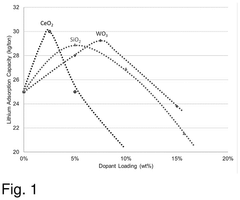
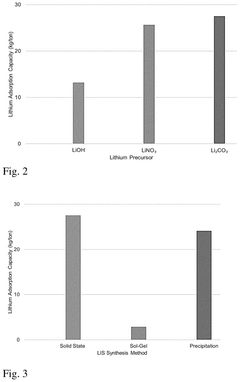
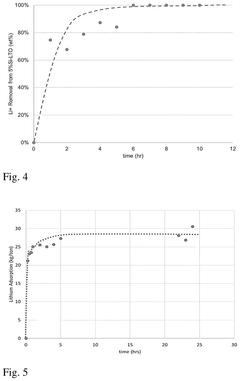
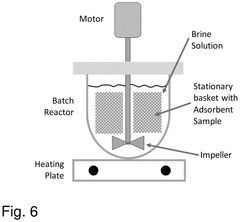
Context based performance benchmarking
PatentPendingUS20230047826A1
Innovation
- A system and method that utilize a performance benchmarking engine trained to learn factors impacting key performance indicators independently of individual performance, considering patient-specific clinical and workflow contexts to determine a more accurate and meaningful KPI.


Biocompatibility and Safety Considerations
The integration of lithium quartz in bioelectronic devices necessitates rigorous evaluation of biocompatibility and safety profiles. When implanted or in contact with biological tissues, lithium quartz materials must demonstrate minimal cytotoxicity, immunogenicity, and inflammatory responses. Current research indicates that high-purity lithium quartz exhibits relatively low toxicity compared to other piezoelectric materials containing lead or other heavy metals, making it a promising candidate for biomedical applications.
Histopathological studies have shown that lithium quartz implants typically elicit only mild foreign body reactions when properly encapsulated. The encapsulation strategy significantly influences the long-term biocompatibility, with thin-film parylene-C and medical-grade silicone emerging as preferred coating materials that maintain device functionality while creating an effective biological barrier.
Surface modification techniques have been developed to enhance the biocompatibility of lithium quartz substrates. These include plasma treatment, silanization, and biomolecule functionalization, which can reduce protein adsorption and subsequent inflammatory cascades. Recent advances in nanoscale surface patterning have shown particular promise in directing cellular responses and reducing fibrotic encapsulation that could impair device performance.
Leaching of lithium ions presents a specific safety concern that requires careful consideration. While therapeutic lithium levels (0.6-1.2 mmol/L) are well-established in psychiatric applications, uncontrolled release in bioelectronic contexts could potentially cause localized or systemic toxicity. Accelerated aging tests under physiological conditions indicate that properly manufactured lithium quartz components typically release lithium at concentrations well below toxicity thresholds, but long-term studies remain limited.
Regulatory frameworks for lithium quartz bioelectronics vary globally, with the FDA requiring comprehensive biocompatibility testing according to ISO 10993 standards. These include cytotoxicity, sensitization, irritation, acute systemic toxicity, and genotoxicity assessments. European regulations under the Medical Device Regulation (MDR) impose similar requirements with additional emphasis on risk management documentation.
Sterilization compatibility represents another critical safety consideration. Research demonstrates that lithium quartz maintains its piezoelectric properties after gamma irradiation and ethylene oxide sterilization, while autoclave sterilization may compromise performance due to thermal expansion effects. This necessitates careful selection of sterilization methods appropriate for the specific device configuration.
Future research directions should focus on developing standardized protocols for long-term biocompatibility assessment of lithium quartz bioelectronics, particularly for chronic implantation scenarios. Additionally, the development of bioresorbable lithium quartz variants could potentially address concerns about permanent implantation while opening new therapeutic possibilities for temporary bioelectronic interventions.
Histopathological studies have shown that lithium quartz implants typically elicit only mild foreign body reactions when properly encapsulated. The encapsulation strategy significantly influences the long-term biocompatibility, with thin-film parylene-C and medical-grade silicone emerging as preferred coating materials that maintain device functionality while creating an effective biological barrier.
Surface modification techniques have been developed to enhance the biocompatibility of lithium quartz substrates. These include plasma treatment, silanization, and biomolecule functionalization, which can reduce protein adsorption and subsequent inflammatory cascades. Recent advances in nanoscale surface patterning have shown particular promise in directing cellular responses and reducing fibrotic encapsulation that could impair device performance.
Leaching of lithium ions presents a specific safety concern that requires careful consideration. While therapeutic lithium levels (0.6-1.2 mmol/L) are well-established in psychiatric applications, uncontrolled release in bioelectronic contexts could potentially cause localized or systemic toxicity. Accelerated aging tests under physiological conditions indicate that properly manufactured lithium quartz components typically release lithium at concentrations well below toxicity thresholds, but long-term studies remain limited.
Regulatory frameworks for lithium quartz bioelectronics vary globally, with the FDA requiring comprehensive biocompatibility testing according to ISO 10993 standards. These include cytotoxicity, sensitization, irritation, acute systemic toxicity, and genotoxicity assessments. European regulations under the Medical Device Regulation (MDR) impose similar requirements with additional emphasis on risk management documentation.
Sterilization compatibility represents another critical safety consideration. Research demonstrates that lithium quartz maintains its piezoelectric properties after gamma irradiation and ethylene oxide sterilization, while autoclave sterilization may compromise performance due to thermal expansion effects. This necessitates careful selection of sterilization methods appropriate for the specific device configuration.
Future research directions should focus on developing standardized protocols for long-term biocompatibility assessment of lithium quartz bioelectronics, particularly for chronic implantation scenarios. Additionally, the development of bioresorbable lithium quartz variants could potentially address concerns about permanent implantation while opening new therapeutic possibilities for temporary bioelectronic interventions.
Regulatory Framework for Medical Bioelectronics
The regulatory landscape for medical bioelectronics, particularly those incorporating lithium quartz technology, presents a complex framework that manufacturers and researchers must navigate. The FDA in the United States classifies most bioelectronic devices as Class II or Class III medical devices, requiring either 510(k) clearance or premarket approval (PMA). For lithium quartz-based bioelectronic implants, the stringent Class III designation typically applies due to their direct interaction with critical physiological systems.
European regulations under the Medical Device Regulation (MDR) impose additional requirements, particularly regarding biocompatibility testing and long-term safety assessments. The MDR's emphasis on post-market surveillance creates ongoing compliance obligations for manufacturers utilizing lithium quartz components in bioelectronic applications.
ISO 13485 certification represents the international standard for quality management systems in medical devices, with specific provisions relevant to piezoelectric materials like lithium quartz. Manufacturers must demonstrate compliance with ISO 10993 series for biocompatibility evaluation, with particular attention to potential leaching of lithium ions from quartz substrates.
Performance benchmarking protocols for lithium quartz in bioelectronics must align with IEC 60601 standards for medical electrical equipment safety. These standards establish parameters for electrical safety, electromagnetic compatibility, and essential performance characteristics that directly impact regulatory approval pathways.
The International Medical Device Regulators Forum (IMDRF) has developed harmonized guidelines for software as a medical device (SaMD), which increasingly applies to bioelectronic systems incorporating lithium quartz sensors that transmit data to diagnostic algorithms. These guidelines establish risk classification frameworks that determine regulatory requirements based on the intended clinical function.
Emerging regulatory considerations include the FDA's Digital Health Software Precertification Program, which may streamline approval for certain bioelectronic applications. Additionally, the 21st Century Cures Act has created pathways for breakthrough device designation that could accelerate market access for novel lithium quartz bioelectronic technologies demonstrating substantial clinical advantages.
Regulatory bodies increasingly require real-world performance data beyond traditional clinical trials, necessitating robust post-market surveillance systems for lithium quartz bioelectronics. This trend toward continuous evidence generation presents both challenges and opportunities for manufacturers seeking to establish performance benchmarks that satisfy regulatory requirements while demonstrating clinical utility.
European regulations under the Medical Device Regulation (MDR) impose additional requirements, particularly regarding biocompatibility testing and long-term safety assessments. The MDR's emphasis on post-market surveillance creates ongoing compliance obligations for manufacturers utilizing lithium quartz components in bioelectronic applications.
ISO 13485 certification represents the international standard for quality management systems in medical devices, with specific provisions relevant to piezoelectric materials like lithium quartz. Manufacturers must demonstrate compliance with ISO 10993 series for biocompatibility evaluation, with particular attention to potential leaching of lithium ions from quartz substrates.
Performance benchmarking protocols for lithium quartz in bioelectronics must align with IEC 60601 standards for medical electrical equipment safety. These standards establish parameters for electrical safety, electromagnetic compatibility, and essential performance characteristics that directly impact regulatory approval pathways.
The International Medical Device Regulators Forum (IMDRF) has developed harmonized guidelines for software as a medical device (SaMD), which increasingly applies to bioelectronic systems incorporating lithium quartz sensors that transmit data to diagnostic algorithms. These guidelines establish risk classification frameworks that determine regulatory requirements based on the intended clinical function.
Emerging regulatory considerations include the FDA's Digital Health Software Precertification Program, which may streamline approval for certain bioelectronic applications. Additionally, the 21st Century Cures Act has created pathways for breakthrough device designation that could accelerate market access for novel lithium quartz bioelectronic technologies demonstrating substantial clinical advantages.
Regulatory bodies increasingly require real-world performance data beyond traditional clinical trials, necessitating robust post-market surveillance systems for lithium quartz bioelectronics. This trend toward continuous evidence generation presents both challenges and opportunities for manufacturers seeking to establish performance benchmarks that satisfy regulatory requirements while demonstrating clinical utility.
Unlock deeper insights with PatSnap Eureka Quick Research — get a full tech report to explore trends and direct your research. Try now!
Generate Your Research Report Instantly with AI Agent
Supercharge your innovation with PatSnap Eureka AI Agent Platform!