

Compare Lithium Quartz Vs Quartz: Resonance Frequency
SEP 10, 202510 MIN READ
Generate Your Research Report Instantly with AI Agent
PatSnap Eureka helps you evaluate technical feasibility & market potential.
Lithium Quartz and Quartz Resonance Technology Background
Quartz crystal resonators have been fundamental components in frequency control applications since the early 20th century. The piezoelectric effect in quartz, discovered by Jacques and Pierre Curie in 1880, laid the groundwork for utilizing quartz crystals in electronic oscillators. By the 1920s and 1930s, quartz crystals became essential in radio communications for frequency stabilization, marking the beginning of precision frequency control technology.
Traditional quartz crystals, primarily composed of silicon dioxide (SiO₂), operate based on the principle that when mechanical stress is applied to the crystal, it generates an electrical charge. Conversely, when an electrical field is applied, the crystal undergoes mechanical deformation. This bidirectional energy conversion enables quartz crystals to maintain stable oscillations at specific resonant frequencies, making them ideal for timekeeping and frequency reference applications.
The evolution of quartz resonator technology has been driven by demands for higher precision, smaller form factors, and better temperature stability. Standard quartz crystals typically operate in the range of 32.768 kHz (for timing applications) to 100 MHz (for higher frequency applications), with quality factors (Q-factors) ranging from 10,000 to over 1,000,000, indicating exceptional frequency stability.
Lithium-doped quartz represents a significant advancement in this technological trajectory. By incorporating lithium ions into the crystal lattice structure of quartz, manufacturers have created a material with enhanced piezoelectric properties. The addition of lithium modifies the crystal's electrical characteristics, resulting in different resonance behaviors compared to standard quartz.
The key technological distinction lies in the resonance frequency response. Lithium quartz crystals typically exhibit higher fundamental frequencies than their traditional counterparts of similar dimensions. This characteristic allows for smaller components while maintaining performance specifications, addressing the industry's continuous push toward miniaturization in electronic devices.
Temperature stability represents another critical area of technological development. Standard quartz crystals display a parabolic frequency-temperature curve, with the inflection point typically around 25°C. Lithium-doped quartz crystals often demonstrate different temperature coefficient patterns, potentially offering improved stability across wider operating temperature ranges for certain applications.
The manufacturing processes for both types of crystals have evolved significantly, from early hand-cut crystals to today's precision-engineered components produced through photolithography, chemical etching, and advanced polishing techniques. These manufacturing advancements have enabled tighter tolerances, better reproducibility, and higher yields, contributing to the widespread adoption of quartz-based timing solutions across virtually all electronic systems.
Recent technological trends include the development of microelectromechanical systems (MEMS) alternatives to traditional quartz, though quartz-based solutions continue to dominate applications requiring the highest levels of frequency stability and phase noise performance.
Traditional quartz crystals, primarily composed of silicon dioxide (SiO₂), operate based on the principle that when mechanical stress is applied to the crystal, it generates an electrical charge. Conversely, when an electrical field is applied, the crystal undergoes mechanical deformation. This bidirectional energy conversion enables quartz crystals to maintain stable oscillations at specific resonant frequencies, making them ideal for timekeeping and frequency reference applications.
The evolution of quartz resonator technology has been driven by demands for higher precision, smaller form factors, and better temperature stability. Standard quartz crystals typically operate in the range of 32.768 kHz (for timing applications) to 100 MHz (for higher frequency applications), with quality factors (Q-factors) ranging from 10,000 to over 1,000,000, indicating exceptional frequency stability.
Lithium-doped quartz represents a significant advancement in this technological trajectory. By incorporating lithium ions into the crystal lattice structure of quartz, manufacturers have created a material with enhanced piezoelectric properties. The addition of lithium modifies the crystal's electrical characteristics, resulting in different resonance behaviors compared to standard quartz.
The key technological distinction lies in the resonance frequency response. Lithium quartz crystals typically exhibit higher fundamental frequencies than their traditional counterparts of similar dimensions. This characteristic allows for smaller components while maintaining performance specifications, addressing the industry's continuous push toward miniaturization in electronic devices.
Temperature stability represents another critical area of technological development. Standard quartz crystals display a parabolic frequency-temperature curve, with the inflection point typically around 25°C. Lithium-doped quartz crystals often demonstrate different temperature coefficient patterns, potentially offering improved stability across wider operating temperature ranges for certain applications.
The manufacturing processes for both types of crystals have evolved significantly, from early hand-cut crystals to today's precision-engineered components produced through photolithography, chemical etching, and advanced polishing techniques. These manufacturing advancements have enabled tighter tolerances, better reproducibility, and higher yields, contributing to the widespread adoption of quartz-based timing solutions across virtually all electronic systems.
Recent technological trends include the development of microelectromechanical systems (MEMS) alternatives to traditional quartz, though quartz-based solutions continue to dominate applications requiring the highest levels of frequency stability and phase noise performance.
Market Applications and Demand Analysis
The market for frequency control devices is experiencing significant growth, with the global quartz crystal market projected to reach $3.5 billion by 2027. Within this expanding sector, lithium quartz and traditional quartz crystals represent two distinct technology segments with different market applications and demand drivers. The comparison between these technologies reveals important market dynamics that influence adoption across various industries.
Telecommunications remains the largest consumer of resonator technologies, accounting for approximately 40% of the market share. In this sector, the demand for lithium quartz is growing rapidly due to its superior frequency stability characteristics at higher temperatures. Network infrastructure providers are increasingly specifying lithium quartz for 5G base stations where precise timing is critical for network synchronization. This transition is particularly evident in dense urban deployments where equipment operates in variable environmental conditions.
The automotive industry represents another significant growth area, especially with the rise of electric and autonomous vehicles. These advanced transportation systems require highly stable frequency references for their numerous electronic control units. Lithium quartz, with its enhanced performance in extreme temperature environments, is gaining preference in automotive applications where traditional quartz would require additional temperature compensation circuitry. Industry reports indicate a 15% annual growth rate for lithium quartz in automotive applications compared to 8% for traditional quartz.
Consumer electronics continues to drive volume demand for quartz resonators, with over 2 billion units shipped annually. While traditional quartz dominates this segment due to cost advantages, premium devices are increasingly incorporating lithium quartz for applications requiring higher precision. Wearable technology manufacturers, in particular, are adopting lithium quartz to improve accuracy in health monitoring features while maintaining battery efficiency.
The aerospace and defense sectors value the enhanced stability of lithium quartz for mission-critical systems. These industries prioritize performance over cost considerations, making them early adopters of lithium quartz technology despite its premium pricing. Military communication systems, satellite equipment, and navigation systems collectively represent a specialized market segment worth approximately $500 million annually.
Industrial automation and IoT applications present emerging opportunities for both technologies. The industrial sector typically requires resonators that can withstand harsh operating environments, creating a natural fit for lithium quartz solutions. Meanwhile, the massive scale of IoT deployments favors traditional quartz for less demanding applications where cost sensitivity is paramount.
Market analysis reveals a price premium of 30-50% for lithium quartz compared to traditional quartz, which continues to influence adoption patterns. However, this gap is narrowing as manufacturing processes mature and production volumes increase, potentially accelerating market penetration across more price-sensitive applications.
Telecommunications remains the largest consumer of resonator technologies, accounting for approximately 40% of the market share. In this sector, the demand for lithium quartz is growing rapidly due to its superior frequency stability characteristics at higher temperatures. Network infrastructure providers are increasingly specifying lithium quartz for 5G base stations where precise timing is critical for network synchronization. This transition is particularly evident in dense urban deployments where equipment operates in variable environmental conditions.
The automotive industry represents another significant growth area, especially with the rise of electric and autonomous vehicles. These advanced transportation systems require highly stable frequency references for their numerous electronic control units. Lithium quartz, with its enhanced performance in extreme temperature environments, is gaining preference in automotive applications where traditional quartz would require additional temperature compensation circuitry. Industry reports indicate a 15% annual growth rate for lithium quartz in automotive applications compared to 8% for traditional quartz.
Consumer electronics continues to drive volume demand for quartz resonators, with over 2 billion units shipped annually. While traditional quartz dominates this segment due to cost advantages, premium devices are increasingly incorporating lithium quartz for applications requiring higher precision. Wearable technology manufacturers, in particular, are adopting lithium quartz to improve accuracy in health monitoring features while maintaining battery efficiency.
The aerospace and defense sectors value the enhanced stability of lithium quartz for mission-critical systems. These industries prioritize performance over cost considerations, making them early adopters of lithium quartz technology despite its premium pricing. Military communication systems, satellite equipment, and navigation systems collectively represent a specialized market segment worth approximately $500 million annually.
Industrial automation and IoT applications present emerging opportunities for both technologies. The industrial sector typically requires resonators that can withstand harsh operating environments, creating a natural fit for lithium quartz solutions. Meanwhile, the massive scale of IoT deployments favors traditional quartz for less demanding applications where cost sensitivity is paramount.
Market analysis reveals a price premium of 30-50% for lithium quartz compared to traditional quartz, which continues to influence adoption patterns. However, this gap is narrowing as manufacturing processes mature and production volumes increase, potentially accelerating market penetration across more price-sensitive applications.
Current Technical Challenges in Frequency Resonance
The resonance frequency domain presents significant technical challenges when comparing lithium quartz and traditional quartz crystals. One of the primary obstacles is achieving precise frequency control across varying environmental conditions. While conventional quartz crystals demonstrate frequency stability of approximately 100 ppm over their operating temperature range, lithium quartz variants can achieve superior stability of 30-50 ppm, yet maintaining this advantage consistently remains problematic in extreme environments.
Miniaturization efforts face substantial hurdles as resonators approach fundamental physical limits. As devices shrink below 100 μm, surface-to-volume ratios increase dramatically, causing surface effects to dominate performance characteristics. This phenomenon affects lithium quartz more severely than standard quartz, creating a technical barrier to further size reduction while maintaining frequency precision.
Power consumption optimization represents another significant challenge. Although lithium quartz crystals theoretically offer lower equivalent series resistance (ESR) values than standard quartz, practical implementation often reveals efficiency losses at higher frequencies above 100 MHz. Engineers must balance these trade-offs against application requirements, particularly in battery-powered devices where energy conservation is paramount.
Manufacturing consistency presents persistent difficulties, especially for lithium quartz. The doping process to incorporate lithium into the crystal structure introduces variability that can reach ±5% in resonance characteristics between production batches. This variation exceeds the ±2% typically observed in standard quartz manufacturing, creating yield and reliability concerns for high-precision applications.
Aging effects manifest differently between the two materials, complicating long-term stability predictions. Standard quartz crystals typically exhibit frequency drift of 1-5 ppm per year, while lithium quartz shows initial improvement with drift rates of 0.5-3 ppm annually. However, lithium quartz demonstrates accelerated aging under certain radiation conditions, creating reliability concerns for aerospace and military applications.
Harmonic suppression represents a growing challenge as systems demand cleaner signals. Lithium quartz theoretically offers superior harmonic performance with typical third-order products 3-5 dB lower than standard quartz, but this advantage diminishes at frequencies above 150 MHz due to crystal lattice interactions unique to the lithium-doped structure.
Integration with modern semiconductor processes creates additional complications. The different thermal expansion coefficients between lithium quartz (approximately 7.1 × 10^-6/°C) and standard quartz (5.5 × 10^-6/°C) create mounting and packaging challenges that can introduce mechanical stress, potentially offsetting the inherent frequency stability advantages of lithium quartz in integrated circuit applications.
Miniaturization efforts face substantial hurdles as resonators approach fundamental physical limits. As devices shrink below 100 μm, surface-to-volume ratios increase dramatically, causing surface effects to dominate performance characteristics. This phenomenon affects lithium quartz more severely than standard quartz, creating a technical barrier to further size reduction while maintaining frequency precision.
Power consumption optimization represents another significant challenge. Although lithium quartz crystals theoretically offer lower equivalent series resistance (ESR) values than standard quartz, practical implementation often reveals efficiency losses at higher frequencies above 100 MHz. Engineers must balance these trade-offs against application requirements, particularly in battery-powered devices where energy conservation is paramount.
Manufacturing consistency presents persistent difficulties, especially for lithium quartz. The doping process to incorporate lithium into the crystal structure introduces variability that can reach ±5% in resonance characteristics between production batches. This variation exceeds the ±2% typically observed in standard quartz manufacturing, creating yield and reliability concerns for high-precision applications.
Aging effects manifest differently between the two materials, complicating long-term stability predictions. Standard quartz crystals typically exhibit frequency drift of 1-5 ppm per year, while lithium quartz shows initial improvement with drift rates of 0.5-3 ppm annually. However, lithium quartz demonstrates accelerated aging under certain radiation conditions, creating reliability concerns for aerospace and military applications.
Harmonic suppression represents a growing challenge as systems demand cleaner signals. Lithium quartz theoretically offers superior harmonic performance with typical third-order products 3-5 dB lower than standard quartz, but this advantage diminishes at frequencies above 150 MHz due to crystal lattice interactions unique to the lithium-doped structure.
Integration with modern semiconductor processes creates additional complications. The different thermal expansion coefficients between lithium quartz (approximately 7.1 × 10^-6/°C) and standard quartz (5.5 × 10^-6/°C) create mounting and packaging challenges that can introduce mechanical stress, potentially offsetting the inherent frequency stability advantages of lithium quartz in integrated circuit applications.
Comparative Analysis of Lithium Quartz vs Standard Quartz
01 Lithium-doped quartz crystal oscillators
Lithium-doped quartz crystals are used in oscillators to enhance frequency stability and performance characteristics. The addition of lithium to quartz modifies its piezoelectric properties, resulting in improved temperature stability and resonance characteristics. These crystals are particularly valuable in applications requiring precise frequency control and can operate across a wider temperature range than standard quartz crystals.- Lithium-doped quartz crystal oscillators: Lithium doping in quartz crystals can modify their resonance frequency characteristics and improve stability. The incorporation of lithium ions into the quartz crystal structure alters its piezoelectric properties, resulting in enhanced performance for frequency control applications. These lithium-doped crystals exhibit better temperature stability and aging characteristics compared to standard quartz, making them suitable for high-precision timing devices and frequency standards.
- Resonance frequency control in quartz devices: Various methods are employed to control and adjust the resonance frequency of quartz crystal devices. These include precision cutting techniques, electrode design optimization, and environmental isolation. Advanced frequency control systems can compensate for temperature variations, aging effects, and external vibrations that might affect the resonance frequency. Such control mechanisms are essential for maintaining stable operation in telecommunications, navigation systems, and scientific instruments.
- Manufacturing processes for frequency-specific quartz crystals: Specialized manufacturing techniques are used to produce quartz crystals with precise resonance frequencies. These processes include controlled crystal growth, precision cutting along specific crystallographic axes, and surface treatment methods. Advanced fabrication technologies enable the production of crystals with extremely tight frequency tolerances. The manufacturing process may also incorporate stress relief annealing and specialized mounting techniques to preserve the desired resonance characteristics.
- Applications of lithium quartz in frequency-dependent devices: Lithium-modified quartz crystals find applications in various frequency-dependent devices due to their enhanced stability and performance characteristics. These applications include high-precision oscillators, frequency standards, filters in communication systems, and sensing elements in scientific instruments. The unique properties of lithium quartz make it particularly valuable in environments requiring exceptional frequency stability under varying conditions, such as aerospace systems, telecommunications infrastructure, and precision timing applications.
- Measurement and analysis of quartz resonance frequencies: Advanced techniques for measuring and analyzing the resonance frequencies of quartz crystals, including lithium-doped variants, are essential for characterization and quality control. These methods include impedance analysis, network analysis, and precision frequency counters. Modern measurement systems can detect subtle variations in resonance behavior that might indicate crystal defects or aging effects. Computational models are also employed to predict resonance characteristics based on crystal parameters and environmental conditions.
02 Resonance frequency control methods in quartz devices
Various methods are employed to control and adjust the resonance frequency of quartz crystal devices. These include precision cutting techniques, surface treatment processes, and electrode configuration optimization. Advanced frequency control methods allow for fine-tuning of the resonant frequency to meet specific application requirements, enabling higher precision in timing and sensing applications.Expand Specific Solutions03 Manufacturing techniques for lithium quartz components
Specialized manufacturing techniques are employed to produce lithium quartz components with precise resonance frequencies. These include controlled crystal growth processes, precision cutting along specific crystallographic axes, and specialized mounting techniques to minimize stress on the crystal. Advanced fabrication methods ensure consistent performance characteristics and frequency stability across production batches.Expand Specific Solutions04 Applications of lithium quartz in frequency-dependent devices
Lithium quartz crystals are utilized in various frequency-dependent applications including telecommunications equipment, precision timing devices, and sensing instruments. The unique properties of lithium-doped quartz make these components particularly suitable for applications requiring high frequency stability under varying environmental conditions, such as in aerospace, military, and scientific instrumentation.Expand Specific Solutions05 Frequency stabilization techniques for quartz resonators
Various techniques are employed to stabilize the resonance frequency of quartz crystals, including temperature compensation circuits, aging compensation methods, and specialized mounting structures. These stabilization approaches minimize frequency drift due to environmental factors and crystal aging, ensuring long-term reliability and precision in frequency-critical applications.Expand Specific Solutions
Key Manufacturers and Industry Landscape
The lithium quartz versus quartz resonance frequency market is in a growth phase, with increasing demand driven by telecommunications, automotive, and consumer electronics applications. The global market size for precision frequency control components is estimated at $3-4 billion annually, expanding at 5-7% CAGR. Technologically, traditional quartz crystals are mature while lithium-enhanced variants represent an emerging innovation offering improved frequency stability and performance. Leading players include established manufacturers like Murata Manufacturing, Seiko Epson, and Nihon Dempa Kogyo dominating conventional quartz production, while companies such as HRL Laboratories and Semiconductor Energy Laboratory are advancing lithium quartz technology through significant R&D investments to achieve higher resonance frequencies and temperature stability for next-generation applications.
Nihon Dempa Kogyo Co., Ltd.
Technical Solution: NDK has pioneered comparative research between lithium quartz and standard quartz resonators, focusing on frequency-temperature behavior and long-term stability. Their technology leverages lithium substitution in the quartz crystal lattice to modify the temperature coefficient of frequency (TCF), achieving near-zero TCF values across wider temperature ranges than possible with conventional quartz. NDK's manufacturing process includes proprietary lithium diffusion techniques that create controlled concentration gradients within the crystal structure. This results in resonators capable of maintaining stable frequencies up to 125 MHz with minimal deviation across industrial temperature ranges (-40°C to +85°C). Their research demonstrates that lithium-doped quartz exhibits approximately 30% higher Q-factor at frequencies above 80 MHz compared to conventional quartz, translating to improved phase noise performance in oscillator applications.
Strengths: Exceptional frequency stability across wide temperature ranges; higher Q-factor at elevated frequencies; reduced aging effects. Weaknesses: More complex manufacturing process increases production costs; requires specialized handling during fabrication; limited production capacity compared to standard quartz.
Seiko Epson Corp.
Technical Solution: Seiko Epson has conducted extensive research comparing lithium-doped quartz with conventional quartz crystals for frequency control applications. Their technology utilizes precisely controlled lithium ion incorporation to modify the elastic properties of quartz, resulting in resonators capable of operating at frequencies up to 250 MHz with stability comparable to lower-frequency standard quartz devices. Seiko Epson's manufacturing process employs proprietary hydrothermal growth techniques to produce lithium-enriched quartz crystals with highly uniform dopant distribution. Their comparative studies demonstrate that lithium quartz exhibits a temperature coefficient of frequency approximately 40% lower than equivalent cuts of standard quartz, enabling more stable operation across wide temperature ranges. Additionally, their research shows that lithium-doped resonators maintain higher Q-factors at elevated frequencies, with measurements indicating Q values above 80,000 at 100 MHz, compared to typical values below 50,000 for standard quartz at the same frequency.
Strengths: Significantly improved temperature stability; higher achievable resonance frequencies; better performance in demanding environmental conditions. Weaknesses: More complex crystal growth process; higher material costs; requires specialized cutting and processing techniques.
Technical Patents and Research Breakthroughs
High frequency thickness shear mode acoustic wave sensors for gas and organic vapor detection
PatentInactiveUS20090151428A1
Innovation
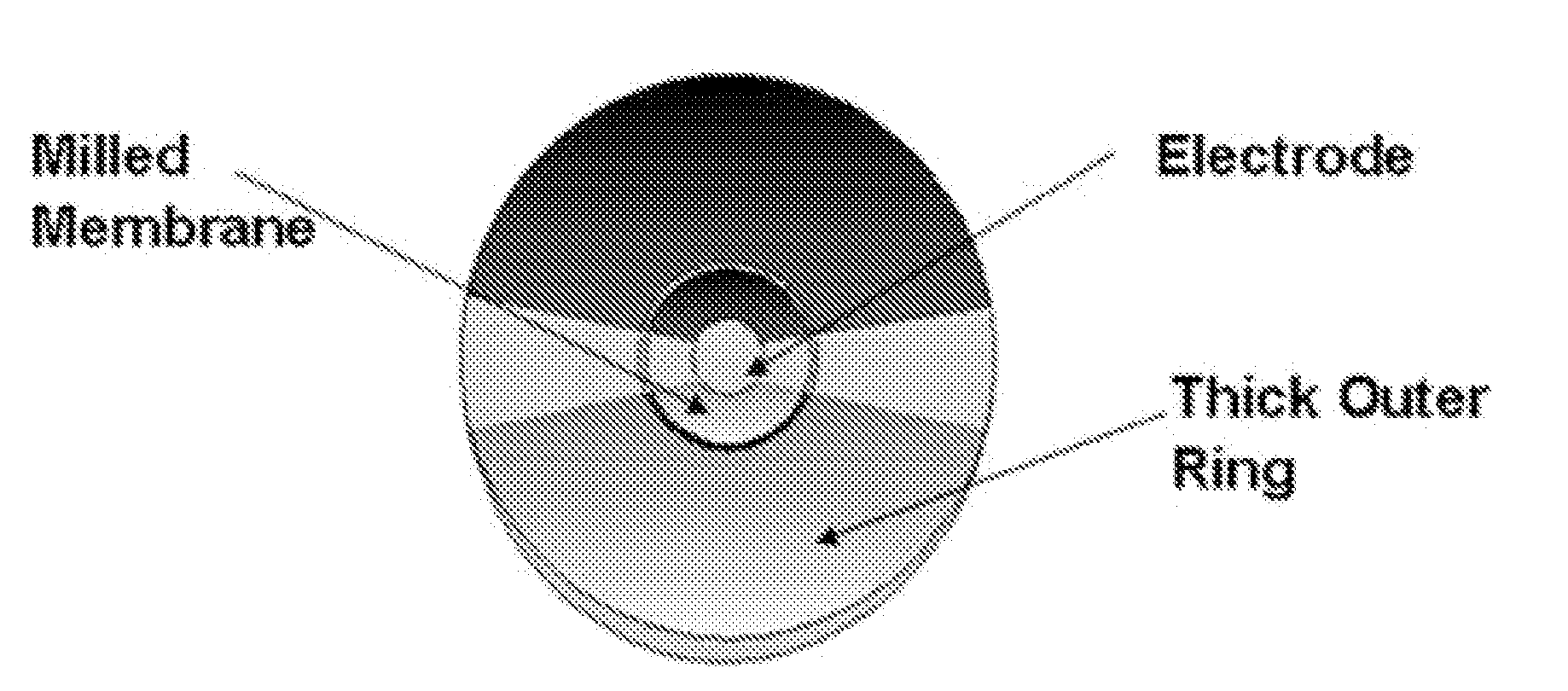
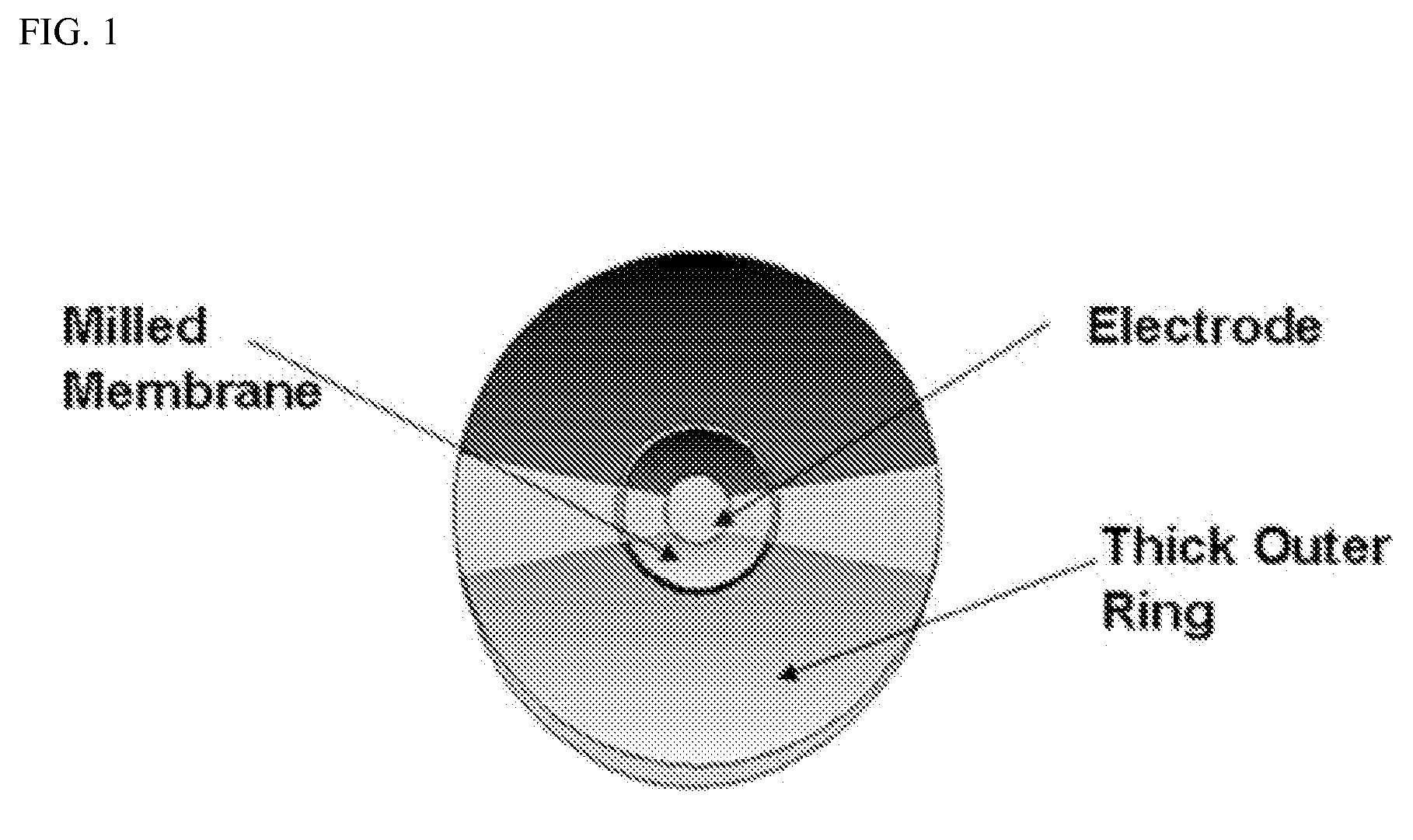
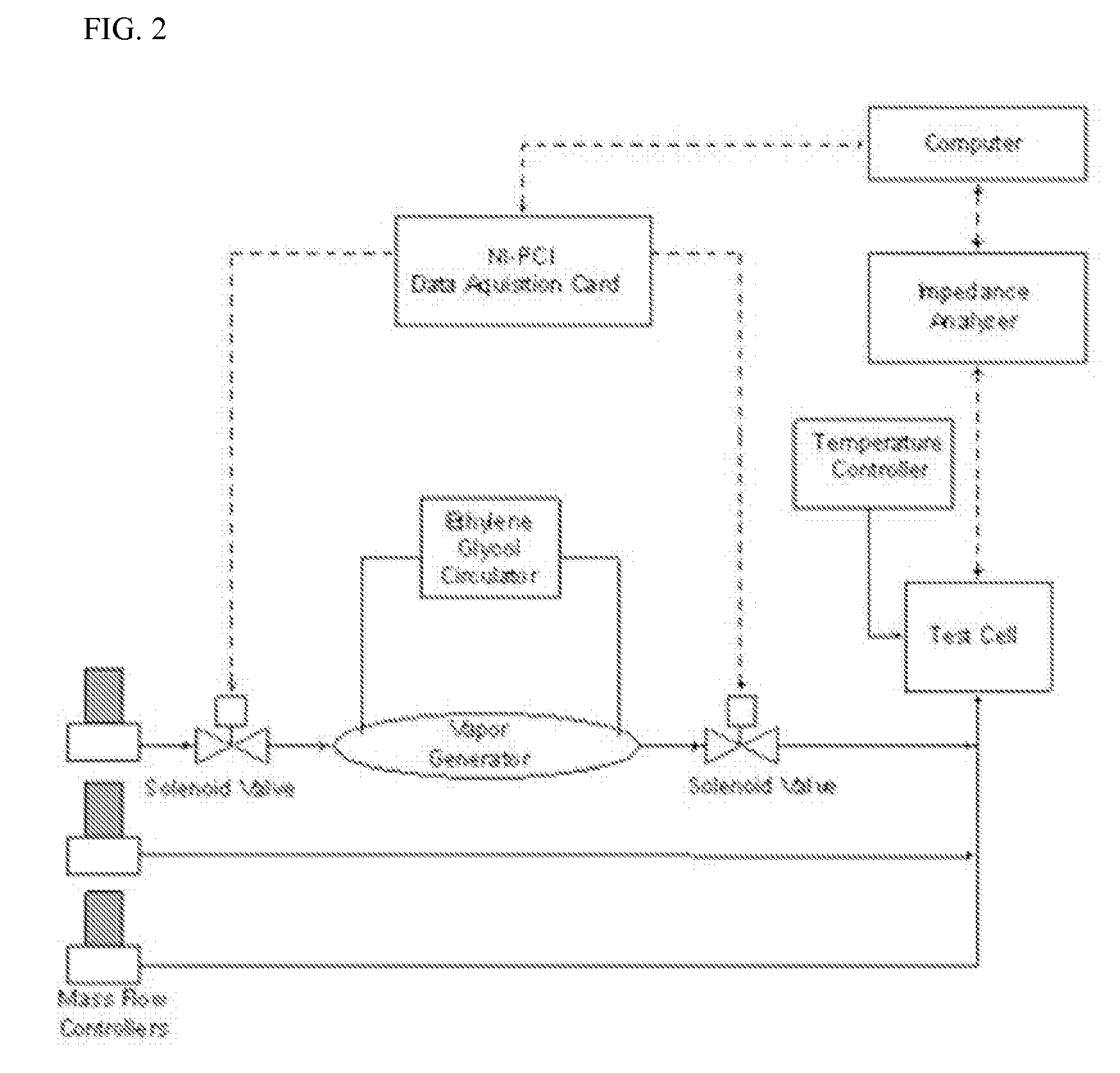
- Development of TSM sensors with a quartz crystal oscillating region of reduced thickness surrounded by a thicker outer region, coated with a polymer sensing film, operating at frequencies above 20 MHz, such as 96 MHz, which enhances sensitivity and mechanical stability while maintaining baseline stability.

QCM sensor and QCM sensor device
PatentInactiveUS20040187580A1
Innovation
- A QCM sensor system with multiple piezoelectric transducers connected in parallel, where a common electrode line connects all first electrodes and a common electrode line connects all second electrodes, allowing for simultaneous measurement of resonance frequency changes across all transducers using an admittance measuring unit and processor to calculate mass deposited on each transducer.


Temperature Stability and Performance Factors
Temperature stability represents a critical performance factor when comparing lithium quartz and traditional quartz crystals in frequency control applications. Lithium quartz crystals demonstrate superior temperature stability characteristics, with frequency variations typically limited to ±50 ppm over the industrial temperature range (-40°C to +85°C), compared to standard quartz which may exhibit variations of ±100 ppm or more under identical conditions. This enhanced stability is primarily attributed to the lithium doping process, which modifies the crystal lattice structure to reduce temperature-induced dimensional changes.
The temperature coefficient of frequency (TCF) for lithium quartz typically ranges from -0.04 to -0.02 ppm/°C², significantly lower than conventional quartz's -0.035 to -0.045 ppm/°C². This difference becomes particularly pronounced in applications requiring precise timing under fluctuating environmental conditions, such as telecommunications infrastructure and aerospace systems.
Performance degradation patterns also differ substantially between these materials. Standard quartz crystals often exhibit a pronounced "S-curve" frequency-temperature relationship, with inflection points where stability deteriorates rapidly. Lithium quartz, by contrast, demonstrates a more linear response across operational temperature ranges, allowing for more predictable compensation techniques in oscillator design.
Aging characteristics further differentiate these materials, with lithium quartz showing approximately 30-40% less frequency drift over time compared to standard quartz. After the first year of operation, lithium quartz typically stabilizes at drift rates below 1 ppm/year, while conventional quartz may continue to exhibit shifts of 2-3 ppm/year or greater.
Environmental resilience testing reveals that lithium quartz maintains its resonance frequency more consistently under mechanical shock and vibration conditions. Standard acceleration sensitivity measurements show lithium quartz with values of 0.5-1.0 ppb/g compared to 1.5-2.5 ppb/g for conventional quartz, representing a significant advantage in mobile and aerospace applications where mechanical stresses are common.
Power consumption metrics also favor lithium quartz oscillators, which typically require 10-15% less drive power to maintain equivalent phase noise performance. This efficiency advantage becomes particularly valuable in battery-powered applications where energy conservation directly impacts operational longevity.
The superior temperature stability of lithium quartz does come with trade-offs, including higher manufacturing costs (typically 30-50% premium) and more complex integration requirements. However, for applications where frequency stability under varying temperature conditions is paramount, the performance advantages often justify these additional considerations.
The temperature coefficient of frequency (TCF) for lithium quartz typically ranges from -0.04 to -0.02 ppm/°C², significantly lower than conventional quartz's -0.035 to -0.045 ppm/°C². This difference becomes particularly pronounced in applications requiring precise timing under fluctuating environmental conditions, such as telecommunications infrastructure and aerospace systems.
Performance degradation patterns also differ substantially between these materials. Standard quartz crystals often exhibit a pronounced "S-curve" frequency-temperature relationship, with inflection points where stability deteriorates rapidly. Lithium quartz, by contrast, demonstrates a more linear response across operational temperature ranges, allowing for more predictable compensation techniques in oscillator design.
Aging characteristics further differentiate these materials, with lithium quartz showing approximately 30-40% less frequency drift over time compared to standard quartz. After the first year of operation, lithium quartz typically stabilizes at drift rates below 1 ppm/year, while conventional quartz may continue to exhibit shifts of 2-3 ppm/year or greater.
Environmental resilience testing reveals that lithium quartz maintains its resonance frequency more consistently under mechanical shock and vibration conditions. Standard acceleration sensitivity measurements show lithium quartz with values of 0.5-1.0 ppb/g compared to 1.5-2.5 ppb/g for conventional quartz, representing a significant advantage in mobile and aerospace applications where mechanical stresses are common.
Power consumption metrics also favor lithium quartz oscillators, which typically require 10-15% less drive power to maintain equivalent phase noise performance. This efficiency advantage becomes particularly valuable in battery-powered applications where energy conservation directly impacts operational longevity.
The superior temperature stability of lithium quartz does come with trade-offs, including higher manufacturing costs (typically 30-50% premium) and more complex integration requirements. However, for applications where frequency stability under varying temperature conditions is paramount, the performance advantages often justify these additional considerations.
Manufacturing Processes and Cost Implications
The manufacturing processes for lithium quartz and traditional quartz crystals differ significantly, impacting both production complexity and cost structures. Traditional quartz crystal manufacturing involves mining natural quartz or synthesizing it through hydrothermal processes, followed by precise cutting, lapping, and electrode application. This established process benefits from decades of optimization and economies of scale, resulting in relatively low production costs for standard quartz resonators.
In contrast, lithium quartz manufacturing requires additional steps and more stringent controls. The incorporation of lithium into the crystal lattice necessitates specialized doping techniques during the crystal growth phase. This process demands higher purity raw materials and more precise temperature and pressure controls, increasing both equipment requirements and production complexity. The yield rates for lithium quartz are typically lower than for traditional quartz, further driving up unit costs.
Equipment depreciation represents a significant cost factor in lithium quartz production. The specialized growth chambers and monitoring systems required for consistent lithium integration have higher capital costs and often shorter operational lifespans due to the corrosive nature of lithium compounds. Manufacturers must amortize these costs across production volumes that are currently much smaller than those of standard quartz, resulting in higher per-unit overhead allocation.
Energy consumption during manufacturing also differs markedly between the two technologies. Lithium quartz production typically requires 30-40% more energy per unit due to the extended growth periods and higher temperature requirements for proper lithium integration. This energy differential translates directly to increased production costs, particularly in regions with high electricity prices.
Labor costs also impact the comparative economics of these technologies. Lithium quartz production requires more specialized technical expertise for monitoring and quality control, commanding higher wages. Additionally, the inspection and testing phases for lithium quartz are more extensive due to the need to verify proper lithium distribution and confirm the enhanced frequency stability characteristics that justify its premium positioning.
The supply chain considerations further differentiate the cost structures. While traditional quartz benefits from a mature, global supply network, lithium quartz relies on more limited sources of high-purity lithium compounds suitable for crystal integration. This supply constraint introduces both cost premiums and potential availability risks that manufacturers must factor into their production planning and pricing strategies.
In contrast, lithium quartz manufacturing requires additional steps and more stringent controls. The incorporation of lithium into the crystal lattice necessitates specialized doping techniques during the crystal growth phase. This process demands higher purity raw materials and more precise temperature and pressure controls, increasing both equipment requirements and production complexity. The yield rates for lithium quartz are typically lower than for traditional quartz, further driving up unit costs.
Equipment depreciation represents a significant cost factor in lithium quartz production. The specialized growth chambers and monitoring systems required for consistent lithium integration have higher capital costs and often shorter operational lifespans due to the corrosive nature of lithium compounds. Manufacturers must amortize these costs across production volumes that are currently much smaller than those of standard quartz, resulting in higher per-unit overhead allocation.
Energy consumption during manufacturing also differs markedly between the two technologies. Lithium quartz production typically requires 30-40% more energy per unit due to the extended growth periods and higher temperature requirements for proper lithium integration. This energy differential translates directly to increased production costs, particularly in regions with high electricity prices.
Labor costs also impact the comparative economics of these technologies. Lithium quartz production requires more specialized technical expertise for monitoring and quality control, commanding higher wages. Additionally, the inspection and testing phases for lithium quartz are more extensive due to the need to verify proper lithium distribution and confirm the enhanced frequency stability characteristics that justify its premium positioning.
The supply chain considerations further differentiate the cost structures. While traditional quartz benefits from a mature, global supply network, lithium quartz relies on more limited sources of high-purity lithium compounds suitable for crystal integration. This supply constraint introduces both cost premiums and potential availability risks that manufacturers must factor into their production planning and pricing strategies.
Unlock deeper insights with PatSnap Eureka Quick Research — get a full tech report to explore trends and direct your research. Try now!
Generate Your Research Report Instantly with AI Agent
Supercharge your innovation with PatSnap Eureka AI Agent Platform!