

Challenges and Innovations in Scramjet Test Bed Developments
AUG 13, 20259 MIN READ
Generate Your Research Report Instantly with AI Agent
PatSnap Eureka helps you evaluate technical feasibility & market potential.
Scramjet Test Bed Evolution and Objectives
Scramjet test bed development has undergone significant evolution since its inception in the mid-20th century. Initially, these facilities were rudimentary, focusing on basic proof-of-concept experiments. As the field progressed, the objectives of scramjet test beds expanded to address more complex challenges in hypersonic propulsion.
The primary goal of early scramjet test beds was to demonstrate the feasibility of supersonic combustion. These facilities aimed to create flow conditions that simulated the high-speed, high-temperature environment encountered during hypersonic flight. As understanding grew, objectives shifted towards optimizing combustion efficiency and stability under various flight conditions.
In the 1990s and early 2000s, scramjet test bed development focused on scaling up experiments to more closely represent full-size engines. This phase saw the introduction of larger facilities capable of longer test durations, allowing researchers to study thermal management and structural integrity issues. Concurrently, the integration of advanced diagnostics became a key objective, enabling more detailed measurements of flow properties, combustion dynamics, and overall engine performance.
Recent advancements in scramjet test bed technology have been driven by the need for more realistic flight condition simulations. Modern facilities aim to replicate a wider range of Mach numbers, altitudes, and flight trajectories. This evolution has led to the development of combined-cycle test beds that can simulate the entire flight envelope of hypersonic vehicles, from takeoff to cruise conditions.
Another significant objective in contemporary scramjet test bed development is the validation of computational fluid dynamics (CFD) models. As numerical simulations become increasingly sophisticated, there is a growing need for experimental data to verify and refine these models. This has led to the integration of high-fidelity instrumentation and non-intrusive measurement techniques in test facilities.
The latest generation of scramjet test beds also focuses on addressing practical challenges in engine design and operation. Objectives now include studying fuel injection strategies, investigating thermal protection systems, and exploring novel materials for engine components. Additionally, there is an increased emphasis on developing test beds that can evaluate the performance of complete propulsion systems, including inlet and nozzle components, rather than isolated combustor sections.
Looking forward, the evolution of scramjet test beds is likely to continue towards more comprehensive, flexible, and efficient facilities. Future objectives may include the development of modular test beds that can be rapidly reconfigured for different experimental setups, as well as the integration of real-time adaptive control systems to optimize test conditions dynamically.
The primary goal of early scramjet test beds was to demonstrate the feasibility of supersonic combustion. These facilities aimed to create flow conditions that simulated the high-speed, high-temperature environment encountered during hypersonic flight. As understanding grew, objectives shifted towards optimizing combustion efficiency and stability under various flight conditions.
In the 1990s and early 2000s, scramjet test bed development focused on scaling up experiments to more closely represent full-size engines. This phase saw the introduction of larger facilities capable of longer test durations, allowing researchers to study thermal management and structural integrity issues. Concurrently, the integration of advanced diagnostics became a key objective, enabling more detailed measurements of flow properties, combustion dynamics, and overall engine performance.
Recent advancements in scramjet test bed technology have been driven by the need for more realistic flight condition simulations. Modern facilities aim to replicate a wider range of Mach numbers, altitudes, and flight trajectories. This evolution has led to the development of combined-cycle test beds that can simulate the entire flight envelope of hypersonic vehicles, from takeoff to cruise conditions.
Another significant objective in contemporary scramjet test bed development is the validation of computational fluid dynamics (CFD) models. As numerical simulations become increasingly sophisticated, there is a growing need for experimental data to verify and refine these models. This has led to the integration of high-fidelity instrumentation and non-intrusive measurement techniques in test facilities.
The latest generation of scramjet test beds also focuses on addressing practical challenges in engine design and operation. Objectives now include studying fuel injection strategies, investigating thermal protection systems, and exploring novel materials for engine components. Additionally, there is an increased emphasis on developing test beds that can evaluate the performance of complete propulsion systems, including inlet and nozzle components, rather than isolated combustor sections.
Looking forward, the evolution of scramjet test beds is likely to continue towards more comprehensive, flexible, and efficient facilities. Future objectives may include the development of modular test beds that can be rapidly reconfigured for different experimental setups, as well as the integration of real-time adaptive control systems to optimize test conditions dynamically.
Market Analysis for Hypersonic Technologies
The hypersonic technology market is experiencing rapid growth, driven by increasing investments in defense and aerospace sectors. The global hypersonic technology market is projected to reach significant value in the coming years, with a compound annual growth rate (CAGR) exceeding industry averages. This growth is primarily fueled by the rising demand for advanced missile systems and hypersonic vehicles for both military and civilian applications.
In the defense sector, major powers such as the United States, China, and Russia are heavily investing in hypersonic weapons development, creating a substantial market for related technologies. These investments are not only in weapon systems but also in countermeasures and defensive capabilities against hypersonic threats. This has led to increased funding for research and development in areas such as advanced materials, propulsion systems, and guidance technologies.
The commercial aerospace sector is also showing interest in hypersonic technologies, particularly for high-speed passenger and cargo transportation. Several companies are exploring the potential of hypersonic aircraft for long-distance travel, which could revolutionize the aviation industry. This interest is creating new market opportunities for technologies related to thermal management, aerodynamics, and propulsion systems optimized for hypersonic flight.
The scramjet test bed market, a crucial subset of hypersonic technologies, is seeing growing demand as it plays a vital role in the development and testing of hypersonic propulsion systems. Test facilities capable of simulating hypersonic flight conditions are becoming increasingly valuable assets for both government agencies and private companies involved in hypersonic research.
Geographically, North America currently leads the hypersonic technology market, followed by Asia-Pacific and Europe. The United States, in particular, has allocated substantial budgets for hypersonic research and development programs. China and Russia are also significant players, with ambitious hypersonic weapon programs driving their domestic markets.
Key market segments within hypersonic technologies include propulsion systems, aerodynamic systems, guidance and navigation systems, and thermal protection systems. Among these, propulsion systems, including scramjets, represent a significant portion of the market due to their critical role in achieving and maintaining hypersonic speeds.
The market for hypersonic technologies faces challenges such as the high costs associated with research and development, the complexity of testing under realistic conditions, and the need for advanced materials capable of withstanding extreme temperatures and stresses. However, these challenges also present opportunities for innovation and technological breakthroughs, potentially leading to new market segments and applications.
In the defense sector, major powers such as the United States, China, and Russia are heavily investing in hypersonic weapons development, creating a substantial market for related technologies. These investments are not only in weapon systems but also in countermeasures and defensive capabilities against hypersonic threats. This has led to increased funding for research and development in areas such as advanced materials, propulsion systems, and guidance technologies.
The commercial aerospace sector is also showing interest in hypersonic technologies, particularly for high-speed passenger and cargo transportation. Several companies are exploring the potential of hypersonic aircraft for long-distance travel, which could revolutionize the aviation industry. This interest is creating new market opportunities for technologies related to thermal management, aerodynamics, and propulsion systems optimized for hypersonic flight.
The scramjet test bed market, a crucial subset of hypersonic technologies, is seeing growing demand as it plays a vital role in the development and testing of hypersonic propulsion systems. Test facilities capable of simulating hypersonic flight conditions are becoming increasingly valuable assets for both government agencies and private companies involved in hypersonic research.
Geographically, North America currently leads the hypersonic technology market, followed by Asia-Pacific and Europe. The United States, in particular, has allocated substantial budgets for hypersonic research and development programs. China and Russia are also significant players, with ambitious hypersonic weapon programs driving their domestic markets.
Key market segments within hypersonic technologies include propulsion systems, aerodynamic systems, guidance and navigation systems, and thermal protection systems. Among these, propulsion systems, including scramjets, represent a significant portion of the market due to their critical role in achieving and maintaining hypersonic speeds.
The market for hypersonic technologies faces challenges such as the high costs associated with research and development, the complexity of testing under realistic conditions, and the need for advanced materials capable of withstanding extreme temperatures and stresses. However, these challenges also present opportunities for innovation and technological breakthroughs, potentially leading to new market segments and applications.
Current Scramjet Test Bed Challenges
Scramjet test bed development faces numerous challenges due to the extreme conditions under which these engines operate. One of the primary obstacles is the creation of high-enthalpy flow conditions that accurately simulate hypersonic flight environments. Achieving and maintaining these conditions in ground-based facilities is technically demanding and requires sophisticated infrastructure.
Material limitations pose another significant challenge. The intense heat and pressure generated during scramjet operation push conventional materials to their limits. Researchers must develop and implement advanced materials capable of withstanding these extreme conditions while maintaining structural integrity and performance.
Instrumentation and measurement techniques present further complications. The high-speed, high-temperature environment makes it difficult to obtain accurate and reliable data. Traditional sensors and measurement tools often fail or provide inaccurate readings under such extreme conditions. This necessitates the development of innovative sensing technologies and data acquisition methods specifically tailored for scramjet test beds.
Scale and duration of testing are also critical issues. Many existing facilities struggle to provide sufficiently large test sections or sustained test times to fully evaluate scramjet performance. This limitation hampers the ability to study complex flow phenomena and engine-vehicle integration effects, which are crucial for advancing scramjet technology.
Another challenge lies in the integration of fuel injection and mixing systems. Achieving efficient fuel-air mixing in the supersonic flow is essential for scramjet performance but remains a complex task. Test beds must incorporate advanced fuel injection mechanisms and allow for the study of various injection strategies and their effects on combustion efficiency.
Computational modeling and simulation capabilities, while advancing, still face limitations in accurately predicting scramjet behavior. The complex, multiphysics nature of scramjet operation makes it challenging to develop comprehensive models that can reliably predict performance across a wide range of conditions. This gap between simulation and real-world testing necessitates continued refinement of computational tools and validation through experimental data.
Lastly, the cost and complexity of scramjet test facilities present significant barriers to research and development. The specialized equipment, infrastructure, and expertise required for these facilities make them expensive to build and operate. This financial constraint limits the number and scope of experiments that can be conducted, potentially slowing the pace of innovation in scramjet technology.
Material limitations pose another significant challenge. The intense heat and pressure generated during scramjet operation push conventional materials to their limits. Researchers must develop and implement advanced materials capable of withstanding these extreme conditions while maintaining structural integrity and performance.
Instrumentation and measurement techniques present further complications. The high-speed, high-temperature environment makes it difficult to obtain accurate and reliable data. Traditional sensors and measurement tools often fail or provide inaccurate readings under such extreme conditions. This necessitates the development of innovative sensing technologies and data acquisition methods specifically tailored for scramjet test beds.
Scale and duration of testing are also critical issues. Many existing facilities struggle to provide sufficiently large test sections or sustained test times to fully evaluate scramjet performance. This limitation hampers the ability to study complex flow phenomena and engine-vehicle integration effects, which are crucial for advancing scramjet technology.
Another challenge lies in the integration of fuel injection and mixing systems. Achieving efficient fuel-air mixing in the supersonic flow is essential for scramjet performance but remains a complex task. Test beds must incorporate advanced fuel injection mechanisms and allow for the study of various injection strategies and their effects on combustion efficiency.
Computational modeling and simulation capabilities, while advancing, still face limitations in accurately predicting scramjet behavior. The complex, multiphysics nature of scramjet operation makes it challenging to develop comprehensive models that can reliably predict performance across a wide range of conditions. This gap between simulation and real-world testing necessitates continued refinement of computational tools and validation through experimental data.
Lastly, the cost and complexity of scramjet test facilities present significant barriers to research and development. The specialized equipment, infrastructure, and expertise required for these facilities make them expensive to build and operate. This financial constraint limits the number and scope of experiments that can be conducted, potentially slowing the pace of innovation in scramjet technology.
Existing Scramjet Test Bed Solutions
01 Scramjet engine design and testing
Scramjet engines are designed and tested for hypersonic flight applications. These test beds involve specialized facilities to simulate high-speed airflow and combustion conditions. The designs focus on optimizing fuel injection, combustion efficiency, and overall engine performance in supersonic airflow.- Scramjet engine design and testing: Scramjet engines are designed and tested for hypersonic flight applications. These test beds involve specialized facilities to simulate high-speed airflow and combustion conditions. The designs focus on optimizing fuel injection, combustion efficiency, and overall engine performance in supersonic airflow.
- Hypersonic vehicle integration: Scramjet test beds are integrated into hypersonic vehicle designs to evaluate overall system performance. This includes testing the interaction between the engine and vehicle aerodynamics, as well as assessing thermal management systems and structural integrity under extreme conditions.
- Fuel injection and mixing systems: Advanced fuel injection and mixing systems are developed and tested to improve scramjet performance. These systems aim to achieve rapid and efficient fuel-air mixing in supersonic flow conditions, which is critical for sustained hypersonic flight.
- Computational modeling and simulation: Computational fluid dynamics (CFD) and other advanced modeling techniques are used to simulate scramjet performance in virtual test beds. These simulations help optimize engine designs and predict performance before physical testing, reducing development time and costs.
- Instrumentation and data acquisition: Specialized instrumentation and data acquisition systems are developed for scramjet test beds. These systems are designed to withstand extreme temperatures and pressures while providing accurate measurements of engine performance, flow characteristics, and combustion dynamics.
02 Wind tunnel facilities for scramjet testing
Specialized wind tunnel facilities are developed for testing scramjet engines. These facilities can simulate hypersonic flight conditions, including high temperatures and pressures. They allow researchers to study the aerodynamics and performance of scramjet engines in controlled environments.Expand Specific Solutions03 Fuel injection and mixing systems
Advanced fuel injection and mixing systems are crucial for scramjet performance. These systems are designed to achieve rapid and efficient fuel-air mixing in supersonic airflow. Various injection techniques and nozzle designs are explored to optimize combustion efficiency and thrust generation.Expand Specific Solutions04 Thermal management and cooling systems
Effective thermal management and cooling systems are essential for scramjet test beds. These systems help manage the extreme temperatures generated during hypersonic flight and engine operation. Advanced materials and cooling techniques are employed to protect engine components and maintain structural integrity.Expand Specific Solutions05 Instrumentation and data acquisition
Sophisticated instrumentation and data acquisition systems are developed for scramjet test beds. These systems enable real-time monitoring and analysis of engine performance, including temperature, pressure, and flow measurements. Advanced sensors and data processing techniques are employed to capture and interpret critical test data.Expand Specific Solutions
Key Players in Scramjet Research
The development of scramjet test beds is currently in a nascent stage, with significant challenges and opportunities for innovation. The market for this technology is relatively small but growing, driven by aerospace and defense sectors. Technical maturity is still low, with key players like Aerojet Rocketdyne, Inc. and Beihang University leading research efforts. Companies such as IFP Energies Nouvelles and AVL List GmbH are contributing to advancements in propulsion systems and testing methodologies. The competitive landscape is characterized by a mix of established aerospace firms and specialized research institutions, with potential for new entrants as the technology progresses.
Aerojet Rocketdyne, Inc.
Technical Solution: Aerojet Rocketdyne has developed advanced scramjet test bed technologies, focusing on high-speed propulsion systems for hypersonic vehicles. Their approach includes innovative fuel injection and combustion strategies to achieve sustained hypersonic flight. The company has successfully demonstrated scramjet engines capable of operating at Mach 5+ speeds in ground-based test facilities[1]. They utilize advanced materials and cooling techniques to manage the extreme temperatures encountered during hypersonic flight. Aerojet Rocketdyne's test beds incorporate sophisticated instrumentation and data acquisition systems to capture critical performance metrics in real-time, enabling rapid iteration and optimization of scramjet designs[3].
Strengths: Extensive experience in rocket propulsion, advanced materials expertise, and established testing infrastructure. Weaknesses: High development costs and limited flight test opportunities for full-scale scramjet engines.
Beihang University
Technical Solution: Beihang University has made significant strides in scramjet test bed development, focusing on both ground-based and flight test capabilities. Their research includes innovative wind tunnel designs that can simulate hypersonic flight conditions more accurately. The university has developed a multi-mode scramjet engine test bed capable of operating across a wide range of Mach numbers, from 4 to 7[2]. They have also pioneered the use of advanced diagnostic techniques, such as laser-based flow visualization and high-speed imaging, to better understand scramjet combustion dynamics. Beihang's test beds incorporate modular designs, allowing for rapid reconfiguration and testing of various scramjet components and geometries[4].
Strengths: Strong academic research foundation, innovative diagnostic techniques, and collaborative approach with industry partners. Weaknesses: Limited resources compared to large aerospace companies and potential challenges in scaling up technologies for full-scale flight tests.
Breakthrough Technologies in Scramjet Testing
Scramjet engine and flying object
PatentWO2019155654A1
Innovation
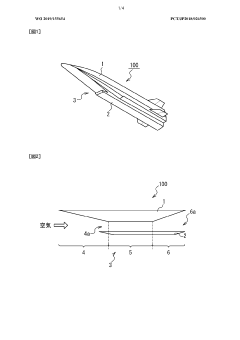
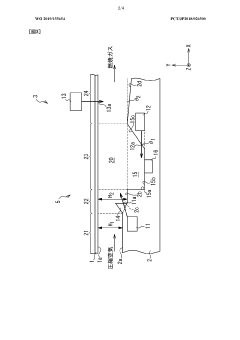
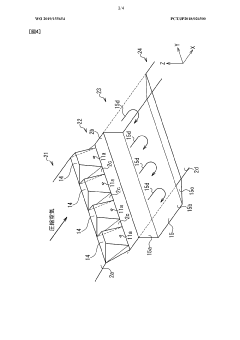
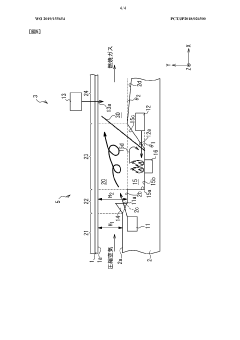
- The scramjet engine design incorporates a dual fuel injection system with a protrusion in the turbulence forming region and a cavity with an inclined surface to generate shock waves, optimizing fuel injection and airflow for improved combustion efficiency, featuring a first fuel nozzle injecting fuel into turbulent air and a second nozzle injecting across a discontinuous surface to promote mixing and flame stabilization.
Ramjet for a supersonic and hypersonic aircraft
PatentInactiveUS20040011045A1
Innovation
- A ramjet design featuring a sliding lower wall with a V-profiled upper and lower wall configuration, where the sliding wall's translation modifies the oxidant inlet and combustion chamber geometries, allowing for adaptive geometry changes from subsonic to supersonic conditions using a single actuator, eliminating the need for variable-geometry walls and complex articulation systems.


Environmental Impact of Scramjet Testing
The environmental impact of scramjet testing is a critical consideration in the development and operation of scramjet test beds. These high-speed propulsion systems, designed to operate at hypersonic speeds, pose unique challenges in terms of their ecological footprint and potential environmental consequences.
One of the primary environmental concerns associated with scramjet testing is the emission of pollutants. The combustion process in scramjets typically involves the use of hydrocarbon fuels, which can result in the release of carbon dioxide, nitrogen oxides, and particulate matter. These emissions contribute to air pollution and may have implications for local air quality and global climate change. The high temperatures and pressures involved in scramjet operation can also lead to the formation of additional pollutants, such as volatile organic compounds and ozone precursors.
Noise pollution is another significant environmental impact of scramjet testing. The extreme velocities and intense combustion processes generate substantial acoustic energy, which can have detrimental effects on surrounding ecosystems and human populations. The high-intensity noise produced during testing may disrupt wildlife habitats, affect animal behavior, and potentially cause stress or hearing damage to both humans and animals in the vicinity of test facilities.
Water consumption and thermal pollution are additional environmental concerns associated with scramjet test beds. Cooling systems required to manage the extreme temperatures generated during testing can consume significant amounts of water, potentially straining local water resources. Furthermore, the discharge of heated water back into natural water bodies can lead to thermal pollution, affecting aquatic ecosystems and altering the delicate balance of marine and freshwater environments.
The construction and operation of scramjet test facilities also have land-use implications. These facilities often require substantial areas of land, which may lead to habitat destruction or fragmentation. The development of supporting infrastructure, such as fuel storage and distribution systems, can further contribute to land-use changes and potential soil contamination risks.
To address these environmental challenges, researchers and engineers are exploring various mitigation strategies. These include the development of cleaner-burning fuels, advanced emission control technologies, and innovative cooling systems that reduce water consumption. Additionally, efforts are being made to improve the design of test facilities to minimize noise propagation and implement sound-dampening measures.
Environmental impact assessments and monitoring programs are becoming increasingly important in scramjet test bed developments. These initiatives aim to quantify and track the environmental effects of testing activities, enabling the implementation of targeted mitigation measures and ensuring compliance with environmental regulations.
As scramjet technology continues to advance, balancing the pursuit of hypersonic propulsion capabilities with environmental stewardship remains a crucial challenge. The ongoing research and development in this field must prioritize sustainable practices and innovative solutions to minimize the ecological footprint of scramjet testing while advancing this cutting-edge technology.
One of the primary environmental concerns associated with scramjet testing is the emission of pollutants. The combustion process in scramjets typically involves the use of hydrocarbon fuels, which can result in the release of carbon dioxide, nitrogen oxides, and particulate matter. These emissions contribute to air pollution and may have implications for local air quality and global climate change. The high temperatures and pressures involved in scramjet operation can also lead to the formation of additional pollutants, such as volatile organic compounds and ozone precursors.
Noise pollution is another significant environmental impact of scramjet testing. The extreme velocities and intense combustion processes generate substantial acoustic energy, which can have detrimental effects on surrounding ecosystems and human populations. The high-intensity noise produced during testing may disrupt wildlife habitats, affect animal behavior, and potentially cause stress or hearing damage to both humans and animals in the vicinity of test facilities.
Water consumption and thermal pollution are additional environmental concerns associated with scramjet test beds. Cooling systems required to manage the extreme temperatures generated during testing can consume significant amounts of water, potentially straining local water resources. Furthermore, the discharge of heated water back into natural water bodies can lead to thermal pollution, affecting aquatic ecosystems and altering the delicate balance of marine and freshwater environments.
The construction and operation of scramjet test facilities also have land-use implications. These facilities often require substantial areas of land, which may lead to habitat destruction or fragmentation. The development of supporting infrastructure, such as fuel storage and distribution systems, can further contribute to land-use changes and potential soil contamination risks.
To address these environmental challenges, researchers and engineers are exploring various mitigation strategies. These include the development of cleaner-burning fuels, advanced emission control technologies, and innovative cooling systems that reduce water consumption. Additionally, efforts are being made to improve the design of test facilities to minimize noise propagation and implement sound-dampening measures.
Environmental impact assessments and monitoring programs are becoming increasingly important in scramjet test bed developments. These initiatives aim to quantify and track the environmental effects of testing activities, enabling the implementation of targeted mitigation measures and ensuring compliance with environmental regulations.
As scramjet technology continues to advance, balancing the pursuit of hypersonic propulsion capabilities with environmental stewardship remains a crucial challenge. The ongoing research and development in this field must prioritize sustainable practices and innovative solutions to minimize the ecological footprint of scramjet testing while advancing this cutting-edge technology.
International Collaboration in Hypersonic Research
International collaboration in hypersonic research has become increasingly crucial in addressing the challenges and innovations in scramjet test bed developments. The complex nature of hypersonic flight and the high costs associated with research and development have necessitated a global approach to advancing this technology.
Several key international partnerships have emerged in recent years, fostering knowledge exchange and resource sharing. The United States and Australia have maintained a long-standing collaboration through the Hypersonic International Flight Research Experimentation (HIFiRE) program, which has yielded significant advancements in scramjet propulsion and hypersonic vehicle design. This partnership has facilitated the development and testing of various scramjet configurations, contributing to the overall understanding of hypersonic flight dynamics.
European nations have also joined forces through initiatives like the European Hypersonic Research Program, which brings together expertise from countries such as France, Germany, and Italy. This collaborative effort has focused on developing advanced materials for hypersonic vehicles and improving computational fluid dynamics models for high-speed flight simulations.
In Asia, countries like China, Japan, and India have been actively pursuing hypersonic research, with varying degrees of international cooperation. China's hypersonic program has made significant strides, although details of international collaborations remain limited. Japan has engaged in joint research with Australia and the United States, particularly in the areas of materials science and propulsion technologies for hypersonic applications.
The sharing of test facilities has been a key aspect of international collaboration. Countries with advanced wind tunnels and shock tubes have opened their facilities to international researchers, allowing for more comprehensive testing of scramjet designs and hypersonic vehicle components. This approach has not only accelerated research progress but also helped in validating computational models across different experimental setups.
International conferences and symposia have played a vital role in fostering collaboration and knowledge dissemination. Events such as the International Space Planes and Hypersonic Systems and Technologies Conference have provided platforms for researchers worldwide to share their findings and discuss future directions in scramjet test bed development.
Despite these collaborative efforts, challenges remain in balancing national security interests with the benefits of international cooperation. Restrictions on technology transfer and export controls have sometimes hindered the full potential of global partnerships. However, the scientific community continues to advocate for increased collaboration, recognizing that the complexities of hypersonic flight require a collective global effort to overcome.
Several key international partnerships have emerged in recent years, fostering knowledge exchange and resource sharing. The United States and Australia have maintained a long-standing collaboration through the Hypersonic International Flight Research Experimentation (HIFiRE) program, which has yielded significant advancements in scramjet propulsion and hypersonic vehicle design. This partnership has facilitated the development and testing of various scramjet configurations, contributing to the overall understanding of hypersonic flight dynamics.
European nations have also joined forces through initiatives like the European Hypersonic Research Program, which brings together expertise from countries such as France, Germany, and Italy. This collaborative effort has focused on developing advanced materials for hypersonic vehicles and improving computational fluid dynamics models for high-speed flight simulations.
In Asia, countries like China, Japan, and India have been actively pursuing hypersonic research, with varying degrees of international cooperation. China's hypersonic program has made significant strides, although details of international collaborations remain limited. Japan has engaged in joint research with Australia and the United States, particularly in the areas of materials science and propulsion technologies for hypersonic applications.
The sharing of test facilities has been a key aspect of international collaboration. Countries with advanced wind tunnels and shock tubes have opened their facilities to international researchers, allowing for more comprehensive testing of scramjet designs and hypersonic vehicle components. This approach has not only accelerated research progress but also helped in validating computational models across different experimental setups.
International conferences and symposia have played a vital role in fostering collaboration and knowledge dissemination. Events such as the International Space Planes and Hypersonic Systems and Technologies Conference have provided platforms for researchers worldwide to share their findings and discuss future directions in scramjet test bed development.
Despite these collaborative efforts, challenges remain in balancing national security interests with the benefits of international cooperation. Restrictions on technology transfer and export controls have sometimes hindered the full potential of global partnerships. However, the scientific community continues to advocate for increased collaboration, recognizing that the complexities of hypersonic flight require a collective global effort to overcome.
Unlock deeper insights with PatSnap Eureka Quick Research — get a full tech report to explore trends and direct your research. Try now!
Generate Your Research Report Instantly with AI Agent
Supercharge your innovation with PatSnap Eureka AI Agent Platform!