
Circulating Fluidized Bed Boiler Load Cycling: How to Maintain Efficiency
JUN 26, 20269 MIN READ
Generate Your Research Report Instantly with AI Agent
Patsnap Eureka helps you evaluate technical feasibility & market potential.
CFB Boiler Load Cycling Background and Efficiency Targets
Circulating Fluidized Bed (CFB) boilers have emerged as a critical technology in the power generation industry since their commercial introduction in the 1980s. Originally developed to address environmental concerns and fuel flexibility requirements, CFB technology has evolved from small-scale industrial applications to large utility-scale power plants exceeding 600 MW capacity. The fundamental principle involves suspending fuel particles in a high-velocity air stream, creating a fluidized bed that enables efficient combustion at relatively low temperatures between 850-900°C.
The historical development of CFB technology can be traced through several distinct phases. The initial phase focused on basic fluidization principles and small-scale demonstrations. The second phase, spanning the 1990s, emphasized scaling up and improving combustion efficiency. The current phase addresses operational flexibility, particularly load cycling capabilities, as power systems increasingly integrate renewable energy sources requiring rapid response from conventional power plants.
Load cycling in CFB boilers presents unique challenges compared to pulverized coal units. The fluidized bed's thermal mass and complex heat transfer mechanisms create inherent operational constraints during load changes. Traditional CFB designs prioritized steady-state efficiency over dynamic performance, resulting in slower ramp rates and potential efficiency penalties during transient operations.
Contemporary efficiency targets for CFB boilers during load cycling operations aim to maintain net plant efficiency above 85% of design values across a load range of 40-100%. Advanced CFB designs target ramp rates of 3-5% per minute while preserving combustion stability and emissions compliance. These targets reflect the industry's recognition that future power generation must balance environmental performance with grid flexibility requirements.
The evolution toward improved load cycling performance has driven innovations in bed material management, air distribution systems, and advanced control strategies. Modern CFB boilers incorporate sophisticated automation systems that optimize fuel feed rates, air distribution, and heat transfer surfaces during load transitions. These technological advances enable CFB units to compete effectively in electricity markets that increasingly value operational flexibility alongside traditional efficiency metrics.
The historical development of CFB technology can be traced through several distinct phases. The initial phase focused on basic fluidization principles and small-scale demonstrations. The second phase, spanning the 1990s, emphasized scaling up and improving combustion efficiency. The current phase addresses operational flexibility, particularly load cycling capabilities, as power systems increasingly integrate renewable energy sources requiring rapid response from conventional power plants.
Load cycling in CFB boilers presents unique challenges compared to pulverized coal units. The fluidized bed's thermal mass and complex heat transfer mechanisms create inherent operational constraints during load changes. Traditional CFB designs prioritized steady-state efficiency over dynamic performance, resulting in slower ramp rates and potential efficiency penalties during transient operations.
Contemporary efficiency targets for CFB boilers during load cycling operations aim to maintain net plant efficiency above 85% of design values across a load range of 40-100%. Advanced CFB designs target ramp rates of 3-5% per minute while preserving combustion stability and emissions compliance. These targets reflect the industry's recognition that future power generation must balance environmental performance with grid flexibility requirements.
The evolution toward improved load cycling performance has driven innovations in bed material management, air distribution systems, and advanced control strategies. Modern CFB boilers incorporate sophisticated automation systems that optimize fuel feed rates, air distribution, and heat transfer surfaces during load transitions. These technological advances enable CFB units to compete effectively in electricity markets that increasingly value operational flexibility alongside traditional efficiency metrics.
Market Demand for Flexible CFB Power Generation
The global energy landscape is experiencing a fundamental transformation driven by the increasing integration of renewable energy sources and the urgent need for grid flexibility. Traditional baseload power generation models are being challenged as power systems require more responsive and adaptable generation capabilities to accommodate the intermittent nature of wind and solar power.
Circulating fluidized bed boilers are emerging as critical assets in this evolving energy ecosystem due to their inherent operational flexibility compared to conventional pulverized coal units. The ability to rapidly adjust load output while maintaining combustion stability positions CFB technology as an essential bridge solution during the transition to cleaner energy systems. This flexibility becomes particularly valuable in markets with high renewable penetration where thermal units must frequently cycle to balance grid demand.
Market drivers for flexible CFB power generation are multifaceted and geographically diverse. In developed markets such as Europe and North America, aging coal fleet retirement combined with renewable energy mandates creates demand for flexible thermal backup capacity. Regulatory frameworks increasingly favor power plants capable of providing ancillary services including frequency regulation, spinning reserves, and rapid ramping capabilities that CFB units can deliver effectively.
Emerging economies present different but equally compelling market opportunities. Countries experiencing rapid industrialization and urbanization require power generation systems that can adapt to volatile demand patterns while utilizing locally available fuel sources. CFB technology's fuel flexibility allows utilization of lower-grade coals, biomass, and waste materials, making it economically attractive in regions with diverse fuel availability.
The economic value proposition for flexible CFB operation extends beyond traditional energy sales to include participation in capacity markets and ancillary service revenues. Grid operators are willing to pay premium rates for reliable flexible capacity that can respond quickly to system needs. This revenue diversification helps offset the efficiency penalties associated with frequent load cycling operations.
Industrial cogeneration applications represent another significant market segment driving demand for flexible CFB systems. Manufacturing facilities require steam and power generation that can adapt to varying production schedules while maintaining cost-effectiveness. The ability to efficiently cycle CFB boilers enables better alignment between energy production and industrial process requirements, reducing overall operational costs.
Environmental regulations continue to shape market demand by favoring cleaner combustion technologies. CFB boilers' superior emissions control capabilities, particularly for sulfur dioxide and nitrogen oxides, make them preferred choices in regions with stringent environmental standards. The technology's compatibility with carbon capture systems also positions it favorably for future carbon pricing scenarios.
Circulating fluidized bed boilers are emerging as critical assets in this evolving energy ecosystem due to their inherent operational flexibility compared to conventional pulverized coal units. The ability to rapidly adjust load output while maintaining combustion stability positions CFB technology as an essential bridge solution during the transition to cleaner energy systems. This flexibility becomes particularly valuable in markets with high renewable penetration where thermal units must frequently cycle to balance grid demand.
Market drivers for flexible CFB power generation are multifaceted and geographically diverse. In developed markets such as Europe and North America, aging coal fleet retirement combined with renewable energy mandates creates demand for flexible thermal backup capacity. Regulatory frameworks increasingly favor power plants capable of providing ancillary services including frequency regulation, spinning reserves, and rapid ramping capabilities that CFB units can deliver effectively.
Emerging economies present different but equally compelling market opportunities. Countries experiencing rapid industrialization and urbanization require power generation systems that can adapt to volatile demand patterns while utilizing locally available fuel sources. CFB technology's fuel flexibility allows utilization of lower-grade coals, biomass, and waste materials, making it economically attractive in regions with diverse fuel availability.
The economic value proposition for flexible CFB operation extends beyond traditional energy sales to include participation in capacity markets and ancillary service revenues. Grid operators are willing to pay premium rates for reliable flexible capacity that can respond quickly to system needs. This revenue diversification helps offset the efficiency penalties associated with frequent load cycling operations.
Industrial cogeneration applications represent another significant market segment driving demand for flexible CFB systems. Manufacturing facilities require steam and power generation that can adapt to varying production schedules while maintaining cost-effectiveness. The ability to efficiently cycle CFB boilers enables better alignment between energy production and industrial process requirements, reducing overall operational costs.
Environmental regulations continue to shape market demand by favoring cleaner combustion technologies. CFB boilers' superior emissions control capabilities, particularly for sulfur dioxide and nitrogen oxides, make them preferred choices in regions with stringent environmental standards. The technology's compatibility with carbon capture systems also positions it favorably for future carbon pricing scenarios.
Current CFB Load Cycling Challenges and Constraints
Circulating Fluidized Bed (CFB) boilers face significant operational challenges when subjected to frequent load cycling demands, particularly in modern power systems with increasing renewable energy integration. The primary constraint stems from the thermal inertia of the bed material, which requires substantial time to reach optimal operating temperatures during startup and experiences considerable heat loss during shutdown periods. This thermal cycling creates efficiency penalties that can reduce overall plant performance by 3-8% compared to steady-state operations.
The fluidization dynamics present another critical challenge during load cycling operations. Maintaining proper bed inventory and circulation rates across varying load conditions requires precise control of primary and secondary air flows. Insufficient fluidization at reduced loads can lead to bed defluidization, causing uneven temperature distribution and potential tube damage. Conversely, excessive fluidization during rapid load increases can result in increased particle carryover and erosion of downstream equipment.
Combustion stability represents a fundamental constraint in CFB load cycling operations. The heterogeneous nature of CFB combustion relies on maintaining adequate bed temperature and proper fuel-air mixing ratios. During load reduction phases, decreased fuel input can cause localized cold spots within the bed, leading to incomplete combustion and increased emissions of carbon monoxide and unburned hydrocarbons. The limestone injection system for sulfur capture also becomes less effective at lower temperatures, compromising environmental compliance.
Heat transfer efficiency degradation occurs during transient operations due to changes in bed density and particle circulation patterns. The cyclone separator efficiency varies with gas velocity changes during load cycling, affecting the overall heat transfer coefficient between the bed and heat exchange surfaces. This variability can result in steam temperature fluctuations and reduced thermal efficiency, particularly during rapid load change scenarios.
Control system limitations pose additional constraints for maintaining optimal performance during load cycling. Traditional control strategies designed for steady-state operations often struggle with the complex, non-linear dynamics of CFB systems during transient conditions. The time delays inherent in bed temperature response and the coupling between multiple process variables create challenges for maintaining stable operation while meeting grid dispatch requirements.
Economic constraints further compound these technical challenges, as frequent load cycling increases maintenance requirements for refractory materials, increases auxiliary power consumption for fans and pumps, and reduces overall plant availability. These factors collectively impact the economic viability of CFB technology in flexible power generation applications.
The fluidization dynamics present another critical challenge during load cycling operations. Maintaining proper bed inventory and circulation rates across varying load conditions requires precise control of primary and secondary air flows. Insufficient fluidization at reduced loads can lead to bed defluidization, causing uneven temperature distribution and potential tube damage. Conversely, excessive fluidization during rapid load increases can result in increased particle carryover and erosion of downstream equipment.
Combustion stability represents a fundamental constraint in CFB load cycling operations. The heterogeneous nature of CFB combustion relies on maintaining adequate bed temperature and proper fuel-air mixing ratios. During load reduction phases, decreased fuel input can cause localized cold spots within the bed, leading to incomplete combustion and increased emissions of carbon monoxide and unburned hydrocarbons. The limestone injection system for sulfur capture also becomes less effective at lower temperatures, compromising environmental compliance.
Heat transfer efficiency degradation occurs during transient operations due to changes in bed density and particle circulation patterns. The cyclone separator efficiency varies with gas velocity changes during load cycling, affecting the overall heat transfer coefficient between the bed and heat exchange surfaces. This variability can result in steam temperature fluctuations and reduced thermal efficiency, particularly during rapid load change scenarios.
Control system limitations pose additional constraints for maintaining optimal performance during load cycling. Traditional control strategies designed for steady-state operations often struggle with the complex, non-linear dynamics of CFB systems during transient conditions. The time delays inherent in bed temperature response and the coupling between multiple process variables create challenges for maintaining stable operation while meeting grid dispatch requirements.
Economic constraints further compound these technical challenges, as frequent load cycling increases maintenance requirements for refractory materials, increases auxiliary power consumption for fans and pumps, and reduces overall plant availability. These factors collectively impact the economic viability of CFB technology in flexible power generation applications.
Existing CFB Load Cycling Control Solutions
01 Combustion optimization and air distribution systems
Advanced air distribution systems and combustion optimization techniques are employed to enhance the efficiency of circulating fluidized bed boilers. These systems control the primary and secondary air flow rates, optimize the air-to-fuel ratio, and ensure proper mixing of combustible materials. The implementation of staged combustion and controlled air injection at different levels of the boiler helps achieve complete fuel burnout and reduces heat losses, thereby improving overall thermal efficiency.- Combustion optimization and air distribution systems: Advanced air distribution systems and combustion optimization techniques are employed to enhance the efficiency of circulating fluidized bed boilers. These systems control the primary and secondary air flow rates, optimize the air-to-fuel ratio, and ensure proper mixing of combustible materials. The implementation of staged combustion and controlled air injection at various levels of the boiler helps achieve complete fuel burnout and reduces heat losses, thereby improving overall thermal efficiency.
- Heat recovery and waste heat utilization: Heat recovery systems are integrated into circulating fluidized bed boilers to capture and utilize waste heat from flue gases and other thermal streams. These systems include economizers, air preheaters, and heat exchangers that recover sensible heat from exhaust gases. The recovered heat is used to preheat combustion air, feedwater, or fuel, significantly reducing fuel consumption and improving the overall energy efficiency of the boiler system.
- Particle circulation and bed material management: Efficient particle circulation systems and optimized bed material management are crucial for maintaining high efficiency in circulating fluidized bed boilers. These systems control the circulation rate of bed particles, manage the inventory of bed materials, and optimize the particle size distribution. Proper management ensures effective heat transfer, maintains stable combustion conditions, and prevents operational issues that could reduce boiler efficiency.
- Advanced control systems and monitoring: Sophisticated control systems and real-time monitoring technologies are implemented to optimize the operation of circulating fluidized bed boilers. These systems continuously monitor various parameters such as temperature, pressure, flow rates, and emissions to maintain optimal operating conditions. Advanced algorithms and feedback control mechanisms automatically adjust operational parameters to maximize efficiency while ensuring safe and stable operation.
- Fuel preparation and feeding optimization: Optimized fuel preparation and feeding systems contribute significantly to the efficiency of circulating fluidized bed boilers. These systems include fuel sizing, drying, and conditioning processes that prepare the fuel for optimal combustion. Advanced feeding mechanisms ensure uniform fuel distribution and controlled feed rates, which help maintain stable combustion conditions and maximize fuel utilization efficiency while minimizing unburned carbon losses.
02 Heat recovery and waste heat utilization
Heat recovery systems are integrated into circulating fluidized bed boilers to capture and utilize waste heat from flue gases and other thermal streams. These systems include economizers, air preheaters, and heat exchangers that recover sensible heat from exhaust gases. The recovered heat is used to preheat combustion air or feedwater, reducing fuel consumption and increasing the overall energy efficiency of the boiler system.Expand Specific Solutions03 Particle circulation and bed material management
Efficient particle circulation systems and proper bed material management are crucial for maintaining optimal heat transfer and combustion efficiency. The design includes cyclone separators, return legs, and loop seals that ensure proper circulation of bed materials. Advanced control of particle size distribution, bed inventory, and circulation rates helps maintain stable fluidization conditions and enhances heat transfer between particles and heat exchange surfaces.Expand Specific Solutions04 Advanced control systems and process monitoring
Sophisticated control systems and real-time monitoring technologies are implemented to optimize boiler operation and maintain peak efficiency. These systems continuously monitor parameters such as bed temperature, pressure drops, gas velocities, and emissions. Automated control algorithms adjust operating conditions in real-time to maintain optimal combustion efficiency, prevent operational issues, and ensure stable performance under varying load conditions.Expand Specific Solutions05 Fuel preparation and feeding systems
Advanced fuel preparation and feeding systems are designed to optimize fuel utilization and combustion efficiency in circulating fluidized bed boilers. These systems include fuel sizing equipment, moisture control systems, and precise feeding mechanisms that ensure uniform fuel distribution. Proper fuel preparation enhances combustion characteristics, reduces unburned carbon losses, and improves the overall thermal efficiency of the boiler by ensuring complete fuel conversion.Expand Specific Solutions
Major CFB Technology Providers and Market Leaders
The circulating fluidized bed (CFB) boiler load cycling efficiency market is in a mature development stage, driven by increasing demand for flexible power generation amid renewable energy integration. The global CFB boiler market, valued at several billion dollars, shows steady growth as utilities seek technologies capable of efficient load following operations. Technology maturity varies significantly among key players, with established manufacturers like Dongfang Boiler, Sumitomo SHI FW Energia, IHI Corp, and Doosan Enerbility leading advanced CFB designs optimized for cycling operations. Korean power companies including KEPCO, Korea Southern Power, and Korea East-West Power demonstrate operational expertise in load cycling applications. Research institutions like Korea Institute of Energy Research, Huaneng Clean Energy Research Institute, and Taiyuan University of Technology contribute to technological advancement. Industrial automation specialists such as Beijing HollySys and Honeywell International Technologies provide critical control systems enabling efficient load cycling. The competitive landscape reflects a mix of mature boiler manufacturers, utility operators, and technology developers working to optimize CFB performance during variable load operations.
GE Vernova Technology GmbH
Technical Solution: GE Vernova has developed advanced control systems for CFB boilers that utilize predictive analytics and machine learning algorithms to optimize load cycling operations. Their technology incorporates real-time monitoring of bed temperature, pressure differentials, and fuel feed rates to maintain optimal fluidization during load changes. The system employs adaptive control strategies that automatically adjust air flow distribution, fuel injection timing, and bed inventory management to minimize efficiency losses during cycling operations. Their solution includes advanced combustion optimization algorithms that maintain stable bed conditions even during rapid load changes, typically achieving efficiency retention of 92-95% during cycling compared to steady-state operations.
Strengths: Proven track record in large-scale power generation, advanced digital control systems, global service network. Weaknesses: High initial investment costs, complex system integration requirements.
Doosan Enerbility Co., Ltd.
Technical Solution: Doosan Enerbility has developed a comprehensive CFB load cycling solution that focuses on maintaining bed temperature stability through advanced fuel management and air distribution control. Their technology employs a multi-zone air injection system that allows for precise control of combustion zones during load variations. The system includes sophisticated bed material management techniques that prevent agglomeration and maintain proper fluidization characteristics during cycling. Their approach incorporates predictive maintenance algorithms that monitor key components and adjust operating parameters to prevent efficiency degradation. The technology also features advanced heat recovery systems that capture and utilize waste heat during load cycling operations, maintaining overall plant efficiency above 90% even during frequent cycling.
Strengths: Strong presence in Asian markets, integrated engineering capabilities, cost-effective solutions. Weaknesses: Limited global market penetration, dependency on regional supply chains.
Advanced Control Systems for CFB Efficiency Optimization
Flow rate control unit and control method for controlling solid flow between fluidized bed furnace and cyclone, and circulating fluidized bed boiler including flow rate control unit and operating method therefor
PatentWO2019168211A1
Innovation
- A flow rate control unit is installed with an inclined member on the horizontal connection's inner surface, allowing solid particles to flow by gravity and adjusting the cross-sectional area to maintain a set flow rate, connected to a damper or inverter to control the suction flow rate, and includes a cooling system to withstand high temperatures.


Circulating fluidized bed boiler
PatentInactiveUS7194983B2
Innovation
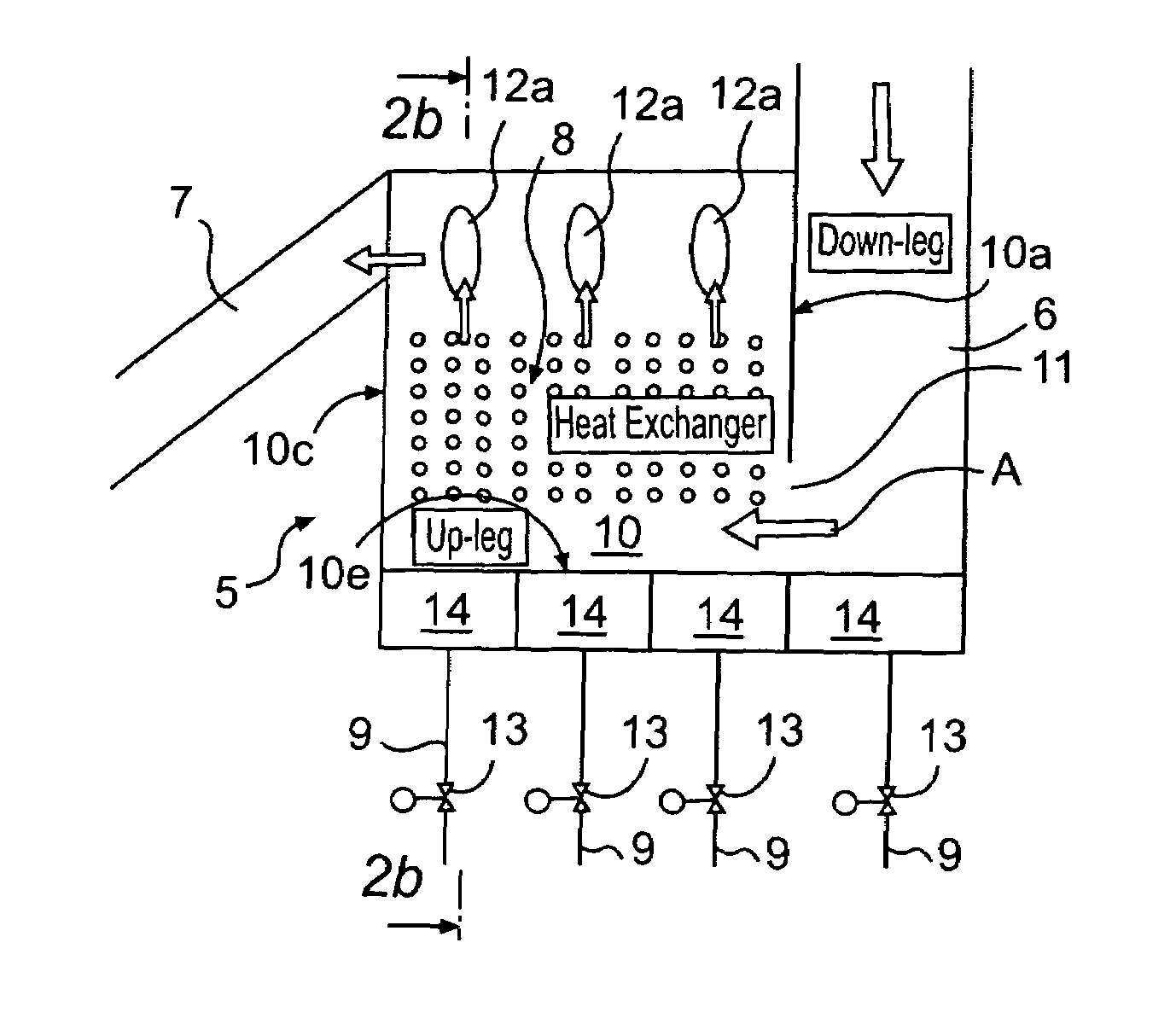
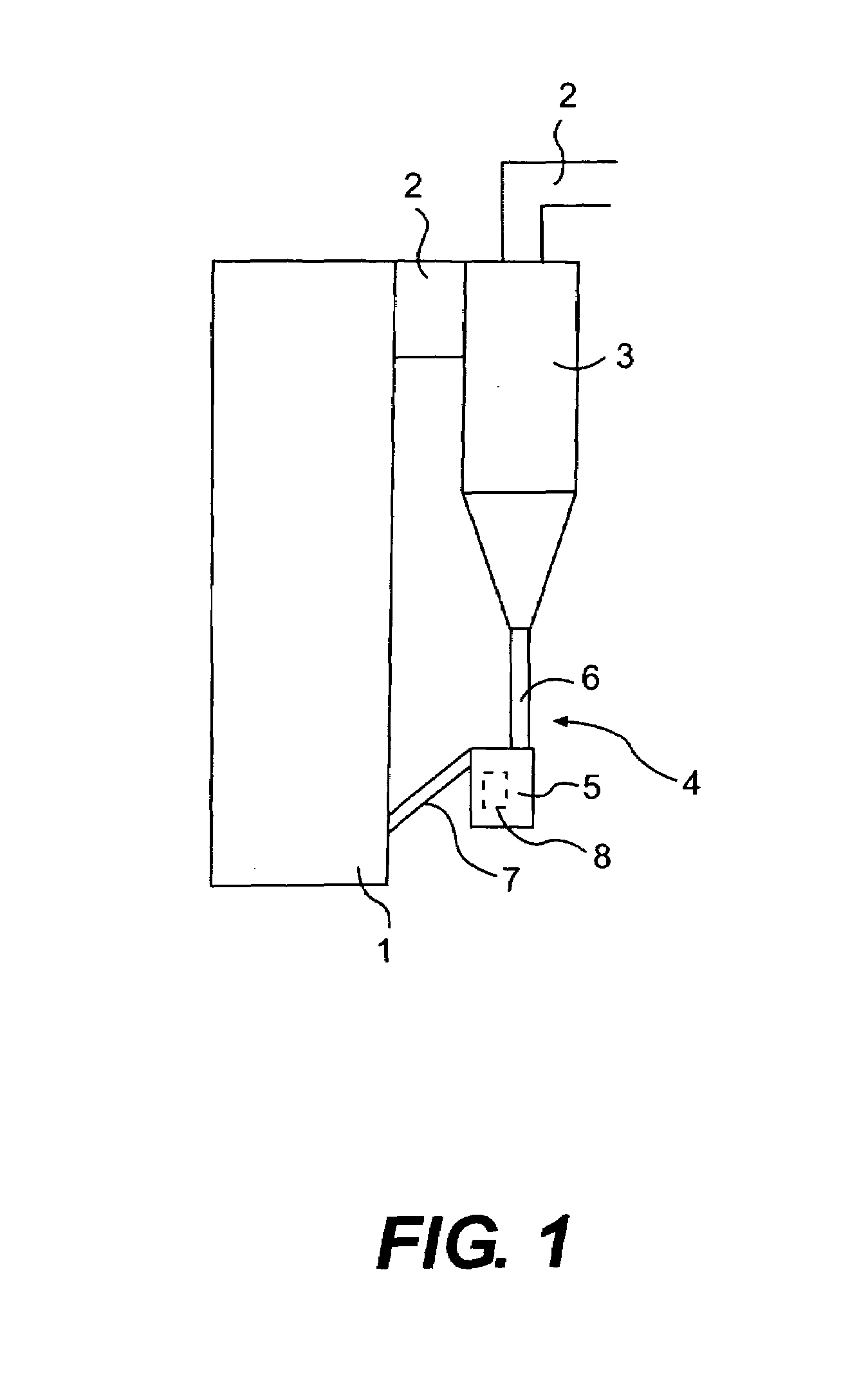
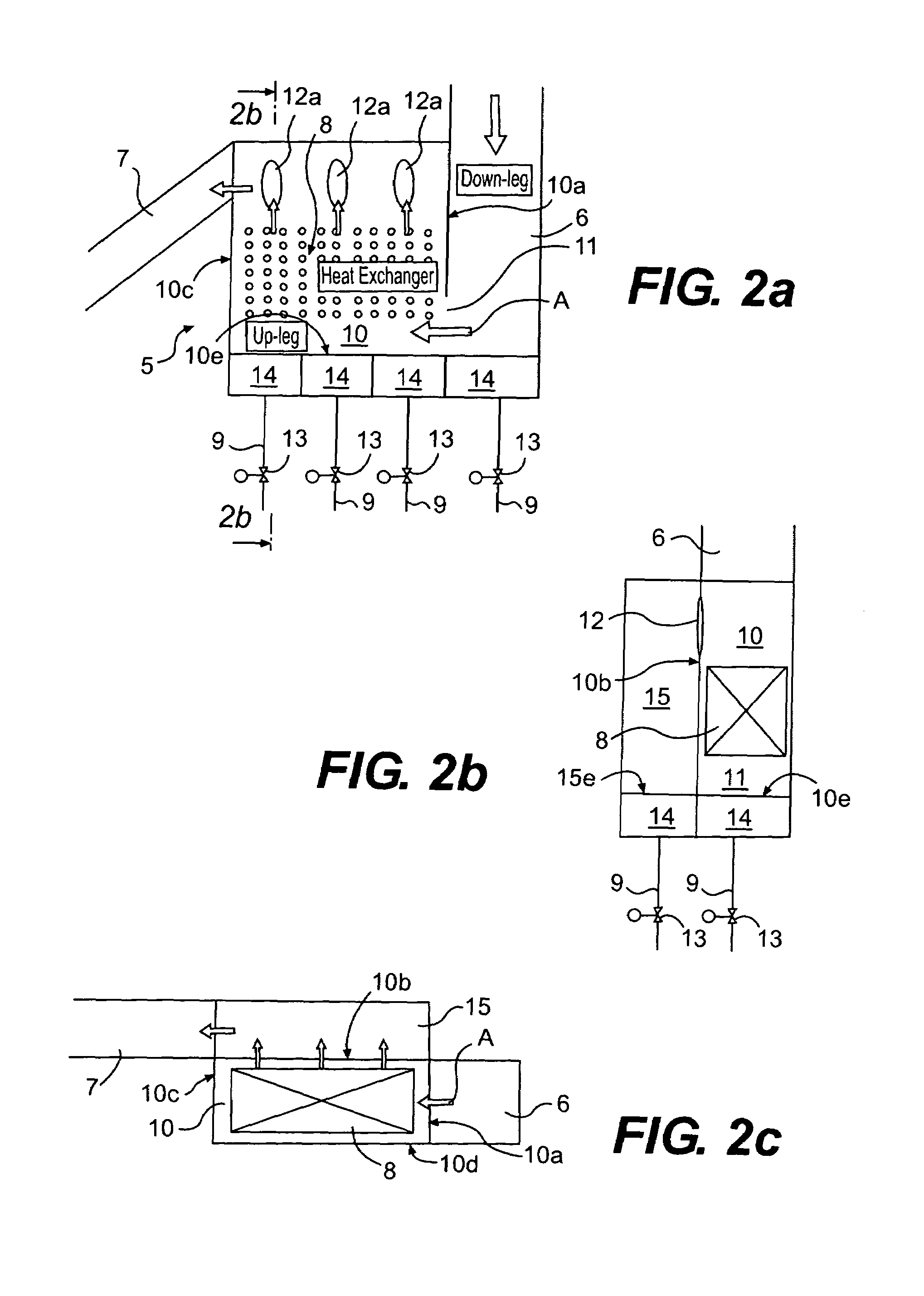
- The solution involves arranging fluidization zones in the inlet direction of the heat exchanger chamber, allowing for individual control of fluidized bed material flow and heat exchange by varying the supply of fluidizing air, which can be adjusted to achieve lateral movement of the material through the heat exchanger chamber without affecting the loop seal's permeability.

Environmental Regulations for CFB Emissions Control
Environmental regulations governing Circulating Fluidized Bed (CFB) boiler emissions have become increasingly stringent worldwide, directly impacting load cycling operations and efficiency maintenance strategies. The regulatory landscape encompasses multiple pollutant categories, including sulfur dioxide, nitrogen oxides, particulate matter, mercury, and carbon dioxide emissions, each requiring specific control measures during variable load conditions.
The Clean Air Act in the United States establishes National Emission Standards for Hazardous Air Pollutants (NESHAP) and New Source Performance Standards (NSPS) that CFB operators must comply with regardless of load variations. These regulations mandate continuous emissions monitoring systems (CEMS) and require maintaining emission limits even during transient operating conditions typical of load cycling scenarios.
European Union directives, particularly the Industrial Emissions Directive (IED) and the Large Combustion Plant Directive, impose Best Available Techniques (BAT) requirements that influence CFB design and operation. These regulations emphasize emission reduction technologies that must remain effective across the entire operational load range, creating challenges for maintaining both environmental compliance and thermal efficiency during cycling operations.
Regional regulations in Asia-Pacific markets, including China's Ultra-Low Emission standards and Japan's environmental quality standards, have established some of the world's most restrictive emission limits. These requirements necessitate advanced emission control systems that can adapt to load variations while maintaining consistent pollutant removal efficiency, directly affecting the economic viability of CFB load cycling operations.
Mercury emission regulations under the Mercury and Air Toxics Standards (MATS) present particular challenges for CFB load cycling, as mercury capture efficiency can vary significantly with combustion temperature and residence time changes during load transitions. Operators must implement control strategies that ensure consistent mercury removal across all operating conditions.
Carbon dioxide regulations and emissions trading systems increasingly influence CFB operational strategies, as load cycling can impact overall plant efficiency and carbon intensity. Regulatory frameworks are evolving to address the role of flexible fossil fuel generation in supporting renewable energy integration while maintaining environmental protection standards.
The Clean Air Act in the United States establishes National Emission Standards for Hazardous Air Pollutants (NESHAP) and New Source Performance Standards (NSPS) that CFB operators must comply with regardless of load variations. These regulations mandate continuous emissions monitoring systems (CEMS) and require maintaining emission limits even during transient operating conditions typical of load cycling scenarios.
European Union directives, particularly the Industrial Emissions Directive (IED) and the Large Combustion Plant Directive, impose Best Available Techniques (BAT) requirements that influence CFB design and operation. These regulations emphasize emission reduction technologies that must remain effective across the entire operational load range, creating challenges for maintaining both environmental compliance and thermal efficiency during cycling operations.
Regional regulations in Asia-Pacific markets, including China's Ultra-Low Emission standards and Japan's environmental quality standards, have established some of the world's most restrictive emission limits. These requirements necessitate advanced emission control systems that can adapt to load variations while maintaining consistent pollutant removal efficiency, directly affecting the economic viability of CFB load cycling operations.
Mercury emission regulations under the Mercury and Air Toxics Standards (MATS) present particular challenges for CFB load cycling, as mercury capture efficiency can vary significantly with combustion temperature and residence time changes during load transitions. Operators must implement control strategies that ensure consistent mercury removal across all operating conditions.
Carbon dioxide regulations and emissions trading systems increasingly influence CFB operational strategies, as load cycling can impact overall plant efficiency and carbon intensity. Regulatory frameworks are evolving to address the role of flexible fossil fuel generation in supporting renewable energy integration while maintaining environmental protection standards.
Grid Integration Requirements for CFB Flexibility
The integration of Circulating Fluidized Bed (CFB) boilers into modern electrical grids requires adherence to stringent technical standards and operational protocols that enable flexible load cycling while maintaining system stability. Grid operators demand rapid response capabilities from power generation units, necessitating CFB systems to demonstrate compliance with frequency regulation requirements, voltage support capabilities, and ramping rate specifications that typically range from 3-5% of rated capacity per minute.
Modern grid codes mandate that CFB units participate in ancillary services including primary frequency response within 30 seconds, secondary frequency control within 15 minutes, and tertiary reserves for longer-term balancing. These requirements necessitate sophisticated control systems capable of managing combustion dynamics, steam parameters, and emissions simultaneously during load transitions. The implementation of advanced distributed control systems (DCS) with predictive algorithms becomes essential for meeting grid operator expectations.
Voltage regulation capabilities represent another critical integration requirement, demanding CFB plants to maintain power factor within ±0.95 ranges while providing reactive power support during grid disturbances. This necessitates coordination between the main generator, auxiliary power systems, and potential static VAR compensators to ensure seamless grid support during varying load conditions.
Communication infrastructure requirements include real-time data exchange protocols such as IEC 61850 or DNP3, enabling grid operators to monitor unit status, receive telemetry data, and transmit dispatch signals with minimal latency. Cybersecurity frameworks must comply with NERC CIP standards, ensuring protection against potential threats while maintaining operational flexibility.
Environmental compliance during flexible operation presents additional grid integration challenges, as CFB units must demonstrate consistent emissions performance across the entire load range. Continuous emissions monitoring systems (CEMS) must provide real-time data to both plant operators and environmental regulators, ensuring NOx, SOx, and particulate emissions remain within permitted limits during rapid load changes.
The economic aspects of grid integration require CFB operators to optimize bidding strategies in electricity markets while considering start-up costs, minimum load constraints, and cycling-related maintenance impacts. Market participation mechanisms must account for the unique operational characteristics of CFB technology compared to conventional pulverized coal units.
Modern grid codes mandate that CFB units participate in ancillary services including primary frequency response within 30 seconds, secondary frequency control within 15 minutes, and tertiary reserves for longer-term balancing. These requirements necessitate sophisticated control systems capable of managing combustion dynamics, steam parameters, and emissions simultaneously during load transitions. The implementation of advanced distributed control systems (DCS) with predictive algorithms becomes essential for meeting grid operator expectations.
Voltage regulation capabilities represent another critical integration requirement, demanding CFB plants to maintain power factor within ±0.95 ranges while providing reactive power support during grid disturbances. This necessitates coordination between the main generator, auxiliary power systems, and potential static VAR compensators to ensure seamless grid support during varying load conditions.
Communication infrastructure requirements include real-time data exchange protocols such as IEC 61850 or DNP3, enabling grid operators to monitor unit status, receive telemetry data, and transmit dispatch signals with minimal latency. Cybersecurity frameworks must comply with NERC CIP standards, ensuring protection against potential threats while maintaining operational flexibility.
Environmental compliance during flexible operation presents additional grid integration challenges, as CFB units must demonstrate consistent emissions performance across the entire load range. Continuous emissions monitoring systems (CEMS) must provide real-time data to both plant operators and environmental regulators, ensuring NOx, SOx, and particulate emissions remain within permitted limits during rapid load changes.
The economic aspects of grid integration require CFB operators to optimize bidding strategies in electricity markets while considering start-up costs, minimum load constraints, and cycling-related maintenance impacts. Market participation mechanisms must account for the unique operational characteristics of CFB technology compared to conventional pulverized coal units.
Unlock deeper insights with Patsnap Eureka Quick Research — get a full tech report to explore trends and direct your research. Try now!
Generate Your Research Report Instantly with AI Agent
Supercharge your innovation with Patsnap Eureka AI Agent Platform!