
Circulating Fluidized Bed Boiler Slagging Rates: How to Evaluate
JUN 26, 20269 MIN READ
Generate Your Research Report Instantly with AI Agent
Patsnap Eureka helps you evaluate technical feasibility & market potential.
CFB Boiler Slagging Background and Research Objectives
Circulating Fluidized Bed (CFB) boilers have emerged as a critical technology in the power generation industry since their commercial introduction in the 1980s. Initially developed to address environmental concerns and fuel flexibility requirements, CFB technology has evolved from small-scale industrial applications to large utility-scale power plants exceeding 600 MW capacity. The technology's ability to burn low-grade fuels while maintaining relatively low emissions has positioned it as a significant player in the global energy landscape.
The fundamental principle of CFB combustion involves suspending fuel particles in a high-velocity air stream, creating a fluidized bed that enhances heat and mass transfer processes. However, this operational mechanism introduces unique challenges, particularly regarding ash behavior and slagging phenomena. Unlike conventional pulverized coal boilers, CFB systems experience different thermal profiles and particle circulation patterns that significantly influence slag formation and deposition characteristics.
Slagging in CFB boilers represents a complex thermochemical process where ash particles undergo partial melting and agglomeration, leading to deposit formation on heat transfer surfaces. This phenomenon has become increasingly problematic as CFB technology scales up and operators seek to burn more challenging fuel compositions, including high-alkali biomass, waste-derived fuels, and low-rank coals with varying ash chemistry profiles.
The evaluation of slagging rates in CFB boilers presents significant technical challenges due to the dynamic nature of the fluidized bed environment. Traditional slagging assessment methods developed for conventional boilers often prove inadequate for CFB applications, necessitating specialized evaluation techniques that account for the unique operating conditions, including lower combustion temperatures, extended residence times, and complex particle circulation patterns.
Current research objectives focus on developing comprehensive methodologies to quantify and predict slagging behavior in CFB systems. These objectives encompass establishing standardized measurement protocols, developing predictive models based on fuel properties and operating conditions, and creating real-time monitoring systems for industrial applications. The ultimate goal is to enable operators to optimize fuel selection, adjust operating parameters, and implement preventive measures to minimize slagging-related operational disruptions.
The strategic importance of this research extends beyond immediate operational concerns, as accurate slagging evaluation capabilities will enable broader fuel flexibility, improved plant availability, and enhanced economic performance of CFB power generation systems in an increasingly competitive energy market.
The fundamental principle of CFB combustion involves suspending fuel particles in a high-velocity air stream, creating a fluidized bed that enhances heat and mass transfer processes. However, this operational mechanism introduces unique challenges, particularly regarding ash behavior and slagging phenomena. Unlike conventional pulverized coal boilers, CFB systems experience different thermal profiles and particle circulation patterns that significantly influence slag formation and deposition characteristics.
Slagging in CFB boilers represents a complex thermochemical process where ash particles undergo partial melting and agglomeration, leading to deposit formation on heat transfer surfaces. This phenomenon has become increasingly problematic as CFB technology scales up and operators seek to burn more challenging fuel compositions, including high-alkali biomass, waste-derived fuels, and low-rank coals with varying ash chemistry profiles.
The evaluation of slagging rates in CFB boilers presents significant technical challenges due to the dynamic nature of the fluidized bed environment. Traditional slagging assessment methods developed for conventional boilers often prove inadequate for CFB applications, necessitating specialized evaluation techniques that account for the unique operating conditions, including lower combustion temperatures, extended residence times, and complex particle circulation patterns.
Current research objectives focus on developing comprehensive methodologies to quantify and predict slagging behavior in CFB systems. These objectives encompass establishing standardized measurement protocols, developing predictive models based on fuel properties and operating conditions, and creating real-time monitoring systems for industrial applications. The ultimate goal is to enable operators to optimize fuel selection, adjust operating parameters, and implement preventive measures to minimize slagging-related operational disruptions.
The strategic importance of this research extends beyond immediate operational concerns, as accurate slagging evaluation capabilities will enable broader fuel flexibility, improved plant availability, and enhanced economic performance of CFB power generation systems in an increasingly competitive energy market.
Market Demand for CFB Boiler Slagging Solutions
The global power generation industry faces mounting pressure to optimize operational efficiency while meeting stringent environmental regulations. Circulating fluidized bed (CFB) boilers have emerged as a preferred technology for coal-fired power plants due to their fuel flexibility and lower emissions profile. However, slagging phenomena continue to pose significant operational challenges, creating substantial market demand for effective evaluation and mitigation solutions.
Power plant operators worldwide are increasingly seeking comprehensive slagging assessment methodologies to minimize unplanned outages and maintenance costs. The economic impact of slagging-related issues extends beyond immediate operational disruptions, affecting long-term asset performance and regulatory compliance. This has driven demand for advanced monitoring systems, predictive analytics tools, and specialized consulting services focused on slagging evaluation and prevention.
The market demand is particularly pronounced in regions with aging coal-fired infrastructure, where existing CFB installations require enhanced monitoring capabilities to extend operational lifespans. Emerging economies with expanding power generation capacity also represent significant growth opportunities, as new CFB installations increasingly incorporate advanced slagging evaluation systems from the design phase.
Industrial sectors beyond power generation, including cement manufacturing, petrochemicals, and waste-to-energy facilities, are driving additional demand for CFB slagging solutions. These industries face unique challenges related to fuel variability and process integration, requiring specialized evaluation approaches tailored to their operational requirements.
The market is witnessing growing interest in integrated solutions that combine real-time monitoring, predictive modeling, and automated response systems. Plant operators are moving beyond reactive maintenance approaches toward proactive slagging management strategies, creating demand for sophisticated evaluation tools that can predict slagging tendencies before they impact operations.
Environmental compliance requirements are further amplifying market demand, as slagging-related operational inefficiencies can compromise emissions control performance. Regulatory frameworks increasingly emphasize continuous monitoring and optimization, making effective slagging evaluation essential for maintaining operating licenses and avoiding penalties.
The digitalization trend in power generation is creating new market segments for cloud-based analytics platforms and artificial intelligence-driven evaluation systems. These technologies enable remote monitoring capabilities and cross-plant performance benchmarking, appealing to multi-site operators seeking standardized slagging management approaches across their portfolios.
Power plant operators worldwide are increasingly seeking comprehensive slagging assessment methodologies to minimize unplanned outages and maintenance costs. The economic impact of slagging-related issues extends beyond immediate operational disruptions, affecting long-term asset performance and regulatory compliance. This has driven demand for advanced monitoring systems, predictive analytics tools, and specialized consulting services focused on slagging evaluation and prevention.
The market demand is particularly pronounced in regions with aging coal-fired infrastructure, where existing CFB installations require enhanced monitoring capabilities to extend operational lifespans. Emerging economies with expanding power generation capacity also represent significant growth opportunities, as new CFB installations increasingly incorporate advanced slagging evaluation systems from the design phase.
Industrial sectors beyond power generation, including cement manufacturing, petrochemicals, and waste-to-energy facilities, are driving additional demand for CFB slagging solutions. These industries face unique challenges related to fuel variability and process integration, requiring specialized evaluation approaches tailored to their operational requirements.
The market is witnessing growing interest in integrated solutions that combine real-time monitoring, predictive modeling, and automated response systems. Plant operators are moving beyond reactive maintenance approaches toward proactive slagging management strategies, creating demand for sophisticated evaluation tools that can predict slagging tendencies before they impact operations.
Environmental compliance requirements are further amplifying market demand, as slagging-related operational inefficiencies can compromise emissions control performance. Regulatory frameworks increasingly emphasize continuous monitoring and optimization, making effective slagging evaluation essential for maintaining operating licenses and avoiding penalties.
The digitalization trend in power generation is creating new market segments for cloud-based analytics platforms and artificial intelligence-driven evaluation systems. These technologies enable remote monitoring capabilities and cross-plant performance benchmarking, appealing to multi-site operators seeking standardized slagging management approaches across their portfolios.
Current CFB Slagging Evaluation Methods and Challenges
Current evaluation methods for circulating fluidized bed (CFB) boiler slagging rates primarily rely on empirical indices and operational monitoring approaches. The most widely adopted method involves slagging tendency indices based on fuel ash composition, including the base-to-acid ratio, silica ratio, and iron-calcium ratio. These indices, originally developed for pulverized coal boilers, provide preliminary assessments but often fail to capture the unique fluidization dynamics and temperature profiles characteristic of CFB systems.
Temperature-based evaluation represents another conventional approach, utilizing ash fusion temperatures and viscosity-temperature relationships to predict slagging behavior. However, these laboratory-derived parameters frequently demonstrate poor correlation with actual CFB operating conditions, where particle circulation patterns and heat transfer mechanisms differ significantly from static testing environments.
Online monitoring techniques have emerged as practical evaluation tools, incorporating bed pressure differential measurements, particle size distribution analysis, and heat transfer coefficient monitoring. While these methods provide real-time operational insights, they typically indicate slagging occurrence after initiation rather than predicting potential risks, limiting their preventive value.
The fundamental challenge in CFB slagging evaluation stems from the complex interplay between fuel properties, operating parameters, and system design characteristics. Unlike conventional boilers, CFB systems exhibit non-uniform temperature distributions, continuous particle circulation, and varying residence times, making traditional evaluation methods inadequate for accurate prediction.
Existing evaluation approaches face significant limitations in addressing fuel variability and co-firing scenarios. Many CFB installations utilize diverse fuel blends, including biomass, waste materials, and low-grade coals, whose slagging behaviors cannot be reliably predicted using conventional coal-based indices. The heterogeneous nature of these alternative fuels introduces additional complexity in ash chemistry and melting characteristics.
Scale-up challenges represent another critical limitation, as laboratory-based evaluation methods often fail to replicate the hydrodynamic conditions and heat transfer patterns present in commercial-scale CFB boilers. The transition from bench-scale testing to full-scale operation frequently reveals discrepancies in slagging predictions, highlighting the inadequacy of current evaluation methodologies.
Furthermore, the lack of standardized evaluation protocols across the industry creates inconsistencies in slagging assessment approaches. Different operators employ varying criteria and thresholds, making it difficult to establish universal guidelines for slagging risk evaluation and mitigation strategies in CFB systems.
Temperature-based evaluation represents another conventional approach, utilizing ash fusion temperatures and viscosity-temperature relationships to predict slagging behavior. However, these laboratory-derived parameters frequently demonstrate poor correlation with actual CFB operating conditions, where particle circulation patterns and heat transfer mechanisms differ significantly from static testing environments.
Online monitoring techniques have emerged as practical evaluation tools, incorporating bed pressure differential measurements, particle size distribution analysis, and heat transfer coefficient monitoring. While these methods provide real-time operational insights, they typically indicate slagging occurrence after initiation rather than predicting potential risks, limiting their preventive value.
The fundamental challenge in CFB slagging evaluation stems from the complex interplay between fuel properties, operating parameters, and system design characteristics. Unlike conventional boilers, CFB systems exhibit non-uniform temperature distributions, continuous particle circulation, and varying residence times, making traditional evaluation methods inadequate for accurate prediction.
Existing evaluation approaches face significant limitations in addressing fuel variability and co-firing scenarios. Many CFB installations utilize diverse fuel blends, including biomass, waste materials, and low-grade coals, whose slagging behaviors cannot be reliably predicted using conventional coal-based indices. The heterogeneous nature of these alternative fuels introduces additional complexity in ash chemistry and melting characteristics.
Scale-up challenges represent another critical limitation, as laboratory-based evaluation methods often fail to replicate the hydrodynamic conditions and heat transfer patterns present in commercial-scale CFB boilers. The transition from bench-scale testing to full-scale operation frequently reveals discrepancies in slagging predictions, highlighting the inadequacy of current evaluation methodologies.
Furthermore, the lack of standardized evaluation protocols across the industry creates inconsistencies in slagging assessment approaches. Different operators employ varying criteria and thresholds, making it difficult to establish universal guidelines for slagging risk evaluation and mitigation strategies in CFB systems.
Existing CFB Slagging Rate Evaluation Approaches
01 Slagging monitoring and detection systems
Advanced monitoring systems are employed to detect and measure slagging rates in circulating fluidized bed boilers. These systems utilize various sensors and measurement techniques to continuously monitor the formation and accumulation of slag deposits on heat transfer surfaces. The monitoring systems help operators identify slagging conditions early and take appropriate corrective actions to maintain boiler efficiency and prevent operational issues.- Slagging prediction and monitoring systems: Advanced monitoring and prediction systems are employed to assess and forecast slagging rates in circulating fluidized bed boilers. These systems utilize various sensors, data analysis algorithms, and real-time monitoring techniques to detect early signs of slag formation and predict when slagging events are likely to occur. The systems help operators take preventive measures and optimize boiler operation to minimize slagging issues.
- Fuel composition and preparation methods: The composition and preparation of fuel significantly impact slagging rates in circulating fluidized bed boilers. Different fuel types, particle sizes, moisture content, and ash characteristics affect the tendency for slag formation. Proper fuel preparation techniques, including grinding, drying, and blending processes, can help reduce slagging by optimizing fuel properties and ensuring more uniform combustion conditions.
- Operating parameter optimization: Optimization of key operating parameters plays a crucial role in controlling slagging rates. These parameters include combustion temperature, air flow rates, bed material circulation, and residence time. By carefully controlling these variables, operators can maintain optimal conditions that minimize the formation of slag deposits while ensuring efficient combustion and heat transfer in the boiler system.
- Bed material and additive management: The selection and management of bed materials and chemical additives significantly influence slagging behavior. Different bed materials have varying thermal properties and chemical reactivity that affect slag formation. Anti-slagging additives and bed material conditioning agents can be introduced to modify ash melting characteristics and reduce the tendency for slag deposits to form on heat transfer surfaces.
- Heat transfer surface design and maintenance: The design of heat transfer surfaces and maintenance strategies are critical factors in managing slagging rates. Surface geometry, material selection, and cleaning mechanisms affect how slag deposits form and accumulate. Regular maintenance procedures, including soot blowing systems and mechanical cleaning methods, help remove slag deposits and maintain efficient heat transfer while preventing excessive buildup that could impact boiler performance.
02 Fuel composition and ash characteristics impact
The slagging behavior in circulating fluidized bed boilers is significantly influenced by fuel composition and ash characteristics. Different fuel types produce varying amounts and types of ash with different melting points and chemical compositions. Understanding these characteristics is crucial for predicting and controlling slagging rates, as certain ash components are more prone to forming sticky deposits on boiler surfaces.Expand Specific Solutions03 Temperature control and combustion optimization
Proper temperature control and combustion optimization are essential for managing slagging rates in circulating fluidized bed boilers. Operating temperatures must be carefully maintained within optimal ranges to prevent ash from reaching its softening or melting point. Combustion parameters such as air distribution, fuel feeding rates, and fluidization velocity are adjusted to minimize conditions that promote slag formation while maintaining efficient combustion.Expand Specific Solutions04 Soot blowing and cleaning mechanisms
Effective cleaning mechanisms including soot blowing systems are implemented to remove slag deposits and maintain heat transfer efficiency. These systems use steam, air, or other cleaning media to periodically remove accumulated deposits from heat exchanger surfaces. The frequency and intensity of cleaning operations are optimized based on slagging rates and operational conditions to prevent excessive buildup while minimizing cleaning medium consumption.Expand Specific Solutions05 Boiler design modifications for slag management
Specialized design features and modifications are incorporated into circulating fluidized bed boilers to better manage slagging issues. These include optimized heat exchanger arrangements, improved material selection for high-temperature components, enhanced circulation patterns, and strategic placement of cleaning systems. Design considerations also include accessibility for maintenance and inspection of areas prone to slag accumulation.Expand Specific Solutions
Key Players in CFB Boiler and Slagging Control Industry
The circulating fluidized bed (CFB) boiler slagging evaluation market represents a mature industrial segment within the broader power generation sector, driven by the need for operational efficiency and emission control. The industry has reached technological maturity, with established players offering comprehensive solutions spanning design, manufacturing, and maintenance services. Key technology providers include Sumitomo SHI FW Energia Oy, which specializes in advanced fluidized bed technologies, IHI Corp. and Sumitomo Heavy Industries from Japan, and major Chinese manufacturers like Dongfang Boiler Group and China Shenhua Energy. The competitive landscape features a mix of established industrial giants such as Siemens AG, Babcock & Wilcox, and Westinghouse Electric, alongside specialized research institutions like Xi'an Thermal Power Research Institute and leading universities including North China Electric Power University and Zhejiang University, indicating strong R&D support for continued technological advancement.
Sumitomo Heavy Industries, Ltd.
Technical Solution: Sumitomo Heavy Industries employs a multi-parameter slagging assessment system for CFB boilers that integrates thermodynamic modeling with empirical correlations. Their methodology focuses on evaluating ash deposition rates through continuous monitoring of furnace wall heat flux variations and bed material sampling analysis. The system incorporates advanced image processing techniques to assess deposit thickness and composition, while utilizing machine learning algorithms to predict slagging propensity based on fuel characteristics, operating conditions, and historical performance data. Their approach includes real-time adjustment of fluidization velocity and bed inventory to minimize slagging occurrence and optimize boiler efficiency.
Strengths: Advanced automation and control systems with strong integration capabilities and proven reliability in industrial applications. Weaknesses: Limited flexibility for retrofit applications and dependency on proprietary control systems that may restrict operational modifications.
IHI Corp.
Technical Solution: IHI Corporation has developed an integrated slagging evaluation platform that combines computational fluid dynamics modeling with experimental validation techniques for CFB boilers. Their system employs sophisticated ash behavior prediction models that account for particle trajectory analysis, temperature distribution mapping, and chemical reaction kinetics. The evaluation methodology includes continuous monitoring of critical operational parameters such as bed temperature uniformity, excess air ratios, and limestone-to-sulfur ratios, while implementing advanced data analytics to correlate fuel properties with slagging tendencies. Their approach utilizes non-intrusive measurement technologies including acoustic monitoring and thermal imaging to assess deposit formation without disrupting boiler operations.
Strengths: Strong engineering capabilities with comprehensive CFD modeling expertise and innovative non-intrusive monitoring technologies. Weaknesses: High capital investment requirements and extended implementation timelines for complex evaluation systems.
Core Technologies in Slagging Prediction and Measurement
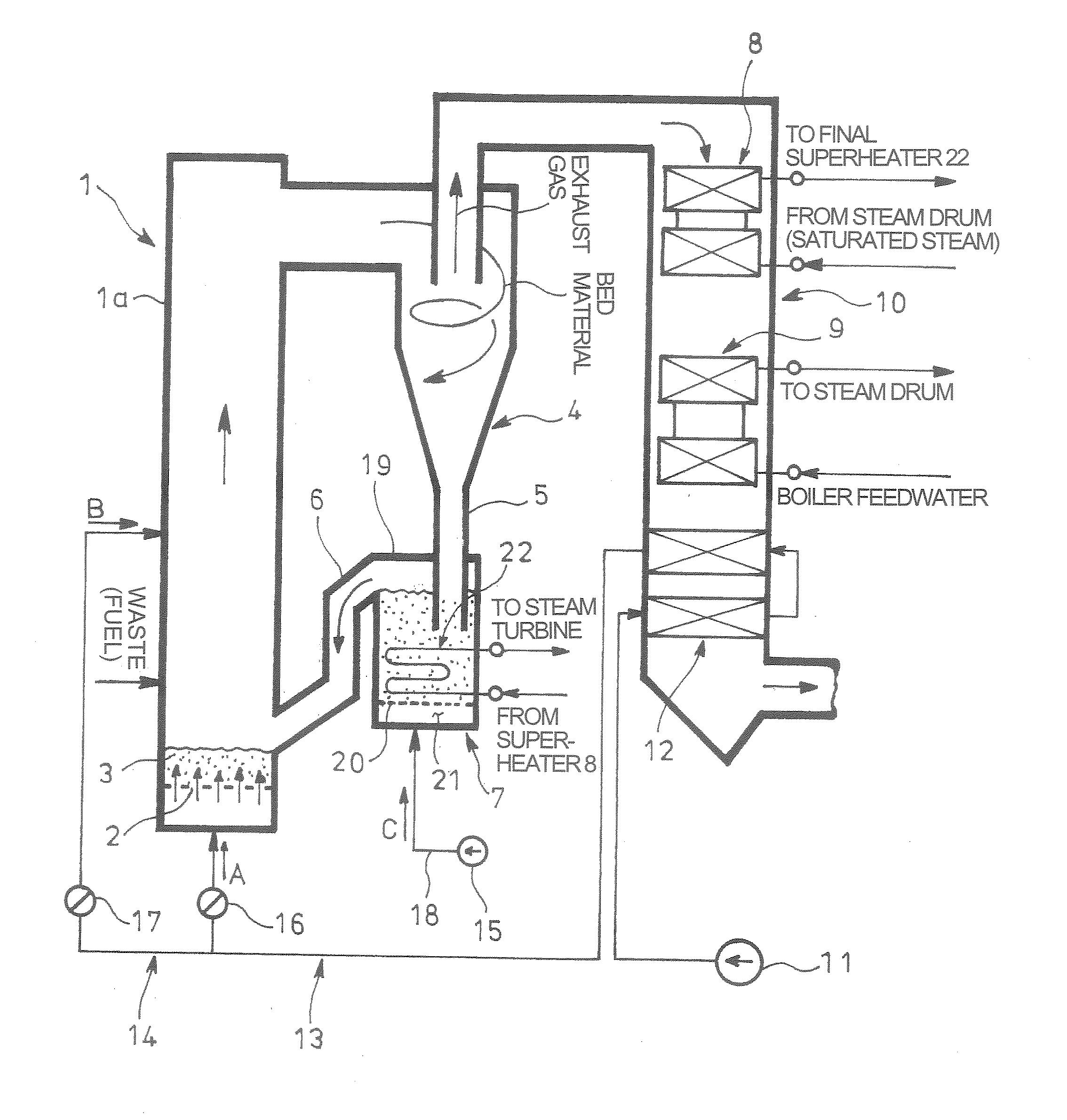
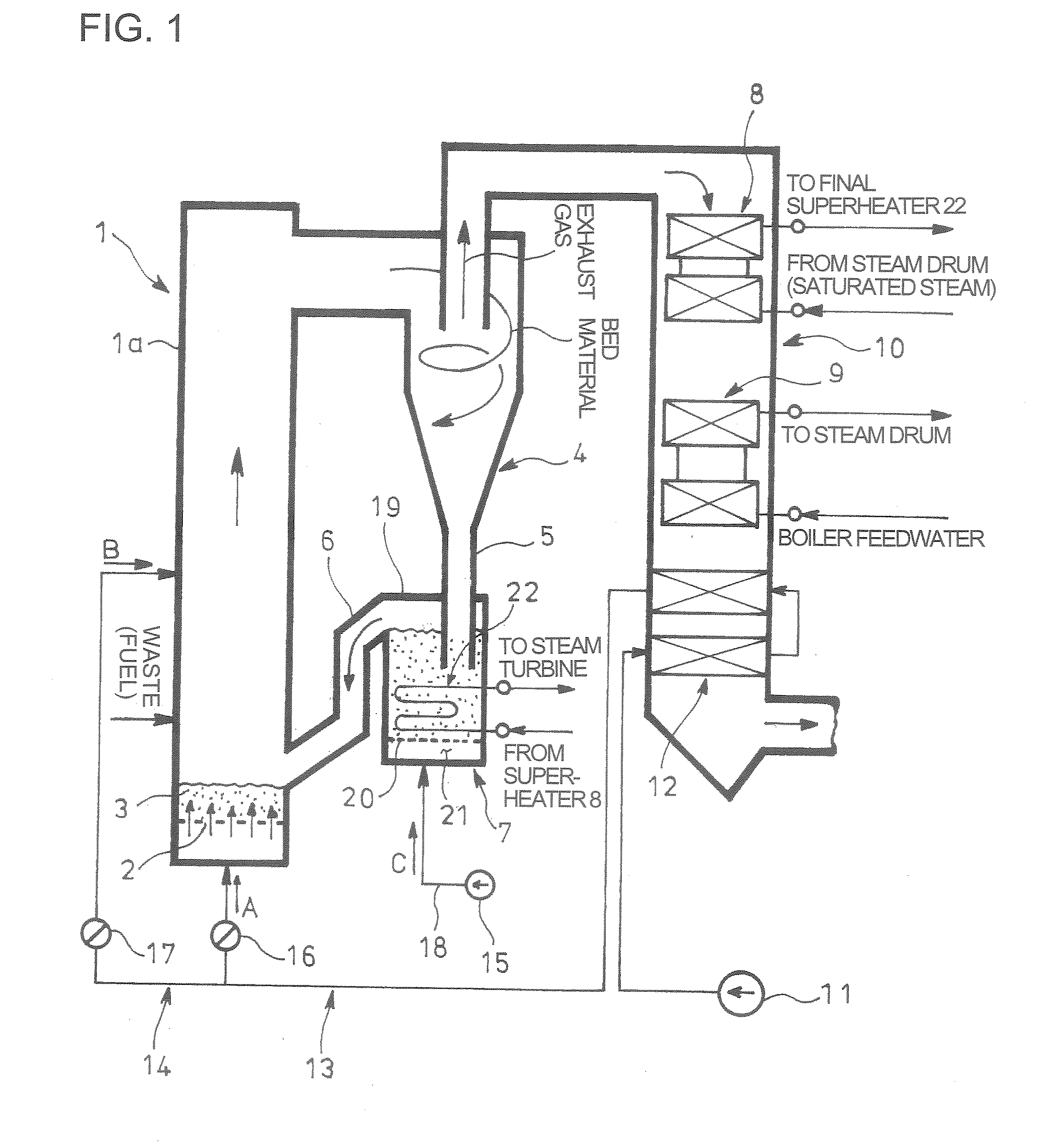
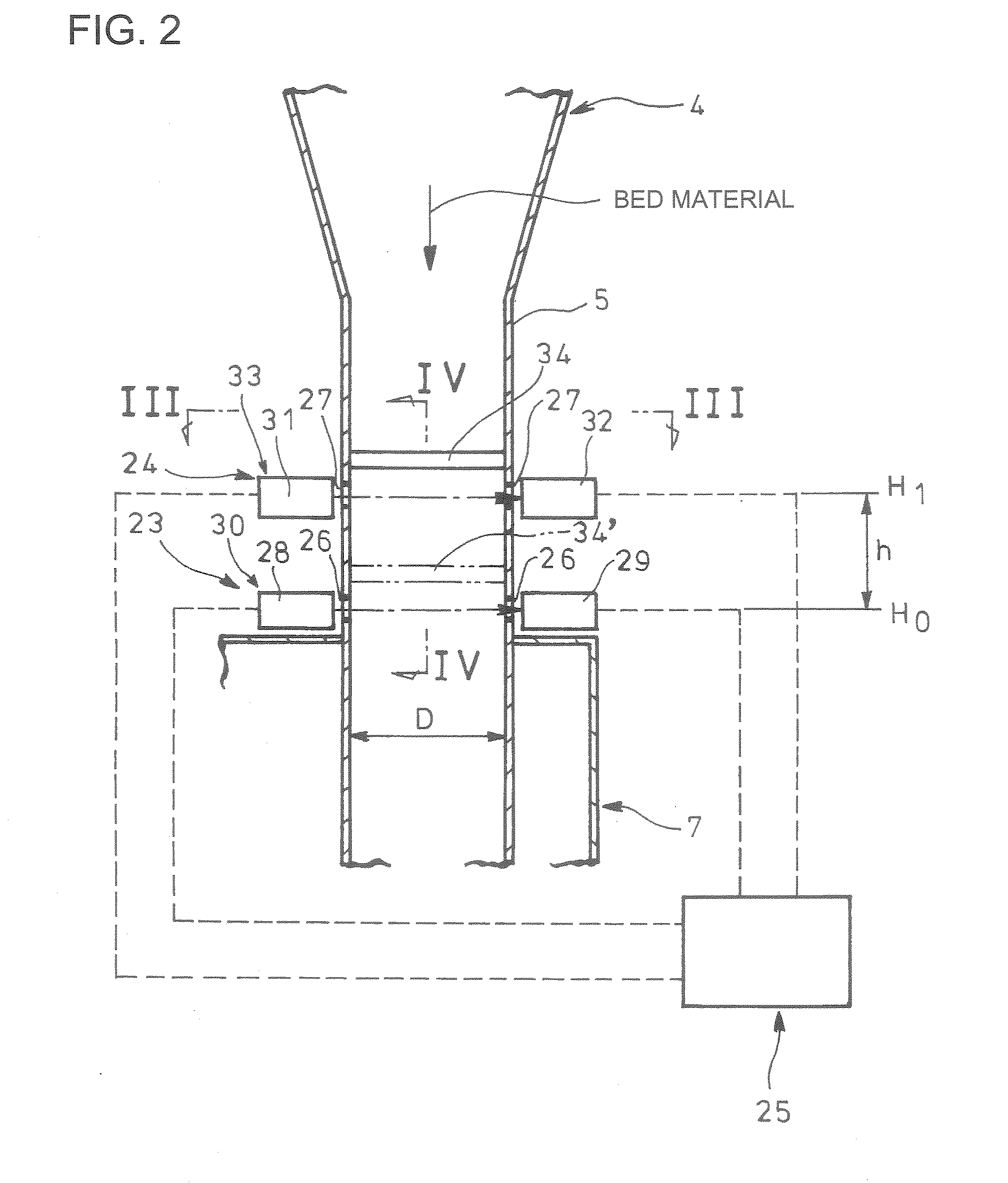
Method and Device For Measuring Circulation Quantity of Bed Material in Circulating Fluidized Bed Combustor
PatentActiveUS20080153048A1
Innovation
- A method and device that measure the time taken for bed material to reach a predetermined height in a downcomer, using light sensors and a timer to calculate the flow rate and accumulated amount, allowing for quantitative estimation of circulation quantity based on the downcomer's inner diameter.

Circulating fluidized bed boiler and method of operating the same
PatentInactivePH12012000192U3
Innovation
- Implementation of differential pressure monitoring system using pressure sensors between downcomer and loop seal unit to detect poor circulation of solid particles at early stage.
- Use of standard deviation analysis of differential pressure data as the diagnostic criterion for determining poor circulation occurrence in real-time operation.
- Integration of control computer system that automatically processes differential pressure information to provide immediate circulation status assessment.

Environmental Regulations for CFB Boiler Emissions
Environmental regulations governing CFB boiler emissions have become increasingly stringent worldwide, driven by growing concerns over air quality and climate change. These regulations directly impact slagging evaluation methodologies, as slag formation affects combustion efficiency and subsequently influences emission profiles. The regulatory landscape encompasses multiple pollutants including sulfur dioxide, nitrogen oxides, particulate matter, and carbon dioxide, each requiring specific monitoring and control strategies.
The United States Environmental Protection Agency (EPA) has established comprehensive standards under the Clean Air Act, including the Mercury and Air Toxics Standards (MATS) and Cross-State Air Pollution Rule (CSAPR). These regulations mandate continuous emissions monitoring systems (CEMS) and impose strict limits on pollutant discharge rates. European Union directives, particularly the Industrial Emissions Directive (IED) and Large Combustion Plant Directive, set equally rigorous standards with emphasis on Best Available Techniques (BAT) implementation.
Slagging evaluation becomes critical under these regulatory frameworks because slag accumulation directly affects boiler performance parameters that influence emission levels. Reduced heat transfer efficiency due to slagging can lead to incomplete combustion, resulting in higher carbon monoxide and unburned hydrocarbon emissions. Additionally, altered fluidization patterns caused by slag deposits can create temperature variations that affect nitrogen oxide formation rates and sulfur capture efficiency.
Regulatory compliance requires operators to demonstrate that slagging rates remain within acceptable limits to maintain optimal emission control performance. This necessitates the development of standardized slagging evaluation protocols that can be integrated into environmental monitoring programs. Many jurisdictions now require periodic assessment of boiler fouling and slagging conditions as part of emission compliance reporting.
The regulatory trend toward real-time monitoring and predictive maintenance aligns with advanced slagging evaluation techniques. Automated monitoring systems that can detect early-stage slag formation help operators maintain compliance while optimizing fuel flexibility and operational efficiency within environmental constraints.
The United States Environmental Protection Agency (EPA) has established comprehensive standards under the Clean Air Act, including the Mercury and Air Toxics Standards (MATS) and Cross-State Air Pollution Rule (CSAPR). These regulations mandate continuous emissions monitoring systems (CEMS) and impose strict limits on pollutant discharge rates. European Union directives, particularly the Industrial Emissions Directive (IED) and Large Combustion Plant Directive, set equally rigorous standards with emphasis on Best Available Techniques (BAT) implementation.
Slagging evaluation becomes critical under these regulatory frameworks because slag accumulation directly affects boiler performance parameters that influence emission levels. Reduced heat transfer efficiency due to slagging can lead to incomplete combustion, resulting in higher carbon monoxide and unburned hydrocarbon emissions. Additionally, altered fluidization patterns caused by slag deposits can create temperature variations that affect nitrogen oxide formation rates and sulfur capture efficiency.
Regulatory compliance requires operators to demonstrate that slagging rates remain within acceptable limits to maintain optimal emission control performance. This necessitates the development of standardized slagging evaluation protocols that can be integrated into environmental monitoring programs. Many jurisdictions now require periodic assessment of boiler fouling and slagging conditions as part of emission compliance reporting.
The regulatory trend toward real-time monitoring and predictive maintenance aligns with advanced slagging evaluation techniques. Automated monitoring systems that can detect early-stage slag formation help operators maintain compliance while optimizing fuel flexibility and operational efficiency within environmental constraints.
Economic Impact Analysis of CFB Slagging Control
The economic implications of slagging in Circulating Fluidized Bed (CFB) boilers extend far beyond immediate operational concerns, creating cascading financial impacts across multiple operational dimensions. Slagging phenomena directly correlate with substantial cost escalations through reduced thermal efficiency, increased maintenance requirements, and unplanned downtime events that can severely compromise plant economics.
Operational cost analysis reveals that slagging-induced efficiency losses typically range from 2-8% depending on severity levels, translating to significant fuel consumption increases. For a typical 300MW CFB unit, each percentage point of efficiency loss can result in additional fuel costs exceeding $500,000 annually. The compounding effect becomes particularly pronounced when considering that slagging tends to worsen progressively without intervention, creating exponential cost growth patterns.
Maintenance expenditure escalation represents another critical economic factor, with slagging-affected units experiencing 40-60% higher maintenance costs compared to optimally operated systems. These costs encompass specialized cleaning procedures, refractory repairs, and premature component replacements. Emergency maintenance interventions during slagging events can cost $50,000-200,000 per incident, depending on severity and required corrective measures.
Revenue impact assessment demonstrates that forced outages due to severe slagging can result in lost generation revenues of $100,000-300,000 per day for utility-scale installations. The unpredictable nature of slagging-induced shutdowns creates additional financial stress through grid penalty payments and replacement power procurement costs, which can double the immediate revenue impact.
Investment in slagging control technologies presents compelling return profiles when evaluated against these operational penalties. Advanced monitoring systems, fuel preprocessing equipment, and optimized combustion controls typically demonstrate payback periods of 18-36 months through avoided costs alone. The economic justification becomes even stronger when considering extended equipment life, improved availability factors, and enhanced operational flexibility that effective slagging control provides to plant operators.
Operational cost analysis reveals that slagging-induced efficiency losses typically range from 2-8% depending on severity levels, translating to significant fuel consumption increases. For a typical 300MW CFB unit, each percentage point of efficiency loss can result in additional fuel costs exceeding $500,000 annually. The compounding effect becomes particularly pronounced when considering that slagging tends to worsen progressively without intervention, creating exponential cost growth patterns.
Maintenance expenditure escalation represents another critical economic factor, with slagging-affected units experiencing 40-60% higher maintenance costs compared to optimally operated systems. These costs encompass specialized cleaning procedures, refractory repairs, and premature component replacements. Emergency maintenance interventions during slagging events can cost $50,000-200,000 per incident, depending on severity and required corrective measures.
Revenue impact assessment demonstrates that forced outages due to severe slagging can result in lost generation revenues of $100,000-300,000 per day for utility-scale installations. The unpredictable nature of slagging-induced shutdowns creates additional financial stress through grid penalty payments and replacement power procurement costs, which can double the immediate revenue impact.
Investment in slagging control technologies presents compelling return profiles when evaluated against these operational penalties. Advanced monitoring systems, fuel preprocessing equipment, and optimized combustion controls typically demonstrate payback periods of 18-36 months through avoided costs alone. The economic justification becomes even stronger when considering extended equipment life, improved availability factors, and enhanced operational flexibility that effective slagging control provides to plant operators.
Unlock deeper insights with Patsnap Eureka Quick Research — get a full tech report to explore trends and direct your research. Try now!
Generate Your Research Report Instantly with AI Agent
Supercharge your innovation with Patsnap Eureka AI Agent Platform!