
How to Optimize Bed Pressure Drop in Circulating Fluidized Bed Boilers
JUN 26, 20269 MIN READ
Generate Your Research Report Instantly with AI Agent
Patsnap Eureka helps you evaluate technical feasibility & market potential.
CFB Boiler Pressure Drop Background and Optimization Goals
Circulating Fluidized Bed (CFB) boiler technology emerged in the 1970s as a revolutionary approach to coal combustion, addressing environmental concerns and fuel flexibility requirements. The technology evolved from conventional fluidized bed systems, incorporating a unique circulation mechanism that allows particles to be continuously recirculated between the combustor and cyclone separator. This innovation enabled higher combustion efficiency, lower emissions, and the ability to burn a wider range of fuels including low-grade coals, biomass, and waste materials.
The development trajectory of CFB boilers has been marked by continuous improvements in design optimization, with pressure drop management becoming increasingly critical as unit sizes scaled up. Early CFB installations in the 1980s faced significant operational challenges related to excessive pressure drops, which directly impacted plant efficiency and economics. The technology matured through the 1990s and 2000s, with manufacturers focusing on optimizing fluidization dynamics, particle circulation rates, and heat transfer mechanisms.
Modern CFB boilers represent sophisticated thermodynamic systems where pressure drop optimization has become a cornerstone of efficient operation. The bed pressure drop directly influences fluidization quality, particle circulation patterns, heat transfer rates, and overall combustion efficiency. Excessive pressure drop leads to increased auxiliary power consumption, reduced net plant efficiency, and higher operational costs. Conversely, insufficient pressure drop can result in poor fluidization, uneven temperature distribution, and incomplete combustion.
The primary optimization goals center on achieving optimal fluidization velocity while minimizing energy losses across the system. This involves balancing bed inventory management, particle size distribution control, and air distribution optimization. Key performance indicators include maintaining stable bed pressure drop within design parameters, ensuring uniform fluidization across the bed cross-section, and minimizing cyclone pressure drop while maintaining high separation efficiency.
Contemporary research focuses on advanced control strategies, computational fluid dynamics modeling, and real-time optimization algorithms to achieve these objectives. The integration of artificial intelligence and machine learning techniques represents the next frontier in CFB boiler pressure drop optimization, promising enhanced operational flexibility and improved economic performance.
The development trajectory of CFB boilers has been marked by continuous improvements in design optimization, with pressure drop management becoming increasingly critical as unit sizes scaled up. Early CFB installations in the 1980s faced significant operational challenges related to excessive pressure drops, which directly impacted plant efficiency and economics. The technology matured through the 1990s and 2000s, with manufacturers focusing on optimizing fluidization dynamics, particle circulation rates, and heat transfer mechanisms.
Modern CFB boilers represent sophisticated thermodynamic systems where pressure drop optimization has become a cornerstone of efficient operation. The bed pressure drop directly influences fluidization quality, particle circulation patterns, heat transfer rates, and overall combustion efficiency. Excessive pressure drop leads to increased auxiliary power consumption, reduced net plant efficiency, and higher operational costs. Conversely, insufficient pressure drop can result in poor fluidization, uneven temperature distribution, and incomplete combustion.
The primary optimization goals center on achieving optimal fluidization velocity while minimizing energy losses across the system. This involves balancing bed inventory management, particle size distribution control, and air distribution optimization. Key performance indicators include maintaining stable bed pressure drop within design parameters, ensuring uniform fluidization across the bed cross-section, and minimizing cyclone pressure drop while maintaining high separation efficiency.
Contemporary research focuses on advanced control strategies, computational fluid dynamics modeling, and real-time optimization algorithms to achieve these objectives. The integration of artificial intelligence and machine learning techniques represents the next frontier in CFB boiler pressure drop optimization, promising enhanced operational flexibility and improved economic performance.
Market Demand for Efficient CFB Boiler Systems
The global power generation industry is experiencing unprecedented demand for efficient and environmentally compliant boiler systems, with circulating fluidized bed (CFB) boilers emerging as a critical technology for meeting these requirements. The market for CFB boiler systems has expanded significantly due to their superior fuel flexibility, reduced emissions, and enhanced combustion efficiency compared to conventional pulverized coal boilers.
Industrial sectors including power generation, petrochemicals, cement manufacturing, and biomass processing are driving substantial demand for optimized CFB boiler technologies. Power utilities particularly seek solutions that can handle diverse fuel types while maintaining operational efficiency and meeting stringent environmental regulations. The ability to optimize bed pressure drop directly impacts overall system performance, fuel consumption rates, and maintenance costs, making it a priority area for technological advancement.
Environmental regulations worldwide are becoming increasingly stringent, compelling power plant operators to invest in cleaner combustion technologies. CFB boilers offer inherent advantages in sulfur dioxide and nitrogen oxide reduction, but their market competitiveness depends heavily on operational efficiency improvements. Optimizing bed pressure drop represents a key pathway to enhancing overall system efficiency and reducing operational expenditures.
The market demand is particularly strong in developing economies where rapid industrialization requires reliable and efficient power generation solutions. Countries with abundant coal reserves but strict environmental standards are specifically interested in CFB technologies that can maximize fuel utilization while minimizing environmental impact. Bed pressure drop optimization directly addresses these dual requirements by improving combustion efficiency and reducing auxiliary power consumption.
Existing CFB boiler operators are increasingly seeking retrofit solutions and operational improvements to enhance plant performance and extend equipment lifespan. The market for optimization technologies, including advanced control systems and design modifications that address pressure drop issues, represents a growing segment within the broader CFB boiler market.
Energy security concerns and the need for fuel flexibility have further amplified market interest in CFB technologies. The ability to efficiently burn various fuel types, from low-grade coals to biomass and waste materials, positions CFB boilers as versatile solutions for diverse energy portfolios. However, achieving optimal performance across different fuel types requires sophisticated pressure drop management strategies, creating sustained market demand for innovative solutions in this technical domain.
Industrial sectors including power generation, petrochemicals, cement manufacturing, and biomass processing are driving substantial demand for optimized CFB boiler technologies. Power utilities particularly seek solutions that can handle diverse fuel types while maintaining operational efficiency and meeting stringent environmental regulations. The ability to optimize bed pressure drop directly impacts overall system performance, fuel consumption rates, and maintenance costs, making it a priority area for technological advancement.
Environmental regulations worldwide are becoming increasingly stringent, compelling power plant operators to invest in cleaner combustion technologies. CFB boilers offer inherent advantages in sulfur dioxide and nitrogen oxide reduction, but their market competitiveness depends heavily on operational efficiency improvements. Optimizing bed pressure drop represents a key pathway to enhancing overall system efficiency and reducing operational expenditures.
The market demand is particularly strong in developing economies where rapid industrialization requires reliable and efficient power generation solutions. Countries with abundant coal reserves but strict environmental standards are specifically interested in CFB technologies that can maximize fuel utilization while minimizing environmental impact. Bed pressure drop optimization directly addresses these dual requirements by improving combustion efficiency and reducing auxiliary power consumption.
Existing CFB boiler operators are increasingly seeking retrofit solutions and operational improvements to enhance plant performance and extend equipment lifespan. The market for optimization technologies, including advanced control systems and design modifications that address pressure drop issues, represents a growing segment within the broader CFB boiler market.
Energy security concerns and the need for fuel flexibility have further amplified market interest in CFB technologies. The ability to efficiently burn various fuel types, from low-grade coals to biomass and waste materials, positions CFB boilers as versatile solutions for diverse energy portfolios. However, achieving optimal performance across different fuel types requires sophisticated pressure drop management strategies, creating sustained market demand for innovative solutions in this technical domain.
Current Pressure Drop Challenges in CFB Technology
Circulating fluidized bed boilers face significant pressure drop challenges that directly impact operational efficiency and economic viability. The primary challenge stems from the complex multiphase flow dynamics within the combustion chamber, where solid particles, combustion gases, and air interact in a highly turbulent environment. This interaction creates substantial resistance to gas flow, resulting in elevated pressure drops that can consume up to 15-20% of the total plant auxiliary power consumption.
The heterogeneous distribution of particle concentration throughout the bed height presents another critical challenge. Dense regions near the bottom of the combustor create localized high-pressure zones, while the upper dilute phase contributes to additional frictional losses. This non-uniform particle distribution leads to unpredictable pressure drop variations that complicate system control and optimization efforts.
Particle size distribution and morphology significantly influence pressure drop characteristics in CFB systems. Fine particles tend to create higher pressure drops due to increased surface area and enhanced gas-solid interaction, while oversized particles can cause flow instabilities and channeling effects. The continuous attrition and fragmentation of bed material during operation further complicates pressure drop prediction and management.
Heat exchanger surfaces and internal structures within the combustor introduce additional pressure drop penalties. In-bed heat transfer tubes, cyclone separators, and particle return systems create flow obstructions that contribute to overall system resistance. The accumulation of ash deposits on these surfaces exacerbates pressure drop issues over time, requiring frequent maintenance interventions.
Temperature variations across the bed height create density gradients that affect local gas velocities and pressure drop characteristics. Higher temperatures in the combustion zone reduce gas density, potentially increasing superficial velocities and associated pressure losses. These thermal effects interact with particle dynamics to create complex pressure drop patterns that are difficult to predict using conventional correlations.
Operational flexibility requirements in modern CFB boilers present additional pressure drop challenges. Load variations, fuel switching, and emission control strategies all influence bed hydrodynamics and pressure drop behavior. Maintaining optimal pressure drop levels across varying operating conditions requires sophisticated control systems and real-time monitoring capabilities that many existing installations lack.
The heterogeneous distribution of particle concentration throughout the bed height presents another critical challenge. Dense regions near the bottom of the combustor create localized high-pressure zones, while the upper dilute phase contributes to additional frictional losses. This non-uniform particle distribution leads to unpredictable pressure drop variations that complicate system control and optimization efforts.
Particle size distribution and morphology significantly influence pressure drop characteristics in CFB systems. Fine particles tend to create higher pressure drops due to increased surface area and enhanced gas-solid interaction, while oversized particles can cause flow instabilities and channeling effects. The continuous attrition and fragmentation of bed material during operation further complicates pressure drop prediction and management.
Heat exchanger surfaces and internal structures within the combustor introduce additional pressure drop penalties. In-bed heat transfer tubes, cyclone separators, and particle return systems create flow obstructions that contribute to overall system resistance. The accumulation of ash deposits on these surfaces exacerbates pressure drop issues over time, requiring frequent maintenance interventions.
Temperature variations across the bed height create density gradients that affect local gas velocities and pressure drop characteristics. Higher temperatures in the combustion zone reduce gas density, potentially increasing superficial velocities and associated pressure losses. These thermal effects interact with particle dynamics to create complex pressure drop patterns that are difficult to predict using conventional correlations.
Operational flexibility requirements in modern CFB boilers present additional pressure drop challenges. Load variations, fuel switching, and emission control strategies all influence bed hydrodynamics and pressure drop behavior. Maintaining optimal pressure drop levels across varying operating conditions requires sophisticated control systems and real-time monitoring capabilities that many existing installations lack.
Existing Bed Pressure Drop Optimization Solutions
01 Pressure measurement and monitoring systems
Advanced pressure measurement systems are employed to continuously monitor bed pressure drop in circulating fluidized bed boilers. These systems utilize various sensors and monitoring devices to track pressure variations across different sections of the fluidized bed, enabling real-time assessment of operational conditions and early detection of potential issues that could affect boiler performance.- Pressure measurement and monitoring systems: Advanced pressure measurement systems are implemented to continuously monitor bed pressure drop in circulating fluidized bed boilers. These systems utilize various sensors and monitoring devices to provide real-time data on pressure variations across different sections of the fluidized bed. The monitoring systems help optimize boiler operation by providing accurate pressure readings that enable operators to maintain optimal fluidization conditions and prevent operational issues.
- Bed material distribution and particle size control: The distribution and size characteristics of bed materials significantly influence pressure drop across the circulating fluidized bed. Proper control of particle size distribution, bed material composition, and inventory management helps maintain optimal pressure conditions. Various techniques are employed to ensure uniform distribution of bed materials and control particle characteristics to minimize excessive pressure drops while maintaining efficient heat transfer and combustion.
- Air distribution and fluidization velocity optimization: Optimization of air distribution systems and fluidization velocities is crucial for controlling bed pressure drop in circulating fluidized bed boilers. Proper design of air distribution plates, nozzles, and velocity control systems ensures uniform fluidization and minimizes pressure losses. The systems are designed to maintain optimal gas-solid contact while preventing excessive pressure drops that could affect boiler efficiency.
- Cyclone separator and return system design: The design and operation of cyclone separators and particle return systems directly impact bed pressure drop characteristics. Efficient cyclone design ensures proper separation of particles from flue gas while maintaining appropriate pressure conditions. The return system design, including standpipes and loop seals, is optimized to control material circulation rates and minimize pressure fluctuations throughout the circulating fluidized bed system.
- Computational modeling and pressure drop prediction: Advanced computational models and simulation techniques are developed to predict and analyze pressure drop behavior in circulating fluidized bed boilers. These models incorporate fluid dynamics, particle behavior, and heat transfer characteristics to optimize boiler design and operation. The predictive models help engineers understand pressure drop mechanisms and develop strategies for improving boiler performance and reducing operational problems.
02 Bed material distribution and particle size optimization
The distribution and characteristics of bed materials significantly influence pressure drop in circulating fluidized bed boilers. Optimization of particle size distribution, bed material composition, and inventory management helps maintain optimal fluidization conditions while minimizing excessive pressure losses. Proper selection and management of bed materials ensures efficient heat transfer and combustion performance.Expand Specific Solutions03 Air distribution and fluidization control
Effective air distribution systems are crucial for maintaining proper fluidization and controlling bed pressure drop. These systems include primary and secondary air injection mechanisms, air distribution plates, and flow control devices that ensure uniform air flow throughout the bed. Proper air distribution prevents channeling and maintains stable fluidization conditions.Expand Specific Solutions04 Cyclone separator and particle recirculation systems
Cyclone separators and particle recirculation systems play a vital role in managing bed pressure drop by controlling the circulation of solid particles within the boiler system. These components separate particles from flue gases and return them to the combustion chamber, maintaining proper bed inventory and circulation patterns that directly impact pressure drop characteristics.Expand Specific Solutions05 Structural design and geometric optimization
The structural design and geometric configuration of circulating fluidized bed boilers significantly affect bed pressure drop characteristics. This includes optimization of combustion chamber dimensions, internal component arrangements, and flow path designs to minimize pressure losses while maintaining efficient combustion and heat transfer. Proper geometric design ensures optimal fluid dynamics and reduces operational pressure requirements.Expand Specific Solutions
Key Players in CFB Boiler Manufacturing Industry
The circulating fluidized bed (CFB) boiler industry is in a mature development stage, driven by increasing demand for cleaner coal combustion technologies and stringent environmental regulations. The global CFB boiler market has experienced steady growth, with significant expansion in Asia-Pacific regions, particularly China and South Korea. Technology maturity varies across market players, with established manufacturers like Babcock & Wilcox, IHI Corp., Sumitomo Heavy Industries, and Dongfang Boiler Group leading in advanced CFB designs and pressure drop optimization solutions. Research institutions including Tsinghua University, Zhejiang University, and Korea Institute of Energy Research are advancing fundamental understanding of fluidization dynamics. Korean companies such as Korea Electric Power Corp., Doosan Enerbility, and Hyundai Heavy Industries Power Systems demonstrate strong technological capabilities in power generation equipment. Chinese entities like China Shenhua Energy and various research institutes are actively developing indigenous CFB technologies, while European players including Valmet Technologies and Amec Foster Wheeler Energia contribute specialized expertise in biomass and waste-to-energy applications.
The Babcock & Wilcox Co.
Technical Solution: Babcock & Wilcox has developed advanced CFB boiler designs with optimized bed geometry and particle size distribution to minimize pressure drop. Their technology incorporates variable bed height control systems and enhanced air distribution mechanisms that maintain optimal fluidization velocity while reducing resistance. The company's CFB systems utilize sophisticated cyclone separators and return leg designs that minimize pressure losses during particle circulation. Their proprietary bed material management system ensures uniform particle distribution, reducing localized pressure variations. B&W's advanced control algorithms continuously monitor and adjust operating parameters including superficial gas velocity, bed inventory, and particle circulation rates to maintain optimal pressure drop characteristics across varying load conditions.
Strengths: Extensive experience in large-scale CFB boiler manufacturing with proven pressure optimization technologies. Weaknesses: Higher initial capital costs and complex control systems requiring specialized maintenance expertise.
Zhejiang University
Technical Solution: Zhejiang University has developed comprehensive computational modeling approaches for CFB bed pressure drop optimization, focusing on particle-fluid interaction mechanisms and flow pattern analysis. Their research encompasses advanced measurement techniques for real-time pressure monitoring and development of control strategies that minimize pressure fluctuations. The university's work includes investigation of bed material properties, particle attrition effects, and their impact on long-term pressure drop performance. Their studies on air distribution optimization and cyclone separator efficiency contribute to overall system pressure reduction. Zhejiang University's research provides valuable insights into the fundamental mechanisms governing pressure drop in CFB systems, supporting the development of more efficient commercial designs.
Strengths: Advanced computational modeling capabilities and comprehensive understanding of CFB fluid dynamics principles. Weaknesses: Primarily academic focus with limited direct industrial implementation and commercial scalability considerations.
Core Innovations in CFB Hydrodynamics Control
Circulating fluidized bed boiler
PatentInactiveUS7194983B2
Innovation
- The solution involves arranging fluidization zones in the inlet direction of the heat exchanger chamber, allowing for individual control of fluidized bed material flow and heat exchange by varying the supply of fluidizing air, which can be adjusted to achieve lateral movement of the material through the heat exchanger chamber without affecting the loop seal's permeability.
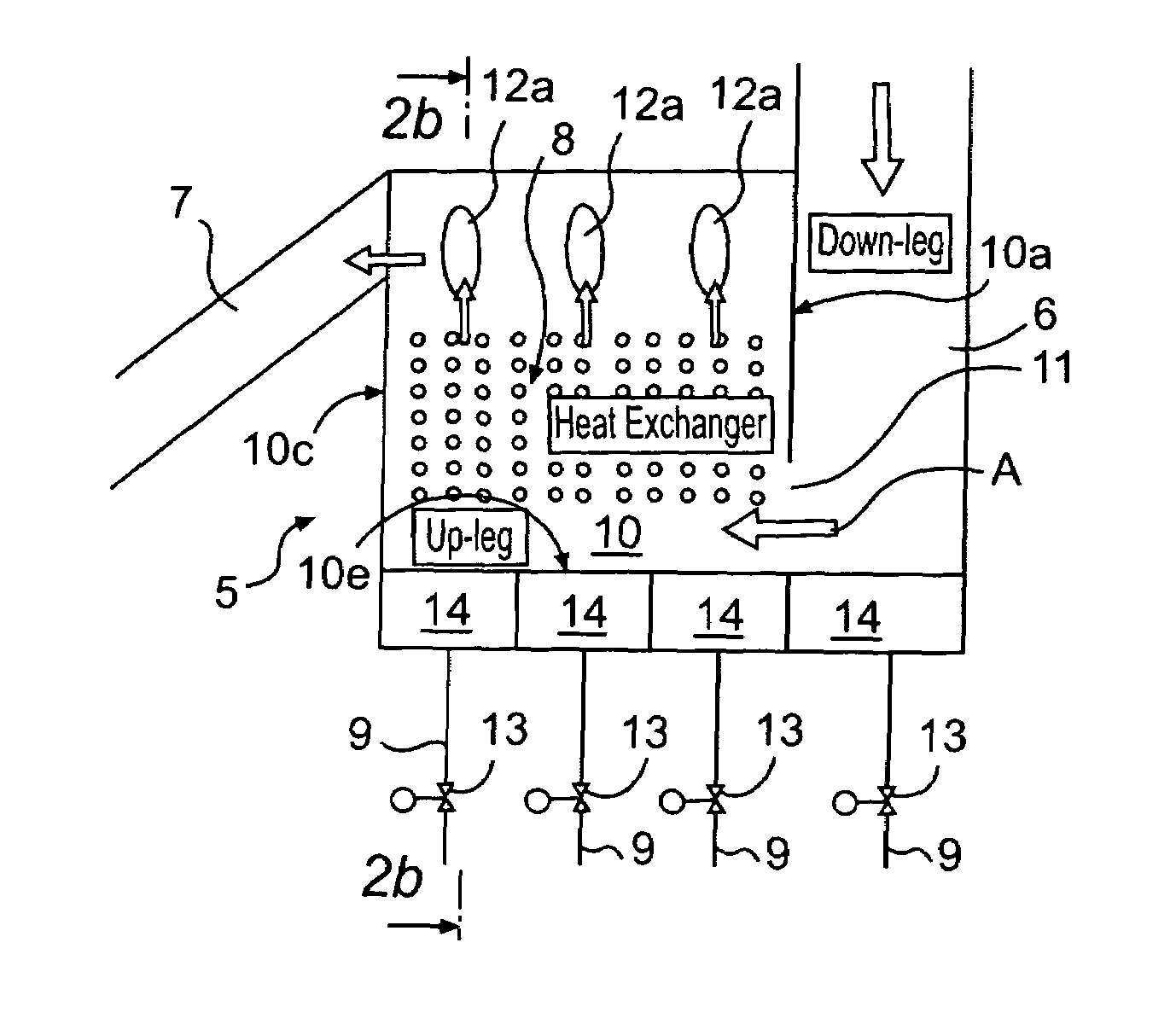
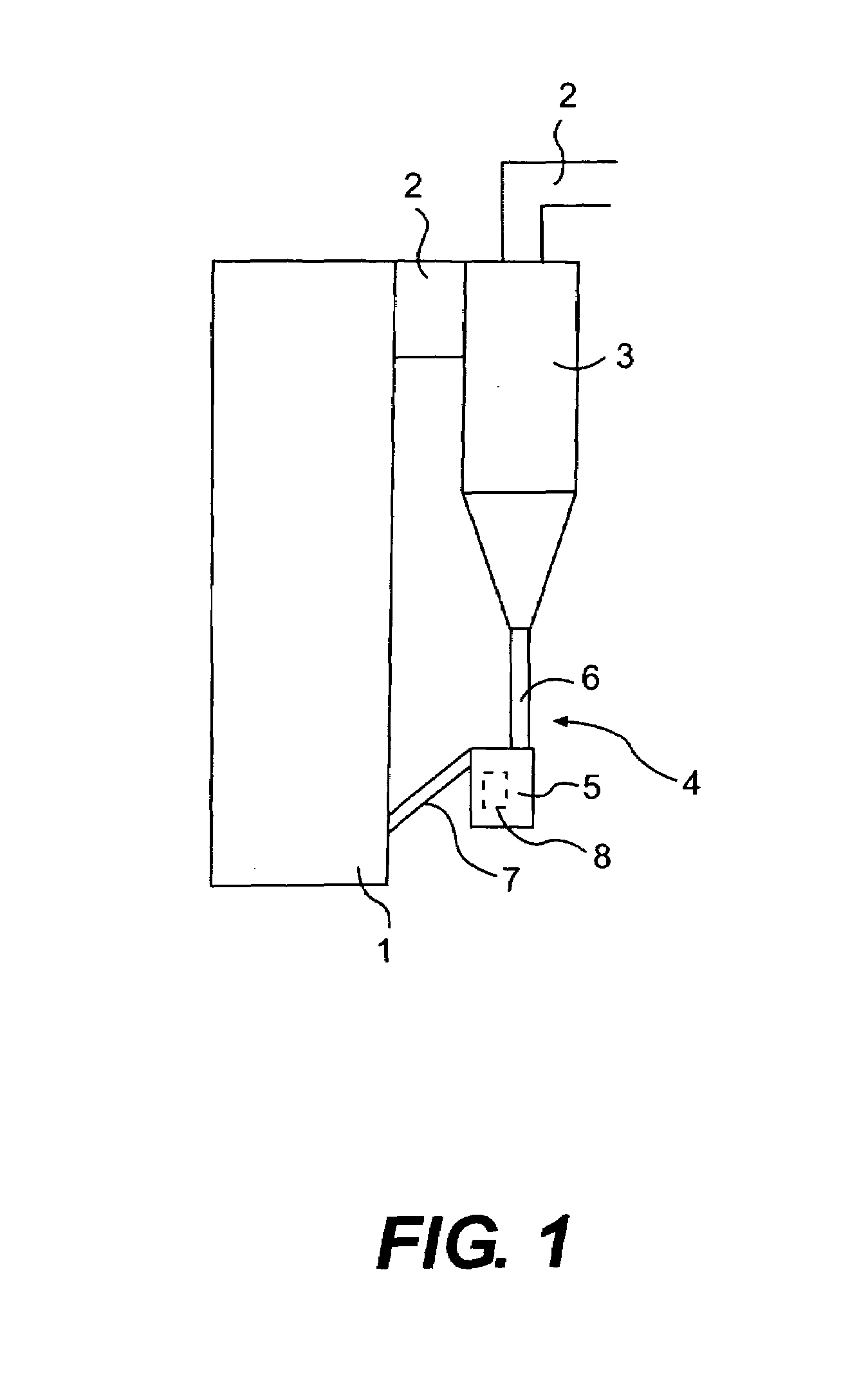
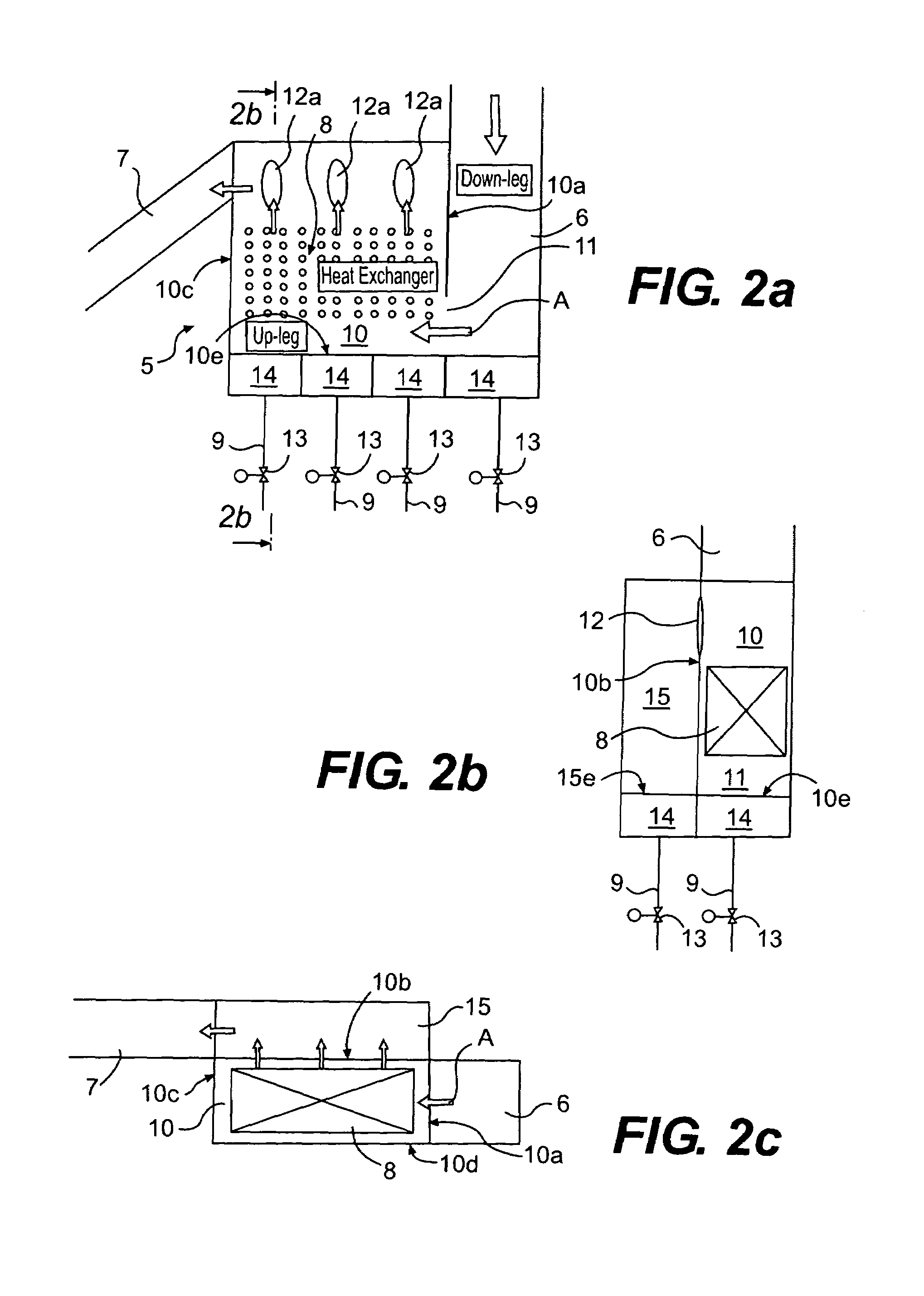

Model-free adaptive control of supercritical circulating fluidized-bed boilers
PatentActiveUS8910478B2
Innovation
- A multivariable Model-Free Adaptive (MFA) control system is developed to manage 5-Input-5-Output combustion processes in Circulating Fluidized-Bed and Once-Through Supercritical Circulating Fluidized-Bed boilers, using a 7-input-7-output control system that integrates with Boiler-Turbine-Generator units, enabling adaptive and robust control without requiring precise process models or manual tuning.


Environmental Regulations for CFB Emissions
Environmental regulations governing circulating fluidized bed boiler emissions have become increasingly stringent worldwide, directly impacting bed pressure drop optimization strategies. The regulatory landscape encompasses multiple pollutant categories, including particulate matter, sulfur dioxide, nitrogen oxides, mercury, and carbon dioxide emissions. These regulations establish maximum allowable emission limits that CFB operators must maintain while optimizing operational parameters such as bed pressure drop.
The United States Environmental Protection Agency's Mercury and Air Toxics Standards and Cross-State Air Pollution Rule impose strict limits on CFB emissions, requiring continuous monitoring and compliance reporting. European Union directives, particularly the Industrial Emissions Directive and Large Combustion Plant Directive, establish even more restrictive emission thresholds. These regulations mandate specific measurement methodologies and averaging periods that influence how pressure drop optimization must be approached.
Bed pressure drop optimization directly affects emission control system performance, creating regulatory compliance challenges. Higher pressure drops can improve combustion efficiency and reduce unburned carbon emissions, but may increase auxiliary power consumption and operational costs. Conversely, lower pressure drops might compromise pollutant capture efficiency in downstream emission control equipment, potentially violating regulatory limits.
Regional variations in environmental standards significantly impact CFB design and operation strategies. China's Ultra-Low Emission standards for coal-fired power plants require particulate matter concentrations below 10 mg/m³, influencing bed design parameters. Indian pollution control regulations focus heavily on particulate matter and sulfur dioxide control, while emerging markets often adopt less stringent but rapidly evolving standards.
Compliance monitoring requirements mandate continuous emission monitoring systems that track real-time pollutant concentrations. These systems must demonstrate correlation between bed operating parameters, including pressure drop, and emission performance. Regulatory agencies require detailed documentation of operational modifications and their environmental impacts, necessitating comprehensive data collection during pressure drop optimization activities.
Future regulatory trends indicate increasing emphasis on greenhouse gas emissions and fine particulate matter control. Carbon pricing mechanisms and renewable energy mandates are reshaping the economic landscape for CFB operations, making pressure drop optimization crucial for maintaining competitiveness while meeting environmental obligations.
The United States Environmental Protection Agency's Mercury and Air Toxics Standards and Cross-State Air Pollution Rule impose strict limits on CFB emissions, requiring continuous monitoring and compliance reporting. European Union directives, particularly the Industrial Emissions Directive and Large Combustion Plant Directive, establish even more restrictive emission thresholds. These regulations mandate specific measurement methodologies and averaging periods that influence how pressure drop optimization must be approached.
Bed pressure drop optimization directly affects emission control system performance, creating regulatory compliance challenges. Higher pressure drops can improve combustion efficiency and reduce unburned carbon emissions, but may increase auxiliary power consumption and operational costs. Conversely, lower pressure drops might compromise pollutant capture efficiency in downstream emission control equipment, potentially violating regulatory limits.
Regional variations in environmental standards significantly impact CFB design and operation strategies. China's Ultra-Low Emission standards for coal-fired power plants require particulate matter concentrations below 10 mg/m³, influencing bed design parameters. Indian pollution control regulations focus heavily on particulate matter and sulfur dioxide control, while emerging markets often adopt less stringent but rapidly evolving standards.
Compliance monitoring requirements mandate continuous emission monitoring systems that track real-time pollutant concentrations. These systems must demonstrate correlation between bed operating parameters, including pressure drop, and emission performance. Regulatory agencies require detailed documentation of operational modifications and their environmental impacts, necessitating comprehensive data collection during pressure drop optimization activities.
Future regulatory trends indicate increasing emphasis on greenhouse gas emissions and fine particulate matter control. Carbon pricing mechanisms and renewable energy mandates are reshaping the economic landscape for CFB operations, making pressure drop optimization crucial for maintaining competitiveness while meeting environmental obligations.
Energy Efficiency Standards for Industrial Boilers
Energy efficiency standards for industrial boilers have become increasingly stringent worldwide, directly impacting the optimization requirements for circulating fluidized bed (CFB) boiler operations. These standards establish minimum efficiency thresholds and maximum emission limits that CFB boilers must achieve to remain compliant with environmental regulations. The pressure drop optimization in bed systems plays a crucial role in meeting these efficiency benchmarks, as excessive pressure losses directly translate to increased auxiliary power consumption and reduced overall plant efficiency.
Current international standards such as the Industrial Emissions Directive in Europe and the Clean Air Act regulations in the United States mandate specific efficiency targets for large-scale industrial boilers. These regulations typically require thermal efficiencies exceeding 85% for new installations and impose strict limits on particulate emissions and nitrogen oxides. CFB boilers must demonstrate compliance through continuous monitoring systems that track both efficiency metrics and environmental performance indicators.
The relationship between bed pressure drop and energy efficiency standards is particularly significant in the context of auxiliary power consumption. Fan power requirements, which can account for 3-5% of total plant output in CFB systems, are directly proportional to pressure losses across the bed and cyclone systems. Standards increasingly recognize this relationship by incorporating net efficiency calculations that account for parasitic loads, making pressure drop optimization essential for regulatory compliance.
Recent updates to efficiency standards have introduced more sophisticated measurement methodologies that consider real-world operating conditions rather than design-point performance alone. These standards now require demonstration of efficiency maintenance across varying load conditions, fuel qualities, and seasonal operating parameters. This evolution places greater emphasis on the dynamic optimization of bed pressure drop to maintain consistent performance across diverse operating scenarios.
Emerging regulatory frameworks are beginning to incorporate lifecycle efficiency assessments and carbon intensity metrics, further emphasizing the importance of optimized CFB boiler operation. These forward-looking standards recognize that sustained efficiency performance requires robust control systems capable of maintaining optimal bed pressure drop characteristics throughout the equipment's operational lifetime, driving innovation in advanced process control and predictive maintenance strategies.
Current international standards such as the Industrial Emissions Directive in Europe and the Clean Air Act regulations in the United States mandate specific efficiency targets for large-scale industrial boilers. These regulations typically require thermal efficiencies exceeding 85% for new installations and impose strict limits on particulate emissions and nitrogen oxides. CFB boilers must demonstrate compliance through continuous monitoring systems that track both efficiency metrics and environmental performance indicators.
The relationship between bed pressure drop and energy efficiency standards is particularly significant in the context of auxiliary power consumption. Fan power requirements, which can account for 3-5% of total plant output in CFB systems, are directly proportional to pressure losses across the bed and cyclone systems. Standards increasingly recognize this relationship by incorporating net efficiency calculations that account for parasitic loads, making pressure drop optimization essential for regulatory compliance.
Recent updates to efficiency standards have introduced more sophisticated measurement methodologies that consider real-world operating conditions rather than design-point performance alone. These standards now require demonstration of efficiency maintenance across varying load conditions, fuel qualities, and seasonal operating parameters. This evolution places greater emphasis on the dynamic optimization of bed pressure drop to maintain consistent performance across diverse operating scenarios.
Emerging regulatory frameworks are beginning to incorporate lifecycle efficiency assessments and carbon intensity metrics, further emphasizing the importance of optimized CFB boiler operation. These forward-looking standards recognize that sustained efficiency performance requires robust control systems capable of maintaining optimal bed pressure drop characteristics throughout the equipment's operational lifetime, driving innovation in advanced process control and predictive maintenance strategies.
Unlock deeper insights with Patsnap Eureka Quick Research — get a full tech report to explore trends and direct your research. Try now!
Generate Your Research Report Instantly with AI Agent
Supercharge your innovation with Patsnap Eureka AI Agent Platform!