CNC vs Injection Molding: Cost and Time Efficiency
MAR 20, 202610 MIN READ
Generate Your Research Report Instantly with AI Agent
Patsnap Eureka helps you evaluate technical feasibility & market potential.
CNC vs Injection Molding Manufacturing Background and Objectives
Manufacturing has undergone significant transformation over the past century, with Computer Numerical Control (CNC) machining and injection molding emerging as two dominant production methodologies. CNC technology evolved from early numerical control systems developed in the 1940s and 1950s, initially designed for aerospace applications requiring high precision. The integration of computer control in the 1970s revolutionized subtractive manufacturing, enabling complex geometries and tight tolerances across various materials.
Injection molding traces its origins to the late 19th century, with John Wesley Hyatt's injection molding machine for celluloid in 1872. The technology gained momentum during World War II with the demand for mass-produced plastic components. Modern injection molding systems incorporate sophisticated temperature control, pressure monitoring, and automated material handling, making it the preferred method for high-volume plastic production.
The contemporary manufacturing landscape faces unprecedented challenges in balancing cost efficiency with production speed while maintaining quality standards. Global supply chain disruptions, labor shortages, and increasing material costs have intensified the need for manufacturers to optimize their production strategies. Companies must navigate between capital-intensive setup costs and per-unit production expenses while meeting increasingly compressed time-to-market requirements.
The primary objective of comparing CNC machining and injection molding centers on establishing clear decision-making frameworks for manufacturers evaluating production methods. This analysis aims to quantify the cost structures inherent to each technology, including initial capital investment, tooling expenses, material utilization rates, and labor requirements. Understanding these financial implications enables informed strategic planning for product development cycles.
Time efficiency represents another critical objective, encompassing setup times, production rates, and scalability considerations. CNC machining offers rapid prototyping capabilities and design iteration flexibility, while injection molding provides unmatched high-volume production speeds once tooling is complete. The analysis seeks to identify crossover points where one method becomes more advantageous than the other based on production volume, part complexity, and timeline constraints.
Quality consistency and material versatility constitute additional evaluation parameters. CNC machining accommodates diverse materials including metals, plastics, and composites, while injection molding primarily focuses on thermoplastic and thermoset polymers. The objective includes establishing quality benchmarks and identifying applications where material properties or geometric requirements favor one technology over another, ultimately providing manufacturers with comprehensive guidance for production method selection.
Injection molding traces its origins to the late 19th century, with John Wesley Hyatt's injection molding machine for celluloid in 1872. The technology gained momentum during World War II with the demand for mass-produced plastic components. Modern injection molding systems incorporate sophisticated temperature control, pressure monitoring, and automated material handling, making it the preferred method for high-volume plastic production.
The contemporary manufacturing landscape faces unprecedented challenges in balancing cost efficiency with production speed while maintaining quality standards. Global supply chain disruptions, labor shortages, and increasing material costs have intensified the need for manufacturers to optimize their production strategies. Companies must navigate between capital-intensive setup costs and per-unit production expenses while meeting increasingly compressed time-to-market requirements.
The primary objective of comparing CNC machining and injection molding centers on establishing clear decision-making frameworks for manufacturers evaluating production methods. This analysis aims to quantify the cost structures inherent to each technology, including initial capital investment, tooling expenses, material utilization rates, and labor requirements. Understanding these financial implications enables informed strategic planning for product development cycles.
Time efficiency represents another critical objective, encompassing setup times, production rates, and scalability considerations. CNC machining offers rapid prototyping capabilities and design iteration flexibility, while injection molding provides unmatched high-volume production speeds once tooling is complete. The analysis seeks to identify crossover points where one method becomes more advantageous than the other based on production volume, part complexity, and timeline constraints.
Quality consistency and material versatility constitute additional evaluation parameters. CNC machining accommodates diverse materials including metals, plastics, and composites, while injection molding primarily focuses on thermoplastic and thermoset polymers. The objective includes establishing quality benchmarks and identifying applications where material properties or geometric requirements favor one technology over another, ultimately providing manufacturers with comprehensive guidance for production method selection.
Market Demand Analysis for CNC and Injection Molding Services
The global manufacturing landscape demonstrates robust demand for both CNC machining and injection molding services, driven by diverse industry requirements and evolving production strategies. CNC machining services experience strong demand across aerospace, automotive, medical device, and precision engineering sectors, where tight tolerances and complex geometries are essential. The aerospace industry particularly values CNC capabilities for producing critical components from specialized materials like titanium and high-strength alloys.
Injection molding services dominate high-volume consumer goods, automotive interior components, packaging, and electronics housing markets. The consumer electronics sector represents a significant demand driver, requiring rapid production of plastic components with consistent quality. Automotive manufacturers increasingly rely on injection molding for lightweight plastic parts that reduce vehicle weight while maintaining structural integrity.
Market segmentation reveals distinct demand patterns based on production volume requirements. Low to medium volume production typically favors CNC machining, especially for prototyping, custom tooling, and specialized components. Industries requiring frequent design iterations, such as medical devices and aerospace, generate consistent demand for CNC services due to the technology's flexibility in accommodating design changes without significant tooling investments.
High-volume production markets predominantly drive injection molding demand. Consumer goods manufacturers, packaging companies, and mass-market automotive suppliers require millions of identical parts annually, making injection molding the economically viable choice despite higher initial tooling costs. The packaging industry alone generates substantial demand for injection molding services, particularly for food containers, caps, and closures.
Regional demand variations reflect local manufacturing capabilities and industry concentrations. North American and European markets show balanced demand for both technologies, with strong aerospace and automotive sectors driving CNC requirements while consumer goods manufacturing sustains injection molding demand. Asian markets, particularly China and Southeast Asia, demonstrate higher injection molding demand due to concentrated consumer electronics and mass production manufacturing.
Emerging trends indicate growing demand for hybrid manufacturing approaches, where companies utilize both technologies strategically. Rapid prototyping workflows increasingly combine CNC machining for initial prototypes with injection molding for production scaling, creating demand for integrated service providers capable of supporting complete product development cycles.
Injection molding services dominate high-volume consumer goods, automotive interior components, packaging, and electronics housing markets. The consumer electronics sector represents a significant demand driver, requiring rapid production of plastic components with consistent quality. Automotive manufacturers increasingly rely on injection molding for lightweight plastic parts that reduce vehicle weight while maintaining structural integrity.
Market segmentation reveals distinct demand patterns based on production volume requirements. Low to medium volume production typically favors CNC machining, especially for prototyping, custom tooling, and specialized components. Industries requiring frequent design iterations, such as medical devices and aerospace, generate consistent demand for CNC services due to the technology's flexibility in accommodating design changes without significant tooling investments.
High-volume production markets predominantly drive injection molding demand. Consumer goods manufacturers, packaging companies, and mass-market automotive suppliers require millions of identical parts annually, making injection molding the economically viable choice despite higher initial tooling costs. The packaging industry alone generates substantial demand for injection molding services, particularly for food containers, caps, and closures.
Regional demand variations reflect local manufacturing capabilities and industry concentrations. North American and European markets show balanced demand for both technologies, with strong aerospace and automotive sectors driving CNC requirements while consumer goods manufacturing sustains injection molding demand. Asian markets, particularly China and Southeast Asia, demonstrate higher injection molding demand due to concentrated consumer electronics and mass production manufacturing.
Emerging trends indicate growing demand for hybrid manufacturing approaches, where companies utilize both technologies strategically. Rapid prototyping workflows increasingly combine CNC machining for initial prototypes with injection molding for production scaling, creating demand for integrated service providers capable of supporting complete product development cycles.
Current Manufacturing Challenges in Cost and Time Efficiency
Manufacturing industries today face unprecedented pressure to optimize both cost efficiency and production timelines while maintaining quality standards. The fundamental challenge lies in selecting appropriate manufacturing processes that can deliver products at competitive prices within increasingly compressed development cycles. Traditional manufacturing approaches often force companies into trade-offs between initial investment costs, per-unit production costs, and time-to-market requirements.
Cost efficiency challenges manifest differently across manufacturing scales and product complexities. Small-batch production often struggles with high per-unit costs due to setup expenses and tooling investments, while high-volume manufacturing faces challenges in justifying substantial upfront capital expenditures. The break-even analysis between different manufacturing methods becomes increasingly complex when factoring in material waste, labor costs, equipment depreciation, and quality control expenses.
Time efficiency presents equally complex challenges in modern manufacturing environments. Lead times for tooling development, prototype iterations, and production scaling can significantly impact market entry timing. The pressure to reduce development cycles while maintaining product quality creates tension between thorough testing phases and rapid market deployment. Manufacturing processes must accommodate frequent design changes and customization requirements without compromising delivery schedules.
Quality consistency across different production volumes represents another critical challenge. Maintaining dimensional accuracy, surface finish standards, and material properties while optimizing for cost and time efficiency requires sophisticated process control and monitoring systems. The challenge intensifies when switching between low-volume prototyping and high-volume production phases, as different manufacturing approaches may yield varying quality outcomes.
Supply chain integration and material availability further complicate cost and time efficiency optimization. Raw material procurement, inventory management, and supplier coordination must align with chosen manufacturing processes. Disruptions in material supply chains can disproportionately impact certain manufacturing methods, creating additional risk factors in production planning.
Technological advancement and equipment modernization present ongoing challenges for manufacturers seeking optimal cost-time efficiency balance. Investment decisions in new manufacturing technologies must consider not only immediate cost implications but also long-term competitiveness and adaptability to future market demands. The rapid evolution of manufacturing technologies creates pressure to continuously evaluate and potentially upgrade production capabilities.
Cost efficiency challenges manifest differently across manufacturing scales and product complexities. Small-batch production often struggles with high per-unit costs due to setup expenses and tooling investments, while high-volume manufacturing faces challenges in justifying substantial upfront capital expenditures. The break-even analysis between different manufacturing methods becomes increasingly complex when factoring in material waste, labor costs, equipment depreciation, and quality control expenses.
Time efficiency presents equally complex challenges in modern manufacturing environments. Lead times for tooling development, prototype iterations, and production scaling can significantly impact market entry timing. The pressure to reduce development cycles while maintaining product quality creates tension between thorough testing phases and rapid market deployment. Manufacturing processes must accommodate frequent design changes and customization requirements without compromising delivery schedules.
Quality consistency across different production volumes represents another critical challenge. Maintaining dimensional accuracy, surface finish standards, and material properties while optimizing for cost and time efficiency requires sophisticated process control and monitoring systems. The challenge intensifies when switching between low-volume prototyping and high-volume production phases, as different manufacturing approaches may yield varying quality outcomes.
Supply chain integration and material availability further complicate cost and time efficiency optimization. Raw material procurement, inventory management, and supplier coordination must align with chosen manufacturing processes. Disruptions in material supply chains can disproportionately impact certain manufacturing methods, creating additional risk factors in production planning.
Technological advancement and equipment modernization present ongoing challenges for manufacturers seeking optimal cost-time efficiency balance. Investment decisions in new manufacturing technologies must consider not only immediate cost implications but also long-term competitiveness and adaptability to future market demands. The rapid evolution of manufacturing technologies creates pressure to continuously evaluate and potentially upgrade production capabilities.
Current Cost-Time Optimization Solutions
01 Rapid prototyping and mold manufacturing methods
Advanced manufacturing techniques focus on reducing mold production time through rapid prototyping technologies. These methods enable faster transition from design to production by utilizing automated processes and optimized tooling strategies. The approaches significantly decrease lead times while maintaining precision and quality standards for both CNC machining and injection molding applications.- Rapid prototyping and mold manufacturing techniques: Advanced rapid prototyping methods and automated mold manufacturing systems can significantly reduce the time required for mold production. These techniques involve computer-aided design integration with CNC machining to create molds more efficiently. The use of automated systems for mold cavity processing and standardized mold components helps minimize production cycles and reduces overall manufacturing time for injection molding operations.
- Optimized injection molding machine design: Improvements in injection molding machine structure and control systems enhance operational efficiency and reduce cycle times. These innovations include advanced clamping mechanisms, improved injection units, and automated control systems that optimize processing parameters. Enhanced machine designs also contribute to better energy efficiency and reduced operational costs while maintaining high production quality and consistency.
- Multi-cavity and modular mold systems: Multi-cavity mold designs and modular mold systems enable simultaneous production of multiple parts, significantly improving production efficiency and reducing per-unit costs. These systems allow for flexible configuration and quick mold changes, minimizing downtime between production runs. The modular approach also facilitates easier maintenance and repair, contributing to overall cost reduction in high-volume manufacturing scenarios.
- Integrated CNC machining and injection molding processes: Integration of CNC machining with injection molding operations creates hybrid manufacturing systems that combine the precision of CNC with the efficiency of injection molding. These integrated approaches allow for in-line finishing operations, reduced handling time, and improved part accuracy. The combination of both technologies in a single workflow reduces overall production time and eliminates the need for multiple setups and transfers between different manufacturing stations.
- Automated material handling and quality control systems: Implementation of automated material feeding, part removal, and quality inspection systems reduces manual labor requirements and improves production consistency. These systems include robotic handling equipment, automated inspection devices, and real-time monitoring capabilities that detect defects early in the production process. Automation of these auxiliary processes significantly reduces cycle times, minimizes waste, and lowers overall production costs while ensuring consistent product quality.
02 Automated injection molding systems with integrated quality control
Integration of automated systems in injection molding processes enhances production efficiency and reduces cycle times. These systems incorporate real-time monitoring, automated material handling, and quality inspection mechanisms that minimize manual intervention. The automation reduces labor costs and improves consistency while increasing overall throughput in manufacturing operations.Expand Specific Solutions03 Multi-cavity mold designs for cost optimization
Multi-cavity mold configurations enable simultaneous production of multiple parts in a single injection cycle, significantly improving production efficiency and reducing per-unit costs. These designs optimize material usage and machine time while maintaining dimensional accuracy across all cavities. The approach is particularly effective for high-volume production scenarios where cost efficiency is critical.Expand Specific Solutions04 Hybrid manufacturing combining CNC and injection molding
Hybrid manufacturing approaches integrate CNC machining with injection molding processes to leverage the advantages of both technologies. This combination allows for rapid prototyping through CNC followed by efficient mass production via injection molding. The methodology reduces overall production time and costs by optimizing the manufacturing workflow and minimizing tooling changes between processes.Expand Specific Solutions05 Advanced cooling systems for cycle time reduction
Innovative cooling channel designs and thermal management systems in injection molds significantly reduce cycle times and improve production efficiency. These systems utilize optimized cooling geometries and advanced heat transfer mechanisms to accelerate part solidification. The enhanced cooling performance directly translates to increased production rates and reduced energy consumption per part.Expand Specific Solutions
Major Players in CNC and Injection Molding Industry
The CNC versus injection molding landscape represents a mature manufacturing sector experiencing significant technological convergence and market expansion. The industry has evolved from traditional manufacturing approaches to sophisticated, integrated solutions combining both technologies strategically based on production requirements. Market leaders like Proto Labs, KraussMaffei Technologies, and Stratasys demonstrate varying levels of technological maturity, with Proto Labs offering comprehensive on-demand manufacturing services, KraussMaffei specializing in advanced injection molding machinery, and Stratasys pioneering additive manufacturing alternatives. Companies such as Thermwood Corp and Impossible Objects are pushing technological boundaries by integrating CNC capabilities with composite materials and advanced 3D printing. The competitive landscape shows established players like LEGO A/S and Procter & Gamble leveraging both technologies for mass production, while specialized firms like Siegfried Hofmann GmbH focus on precision toolmaking and automation integration, indicating a market transitioning toward hybrid manufacturing solutions that optimize cost and time efficiency.
Proto Labs, Inc.
Technical Solution: Proto Labs offers both CNC machining and injection molding services with a focus on rapid prototyping and low-volume production. Their CNC services provide quick turnaround times of 1-3 days for prototypes with high precision and material flexibility, while their injection molding capabilities offer cost-effective solutions for volumes starting from 25 parts. The company utilizes automated quoting systems and digital manufacturing processes to optimize both cost and time efficiency. Their hybrid approach allows customers to transition from CNC prototyping to injection molding production seamlessly, with typical injection molding setup times reduced to 2-3 weeks compared to traditional 6-8 weeks.
Strengths: Fast prototyping capabilities, seamless transition between manufacturing methods, automated cost optimization. Weaknesses: Higher per-unit costs for large volume production, limited material options for specialized applications.
KraussMaffei Technologies GmbH
Technical Solution: KraussMaffei specializes in advanced injection molding technology with focus on cost and time efficiency optimization. Their APC plus process control system reduces cycle times by up to 15% while maintaining consistent quality. The company's modular machine design allows for rapid setup changes, reducing downtime between different production runs. Their digital twin technology enables virtual process optimization before physical production, significantly reducing trial-and-error costs. KraussMaffei's machines feature energy-efficient servo drives that can reduce power consumption by up to 50% compared to hydraulic systems, directly impacting operational costs for high-volume production scenarios.
Strengths: Advanced process control reducing cycle times, energy-efficient systems lowering operational costs, digital optimization capabilities. Weaknesses: High initial capital investment, complex technology requiring specialized training and maintenance.
Core Technologies for Manufacturing Efficiency Enhancement
CNC Instructions For Solidification Fixturing Of Parts
PatentActiveUS20090302496A1
Innovation
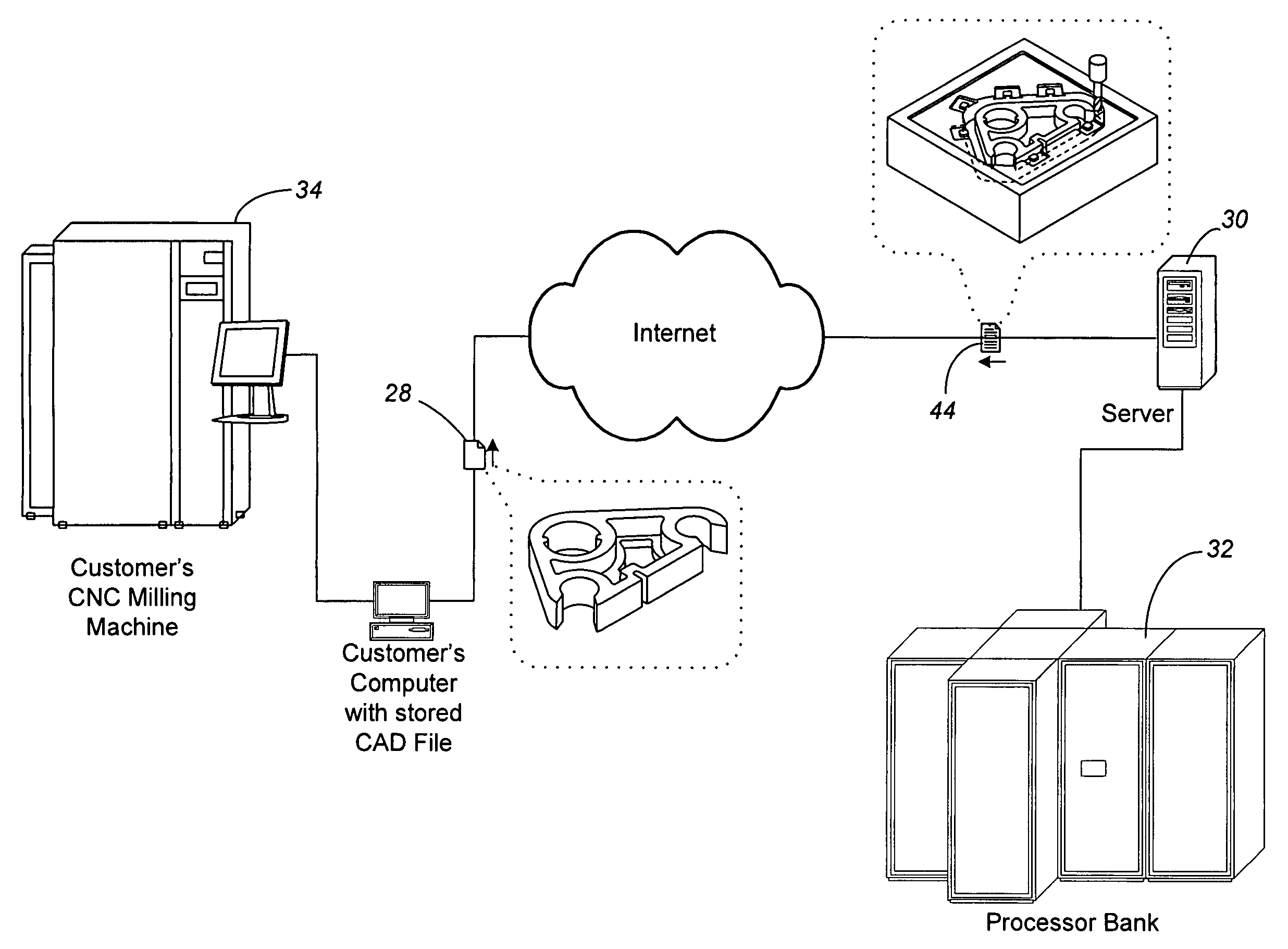
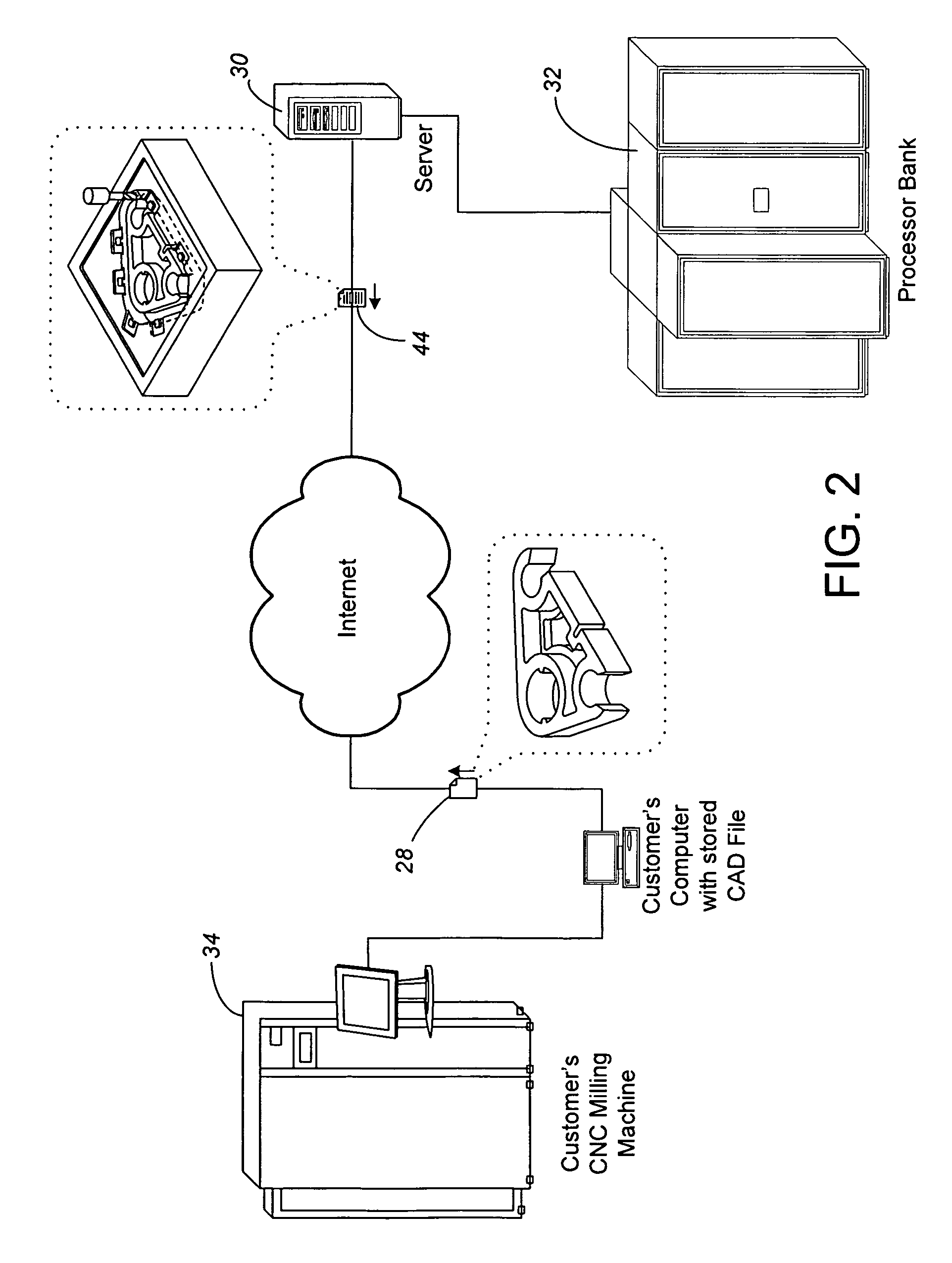
- A method and apparatus that allows customers to total profile machine their own parts by transmitting 3D CAD files to a computer processing location, generating CNC machining instructions for total profile machining, which include features for registration recesses and fluid support material, enabling machining of parts directly from blocks using a customer's CNC mill, eliminating the need for custom fixturing and reducing shipping time.

Method of machining a part
PatentActiveUS7836573B2
Innovation
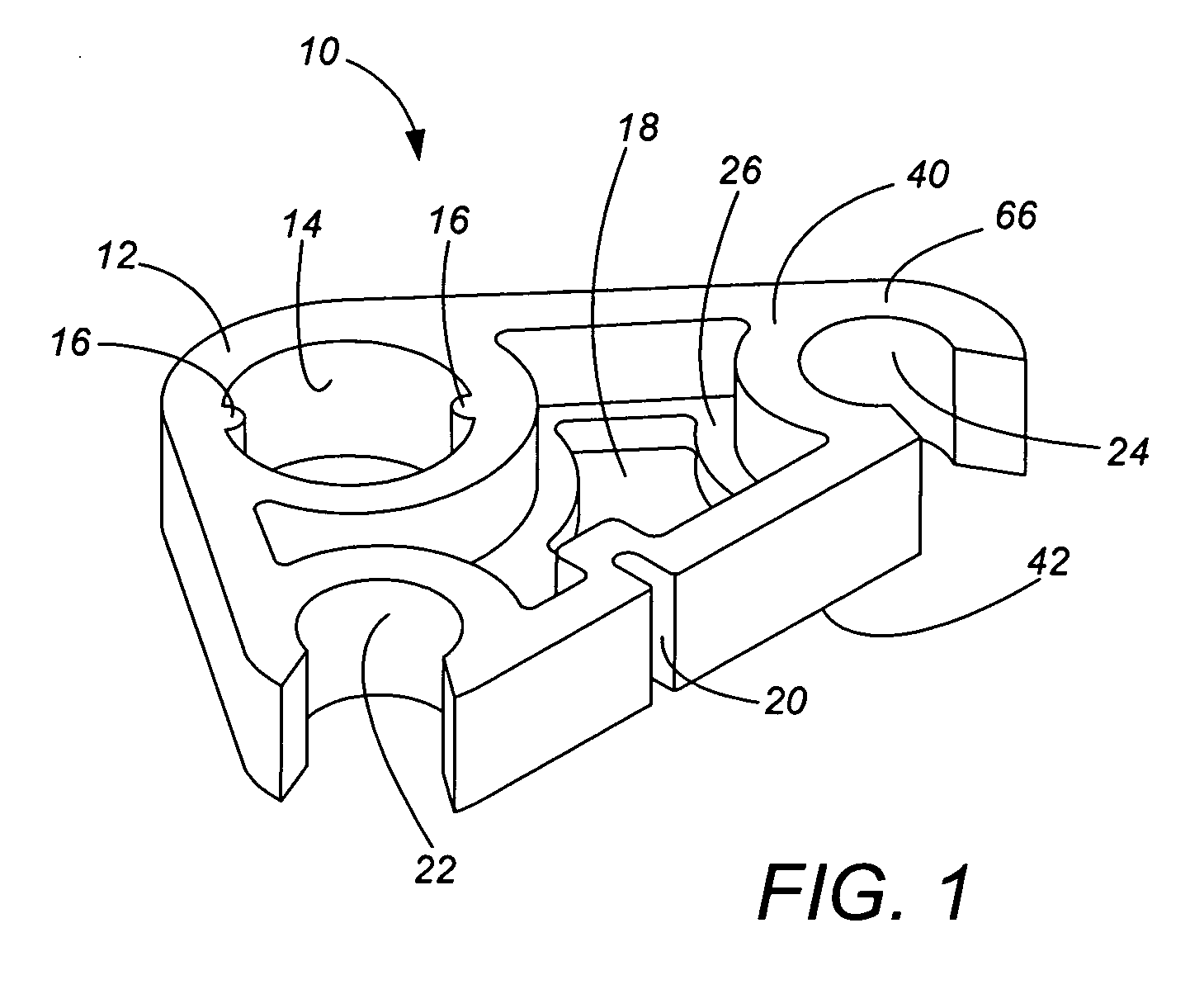
- A method and apparatus for total profile machining using a CNC machine, where a block of material is machined to define a side of the part and a registration/potting fixture is used to pack and solidify potting material, allowing for machining in multiple orientations without the need for custom fixturing, reducing waste and production time.


Environmental Impact Assessment of Manufacturing Methods
The environmental implications of CNC machining versus injection molding present distinct sustainability profiles that significantly influence manufacturing decisions beyond traditional cost and time considerations. Both processes generate different types of environmental impacts across their operational lifecycles, requiring comprehensive assessment frameworks to evaluate their ecological footprints.
CNC machining operates as a subtractive manufacturing process, inherently generating substantial material waste through chip removal and cutting operations. Typical material utilization rates range from 10-30% for complex components, meaning 70-90% of raw material becomes waste. However, this waste consists primarily of clean metal chips that maintain high recyclability value, particularly for aluminum, steel, and titanium alloys. The process requires continuous coolant circulation, generating contaminated fluids requiring specialized disposal or recycling treatment.
Energy consumption patterns differ markedly between these manufacturing methods. CNC operations demand consistent high-power consumption throughout machining cycles, with spindle motors, servo drives, and auxiliary systems consuming 15-45 kWh per operating hour depending on machine size and complexity. Energy intensity varies significantly with material hardness, cutting parameters, and part geometry, creating variable environmental impacts per component produced.
Injection molding demonstrates superior material efficiency, typically achieving 95-98% material utilization rates when accounting for runner systems and recycled regrind incorporation. The process generates minimal direct waste during production cycles, though setup procedures and color changes can produce significant scrap quantities. Plastic waste streams require careful segregation to maintain recycling viability, with contaminated materials often destined for energy recovery rather than mechanical recycling.
The thermal energy requirements for injection molding create substantial environmental considerations. Heating plastic resins to processing temperatures of 200-400°C, maintaining heated mold systems, and operating hydraulic power units generate significant energy demands. However, the high-volume nature of injection molding distributes these energy costs across thousands of parts per production run, typically resulting in lower per-unit energy consumption compared to CNC machining for equivalent production volumes.
Chemical usage patterns present additional environmental differentiation factors. CNC operations rely heavily on metalworking fluids, cutting oils, and cleaning solvents that require careful handling and disposal protocols. Injection molding processes utilize mold release agents, colorants, and various plastic additives that can introduce volatile organic compounds into manufacturing environments, necessitating appropriate ventilation and emission control systems.
Carbon footprint assessments reveal volume-dependent environmental trade-offs between these manufacturing approaches. Low-volume production scenarios typically favor CNC machining due to eliminated tooling production impacts, while high-volume applications demonstrate clear environmental advantages for injection molding through distributed energy consumption and reduced per-unit material waste generation.
CNC machining operates as a subtractive manufacturing process, inherently generating substantial material waste through chip removal and cutting operations. Typical material utilization rates range from 10-30% for complex components, meaning 70-90% of raw material becomes waste. However, this waste consists primarily of clean metal chips that maintain high recyclability value, particularly for aluminum, steel, and titanium alloys. The process requires continuous coolant circulation, generating contaminated fluids requiring specialized disposal or recycling treatment.
Energy consumption patterns differ markedly between these manufacturing methods. CNC operations demand consistent high-power consumption throughout machining cycles, with spindle motors, servo drives, and auxiliary systems consuming 15-45 kWh per operating hour depending on machine size and complexity. Energy intensity varies significantly with material hardness, cutting parameters, and part geometry, creating variable environmental impacts per component produced.
Injection molding demonstrates superior material efficiency, typically achieving 95-98% material utilization rates when accounting for runner systems and recycled regrind incorporation. The process generates minimal direct waste during production cycles, though setup procedures and color changes can produce significant scrap quantities. Plastic waste streams require careful segregation to maintain recycling viability, with contaminated materials often destined for energy recovery rather than mechanical recycling.
The thermal energy requirements for injection molding create substantial environmental considerations. Heating plastic resins to processing temperatures of 200-400°C, maintaining heated mold systems, and operating hydraulic power units generate significant energy demands. However, the high-volume nature of injection molding distributes these energy costs across thousands of parts per production run, typically resulting in lower per-unit energy consumption compared to CNC machining for equivalent production volumes.
Chemical usage patterns present additional environmental differentiation factors. CNC operations rely heavily on metalworking fluids, cutting oils, and cleaning solvents that require careful handling and disposal protocols. Injection molding processes utilize mold release agents, colorants, and various plastic additives that can introduce volatile organic compounds into manufacturing environments, necessitating appropriate ventilation and emission control systems.
Carbon footprint assessments reveal volume-dependent environmental trade-offs between these manufacturing approaches. Low-volume production scenarios typically favor CNC machining due to eliminated tooling production impacts, while high-volume applications demonstrate clear environmental advantages for injection molding through distributed energy consumption and reduced per-unit material waste generation.
Supply Chain Optimization for Manufacturing Processes
Supply chain optimization represents a critical differentiator when evaluating CNC machining versus injection molding manufacturing processes. The fundamental supply chain structures for these two manufacturing approaches exhibit distinct characteristics that significantly impact overall operational efficiency, cost management, and production scalability.
CNC machining operates within a relatively streamlined supply chain framework, primarily requiring raw material procurement of metal blocks, bars, or sheets. The supply chain complexity remains moderate, with established networks of metal suppliers offering standardized materials with predictable lead times. Material inventory management proves straightforward, as raw materials can be stored efficiently and utilized across multiple product variations without significant waste concerns.
Injection molding presents a more complex supply chain ecosystem, demanding coordination between multiple specialized suppliers. The process requires procurement of polymer resins, colorants, additives, and mold tooling from distinct supplier categories. Mold manufacturing itself introduces an additional supply chain layer, often involving specialized tooling companies with extended lead times ranging from 8-16 weeks for complex geometries.
Inventory optimization strategies differ substantially between these manufacturing approaches. CNC operations benefit from flexible raw material utilization, enabling just-in-time procurement strategies that minimize working capital requirements. The ability to machine various components from standard material stock reduces inventory complexity and obsolescence risks.
Injection molding supply chains require sophisticated demand forecasting and inventory planning due to the high setup costs and minimum order quantities typical in resin procurement. Companies must balance carrying costs against potential stockouts, particularly when managing multiple product lines requiring different material specifications.
Supplier relationship management plays a pivotal role in optimizing both supply chains. CNC operations typically maintain relationships with regional metal distributors, enabling rapid material replenishment and reduced transportation costs. Injection molding requires strategic partnerships with resin manufacturers, mold makers, and auxiliary equipment suppliers, necessitating more complex vendor management protocols.
Geographic considerations significantly influence supply chain optimization decisions. CNC machining benefits from distributed supplier networks, reducing dependency on single-source suppliers and enabling regional sourcing strategies. Injection molding often requires centralized production facilities to justify tooling investments, potentially creating longer supply chain distances and increased logistics complexity.
Risk mitigation strategies must address different vulnerability points in each supply chain. CNC operations face primarily material price volatility and supplier capacity constraints. Injection molding supply chains must manage mold damage risks, resin quality variations, and the potential for extended production interruptions due to tooling failures.
CNC machining operates within a relatively streamlined supply chain framework, primarily requiring raw material procurement of metal blocks, bars, or sheets. The supply chain complexity remains moderate, with established networks of metal suppliers offering standardized materials with predictable lead times. Material inventory management proves straightforward, as raw materials can be stored efficiently and utilized across multiple product variations without significant waste concerns.
Injection molding presents a more complex supply chain ecosystem, demanding coordination between multiple specialized suppliers. The process requires procurement of polymer resins, colorants, additives, and mold tooling from distinct supplier categories. Mold manufacturing itself introduces an additional supply chain layer, often involving specialized tooling companies with extended lead times ranging from 8-16 weeks for complex geometries.
Inventory optimization strategies differ substantially between these manufacturing approaches. CNC operations benefit from flexible raw material utilization, enabling just-in-time procurement strategies that minimize working capital requirements. The ability to machine various components from standard material stock reduces inventory complexity and obsolescence risks.
Injection molding supply chains require sophisticated demand forecasting and inventory planning due to the high setup costs and minimum order quantities typical in resin procurement. Companies must balance carrying costs against potential stockouts, particularly when managing multiple product lines requiring different material specifications.
Supplier relationship management plays a pivotal role in optimizing both supply chains. CNC operations typically maintain relationships with regional metal distributors, enabling rapid material replenishment and reduced transportation costs. Injection molding requires strategic partnerships with resin manufacturers, mold makers, and auxiliary equipment suppliers, necessitating more complex vendor management protocols.
Geographic considerations significantly influence supply chain optimization decisions. CNC machining benefits from distributed supplier networks, reducing dependency on single-source suppliers and enabling regional sourcing strategies. Injection molding often requires centralized production facilities to justify tooling investments, potentially creating longer supply chain distances and increased logistics complexity.
Risk mitigation strategies must address different vulnerability points in each supply chain. CNC operations face primarily material price volatility and supplier capacity constraints. Injection molding supply chains must manage mold damage risks, resin quality variations, and the potential for extended production interruptions due to tooling failures.
Unlock deeper insights with Patsnap Eureka Quick Research — get a full tech report to explore trends and direct your research. Try now!
Generate Your Research Report Instantly with AI Agent
Supercharge your innovation with Patsnap Eureka AI Agent Platform!