

Compare ECM Vendor Solutions for Customization Options
MAR 27, 20269 MIN READ
Generate Your Research Report Instantly with AI Agent
PatSnap Eureka helps you evaluate technical feasibility & market potential.
ECM Customization Background and Objectives
Enterprise Content Management (ECM) systems have evolved from simple document repositories into comprehensive platforms that manage the entire lifecycle of organizational content. The evolution began in the 1980s with basic document management systems, progressed through workflow automation in the 1990s, and has now reached sophisticated cloud-native platforms offering extensive customization capabilities. This technological progression reflects organizations' growing need to tailor content management solutions to their unique business processes, regulatory requirements, and operational workflows.
The customization imperative in ECM solutions stems from the recognition that no two organizations manage content identically. Different industries face varying compliance requirements, workflow complexities, and user interaction patterns. Healthcare organizations require HIPAA-compliant document handling with specialized retention policies, while financial institutions need robust audit trails and regulatory reporting capabilities. Manufacturing companies often demand integration with product lifecycle management systems and quality control processes.
Modern ECM customization encompasses multiple dimensions including user interface personalization, workflow configuration, metadata schema design, security model adaptation, and integration architecture flexibility. Organizations increasingly seek solutions that can adapt to their existing technology ecosystems rather than forcing wholesale process changes. This shift has driven ECM vendors to develop more modular, API-driven architectures that support extensive customization without compromising system stability or upgrade paths.
The primary objective of comparing ECM vendor customization options is to establish a comprehensive framework for evaluating how different platforms address organizational uniqueness. This evaluation must consider both immediate customization needs and long-term adaptability as business requirements evolve. Key assessment criteria include configuration flexibility, development tool availability, third-party integration capabilities, and the balance between out-of-the-box functionality and customization complexity.
Strategic objectives include identifying vendors that offer sustainable customization approaches, where modifications enhance rather than hinder system performance and maintainability. Organizations must evaluate whether customization options align with their technical capabilities, budget constraints, and timeline requirements. The ultimate goal is selecting an ECM platform that provides optimal customization depth while maintaining system reliability, security, and vendor support quality throughout the solution lifecycle.
The customization imperative in ECM solutions stems from the recognition that no two organizations manage content identically. Different industries face varying compliance requirements, workflow complexities, and user interaction patterns. Healthcare organizations require HIPAA-compliant document handling with specialized retention policies, while financial institutions need robust audit trails and regulatory reporting capabilities. Manufacturing companies often demand integration with product lifecycle management systems and quality control processes.
Modern ECM customization encompasses multiple dimensions including user interface personalization, workflow configuration, metadata schema design, security model adaptation, and integration architecture flexibility. Organizations increasingly seek solutions that can adapt to their existing technology ecosystems rather than forcing wholesale process changes. This shift has driven ECM vendors to develop more modular, API-driven architectures that support extensive customization without compromising system stability or upgrade paths.
The primary objective of comparing ECM vendor customization options is to establish a comprehensive framework for evaluating how different platforms address organizational uniqueness. This evaluation must consider both immediate customization needs and long-term adaptability as business requirements evolve. Key assessment criteria include configuration flexibility, development tool availability, third-party integration capabilities, and the balance between out-of-the-box functionality and customization complexity.
Strategic objectives include identifying vendors that offer sustainable customization approaches, where modifications enhance rather than hinder system performance and maintainability. Organizations must evaluate whether customization options align with their technical capabilities, budget constraints, and timeline requirements. The ultimate goal is selecting an ECM platform that provides optimal customization depth while maintaining system reliability, security, and vendor support quality throughout the solution lifecycle.
Market Demand for Flexible ECM Solutions
The enterprise content management market is experiencing unprecedented demand for flexible and customizable solutions as organizations grapple with increasingly complex digital transformation requirements. Modern enterprises operate in dynamic environments where standardized ECM solutions often fall short of meeting specific operational needs, regulatory requirements, and industry-specific workflows. This gap has created substantial market pressure for ECM vendors to develop more adaptable platforms that can be tailored to diverse organizational structures and business processes.
Digital transformation initiatives across industries have fundamentally altered how organizations approach content management. Companies are no longer satisfied with one-size-fits-all solutions that require significant process modifications to accommodate rigid system architectures. Instead, they demand ECM platforms that can adapt to existing workflows while providing the flexibility to evolve with changing business requirements. This shift represents a fundamental change in procurement priorities, where customization capabilities have become primary selection criteria rather than secondary considerations.
Regulatory compliance requirements across different industries have intensified the need for flexible ECM solutions. Healthcare organizations require HIPAA-compliant document workflows, financial institutions need SOX-compliant audit trails, and manufacturing companies must adhere to FDA validation requirements. Each sector demands unique customization options that standard ECM packages cannot adequately address without extensive modification capabilities.
The rise of hybrid work environments has further amplified demand for customizable ECM solutions. Organizations need platforms that can seamlessly integrate with diverse collaboration tools, support various authentication methods, and provide flexible access controls that adapt to changing workforce dynamics. This requirement extends beyond simple configuration options to encompass deep customization of user interfaces, workflow engines, and integration capabilities.
Market research indicates strong preference for ECM vendors offering comprehensive customization frameworks rather than limited configuration options. Organizations increasingly evaluate vendors based on their ability to provide flexible APIs, customizable user interfaces, configurable workflow engines, and extensible metadata schemas. This trend has forced traditional ECM vendors to restructure their product architectures to support greater customization depth while maintaining system stability and performance standards.
The competitive landscape reflects this demand shift, with emerging vendors gaining market share by prioritizing flexibility over feature breadth. Established vendors are responding by investing heavily in platform modernization initiatives that enhance customization capabilities while preserving existing functionality and ensuring backward compatibility with legacy implementations.
Digital transformation initiatives across industries have fundamentally altered how organizations approach content management. Companies are no longer satisfied with one-size-fits-all solutions that require significant process modifications to accommodate rigid system architectures. Instead, they demand ECM platforms that can adapt to existing workflows while providing the flexibility to evolve with changing business requirements. This shift represents a fundamental change in procurement priorities, where customization capabilities have become primary selection criteria rather than secondary considerations.
Regulatory compliance requirements across different industries have intensified the need for flexible ECM solutions. Healthcare organizations require HIPAA-compliant document workflows, financial institutions need SOX-compliant audit trails, and manufacturing companies must adhere to FDA validation requirements. Each sector demands unique customization options that standard ECM packages cannot adequately address without extensive modification capabilities.
The rise of hybrid work environments has further amplified demand for customizable ECM solutions. Organizations need platforms that can seamlessly integrate with diverse collaboration tools, support various authentication methods, and provide flexible access controls that adapt to changing workforce dynamics. This requirement extends beyond simple configuration options to encompass deep customization of user interfaces, workflow engines, and integration capabilities.
Market research indicates strong preference for ECM vendors offering comprehensive customization frameworks rather than limited configuration options. Organizations increasingly evaluate vendors based on their ability to provide flexible APIs, customizable user interfaces, configurable workflow engines, and extensible metadata schemas. This trend has forced traditional ECM vendors to restructure their product architectures to support greater customization depth while maintaining system stability and performance standards.
The competitive landscape reflects this demand shift, with emerging vendors gaining market share by prioritizing flexibility over feature breadth. Established vendors are responding by investing heavily in platform modernization initiatives that enhance customization capabilities while preserving existing functionality and ensuring backward compatibility with legacy implementations.
Current ECM Vendor Customization Capabilities
Leading ECM vendors have developed sophisticated customization frameworks to address diverse organizational requirements. Microsoft SharePoint offers extensive customization through its Power Platform integration, enabling organizations to create custom workflows, forms, and applications without extensive coding. The platform supports both declarative customization through SharePoint Designer and programmatic customization via SharePoint Framework (SPFx), providing flexibility for different technical skill levels.
OpenText Content Suite provides comprehensive customization capabilities through its Application Builder and Content Server APIs. Organizations can modify user interfaces, create custom content types, and develop specialized workflows using OpenText's development tools. The platform's modular architecture allows for granular customization while maintaining system stability and upgrade compatibility.
IBM FileNet offers robust customization options through its Process Engine and Content Engine components. The platform enables custom business process automation, specialized content classification rules, and tailored user interfaces through its comprehensive API framework. FileNet's Case Manager provides additional customization capabilities for case-based workflows and document-centric processes.
Documentum by OpenText delivers advanced customization through its xCP platform, allowing organizations to build custom applications on top of the core ECM infrastructure. The platform supports custom object models, specialized retention policies, and industry-specific compliance frameworks. Documentum's Composer tool enables visual development of custom applications and workflows.
Box Business provides customization primarily through its extensive API ecosystem and Box Platform services. Organizations can develop custom integrations, automated workflows, and specialized security controls using Box's RESTful APIs. The platform's metadata templates and custom fields enable tailored content organization and governance structures.
Alfresco Community and Enterprise editions offer significant customization flexibility through their open-source foundation. The platform supports custom content models, specialized user interfaces through Alfresco Share customization, and extensive workflow modifications using Activiti BPM engine. Alfresco's modular architecture enables deep customization while preserving upgrade paths.
M-Files distinguishes itself with metadata-driven customization capabilities, allowing organizations to create dynamic classification systems and automated workflows based on content properties. The platform's intelligent information management approach enables sophisticated customization without traditional folder-based constraints, supporting complex business logic and automated content lifecycle management.
OpenText Content Suite provides comprehensive customization capabilities through its Application Builder and Content Server APIs. Organizations can modify user interfaces, create custom content types, and develop specialized workflows using OpenText's development tools. The platform's modular architecture allows for granular customization while maintaining system stability and upgrade compatibility.
IBM FileNet offers robust customization options through its Process Engine and Content Engine components. The platform enables custom business process automation, specialized content classification rules, and tailored user interfaces through its comprehensive API framework. FileNet's Case Manager provides additional customization capabilities for case-based workflows and document-centric processes.
Documentum by OpenText delivers advanced customization through its xCP platform, allowing organizations to build custom applications on top of the core ECM infrastructure. The platform supports custom object models, specialized retention policies, and industry-specific compliance frameworks. Documentum's Composer tool enables visual development of custom applications and workflows.
Box Business provides customization primarily through its extensive API ecosystem and Box Platform services. Organizations can develop custom integrations, automated workflows, and specialized security controls using Box's RESTful APIs. The platform's metadata templates and custom fields enable tailored content organization and governance structures.
Alfresco Community and Enterprise editions offer significant customization flexibility through their open-source foundation. The platform supports custom content models, specialized user interfaces through Alfresco Share customization, and extensive workflow modifications using Activiti BPM engine. Alfresco's modular architecture enables deep customization while preserving upgrade paths.
M-Files distinguishes itself with metadata-driven customization capabilities, allowing organizations to create dynamic classification systems and automated workflows based on content properties. The platform's intelligent information management approach enables sophisticated customization without traditional folder-based constraints, supporting complex business logic and automated content lifecycle management.
Existing ECM Customization Approaches
01 Customizable workflow and process management systems
ECM solutions can be customized to support flexible workflow configurations that adapt to specific business processes. These systems allow organizations to define custom approval chains, routing rules, and process automation based on their unique operational requirements. The customization enables dynamic adjustment of document lifecycles and business logic without requiring extensive system modifications.- Customizable workflow and process management systems: ECM solutions can be customized to support flexible workflow configurations that adapt to specific business processes. These systems allow organizations to define custom approval chains, routing rules, and process automation based on their unique operational requirements. The customization enables dynamic modification of workflows without requiring extensive system reconfiguration, supporting various document lifecycle stages and approval hierarchies.
- Integration capabilities with third-party systems: Vendor solutions provide customization options for integrating ECM platforms with external enterprise systems and applications. These integration frameworks support data exchange, synchronization, and interoperability with various business systems. Customizable APIs and connectors enable seamless communication between the ECM platform and other organizational tools, facilitating unified information management across different technology ecosystems.
- User interface and experience customization: ECM platforms offer customizable user interface options to match organizational branding and user preferences. These customization features include configurable dashboards, personalized views, and adaptive navigation structures. The interface can be tailored to different user roles and departments, providing relevant functionality and information access based on specific job requirements and security clearances.
- Metadata schema and taxonomy configuration: Customization options include the ability to define and modify metadata structures and classification systems within ECM solutions. Organizations can create custom metadata fields, establish hierarchical taxonomies, and implement controlled vocabularies that align with their information governance requirements. These configurations support enhanced searchability, content organization, and compliance with industry-specific standards.
- Security and access control customization: ECM vendors provide customizable security frameworks that allow organizations to implement granular access controls and permission structures. These options enable the configuration of role-based access, document-level security, and custom authentication mechanisms. Organizations can define specific security policies, audit trails, and compliance rules that meet their regulatory requirements and protect sensitive information according to their unique security protocols.
02 Configurable user interface and access control mechanisms
Vendor solutions provide options for customizing user interfaces to match organizational branding and user preferences. Access control systems can be tailored to implement role-based permissions, custom security policies, and personalized dashboards. These customization features ensure that different user groups have appropriate access levels and viewing experiences aligned with their responsibilities.Expand Specific Solutions03 Integration frameworks and API customization
ECM platforms offer customizable integration capabilities through APIs and connectors that enable seamless connection with third-party applications and legacy systems. These frameworks support custom data mapping, transformation rules, and synchronization protocols. Organizations can develop tailored integration solutions to ensure smooth information flow across their technology ecosystem.Expand Specific Solutions04 Metadata schema and taxonomy customization
Solutions allow organizations to define custom metadata fields, classification schemes, and taxonomies that reflect their specific content organization needs. These customization options enable precise categorization and retrieval of documents based on business-specific attributes. The flexibility in metadata design supports improved searchability and content governance aligned with organizational standards.Expand Specific Solutions05 Reporting and analytics customization capabilities
ECM vendors provide customizable reporting tools that allow organizations to create tailored dashboards, metrics, and analytical views. These features enable the generation of custom reports based on specific KPIs and business intelligence requirements. Organizations can configure data visualization, export formats, and automated reporting schedules to support informed decision-making.Expand Specific Solutions
Major ECM Vendors and Market Position
The ECM vendor solutions market is experiencing significant maturity as organizations increasingly prioritize digital transformation and content governance. The market has evolved from basic document management to comprehensive platforms offering extensive customization capabilities, with global market size reaching billions annually. Technology maturity varies considerably among key players, with established leaders like IBM and Microsoft Technology Licensing LLC providing highly sophisticated, enterprise-grade ECM platforms with deep customization frameworks. OpenText Corp. offers robust content management solutions with flexible APIs and integration capabilities. Traditional IT giants including Intel Corp., Hewlett Packard Enterprise, and F5 Inc. contribute infrastructure and security components that enhance ECM customization potential. Emerging players like Omnissa LLC and specialized firms such as Torrential Data Solutions focus on niche customization requirements. The competitive landscape shows clear segmentation between comprehensive enterprise solutions from major vendors and specialized customization tools from smaller providers, indicating a mature market with diverse technological approaches to meet varying organizational needs.
International Business Machines Corp.
Technical Solution: IBM offers comprehensive ECM solutions through IBM FileNet and IBM Content Manager, providing extensive customization capabilities including custom workflows, metadata schemas, and business rules engines. Their platform supports API-driven customization, allowing organizations to integrate with existing systems and develop custom applications. The solution includes configurable user interfaces, custom document lifecycle management, and flexible security models. IBM's ECM platform enables organizations to customize retention policies, audit trails, and compliance frameworks according to specific industry requirements. The platform supports multi-tenancy with customizable branding and user experiences for different organizational units.
Strengths: Robust enterprise-grade platform with extensive API support and proven scalability. Weaknesses: High implementation costs and complexity requiring specialized expertise for customization.
Intel Corp.
Technical Solution: Intel provides ECM infrastructure optimization and hardware acceleration solutions rather than direct ECM software platforms. Their customization focus centers on optimizing ECM performance through Intel processors, storage solutions, and AI acceleration technologies. Intel's approach enables ECM vendors and enterprises to customize hardware configurations for specific content management workloads, including document processing, search optimization, and analytics acceleration. Their solutions support customizable storage architectures and computing resources to meet varying ECM performance requirements. Intel collaborates with ECM software vendors to optimize applications for Intel hardware platforms.
Strengths: Superior hardware performance optimization and AI acceleration capabilities for ECM workloads. Weaknesses: Limited direct ECM software customization options as primarily a hardware infrastructure provider.
Core ECM Customization Innovations
Service-based content management
PatentInactiveUS20090172696A1
Innovation
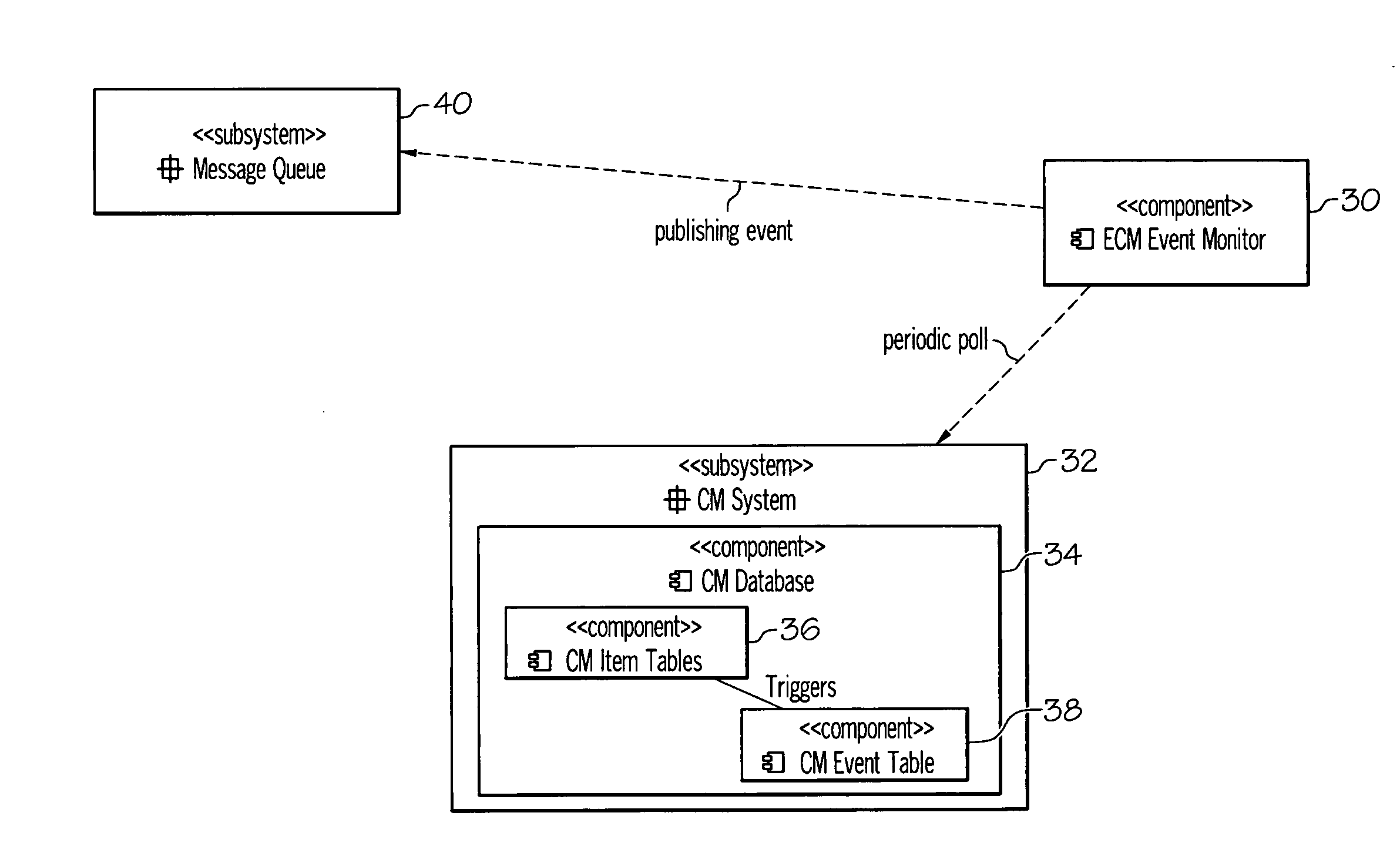
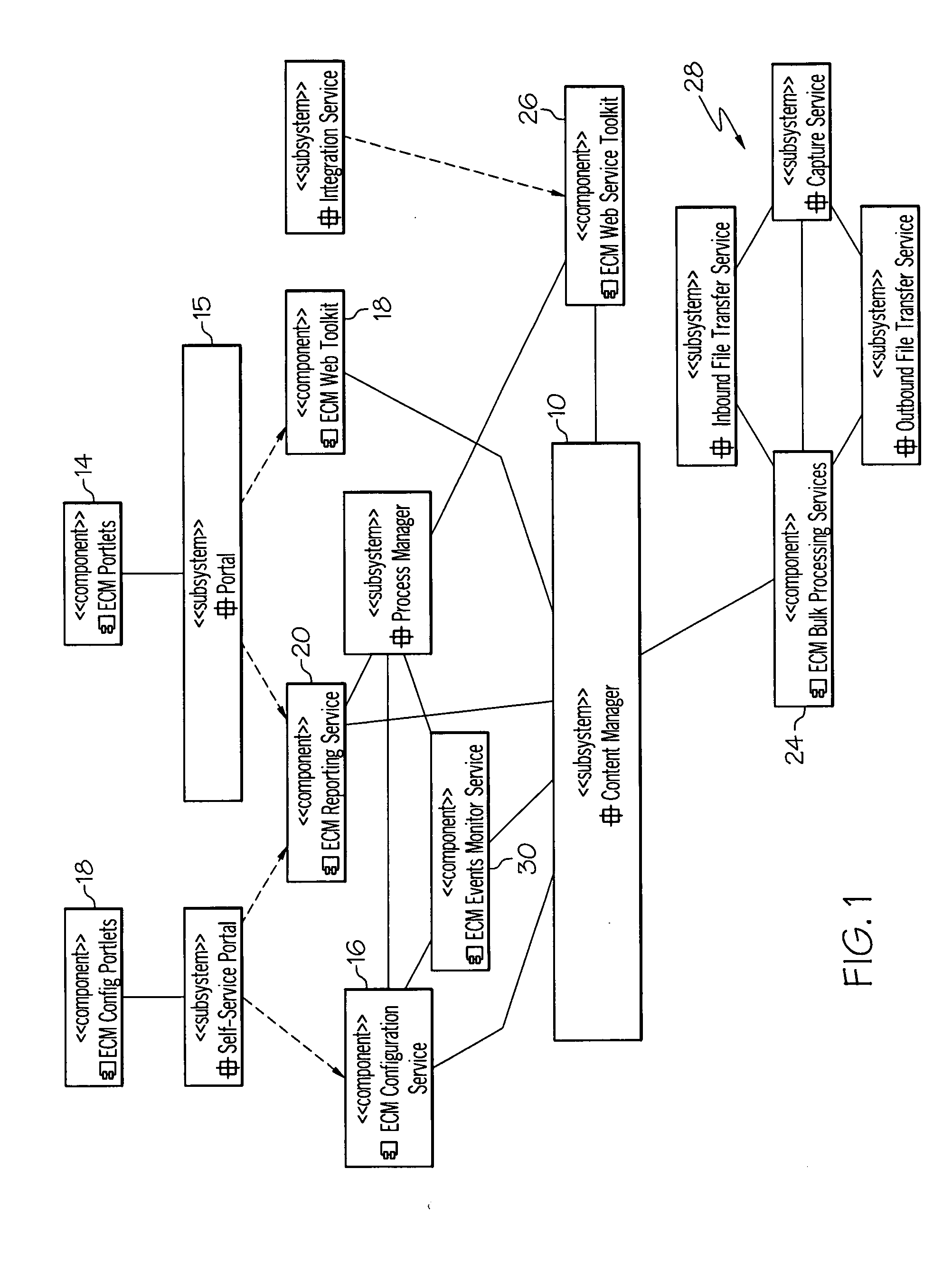
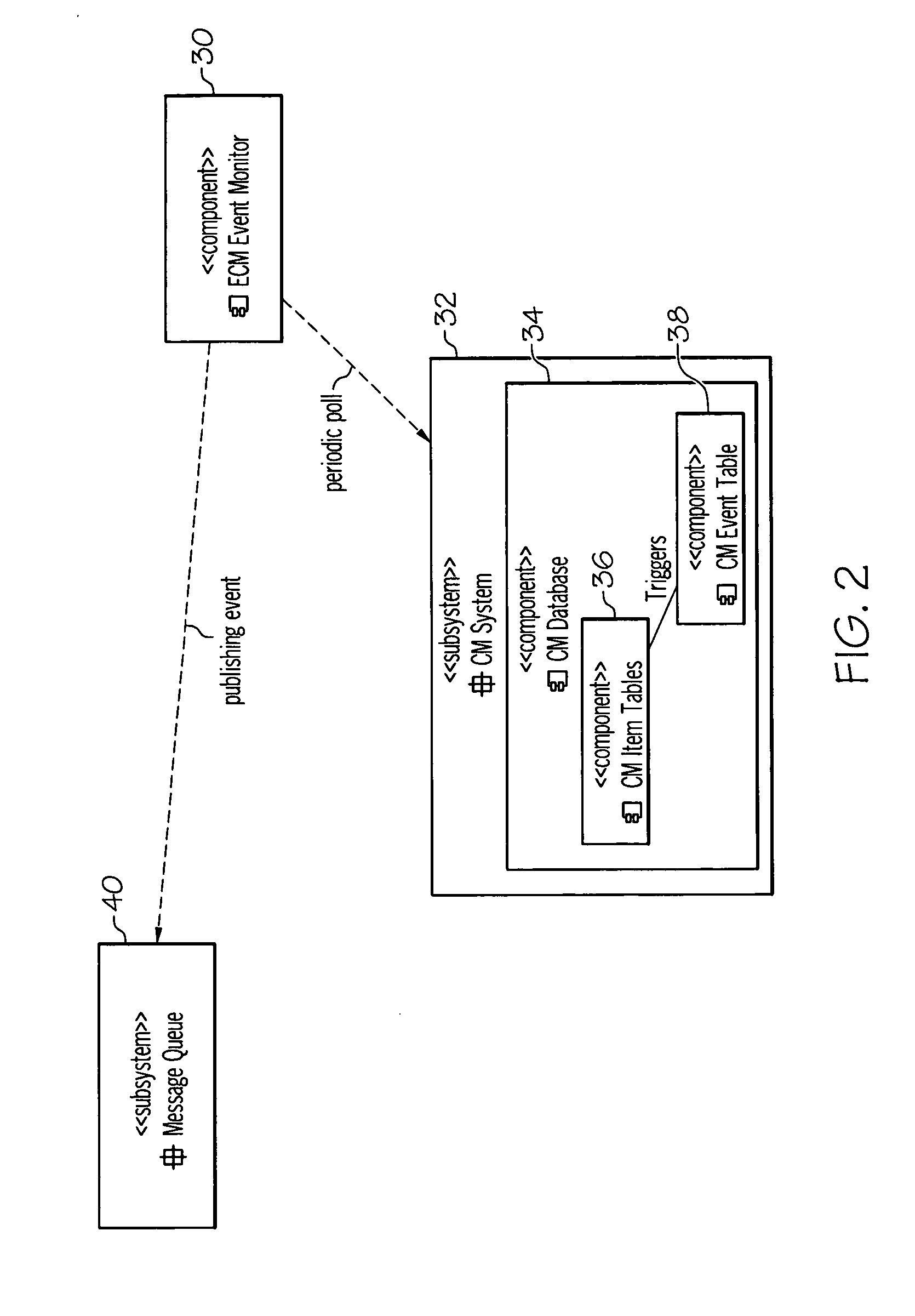
- A service-oriented architecture-based approach that provides enterprise content management as a service, featuring a reusable content management system with abstracted generic components, configurable data modeling and workflow, a common UI for content editing and viewing, and a plug-in component for bulk processing, allowing organizations to deploy a flexible and standardized content management system.

Enterprise content management deployment, collaboration, and proposal tool
PatentInactiveUS20140244339A1
Innovation
- A method and system that allows organizations to access and select ECM solutions, transmit planning inputs, and receive implementation information, including time and resource requirements, through a network, enabling informed decision-making and potential synergistic improvements by considering multiple solution combinations.


ECM Integration Standards and Protocols
Enterprise Content Management systems rely heavily on standardized integration protocols to ensure seamless interoperability across diverse organizational environments. The foundation of ECM integration rests upon several key standards that facilitate data exchange, workflow automation, and system connectivity. These protocols serve as the backbone for customization capabilities, directly influencing how vendors can adapt their solutions to meet specific organizational requirements.
The Content Management Interoperability Services (CMIS) standard represents the most widely adopted protocol in ECM integration. CMIS provides a standardized web services interface that enables applications to work with content repositories regardless of the underlying vendor implementation. This standard supports both SOAP and REST-based communication, offering flexibility in integration approaches while maintaining consistent data access patterns across different ECM platforms.
Web-based Distributed Authoring and Versioning (WebDAV) protocol continues to play a crucial role in ECM integration, particularly for document management and collaborative editing scenarios. WebDAV extends HTTP functionality to support file operations, version control, and metadata management, making it essential for organizations requiring direct file system integration with their ECM solutions.
Modern ECM implementations increasingly leverage RESTful APIs as primary integration mechanisms. These APIs provide lightweight, scalable communication channels that support real-time data synchronization and enable mobile application connectivity. REST-based integration protocols offer superior performance characteristics compared to traditional SOAP-based approaches, particularly in cloud-native ECM deployments.
Security protocols form another critical component of ECM integration standards. OAuth 2.0 and SAML authentication frameworks ensure secure access control across integrated systems, while encryption standards like TLS protect data transmission. These security protocols are fundamental to maintaining compliance with regulatory requirements and protecting sensitive organizational content.
Message queuing protocols such as AMQP and JMS enable asynchronous communication between ECM systems and external applications. These protocols support high-volume transaction processing and ensure reliable message delivery in complex enterprise environments, making them essential for large-scale ECM implementations requiring robust integration capabilities.
The emergence of cloud-native integration standards, including container orchestration protocols and microservices architectures, is reshaping ECM integration approaches. These modern standards enable more flexible, scalable integration patterns that support hybrid cloud deployments and facilitate rapid customization of ECM solutions to meet evolving business requirements.
The Content Management Interoperability Services (CMIS) standard represents the most widely adopted protocol in ECM integration. CMIS provides a standardized web services interface that enables applications to work with content repositories regardless of the underlying vendor implementation. This standard supports both SOAP and REST-based communication, offering flexibility in integration approaches while maintaining consistent data access patterns across different ECM platforms.
Web-based Distributed Authoring and Versioning (WebDAV) protocol continues to play a crucial role in ECM integration, particularly for document management and collaborative editing scenarios. WebDAV extends HTTP functionality to support file operations, version control, and metadata management, making it essential for organizations requiring direct file system integration with their ECM solutions.
Modern ECM implementations increasingly leverage RESTful APIs as primary integration mechanisms. These APIs provide lightweight, scalable communication channels that support real-time data synchronization and enable mobile application connectivity. REST-based integration protocols offer superior performance characteristics compared to traditional SOAP-based approaches, particularly in cloud-native ECM deployments.
Security protocols form another critical component of ECM integration standards. OAuth 2.0 and SAML authentication frameworks ensure secure access control across integrated systems, while encryption standards like TLS protect data transmission. These security protocols are fundamental to maintaining compliance with regulatory requirements and protecting sensitive organizational content.
Message queuing protocols such as AMQP and JMS enable asynchronous communication between ECM systems and external applications. These protocols support high-volume transaction processing and ensure reliable message delivery in complex enterprise environments, making them essential for large-scale ECM implementations requiring robust integration capabilities.
The emergence of cloud-native integration standards, including container orchestration protocols and microservices architectures, is reshaping ECM integration approaches. These modern standards enable more flexible, scalable integration patterns that support hybrid cloud deployments and facilitate rapid customization of ECM solutions to meet evolving business requirements.
Total Cost of ECM Customization Ownership
The total cost of ownership for ECM customization extends far beyond initial implementation expenses, encompassing a complex web of direct and indirect costs that organizations must carefully evaluate when comparing vendor solutions. Understanding these comprehensive cost structures is essential for making informed decisions about ECM platform selection and customization strategies.
Initial customization costs typically represent only 20-30% of the total ownership expense over a five-year period. These upfront investments include professional services fees, custom development work, system integration efforts, and initial training programs. However, the more substantial financial impact emerges from ongoing operational costs, which include maintenance fees, upgrade expenses, and continuous support requirements that can escalate significantly with highly customized implementations.
Maintenance and support costs vary dramatically across ECM vendors, with some charging premium rates for customized environments. Organizations often face annual maintenance fees ranging from 18-25% of initial licensing costs, with additional surcharges for custom modules and integrations. These expenses tend to compound over time as customizations become more complex and interdependent with core system functionality.
Upgrade and migration costs present another critical consideration, as heavily customized ECM systems often require extensive rework during version updates. Some vendors offer better backward compatibility and upgrade paths for customizations, while others may necessitate complete redevelopment of custom features. This can result in upgrade costs that are 2-3 times higher than standard implementations, creating significant budget implications for long-term planning.
Hidden costs frequently emerge from reduced system performance, increased security vulnerabilities, and extended testing cycles associated with customized ECM environments. Additionally, organizations must factor in the opportunity costs of delayed deployments, extended user training periods, and potential productivity losses during customization implementation phases.
Vendor lock-in represents a substantial long-term cost consideration, as extensive customizations can make it prohibitively expensive to migrate to alternative platforms. This dependency can limit negotiating power and force organizations to accept unfavorable contract terms or pricing increases over time.
Initial customization costs typically represent only 20-30% of the total ownership expense over a five-year period. These upfront investments include professional services fees, custom development work, system integration efforts, and initial training programs. However, the more substantial financial impact emerges from ongoing operational costs, which include maintenance fees, upgrade expenses, and continuous support requirements that can escalate significantly with highly customized implementations.
Maintenance and support costs vary dramatically across ECM vendors, with some charging premium rates for customized environments. Organizations often face annual maintenance fees ranging from 18-25% of initial licensing costs, with additional surcharges for custom modules and integrations. These expenses tend to compound over time as customizations become more complex and interdependent with core system functionality.
Upgrade and migration costs present another critical consideration, as heavily customized ECM systems often require extensive rework during version updates. Some vendors offer better backward compatibility and upgrade paths for customizations, while others may necessitate complete redevelopment of custom features. This can result in upgrade costs that are 2-3 times higher than standard implementations, creating significant budget implications for long-term planning.
Hidden costs frequently emerge from reduced system performance, increased security vulnerabilities, and extended testing cycles associated with customized ECM environments. Additionally, organizations must factor in the opportunity costs of delayed deployments, extended user training periods, and potential productivity losses during customization implementation phases.
Vendor lock-in represents a substantial long-term cost consideration, as extensive customizations can make it prohibitively expensive to migrate to alternative platforms. This dependency can limit negotiating power and force organizations to accept unfavorable contract terms or pricing increases over time.
Unlock deeper insights with PatSnap Eureka Quick Research — get a full tech report to explore trends and direct your research. Try now!
Generate Your Research Report Instantly with AI Agent
Supercharge your innovation with PatSnap Eureka AI Agent Platform!